Close-ups
Framed and on the wall
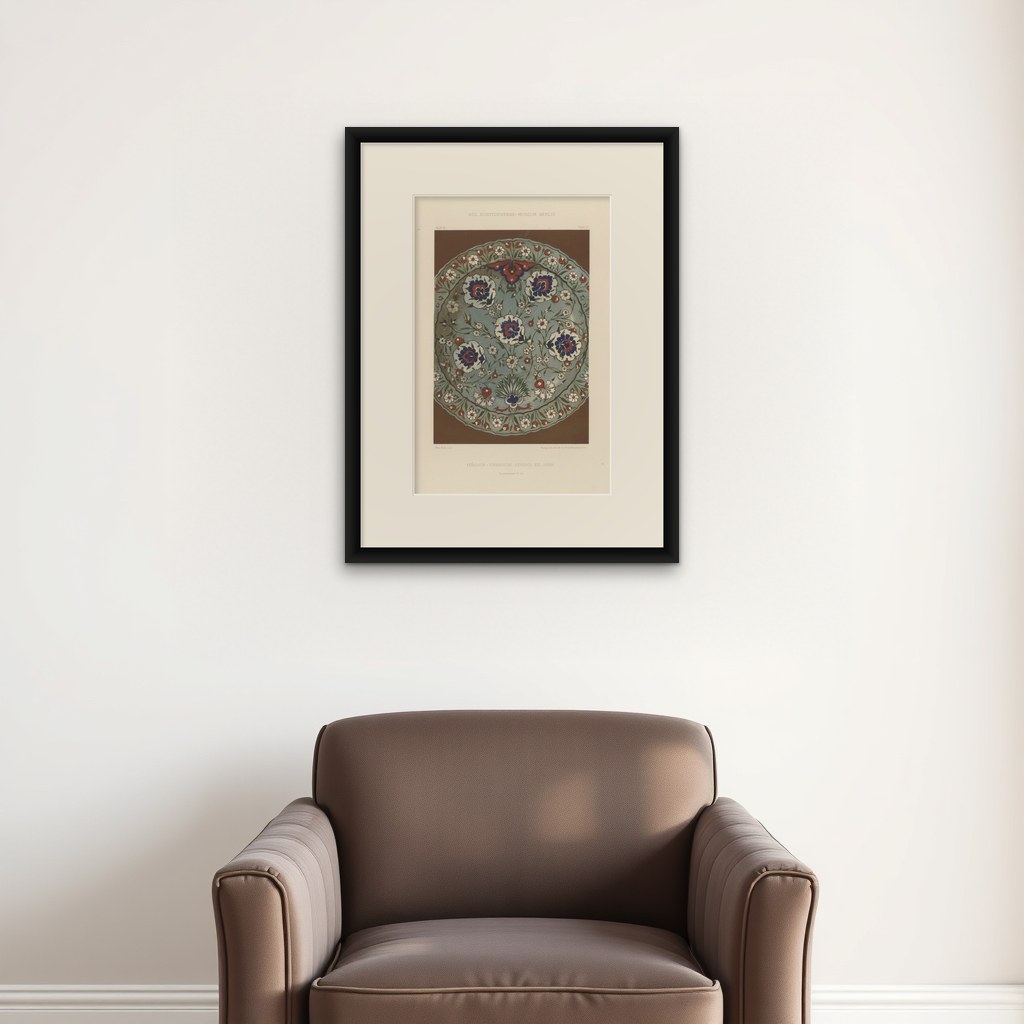

Frame and rooms are illustrations of how the print could look; the description says what is included.
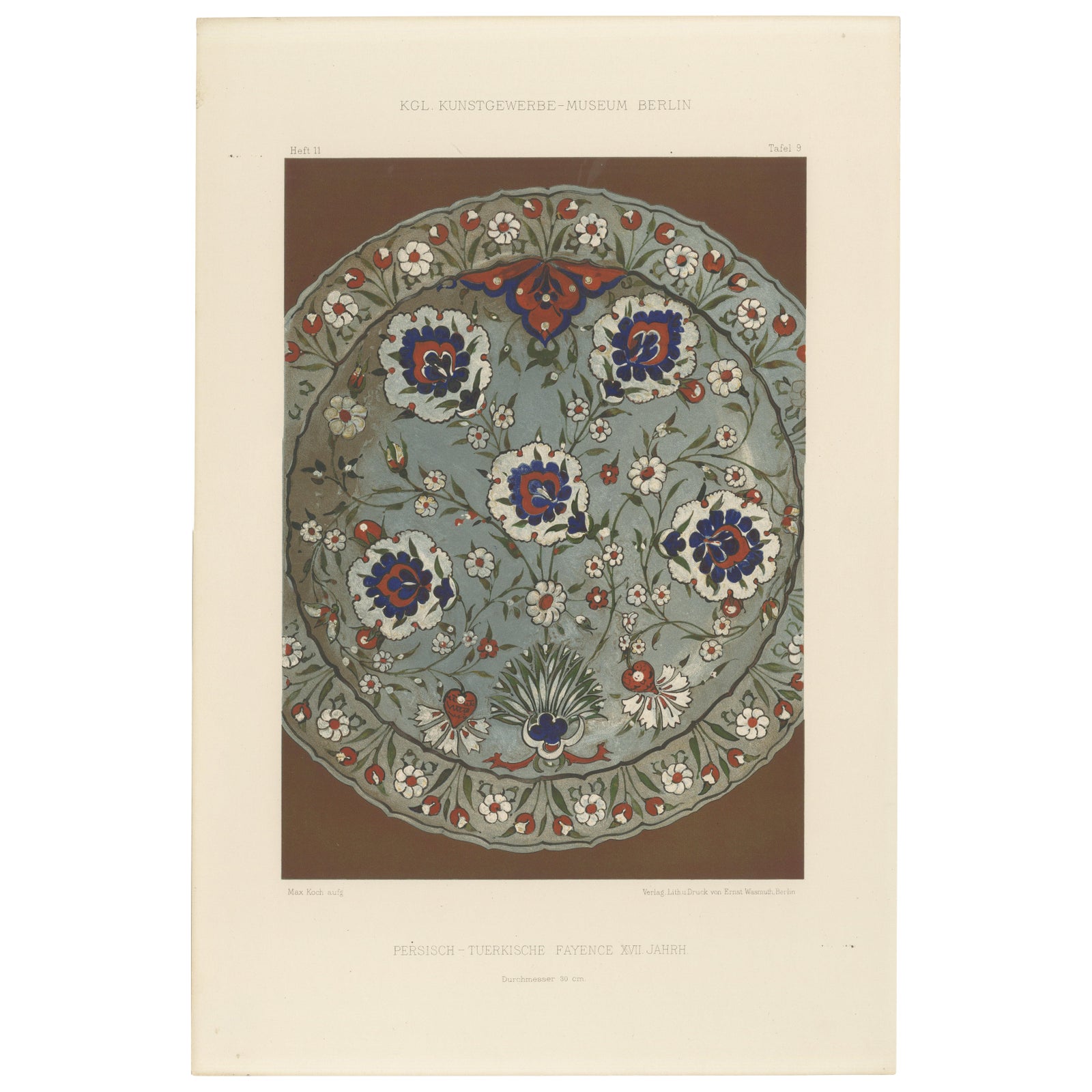
Persian-Turkish Faience Plate with Carnation Motif, Julius Lessing, Berlin 1890
£290 ($385, €340)
Period original, not a reproduction.
Shipped from the Netherlands, flat, insured and tracked, worldwide. Returns accepted within 14 days.
- Date
- 1890
- Size
- 19.3 × 13 in (49 × 33 cm)
- Condition
- Good. Excellent condition with vivid, unfaded colors. Slight marginal toning and faint handling marks at edges, well within acceptable range for age. Wide margins preserved.
- Period
- Late 19th century
- Section
- Botanical
- Reference
- f_47346102
Persian-Turkish Faience Plate with Carnation Motif, Julius Lessing, Berlin 1890
Description:
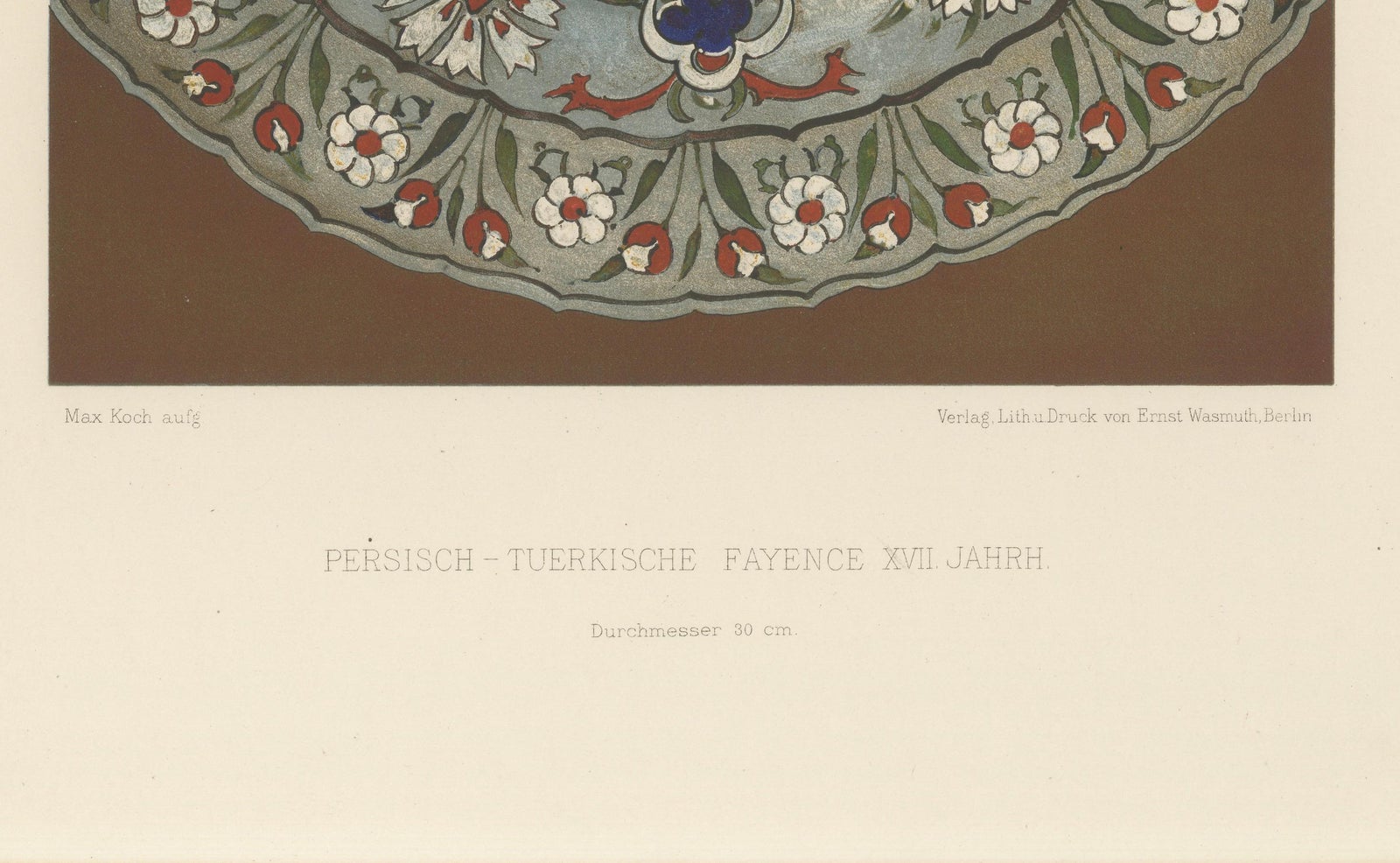
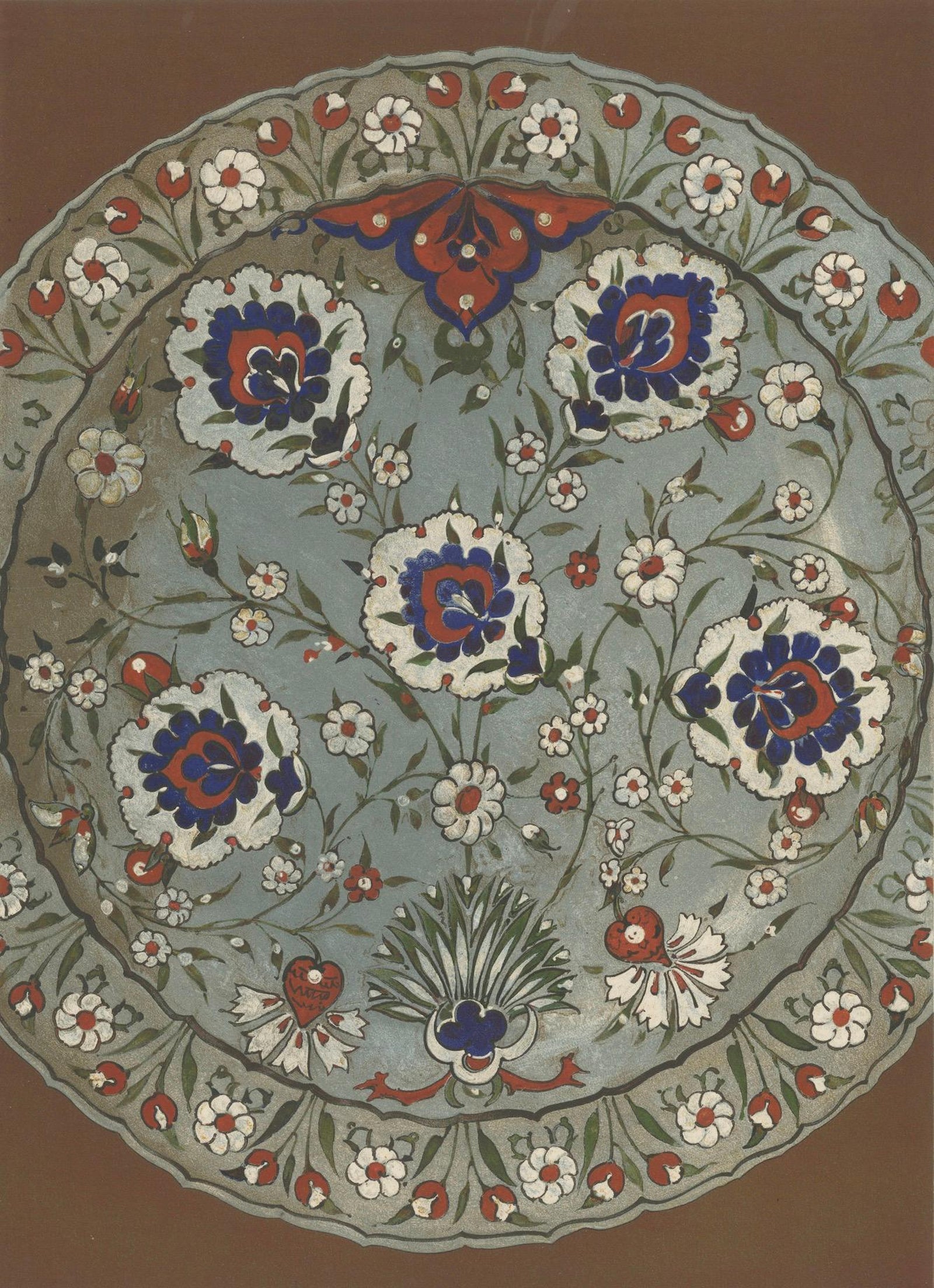
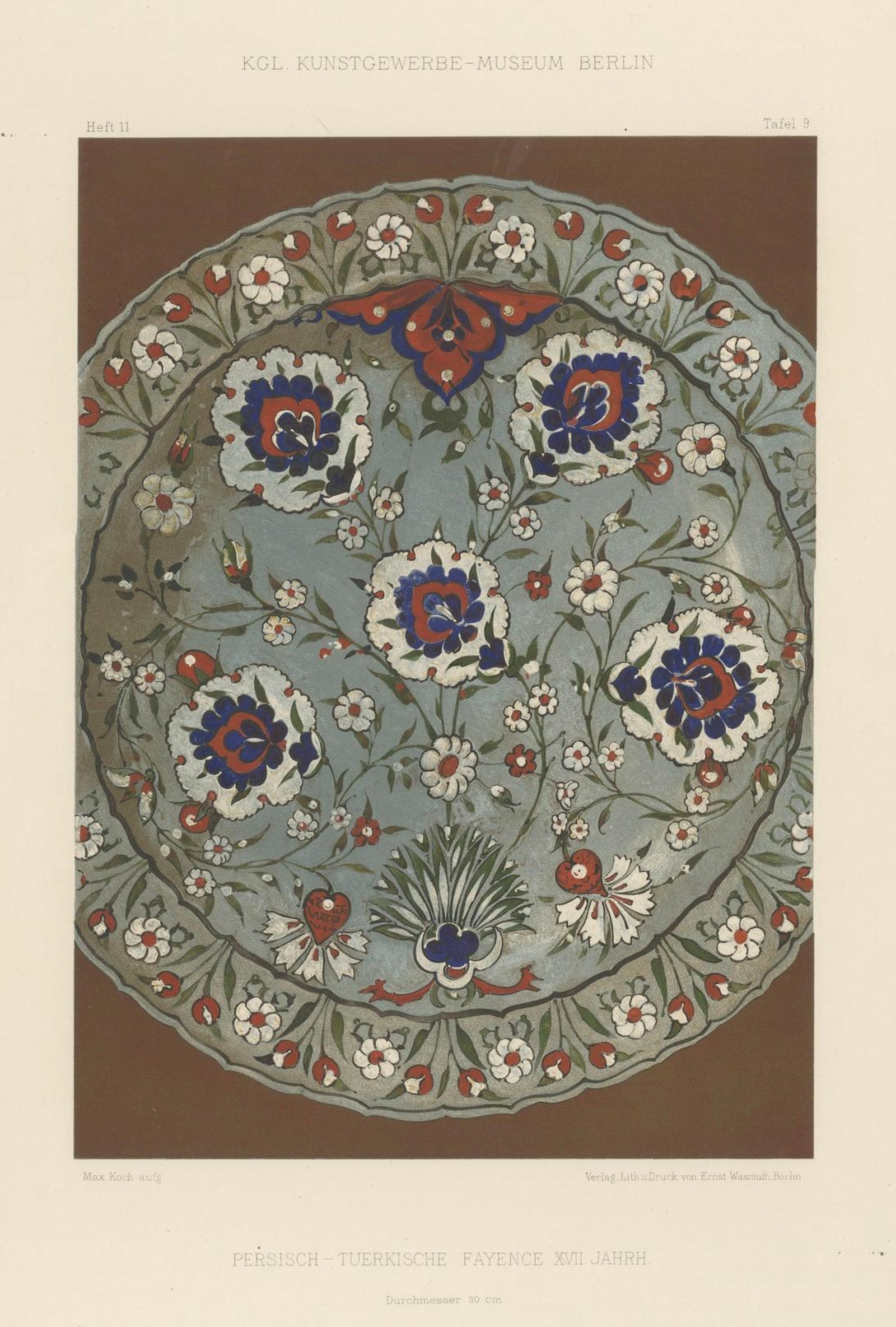
A richly detailed chromolithograph from Julius Lessing’s Persisch-Türkische Fayencen (Persian-Turkish Faience), published by Ernst Wasmuth in Berlin, 1890, as part of Vorbilder-Hefte aus dem Königlichen Kunstgewerbe-Museum, Heft 11. This plate (Tafel 9) reproduces a 16th-century faience dish from the celebrated collection of the Royal Museum of Decorative Arts in Berlin.
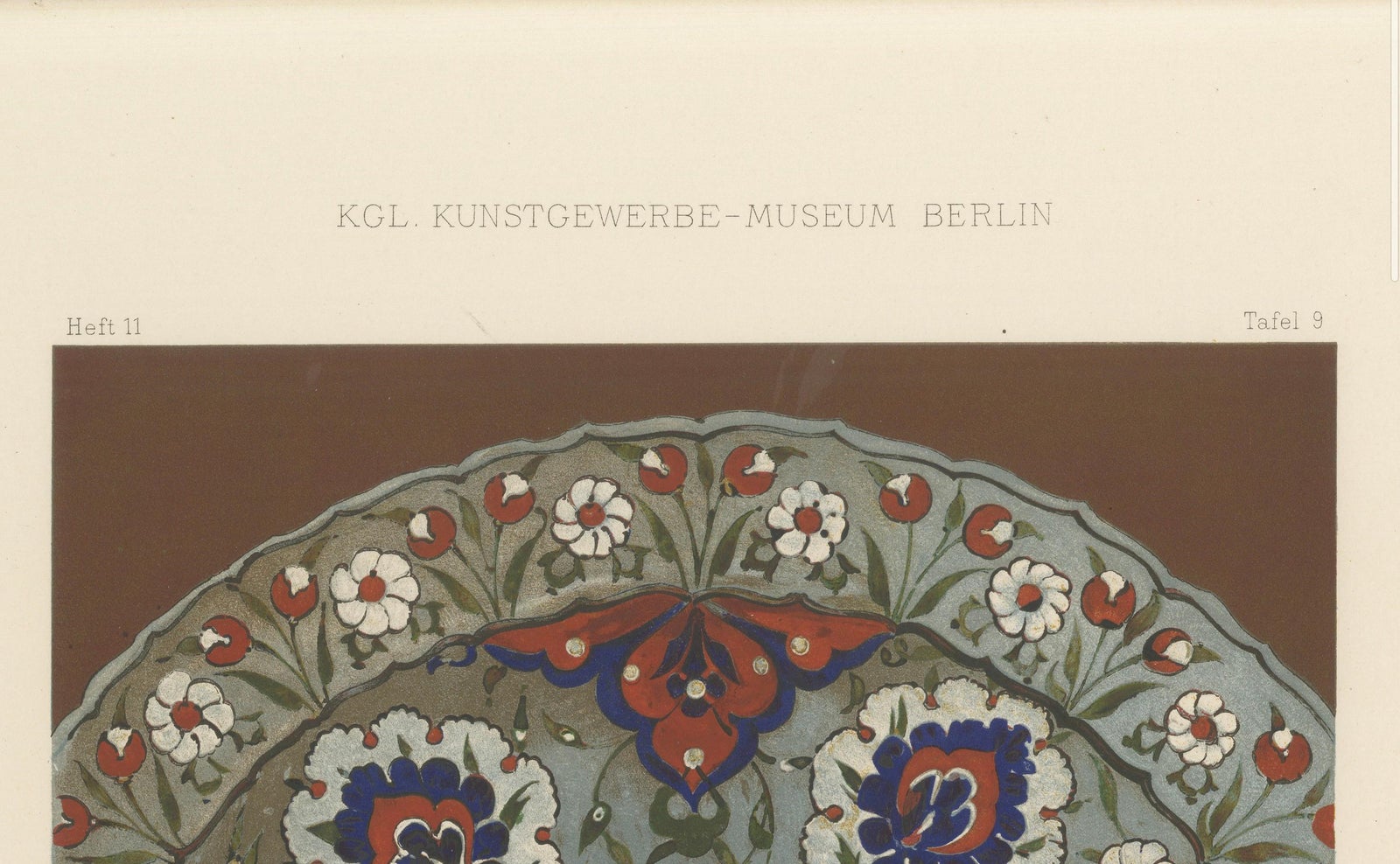
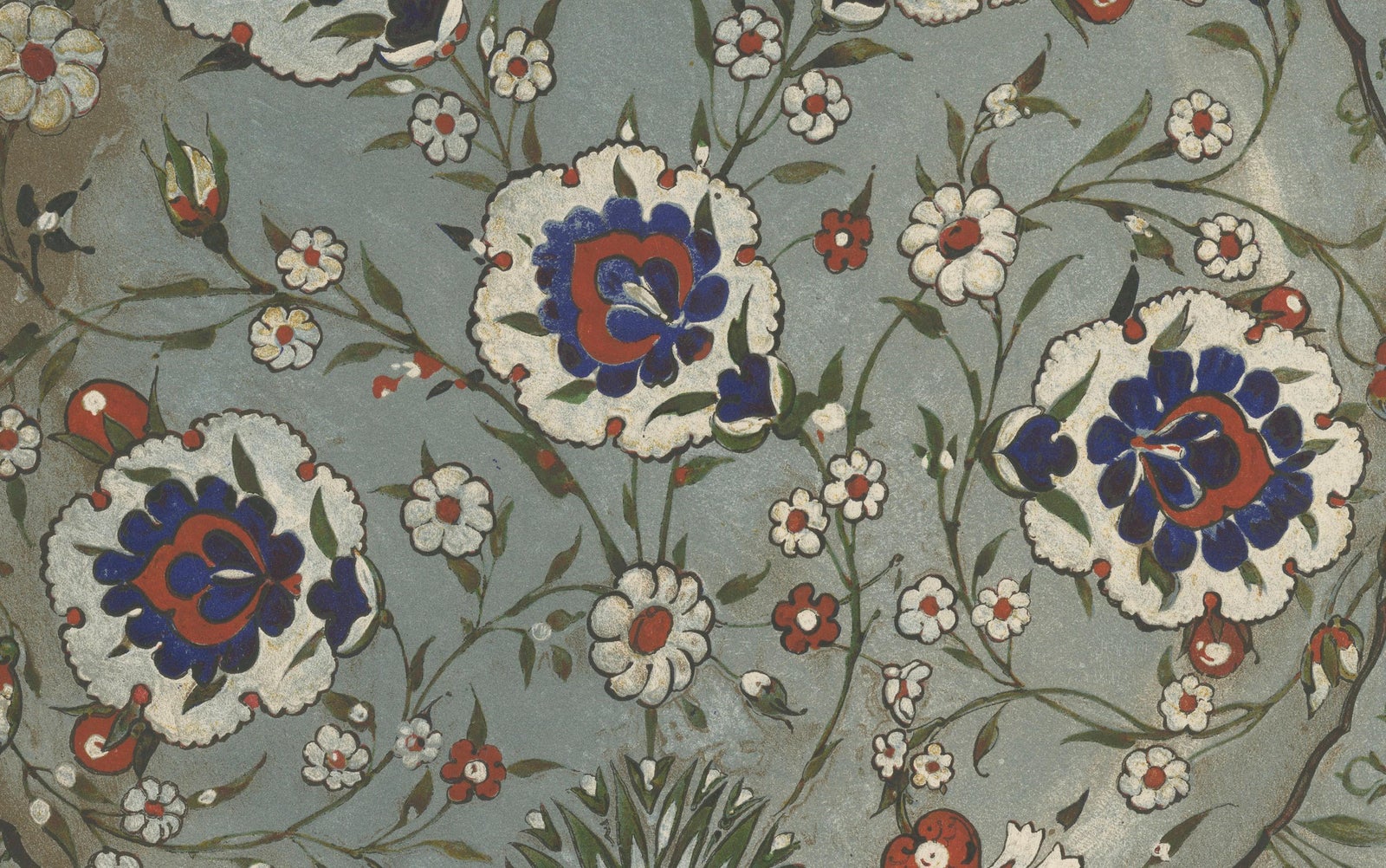
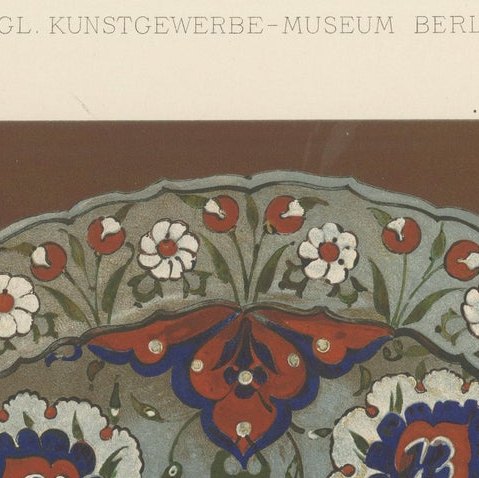
The print captures the exquisite ornamentation of an Iznik plate decorated with scrolling floral patterns and stylized carnations, one of the most recognizable elements in Ottoman ceramic art. The design features large composite blossoms surrounded by delicate stems of smaller flowers and leaves, harmoniously arranged across a pale blue background. A border of alternating blossoms and buds encircles the rim, unifying the pattern within a rhythmic botanical framework.
Rendered in deep cobalt blue, coral red, turquoise, white, and sage green, the palette reflects the distinct color harmony of 16th-century Iznik pottery, famous for its refinement and luminosity. The central floral arrangement radiates elegance and serenity, exemplifying the synthesis of Persian-inspired motifs and Ottoman artistry that defined the era’s ceramics.
Drawn by Max Koch and printed by the distinguished Berlin lithographer Ernst Wasmuth, this chromolithograph belongs to one of the most influential late 19th-century series documenting decorative arts worldwide. Under the direction of Julius Lessing (1843–1908), the *Vorbilder-Hefte* publications aimed to provide authentic visual references for artists, architects, and craftsmen, promoting appreciation for the ornament traditions of Islamic, Asian, and European art.
Condition report:
Excellent condition with vivid, unfaded colors. Slight marginal toning and faint handling marks at edges, well within acceptable range for age. Wide margins preserved.
Framing tips:
A simple ivory or sand-toned mat with a medium oak or gilt frame will complement the soft blue and red tones beautifully. Pairs well with other plates from the *Persisch-Türkische Fayencen* series for a cohesive display.
Technique: Chromolithograph
Maker: Julius Lessing, Berlin, 1890