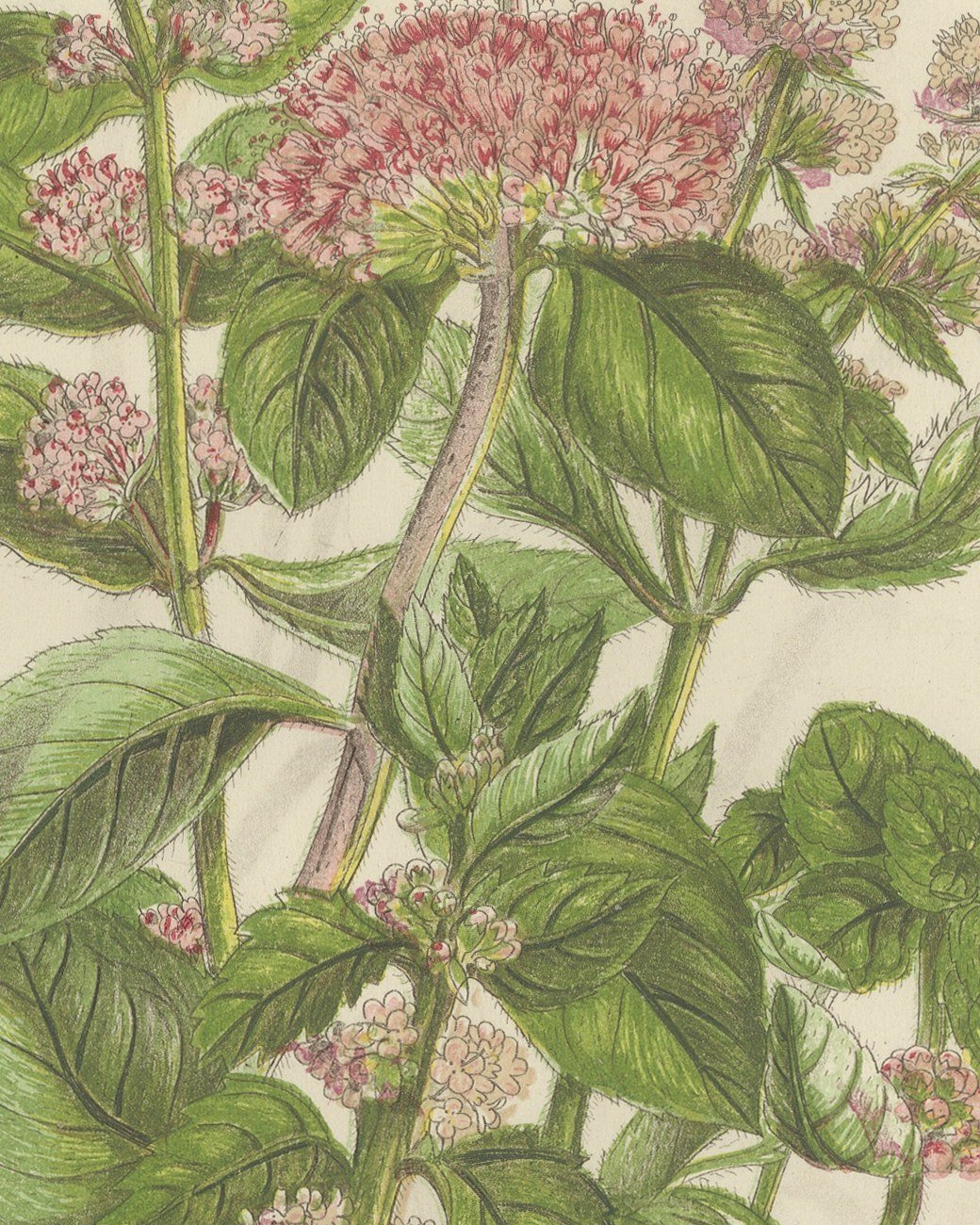
Close-ups
Framed and on the wall
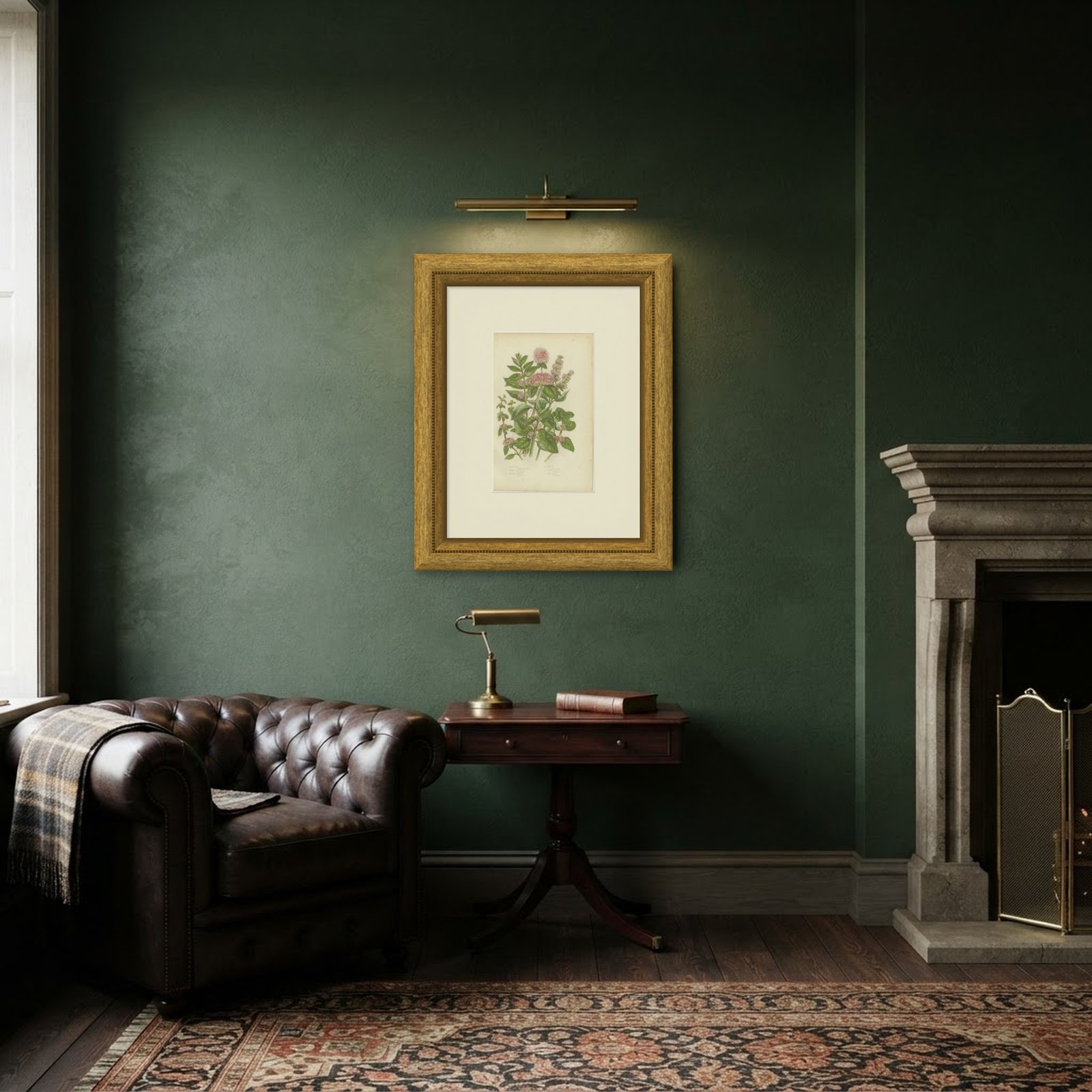
Frame and rooms are illustrations of how the print could look; the description says what is included.
Peppermint and Penny Royal, Antique Kitchen Herb Botanical Print, circa 1873
$160 (£120, €145)
Period original, not a reproduction.
Shipped from the Netherlands, flat or rolled, insured and tracked, worldwide. Returns accepted within 14 days.
- Date
- circa 1873
- Size
- 9.4 × 6.1 in (24 × 15.5 cm)
- Technique
- Chromolithograph
- Coloring
- Printed color
- Condition
- Good. Even age toning. Marked handling soiling along the bottom, right and top edges. Scattered light foxing in the margin. Slight wear at the bottom left corner.
- Period
- Late 19th century
- Section
- Botanical
- Reference
- BG-14434-23
What the condition grades mean
- Excellent
- Bright and clean, with no faults worth mentioning.
- Very good
- Only light signs of age, such as faint toning.
- Good
- Normal signs of age for a sheet of this period: toning, some foxing, small marks or neat old repairs.
- Fair
- Clear faults such as staining, tears or repairs, priced to match.
Every fault we see is written in the condition note, and the whole sheet is shown uncropped in the photos.
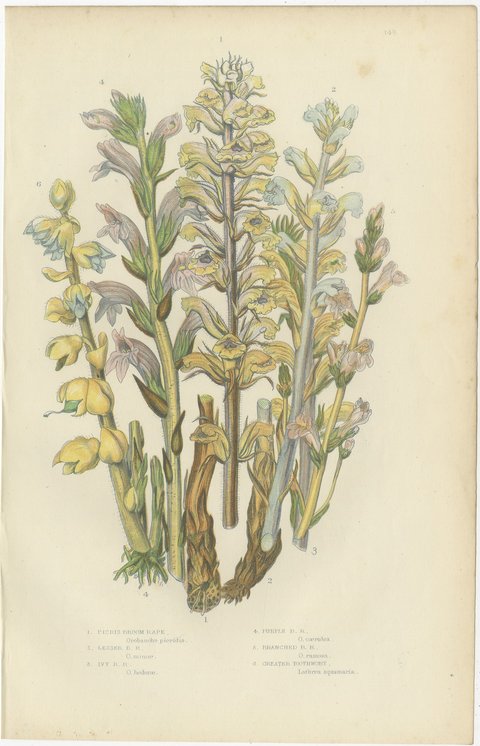
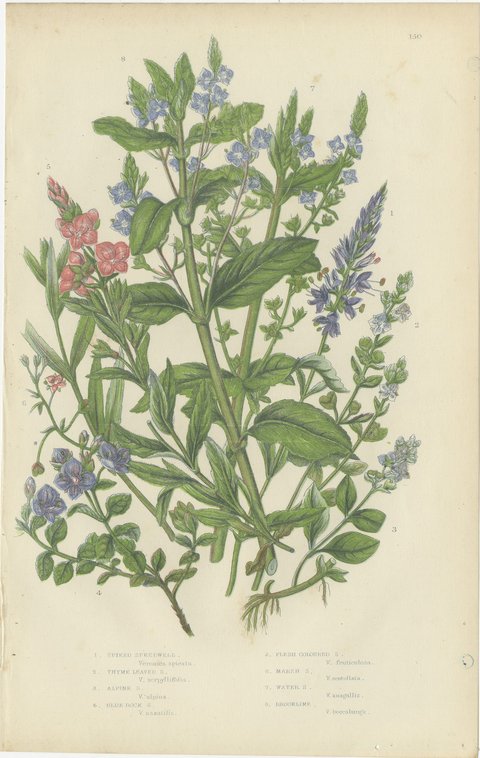
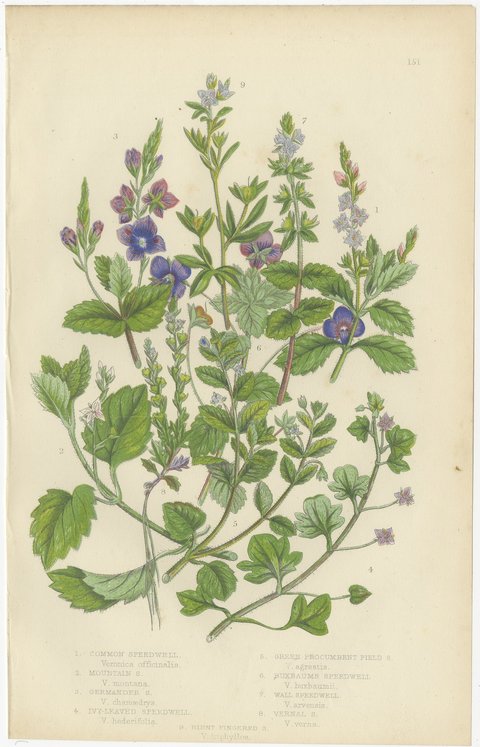
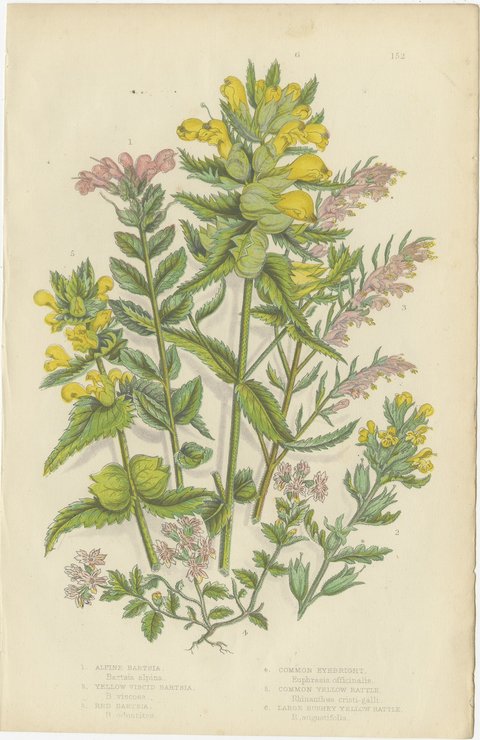
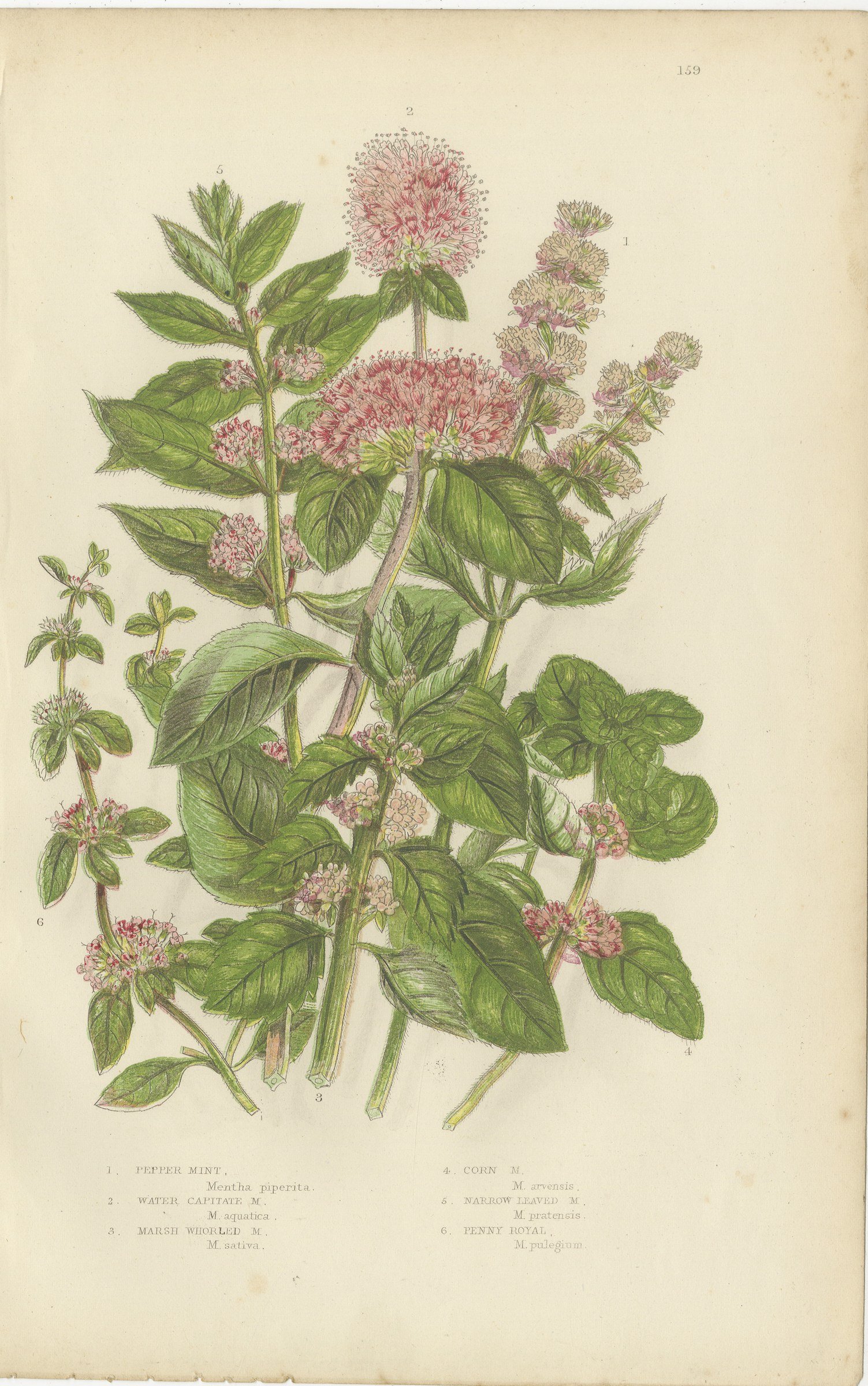
An original antique color plate from Anne Pratt's The Flowering Plants, Grasses, Sedges, and Ferns of Great Britain, this sheet shows six British mints, among them peppermint and penny royal. A rounded head of rose pink flowers crowns the water mint at the top of the sheet and a second full head opens below it, both of them dense with projecting stamens. Peppermint carries its paler spikes at the right, the whorled flowers of the corn mint sit in tight rings along the stems at the foot, and broad veined green leaves fill the middle of the page.
Anne Pratt brought out The Flowering Plants, Grasses, Sedges, and Ferns of Great Britain through Frederick Warne and Co. of Bedford Street, Covent Garden, in six volumes covering more than fifteen hundred species. The plates were printed in color by William Dickes of London, a licensee of the Baxter color process, and this sheet comes from Volume IV, which the title page records as carrying 249 species in color.
The work was one of the first thorough illustrated floras of Britain aimed at the ordinary reader rather than the specialist, and the price was only possible because the plates were printed in color instead of being colored by hand. That technical choice is part of what the sheet records, and it put a reliable colored figure of every British species within reach of a wide public for the first time.
Even age toning. Marked handling soiling along the bottom, right and top edges. Scattered light foxing in the margin. Slight wear at the bottom left corner.
This is an original antique print, not a modern reproduction. This item is sold unframed.