Close-ups
Framed and on the wall
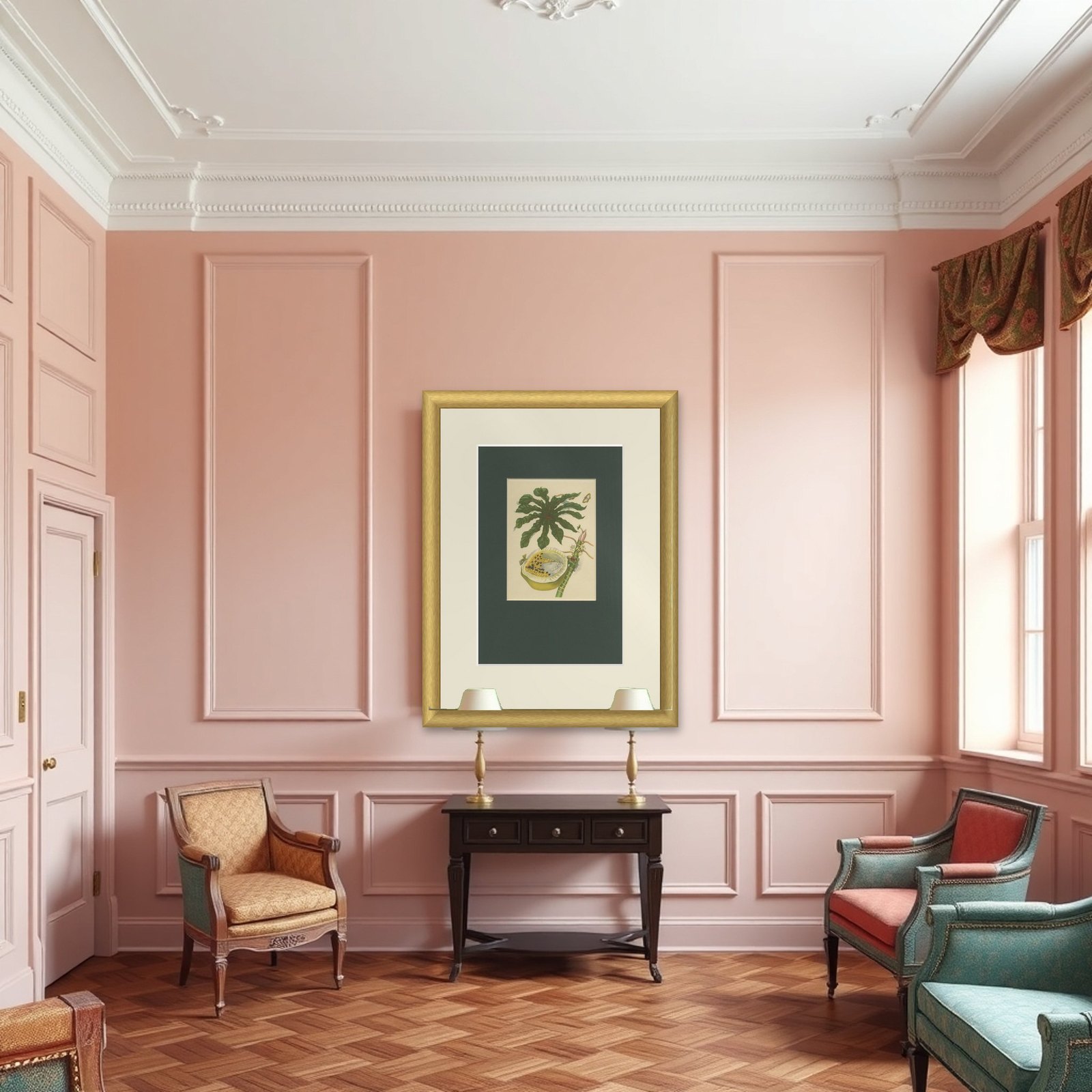
Frame and rooms are illustrations of how the print could look; the description says what is included.
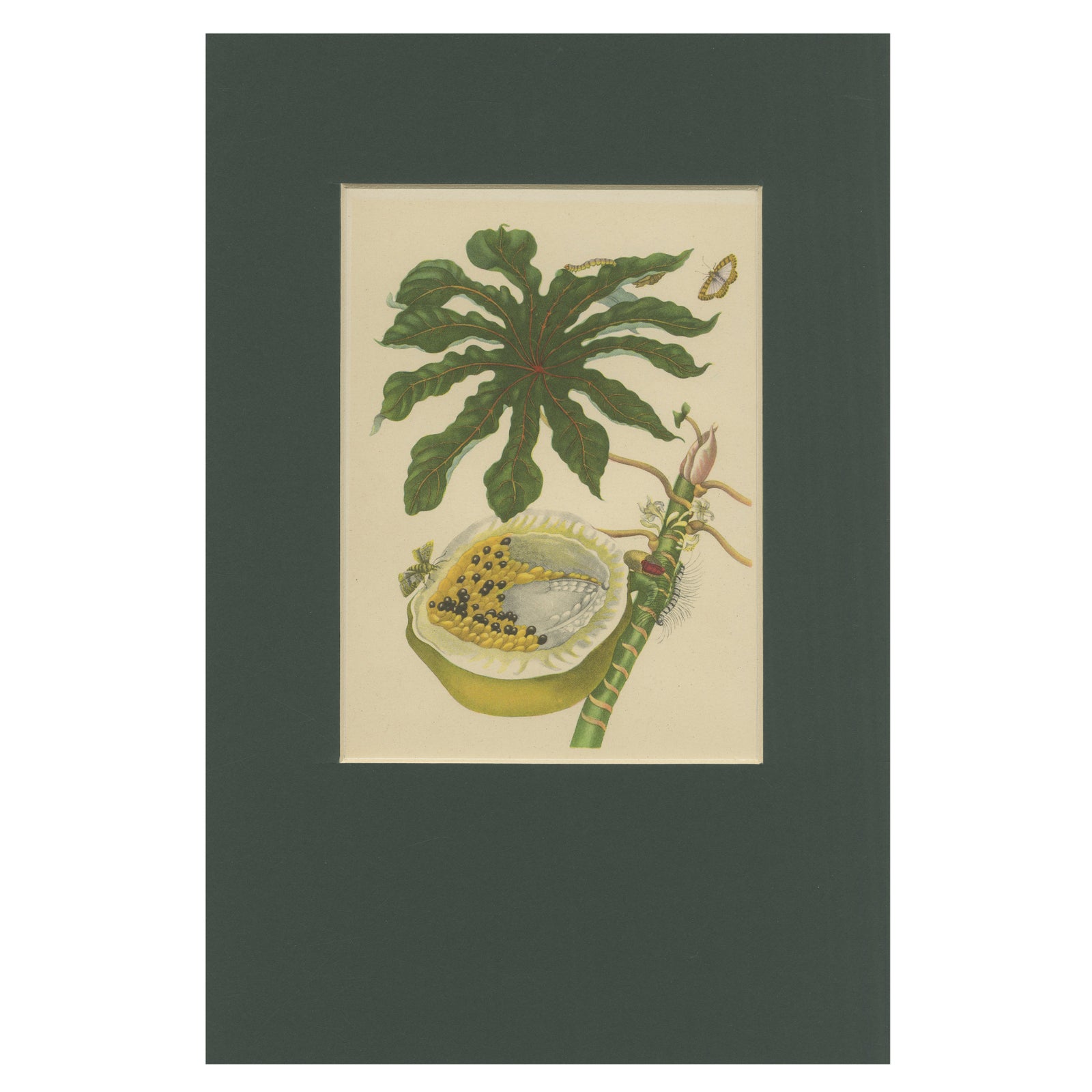
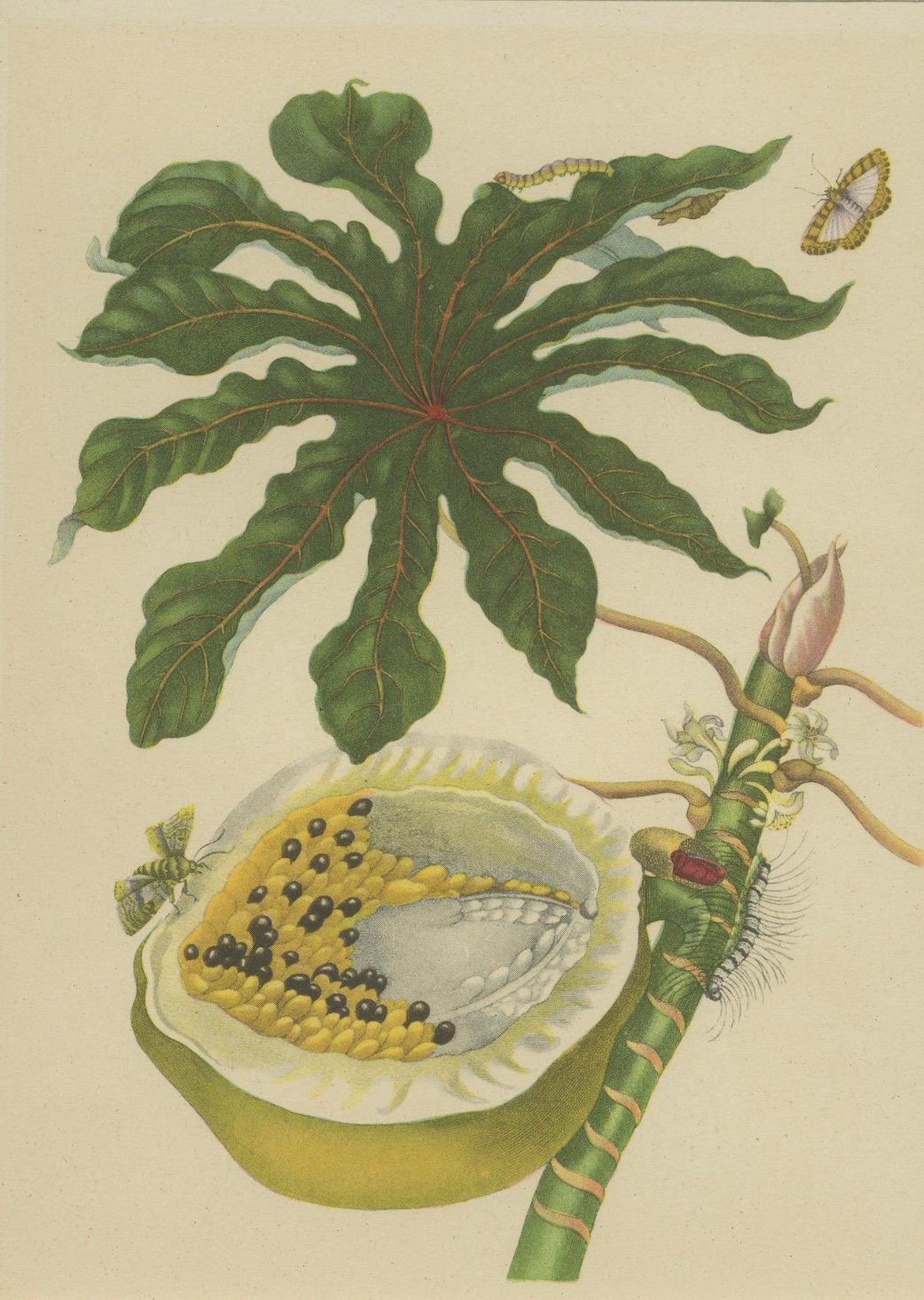
Papaya and Insects, 19th-Century Hand-Coloured Lithograph after Merian Plate 45
€220 ($245, £185, €220)
Period original, not a reproduction.
Shipped from the Netherlands, flat, insured and tracked, worldwide. Returns accepted within 14 days.
- Date
- Not stated
- Size
- 11.8 × 7.9 in (30 × 20 cm)
- Condition
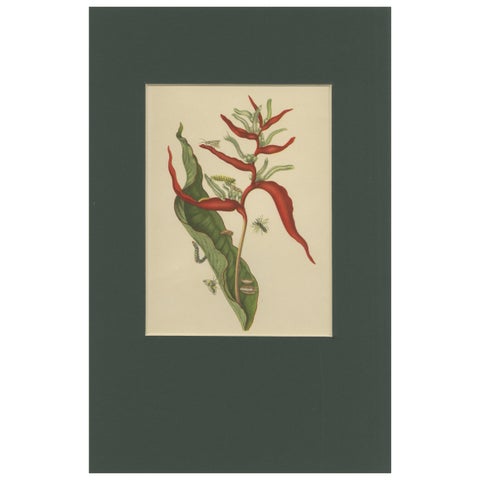
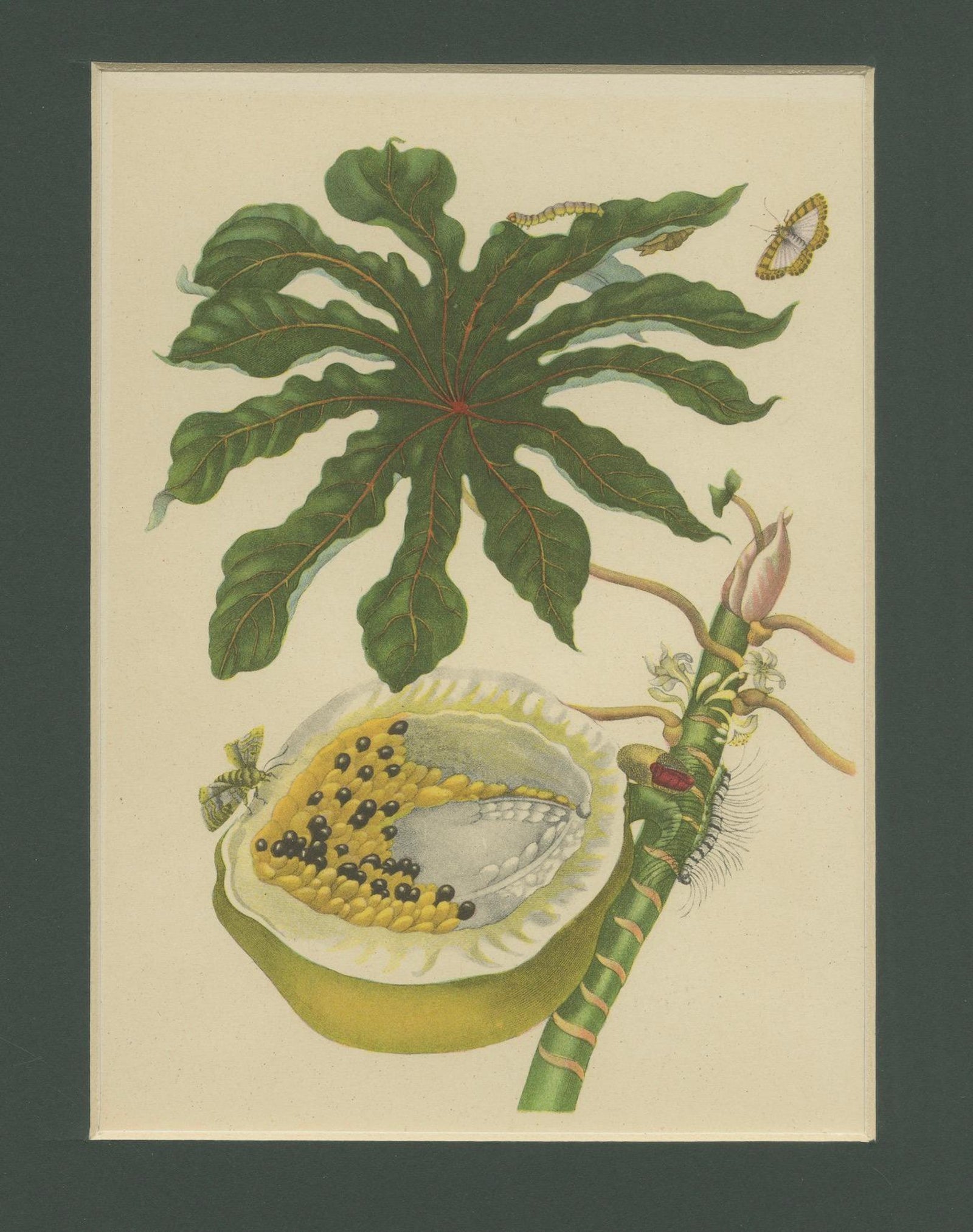
- Good. Very good condition. Colours are fresh and vibrant, with only minimal toning. No visible tears or creases. The print is presented in a dark green matting board, which enhances the rich reds of the Heliconia and complements the green foliage.
- Artist or book
- Maria Sibylla Merian
- Section
- Insects and butterflies
- Reference
- f_46270712
A papaya with its insects, a color lithograph of the nineteenth century after a plate from Maria Sibylla Merian's Metamorphosis insectorum Surinamensium, first published in Amsterdam in 1705. The plate is listed as plate 45 of the original work. The print is shown in a green mat.
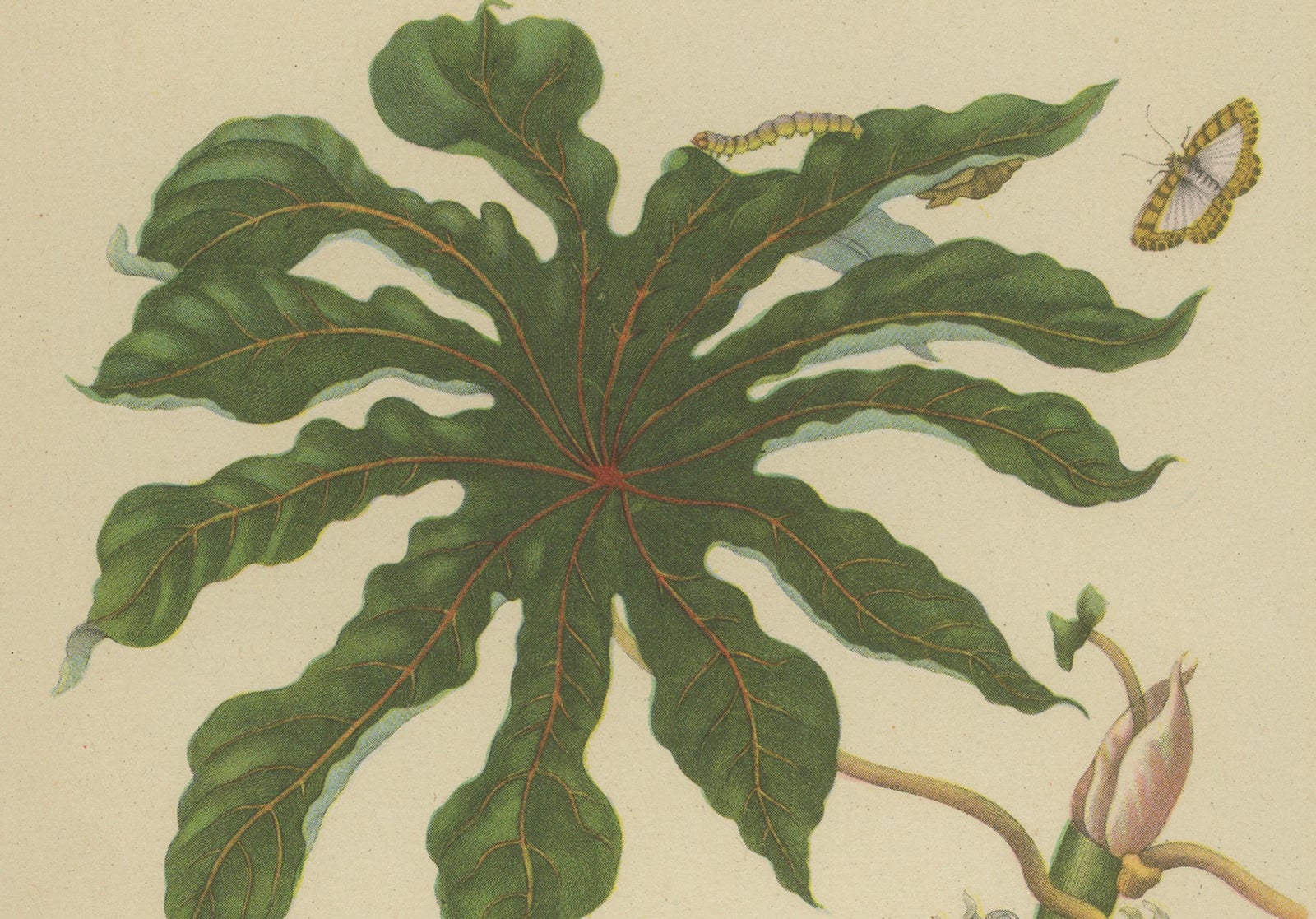
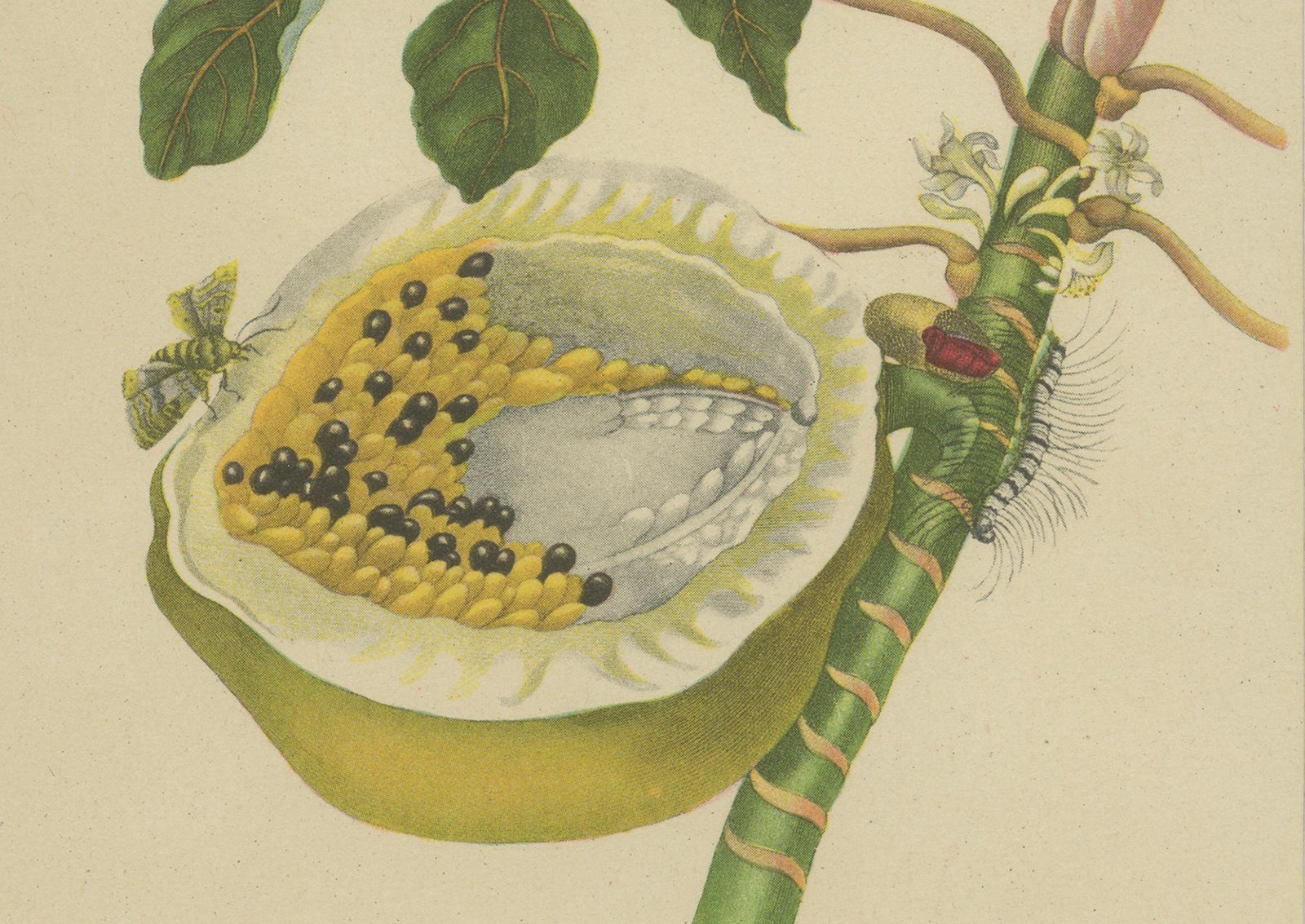
The picture shows the papaya tree's large palmate leaf spread at the top, a halved fruit below it with yellow flesh and a cluster of black seeds, and a stem hung with pink and white blossoms at the right. Around them Merian places the insects that feed on the plant: caterpillars on the leaf and on the stem, and a small winged insect near the fruit and two moths above, so that the plant and the stages of the insects' life appear on the same sheet. That union of botany and entomology was the hallmark of her work. Merian (1647 to 1717) was a German-born naturalist and illustrator who traveled to Suriname in 1699 to study its plants and insects, and the plates of her book remain some of the best-known natural history illustrations of the New World.