Close-ups
Framed and on the wall
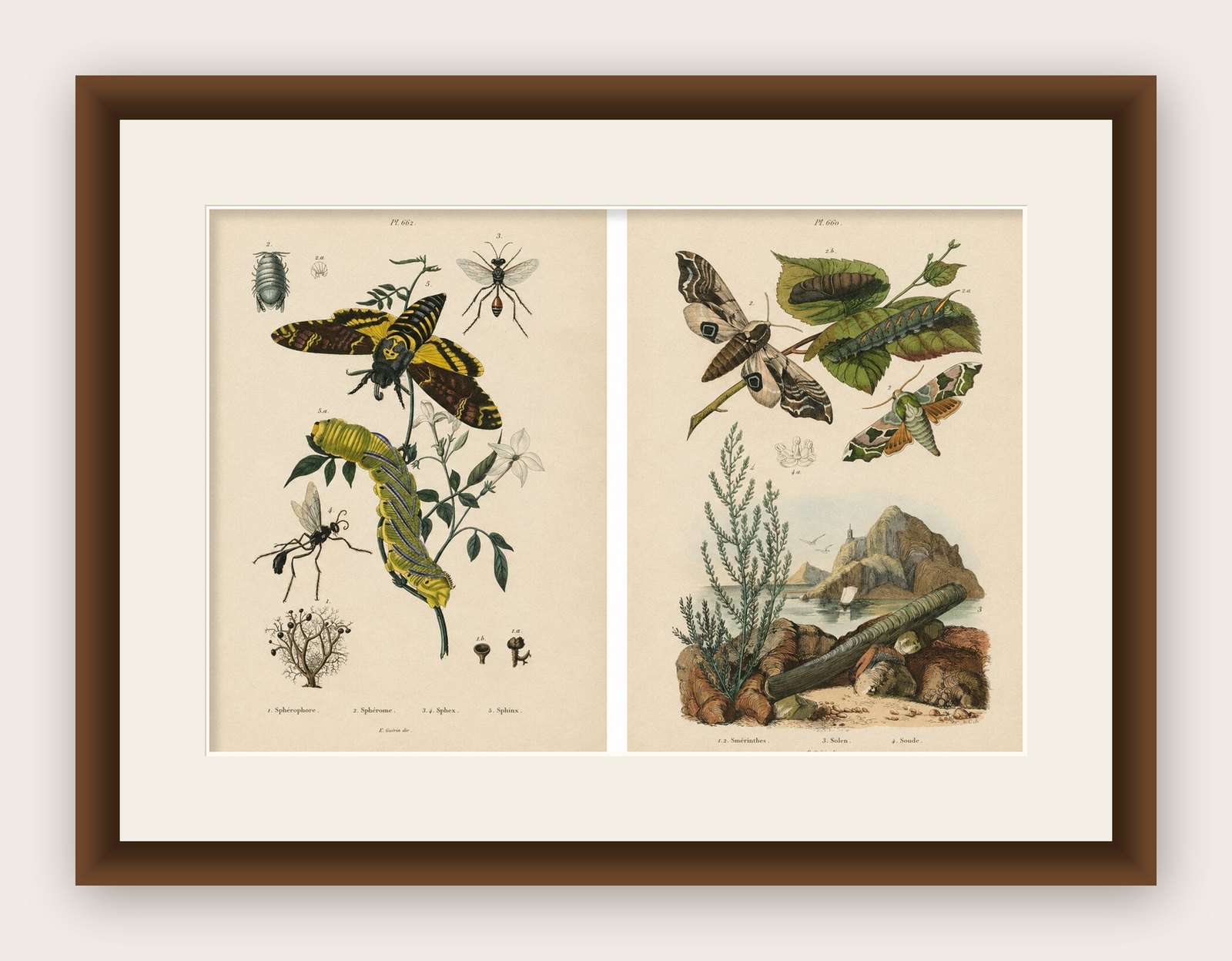
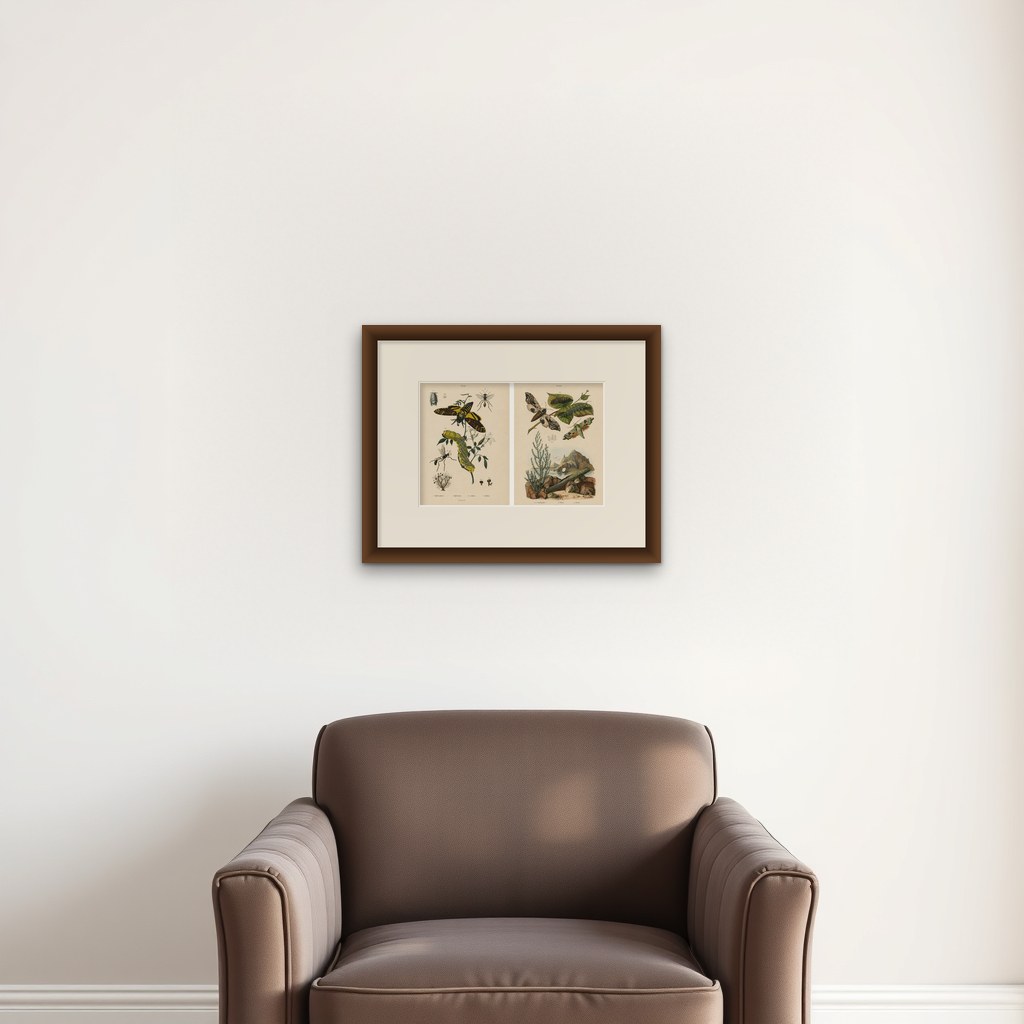

Frame and rooms are illustrations of how the print could look; the description says what is included.
Pair of French Sphinx Moth Engravings by Duméril & Guérin, 1835
$460$32530% off (£245, €294)
Period original, not a reproduction.
Shipped from the Netherlands, flat or rolled, insured and tracked, worldwide. Returns accepted within 14 days.
- Date
- 1835
- Size
- 11.9 × 7.5 in (30.2 × 19 cm)
- Condition
- Good. Good antique condition overall, with age-related toning, scattered foxing, and minor handling wear consistent with age. Colors remain vibrant and attractive. Please study the images carefully.
- Period
- Early 19th century
- Artist or book
- Duméril
- Section
- Insects and butterflies
- Reference
- f_50106962
- Color
- Hand colored
What the condition grades mean
- Excellent
- Bright and clean, with no faults worth mentioning.
- Very good
- Only light signs of age, such as faint toning.
- Good
- Normal signs of age for a sheet of this period: toning, some foxing, small marks or neat old repairs.
- Fair
- Clear faults such as staining, tears or repairs, priced to match.
Every fault we see is written in the condition note, and the whole sheet is shown uncropped in the photos.
Pair of French Sphinx Moth Engravings by Duméril & Guérin, 1835
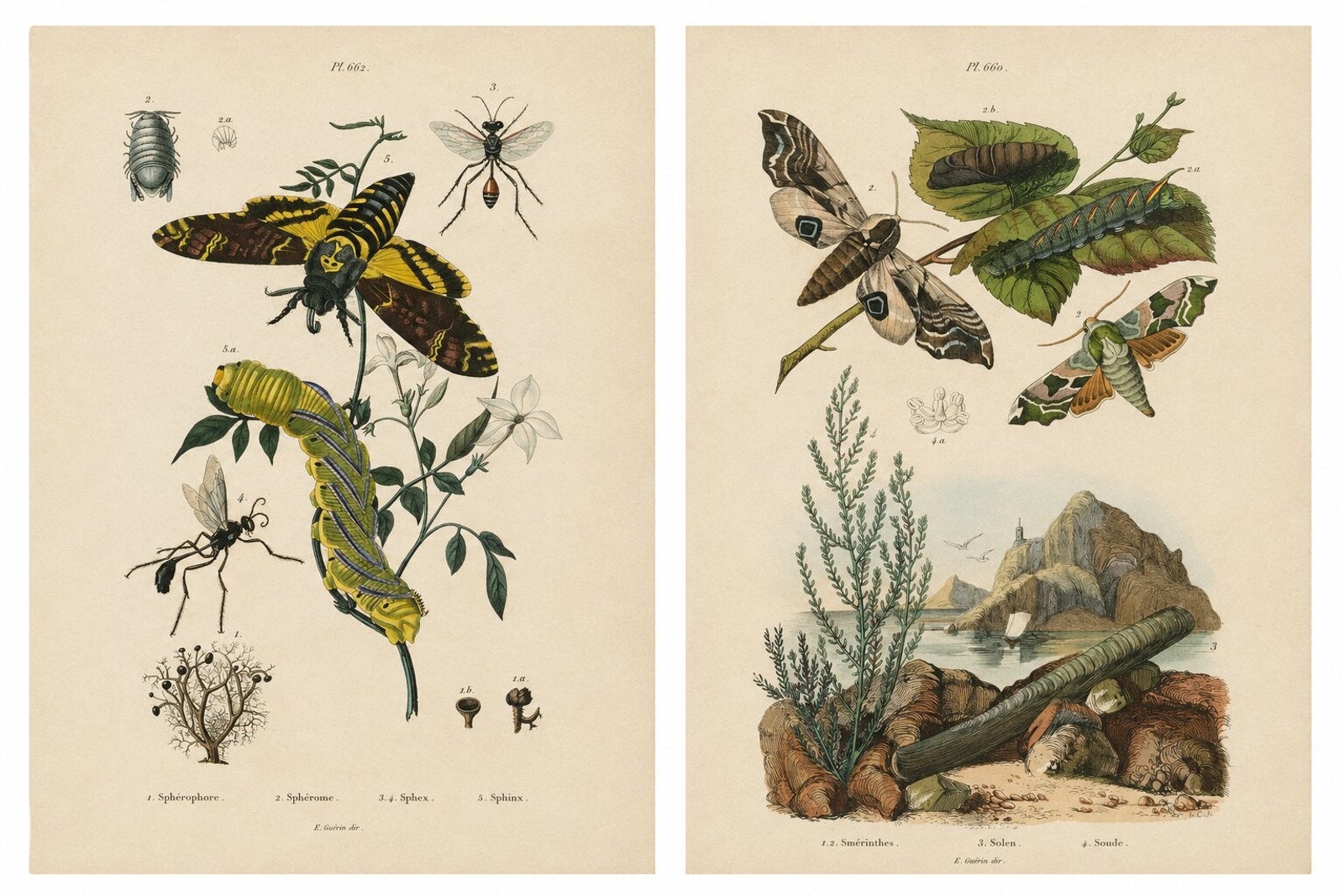
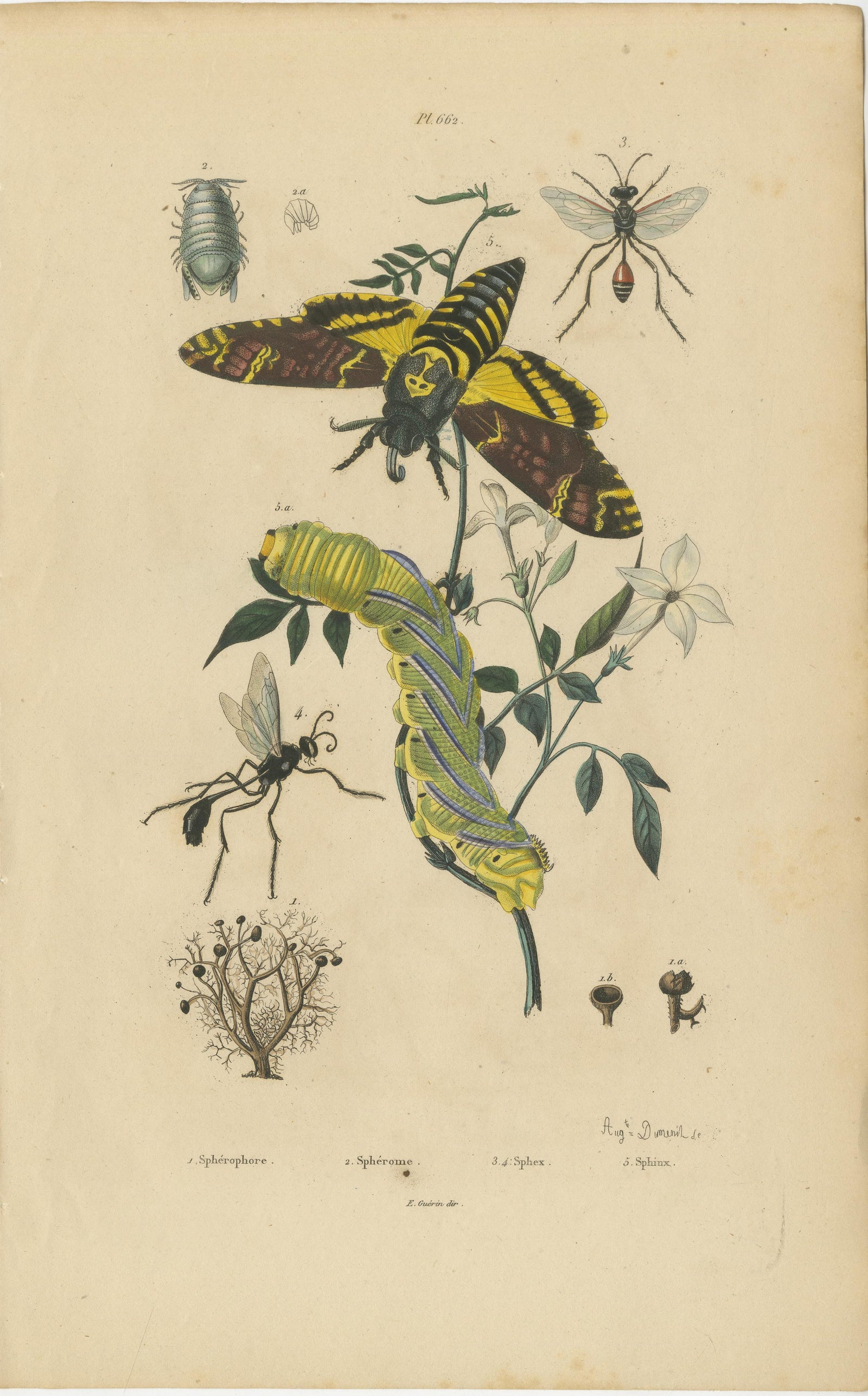
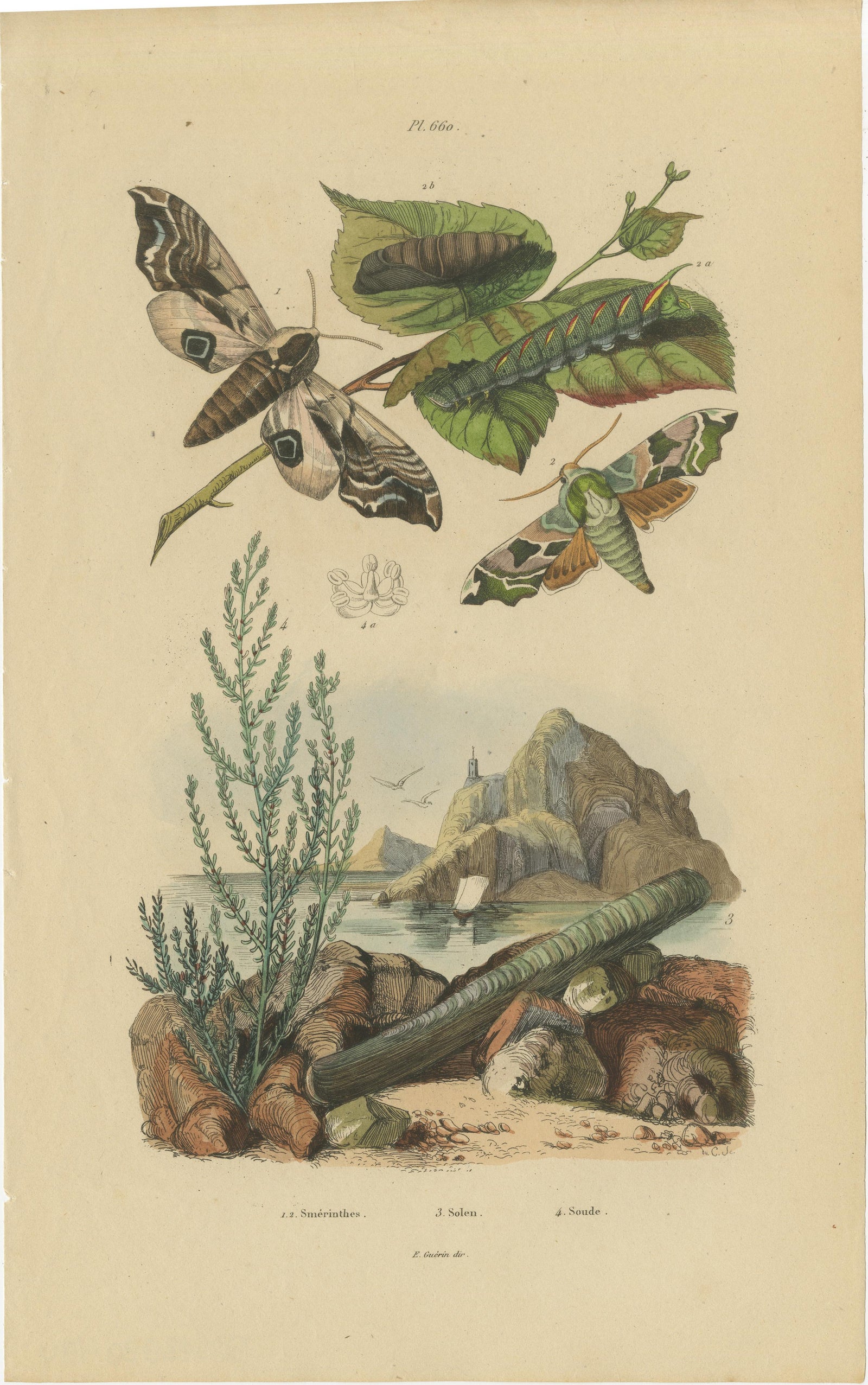
This striking pair of antique French natural history engravings depicts exotic sphinx moths, caterpillars, insects, marine life, and botanical studies rendered in luminous hand-color. Produced circa 1835 under the direction of the noted French zoological illustrator Edmond Guérin, with drawings attributed to Auguste Duméril, these plates beautifully combine scientific precision with the decorative elegance characteristic of early 19th-century French natural history publishing.
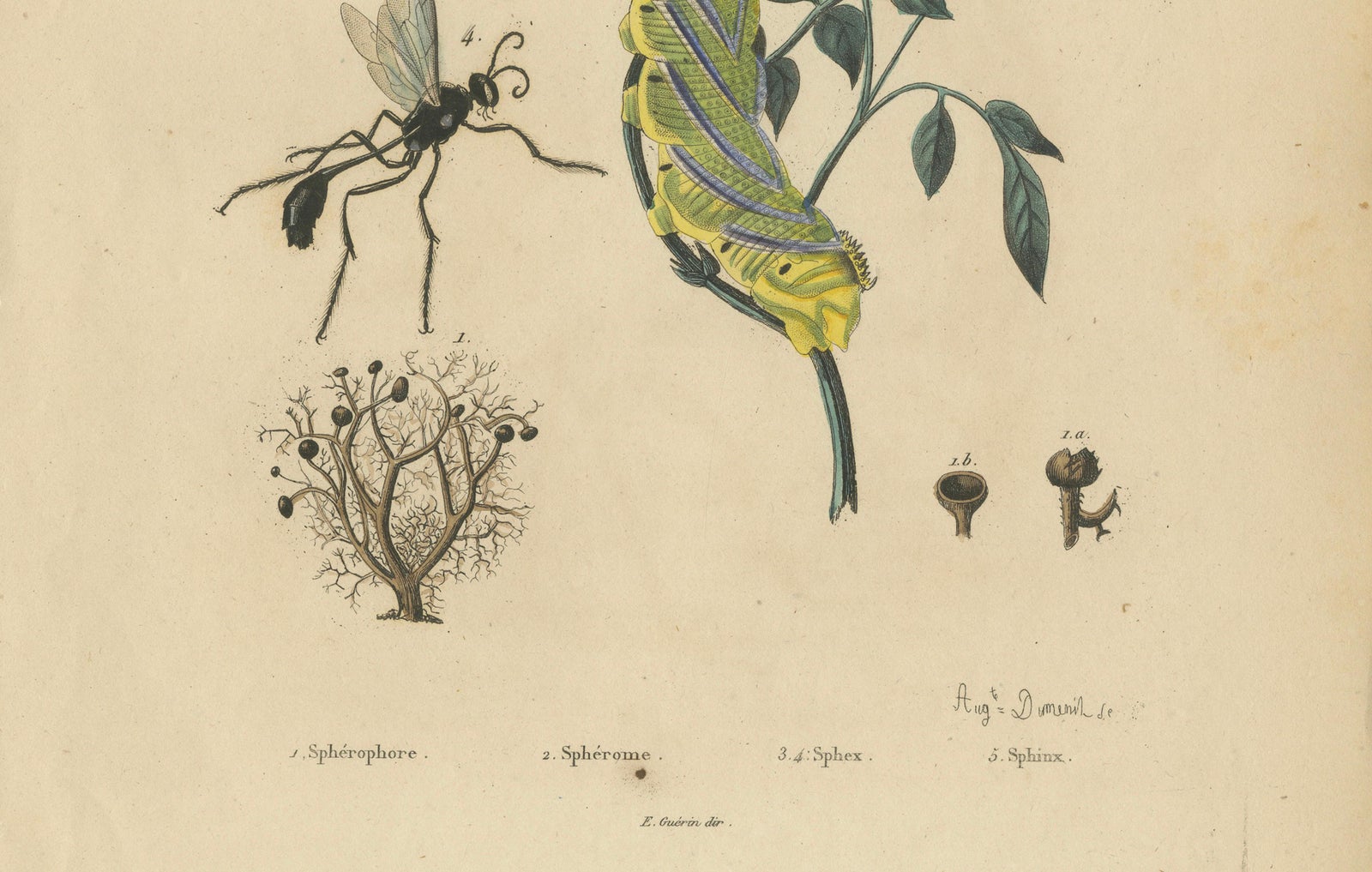
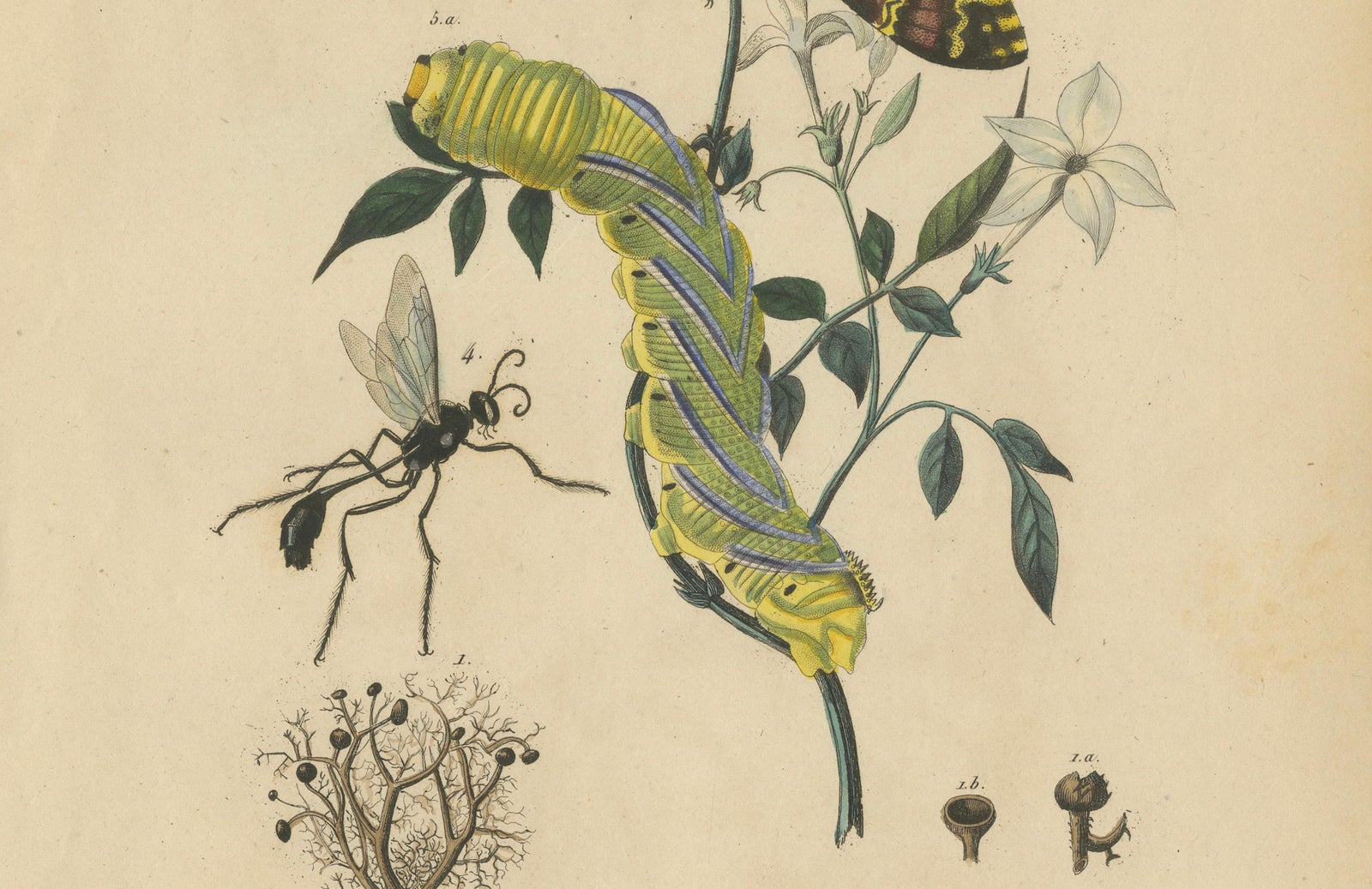
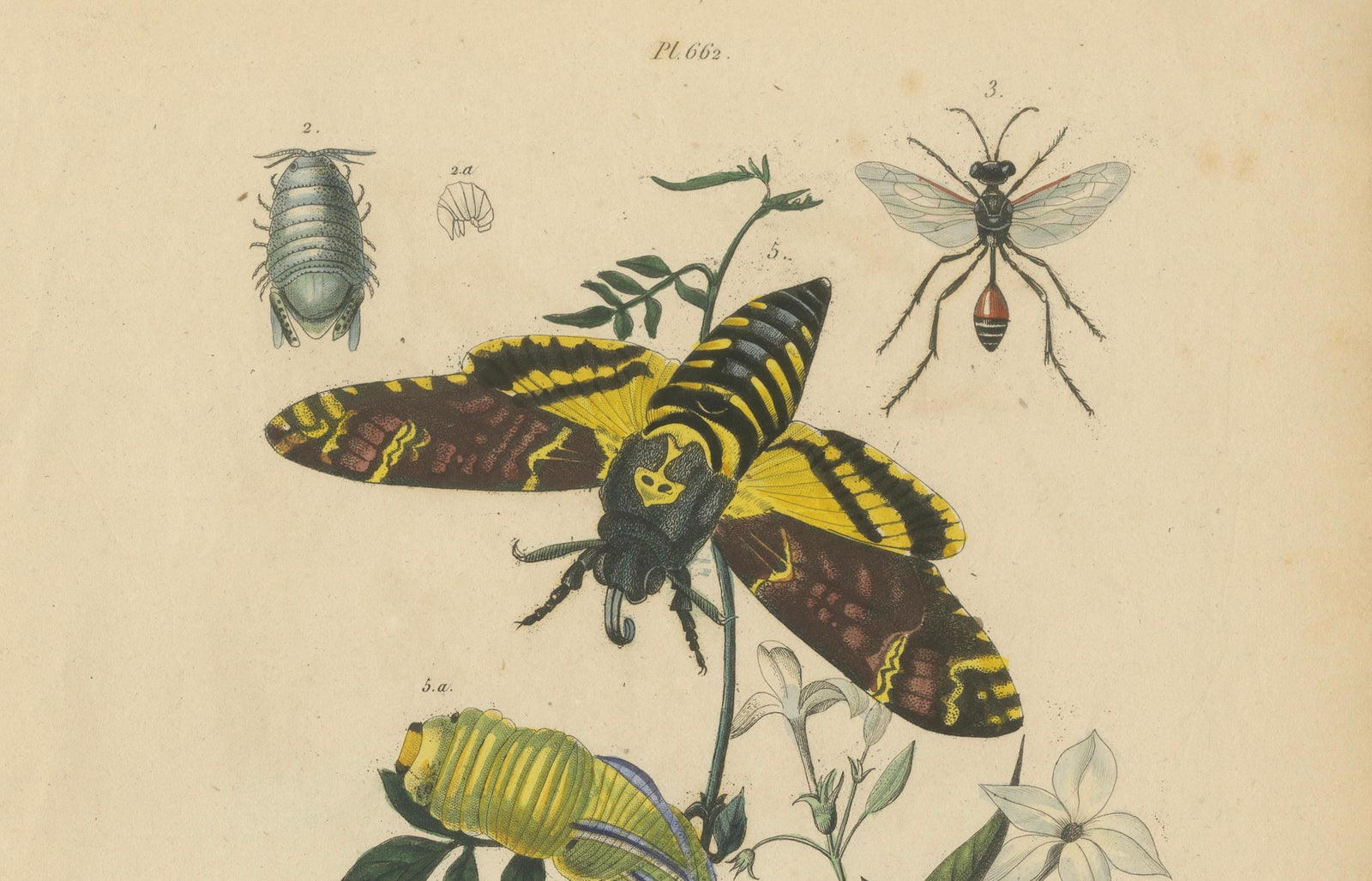
The first engraving centers around a dramatic yellow-and-brown sphinx moth with bold striped markings and richly patterned wings. Below it appears an enormous green caterpillar clinging to flowering stems, rendered with remarkable anatomical detail and subtle coloration. Additional insects, including wasp-like species and entomological specimen studies, surround the central composition, emphasizing the scientific nature of the plate while maintaining an elegant visual balance. The spacious arrangement and refined engraving technique create a composition that feels both scholarly and highly decorative.
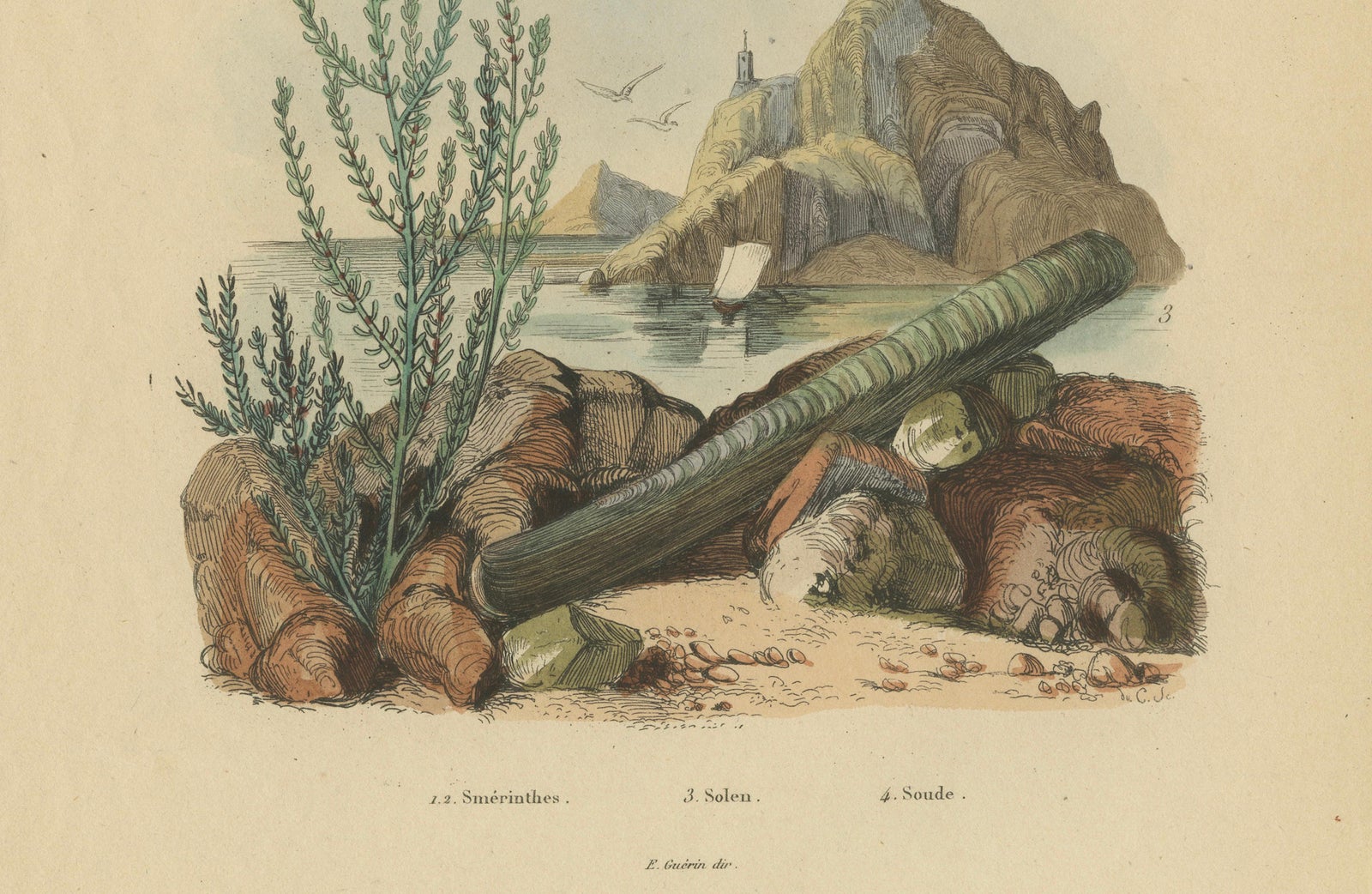
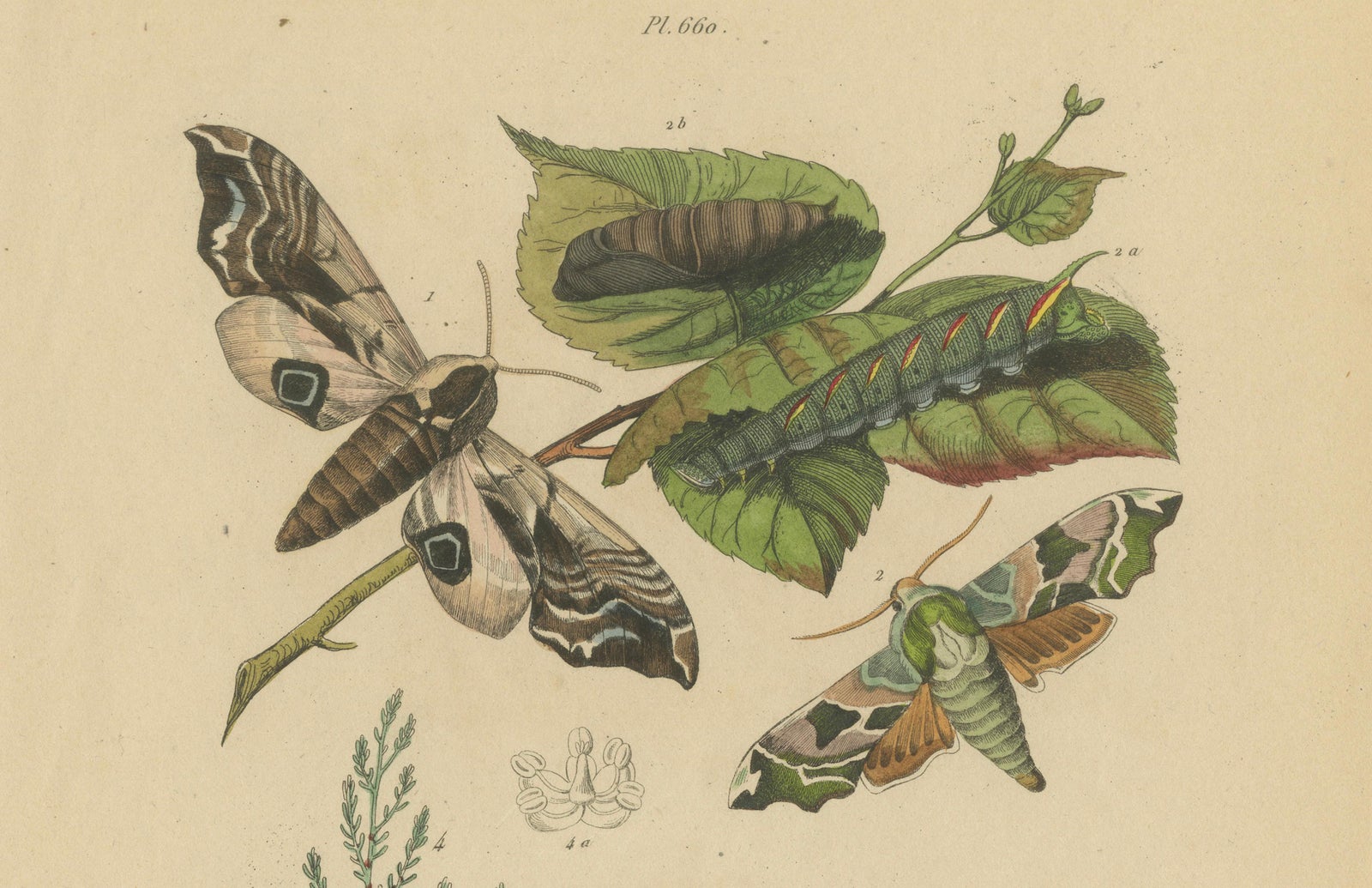
The second plate presents several sphinx moth species in a fascinating coastal and marine setting. Two striking moths with green, olive, and brown camouflage-like wing patterns hover above an arrangement of marine plants, shells, and coastal rocks. The composition includes detailed studies of caterpillars and chrysalis forms resting on leaves, illustrating the insects’ developmental stages in the great tradition of 19th-century zoological illustration. A romanticized rocky shoreline with distant seabirds enhances the atmospheric quality of the scene and reflects the period fascination with nature, exploration, and classification.
Both engravings were carefully hand-colored at the time of publication, with fine engraved linework and subtle tonal transitions throughout. The prints exemplify the high level of craftsmanship associated with Parisian natural history works of the 1830s and 1840s, when publishers sought to merge educational content with artistic beauty suitable for affluent interiors and collectors’ cabinets.
Today these engravings are especially sought after for their strong decorative qualities, cabinet-of-curiosity appeal, and sophisticated natural history imagery. The combination of exotic moths, caterpillars, botanical elements, and coastal scenery makes this pair particularly compelling for display.
Framing tip: Particularly effective framed together in matching dark walnut, ebonized, or gilt frames with wide cream or ivory mats. The pair works beautifully in studies, libraries, conservatories, or salon-style arrangements of natural history engravings.
Note: These prints are original antique engravings, not reproductions.
Technique: Antique hand-colored engravings
Maker: Auguste Duméril & Edmond Guérin, French, circa 1835