Close-ups
Framed and on the wall


Frame and rooms are illustrations of how the print could look; the description says what is included.
Original Antique Print of Tarantula, Spiders and Scorpions by Bertuch, c. 1790
€330 ($370, £280, €330)
Period original, not a reproduction.
Shipped from the Netherlands, flat, insured and tracked, worldwide. Returns accepted within 14 days.
- Date
- 1790
- Size
- 9.4 × 7.7 in (24 × 19.5 cm)
- Condition
- Good. Wear consistent with age and use. Good. Wear consistent with age and use. General age-related toning with scattered foxing, spotting and handling marks. Some discoloration and staining are visible, particularly in the margins. Minor edge wear and small imperfections.
- Period
- 18th century
- Artist or book
- Bertuch
- Section
- Insects and butterflies
- Reference
- f_51424582
Original Antique Print of Tarantula, Spiders and Scorpions by Bertuch, c. 1790
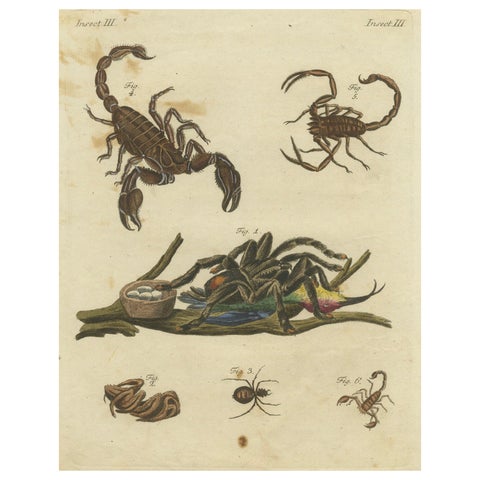
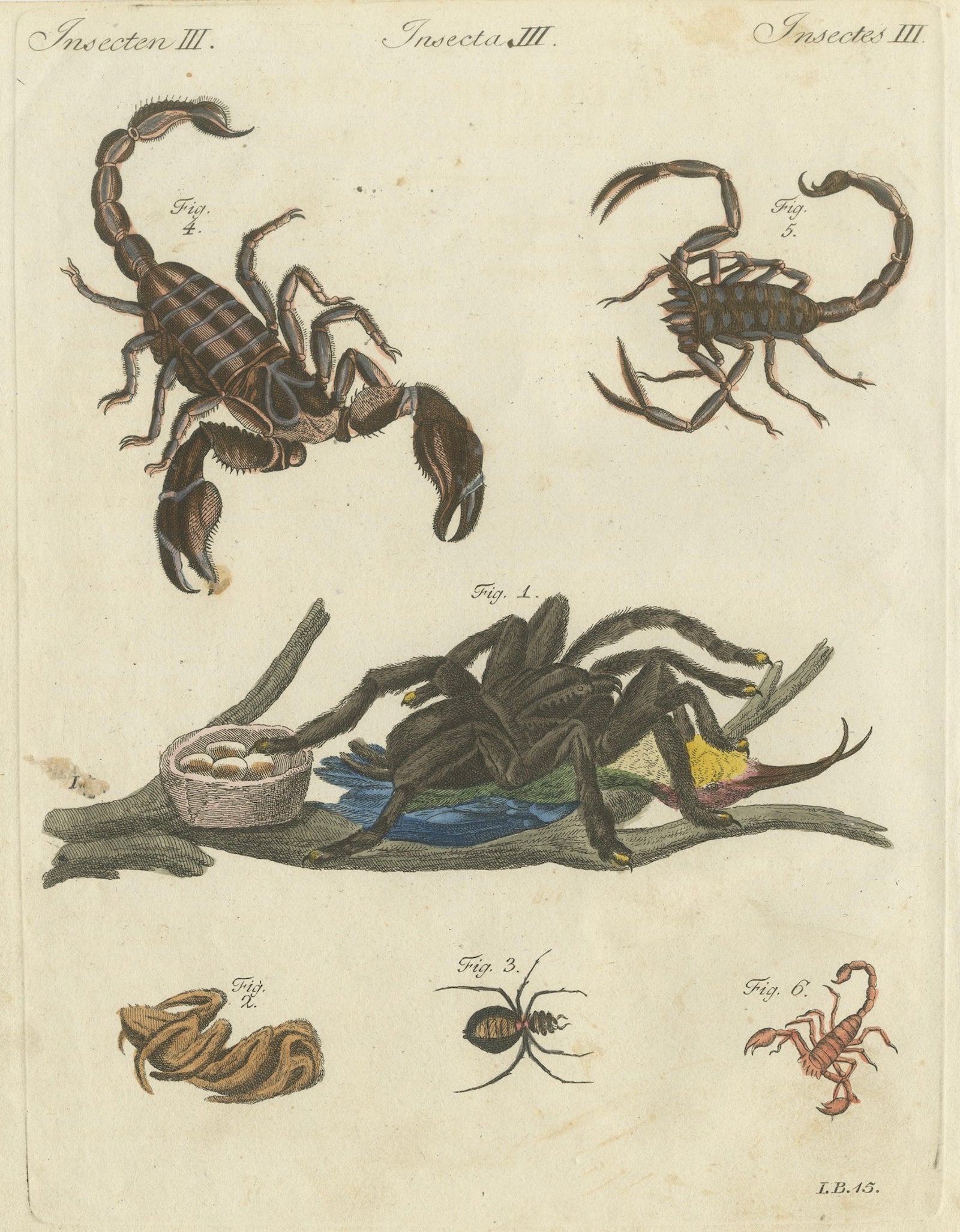
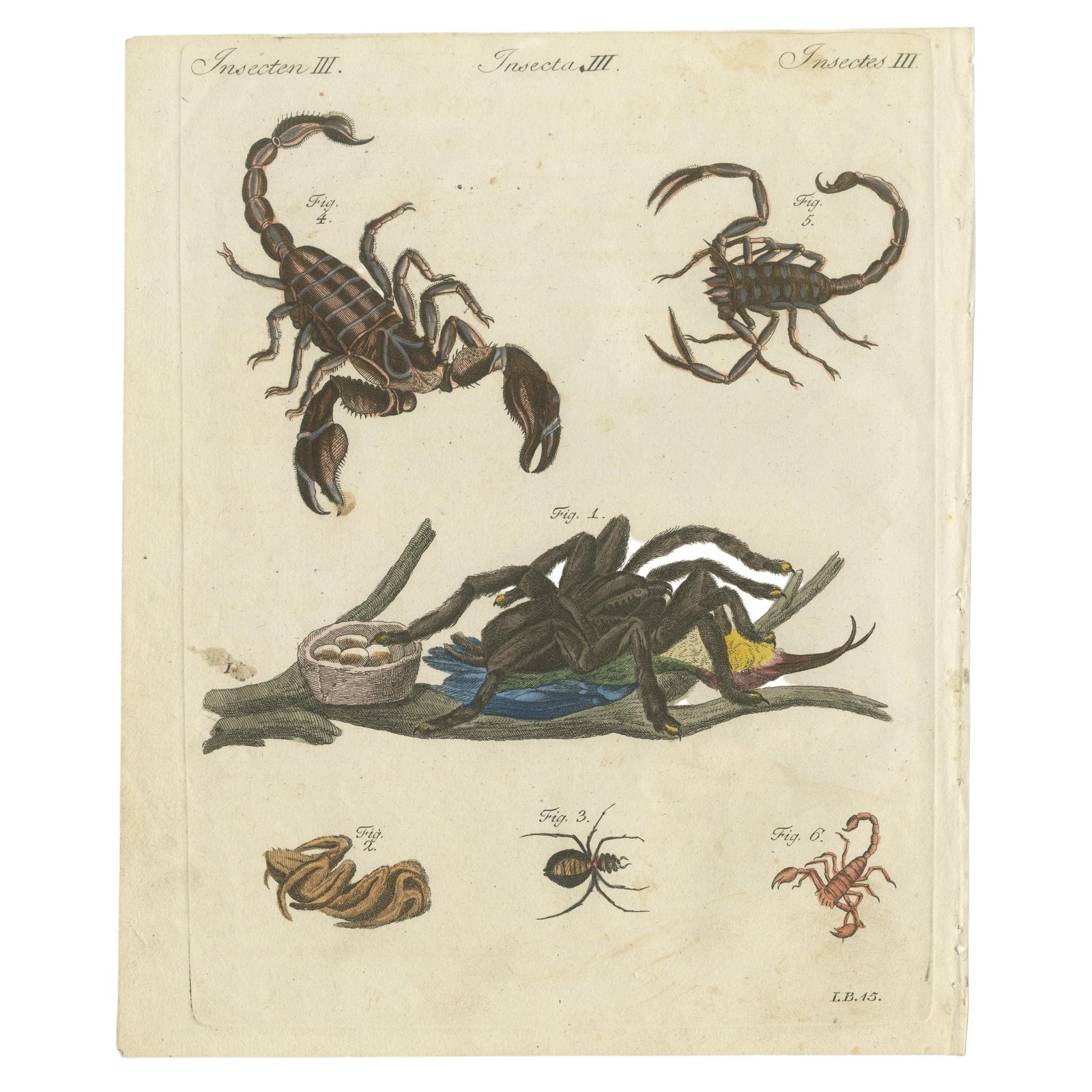
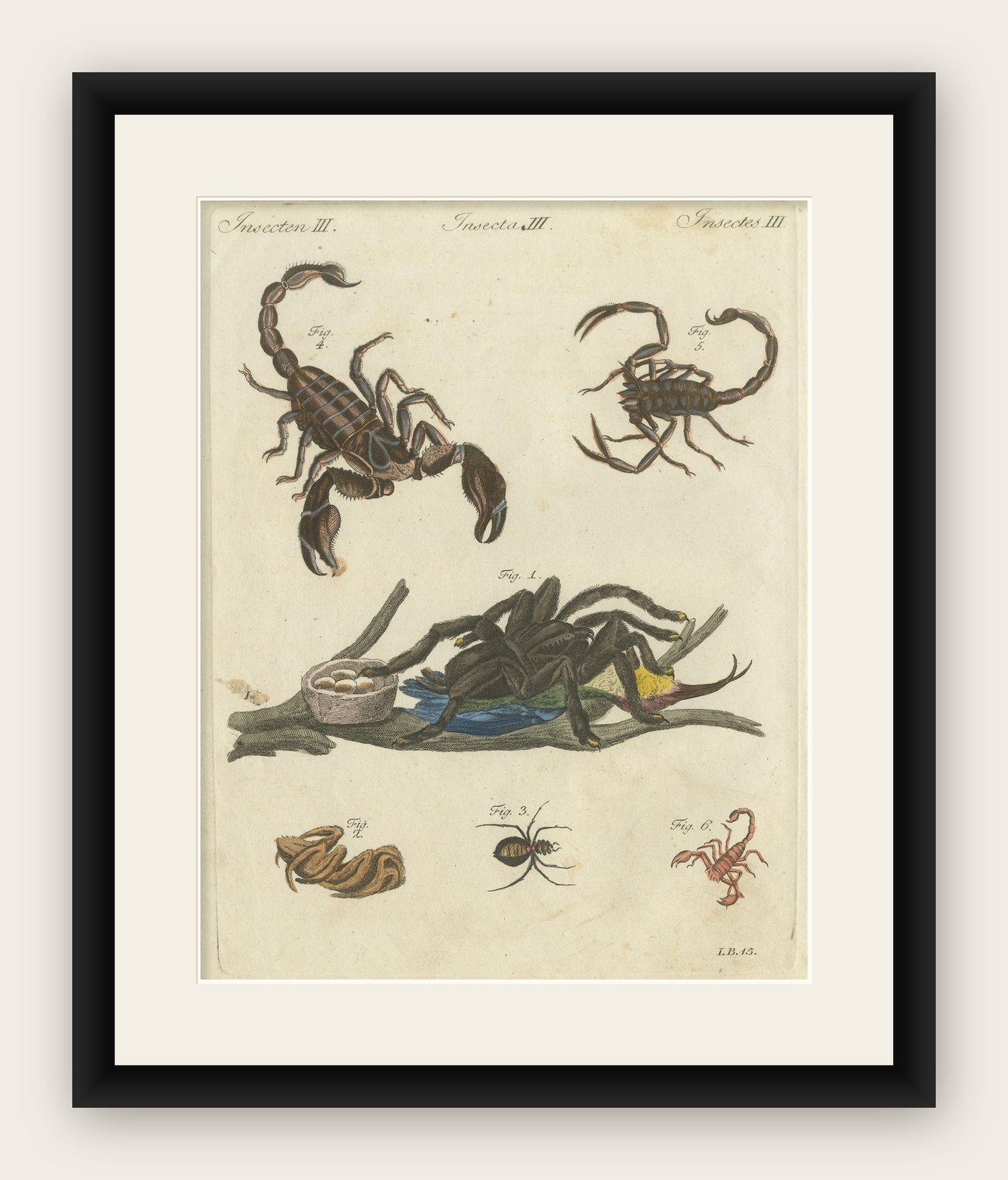
Original antique hand-colored copper engraving depicting a remarkable group of spiders and scorpions, published in Friedrich Justin Bertuch’s celebrated “Bilderbuch für Kinder” around the end of the 18th century.
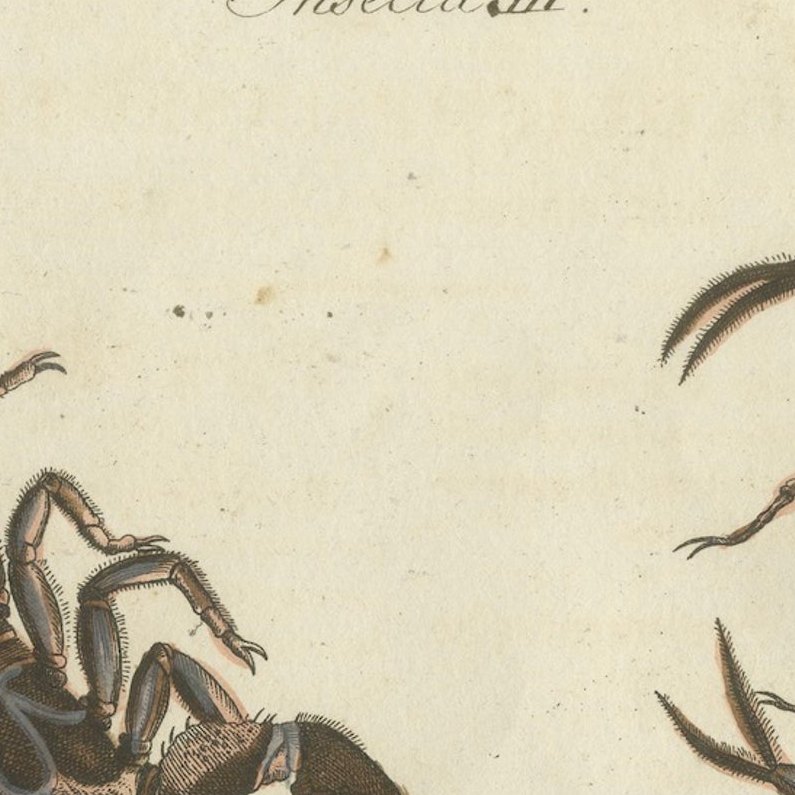
The plate is titled “Insecten III / Insecta III / Insectes III” and bears the reference “I.B.15” at lower right. It presents six different arachnid subjects, dominated by an enormous hairy spider and a large dark scorpion.
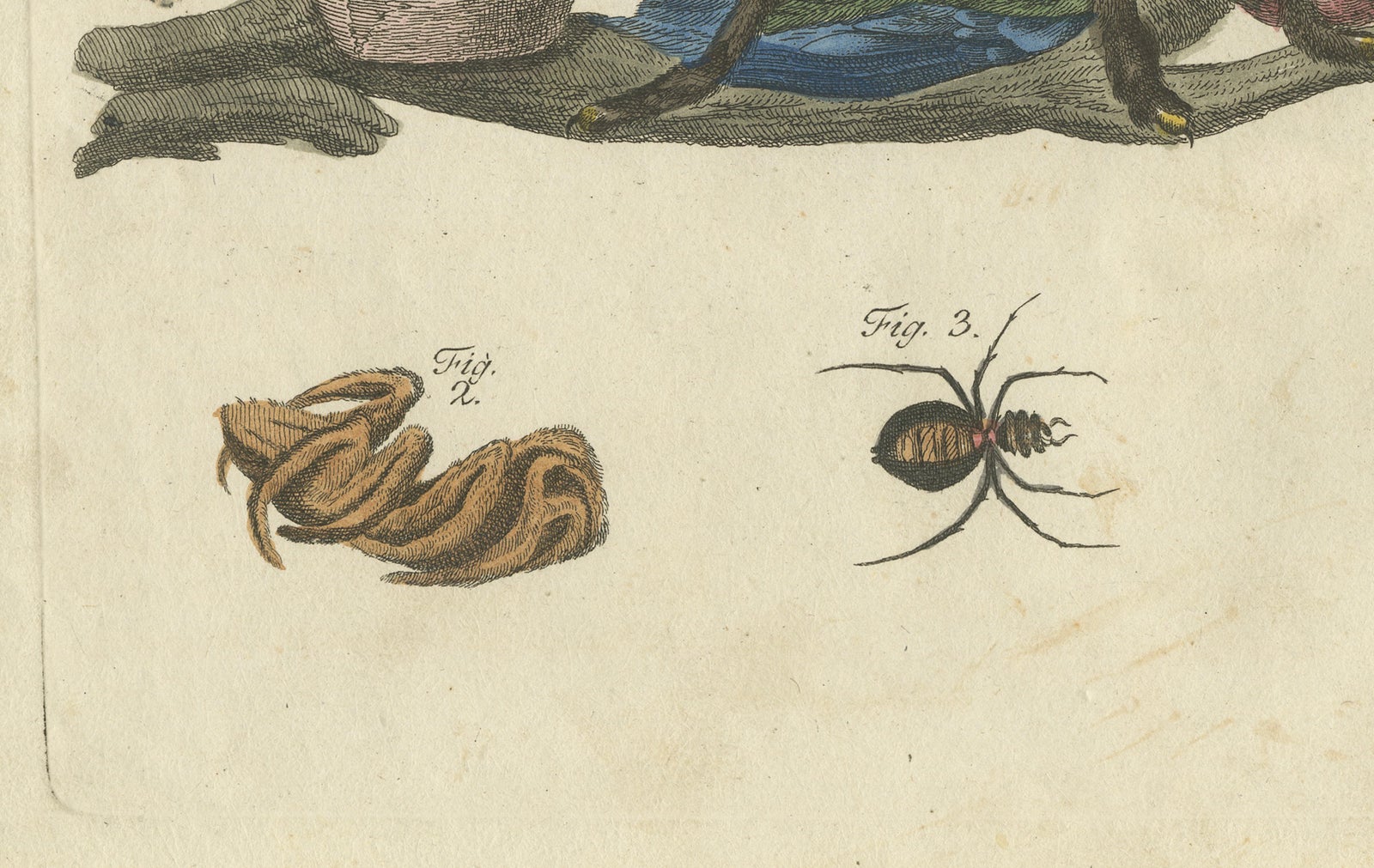
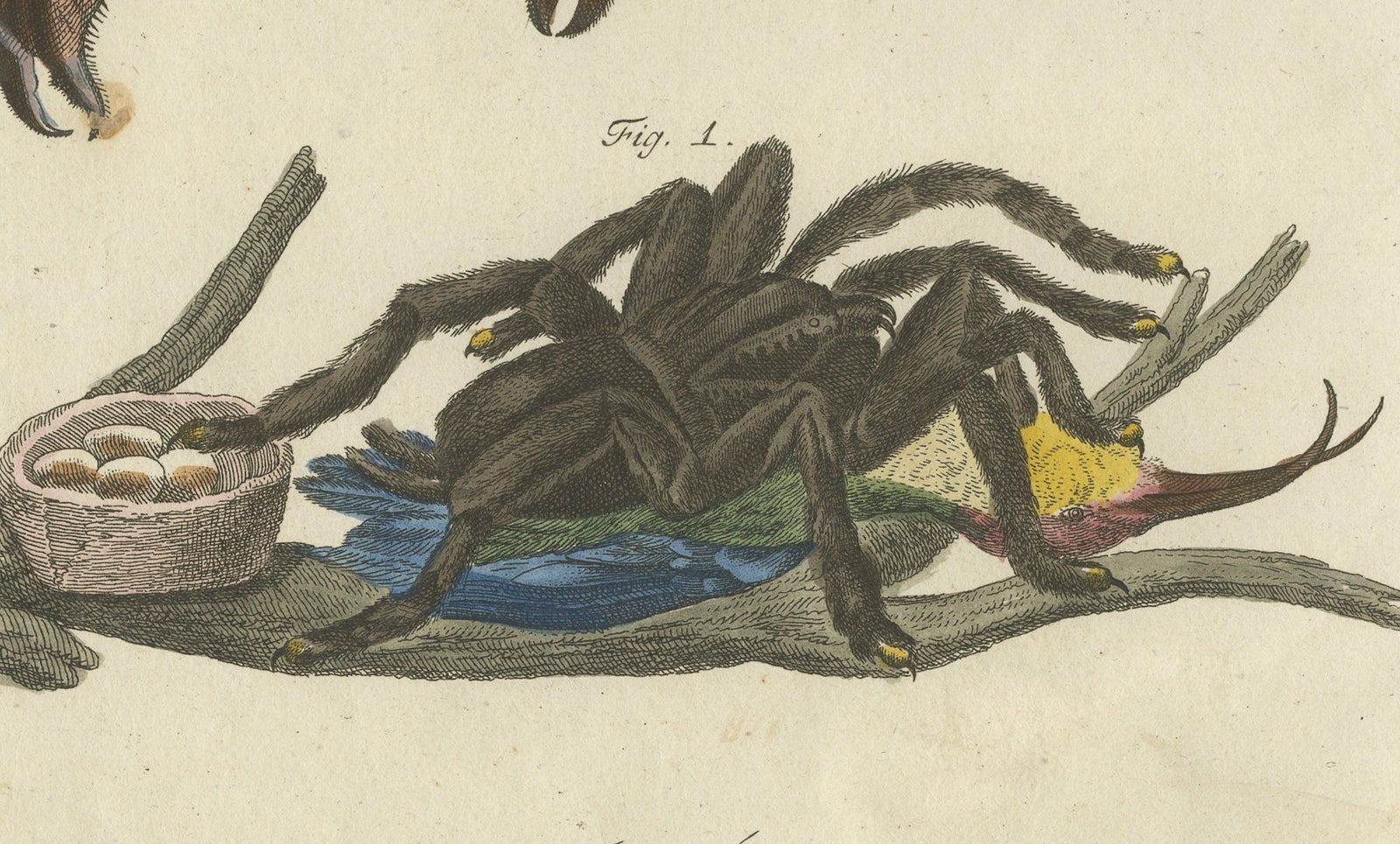
Fig. 1 depicts a spectacular large hairy spider or tarantula-type spider. It is shown beside a small nest-like structure containing eggs, providing an early natural-history representation of the animal together with its reproductive behavior.
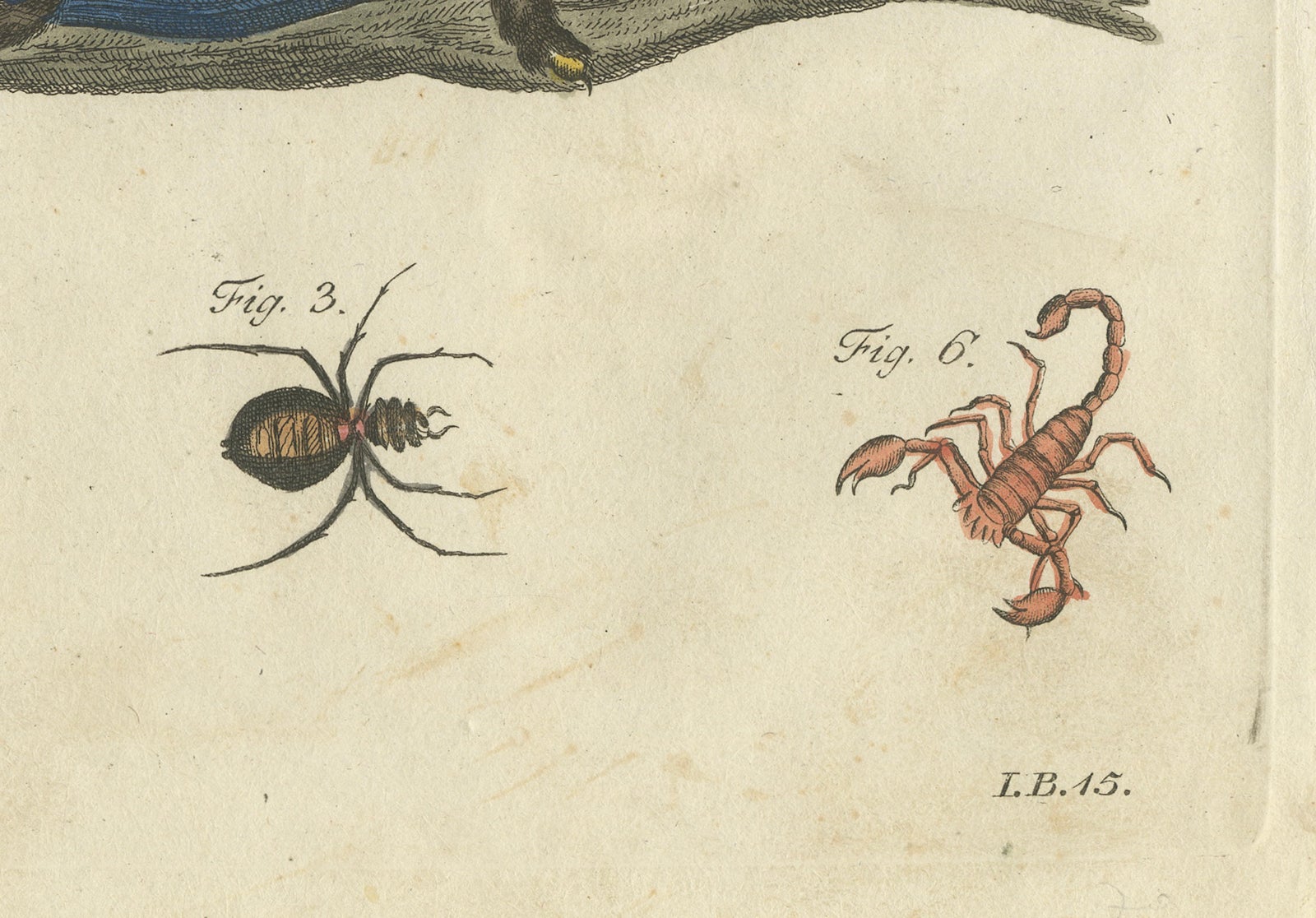
Fig. 2 shows a curled or contracted spider, while Fig. 3 depicts another smaller spider with long slender legs and a contrasting dark body.
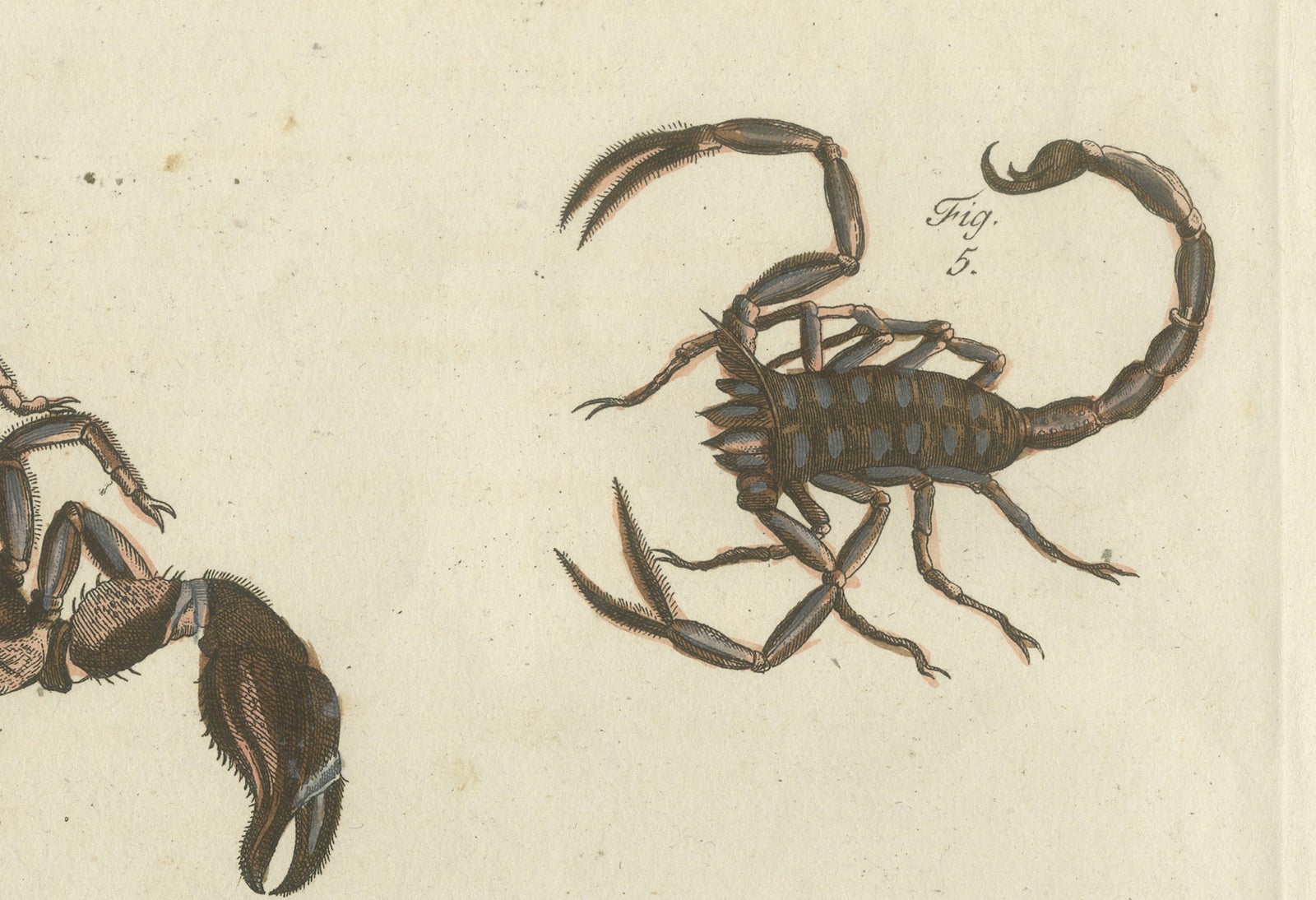
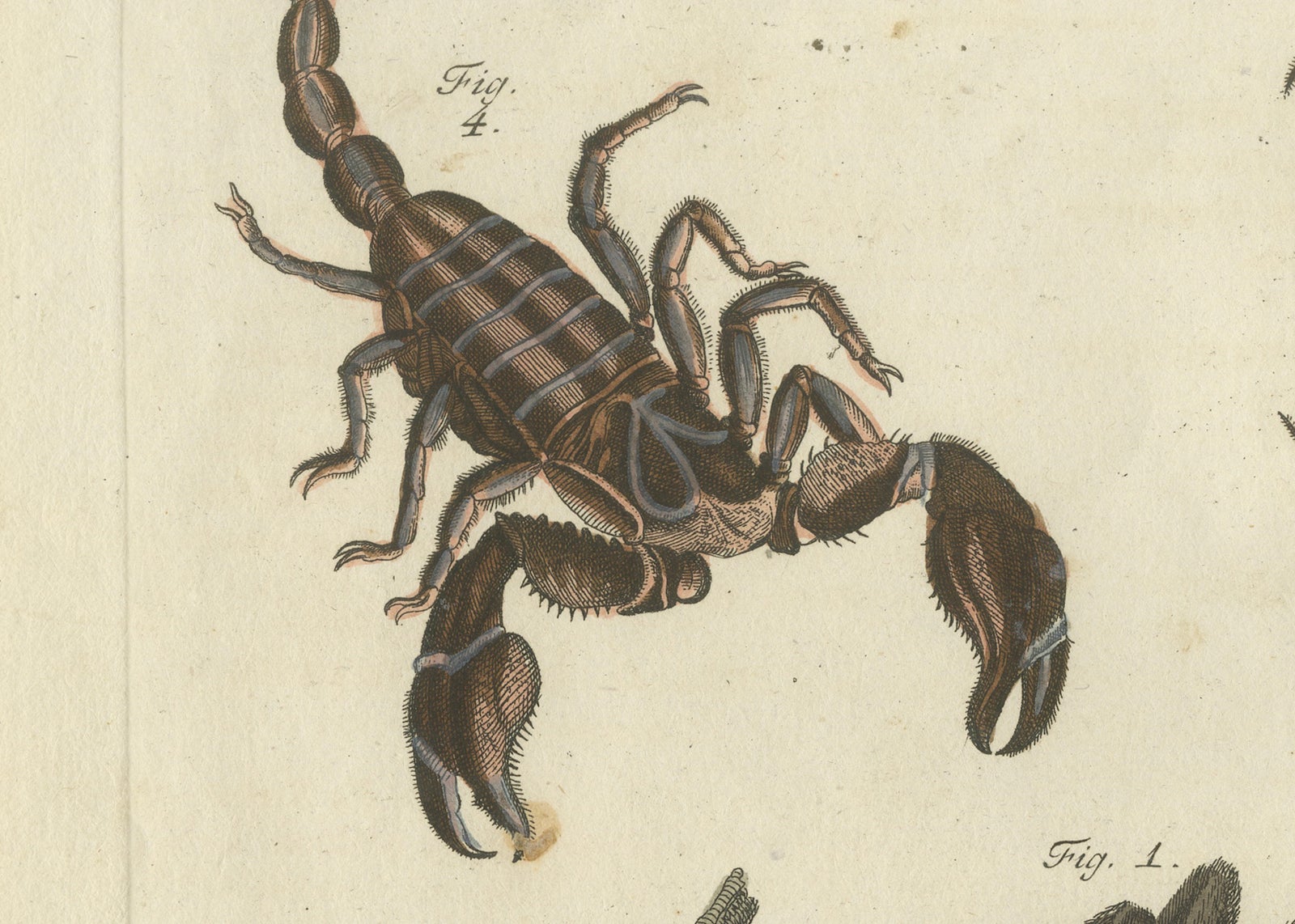
The remaining figures illustrate several different scorpions. Particularly impressive is Fig. 4 at upper left, a very large dark scorpion with powerful pincers and a prominently curved segmented tail terminating in its sting. Fig. 5 represents another dark scorpion of a different form, while Fig. 6 shows a considerably smaller specimen enhanced with reddish hand coloring.
The dramatic differences in size, anatomy and coloration reflect the fascination European naturalists had with exotic arachnids during the Enlightenment. Spiders, scorpions and related creatures were popular subjects in natural-history collections and cabinets of curiosities, where their unusual forms and reputedly dangerous nature attracted particular attention.
Although Bertuch classified these creatures within his historical section “Insecten,” spiders and scorpions are today classified as arachnids rather than insects. The terminology therefore provides an interesting glimpse into the changing classification of the natural world around 1800.
The engraving is enhanced with original hand coloring in shades of black, brown, red, blue, green and yellow. The huge black spider and imposing scorpion create an exceptionally strong composition, making this one of the more dramatic natural-history plates from the series.
Friedrich Justin Bertuch (1747–1822) was a German publisher, writer and patron of the arts. His monumental “Bilderbuch für Kinder” (Picture Book for Children), published in Weimar from 1790 onward, became one of the great illustrated educational encyclopedias of its period. Its hundreds of finely engraved plates introduced readers to zoology, botany, geography, science, technology, antiquity and cultures from around the world.
Creator:
Friedrich Justin Bertuch (1747–1822)
Source:
Bilderbuch für Kinder
Plate:
Insecten III / Insecta III / Insectes III
Reference:
I.B.15
Subject:
Tarantula-Type Spider, Spiders and Scorpions
Place of Publication:
Weimar, Germany
Date of Manufacture:
Circa 1790
Period:
Late 18th Century
Style:
Neoclassical, In the Period of
Medium:
Original hand-colored copper engraving on paper
Condition:
Good. Wear consistent with age and use. General age-related toning with scattered foxing, spotting and handling marks. Some discoloration and staining are visible, particularly in the margins. Minor edge wear and small imperfections consistent with age. Original hand coloring remains attractive. Please refer to the photographs for further details of condition.
Please note:
This is an original antique engraving from the late 18th century, not a modern reproduction. The print is sold unframed. Framed images or interior views, if shown, are for presentation and inspiration only.
Other companion insect, arachnid and natural-history plates from Bertuch’s “Bilderbuch für Kinder” are also available separately.
Keywords:
antique spider print, tarantula print, antique scorpion print, spider engraving, scorpion engraving, arachnid print, antique entomology, natural history print, zoological engraving, cabinet of curiosities, curiosity cabinet, gothic decor, scientific illustration, Bertuch print, Friedrich Justin Bertuch, hand colored engraving, 18th century natural history