Close-ups
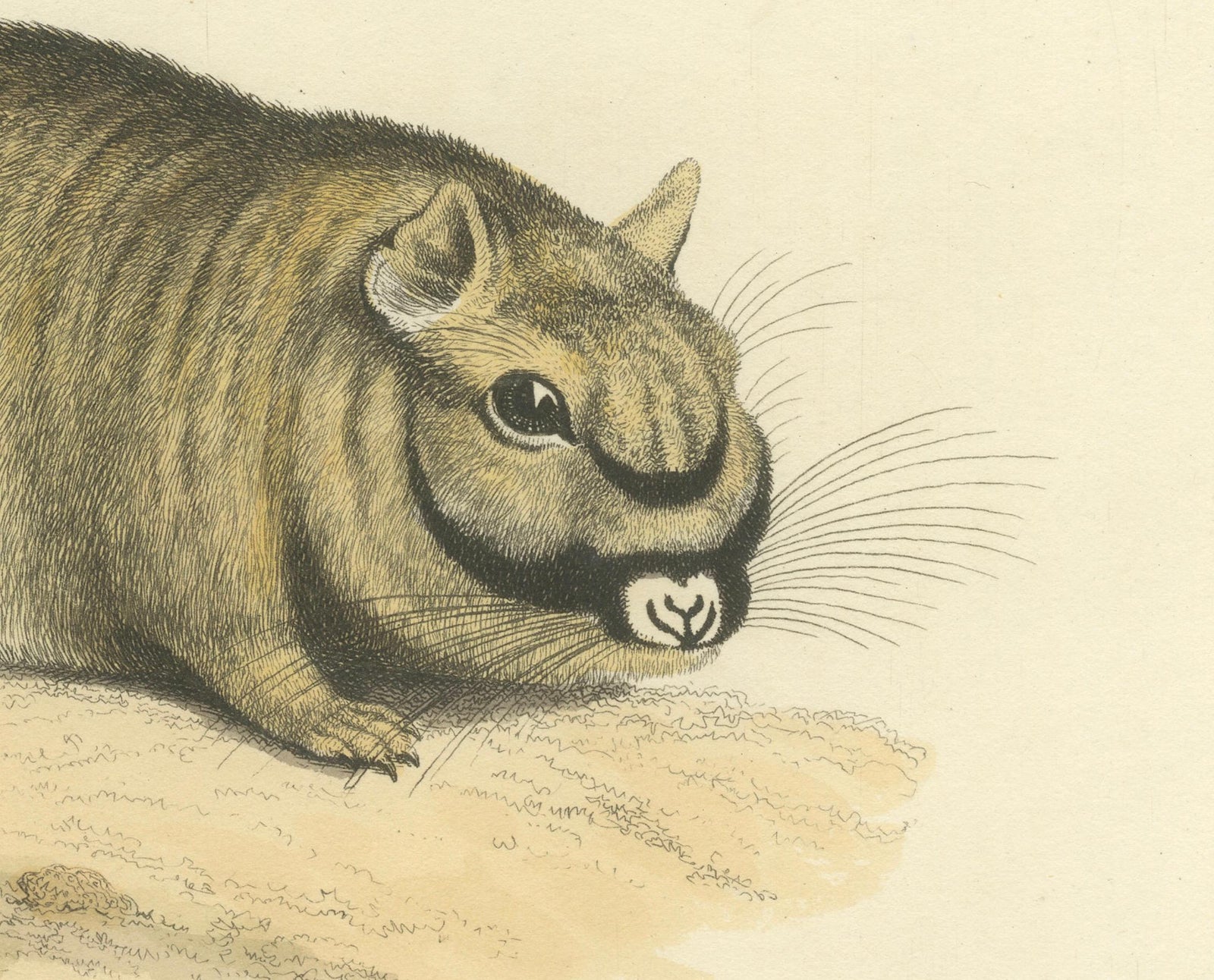
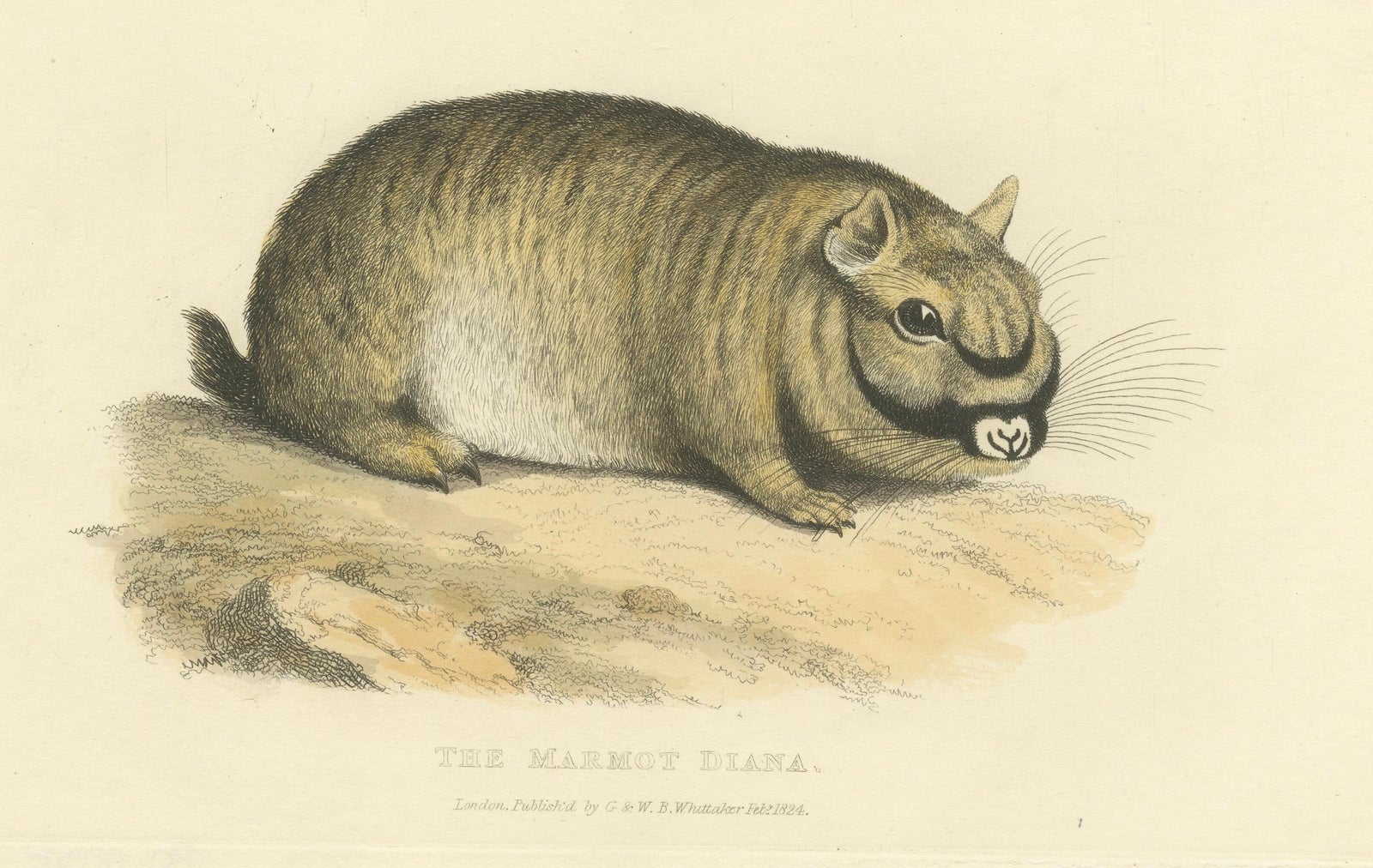
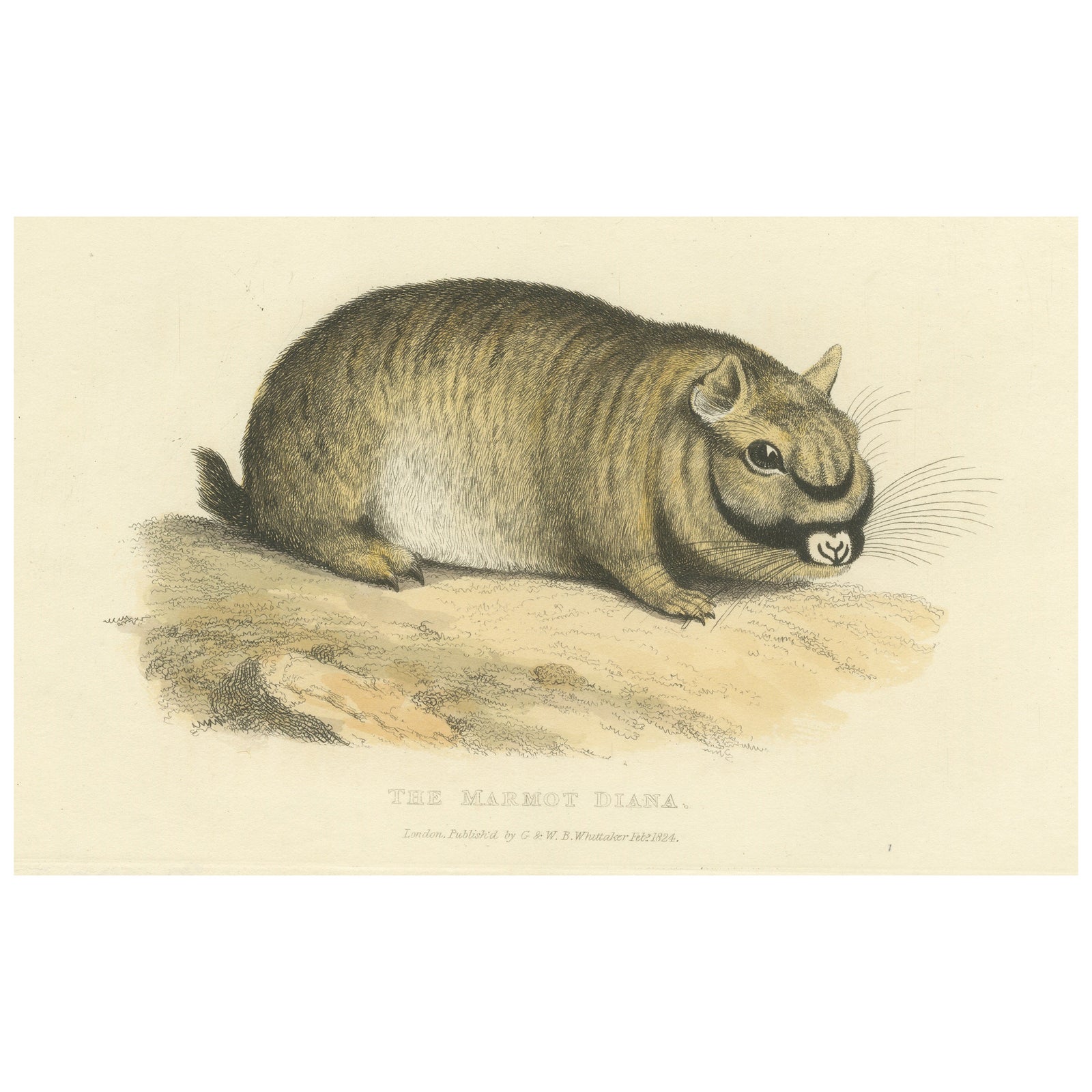
Original Antique Print of Marmot Diana, an unknown variety of a Groundhog, 1824
£160 ($215, €190)
Period original, not a reproduction.
Shipped from the Netherlands, flat, insured and tracked, worldwide. Returns accepted within 14 days.
- Date
- 1824
- Size
- 5.6 × 9.4 in (14.3 × 24 cm)
- Condition
- Good. General age-related toning. Minor wear and soiling, blank verso. Very tiny tear upper margin. Blank verso. Please study image carefully.
- Period
- Early 19th century
- Section
- Mammals
- Reference
- f_38710232
- Color
- Hand colored
What the condition grades mean
- Excellent
- Bright and clean, with no faults worth mentioning.
- Very good
- Only light signs of age, such as faint toning.
- Good
- Normal signs of age for a sheet of this period: toning, some foxing, small marks or neat old repairs.
- Fair
- Clear faults such as staining, tears or repairs, priced to match.
Every fault we see is written in the condition note, and the whole sheet is shown uncropped in the photos.
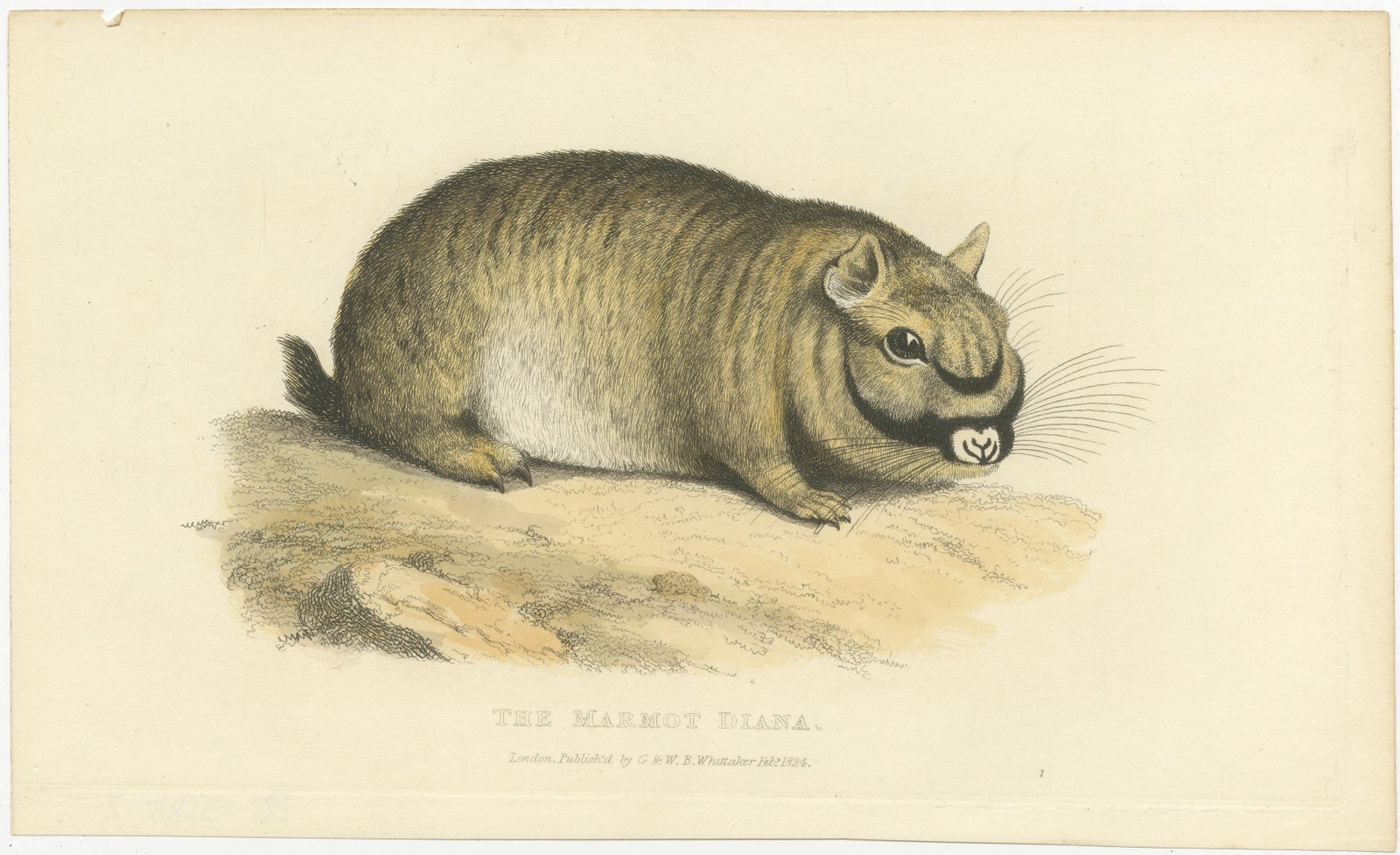
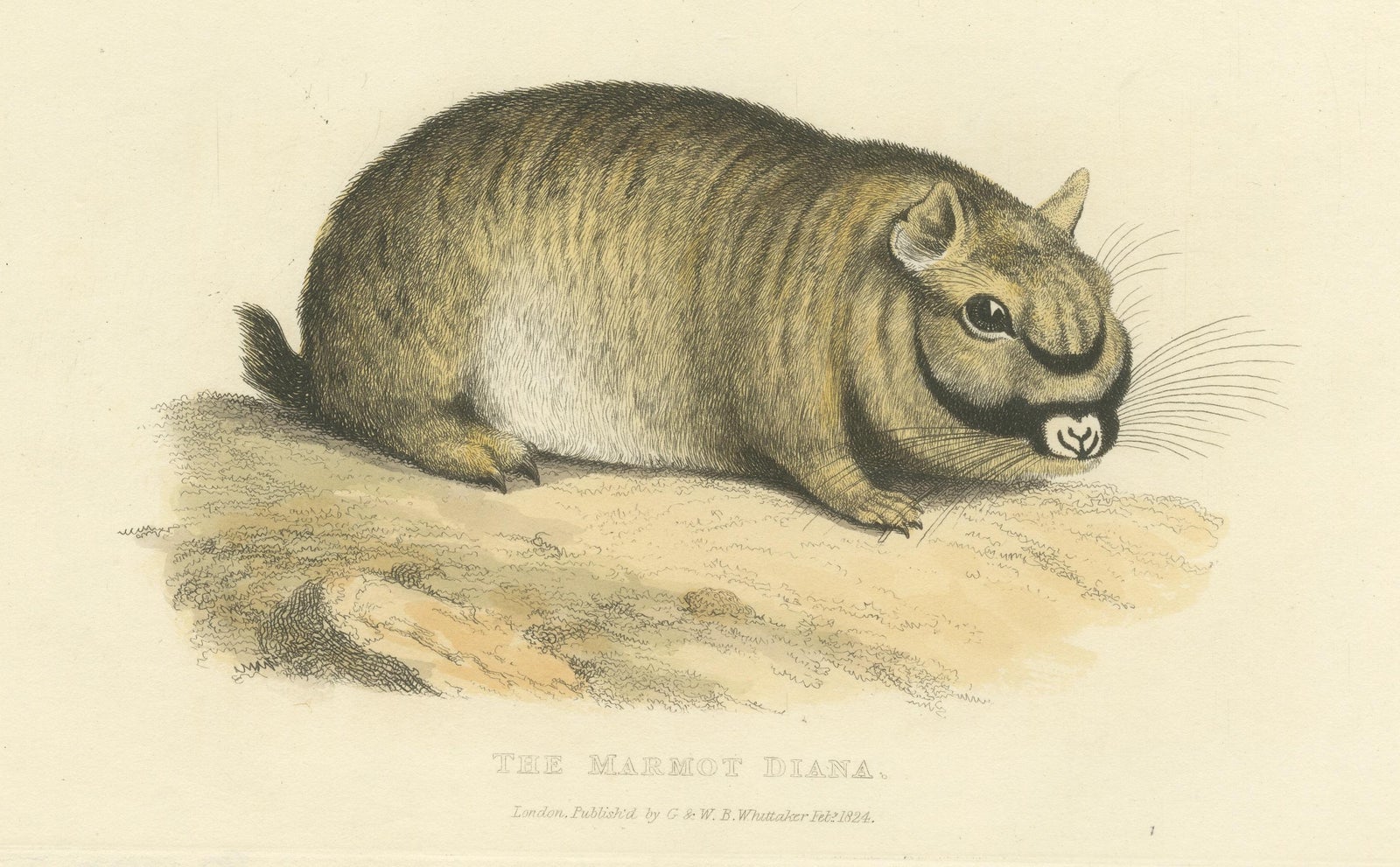
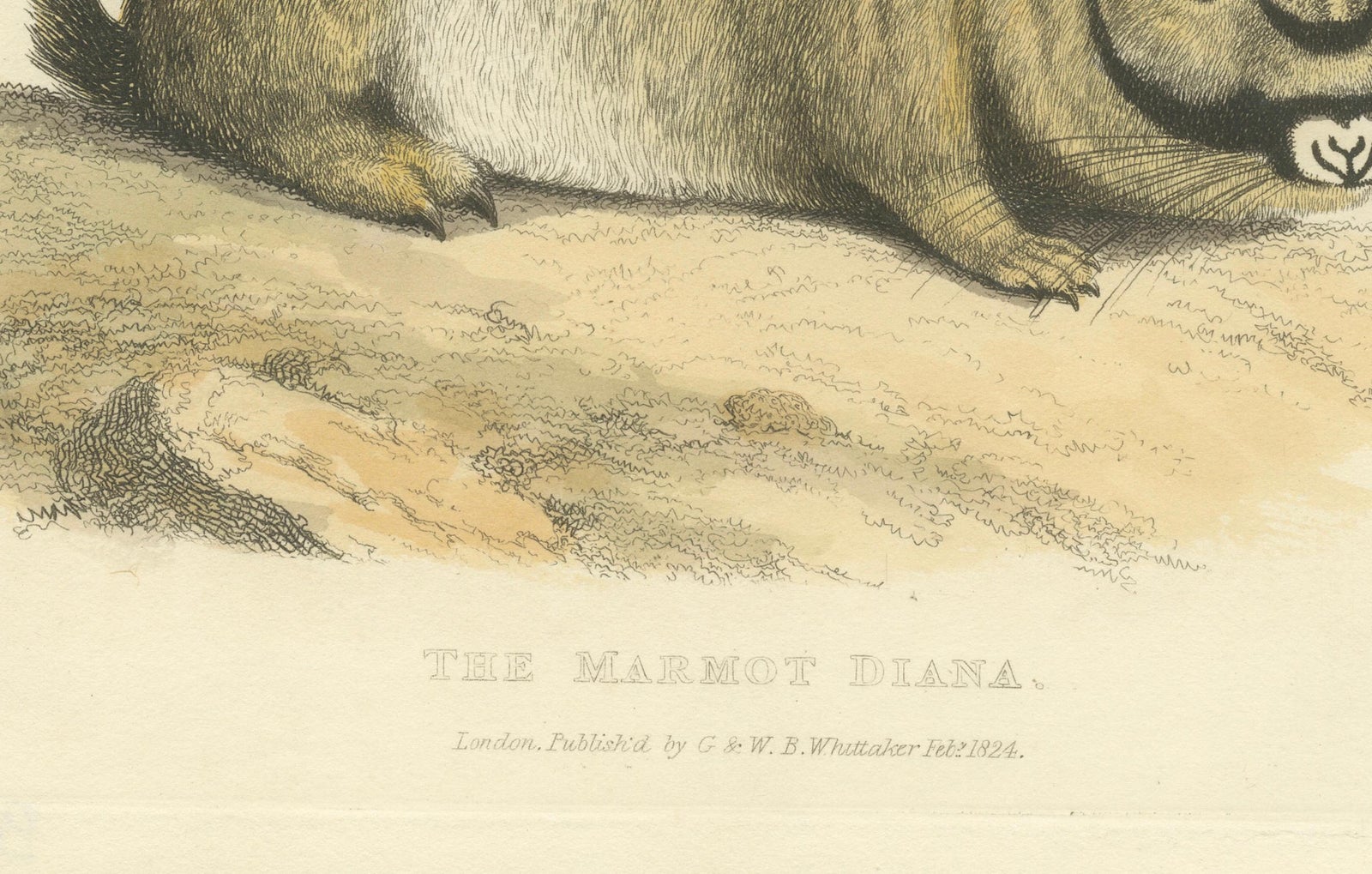
The antique print titled "The Marmot Diana" is a charming hand-colored illustration of a groundhog or prairie dog. It depicts the creature in a restful pose, on what appears to be a rocky outcrop. The animal is shown with a robust and rounded body, indicative of the marmot family, which is known for their stocky build and short limbs. Its fur is colored with varying shades suggesting a soft and dense texture, and its face features prominent whiskers and a distinctive white patch, lending character and individuality to the illustration.
This print is based on a specimen that was drawn by Howitt at Exeter-Change, a noted menagerie in London during the early 19th century, where many exotic animals were kept for public display and for artists to study. The specific species or variety of marmot, referred to here as "Diana," may have been less well known or classified at the time, leading to the "unknown variety" description.
Published by G. & W.B. Whittaker around 1824, this work is an excellent representation of early 19th-century natural history illustration practices. The Whittakers were known publishers of the time, contributing to the era's expanding knowledge and public interest in wildlife and natural sciences. The hand coloring technique used in this print would have brought the image to life for contemporary viewers, offering a glimpse into the diversity of the animal kingdom as understood in that period.