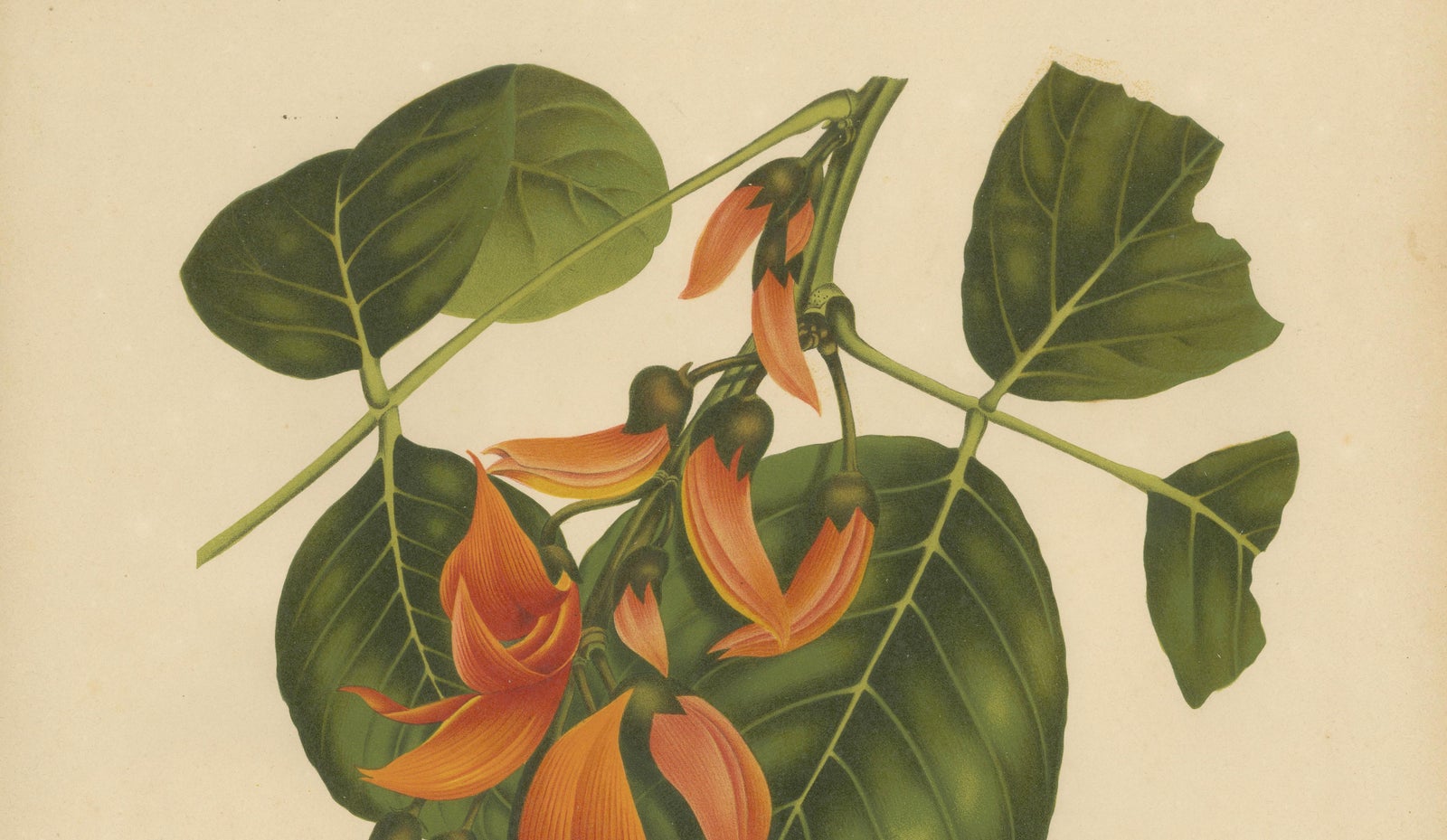
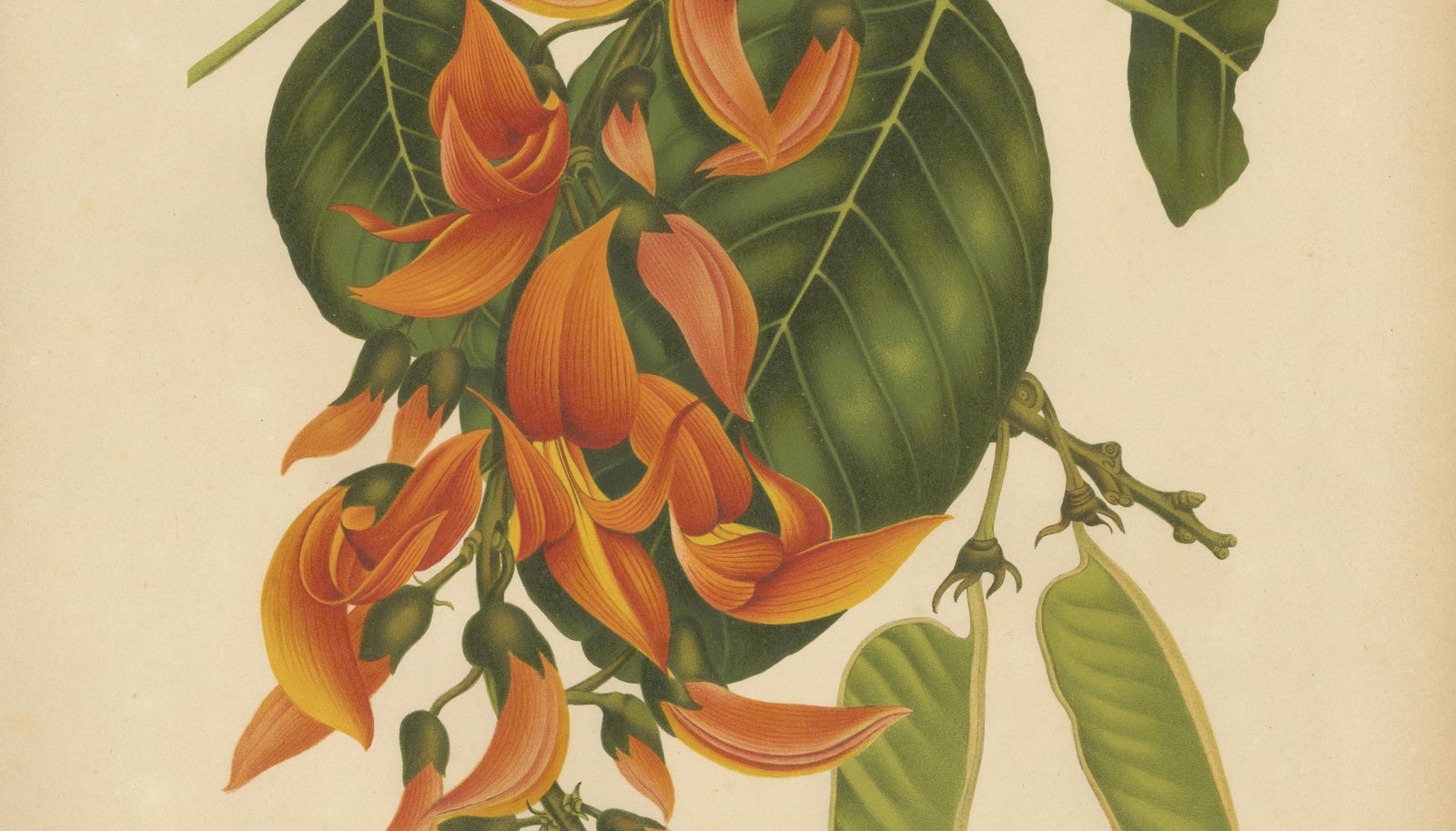
Close-ups
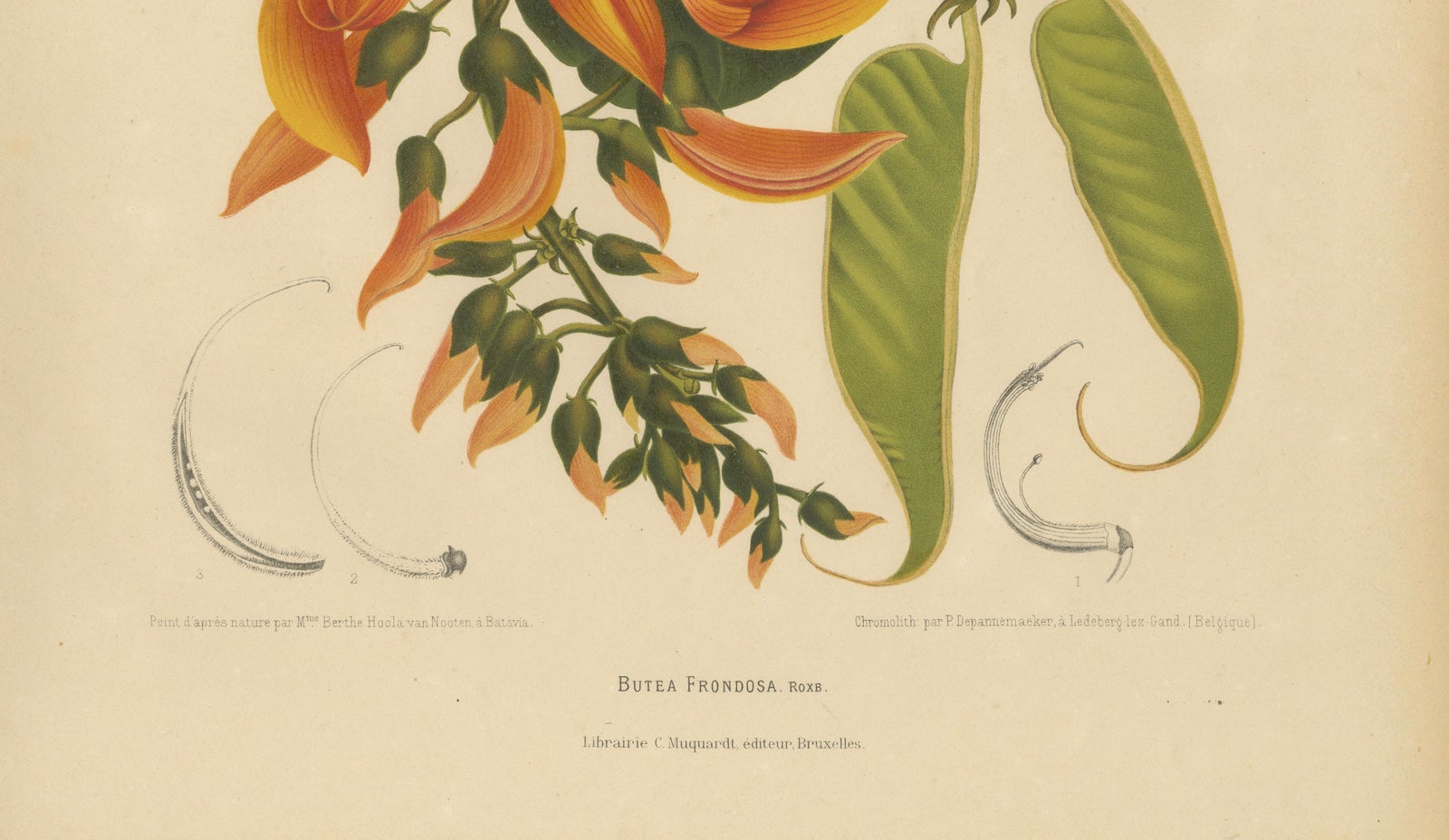
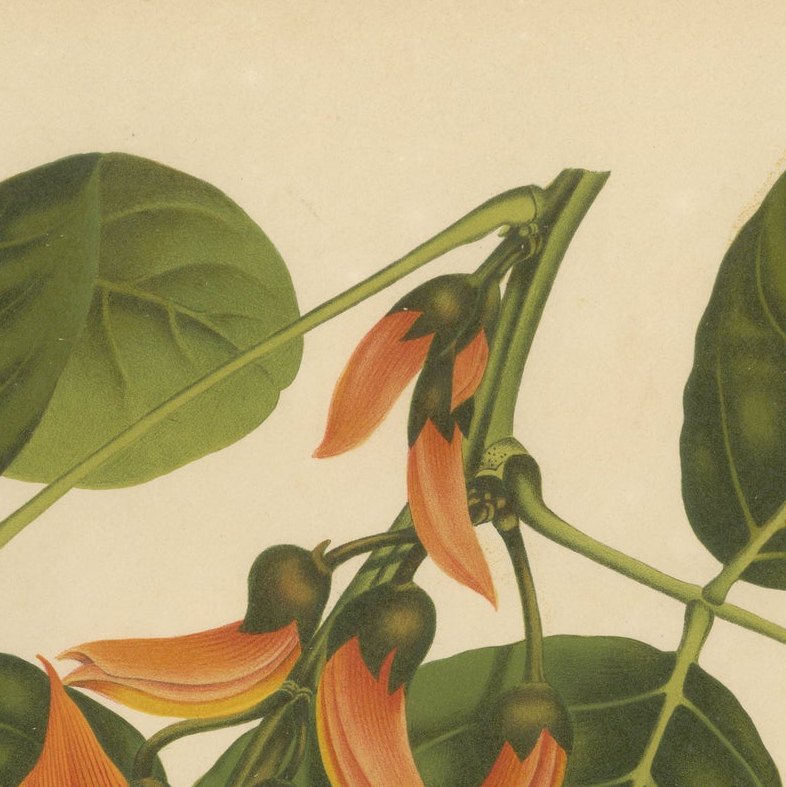
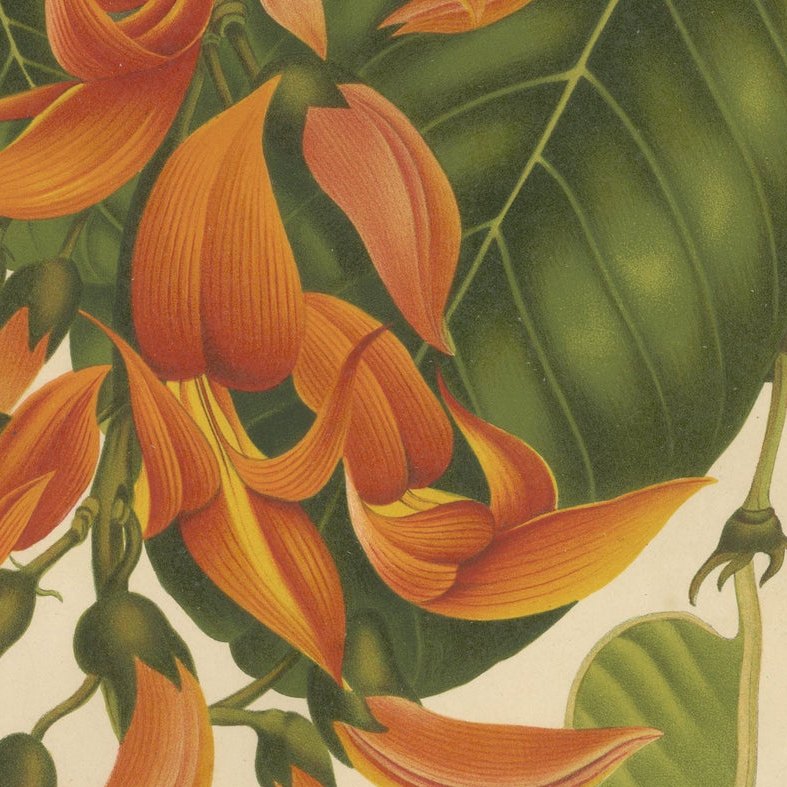
Framed and on the wall
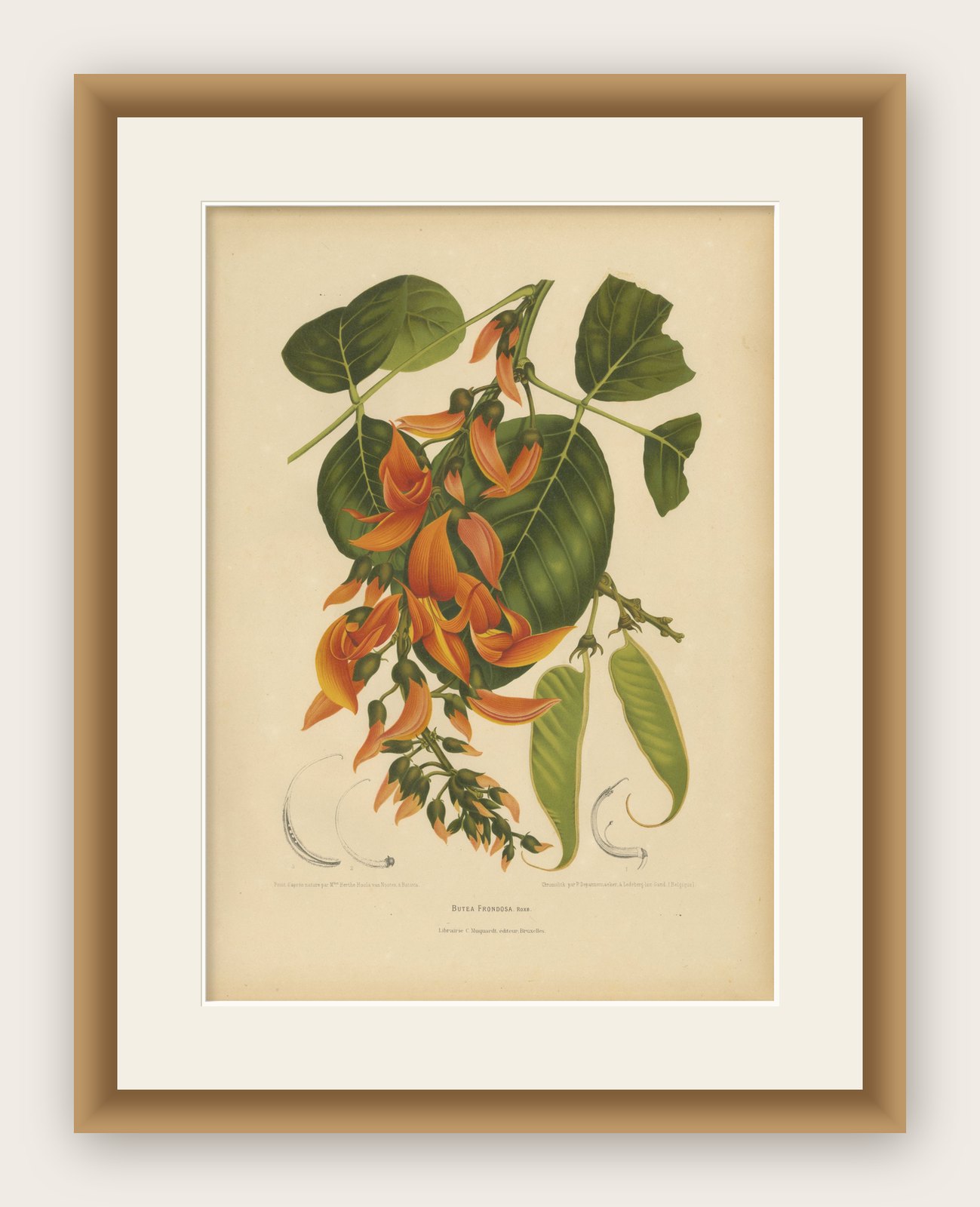
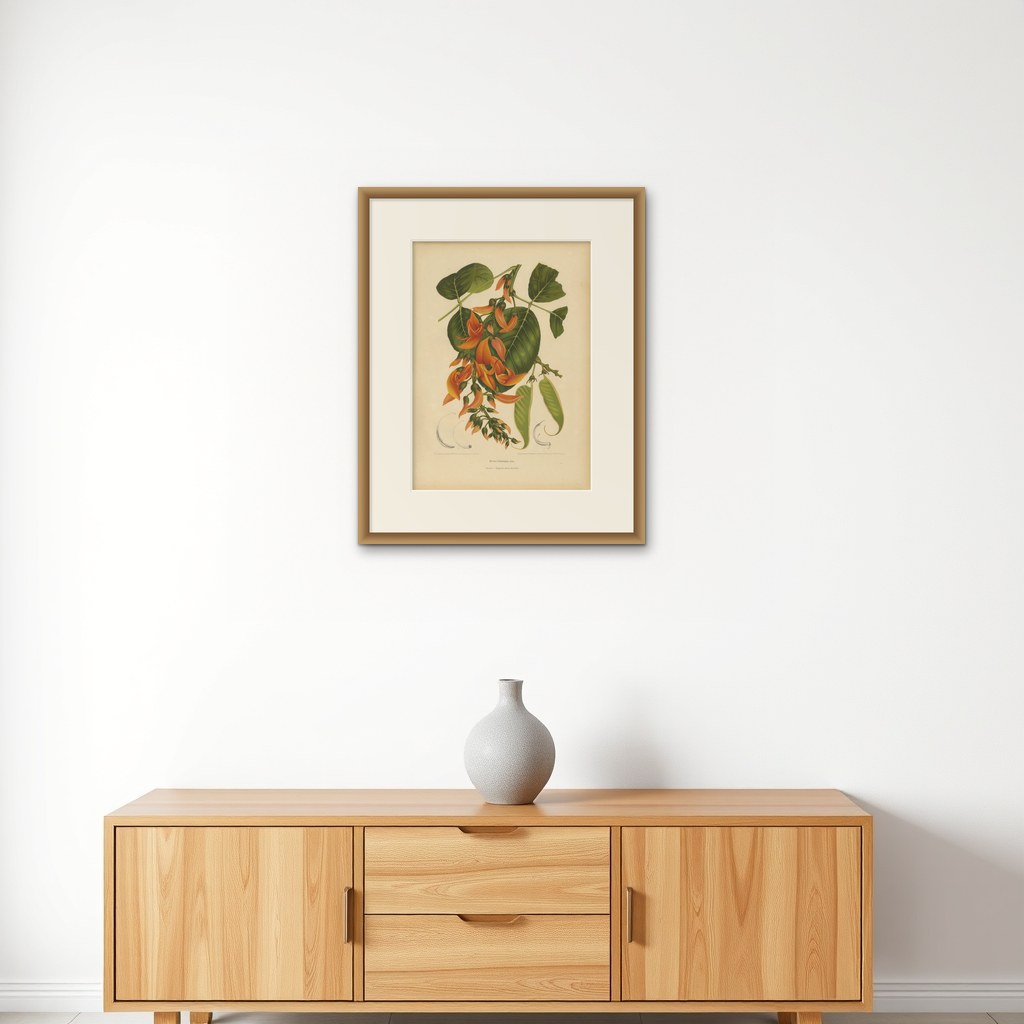

Frame and rooms are illustrations of how the print could look; the description says what is included.
Original Antique Flame of the Forest Botanical Chromolithograph, ca.1880
€695 ($785, £590, €695)
Period original, not a reproduction.
Shipped from the Netherlands, flat, insured and tracked, worldwide. Returns accepted within 14 days.
- Date
- 1880
- Size
- 21.9 × 15.7 in (55.5 × 40 cm)
- Condition
- Good. Good antique condition with age-related toning and minor foxing consistent with age. Please examine the photographs carefully.
- Period
- Late 19th century
- Section
- Botanical
- Reference
- f_50940172
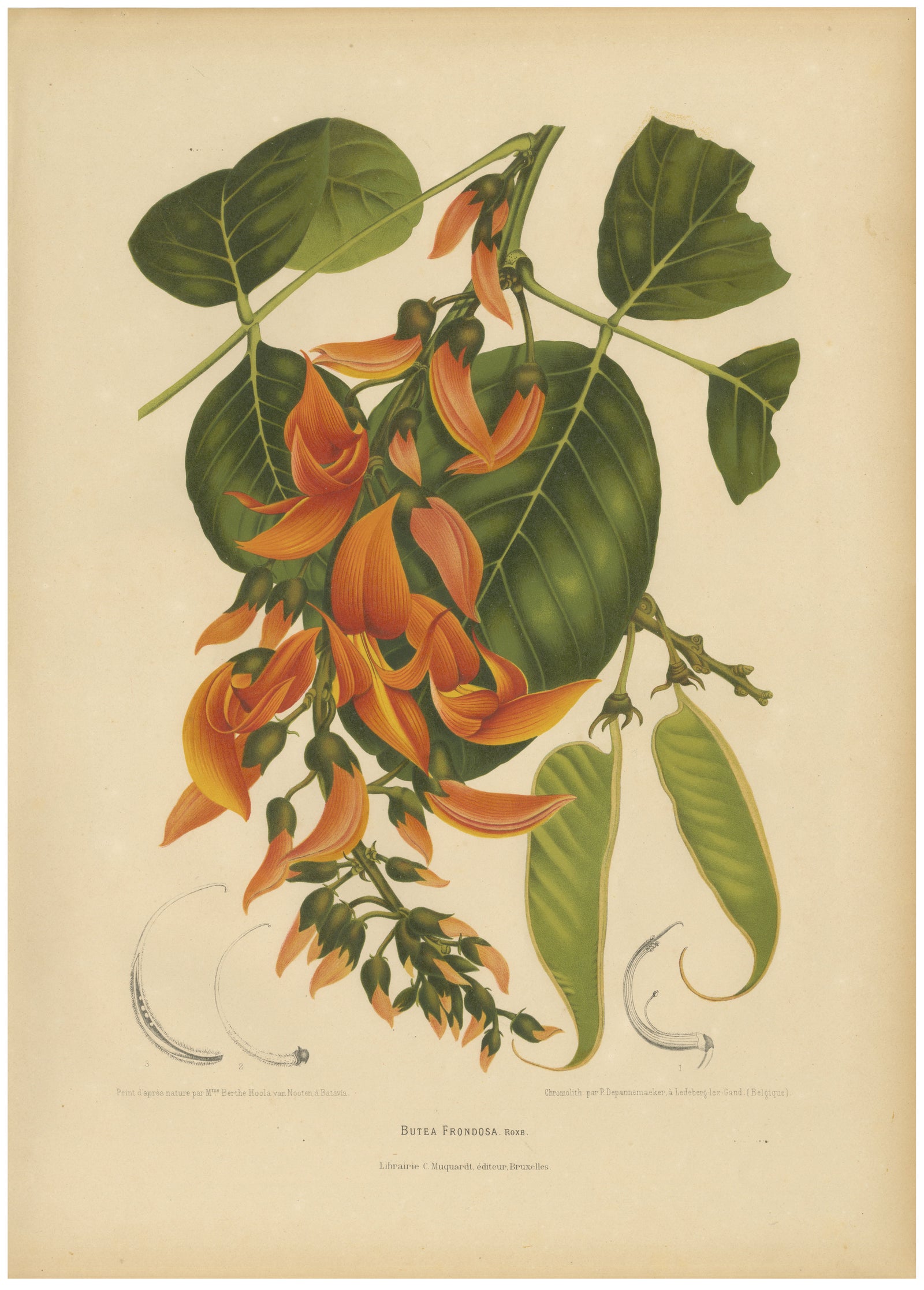
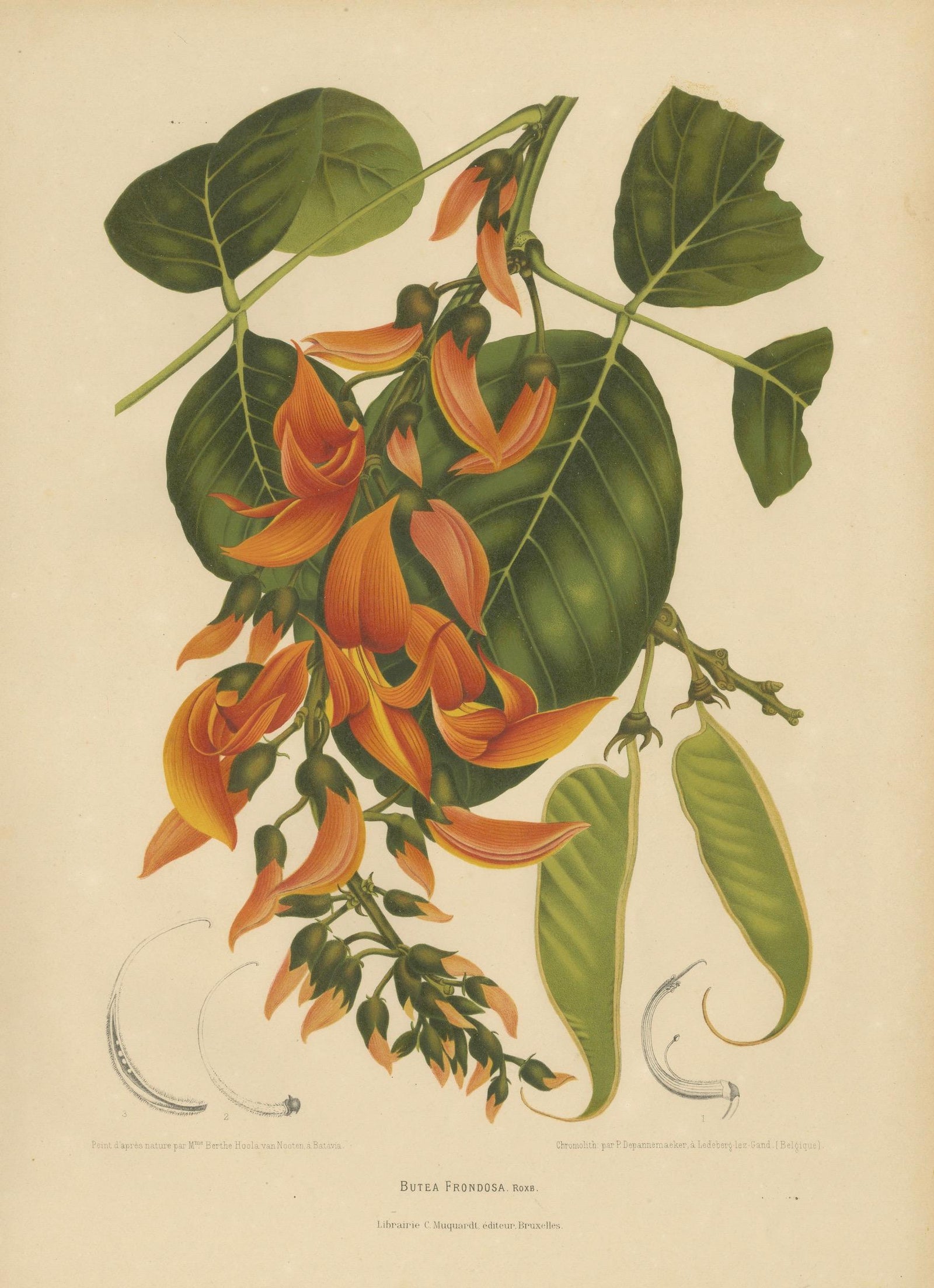
Title: Original Antique Flame of the Forest Botanical Chromolithograph by Hoola van Nooten 1880
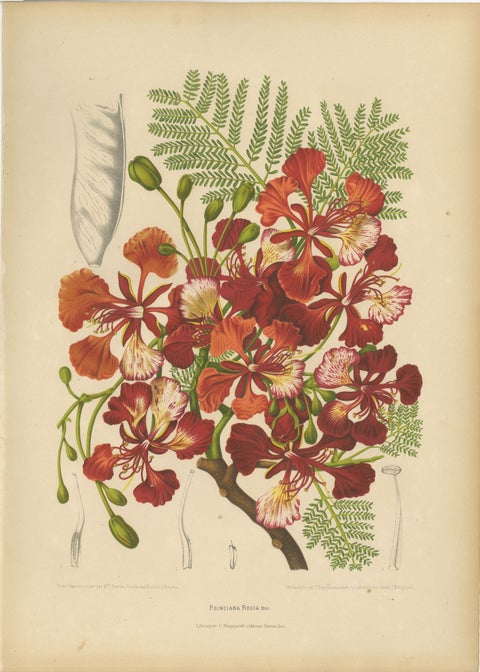
Description: An original antique botanical chromolithograph depicting Butea frondosa Roxb., now accepted as Butea monosperma, the magnificent Flame of the Forest. This exceptional plate was painted from nature by the renowned botanical artist Berthe Hoola van Nooten and published in the third edition of Fleurs, Fruits et Feuillages Choisis de la Flore et de la Pomone de l'Ile de Java, issued by G. Severeyns in Brussels around 1880.
This striking composition illustrates cascading clusters of brilliant orange-scarlet flowers set against rich green foliage, accompanied by botanical studies of the plant's distinctive curved petals. The dramatic color contrast and graceful arrangement make this one of the most decorative floral plates in Hoola van Nooten's celebrated series.
Native to India and widely cultivated throughout Indonesia and Southeast Asia, the Flame of the Forest is admired for its spectacular spring flowering, when entire trees become covered with vivid orange blossoms. The species has long been valued for its ornamental beauty, natural dyes, traditional medicine, and cultural significance across Asia.
Berthe Hoola van Nooten's botanical illustrations are regarded among the finest chromolithographs of the nineteenth century. Painted from living specimens in Batavia (present-day Jakarta), her works combine scientific precision with exceptional artistic refinement. The sophisticated chromolithographic process faithfully reproduces the brilliance and subtle tonal variations of the original watercolors.
Presented unframed. Images showing the print in a frame are for inspiration only. The frame is not included and may not be to scale.
Condition: Good antique condition with age-related toning and minor foxing consistent with age. Please examine the photographs carefully.
Maker: After Berthe Hoola van Nooten (1817–1892)
Publisher: G. Severeyns, Brussels
Origin: Belgium
Date: Circa 1880
Medium: Original chromolithograph on paper with original hand-finished color.
Keywords:
original antique print, Flame of the Forest, Butea monosperma, Butea frondosa, Palash Tree, Bastard Teak, Berthe Hoola van Nooten, Hoola van Nooten, botanical print, chromolithograph, tropical flower, flowering tree, Java, Indonesia, Southeast Asia, botanical illustration, Victorian botanical art, antique wall art, natural history print, nineteenth century print, collector's print, museum quality botanical art