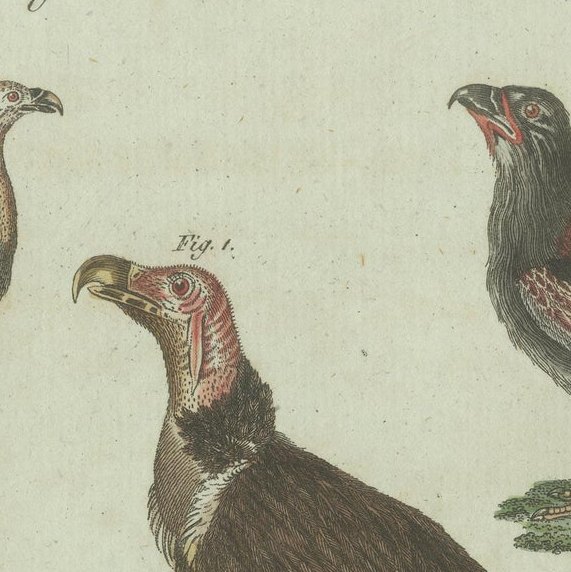
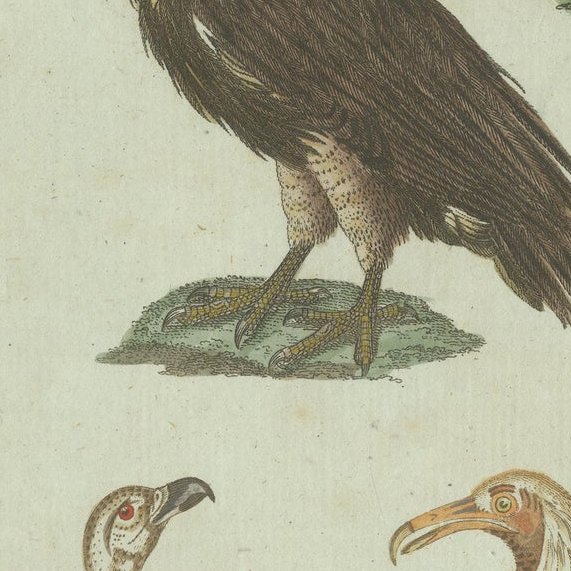
Close-ups
Framed and on the wall
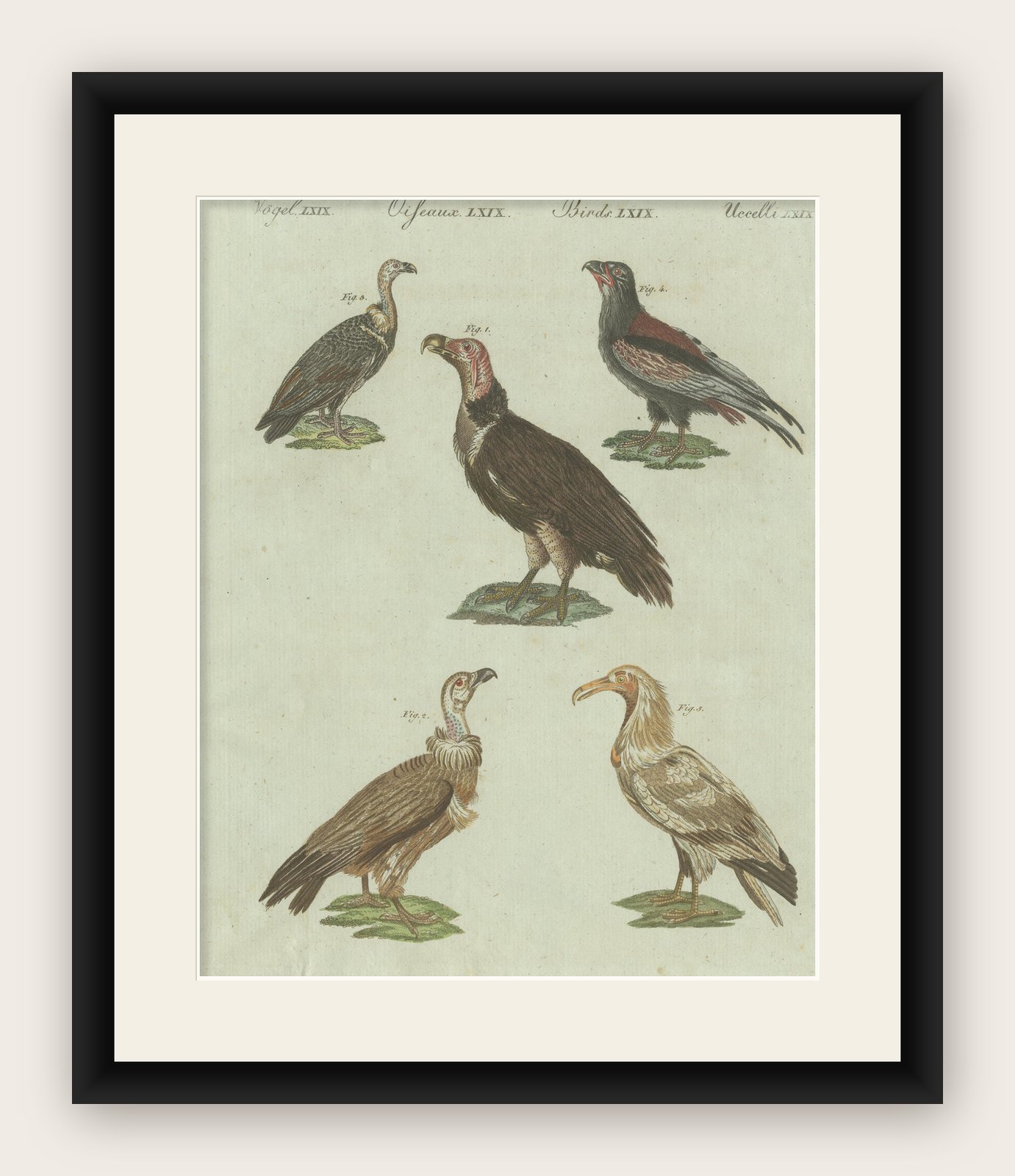


Frame and rooms are illustrations of how the print could look; the description says what is included.
Original Antique Bird Print of African and Asian Vultures, c.1800
£135 ($180, €160)
Period original, not a reproduction.
Shipped from the Netherlands, flat, insured and tracked, worldwide. Returns accepted within 14 days.
- Date
- 1800
- Size
- 9.4 × 7.5 in (24 × 19 cm)
- Condition
- Good. Wear consistent with age and use. Good condition. Clean surface, vibrant hand-coloring. Minor edge wear and light creases in the lower area. No visible tears or staining.
- Period
- Early 19th century
- Artist or book
- Bertuch
- Section
- Birds
- Reference
- f_31088792
- Colour
- Hand coloured
What the condition grades mean
- Excellent
- Bright and clean, with no faults worth mentioning.
- Very good
- Only light signs of age, such as faint toning.
- Good
- Normal signs of age for a sheet of this period: toning, some foxing, small marks or neat old repairs.
- Fair
- Clear faults such as staining, tears or repairs, priced to match.
Every fault we see is written in the condition note, and the whole sheet is shown uncropped in the photos.
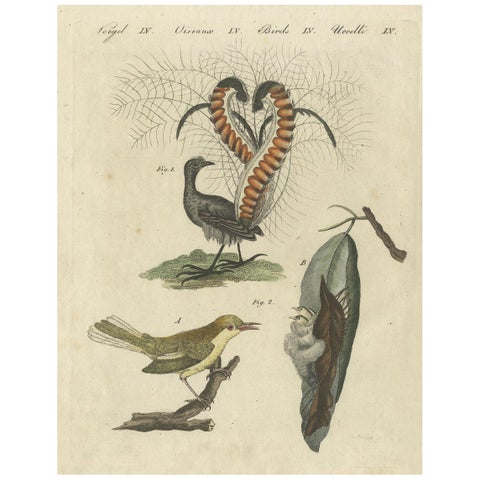
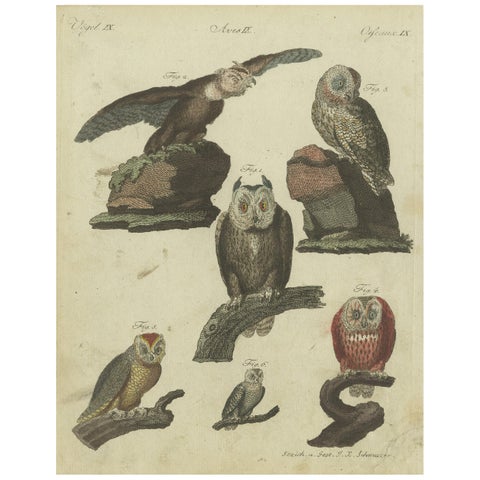
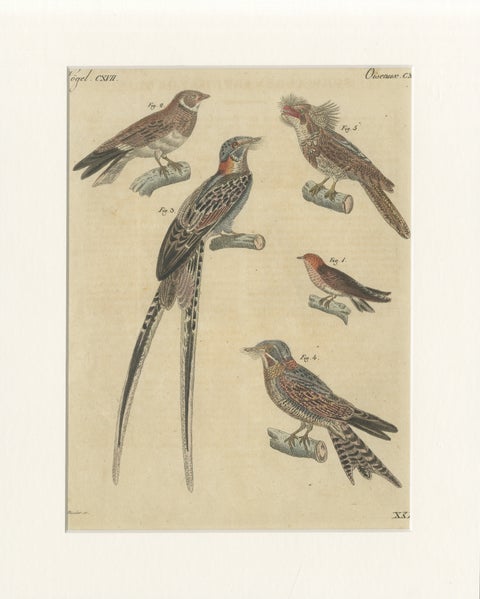
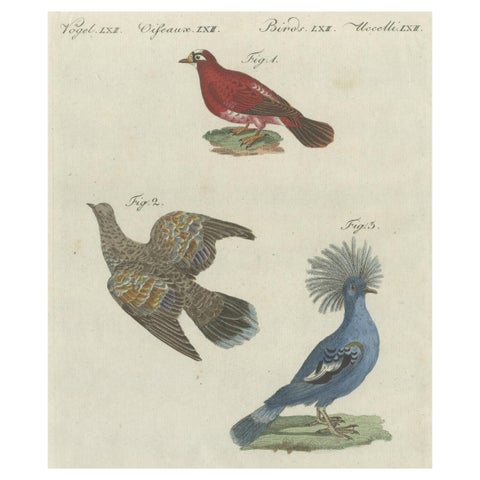
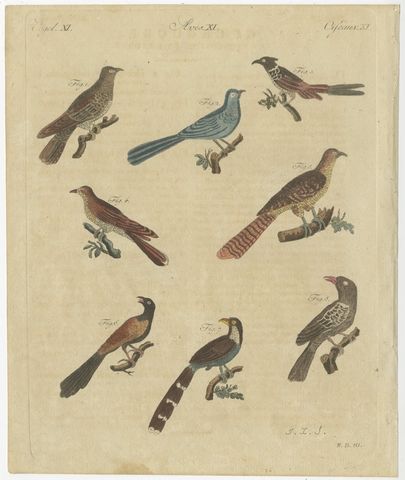
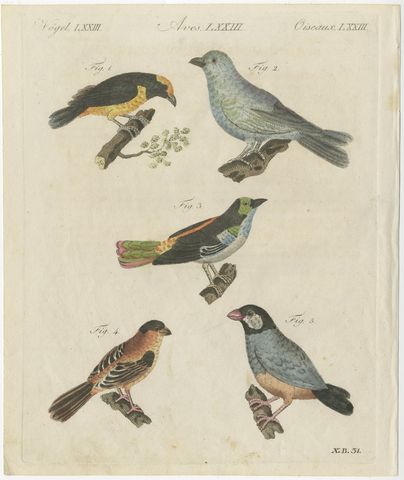
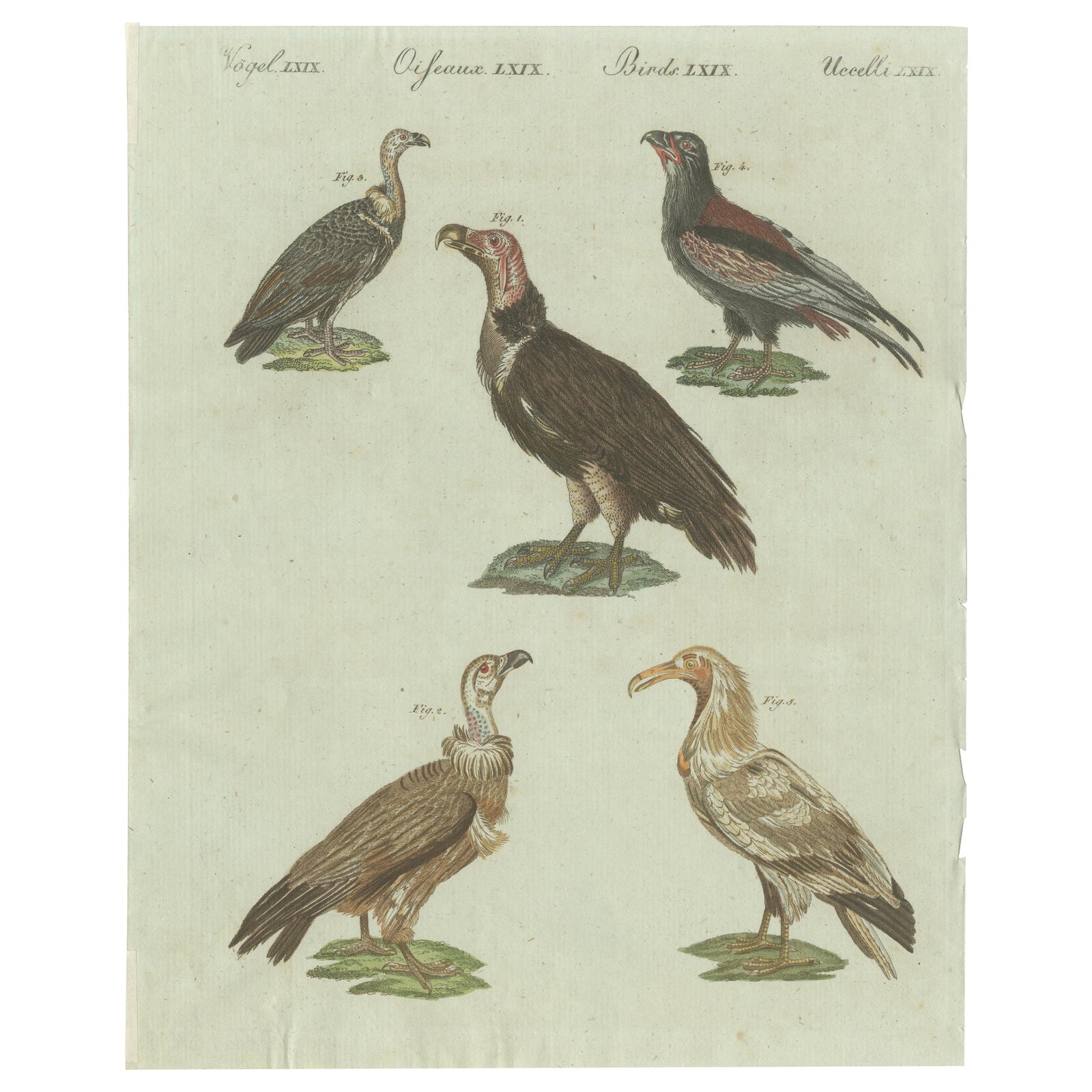
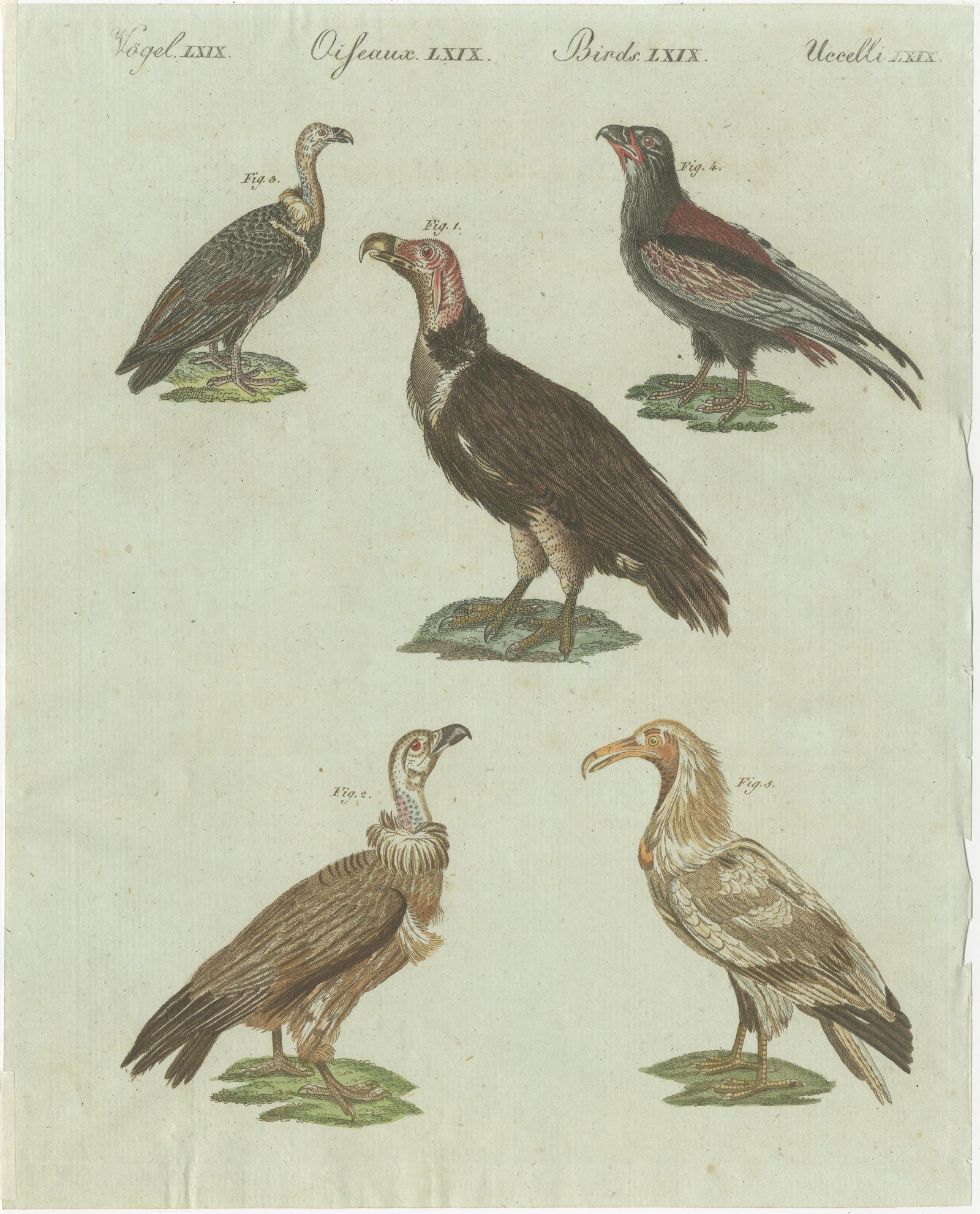
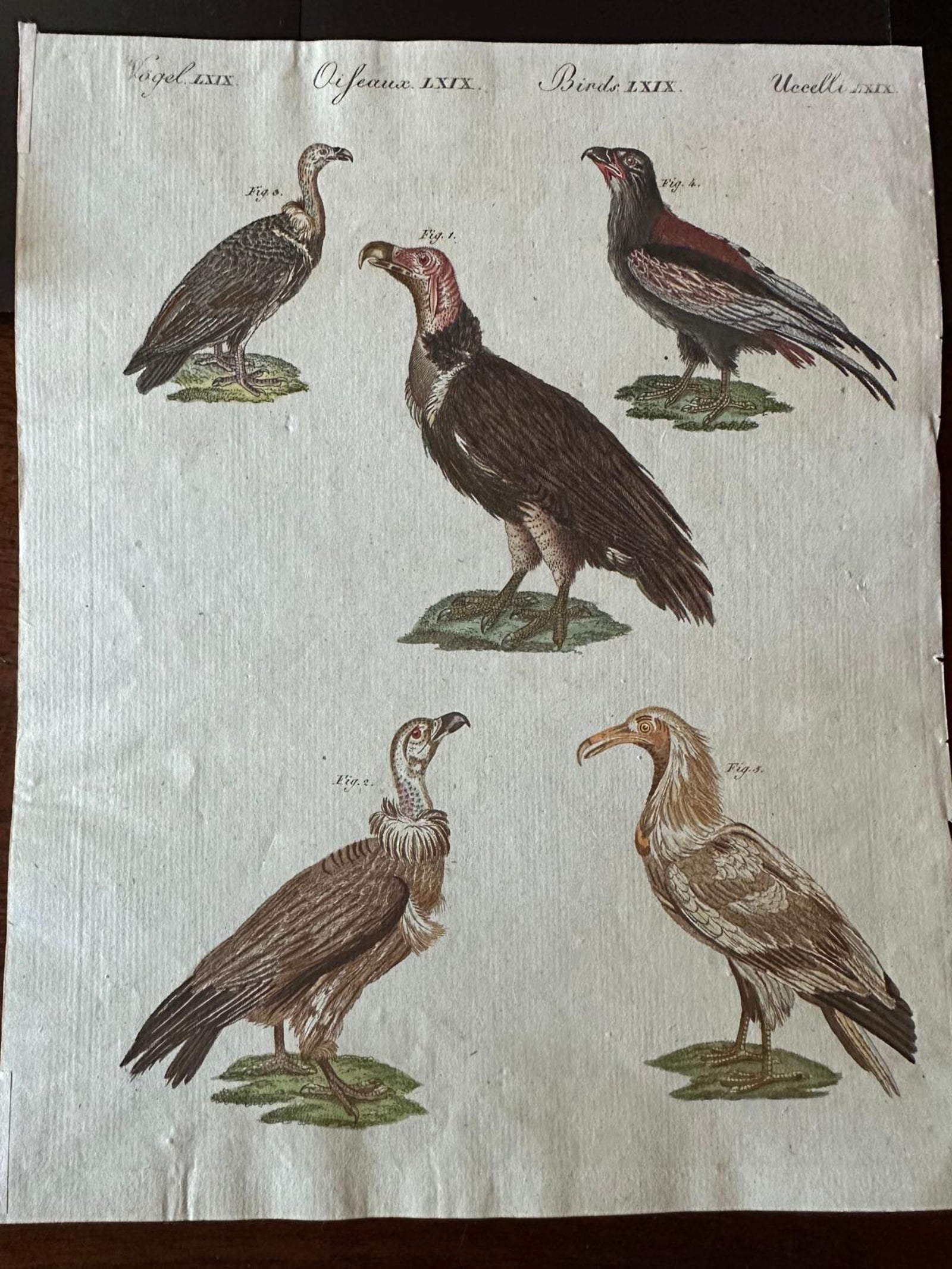
Antique bird print of African and Asian vultures. This print originates from 'Bilderbuch fur Kinder' by F.J. Bertuch. Friedrich Johann Bertuch (1747-1822) was a German publisher and man of arts most famous for his 12-volume encyclopedia for children illustrated with 1,200 engraved plates on natural history, science, costume, mythology, etc., published from 1790-1830.
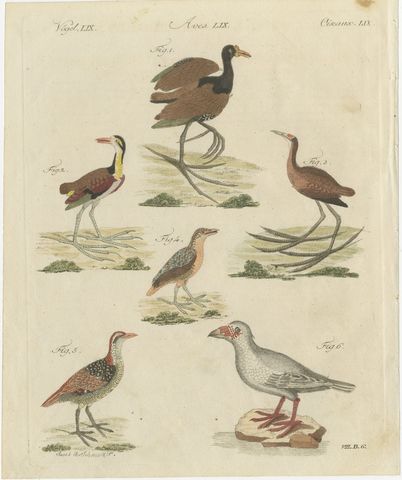
Title: Hand-colored 18th-century engraving of vultures, Birds Plate LXIX, c. 1770
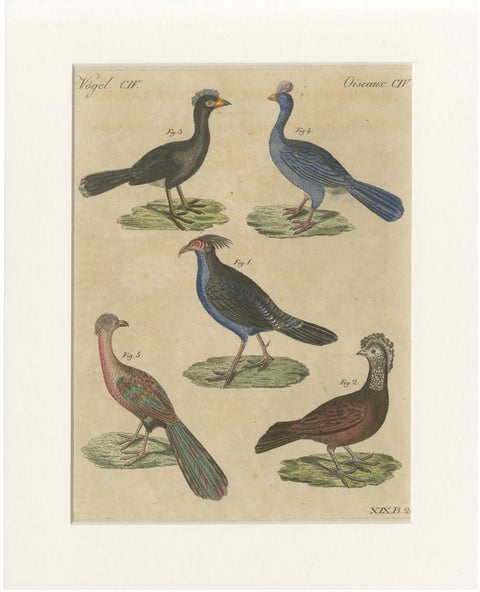
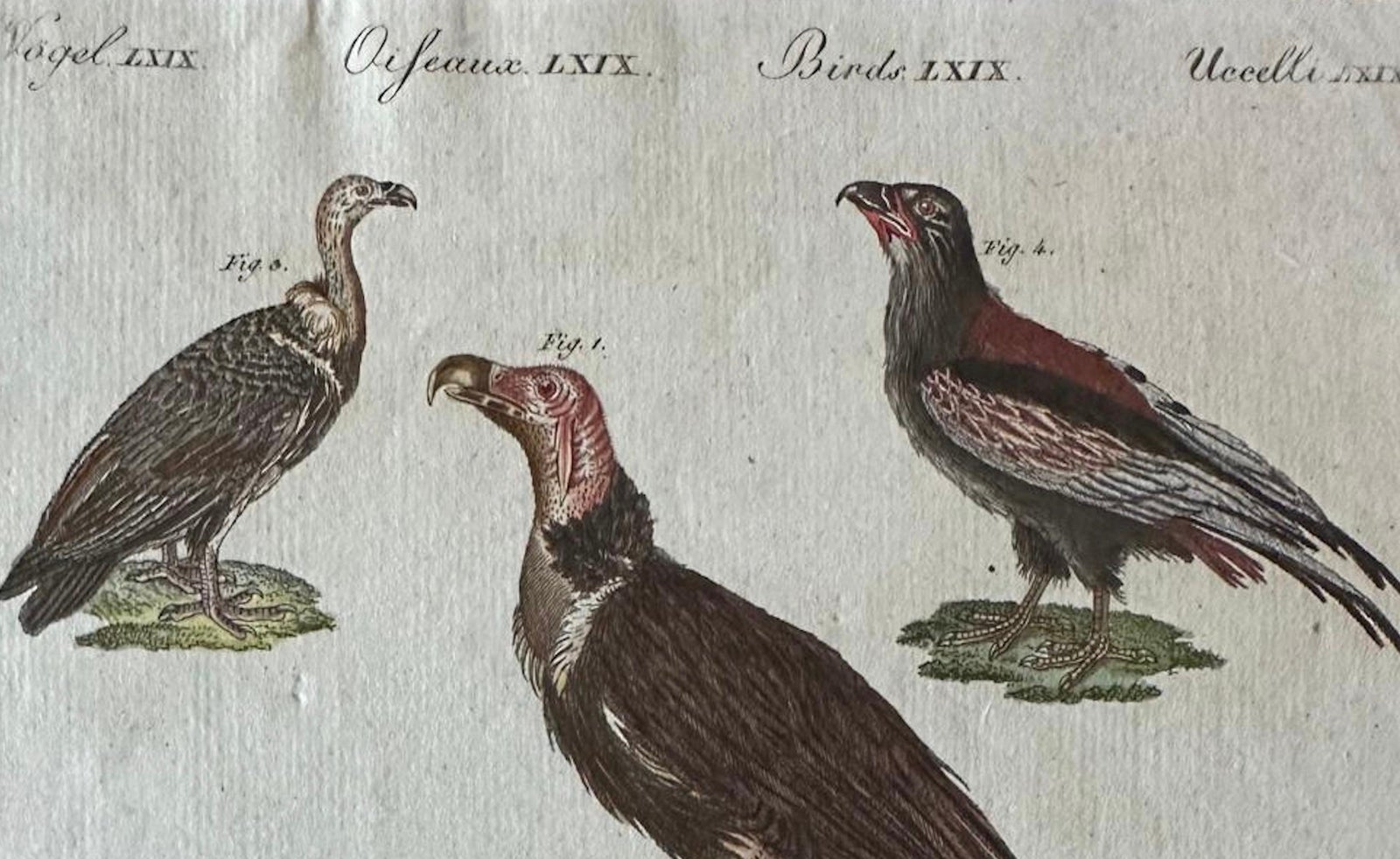
Description: This hand-colored antique engraving, titled "Vögel LXIX / Oiseaux LXIX / Birds LXIX / Uccelli LXIX", dates from around 1770 and features five scientifically illustrated species of vultures and large birds of prey. It is Plate LXIX from a multilingual natural history work, likely part of an 18th-century zoological encyclopedia such as Friedrich Justin Bertuch’s "Bilderbuch für Kinder" or a similar publication that used Latin, German, French, English, and Italian labels.
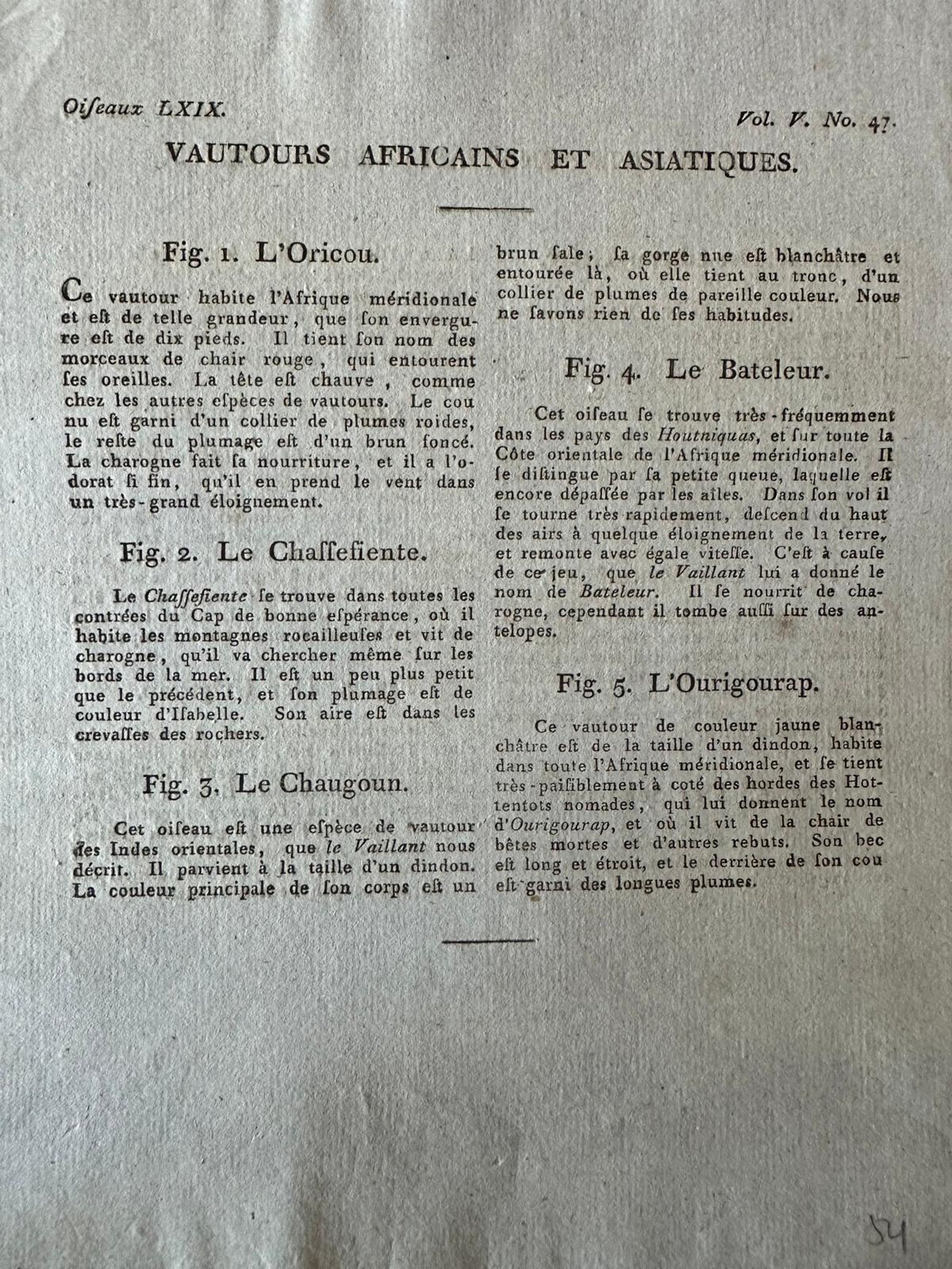
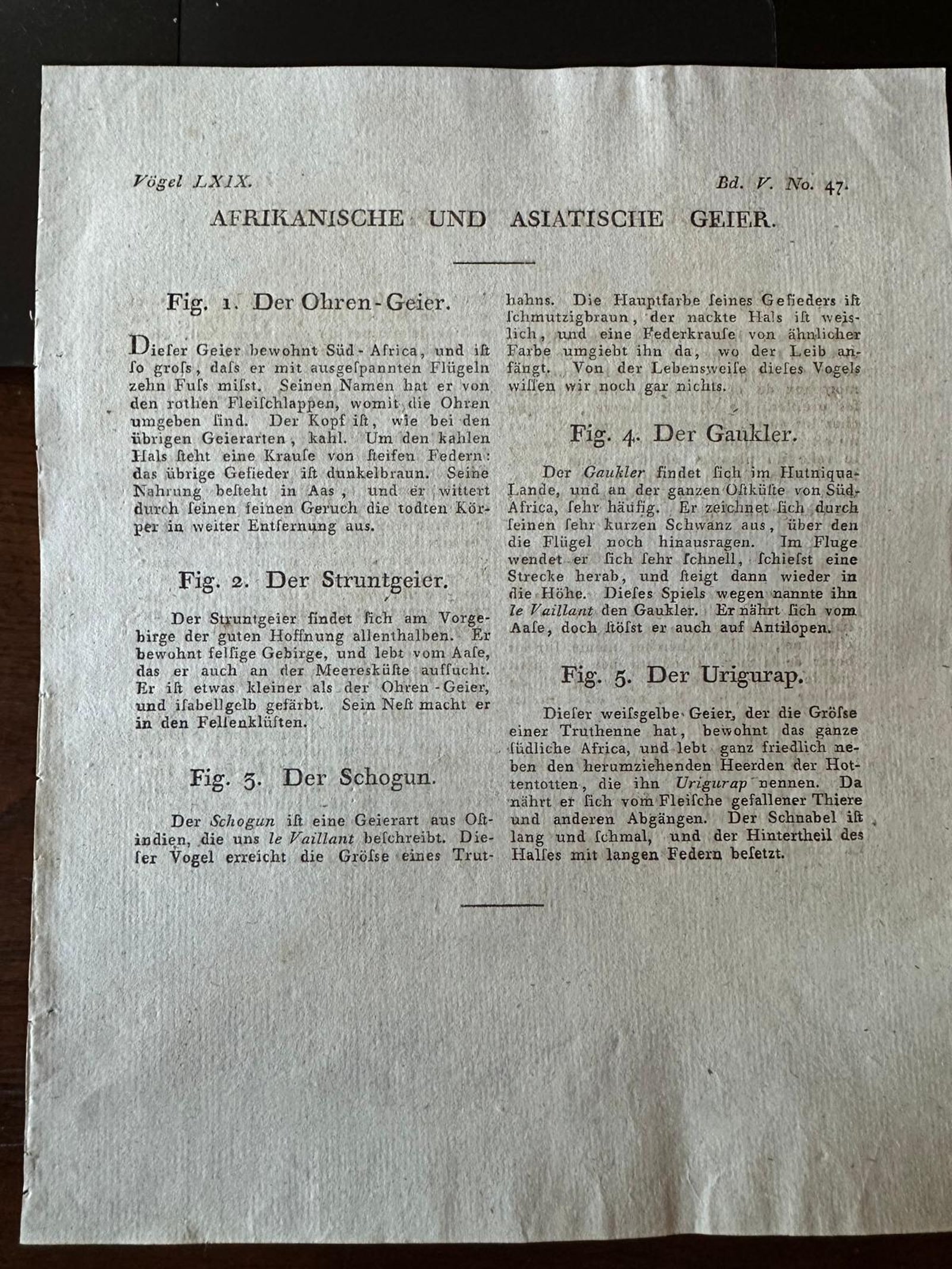
Each bird is labeled by figure number and represents different species:
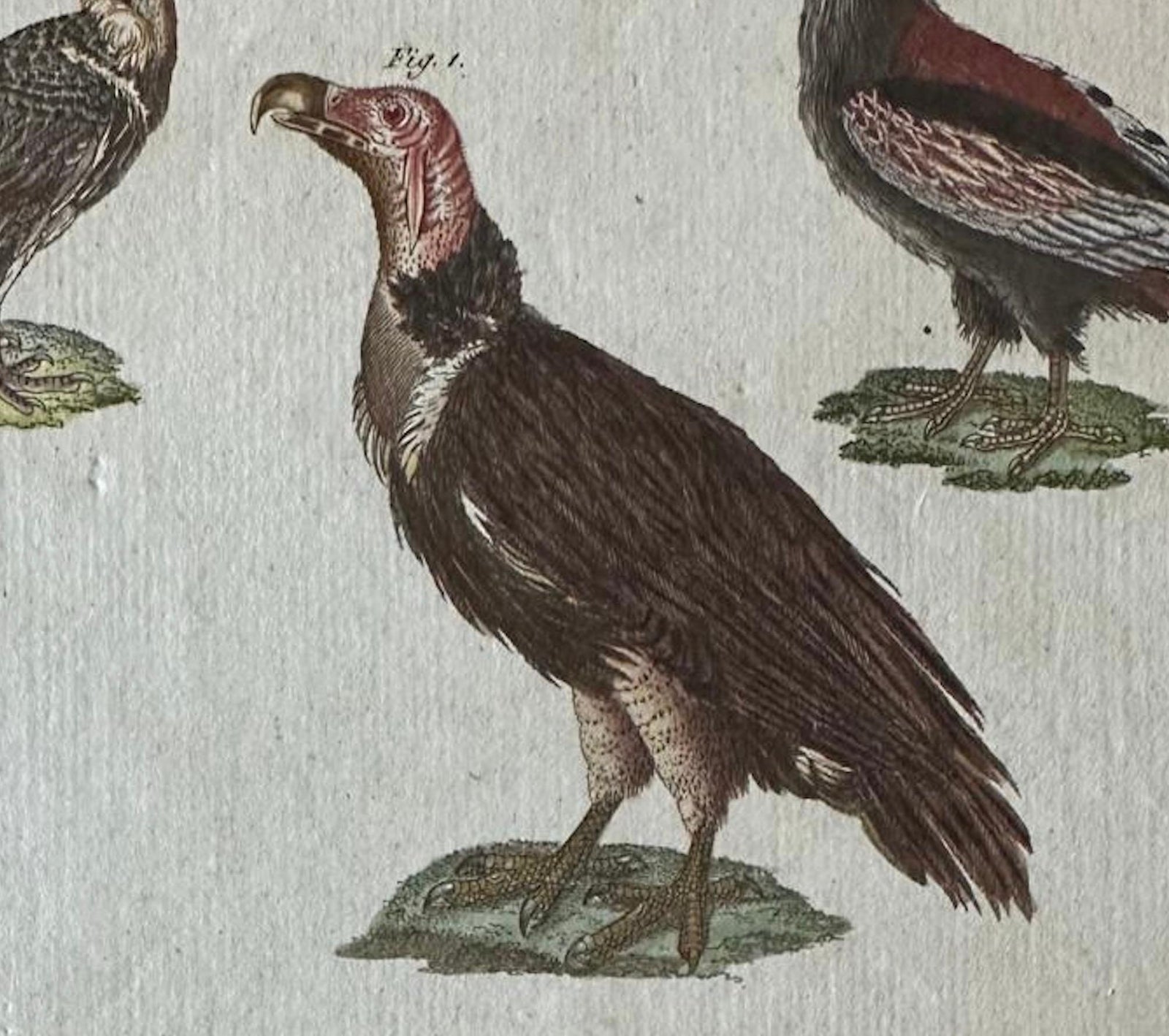
Fig. 1 (center) depicts a large vulture, possibly a California or Andean condor, with a bare head and strong curved beak.
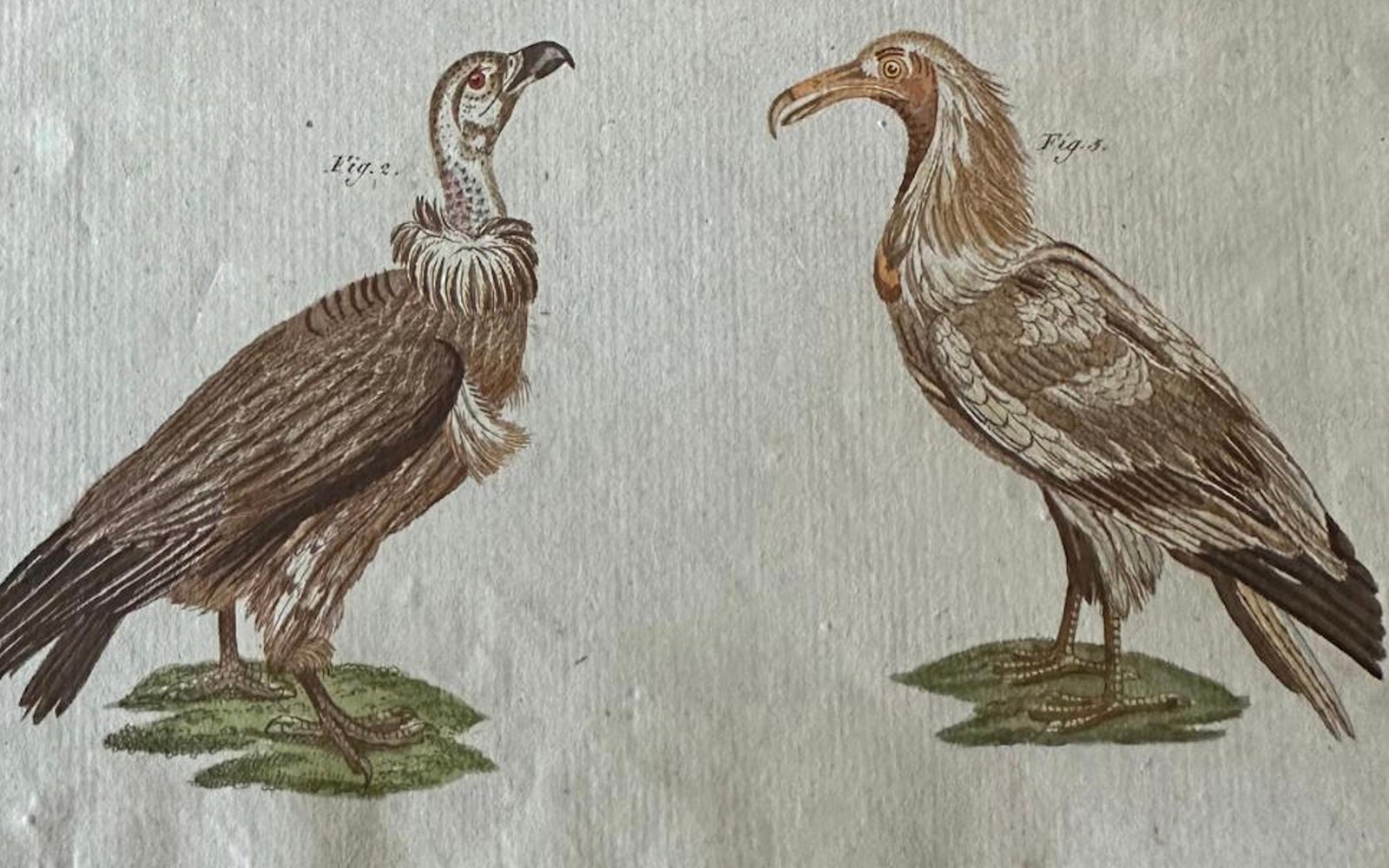
Fig. 2 and Fig. 5 (left and right) show two types of Old World vultures, both with featherless necks and ruffled collars.
Fig. 3 (bottom right) may represent the Egyptian vulture (Neophron percnopterus), with its pale plumage and sharp beak.
Fig. 4 (top right) features a darker bird with reddish markings, possibly a lammergeier or related species.
The illustration is finely engraved, with detailed linework and delicate hand-applied watercolor. Each bird stands on a simple patch of green ground, set against an unadorned background to emphasize the plumage and form.
Such engravings were typical of Enlightenment-era efforts to document the natural world. They were designed to educate and inspire curiosity, and are now prized for their artistic and historical value.
Condition report :
Good condition. Clean surface, vibrant hand-coloring. Minor edge wear and light creases in the lower area. No visible tears or staining.
Framing suggestion:
Frame with an off-white archival mat and a simple dark wood or black frame. A float mount is recommended to display the plate titles clearly and preserve the full sheet.