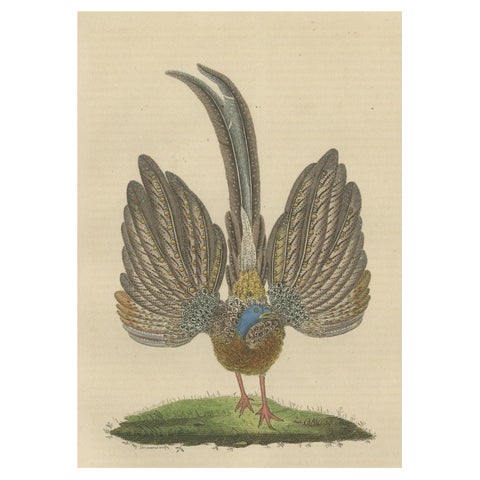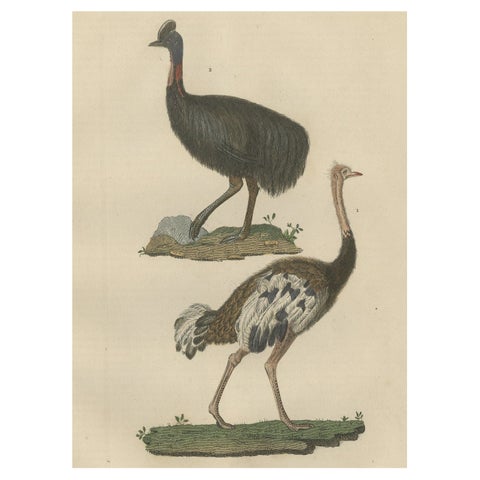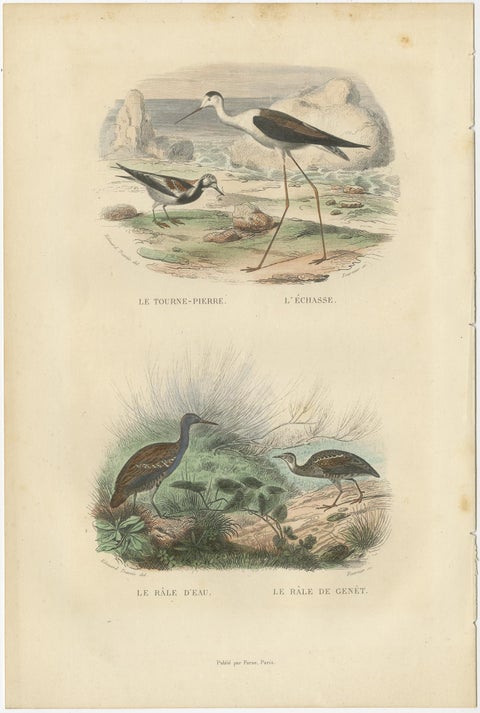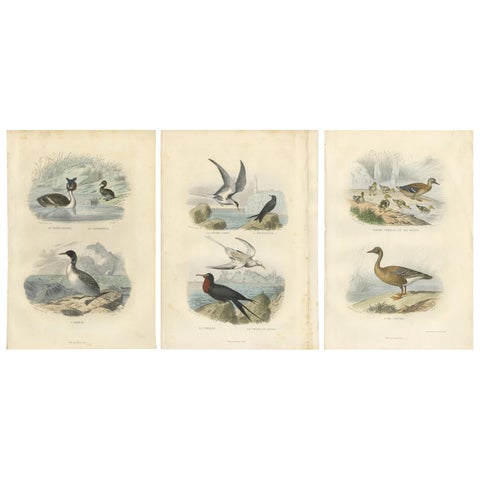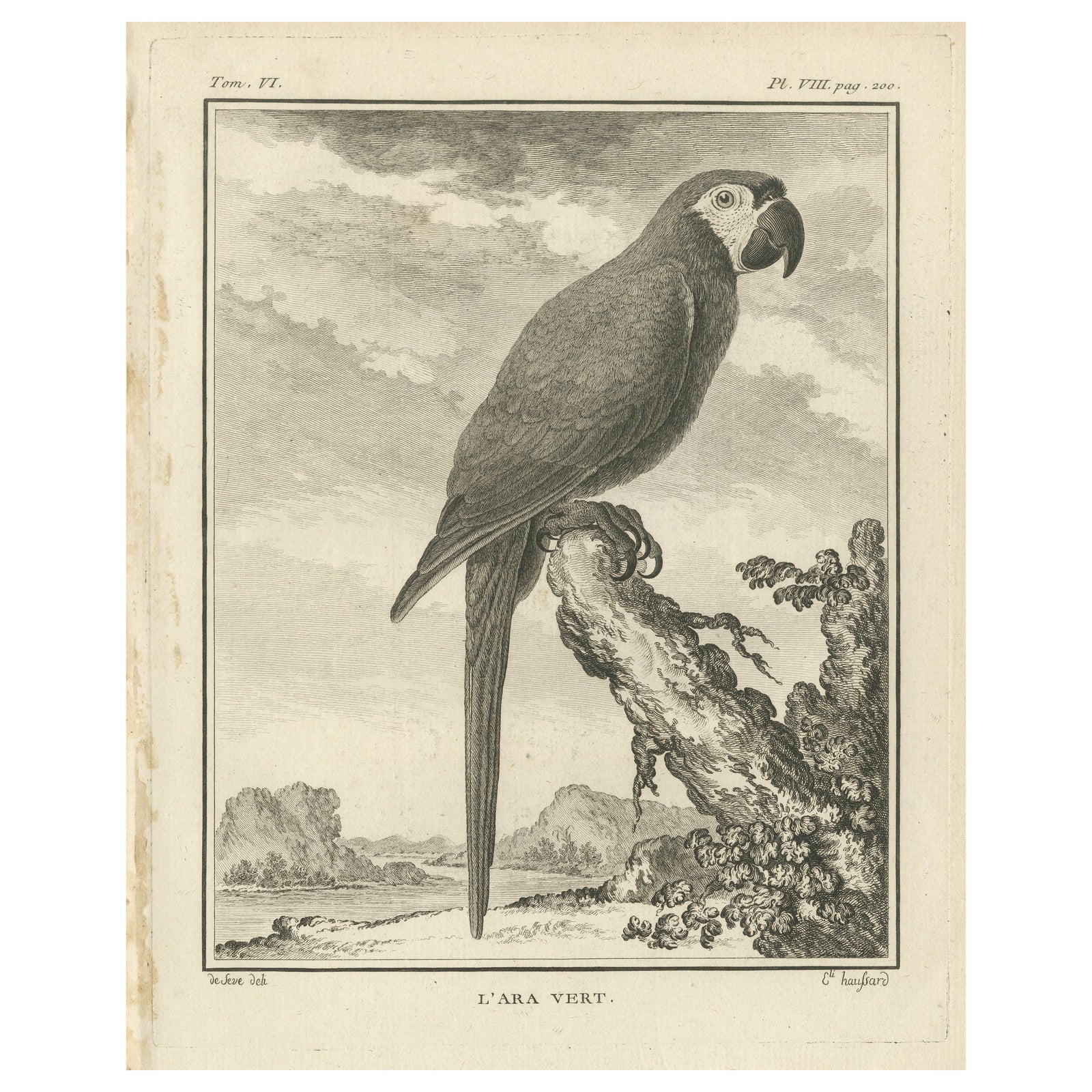
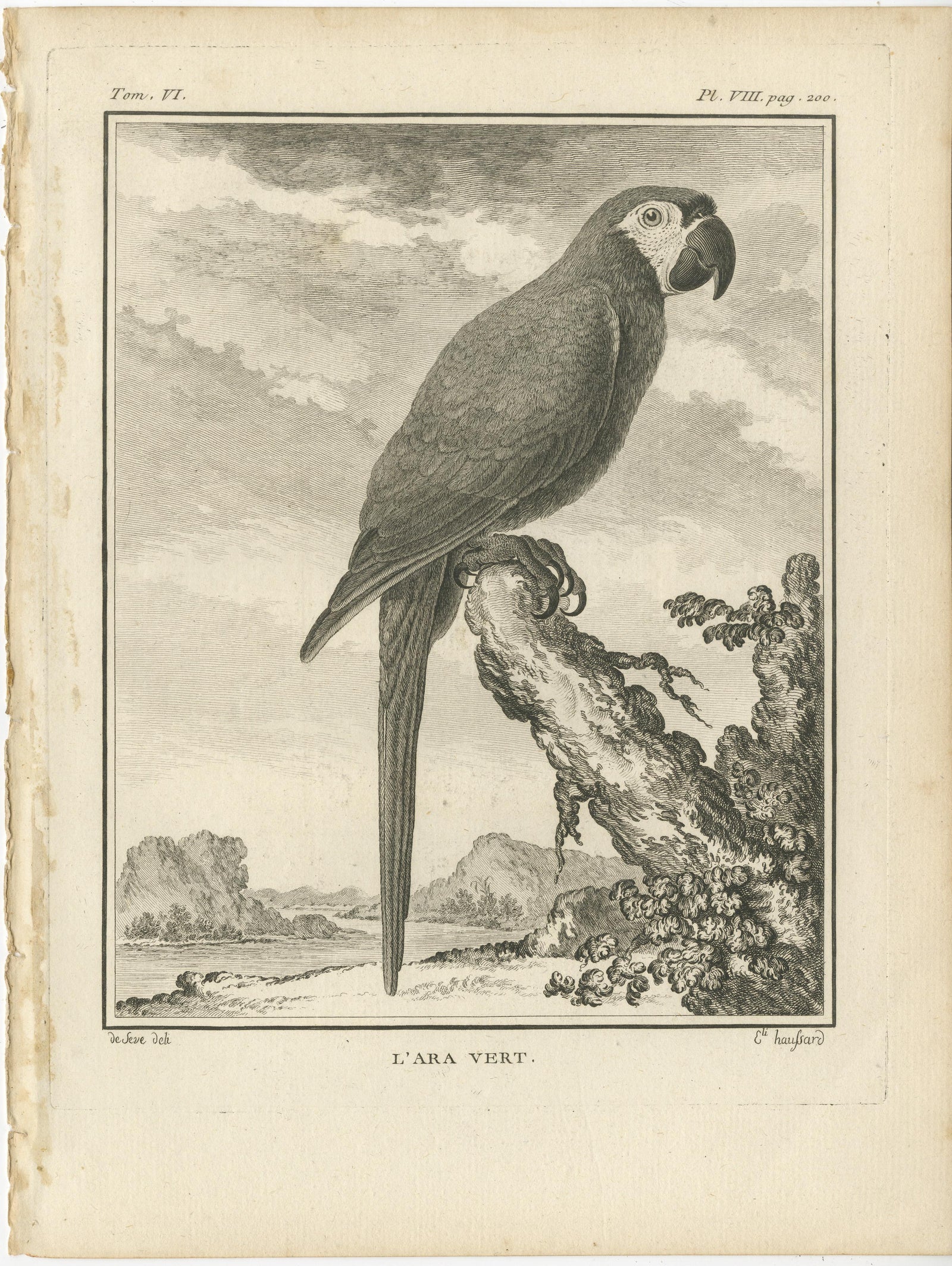
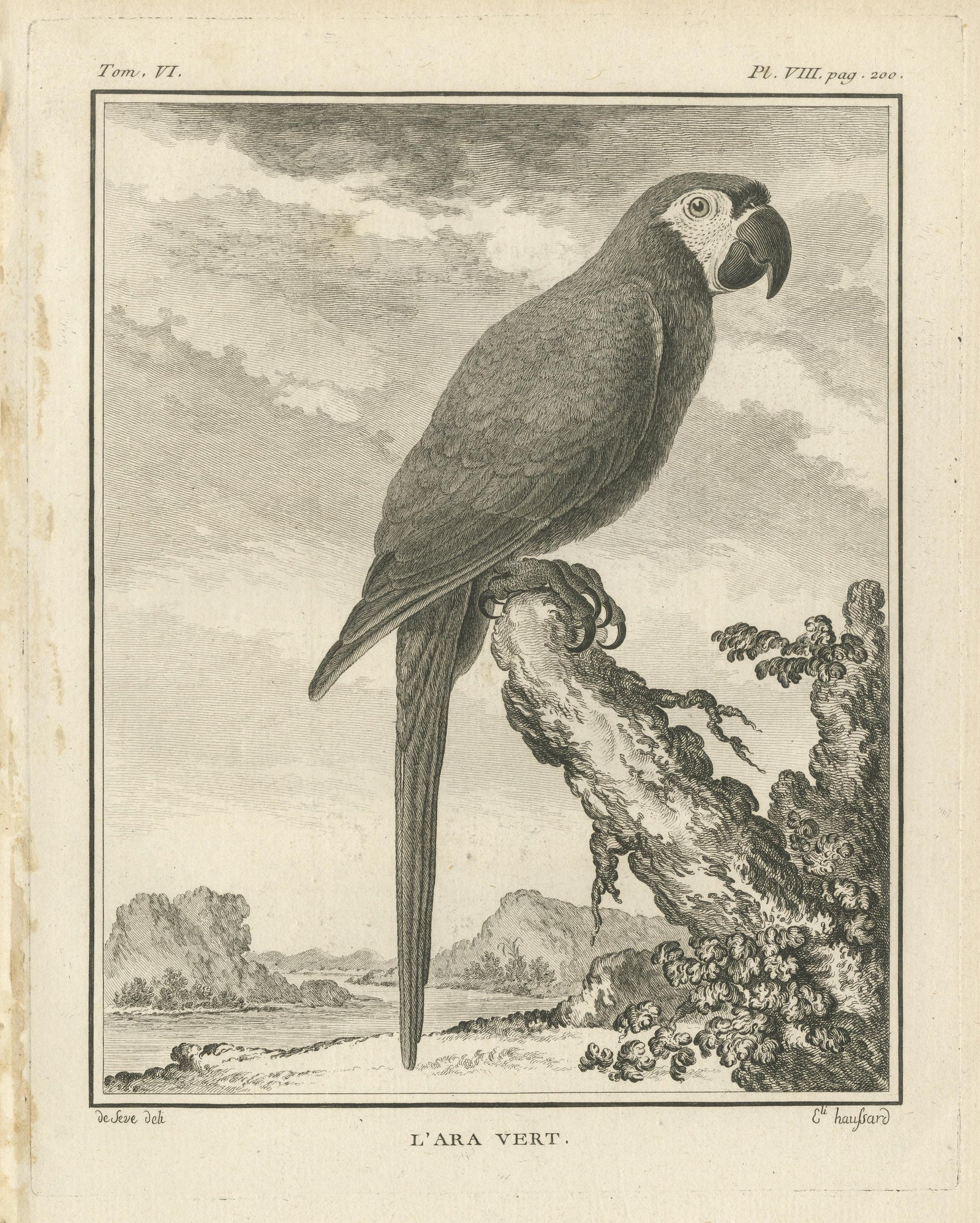
Close-ups
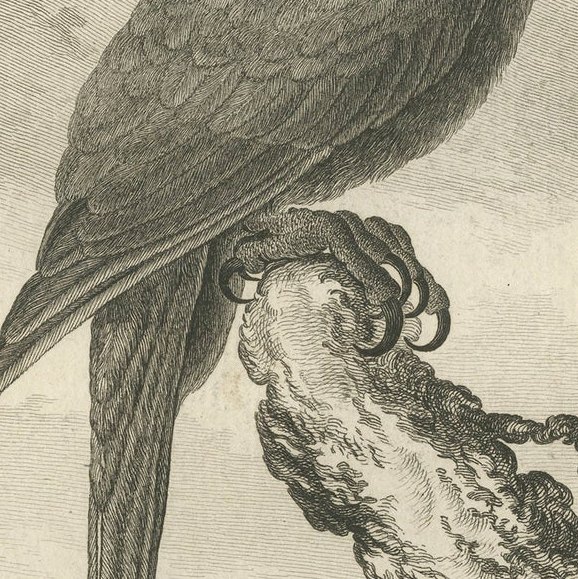
Framed and on the wall
Frame and rooms are illustrations of how the print could look; the description says what is included.
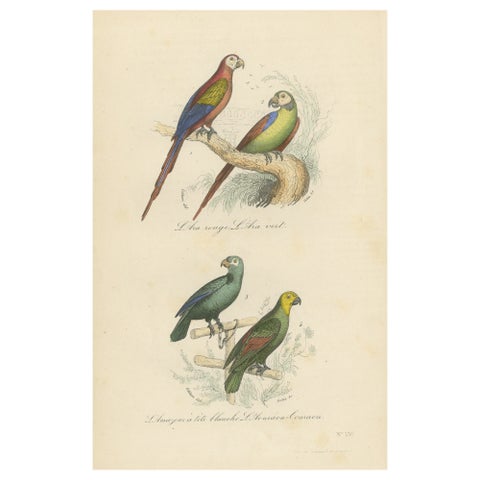
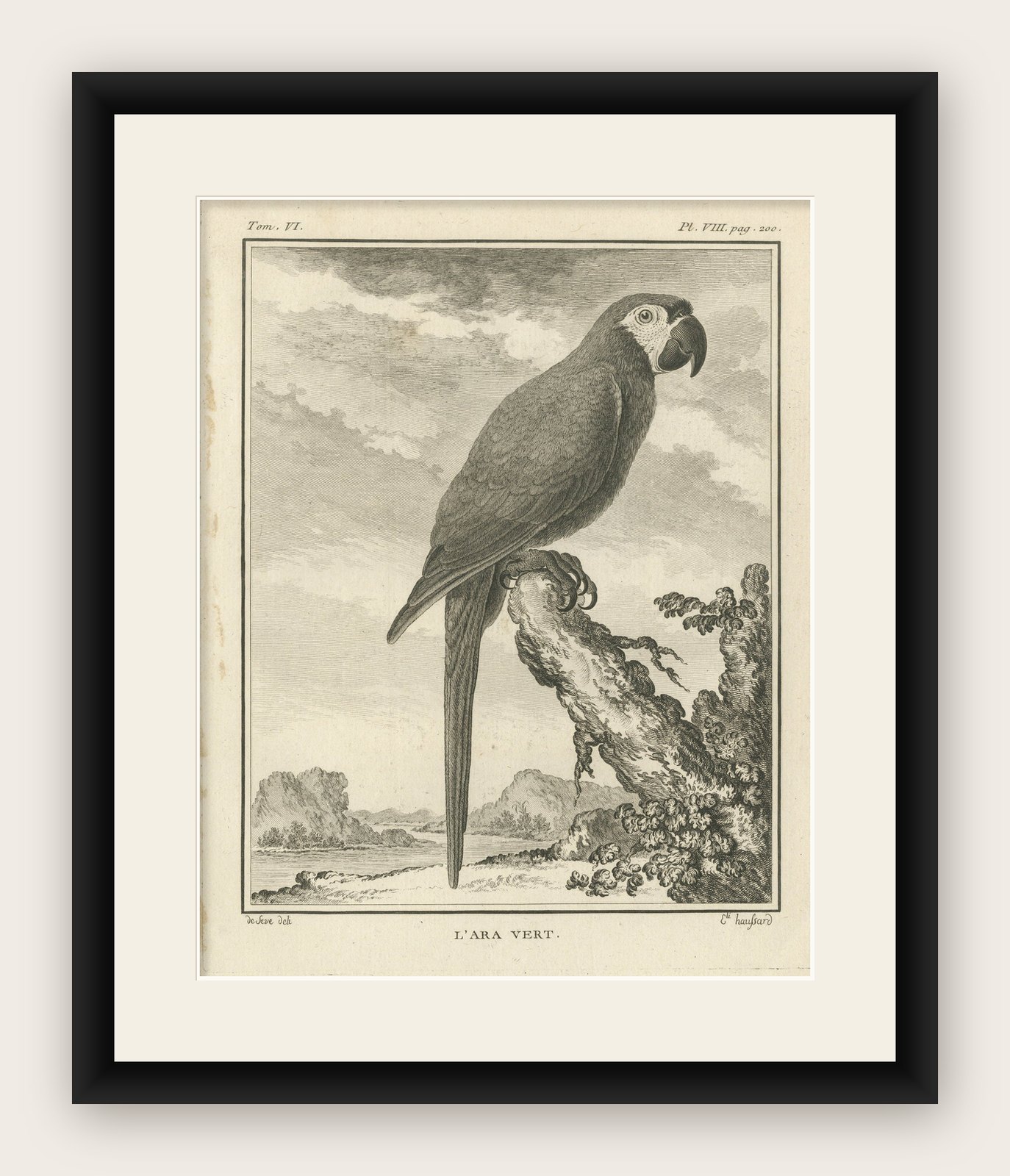
Original Antique Bird Engraving of a Green Macaw
£220 ($295, €260)
Period original, not a reproduction.
Shipped from the Netherlands, flat, insured and tracked, worldwide. Returns accepted within 14 days.
- Date
- Not stated
- Size
- 10.2 × 7.8 in (26 × 19.7 cm)
- Condition
- Good. Wear consistent with age and use. General age-related toning. Minor wear and soiling, blank verso. Please study image carefully.
- Artist or book
- Buffon
- Section
- Birds
- Reference
- f_32878432
Antique bird print titled 'L'Ara Vert'. Old bird engraving of a green macaw. This print originates from 'Histoire Naturelle, générale et particulière, avec la description du Cabinet du Roi' by Georges-Louis Marie Leclerc, Comte de Buffon. Published between 1749 and 1804.
Buffon’s Histoire Naturelle was his major achievement and an ambitious project characteristic of the 18th-century Enlightenment: a 44-volume encyclopedia attempting to include everything known about the natural world and widely disseminate scientific knowledge. It was the first complete natural history survey presented in a popular form, and also broke ground in attempting to separate science from theological dogma. Decades before Darwin introduced his theory of evolution, Buffon dared to challenge religious thought with empirical observations, suggesting that the earth was older than 6,000 years and that the physical resemblance between humans and apes might be explained by their having a common ancestry. While the theories he proposed to explain these phenomena were by and large incorrect, he correctly grasped that a new paradigm was needed.