Close-ups
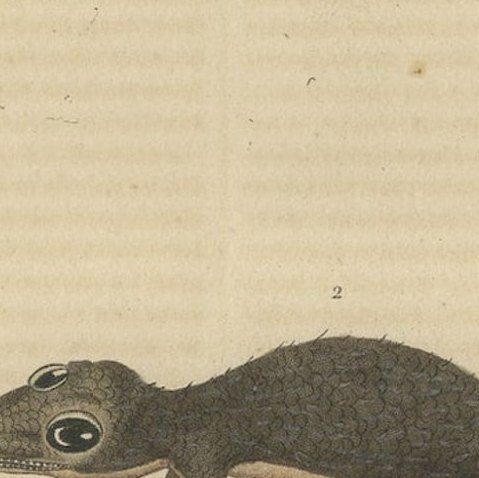
Framed and on the wall
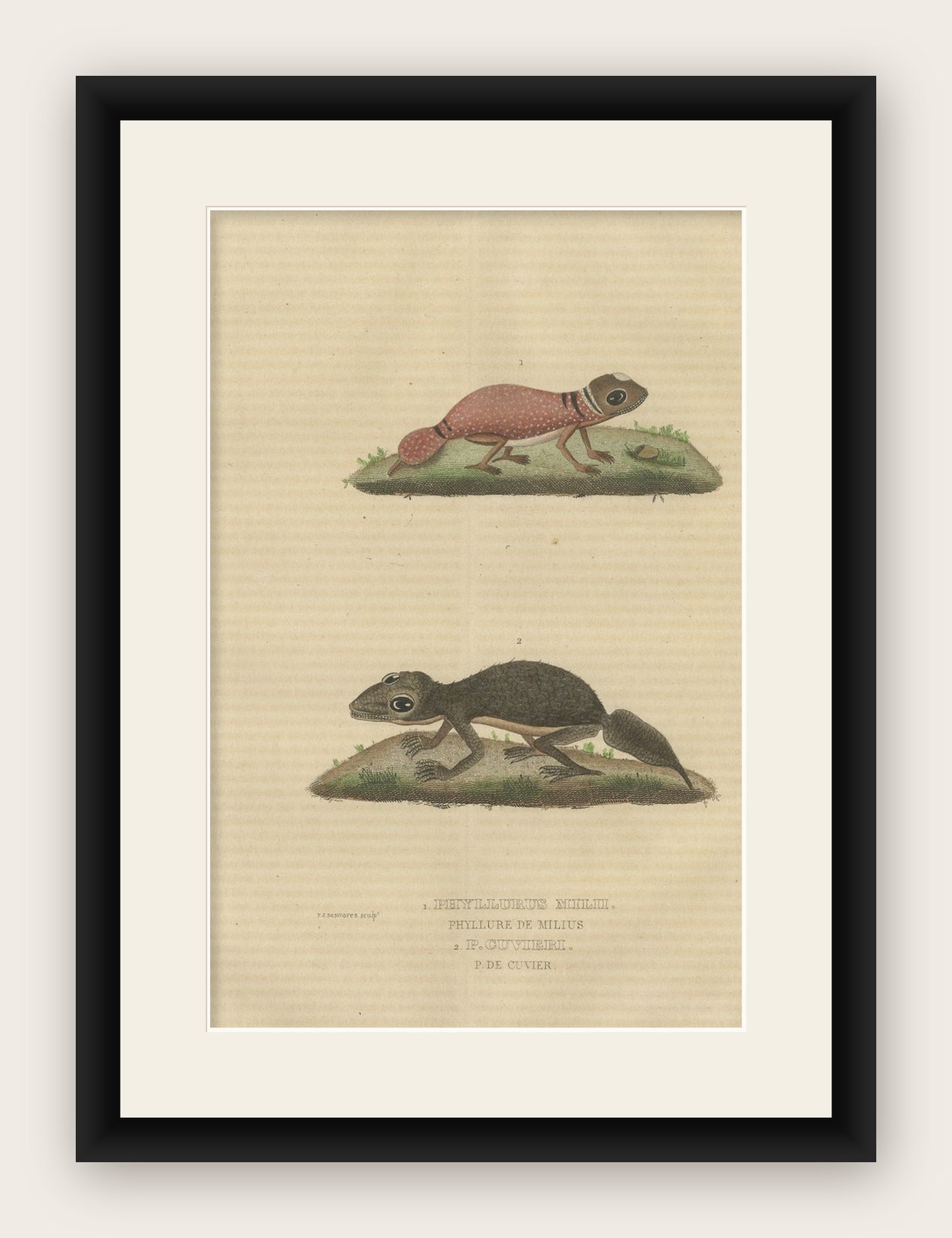
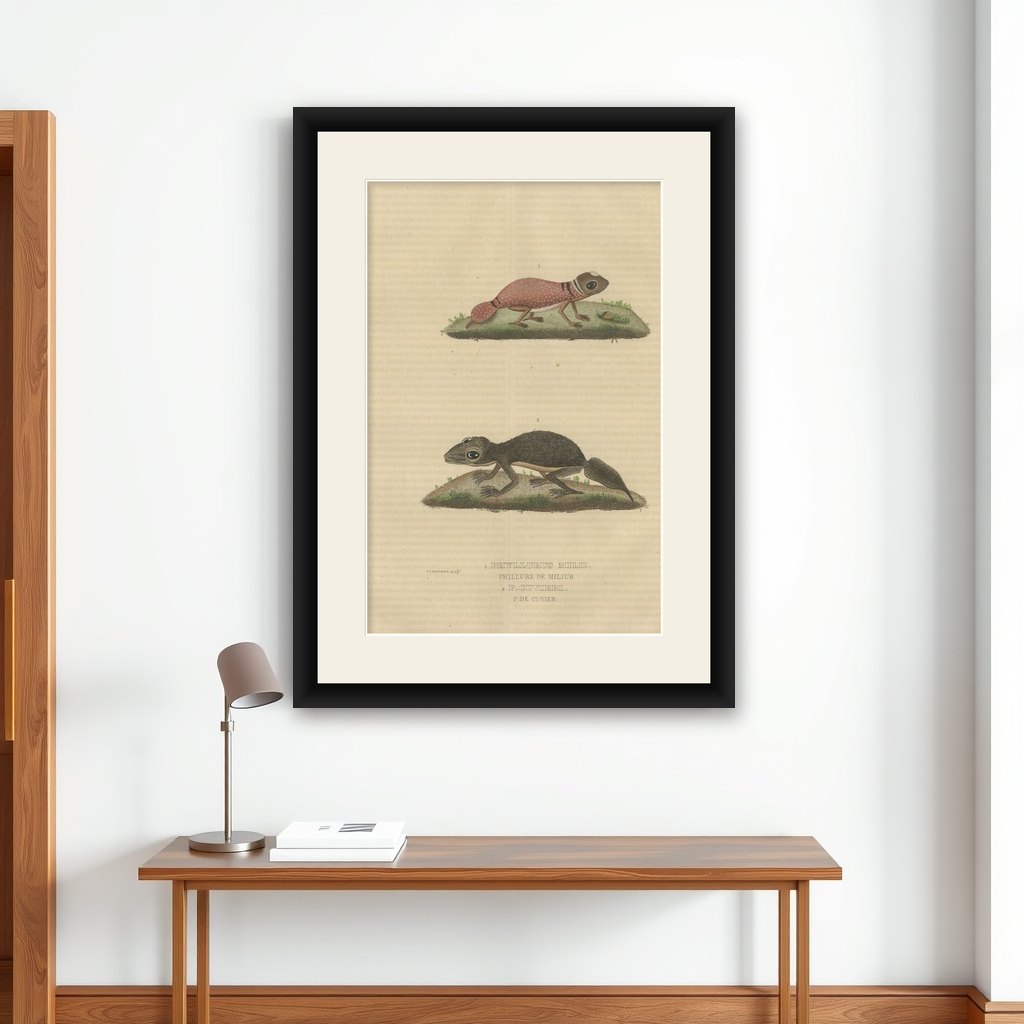

Frame and rooms are illustrations of how the print could look; the description says what is included.
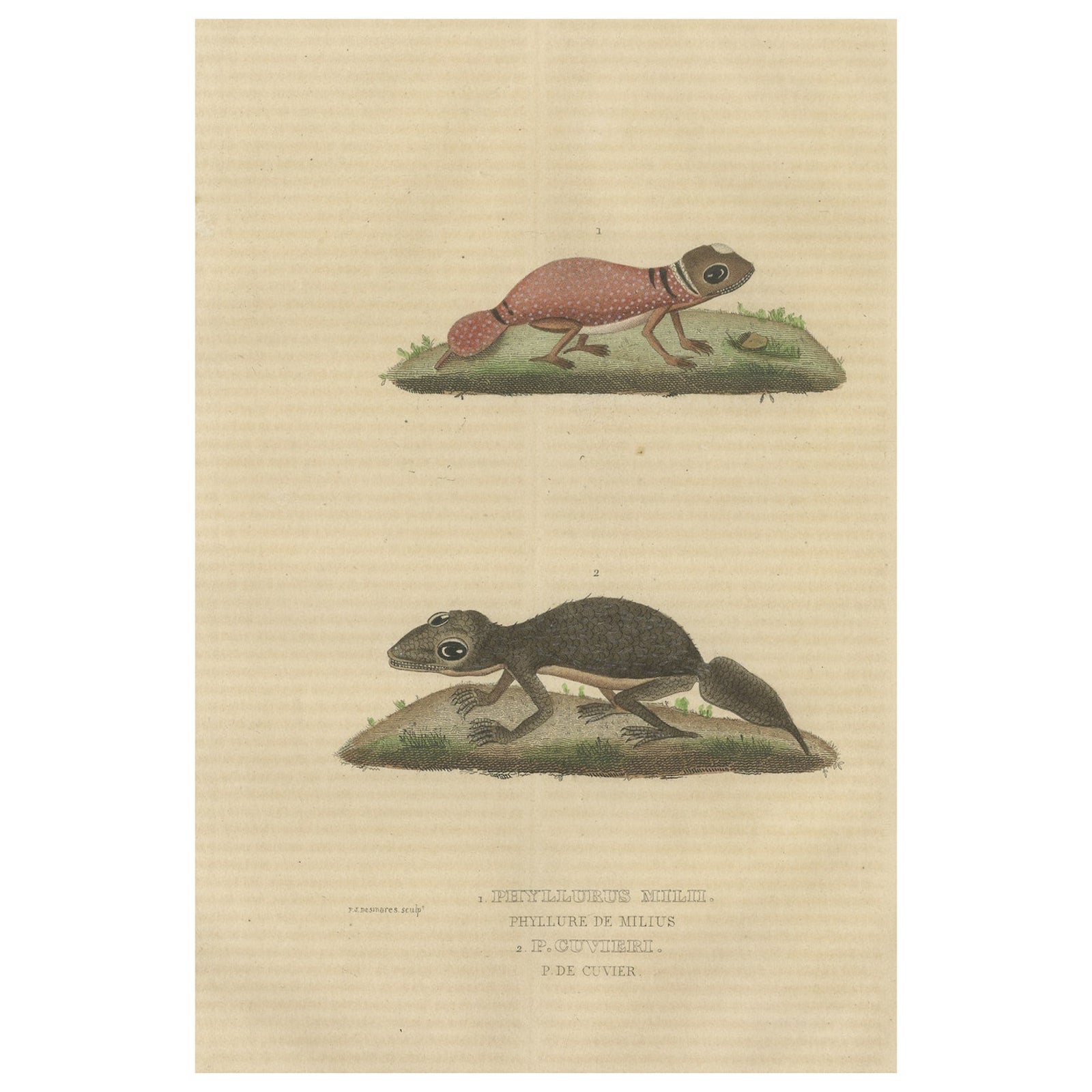
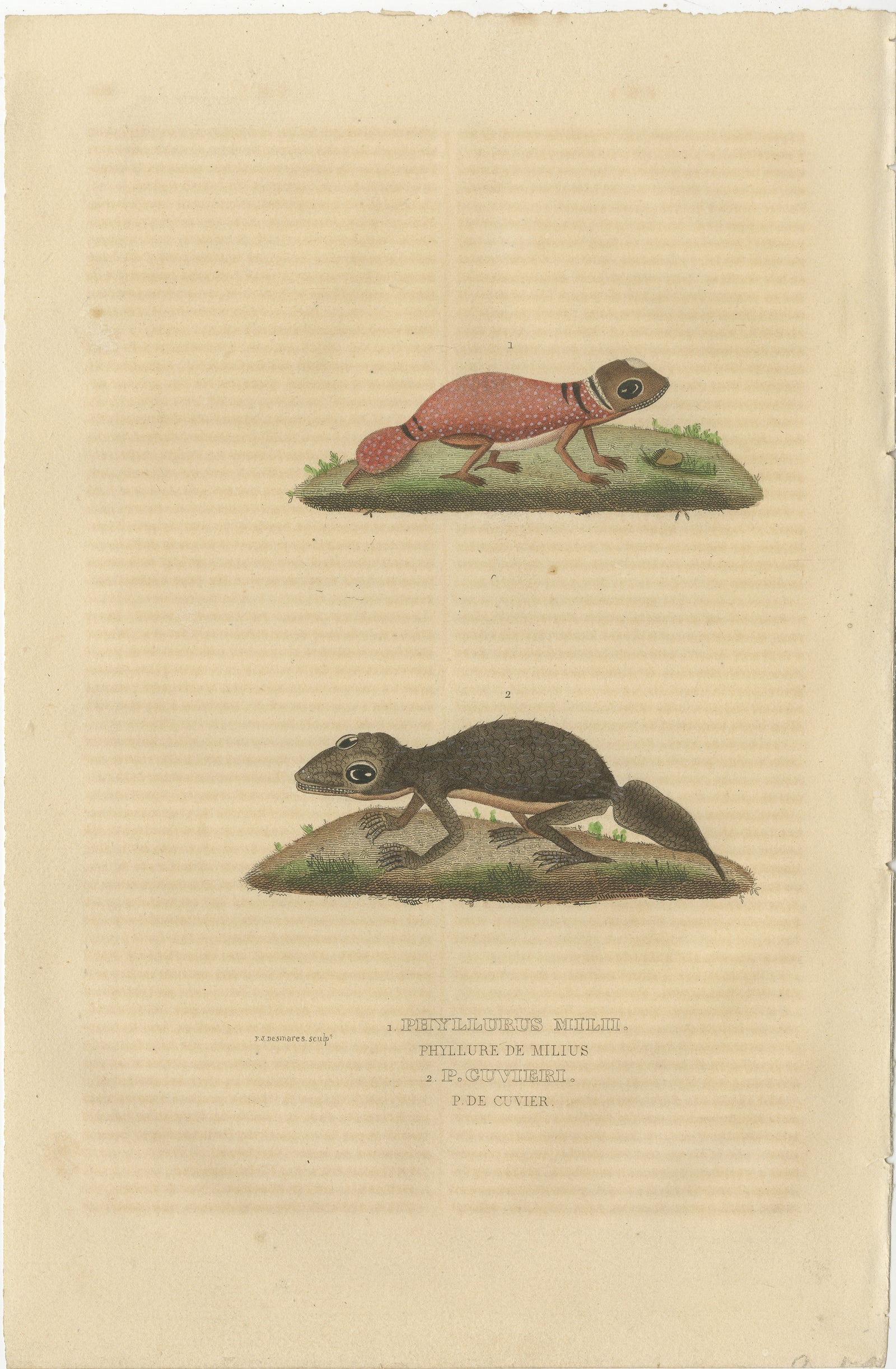
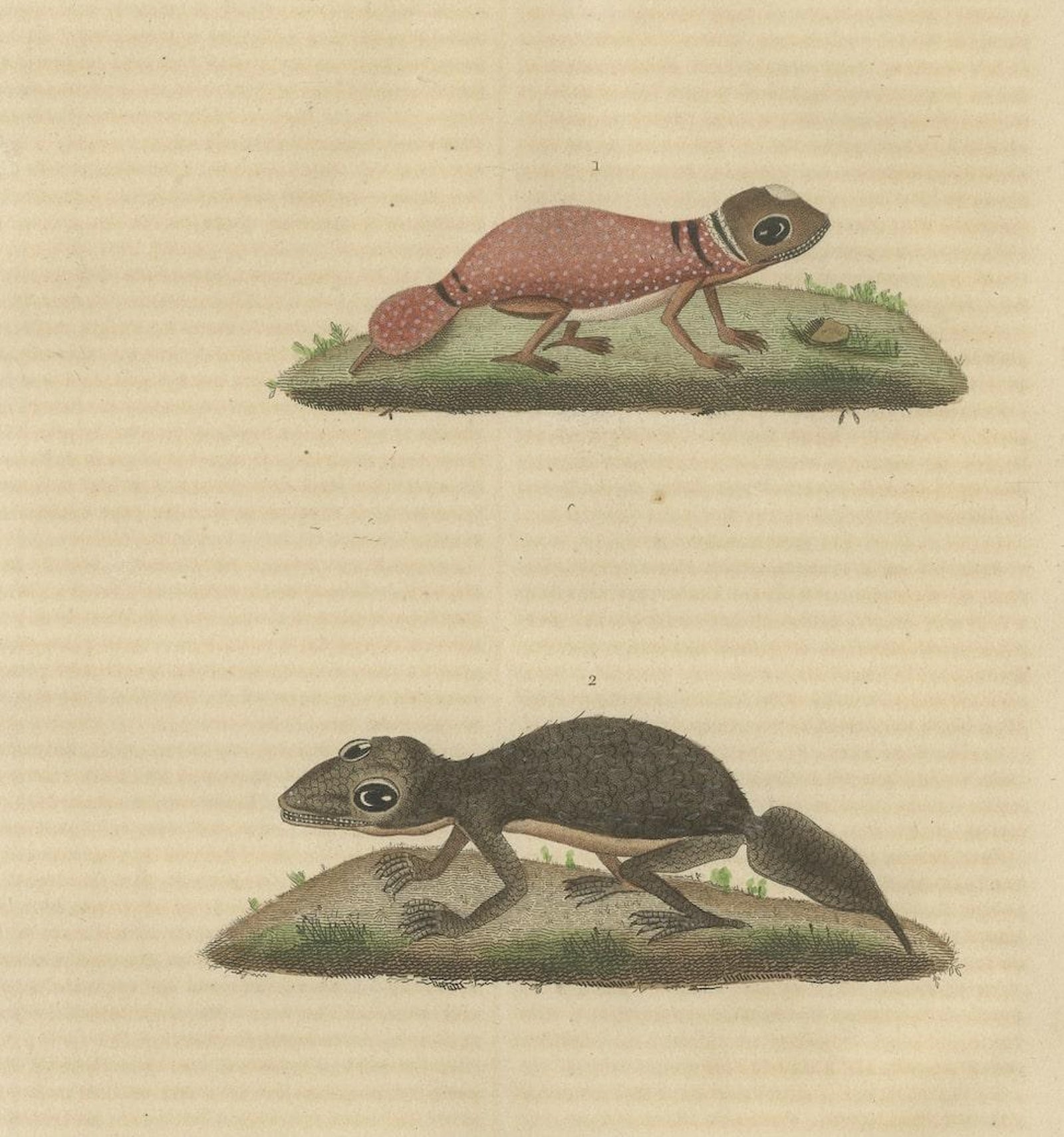
Old Hand-Colored Print of an Australian Thick-tailed Gecko and a Leaftail Gecko
£160 ($215, €190)
Period original, not a reproduction.
Shipped from the Netherlands, flat, insured and tracked, worldwide. Returns accepted within 14 days.
- Date
- Not stated
- Size
- 10.4 × 6.7 in (26.5 × 17 cm)
- Condition
- Good, given age. General age-related toning and/or occasional minor defects from handling. Please study scan carefully.
- Artist or book
- Cuvier
- Section
- Reptiles and amphibians
- Reference
- f_37410652
Title: 1. Phyllurus milii - Phyllure de milius, 2. Phyllurus cuvieri - Phyllure de cuvier.' (1. Thick-tailed Gecko, 2. Leaftail Gecko.)
Phyllurus milii and Phyllurus cuvieri are both species of geckos, known for their distinct features and fascinating characteristics.
1. **Phyllurus milii** - This gecko species is commonly referred to as the Thick-tailed Gecko. They are recognized for their robust bodies and, as the name suggests, their relatively thick tails. These geckos are native to Australia, known for their remarkable camouflage and their ability to blend seamlessly into their surroundings. Their appearance and behavior make them a fascinating species for reptile enthusiasts and collectors.
2. **Phyllurus cuvieri** - This species is known as the Leaftail Gecko. They derive this name from their leaf-like appearance, especially in their tails, which resemble dried leaves. This camouflage adaptation aids them in hiding from predators and ambushing prey. These geckos are also indigenous to Australia and are admired for their unique appearance and adaptations for survival.
Both species are part of the Phyllurus genus and belong to the diverse and intriguing world of geckos, known for their remarkable adaptations, distinctive appearances, and their appeal to reptile enthusiasts and collectors.
Made by F.J. Desmares after Pierre Auguste Joseph Drapiez (1778-1856).
Engraving with original hand colouring, heightened with arabic gum on wove (vellin) paper.
More info on the book in which it was published:
The 'Dictionnaire Classique des Sciences Naturelles' by Pierre Auguste Joseph Drapiez stands as a remarkable testament to 19th-century natural sciences. Published in Brussels in 1845, this work represents an expansive collation of knowledge, building upon the pioneering works of Buffon, Daubenton, Lacepede, Cuvier, de Jussieu, and other influential naturalists.
The prints within this compendium likely showcase a rich amalgamation of artistic precision and scientific accuracy. Drapiez, himself a Belgian naturalist, would have aimed for detailed representations of flora, fauna, and scientific phenomena, mirroring the illustrative styles prevalent during his time. Given the era's emphasis on illustration, these prints were likely engraved meticulously, possibly portraying intricate anatomical details or lifelike depictions of the natural world.
With Drapiez's background in natural history, the prints might bear testament to his commitment to scientific authenticity, aiming to educate and inspire scholars and enthusiasts alike. These engravings would have complemented the text, offering visual aids that elucidate the concepts and specimens discussed in the volume.
Overall, the prints of 'Dictionnaire Classique des Sciences Naturelles' likely serve as both artistic representations and invaluable scientific resources, encapsulating the essence of 19th-century natural history exploration and documentation.