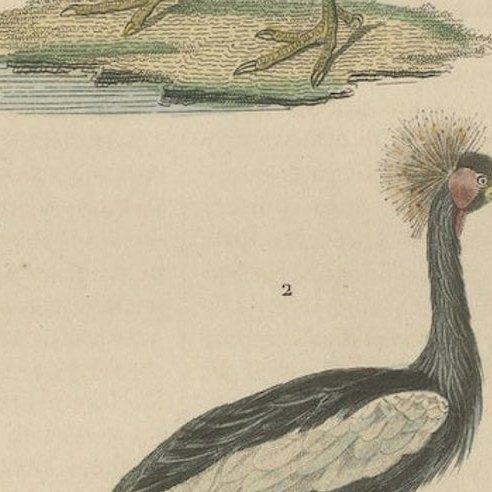
Close-ups
Framed and on the wall
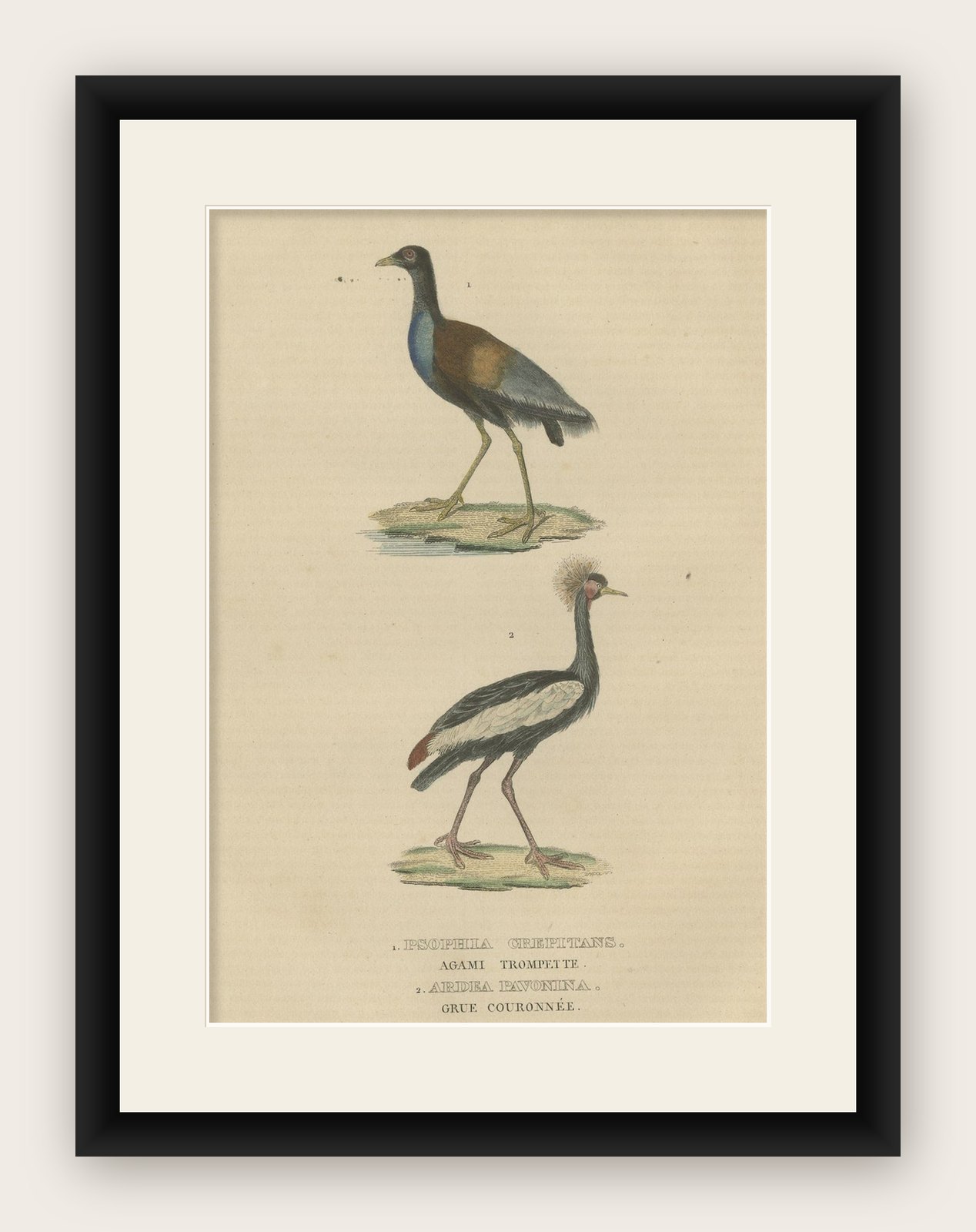


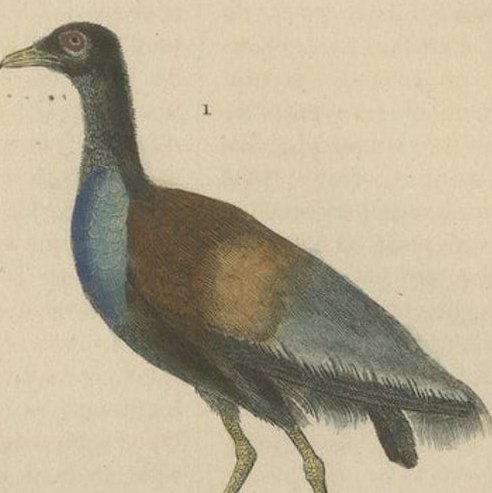
Frame and rooms are illustrations of how the print could look; the description says what is included.
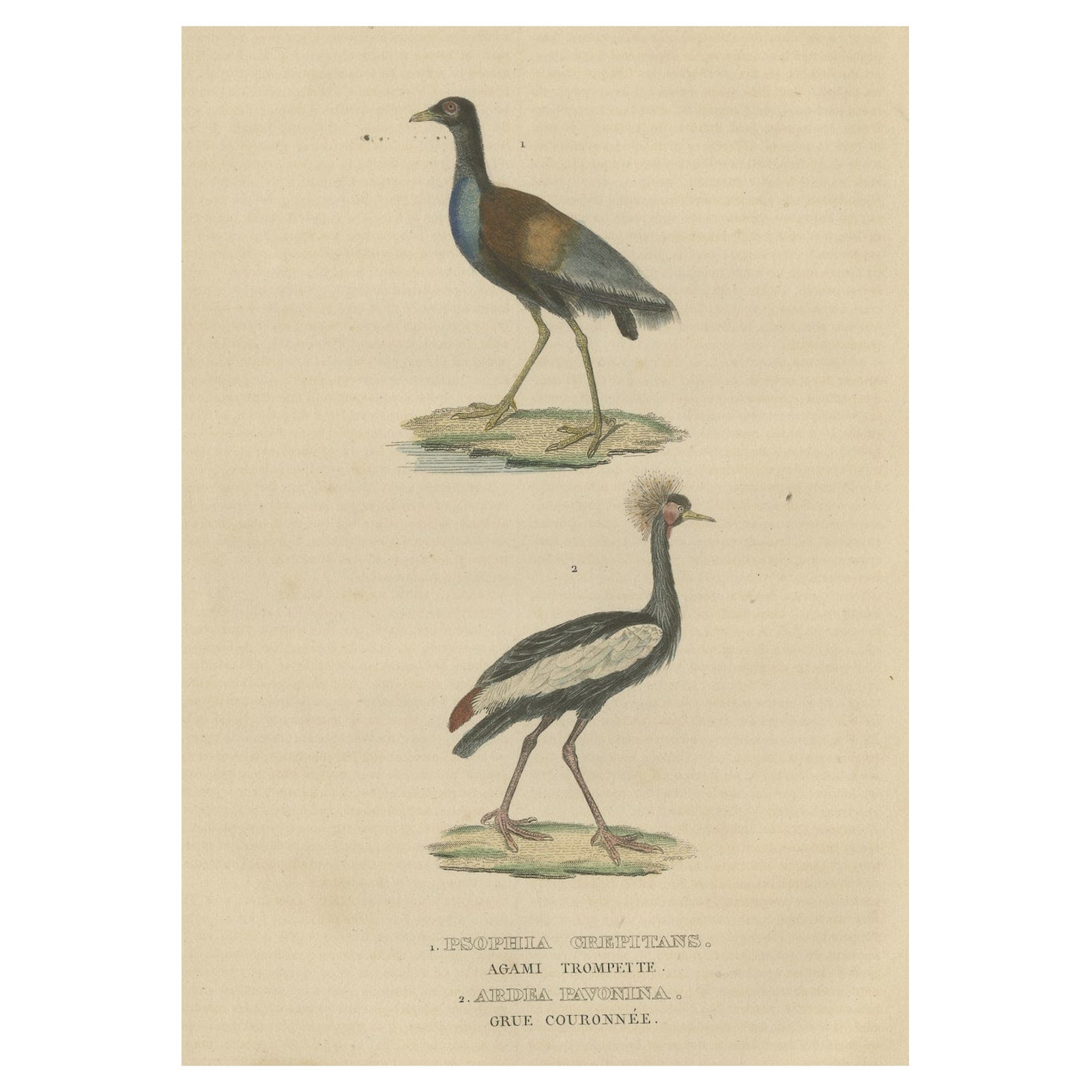
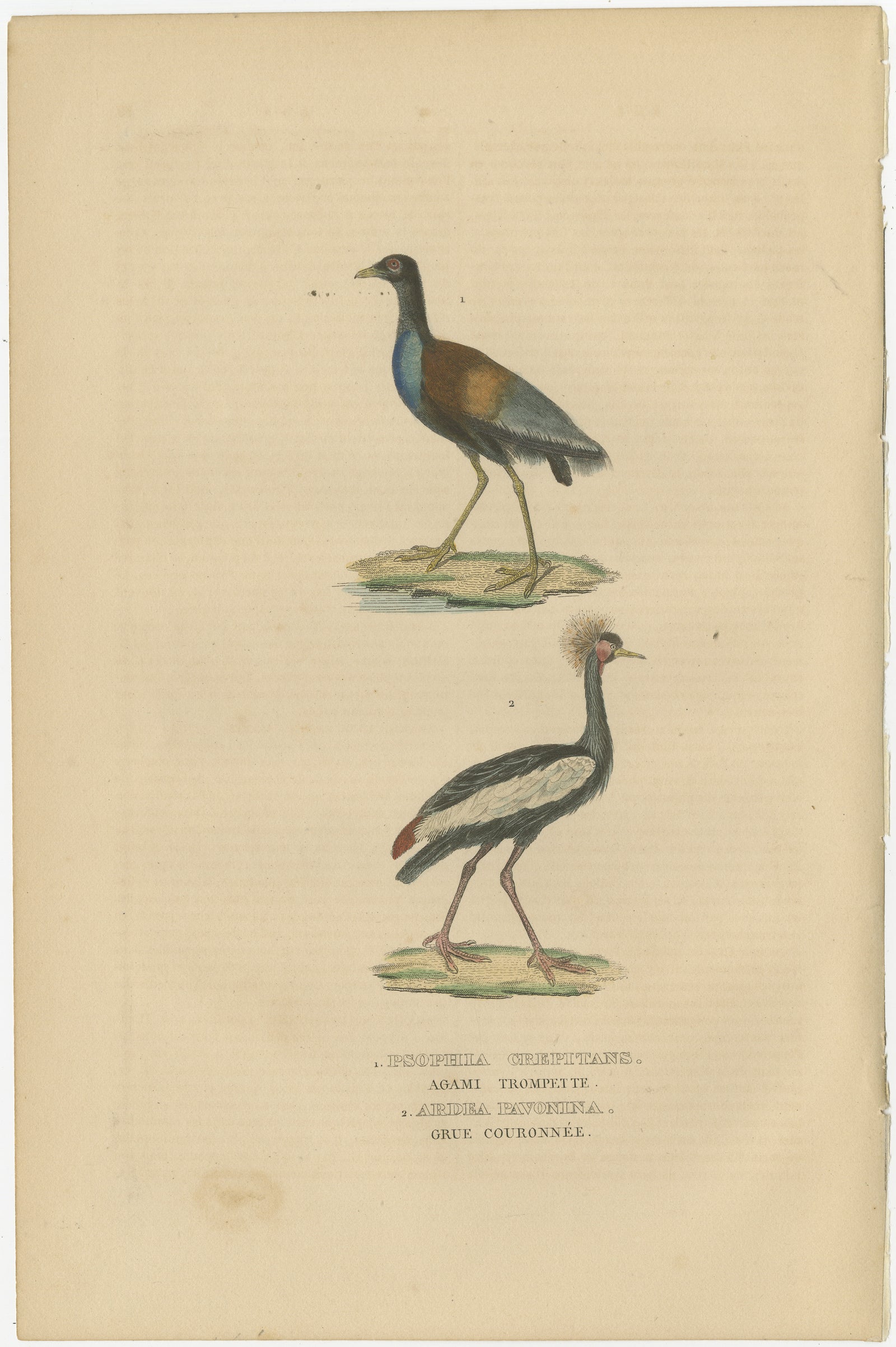
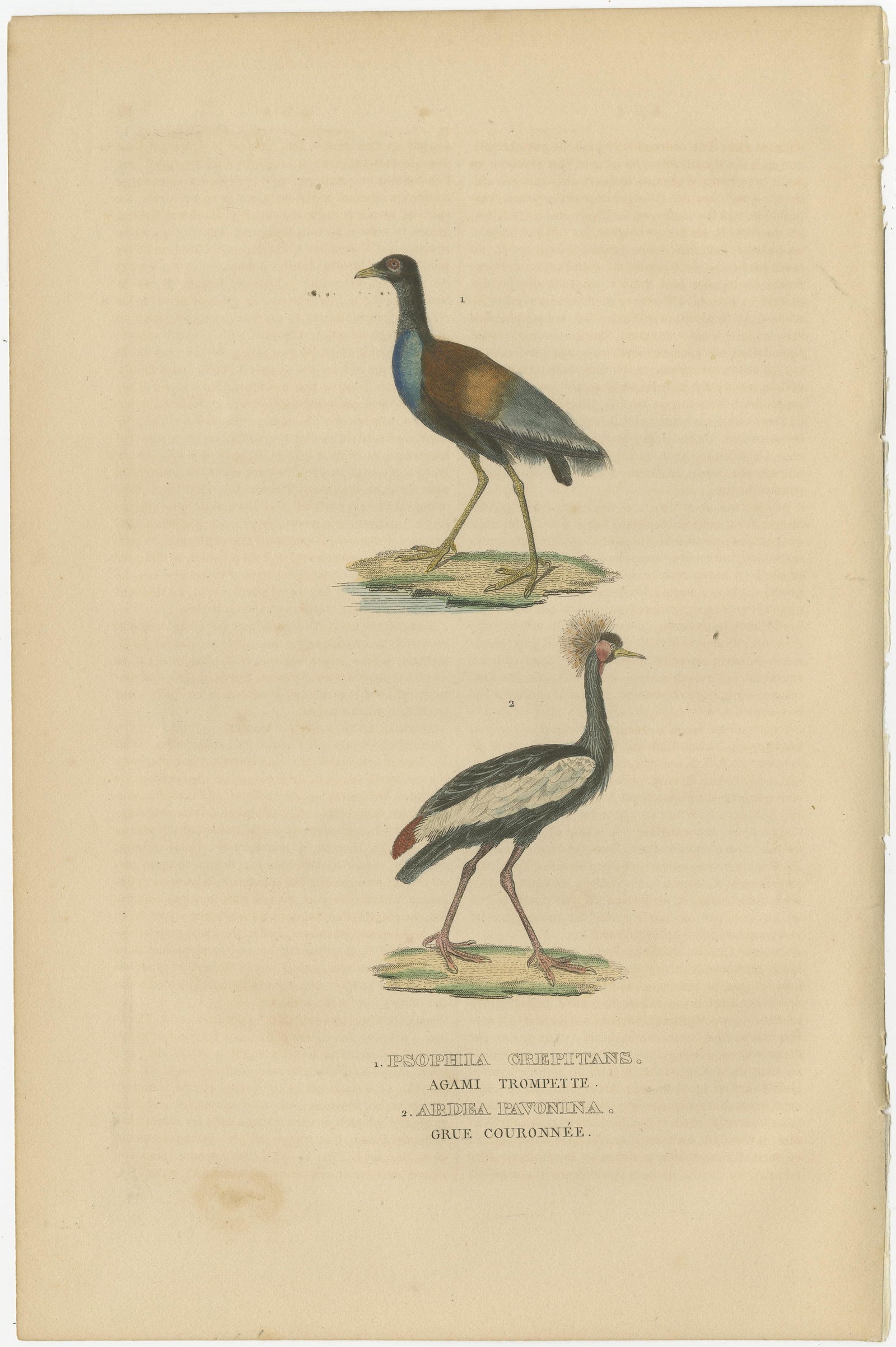
Old Bird Print of The Grey-winged Trumpeter and Black Crowned of Kaffir Crane
£160 ($210, €190)
Period original, not a reproduction.
Shipped from the Netherlands, flat, insured and tracked, worldwide. Returns accepted within 14 days.
- Date
- Not stated
- Size
- 10.4 × 6.7 in (26.5 × 17 cm)
- Condition
- Very good, given age. General age-related toning and/or occasional minor defects from handling. Please study scan carefully.
- Section
- Birds
- Reference
- f_37381292
- Colour
- Hand coloured
What the condition grades mean
- Excellent
- Bright and clean, with no faults worth mentioning.
- Very good
- Only light signs of age, such as faint toning.
- Good
- Normal signs of age for a sheet of this period: toning, some foxing, small marks or neat old repairs.
- Fair
- Clear faults such as staining, tears or repairs, priced to match.
Every fault we see is written in the condition note, and the whole sheet is shown uncropped in the photos.
Title: ‘1. PSOPHIA CREPITANS, AGAMI TROMPETTE, 2. ARDEA PAVONINA, GRUE COURONNEE.’
(translated: 1. Grey-winged Trumpeter, 2. Black Crowned Crane, Kaffir Crane.)
Made by F.J. Desmares after Pierre Auguste Joseph Drapiez (1778-1856).
Engraving with original hand colouring, heightened with arabic gum on wove (vellin) paper.
More info on the book in which it was published:
The 'Dictionnaire Classique des Sciences Naturelles' by Pierre Auguste Joseph Drapiez stands as a remarkable testament to 19th-century natural sciences. Published in Brussels in 1845, this work represents an expansive collation of knowledge, building upon the pioneering works of Buffon, Daubenton, Lacepede, Cuvier, de Jussieu, and other influential naturalists.
The prints within this compendium likely showcase a rich amalgamation of artistic precision and scientific accuracy. Drapiez, himself a Belgian naturalist, would have aimed for detailed representations of flora, fauna, and scientific phenomena, mirroring the illustrative styles prevalent during his time. Given the era's emphasis on illustration, these prints were likely engraved meticulously, possibly portraying intricate anatomical details or lifelike depictions of the natural world.
With Drapiez's background in natural history, the prints might bear testament to his commitment to scientific authenticity, aiming to educate and inspire scholars and enthusiasts alike. These engravings would have complemented the text, offering visual aids that elucidate the concepts and specimens discussed in the volume.
Overall, the prints of 'Dictionnaire Classique des Sciences Naturelles' likely serve as both artistic representations and invaluable scientific resources, encapsulating the essence of 19th-century natural history exploration and documentation.