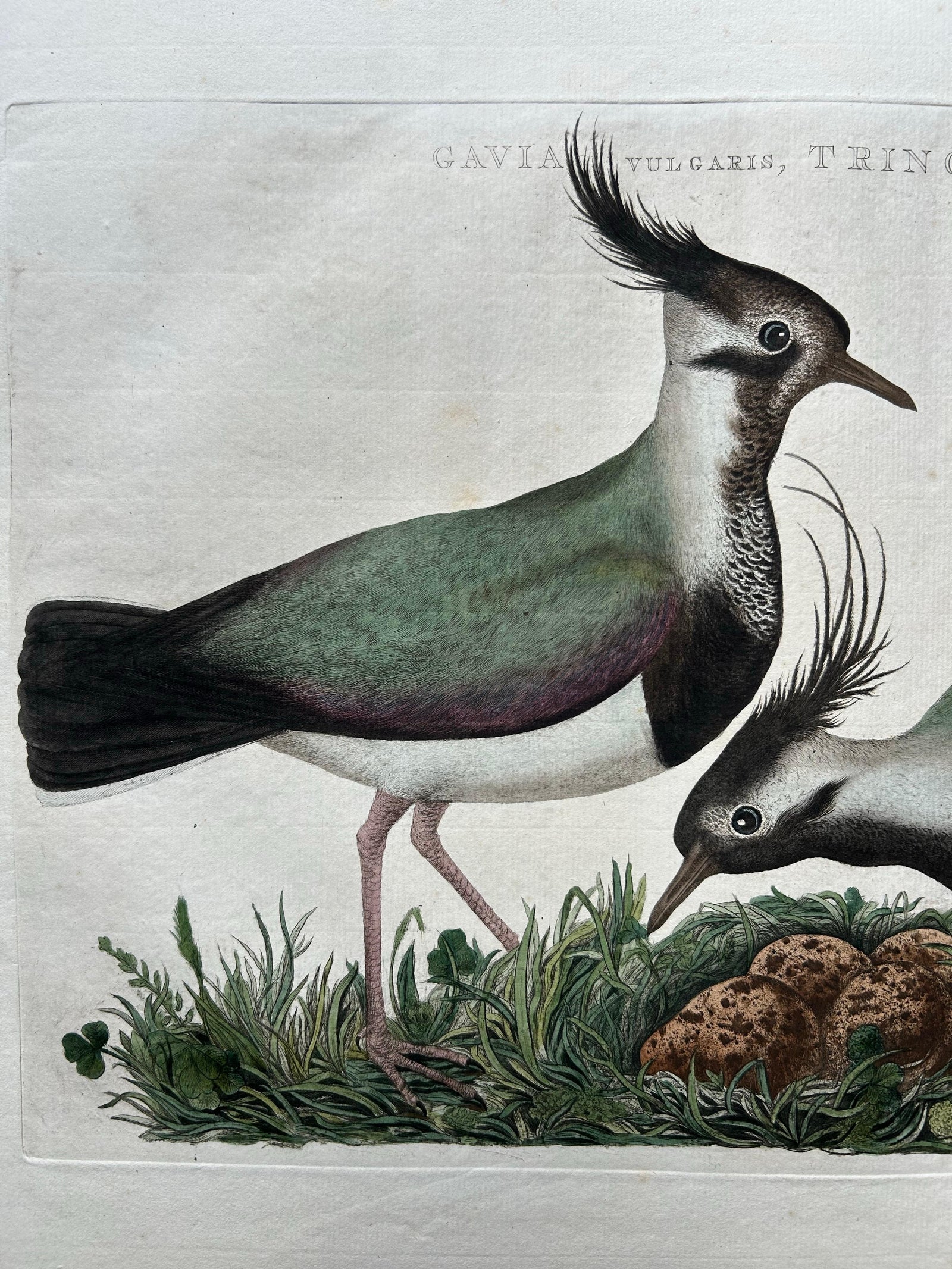
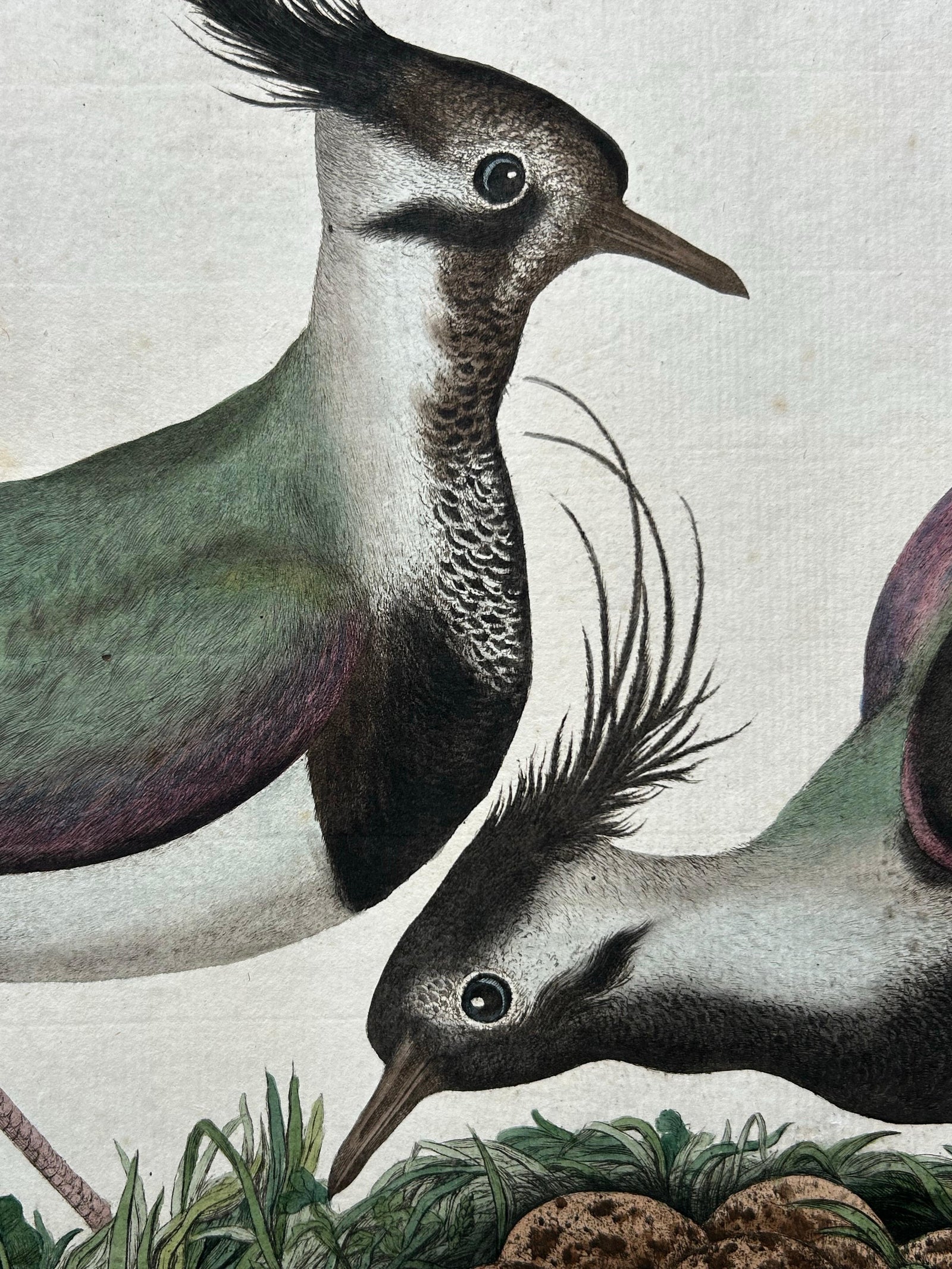
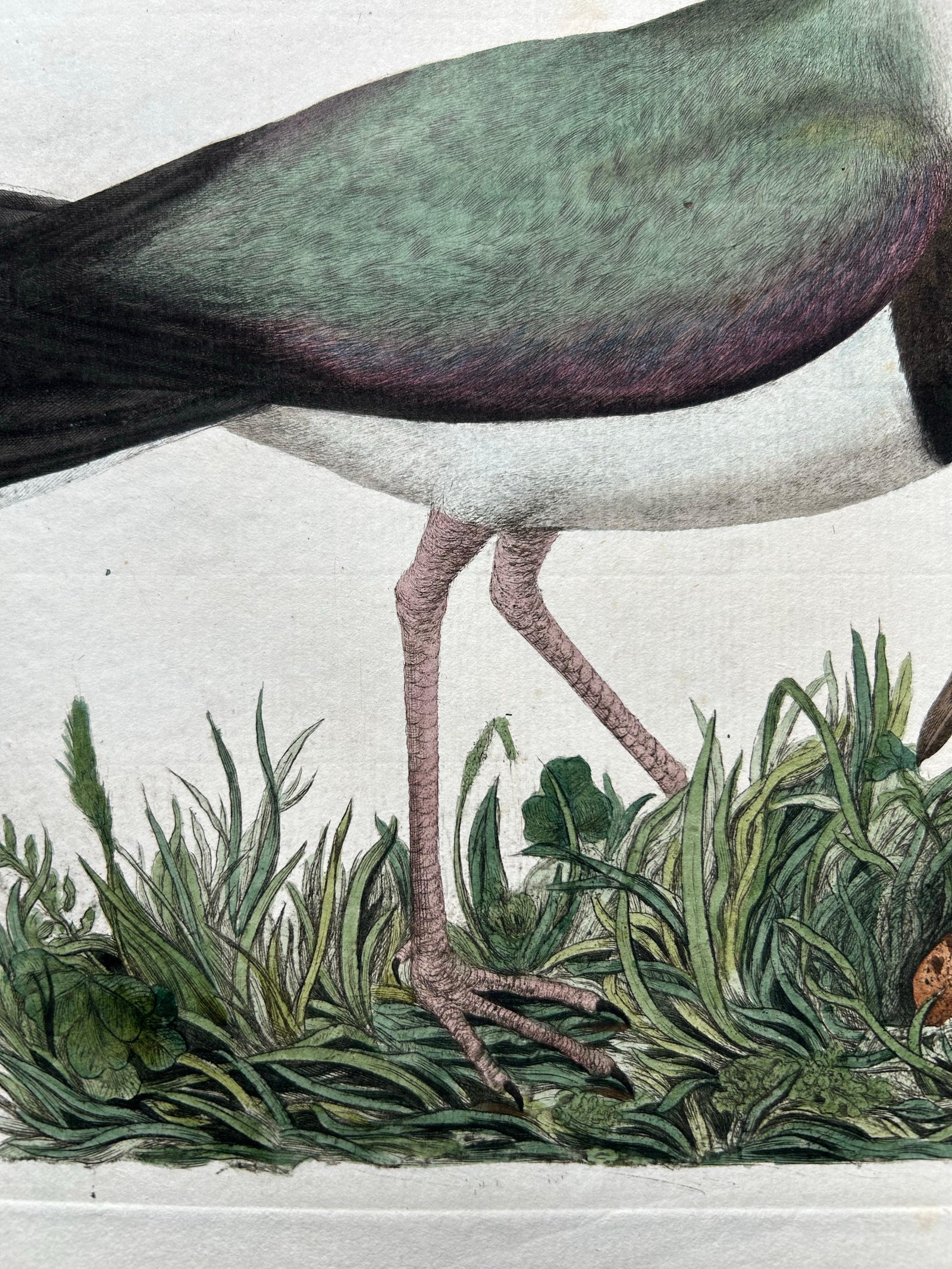
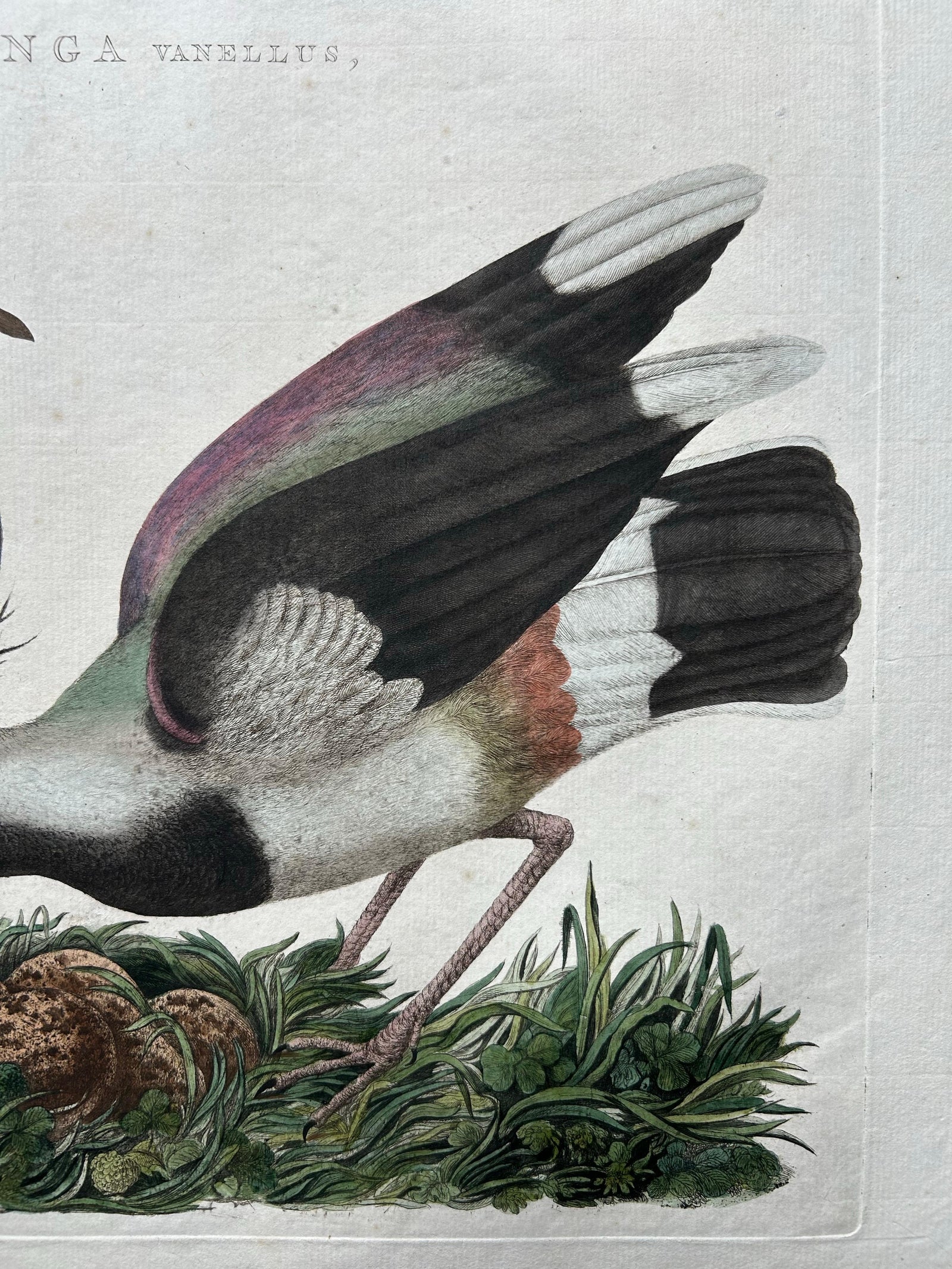
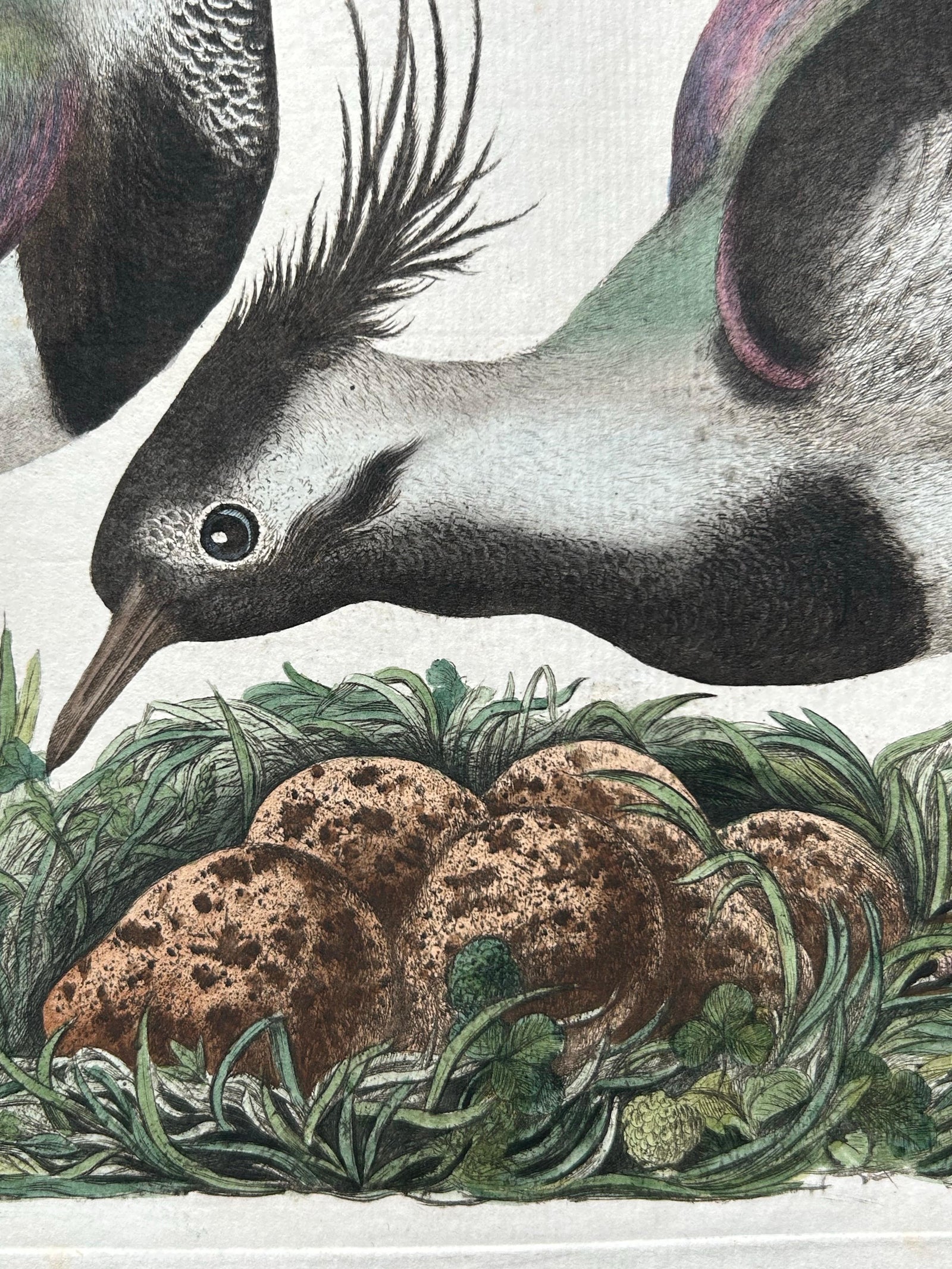
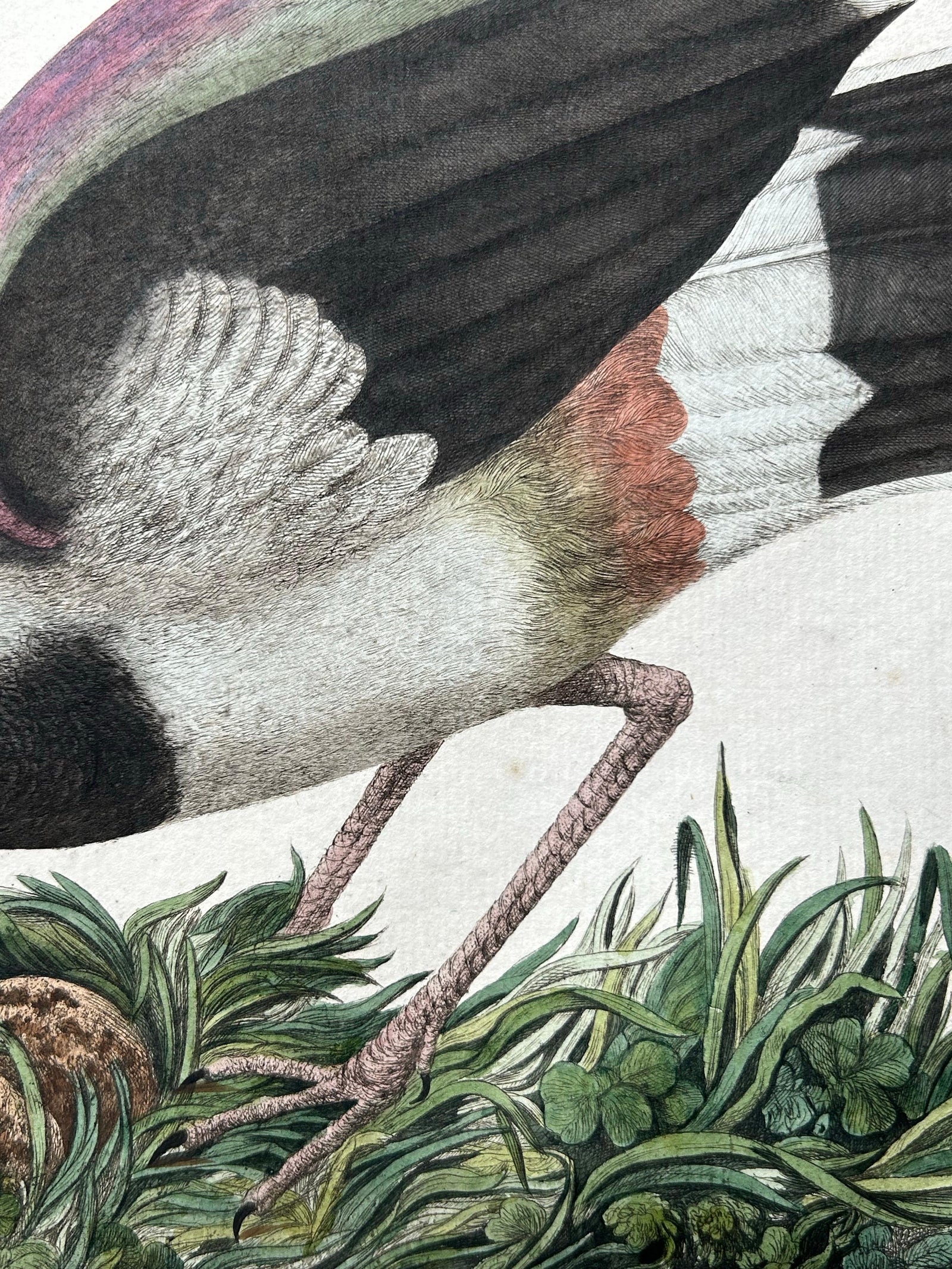
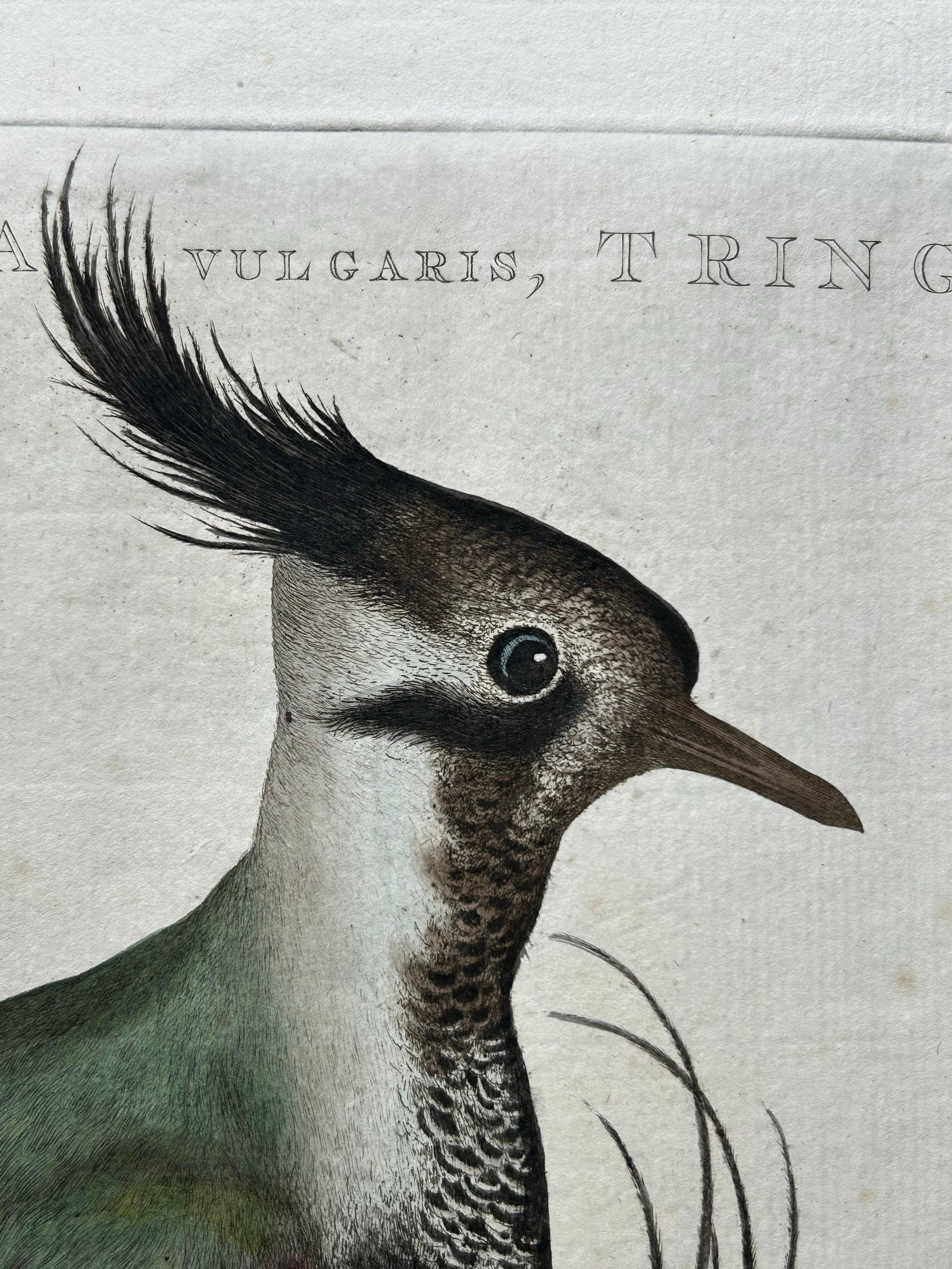
Close-ups
Framed and on the wall
Frame and rooms are illustrations of how the print could look; the description says what is included.
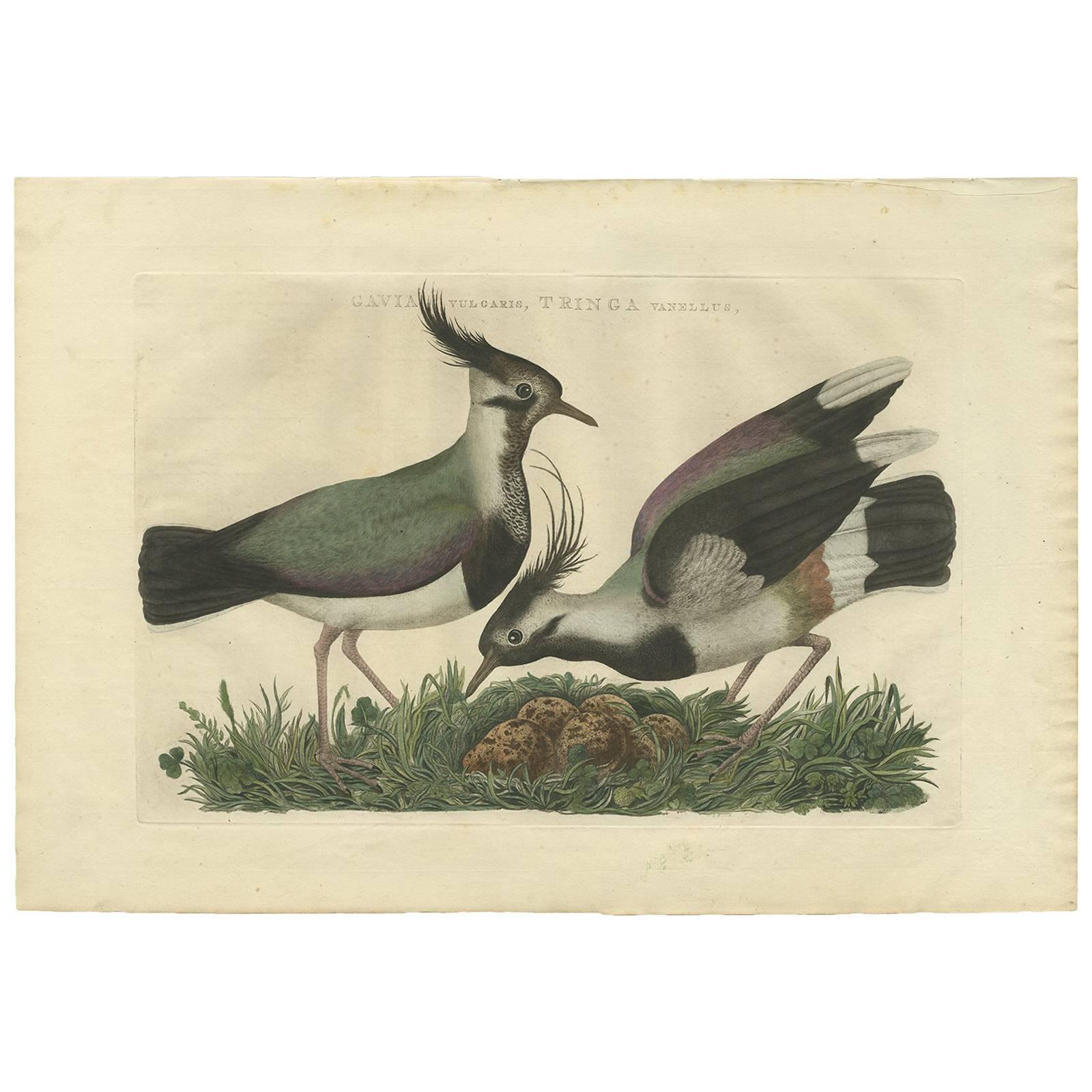
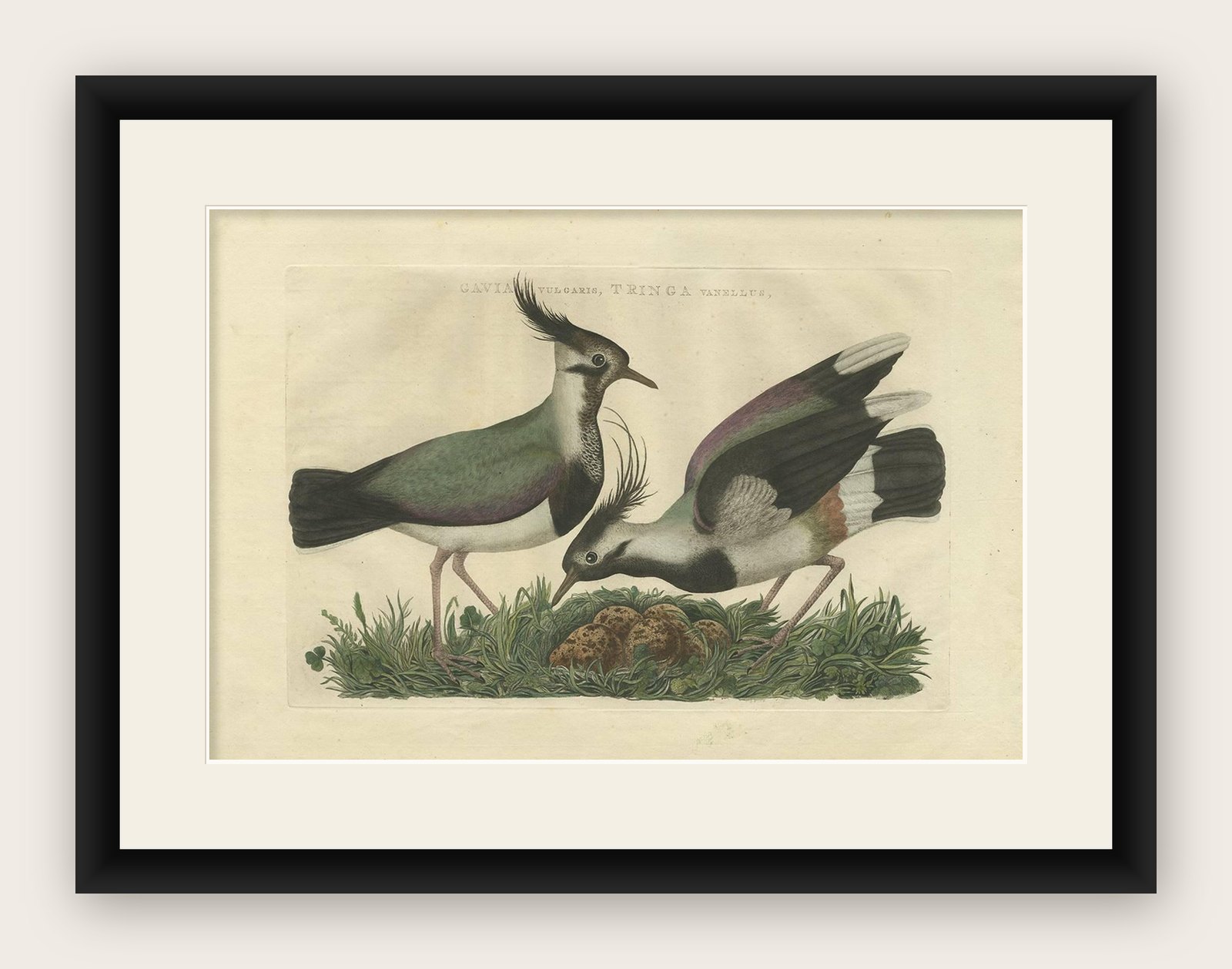
Northern Lapwing, Gavia vulgaris, Tringa vanellus, Nozeman & Sepp, 1770–1829
£2,970 ($3,945, €3,500)
Period original, not a reproduction.
Shipped from the Netherlands, flat, insured and tracked, worldwide. Returns accepted within 14 days.
- Date
- 1770
- Size
- 21.1 × 14.6 in (53.5 × 37 cm)
- Technique
- Engraved
- Condition
- Good. Very good impression with rich original hand colour. Light toning to margins and occasional faint handling marks consistent with age. Plate mark visible. Paper strong, no tears or repairs.
- Period
- 18th century
- Artist or book
- Nozeman and Sepp
- Section
- Birds
- Reference
- f_10821253
Northern Lapwing, Gavia vulgaris, Tringa vanellus, Nozeman & Sepp, 1770–1829
This finely hand-coloured engraving, titled “Gavia vulgaris, Tringa vanellus,” depicts the northern lapwing (Vanellus vanellus), a striking wader recognised by its iridescent green plumage, long wispy crest, and bold black-and-white markings. The scene captures a pair of lapwings on the ground beside their nest, with the intricately speckled eggs carefully rendered amid tufts of grass. The naturalistic composition reflects the lapwing’s characteristic breeding habitat of open grasslands and cultivated fields.
The northern lapwing, also known as the peewit, green plover, or simply lapwing, is widespread across temperate Eurasia. Highly migratory, most birds winter further south in Europe, North Africa, and Asia, though some western European populations remain resident. The lapwing’s tumbling flight display, distinctive “pee-wit” call, and fiercely protective nesting behaviour have made it a familiar and celebrated farmland bird for centuries. Historically valued for its eggs, the species was once the subject of intensive seasonal collection, a detail vividly discussed in the original accompanying Dutch text.
This engraving originates from “Nederlandsche Vogelen; volgens hunne huisdouding, aert, en eigenschappen beschreeven,” Amsterdam, 1770–1829, by Cornelius Nozeman, Martinus Houttuyn, and Jan Christiaan Sepp. The work represents the first major ornithological study published in the Netherlands and remains a landmark in European natural history illustration. Each plate was meticulously hand-coloured, with the birds often shown close to life size in their natural environment. This example is offered with its two original pages of descriptive letterpress text in Dutch, as issued.
Condition: Very good impression with rich original hand colour. Light toning to margins and occasional faint handling marks consistent with age. Plate mark visible. Paper strong, no tears or repairs.
Framing tips: A dark wood or ebonised frame will accentuate the green and black plumage of the birds, while a soft cream or pale green mount will enhance the surrounding grassy details. Consider conservation-grade materials to protect the original hand colouring and text pages, with the option to frame the illustration and text together for historical context.