Close-ups
Framed and on the wall


Frame and rooms are illustrations of how the print could look; the description says what is included.
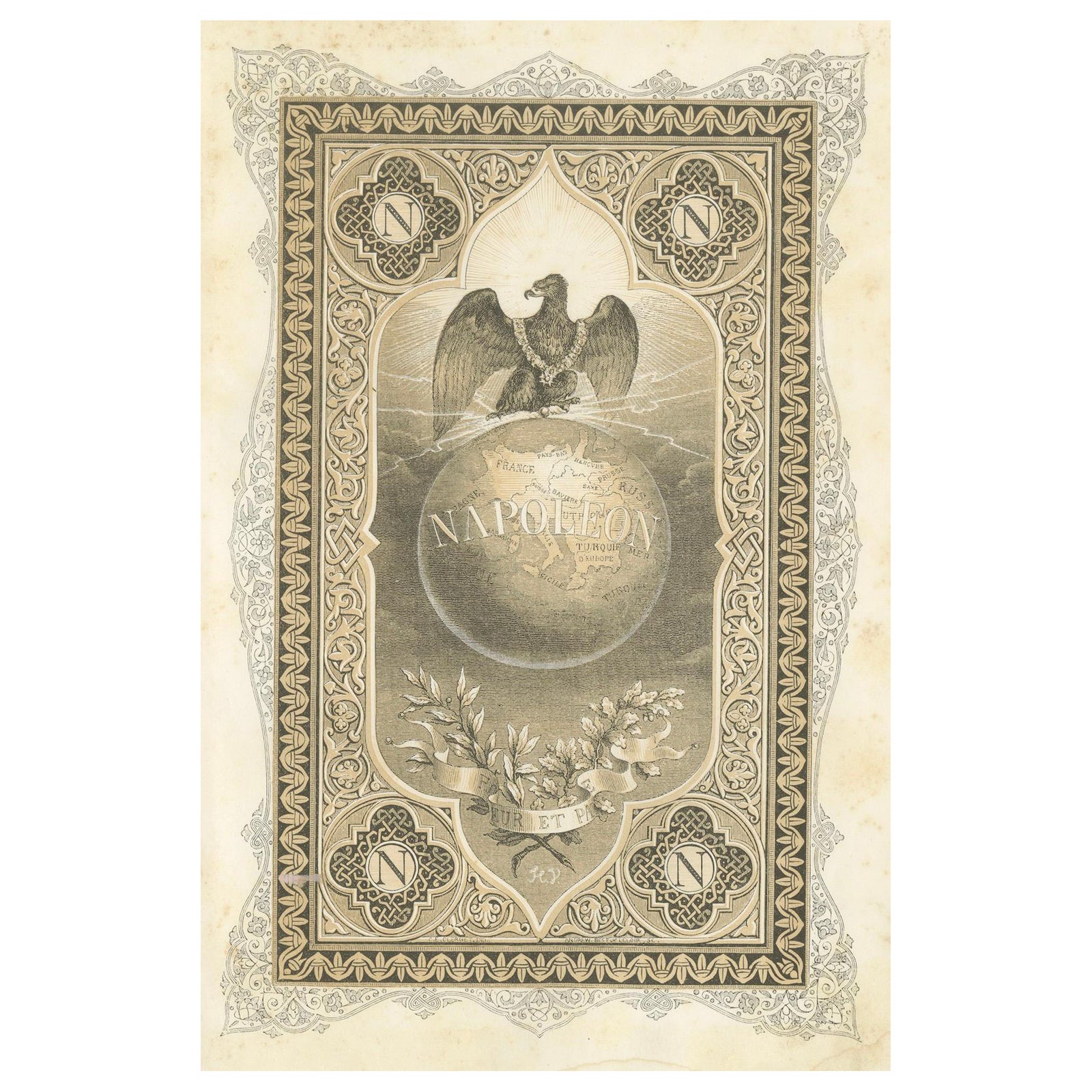
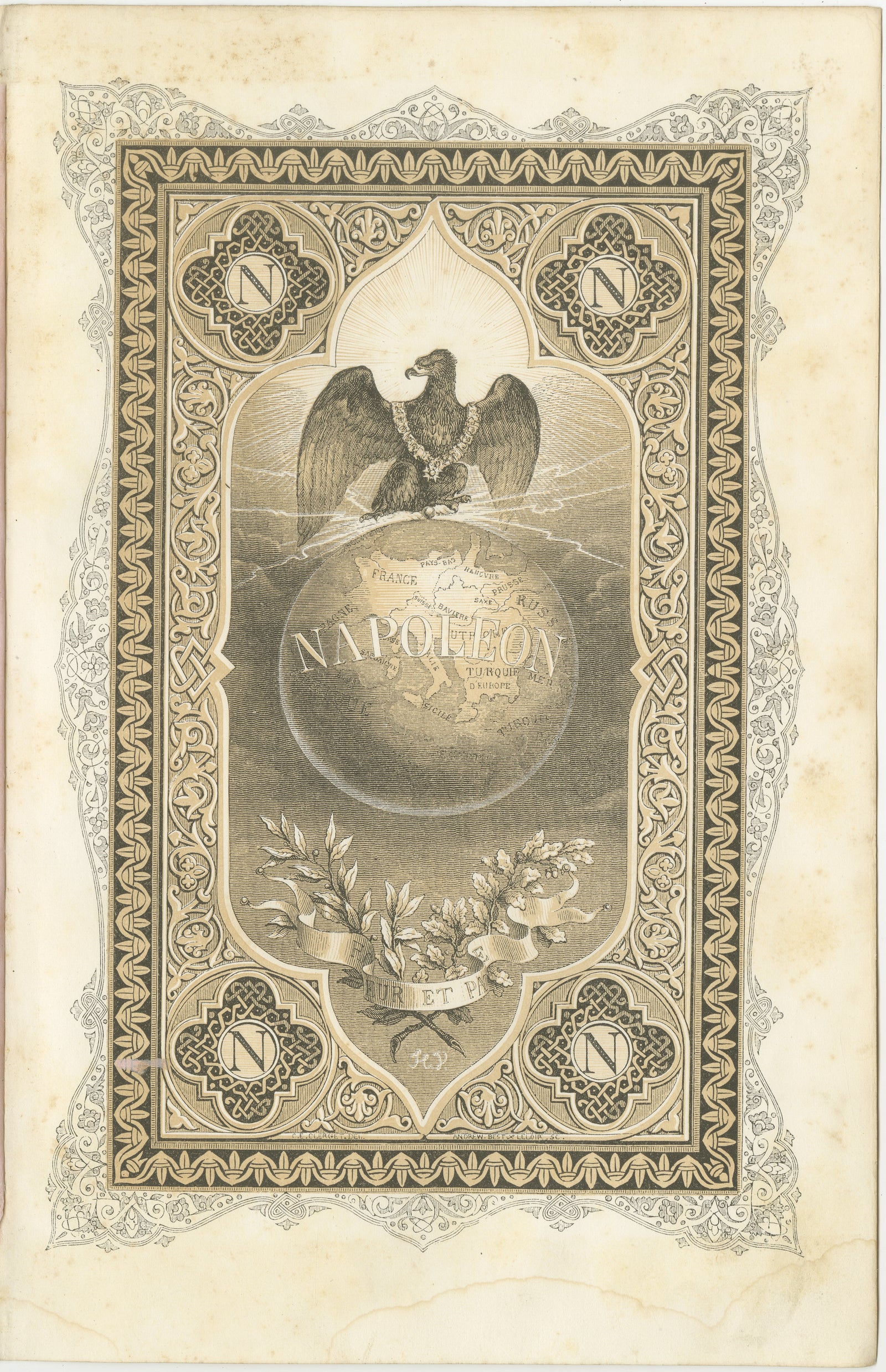
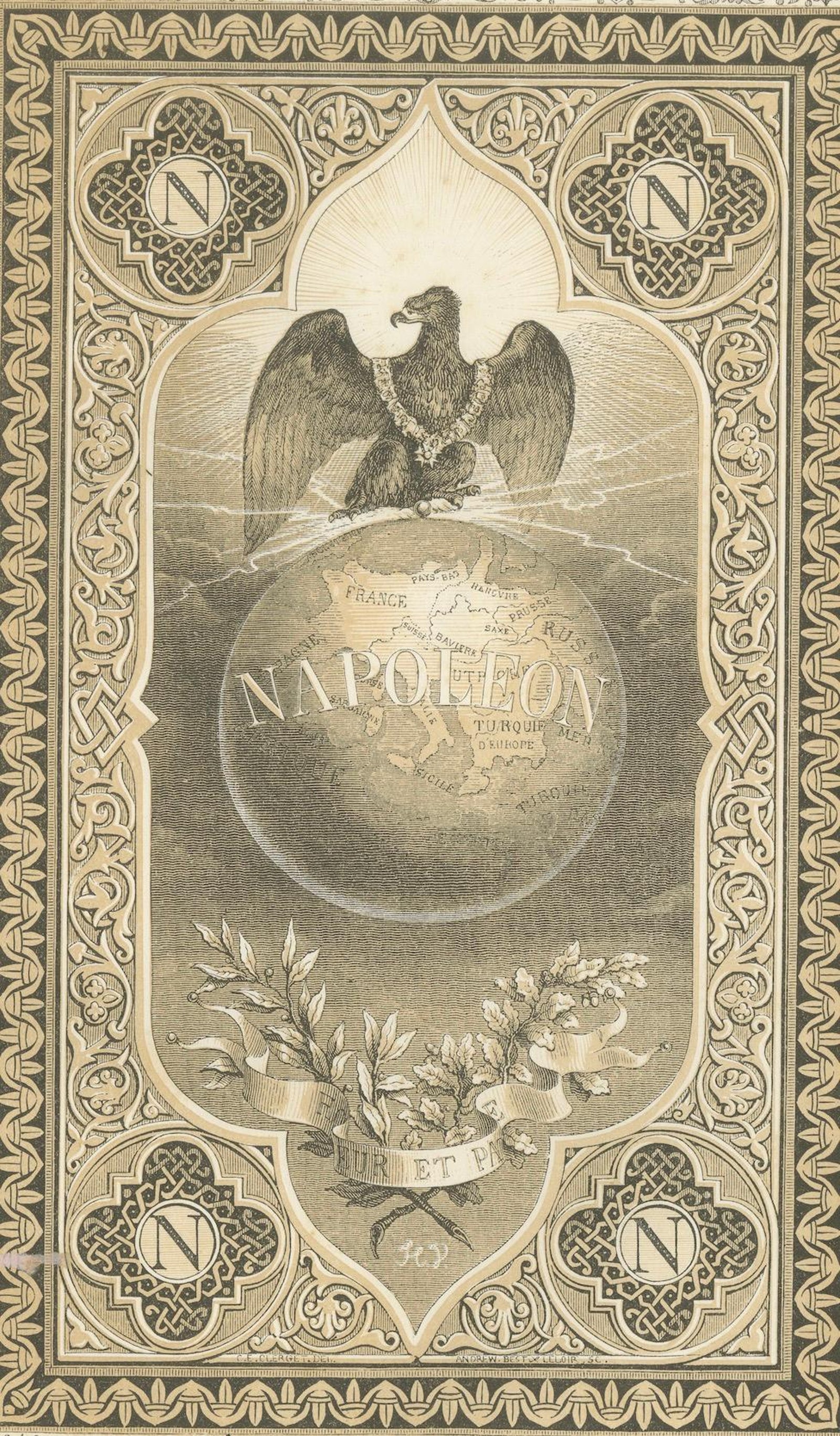
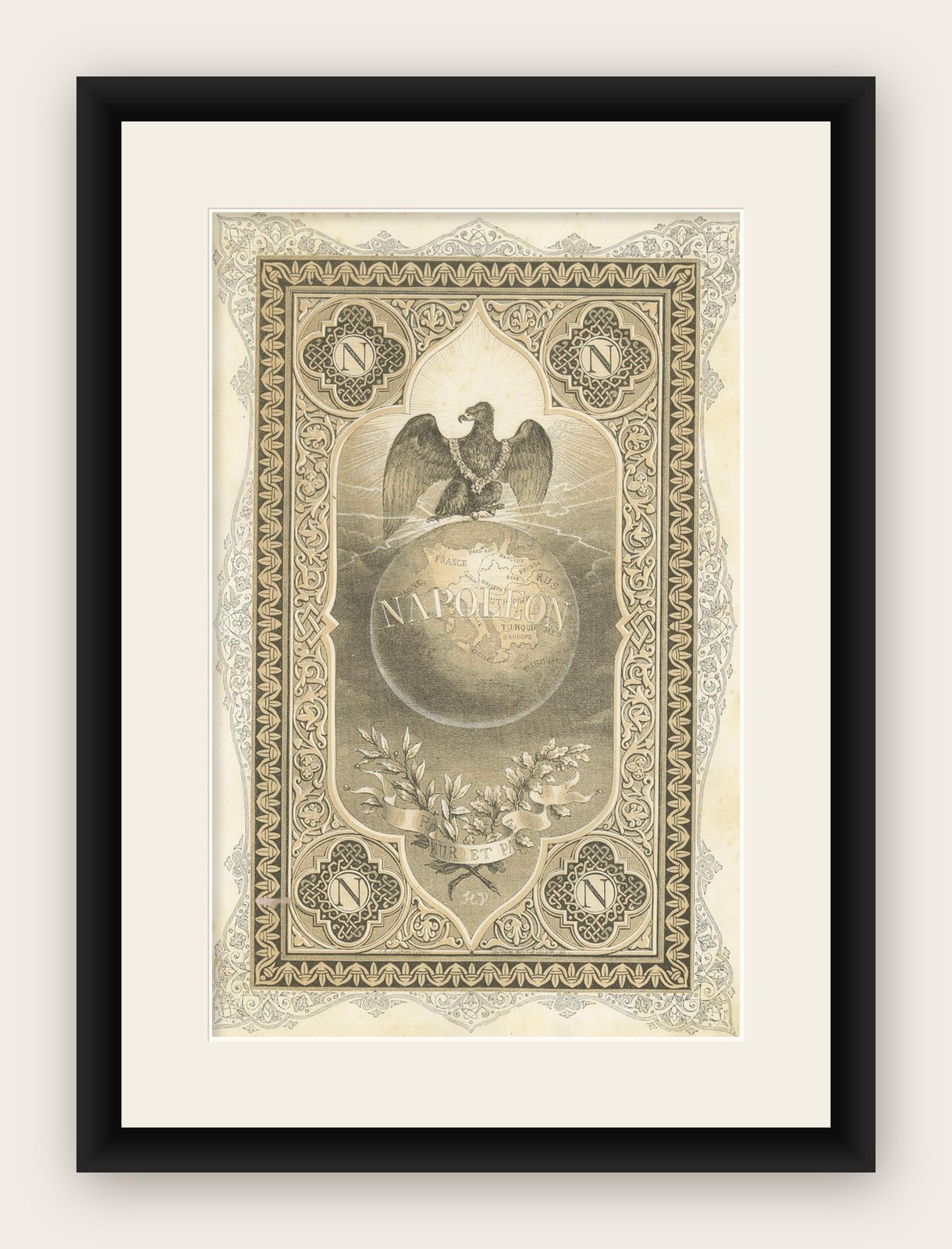
Napoleon Bonaparte, Imperial Eagle and World Allegory, French Engraving, 1843
£145 ($190, €170)
Period original, not a reproduction.
Shipped from the Netherlands, flat, insured and tracked, worldwide. Returns accepted within 14 days.
- Date
- 1843
- Size
- 10 × 6.3 in (25.3 × 16 cm)
- Condition
- Fair. Paper in fair to good overall condition with light age toning. Some scattered foxing and minor surface spotting, most visible in the margins. A faint tide mark along the lower edge, not affecting the image area. Margins ample.
- Period
- Early 19th century
- Section
- Birds
- Reference
- f_47987912
Napoleon Bonaparte, Imperial Eagle and World Allegory, French Engraving
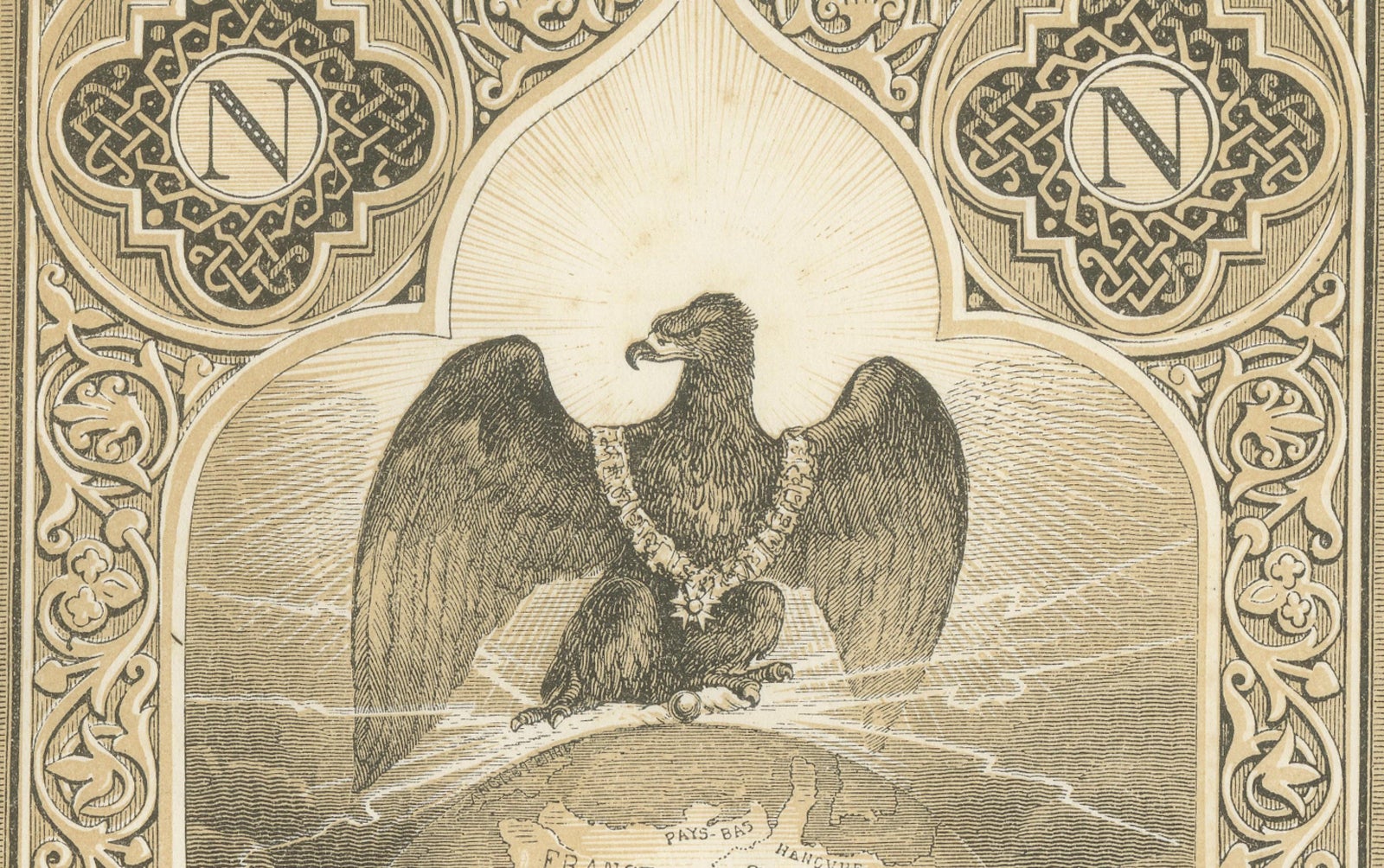
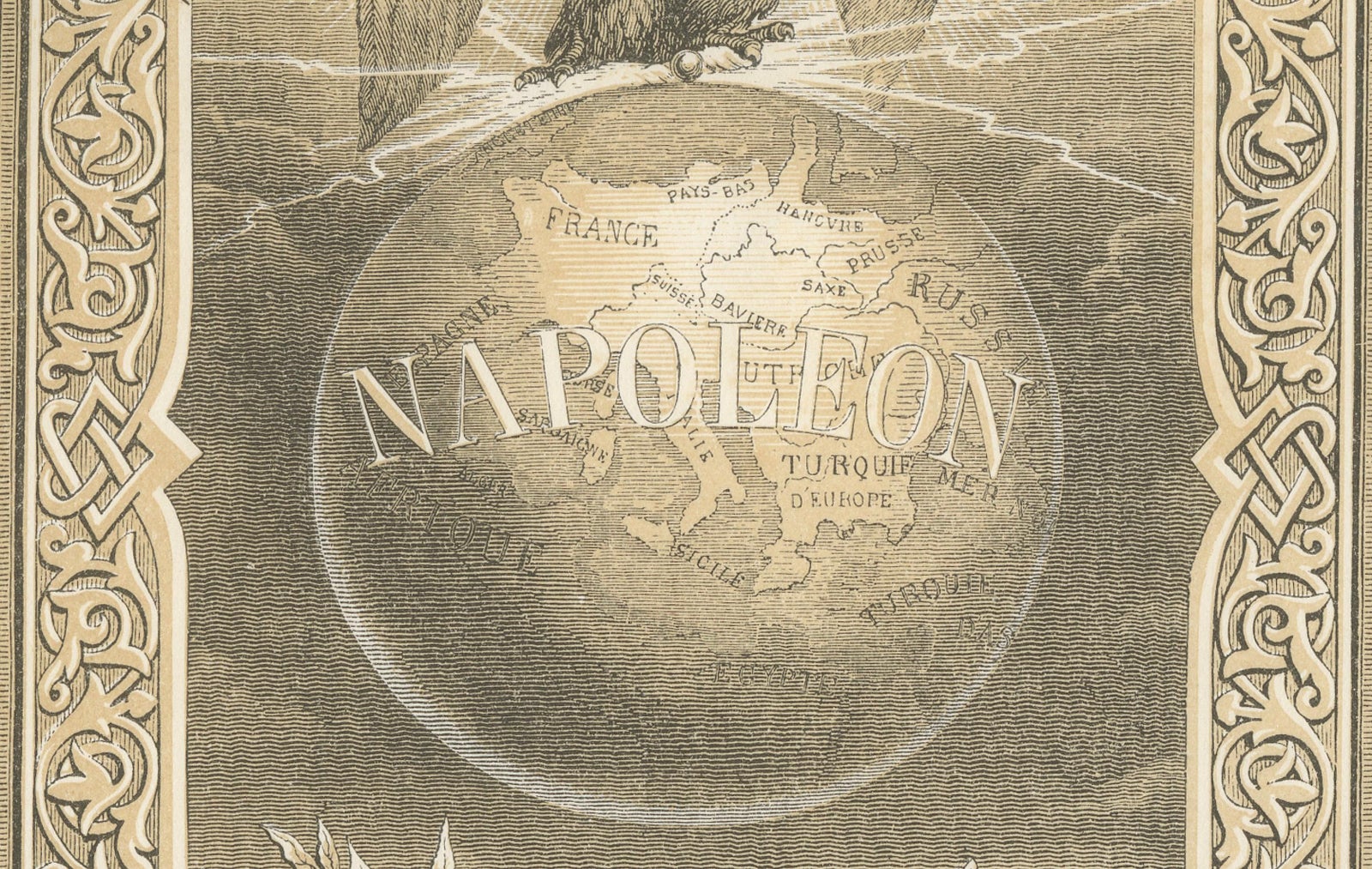
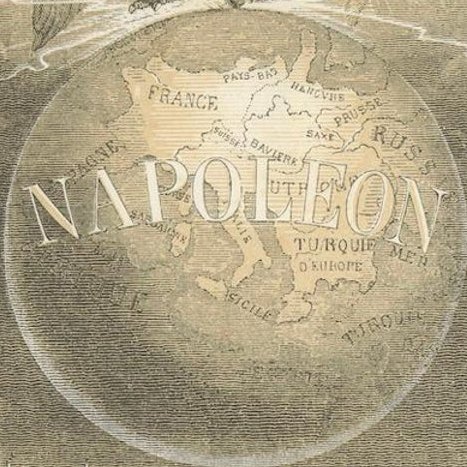
This powerful 19th-century allegorical print centers on Napoleon Bonaparte as a global and imperial force, expressed through rich symbolic imagery rather than portraiture. At the heart of the composition stands the imperial eagle, wings outspread, poised atop a globe bearing the name “NAPOLEON” across Europe. The eagle, a direct reference to Roman imperial power and adopted by Napoleon as his emblem, conveys authority, dominion, and military sovereignty.
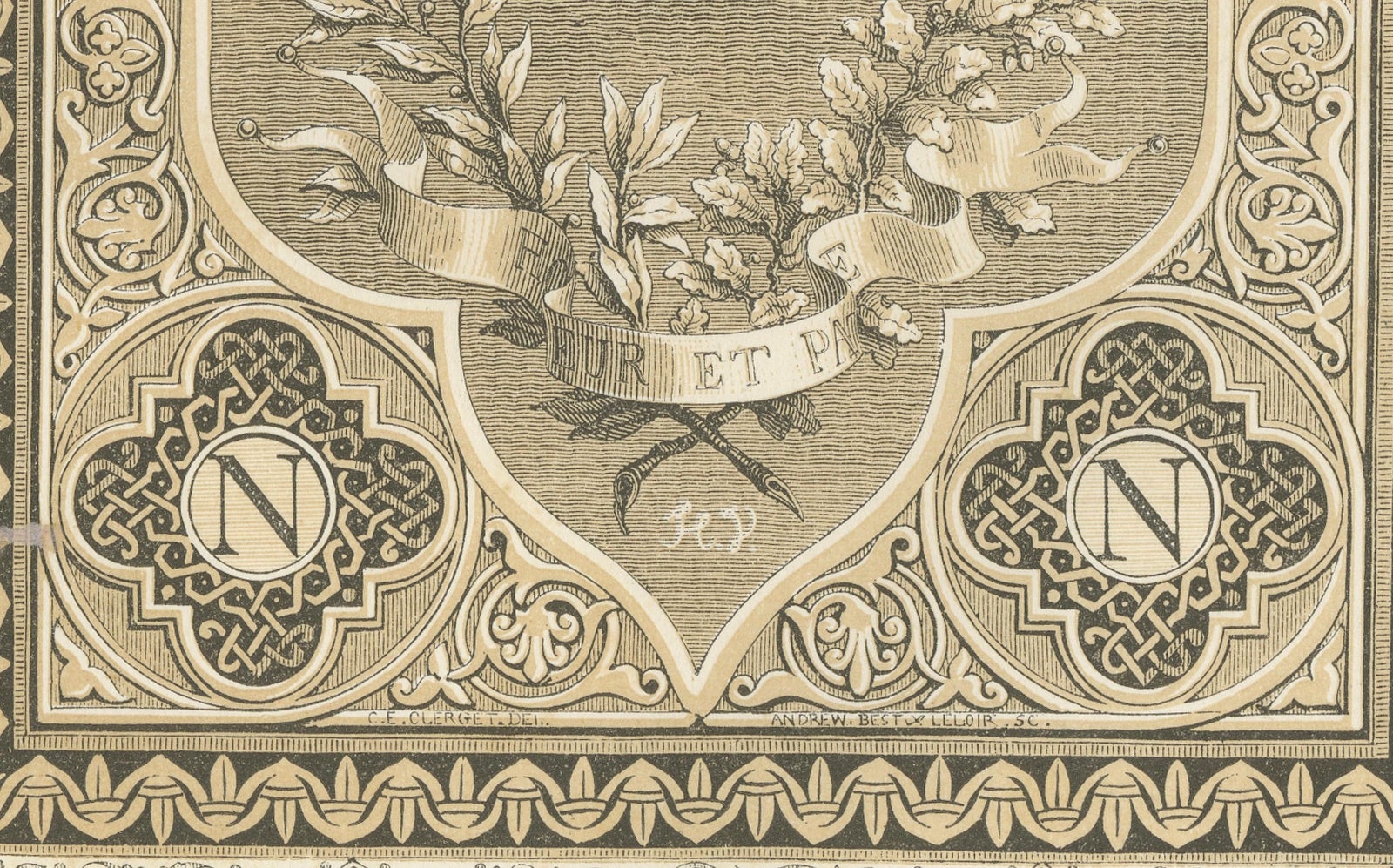
The globe beneath the eagle prominently highlights France and neighboring regions, visually reinforcing the idea of Napoleonic influence extending across the European continent. Below, laurel and oak branches, classical symbols of victory, strength, and endurance, are tied with a ribbon, further underscoring themes of triumph and legitimacy. Surrounding the central image is an elaborate ornamental frame, richly decorated with interlacing motifs and repeated “N” medallions, unmistakably referring to Napoleon himself. The overall design reflects the historicist and neo-medieval decorative language that became popular in France during the mid-19th century, particularly in works celebrating national history and heroic figures.
This print originates from the illustrated publication *Histoire de l’Empereur Napoléon* by P.-M. Laurent de l’Ardèche, published in Paris in 1843. The book sought to cement Napoleon’s legacy for a new generation, combining historical narrative with striking visual symbolism. Rather than documenting a specific event, this image functions as a visual manifesto of Napoleonic power, ideology, and myth-making, making it especially appealing to collectors of Napoleonic memorabilia, French imperial history, and symbolic historical prints.
Condition report:
Paper in good overall condition with light age toning. Some scattered foxing and minor surface spotting, most visible in the margins. A faint tide mark along the lower edge, not affecting the image area. Margins ample. Image strong and well-preserved.
Framing tips:
This print benefits from a refined, classic presentation. A dark walnut, mahogany, or black frame paired with a wide cream or warm ivory mat will emphasize the intricate border and central allegory. Museum glass is recommended to protect the paper and preserve contrast.
Technique: Engraving
Maker: French school, Paris, 1843