Close-ups
Framed and on the wall
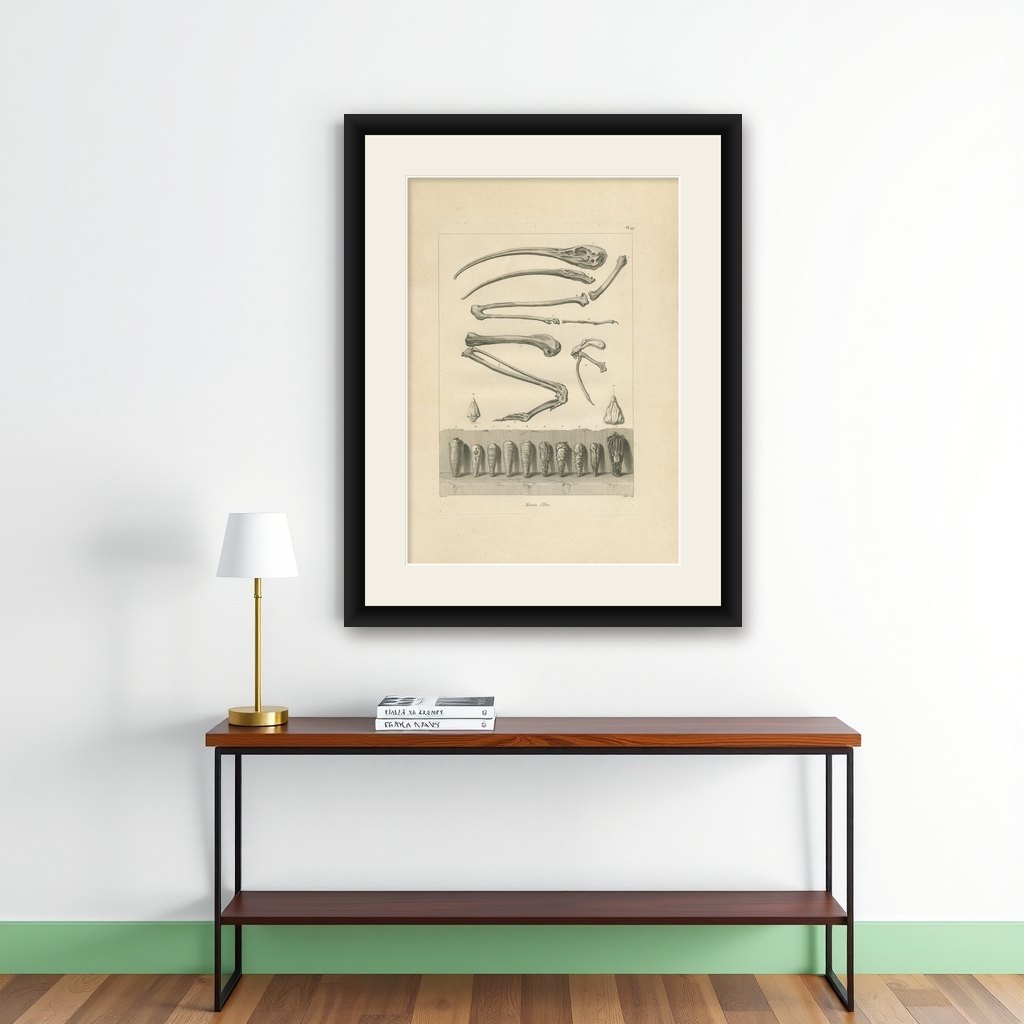
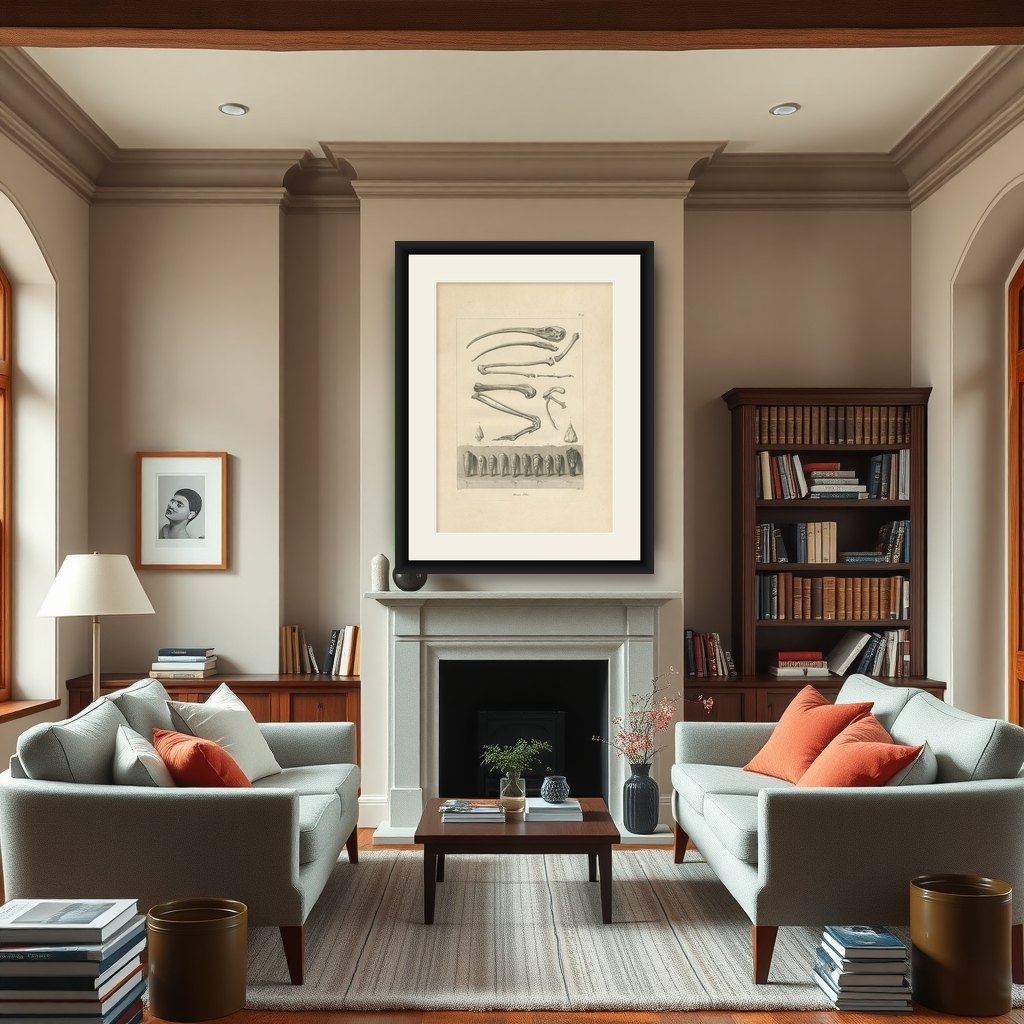
Frame and rooms are illustrations of how the print could look; the description says what is included.
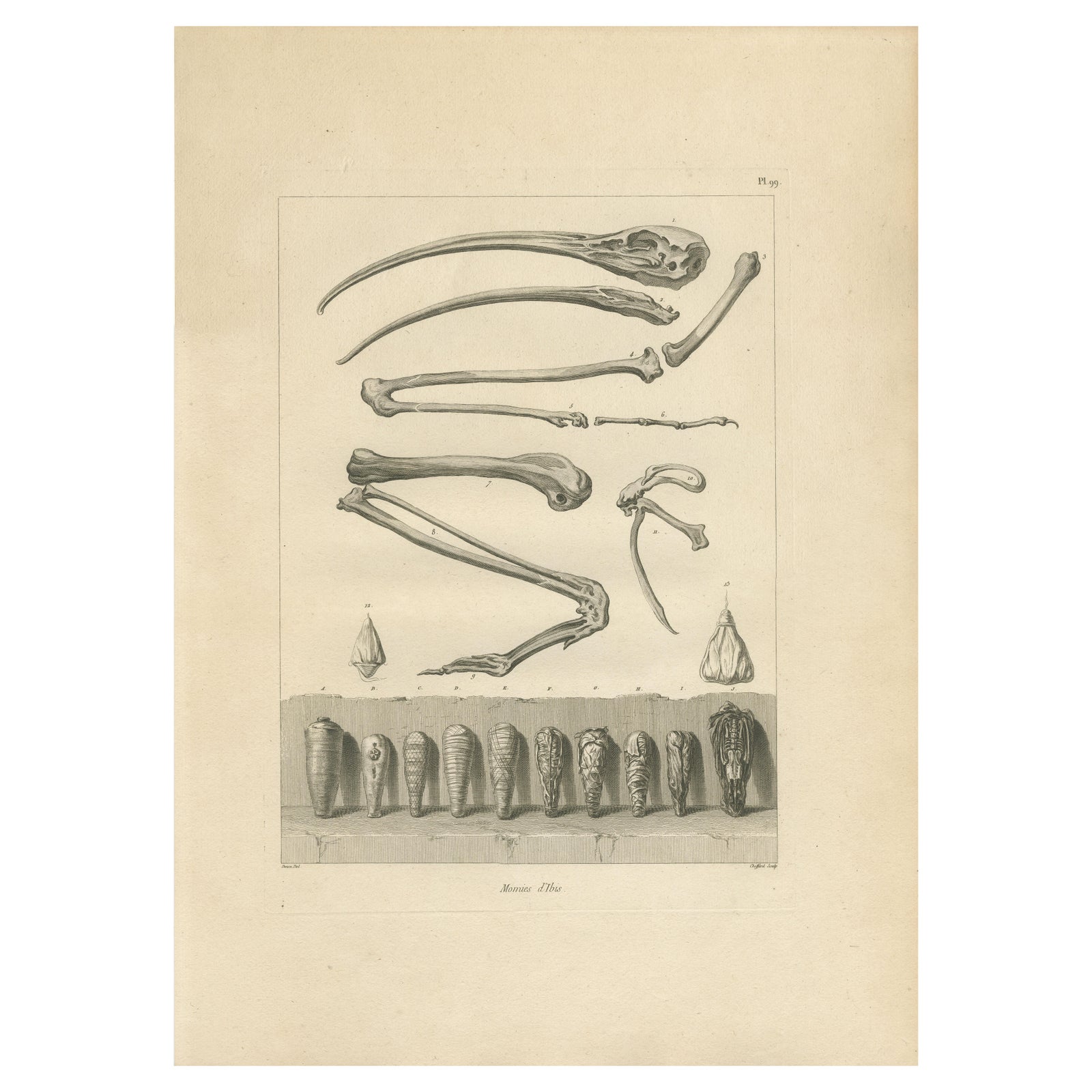
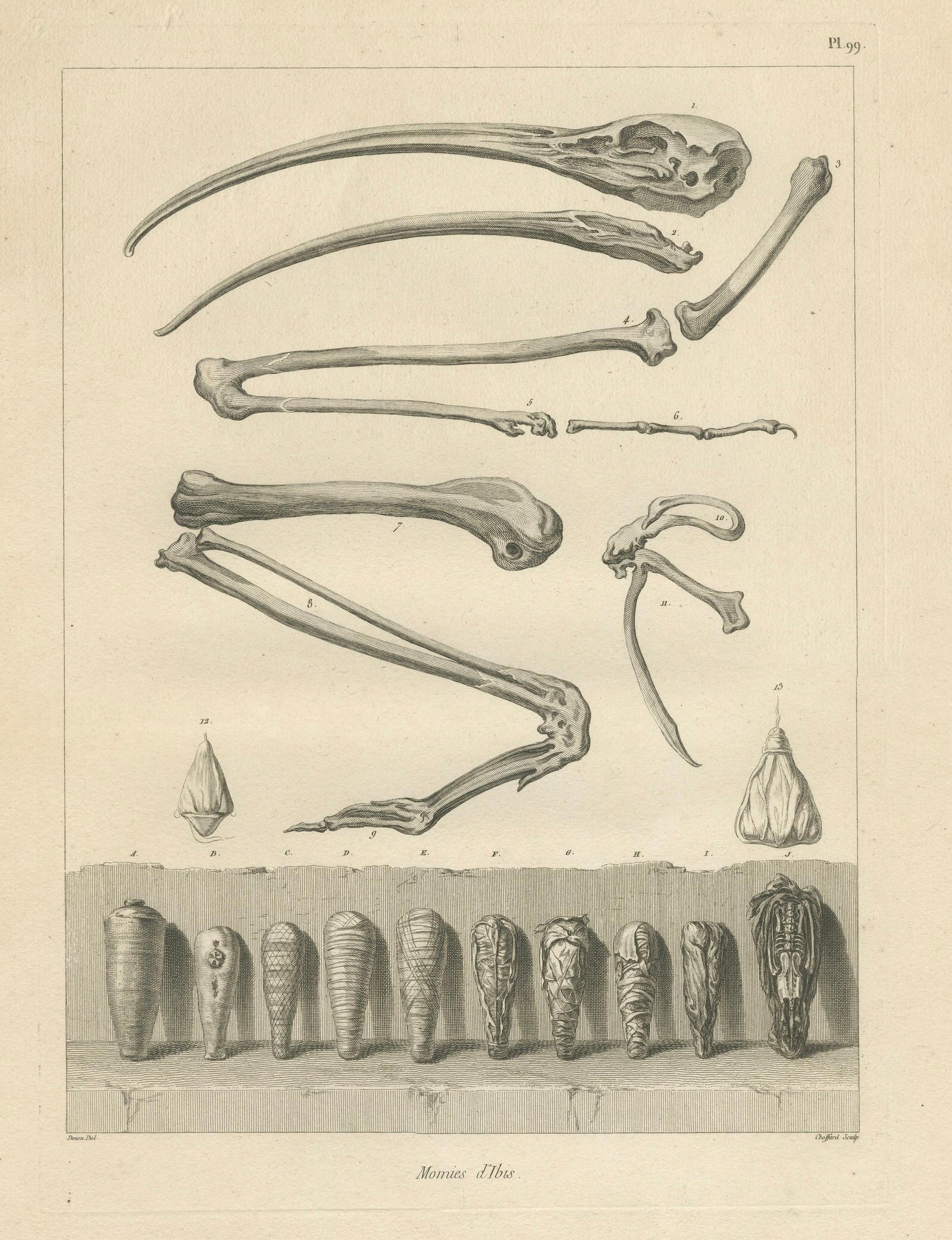
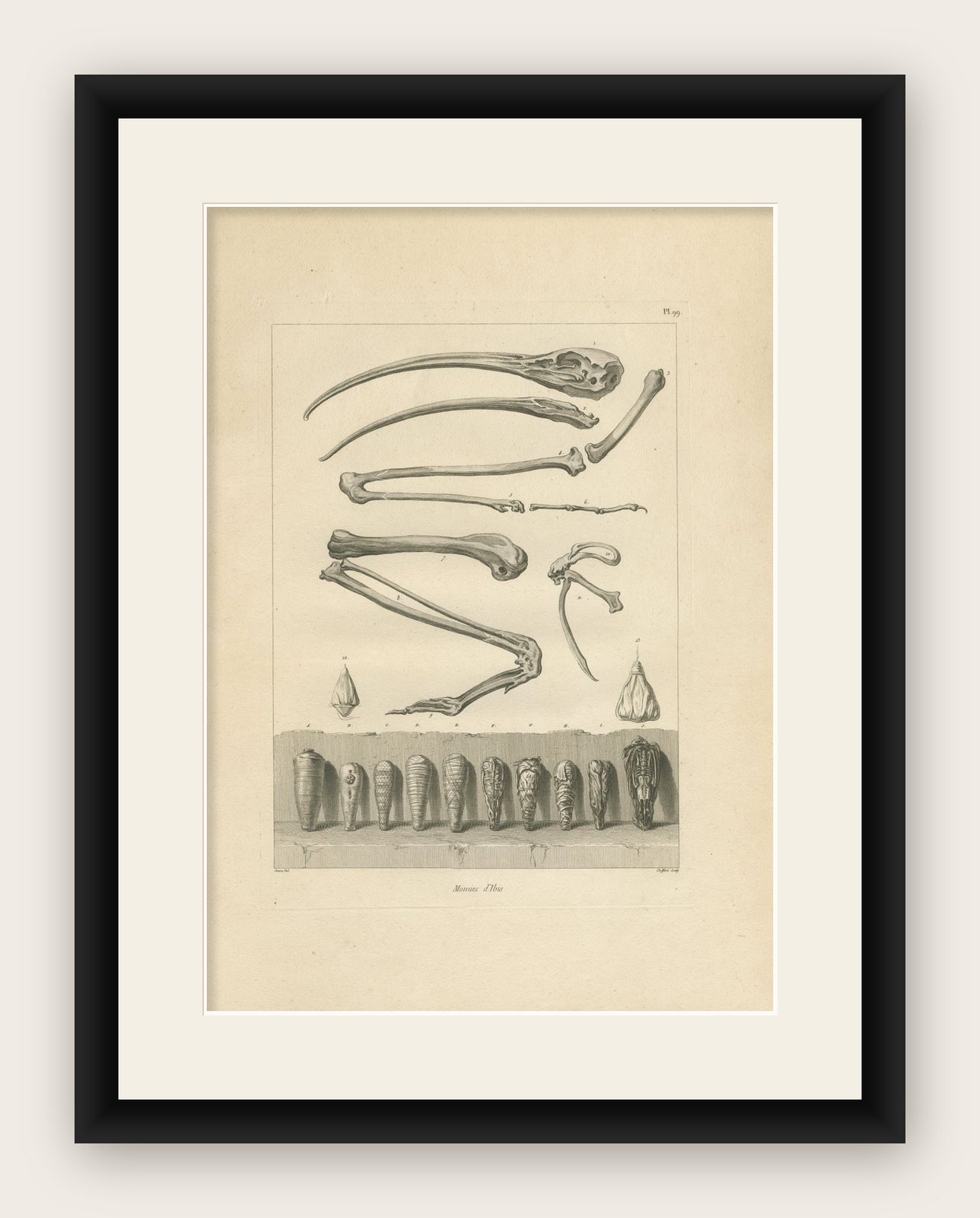
Mummies of Ibis and Skeletal Remains, Egypt, Antique Engraving, c.1802
$885 (£670, €790)
Period original, not a reproduction.
Shipped from the Netherlands, flat, insured and tracked, worldwide. Returns accepted within 14 days.
- Date
- 1802
- Size
- 23 × 16.3 in (58.5 × 41.5 cm)
- Condition
- Original antique engraving on laid paper. Light overall age toning and scattered spotting consistent with age. Margins ample. Plate mark visible.
- Period
- Early 19th century
- Section
- Birds
- Reference
- f_48440402
Mummies of Ibis and Skeletal Remains, Egypt, Antique Engraving, c.1802
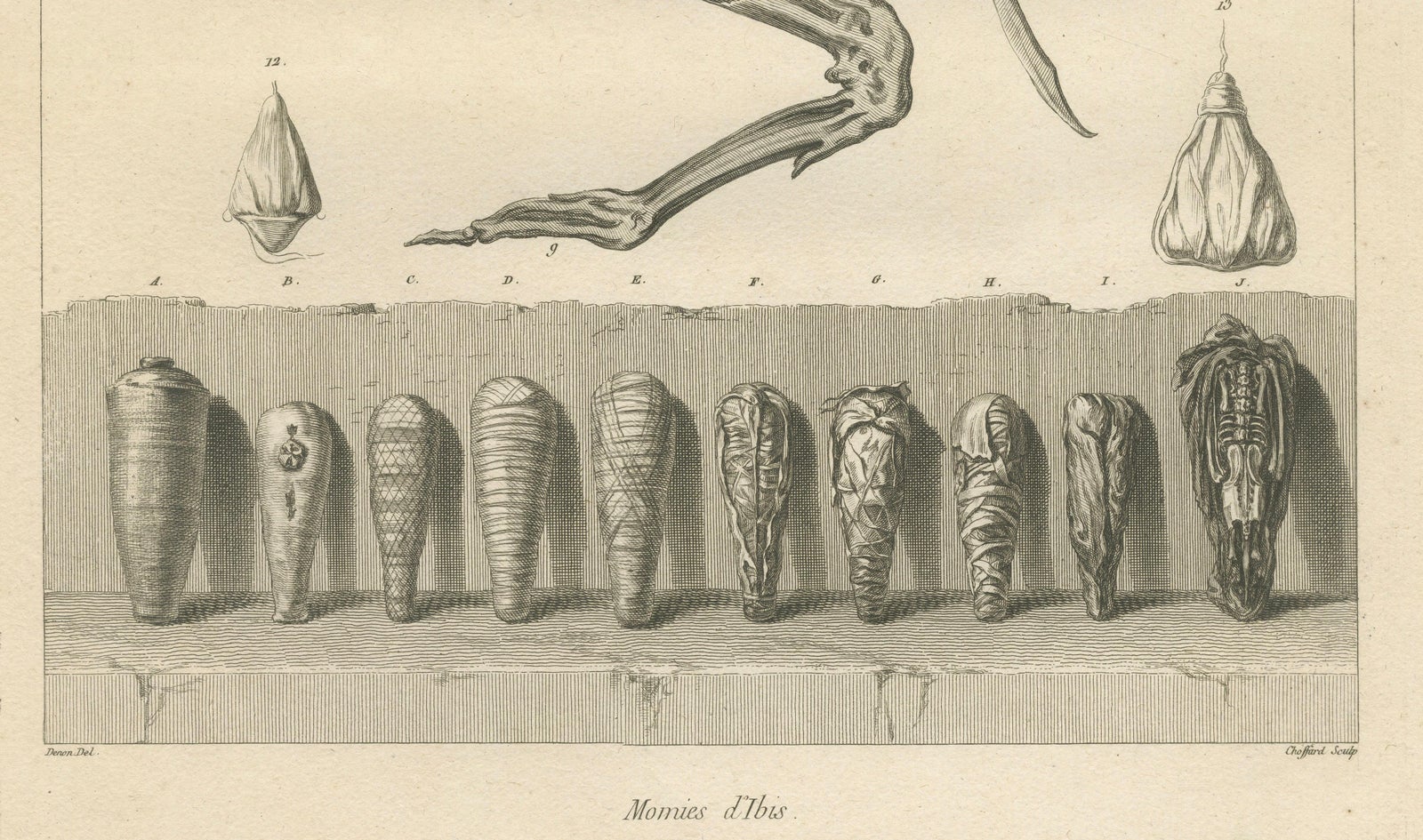
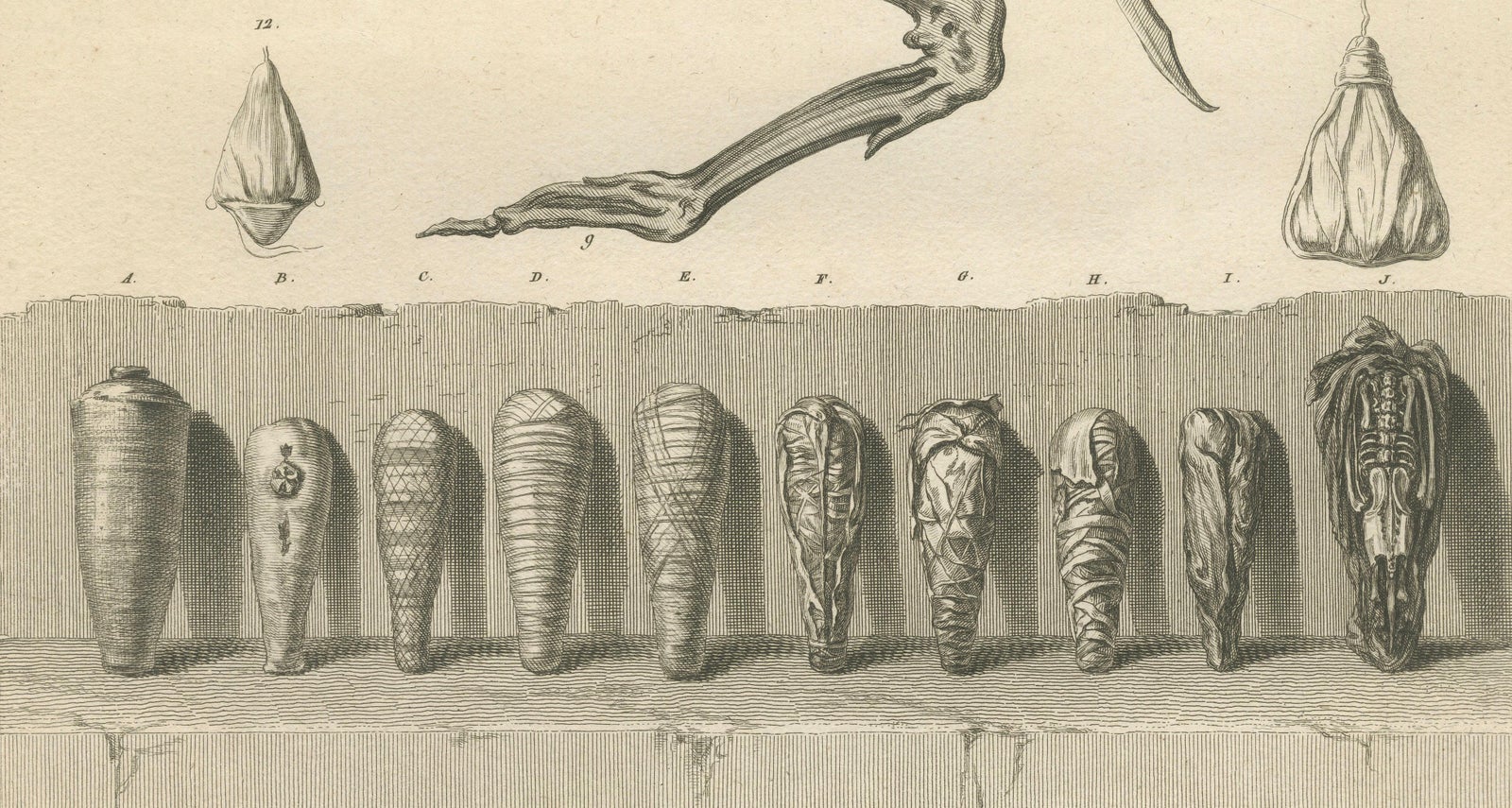
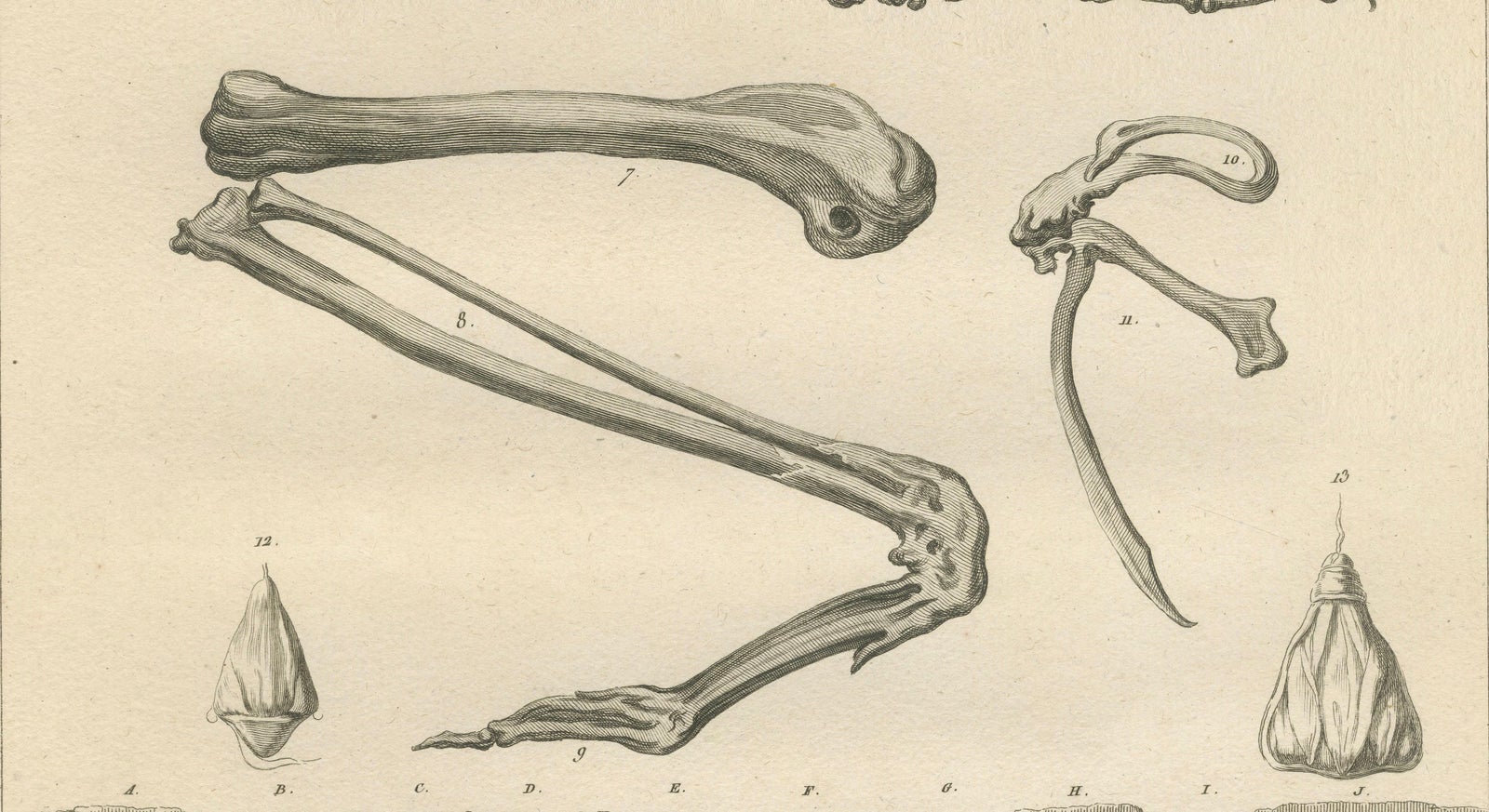
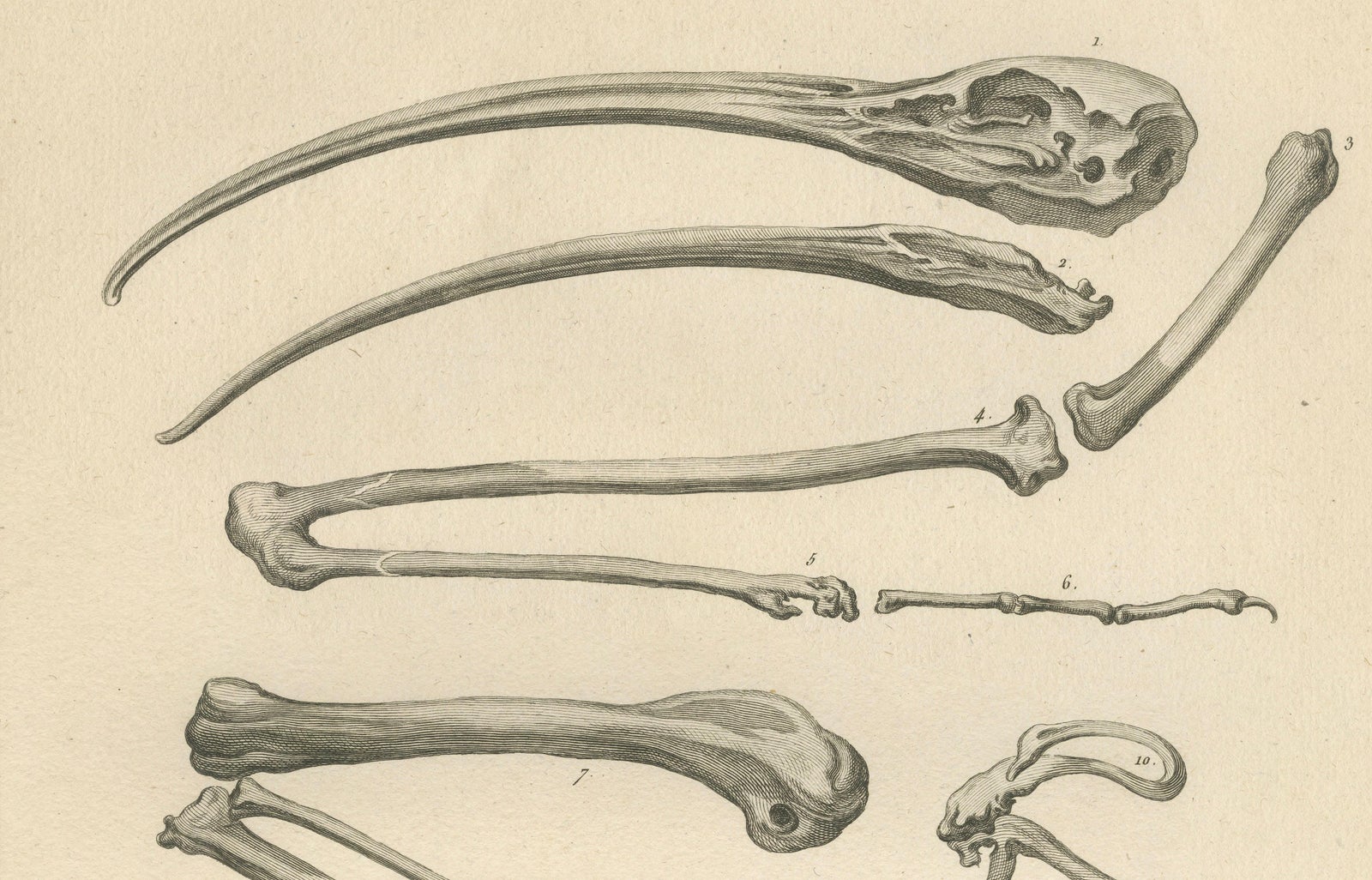
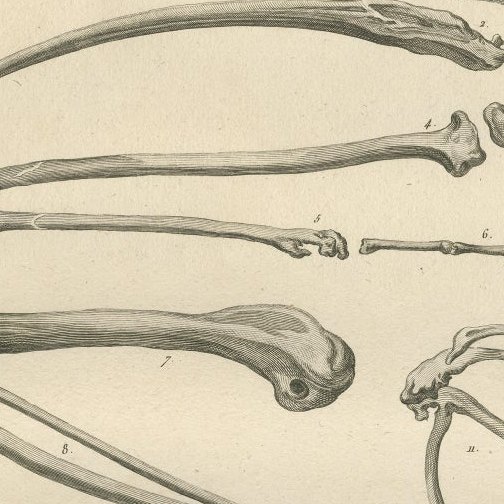
This finely engraved plate depicts a remarkable selection of mummified ibis birds alongside skeletal remains and anatomical fragments, illustrating the ritual and scientific examination of Egyptian animal mummies in the early nineteenth century. The composition combines precise anatomical observation with archaeological curiosity, presenting bones, preserved forms, and wrapped mummies arranged systematically against a neutral ground.
The plate originates from a major early Egyptological publication produced in the wake of Napoleon’s Egyptian campaign, a period that sparked intense European fascination with the antiquities, religious practices, and natural history of ancient Egypt. Animal mummification, particularly of sacred ibis birds associated with the god Thoth, was of great interest to scholars seeking to understand Egyptian ritual life and belief systems. This engraving reflects the emerging scientific approach of the era, blending archaeology, anatomy, and comparative natural history.
Visually, the plate is both striking and intellectually engaging. The contrast between skeletal structures and tightly wrapped mummified forms creates a powerful rhythm across the lower register, while the upper section presents detailed bone studies rendered with clarity and restraint. The monochrome palette enhances the graphic quality, making the sheet especially appealing for contemporary interiors, cabinets of curiosity, libraries, or study spaces.
Such plates are highly sought after by collectors of early Egyptology, natural history, and anatomical illustration, as well as by interior designers looking for distinctive, conversation-starting works on paper. This example stands out for its balanced composition, crisp engraving, and strong thematic focus.
Condition: Original antique engraving on laid paper. Light overall age toning and scattered spotting consistent with age. Margins ample. Plate mark visible.
Framing tips: Present in a dark walnut or black frame with a wide off-white or light sand-coloured mat to enhance contrast and preserve the scholarly character. A museum-style mount works particularly well.
Technique: Engraving
Maker: After Dominique Vivant Denon, France, early 19th century
-