Close-ups
Framed and on the wall
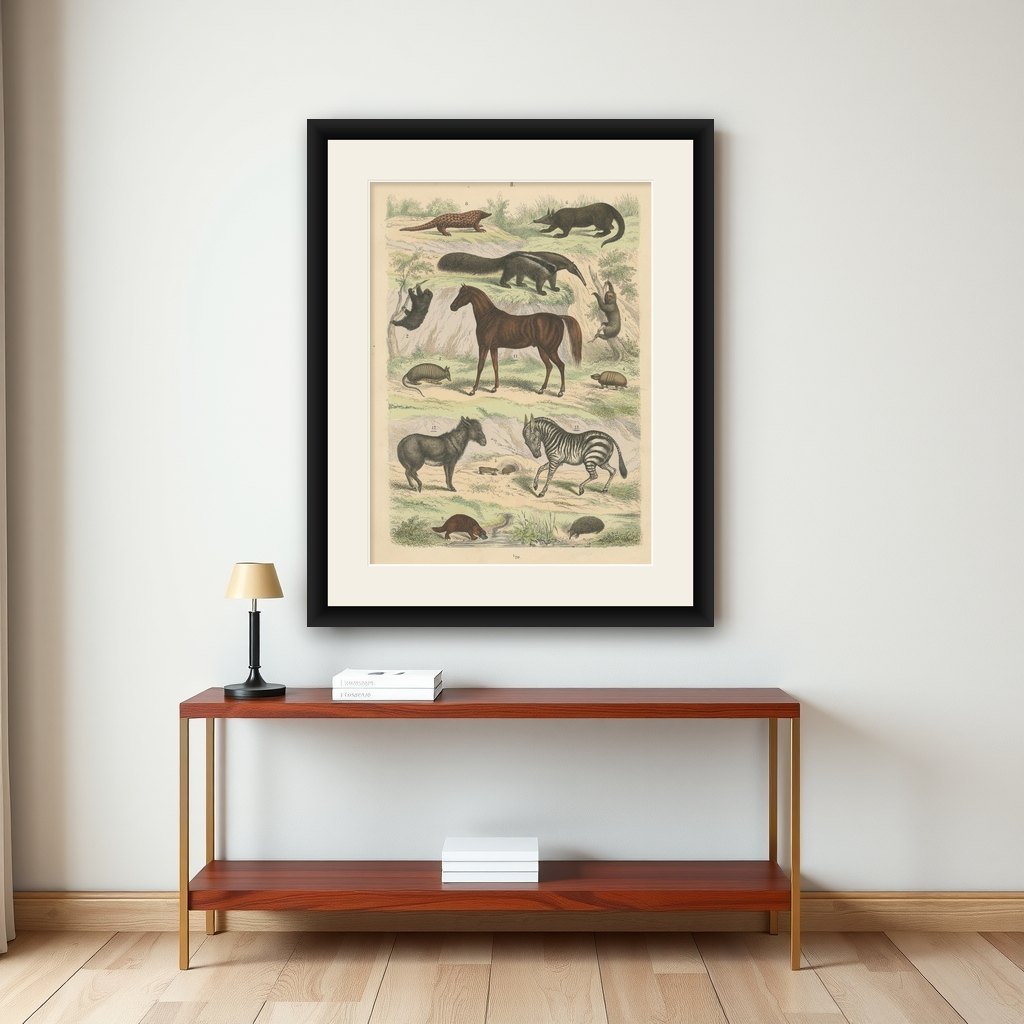
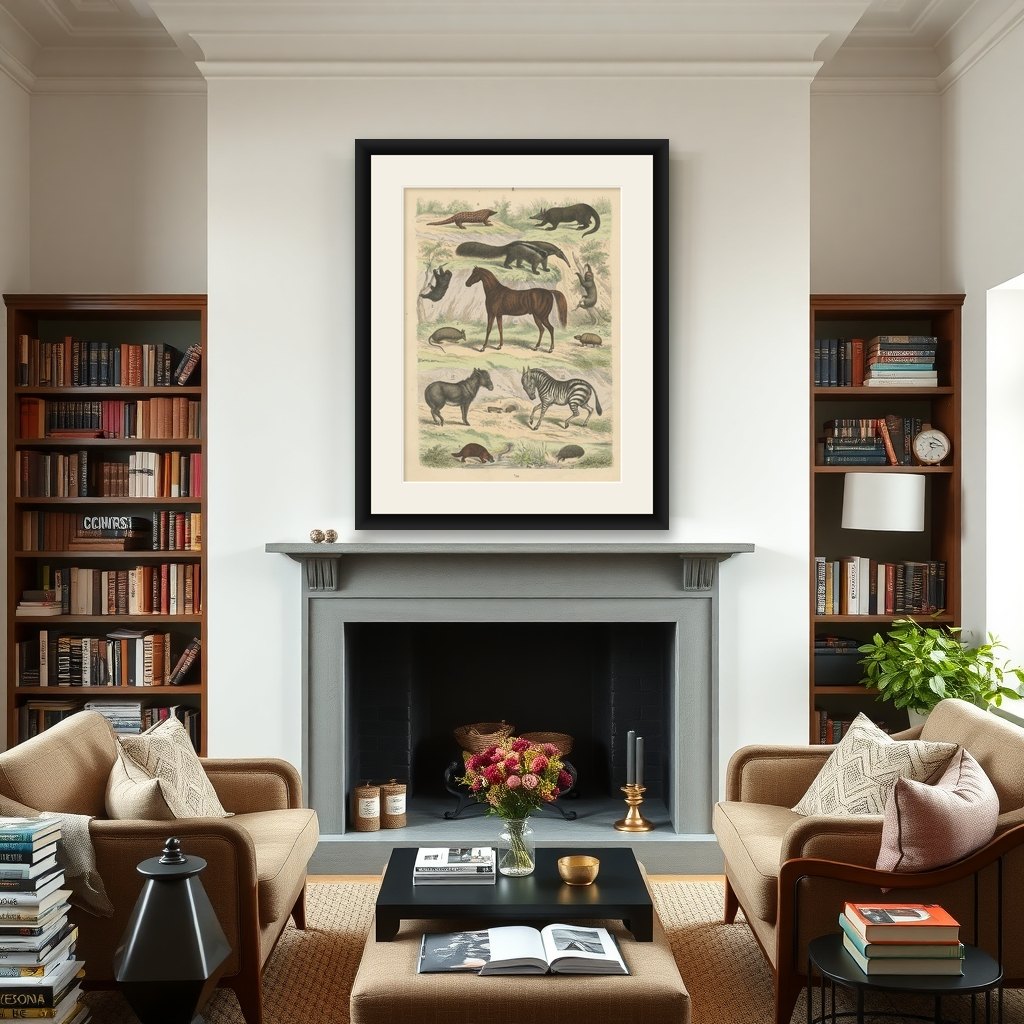
Frame and rooms are illustrations of how the print could look; the description says what is included.
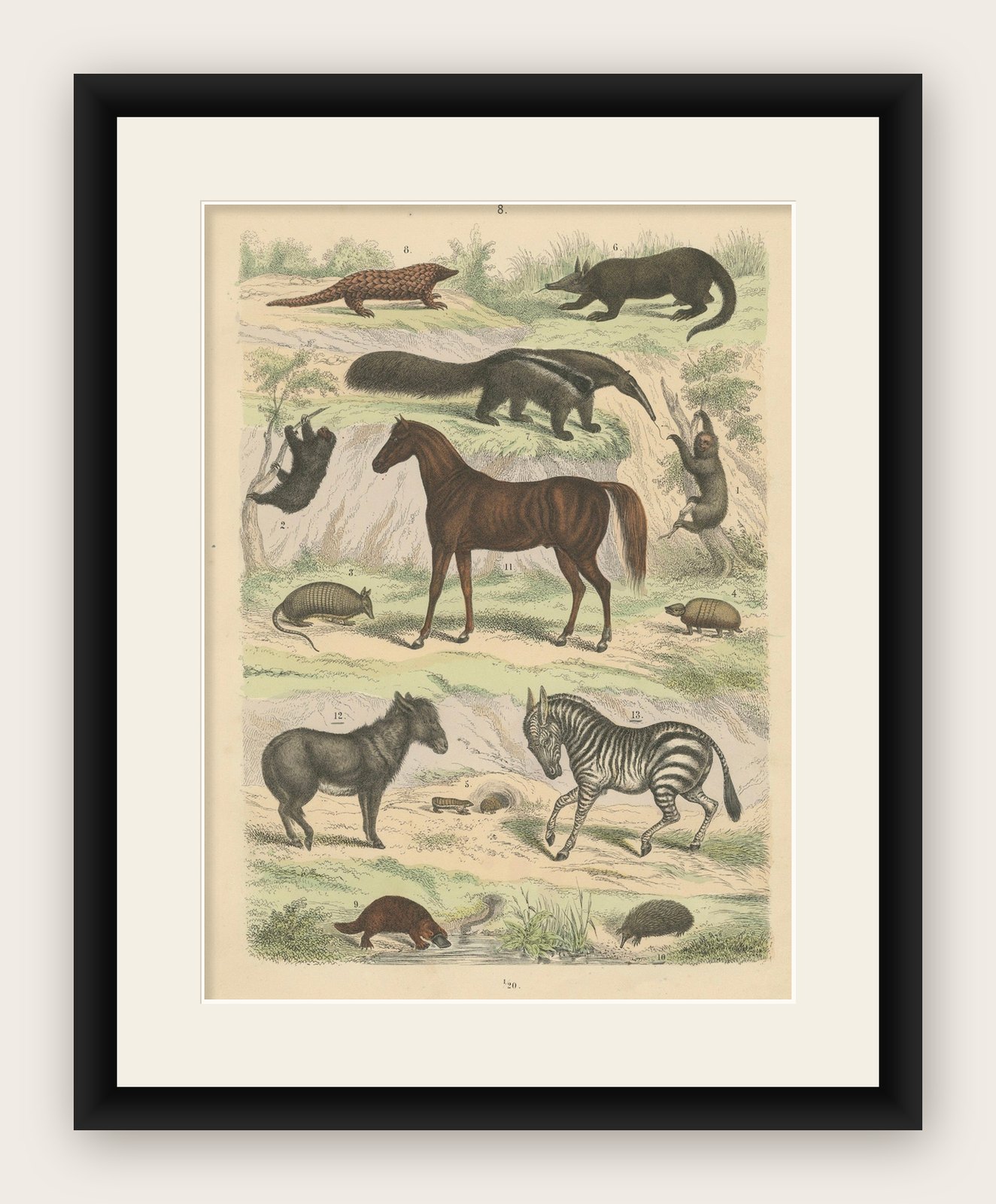
Mammals Print: Horse, Zebra, Anteater & Pangolin, Antique 1867
£150 ($200, €180)
Period original, not a reproduction.
Shipped from the Netherlands, flat, insured and tracked, worldwide. Returns accepted within 14 days.
- Date
- 1867
- Size
- 11.2 × 8.7 in (28.5 × 22 cm)
- Condition
- Good. Good condition for its age, with light overall toning and occasional small foxing spots mainly in the margins. The paper is strong with no tears or repairs, and the hand colouring remains fresh and vibrant.
- Period
- Late 19th century
- Section
- Mammals
- Reference
- f_45792062
Mammals Print: Horse, Zebra, Anteater & Pangolin, Antique 1867
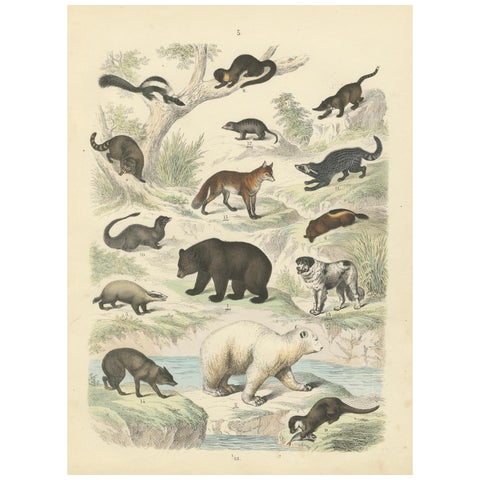
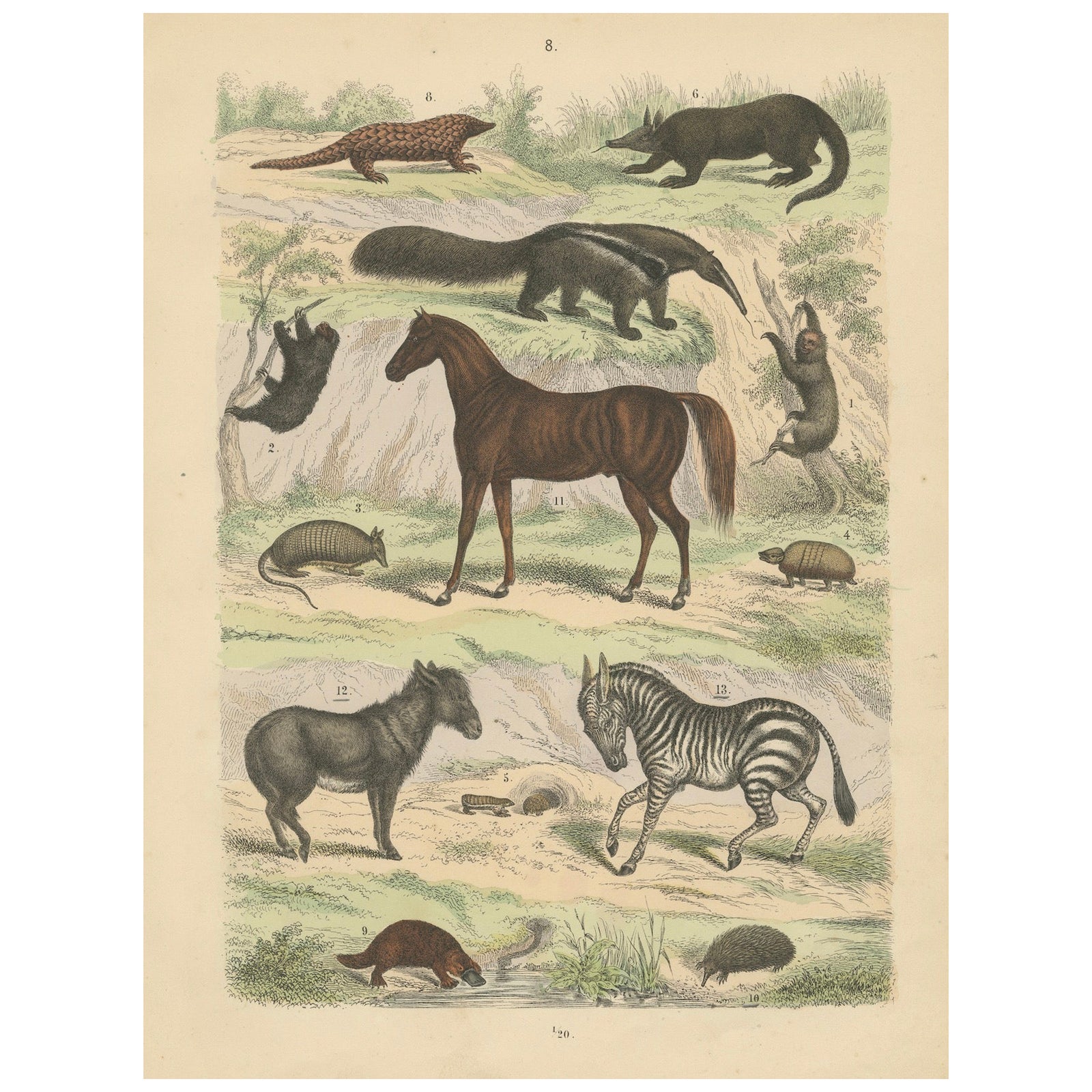
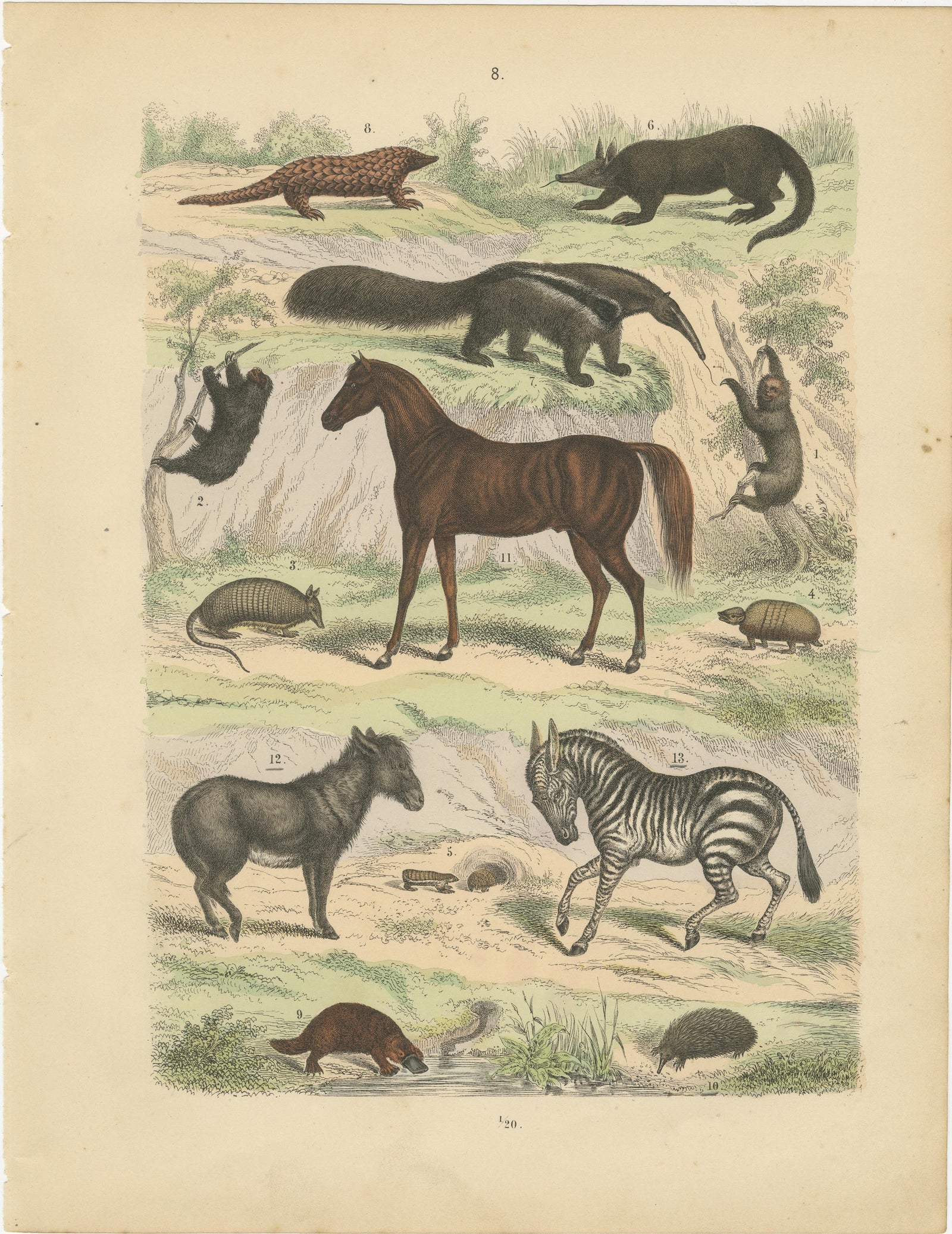
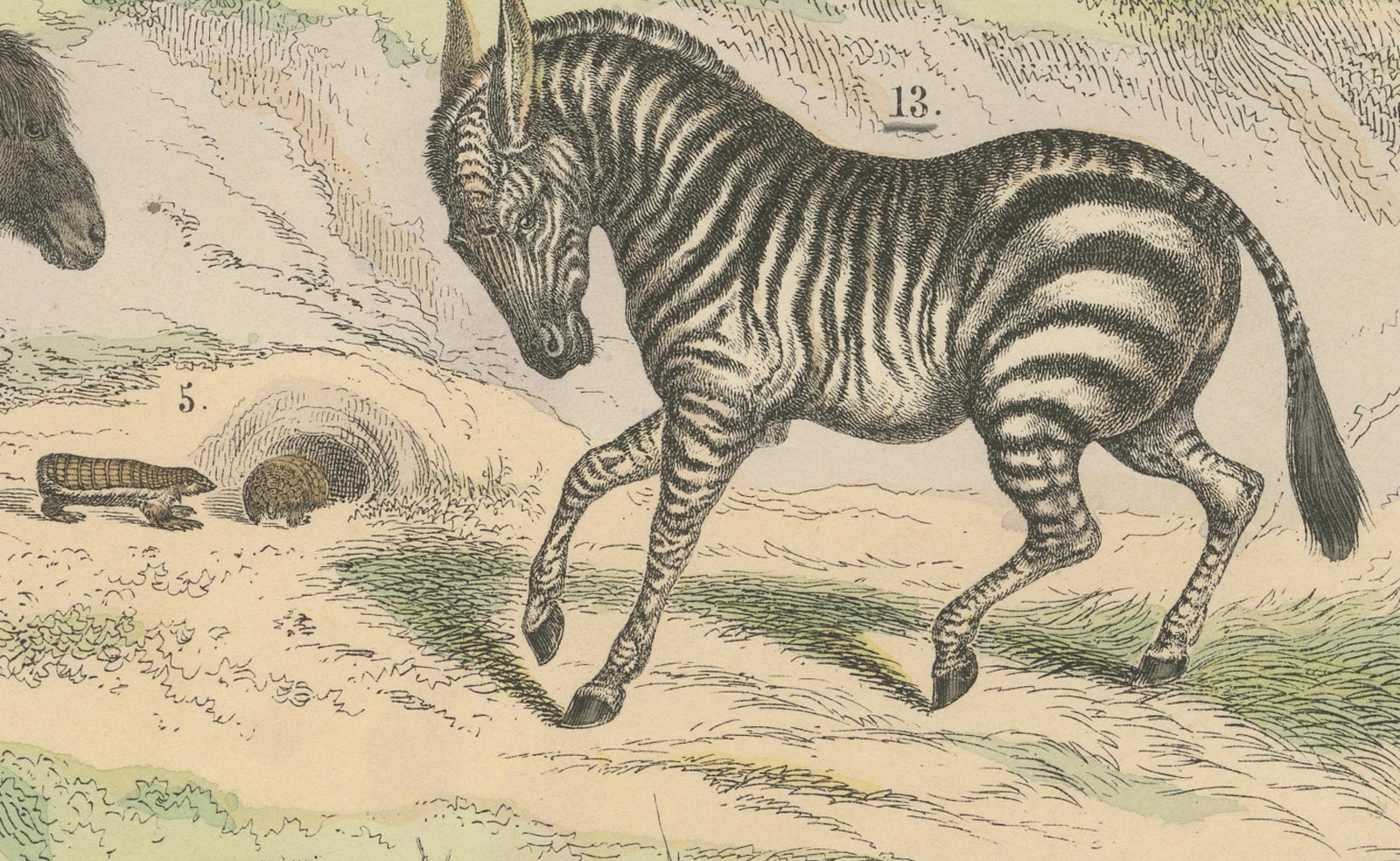
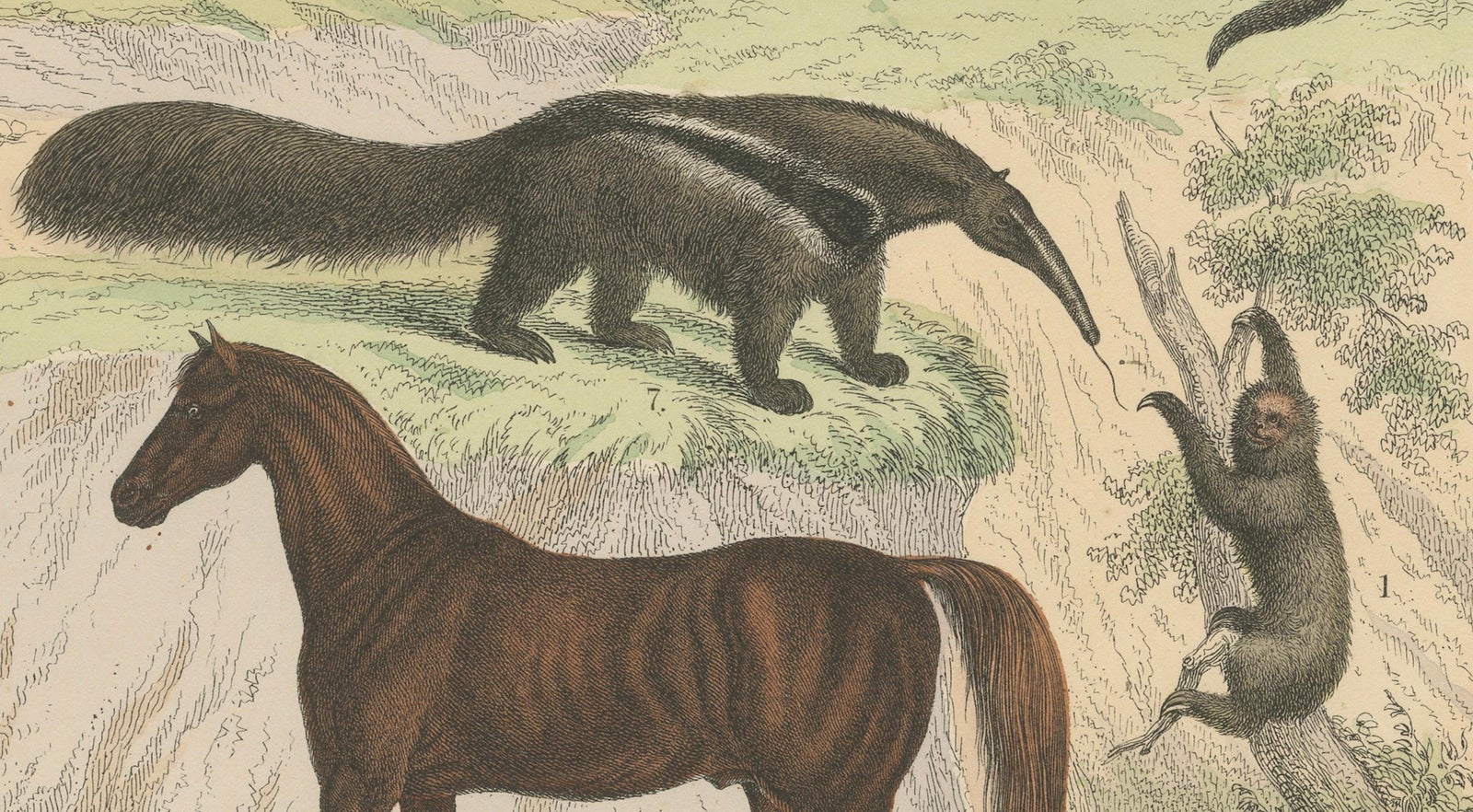
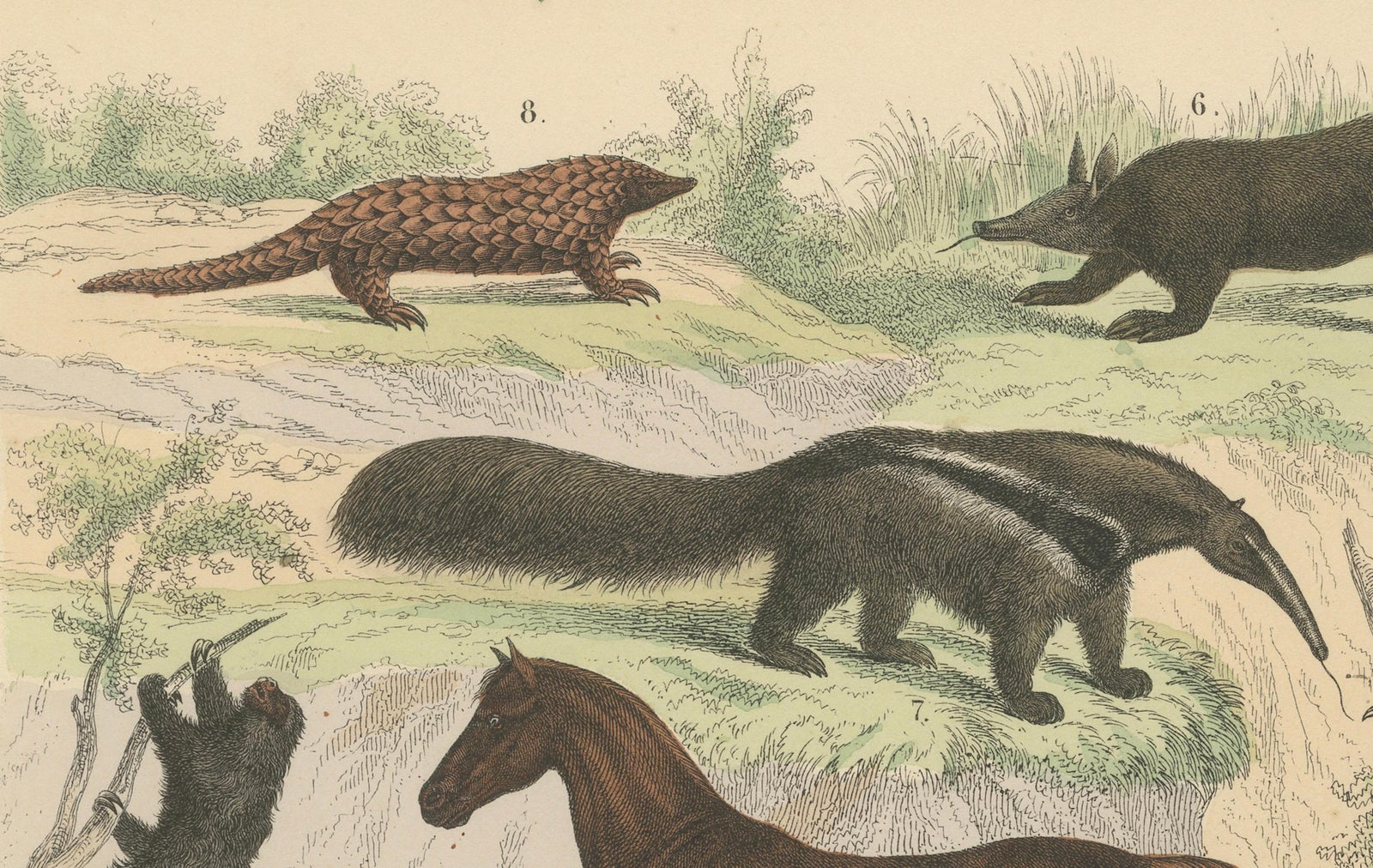
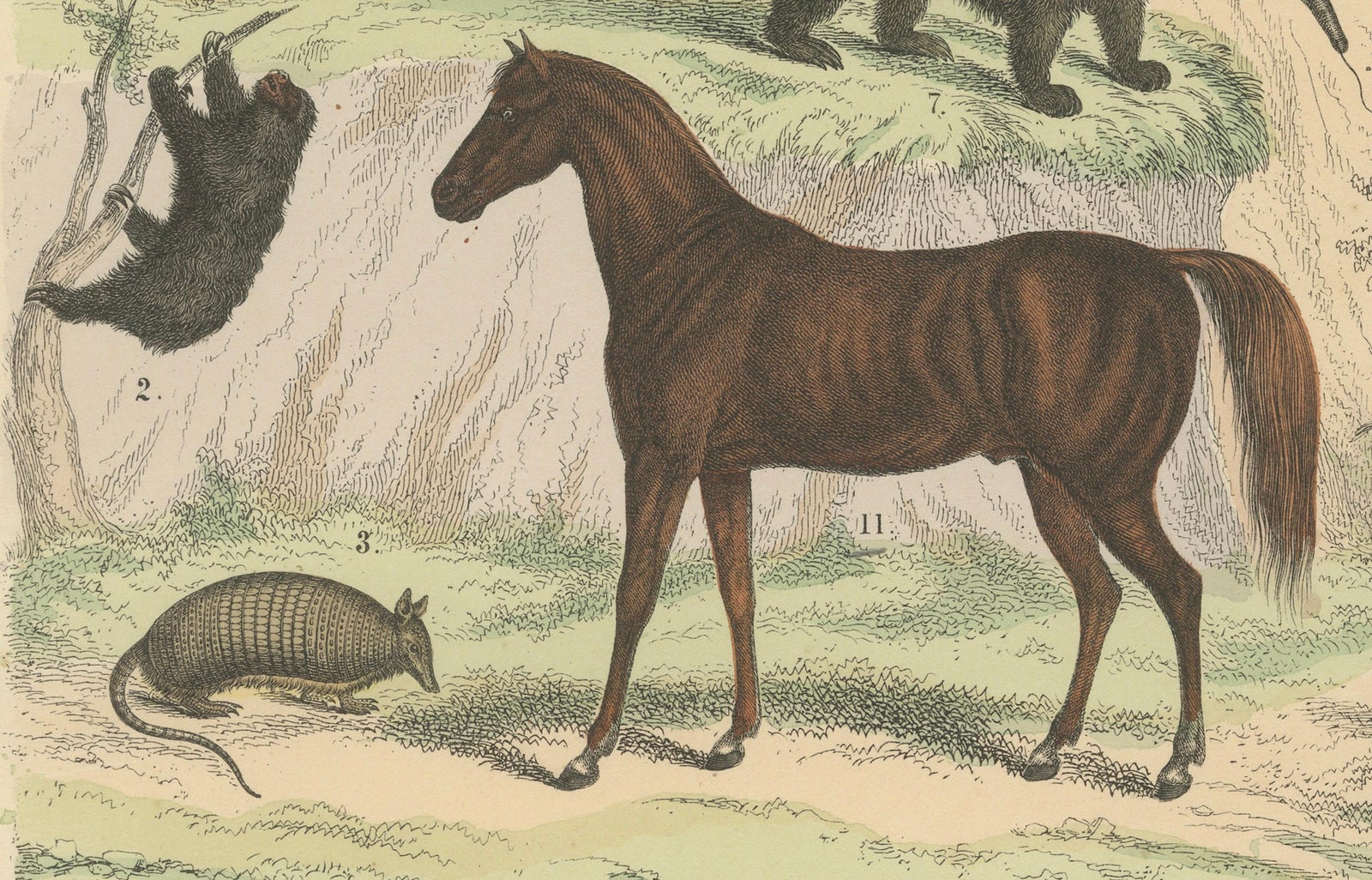
This fascinating antique print depicts a diverse collection of mammals including horses, zebras, anteaters, and pangolins, rendered in fine hand-coloured engravings. It originates from the Atlas der Natuurlijke Geschiedenis voor scholen en huisgezinnen, adapted into Dutch by T.C. Winkler after Traugott Bromme, published in Amsterdam by J.C. Loman in 1867. Designed for educational use, this print showcases animals from various continents, combining zoological accuracy with aesthetic presentation for 19th-century students and readers.
The labelled figures include:
1. (not shown)
2. Sloth (Bradypus species)
3. Armadillo (Dasypodidae species)
4. Armadillo (Dasypodidae species)
5. Mole (Talpa europaea)
6. Aardvark (Orycteropus afer)
7. Giant anteater (Myrmecophaga tridactyla)
8. Pangolin (Manis species)
9. Echidna (Tachyglossidae family)
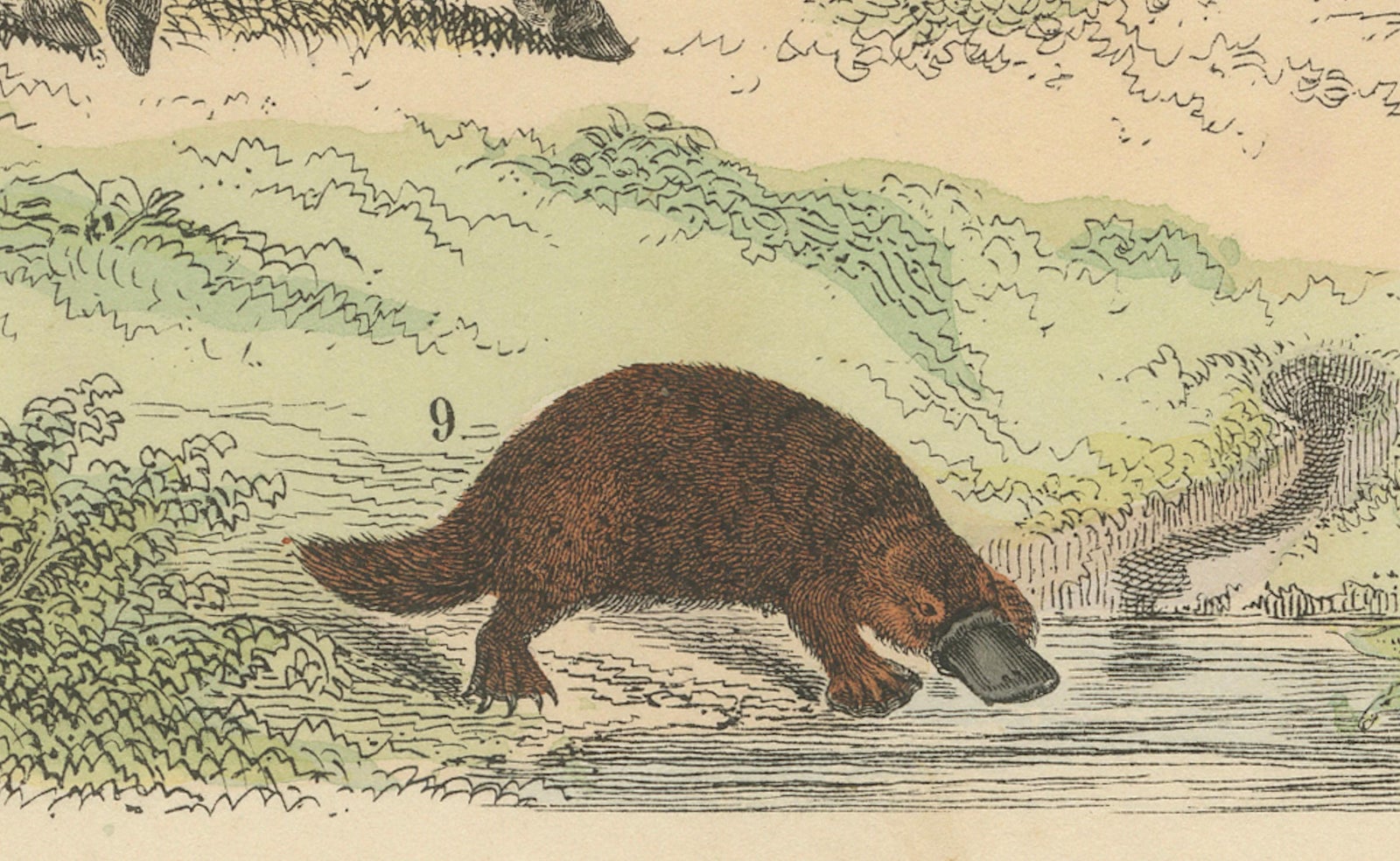
10. Platypus (Ornithorhynchus anatinus)
11. Horse (Equus ferus caballus)
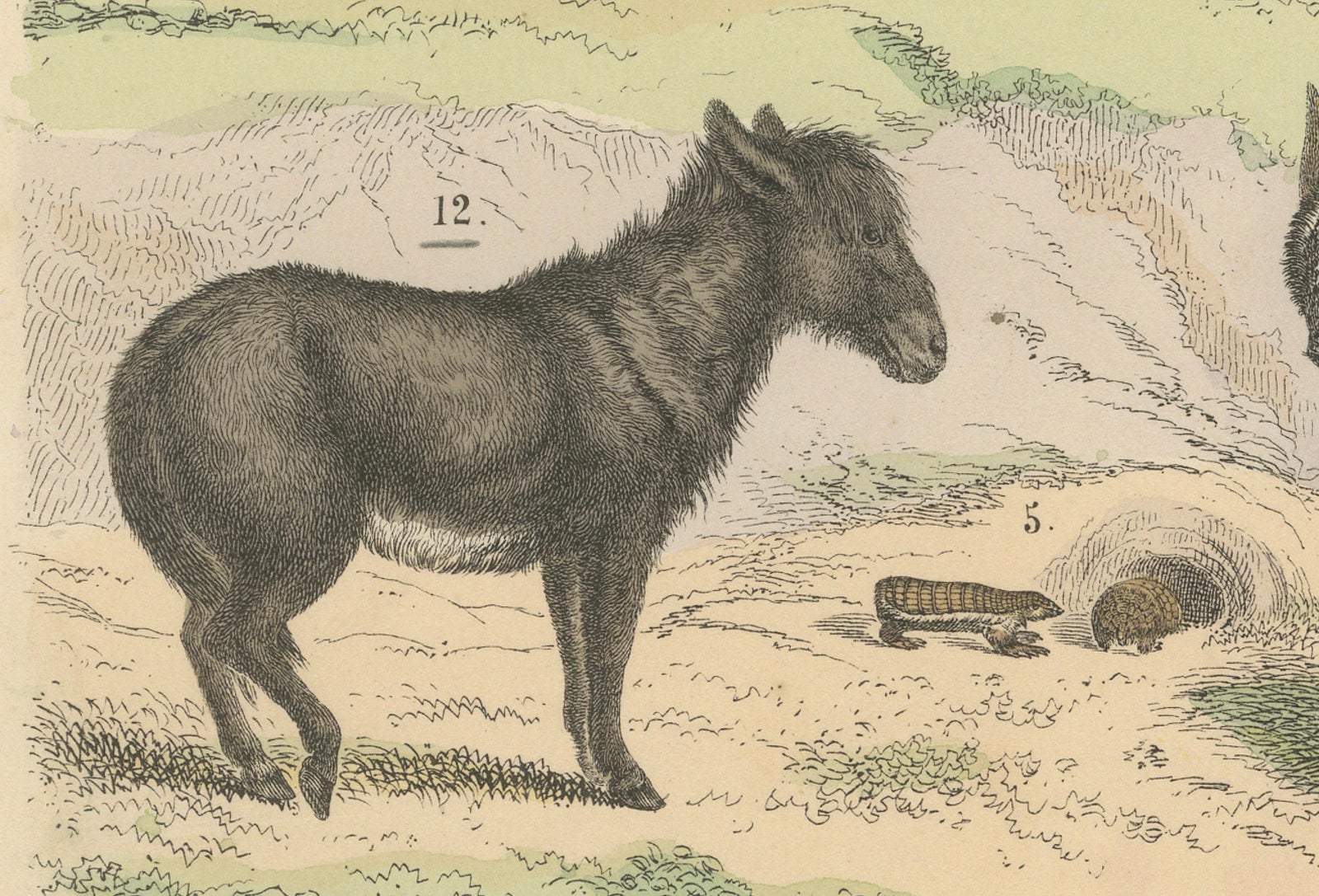
12. Wild ass or onager (Equus hemionus)
13. Zebra (Equus quagga)
The print was produced using copper engraving with meticulous hand colouring, highlighting each animal’s anatomy, texture, and distinctive colouring. Animals are shown in naturalistic poses within landscape settings, enhancing their educational value and visual appeal. Such prints served as essential tools in schools and libraries, bringing the wonders of the natural world to life for students in the 19th century.
Condition summary:
Good condition for its age, with light overall toning and occasional small foxing spots mainly in the margins. The paper is strong with no tears or repairs, and the hand colouring remains fresh and vibrant.
Framing tips:
Frame this zoological print in a dark wood, walnut, or black frame with a cream or off-white mount to enhance its detailed engraving and subtle colouring. For a traditional interior, a gold frame adds warmth and historical character. UV-protective glass is recommended to preserve its colours and prevent further toning. This antique natural history print is ideal for collectors, educational spaces, and interiors seeking a touch of scientific charm and timeless beauty.