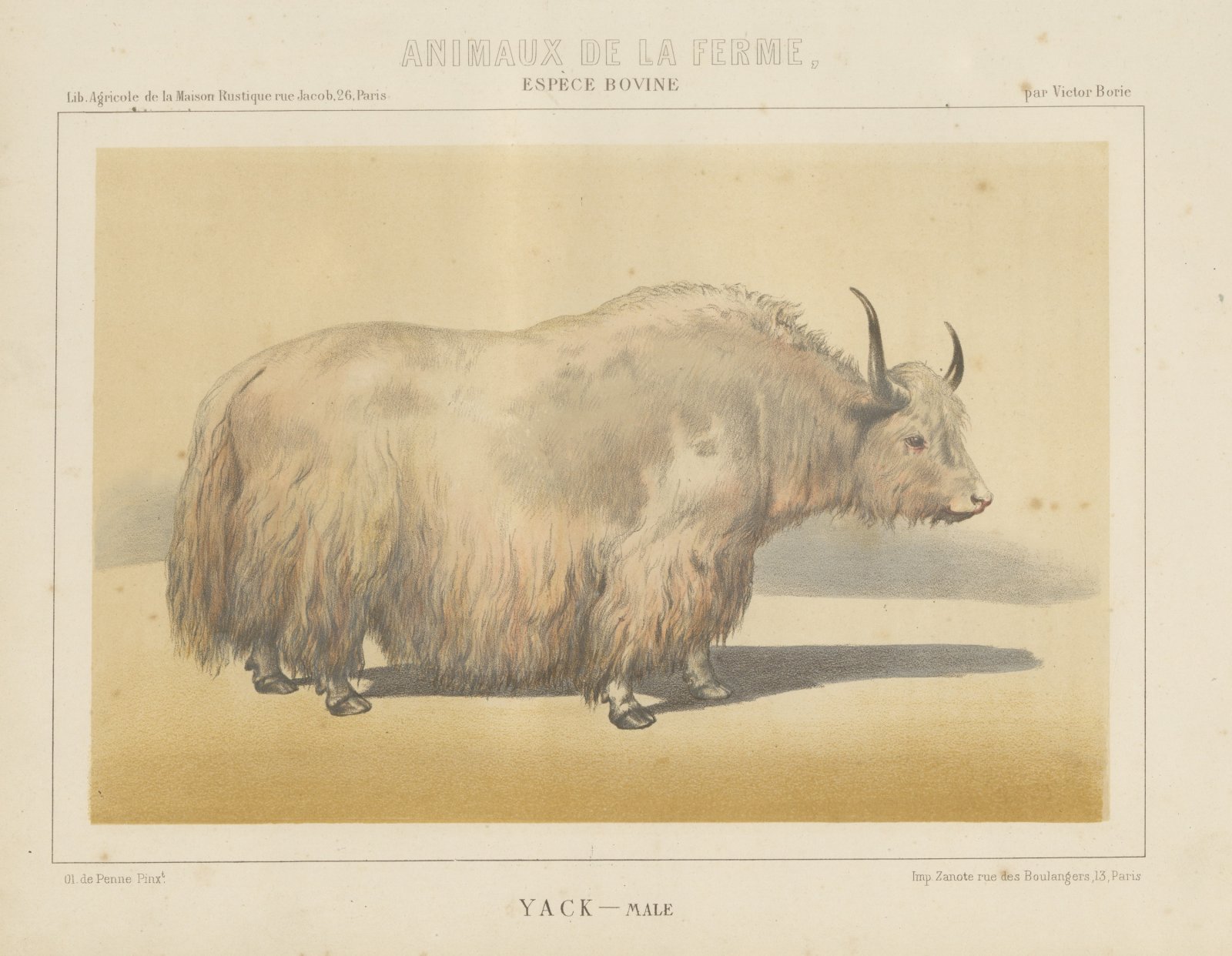
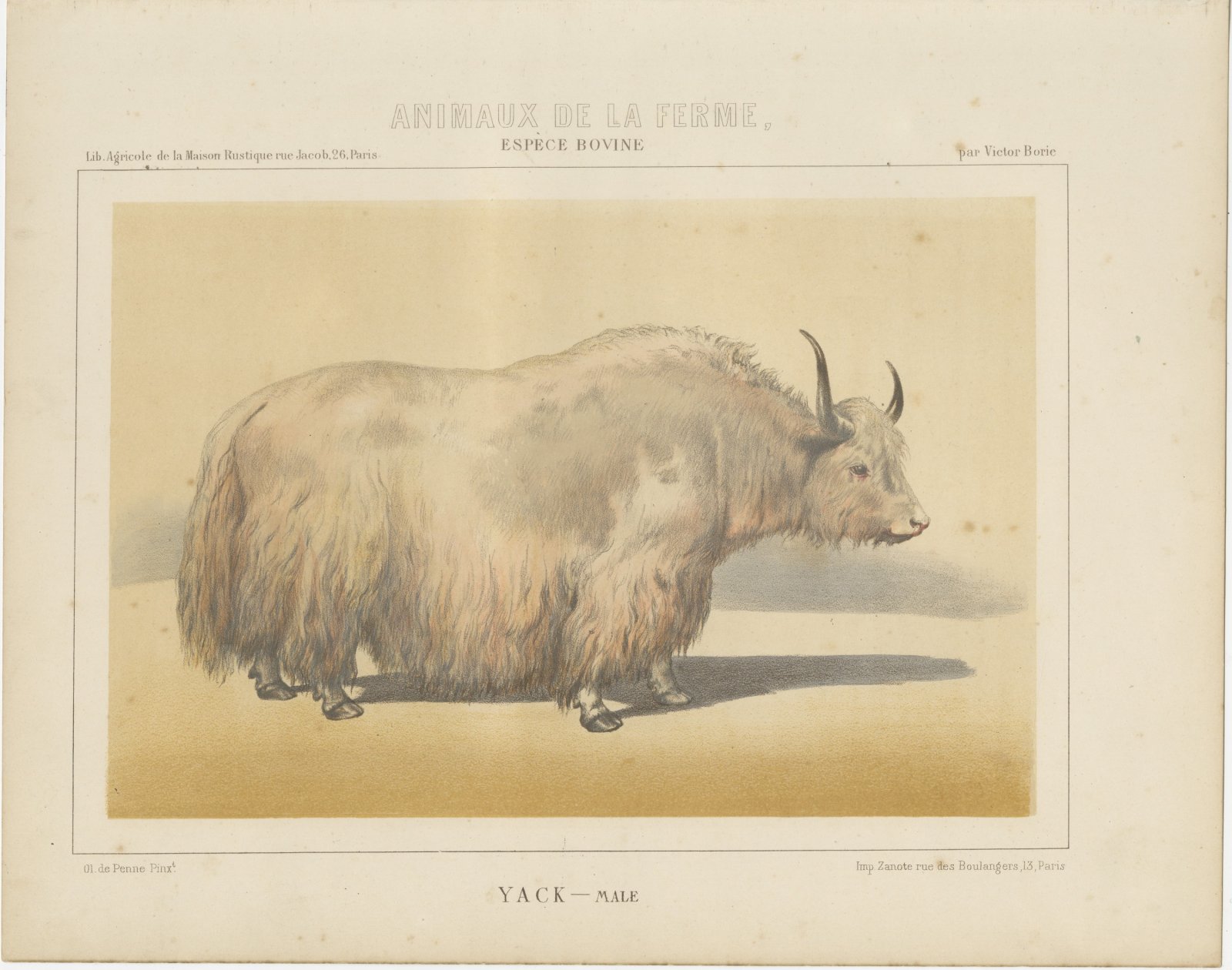
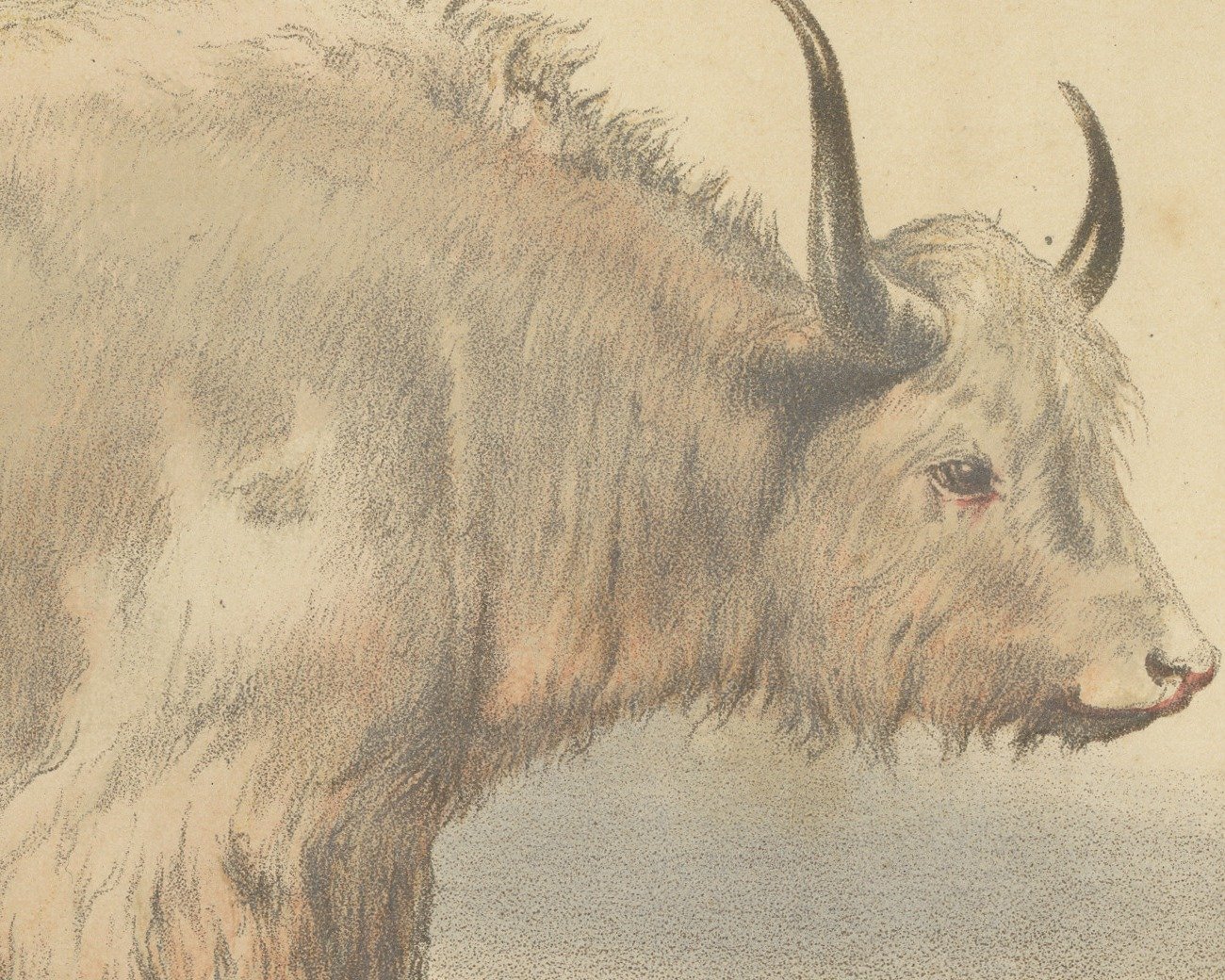
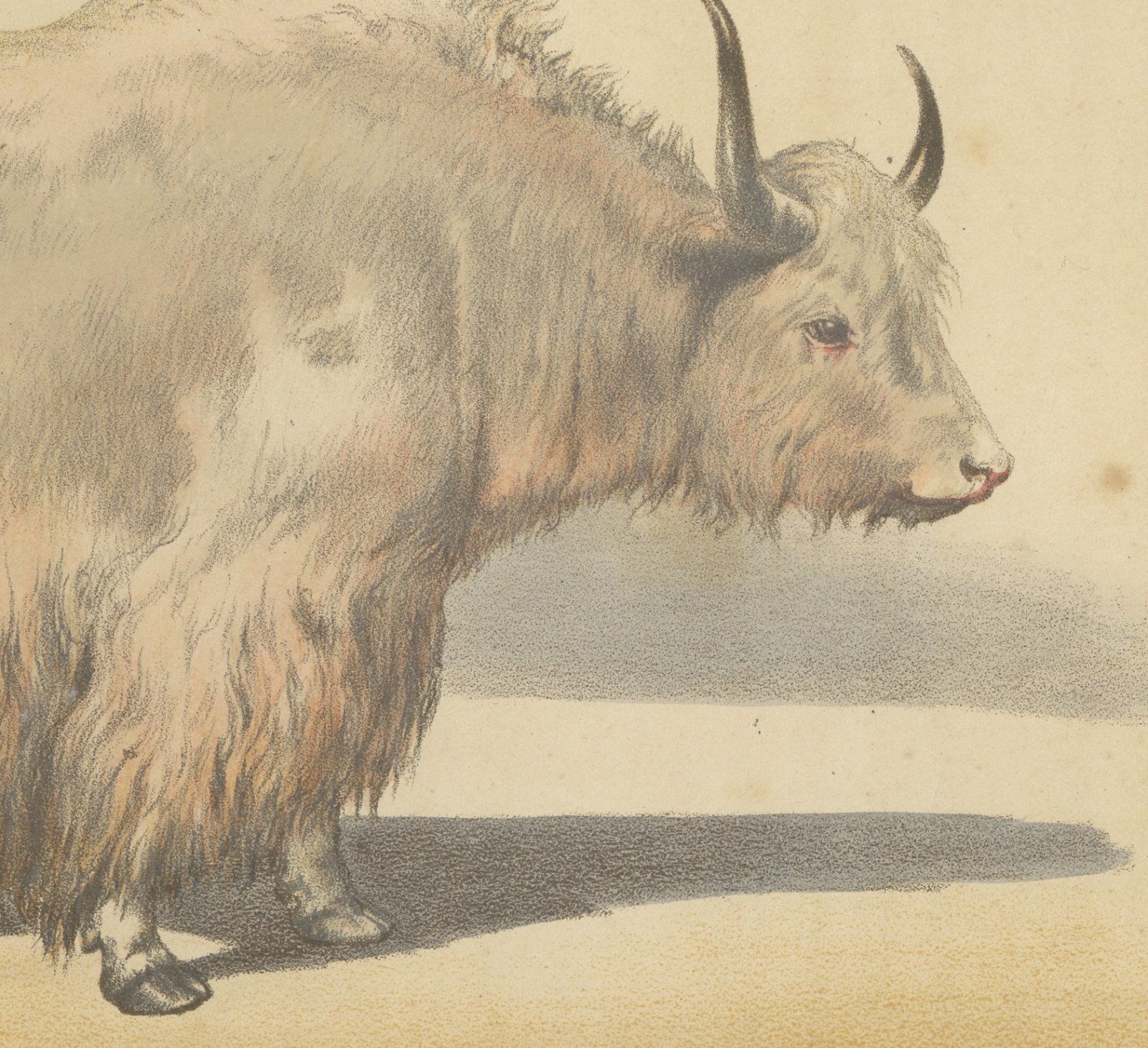
Close-ups
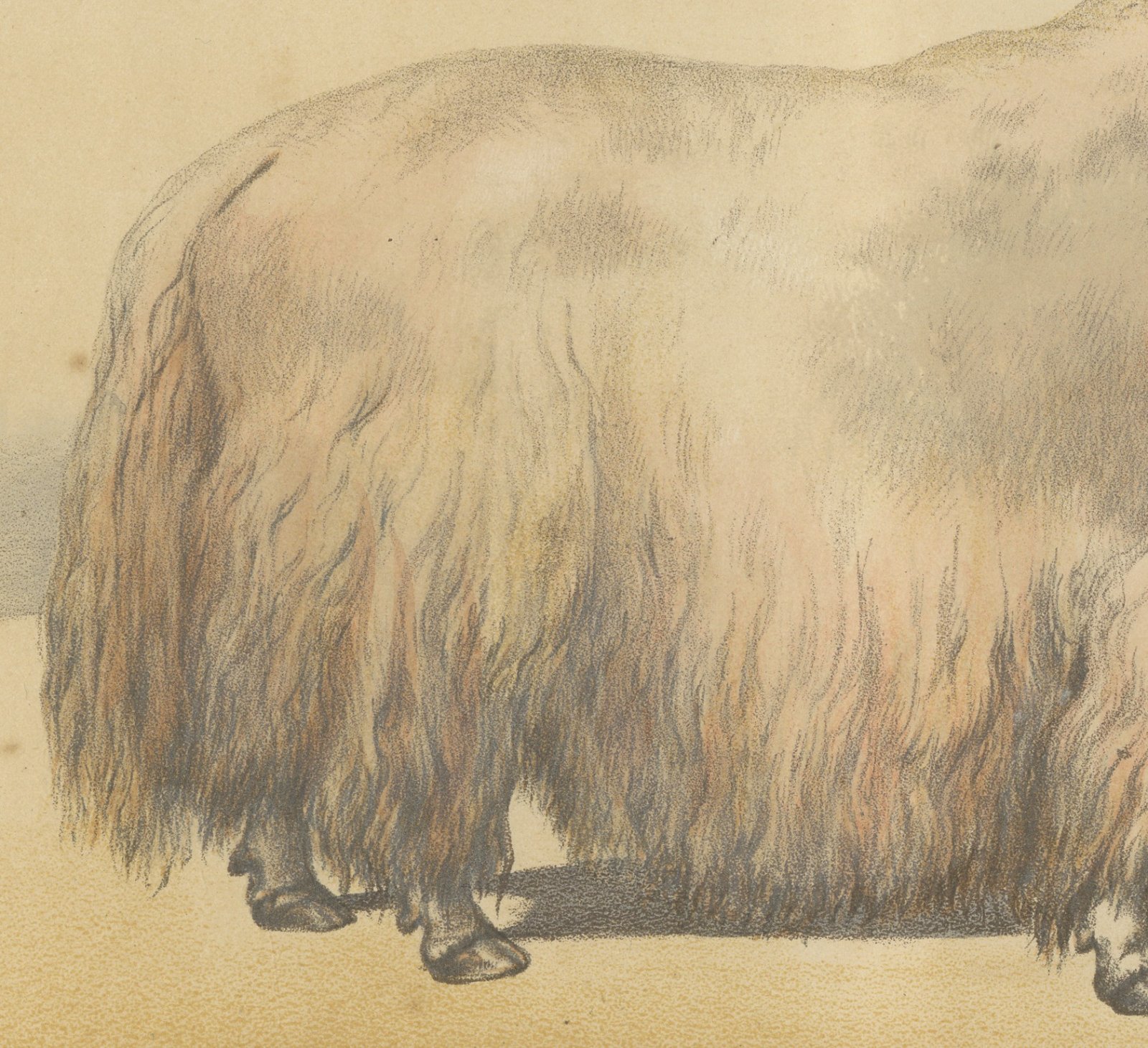
Framed and on the wall
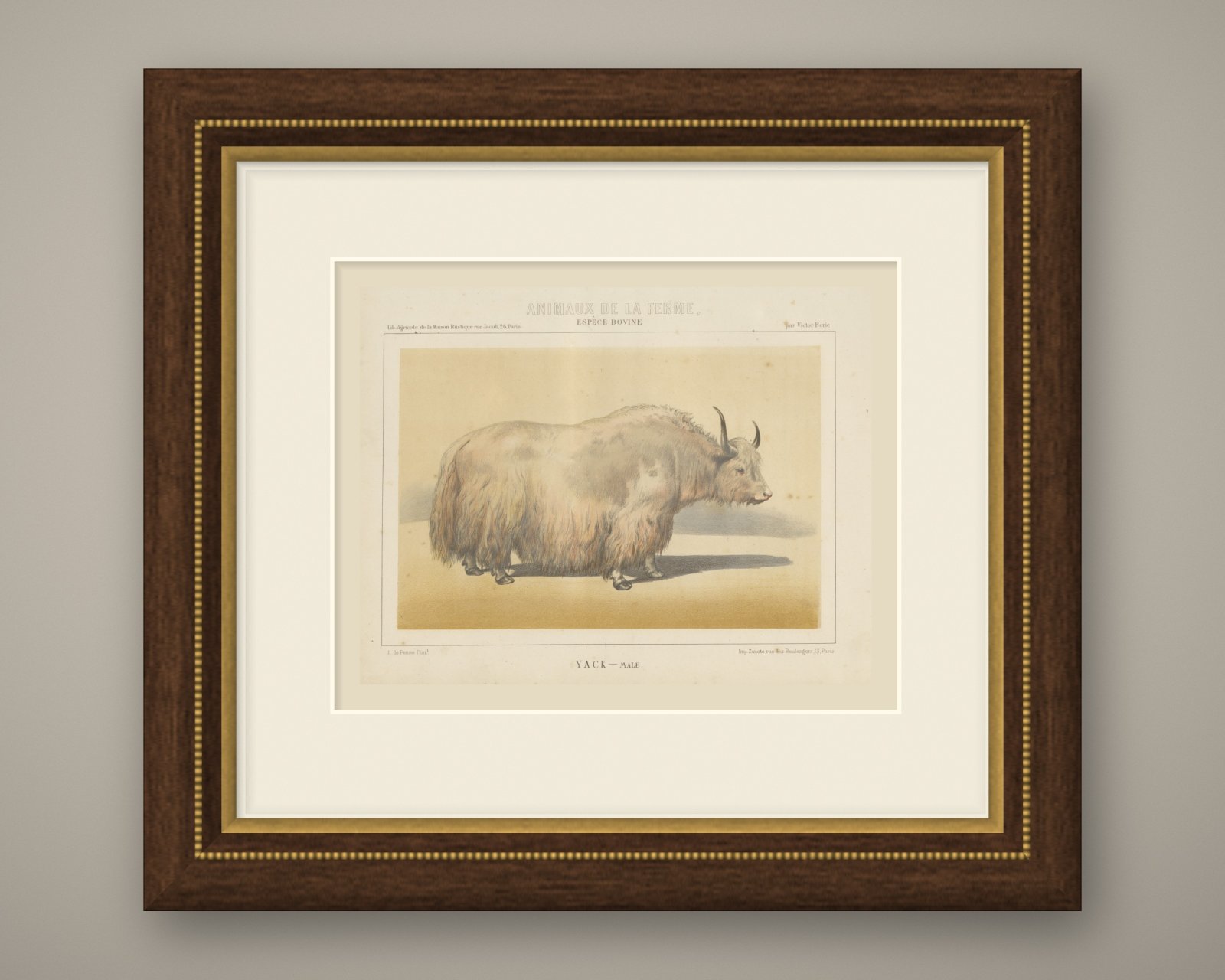
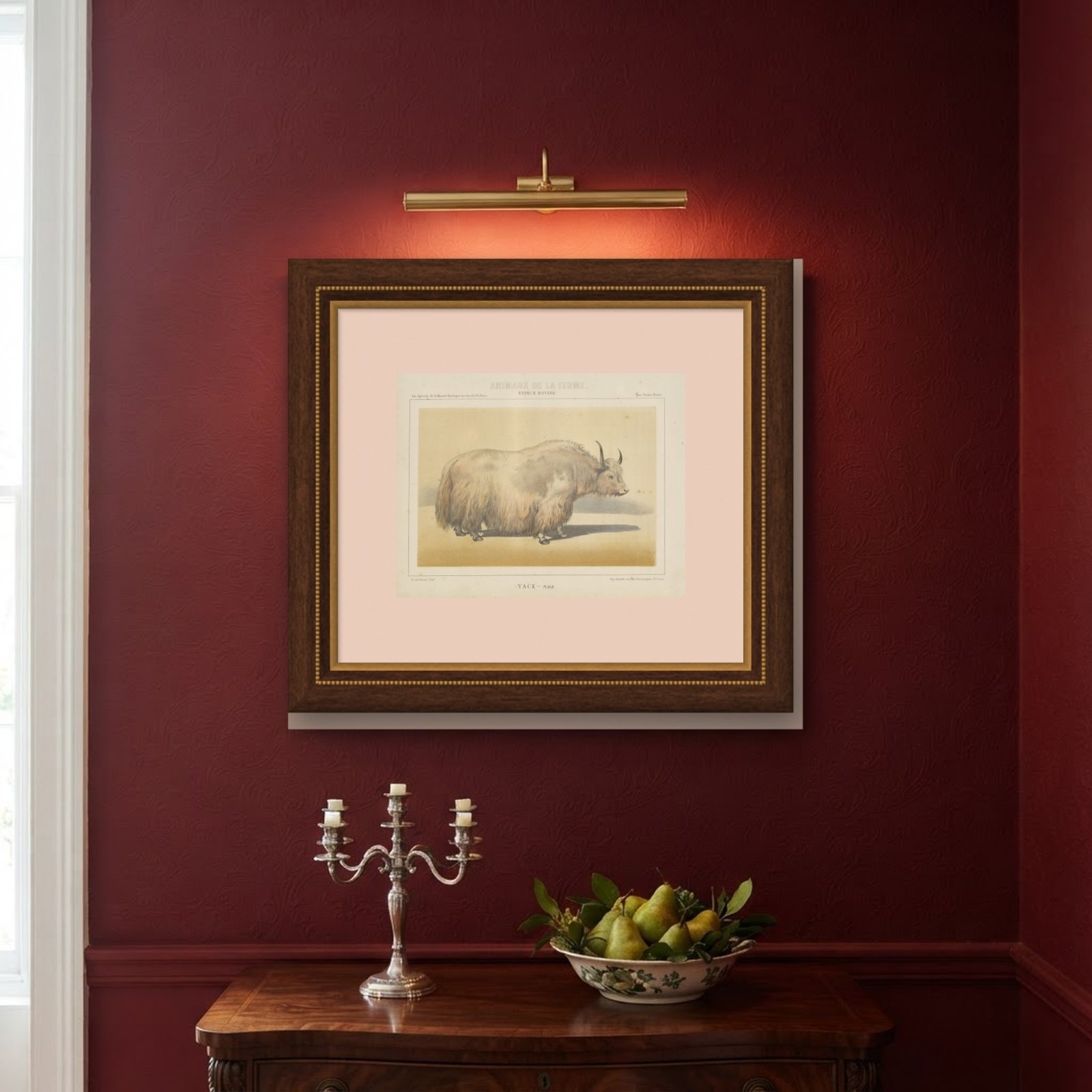
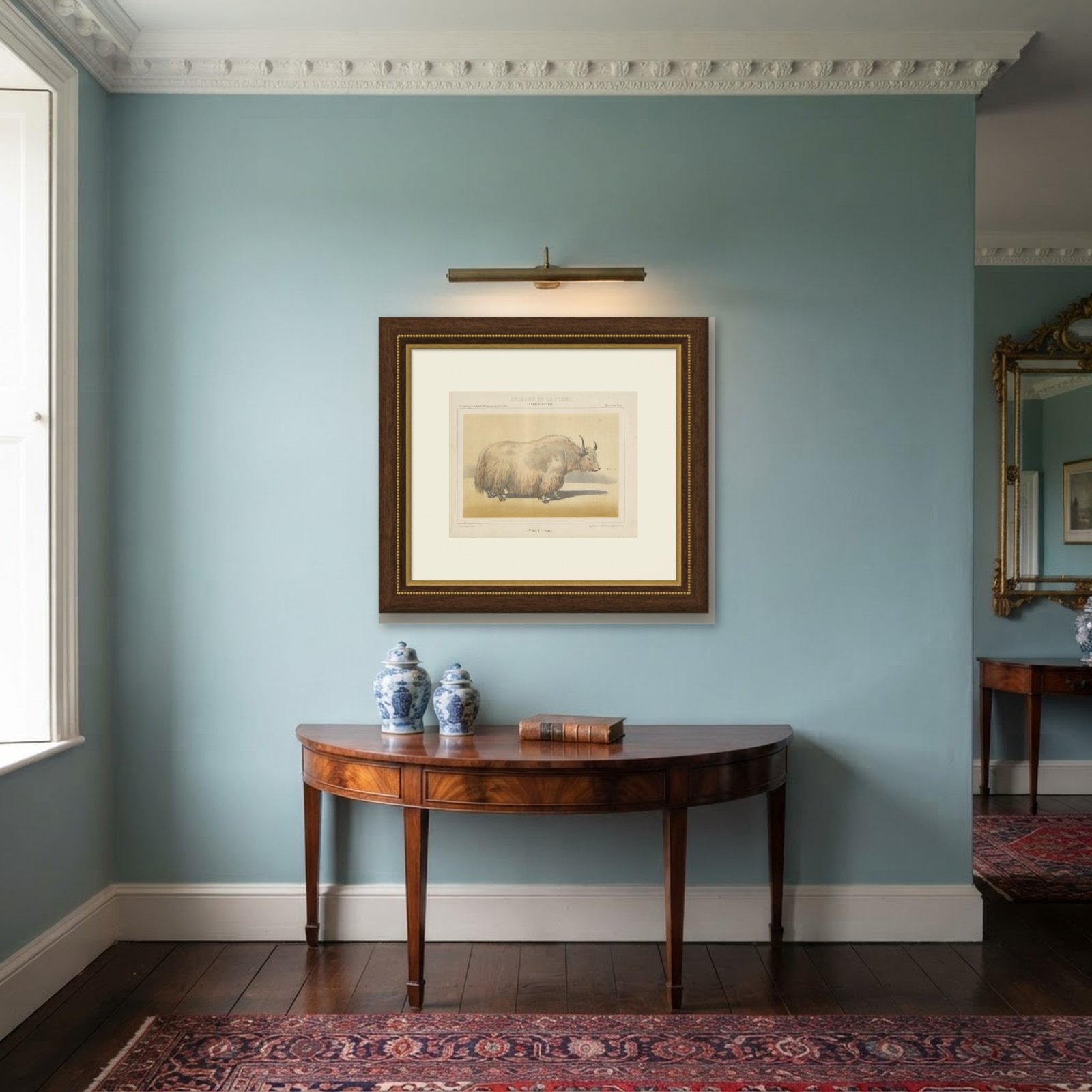
Frame and rooms are illustrations of how the print could look; the description says what is included.
Male Yak, Antique Chromolithograph from Borie's Animaux de la Ferme, 1863
£365 ($480, €430)
Period original, not a reproduction.
Shipped from the Netherlands, flat, insured and tracked, worldwide. Returns accepted within 14 days.
- Date
- 1863
- Technique
- Chromolithograph
- Coloring
- Printed in color
- Condition
- Good. Light handling wear to the bottom right corner; edges straight and without nicks. Even age toning, lightly soiled along the bottom, left, right and top edges. A few small foxing spots in the margin.
- Period
- Late 19th century
- Section
- Mammals
- Reference
- BG-13174-45
What the condition grades mean
- Excellent
- Bright and clean, with no faults worth mentioning.
- Very good
- Only light signs of age, such as faint toning.
- Good
- Normal signs of age for a sheet of this period: toning, some foxing, small marks or neat old repairs.
- Fair
- Clear faults such as staining, tears or repairs, priced to match.
Every fault we see is written in the condition note, and the whole sheet is shown uncropped in the photos.
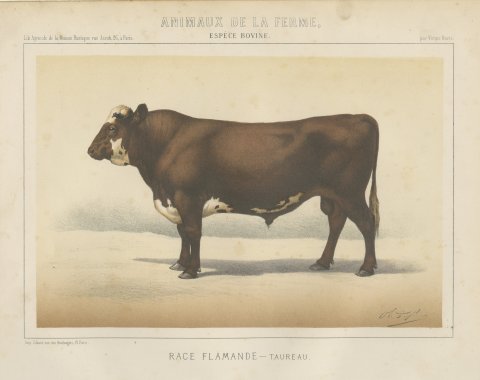
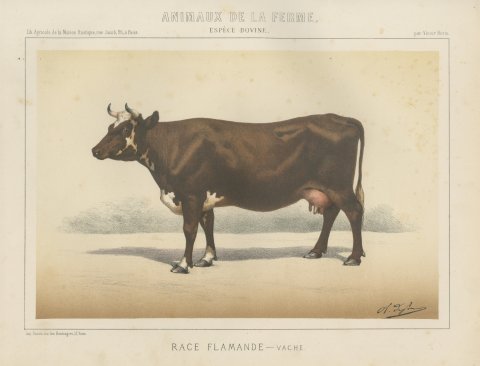
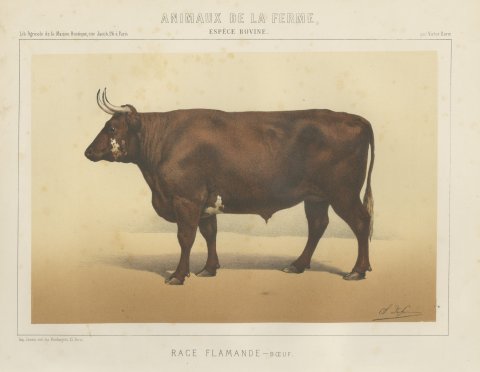
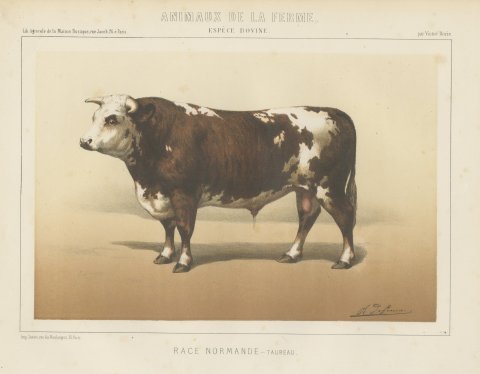
This is an original antique chromolithograph, printed in color from several lithographic stones, from Victor Borie's Animaux de la Ferme, Espèce Bovine, published in Paris about 1863. The plate is lettered "YACK, MALE" (Yak, male). The yak stands facing the viewer's right, a heavy, humped animal covered in long, pale cream hair tinged with pink and gray, falling in a fringe from the flanks and belly almost to the hooves, with a full, hanging tail. Dark horns rise and curve upward from the head, and the muzzle is pink. He stands on a sandy yellow ground with a long gray shadow.
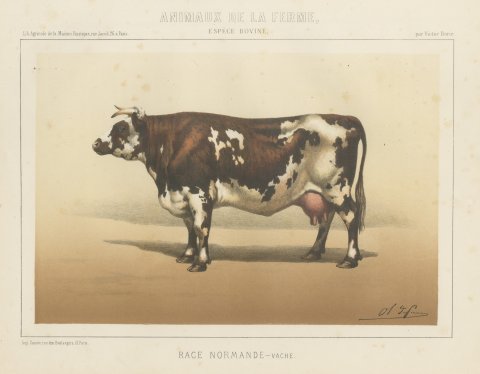
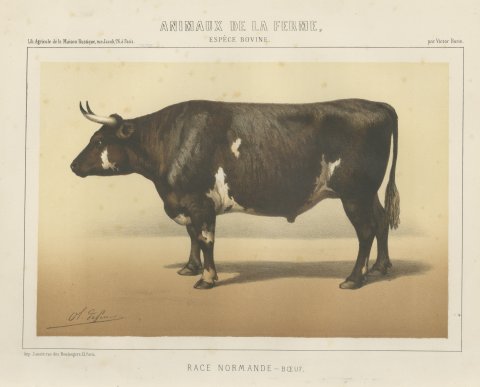
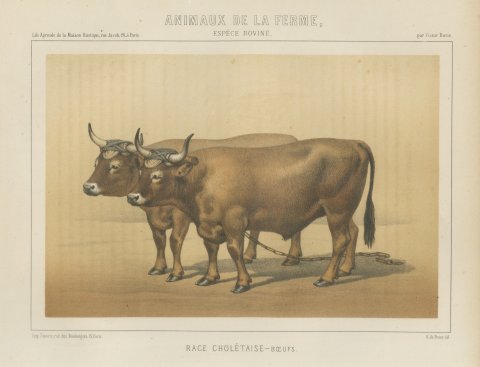
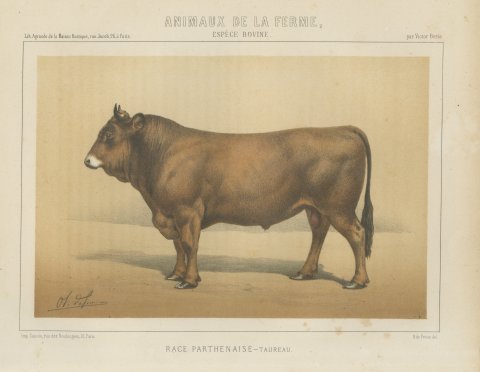
Above the image, the plate is headed Animaux de la Ferme, Espèce Bovine (Farm Animals, Cattle), with the imprint "Lib. Agricole de la Maison Rustique rue Jacob, 26, Paris" at left (the agricultural bookshop of the Maison Rustique), and "par Victor Borie" (by Victor Borie) at right. Below the image, the artist's credit reads "Ol. de Penne Pinx.t" and the printer's line reads "Imp. Zanote rue des Boulangers, 13, Paris" (printed by Zanote, rue des Boulangers, Paris). The abbreviation stands for pinxit, painted it. The artist is the French animal painter Charles Olivier de Penne (1831 to 1897).
The yak, the long haired ox of the high plateaus of Central Asia and Tibet, was of keen interest to the French acclimatization movement of the period, which sought to establish useful foreign animals in France. Borie's album sets out the cattle of France alongside British and other foreign breeds, each animal shown in profile on a plain ground so that build, coat and horns can be compared. It was issued by the Librairie Agricole de la Maison Rustique, the Paris publisher of agricultural books.
The clear profile and warm palette suit a kitchen, study or country house, alone or with other plates from the series.
Condition: Light handling wear to the bottom right corner; edges straight and without nicks. Even age toning, lightly soiled along the bottom, left, right and top edges. A few small foxing spots in the margin.
This is an original antique print, not a modern reproduction. This item is sold unframed. Any framed or interior images are shown for presentation and inspiration only, unless the listing explicitly states that the item is sold framed.