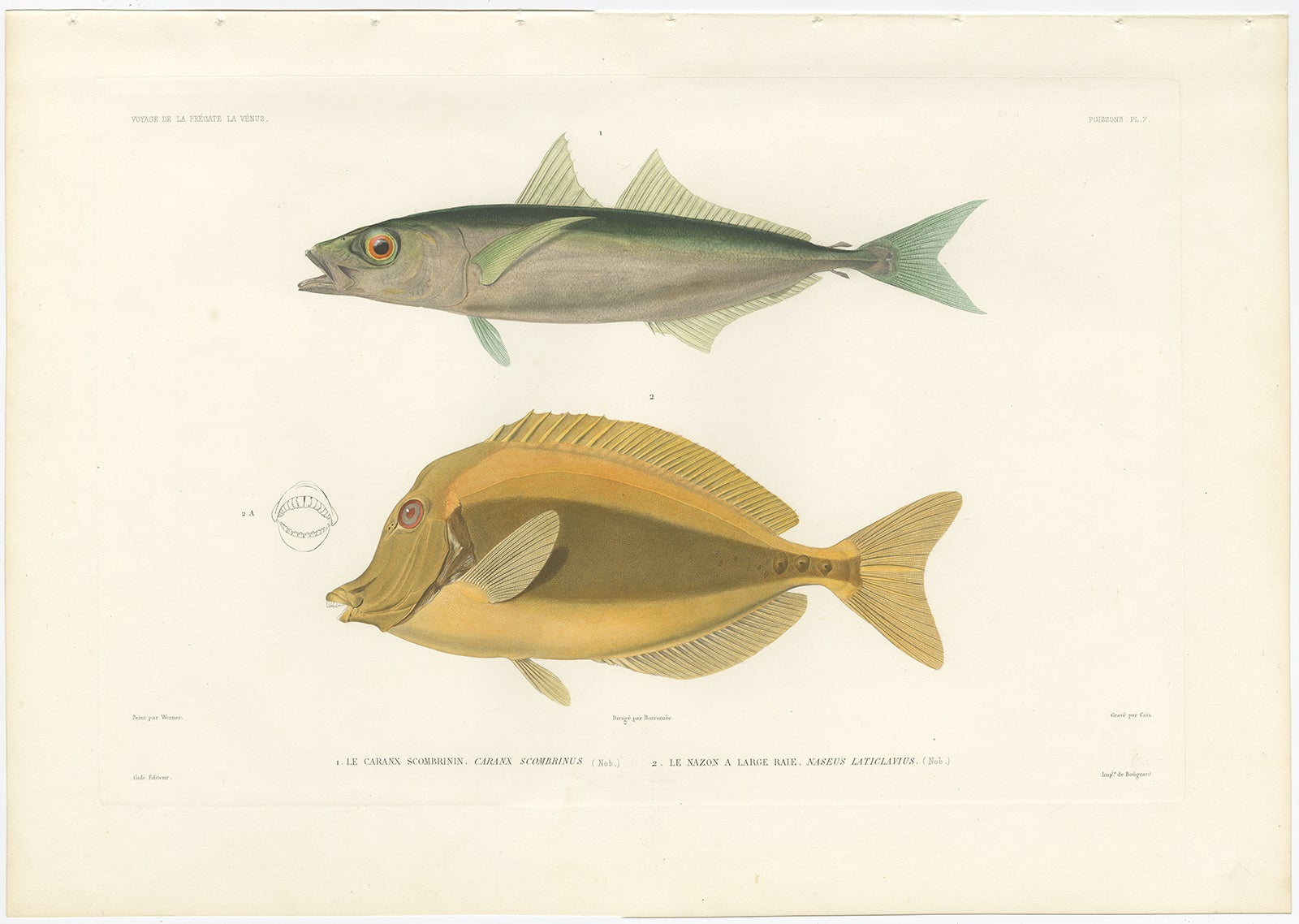
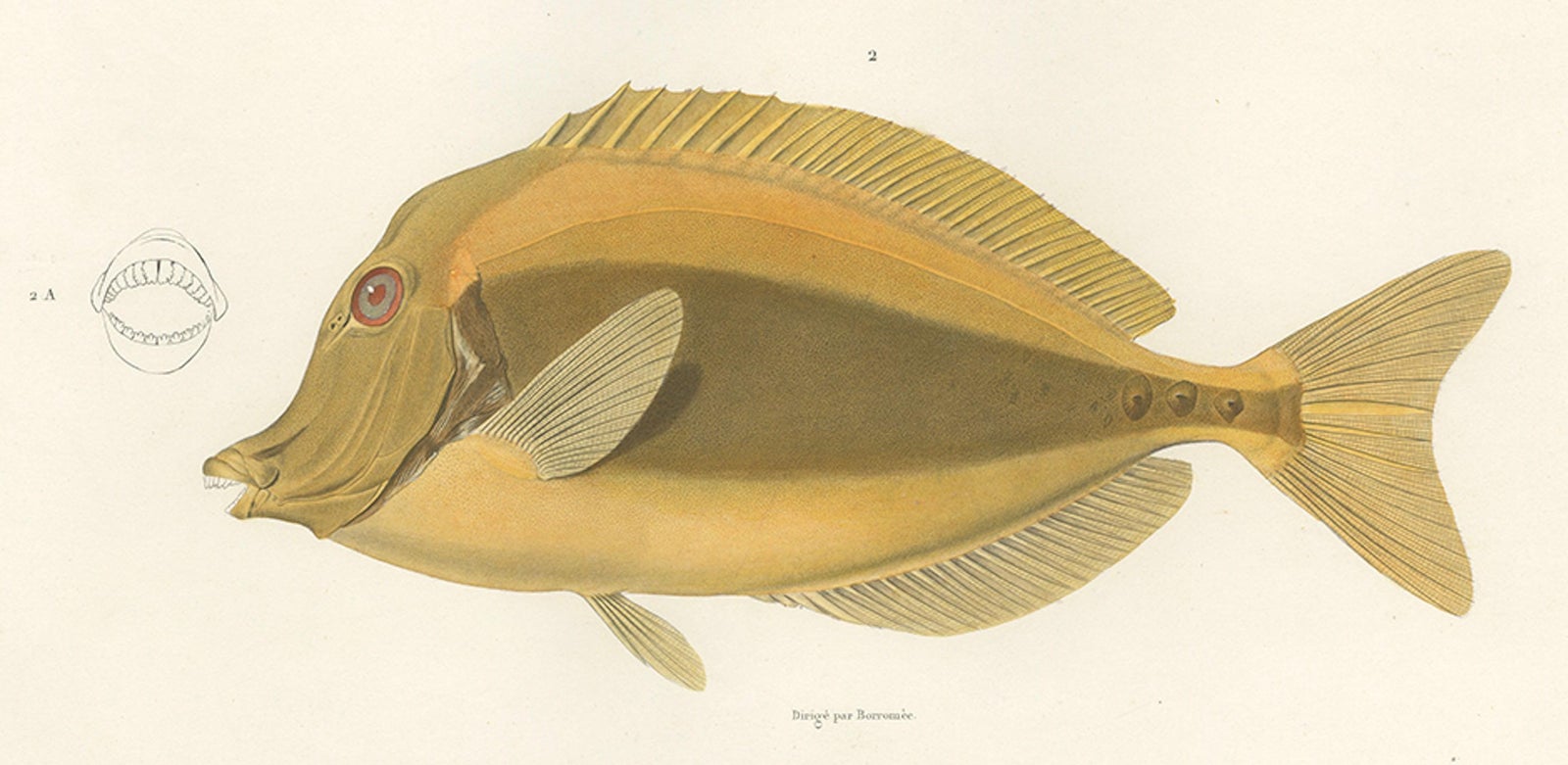
Close-ups
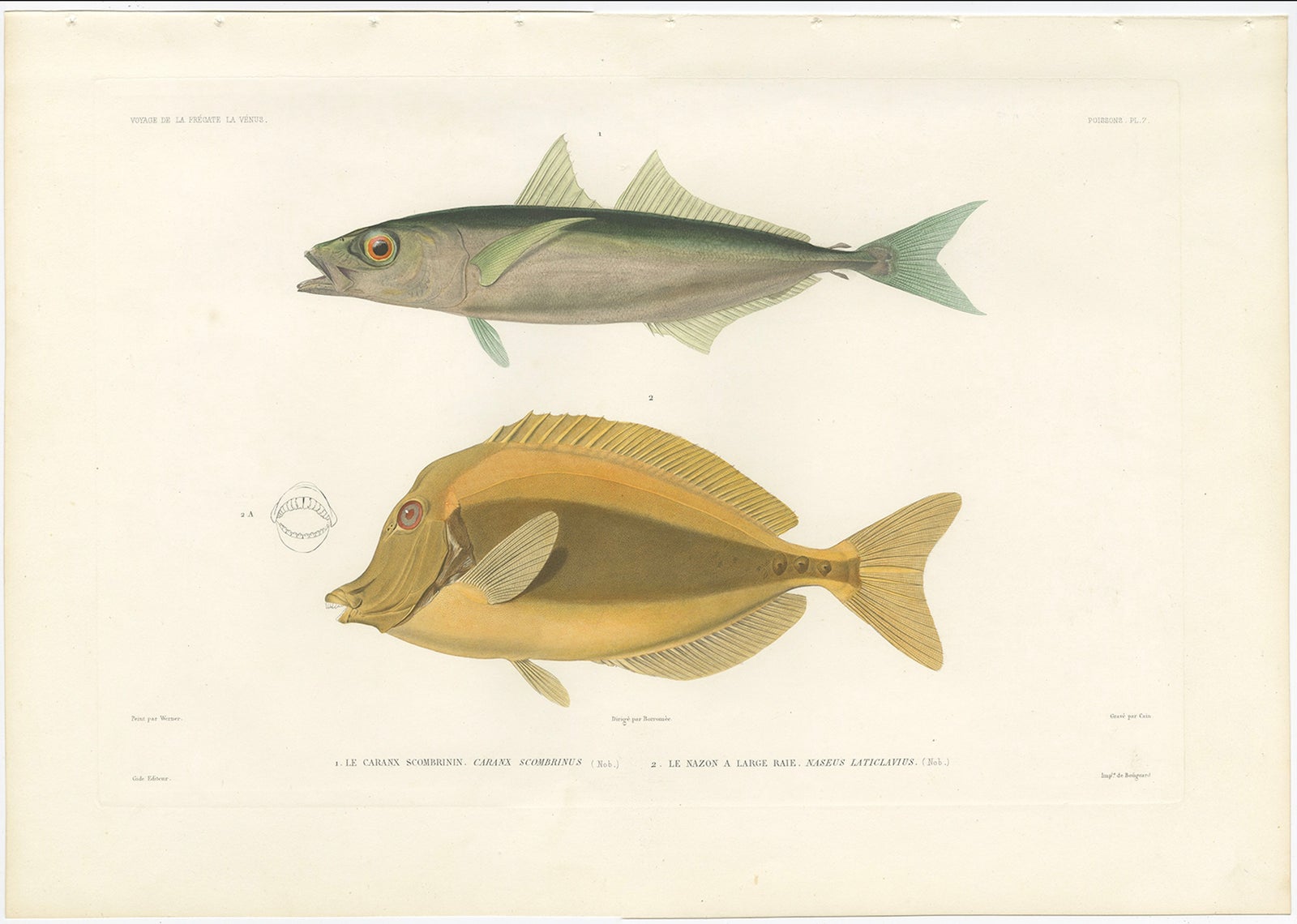
Framed and on the wall
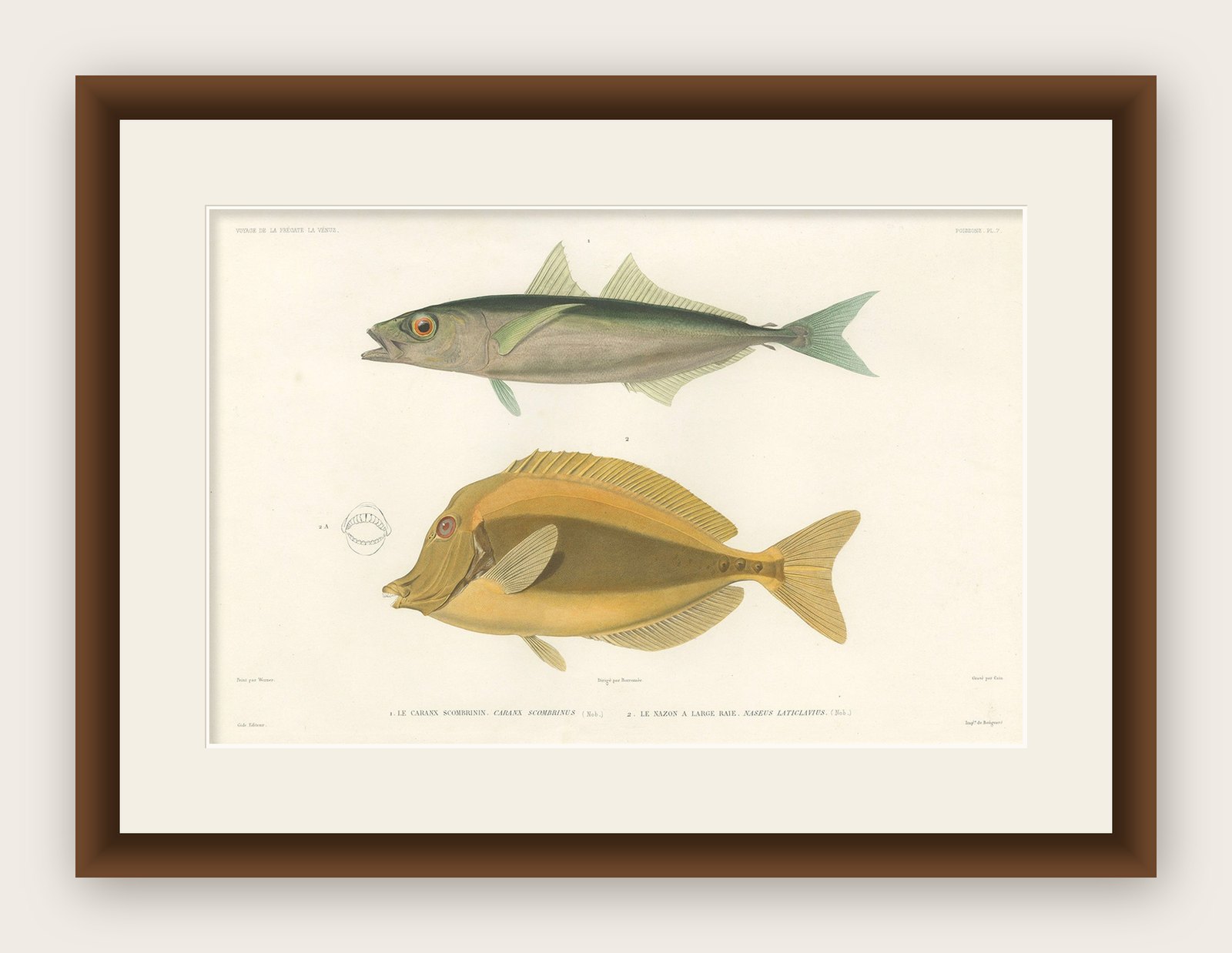
Frame and rooms are illustrations of how the print could look; the description says what is included.
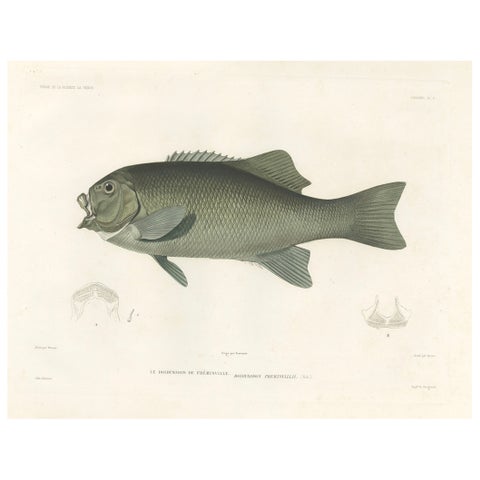
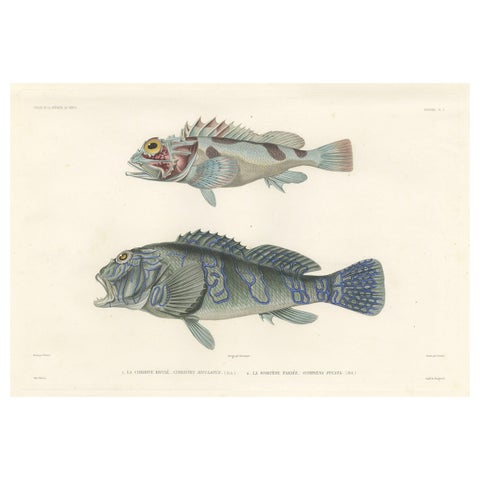
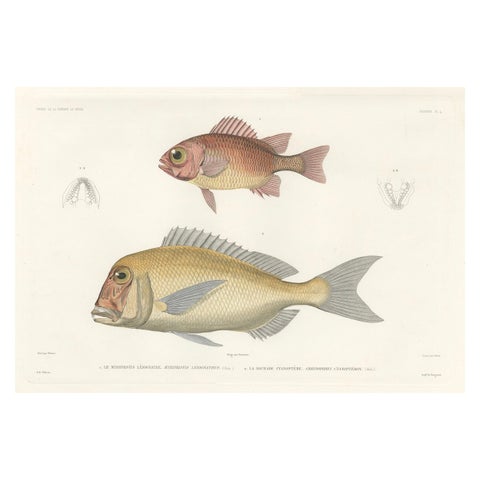
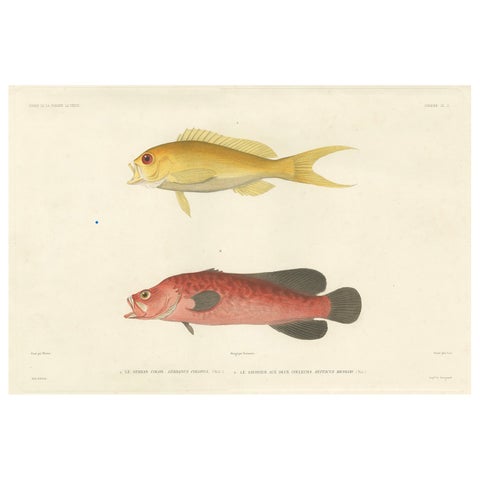
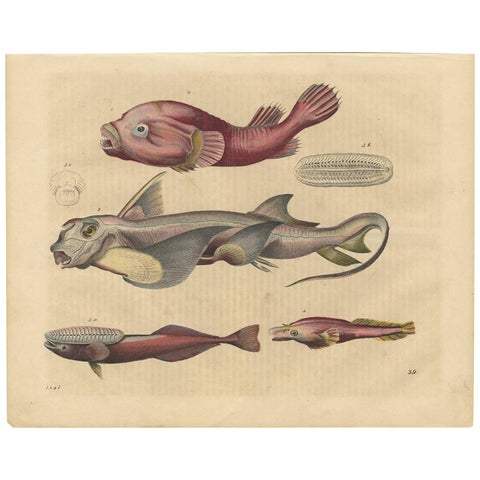
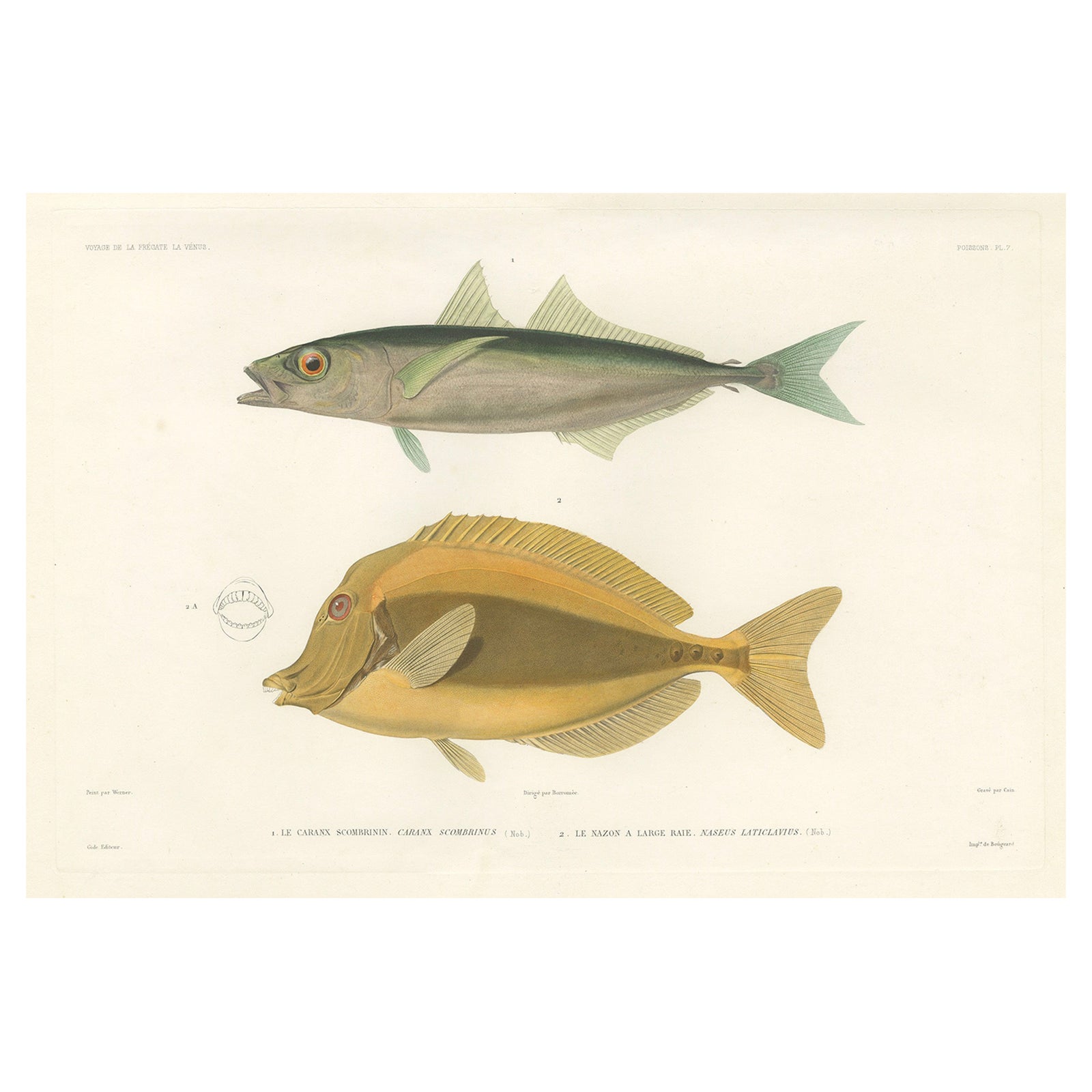
Mackerel Jack and Surgeonfish, Decorative Antique Sea Life Lithograph, 1846
$875 (£660, €780)
Period original, not a reproduction.
Shipped from the Netherlands, flat, insured and tracked, worldwide. Returns accepted within 14 days.
- Date
- 1846
- Size
- 13.4 × 19.2 in (34 × 48.7 cm)
- Condition
- Good. Very good condition. Some minor toning and faint foxing in the margins. Plate mark clear. No repairs or losses. Rich hand coloring preserved.
- Period
- Early 19th century
- Section
- Fish and shells
- Reference
- f_45531712
Antique Print of Mackerel Jack and Orange Spine Unicornfish, Paris 1846
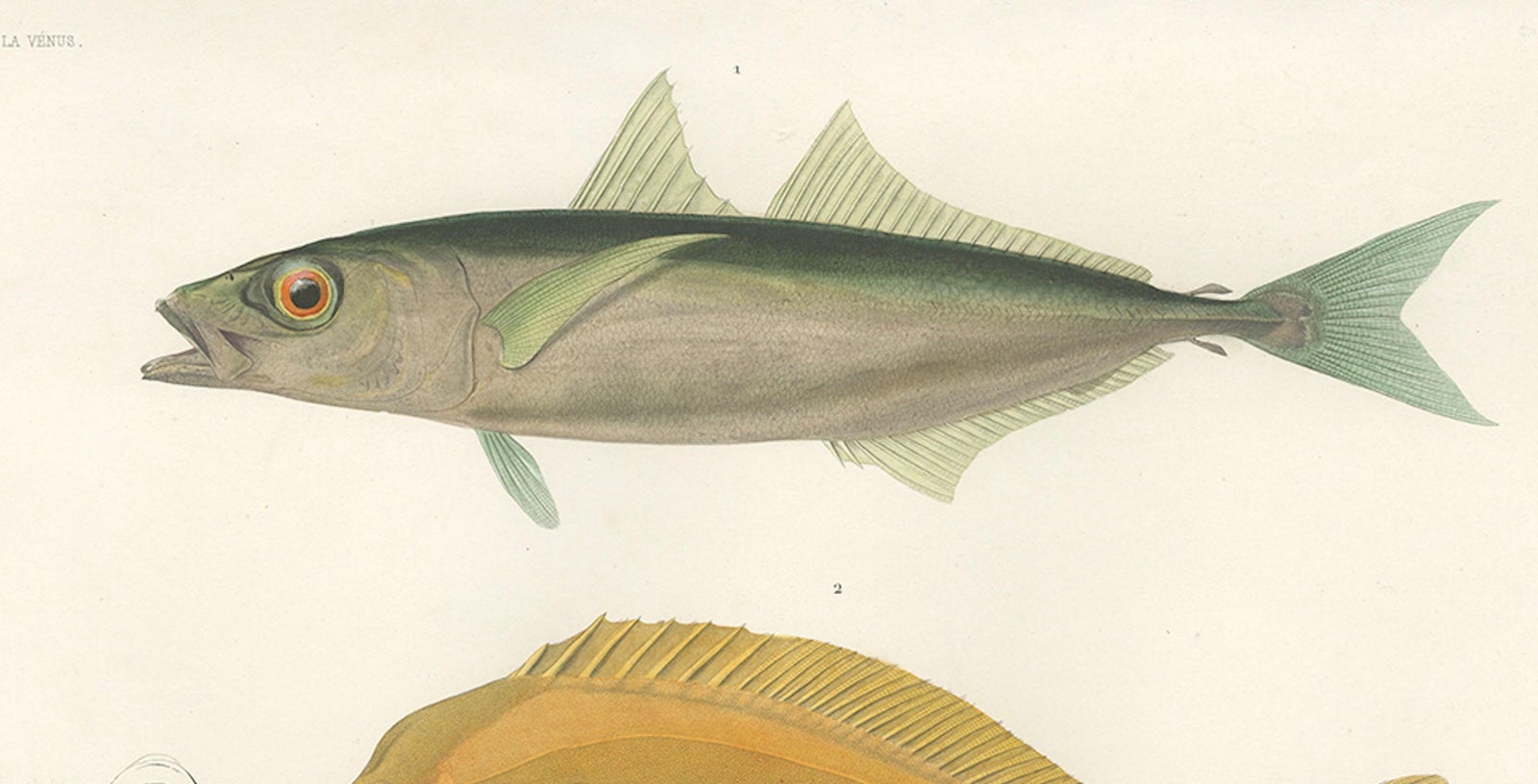
This elegant hand-colored lithograph features two distinct tropical marine species: Caranx scombrinus (commonly known as the Mackerel Jack) and Naso lituratus (here listed as Naseus laticaudus, also known as the Orange Spine Unicornfish). The plate is part of the natural history section of Voyage de la frégate La Vénus, published in Paris by Gide in 1846 following the French naval expedition around the world (1836–1839).
The upper fish, Caranx scombrinus, is streamlined and iridescent, with silvery flanks and greenish upper body tones, typical of members of the jack or trevally family. Known for their speed and agility in coastal waters, these fish were of interest both to naturalists and to fisheries of the time.
Below, the Naseus laticaudus (modern Naso lituratus), is a beautifully drawn species with golden-brown coloring and distinct facial contours, including a pronounced “unicorn” snout and two bright orange spines near the base of the tail. It is part of the surgeonfish family and is known for its striking coloration and reef-dwelling habits in the Indo-Pacific region. A small inset detail (2A) shows the dental structure of the species, underscoring the plate’s scientific purpose.
This print is labeled “Poissons Pl. 7” and was drawn by Werner, engraved by Giraud and printed by Bougeard. It showcases the exceptional precision and artistry of early French marine zoology publications. The level of anatomical detail and subtle coloring is typical of prints issued under state-sponsored scientific voyages of the 19th century.
The Voyage de la Vénus was one of France’s grand global expeditions, combining ethnography, cartography, and natural sciences. Prints from this work remain prized by collectors of natural history illustration.
Condition:
Very good condition. Some minor toning and faint foxing in the margins. Plate mark clear. No repairs or losses. Rich hand coloring preserved.
Framing tips:
This plate works beautifully in a classic wooden or black frame with a neutral mat (ivory, pale beige, or light seafoam green) to enhance the fish’s subtle tones. Ideal for collectors, marine-themed decor, or vintage scientific illustration displays.