Close-ups
Framed and on the wall
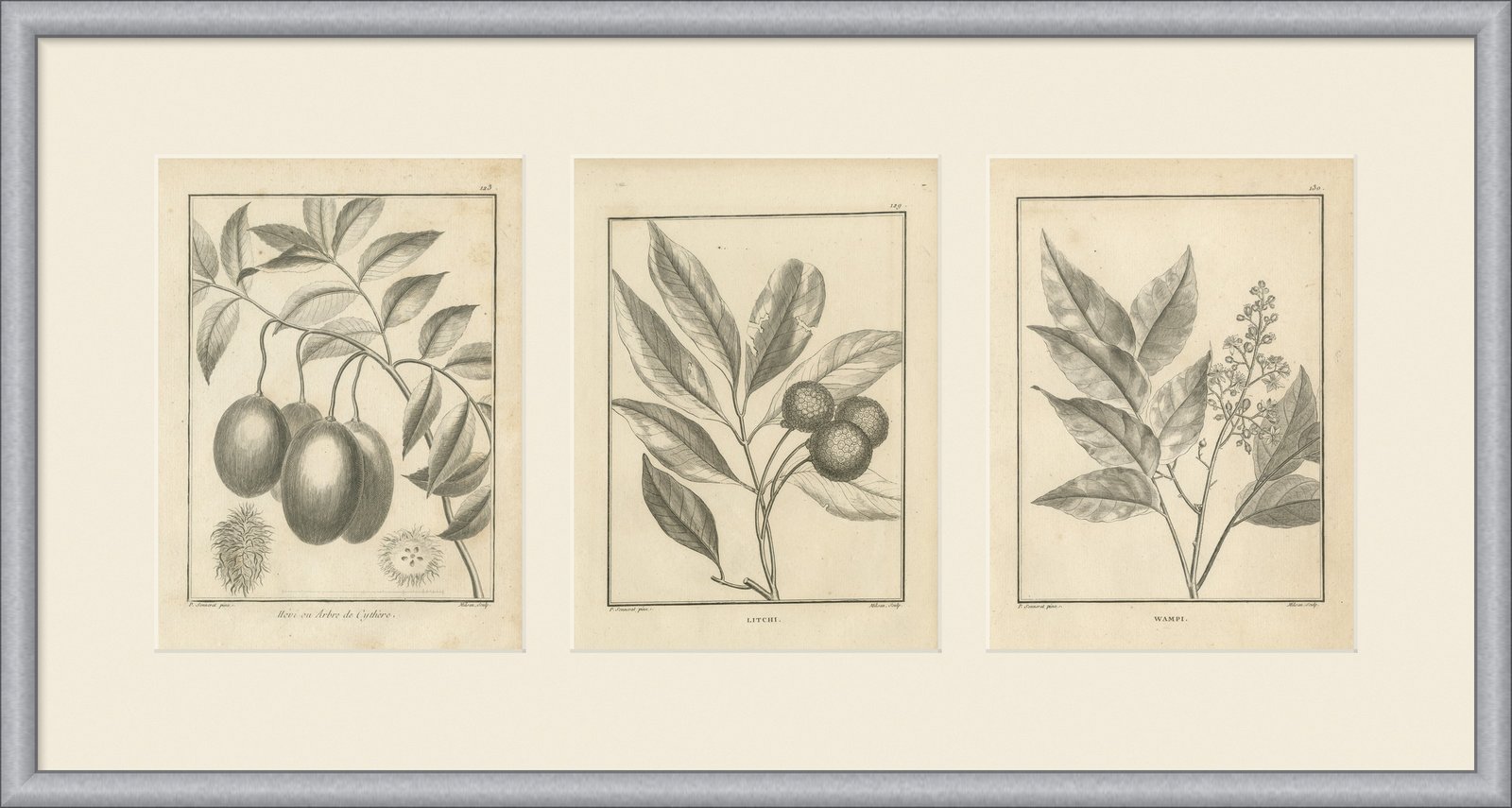
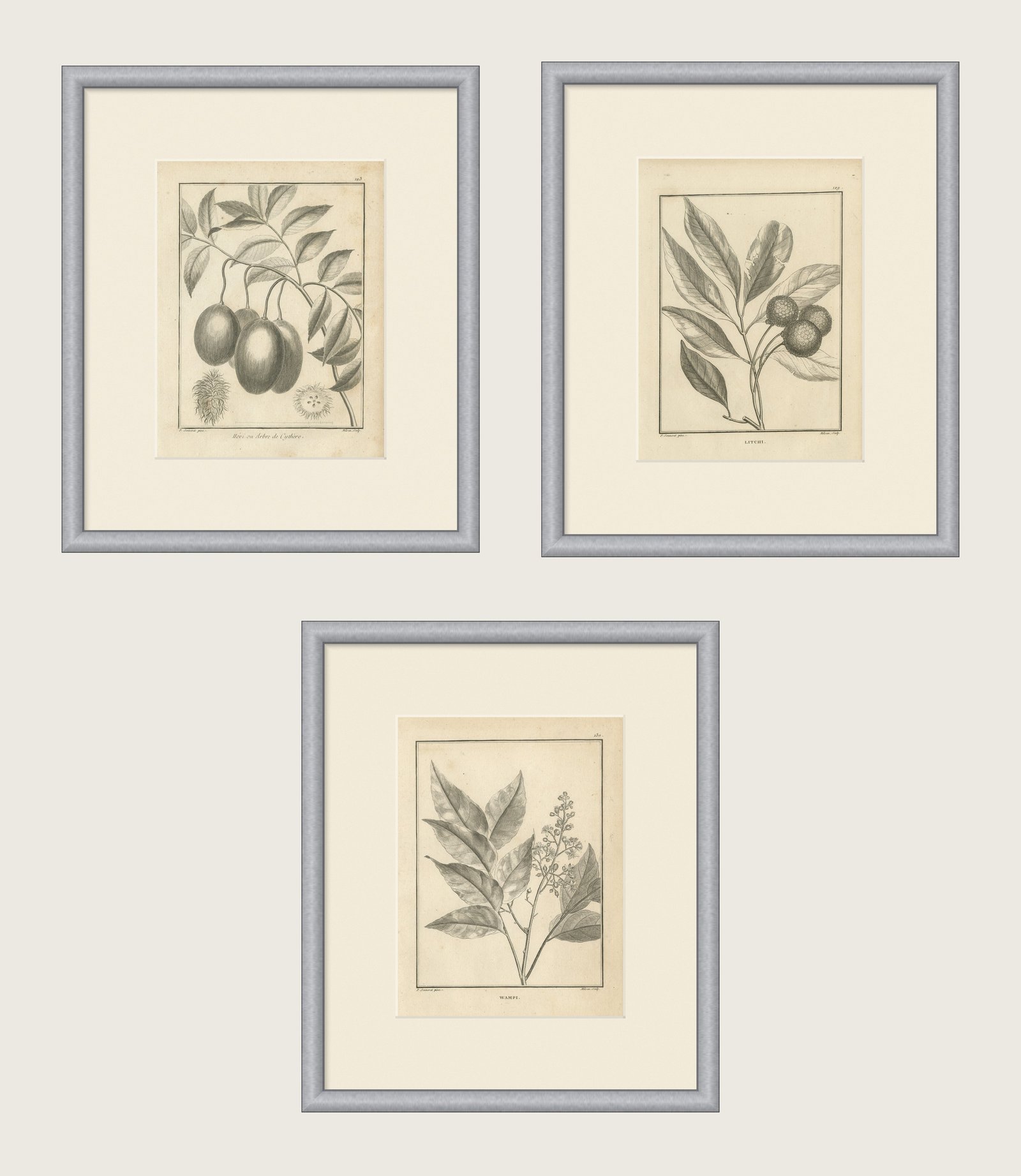


Frame and rooms are illustrations of how the print could look; the description says what is included.
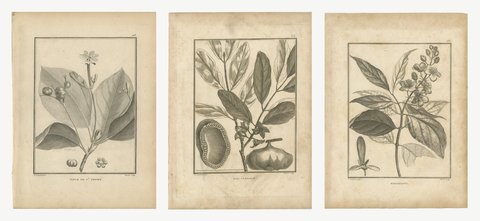
Litchi, Wampee and Hevi Fruit Trees, Three Antique Botanical Plates, 1806
£395 ($520, €470)
Period original, not a reproduction.
Shipped from the Netherlands, flat or rolled, insured and tracked, worldwide. Returns accepted within 14 days.
- Date
- 1806
- Size
- 11.2 × 8.3 in (28.5 × 21 cm)
- Technique
- Copper Engraving
- Coloring
- Uncolored
- Condition
- Good. Light uneven toning, browner towards the edges. Marked handling soiling along the edges of all three sheets. Scattered light foxing in the margins of all three sheets. Slight wear at the corners of two of the three sheets.
- Period
- Early 19th century
- Section
- Botanical
- Reference
- BG-13429-121
What the condition grades mean
- Excellent
- Bright and clean, with no faults worth mentioning.
- Very good
- Only light signs of age, such as faint toning.
- Good
- Normal signs of age for a sheet of this period: toning, some foxing, small marks or neat old repairs.
- Fair
- Clear faults such as staining, tears or repairs, priced to match.
Every fault we see is written in the condition note, and the whole sheet is shown uncropped in the photos.
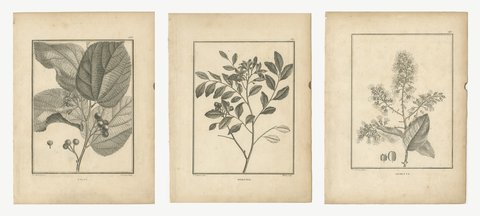
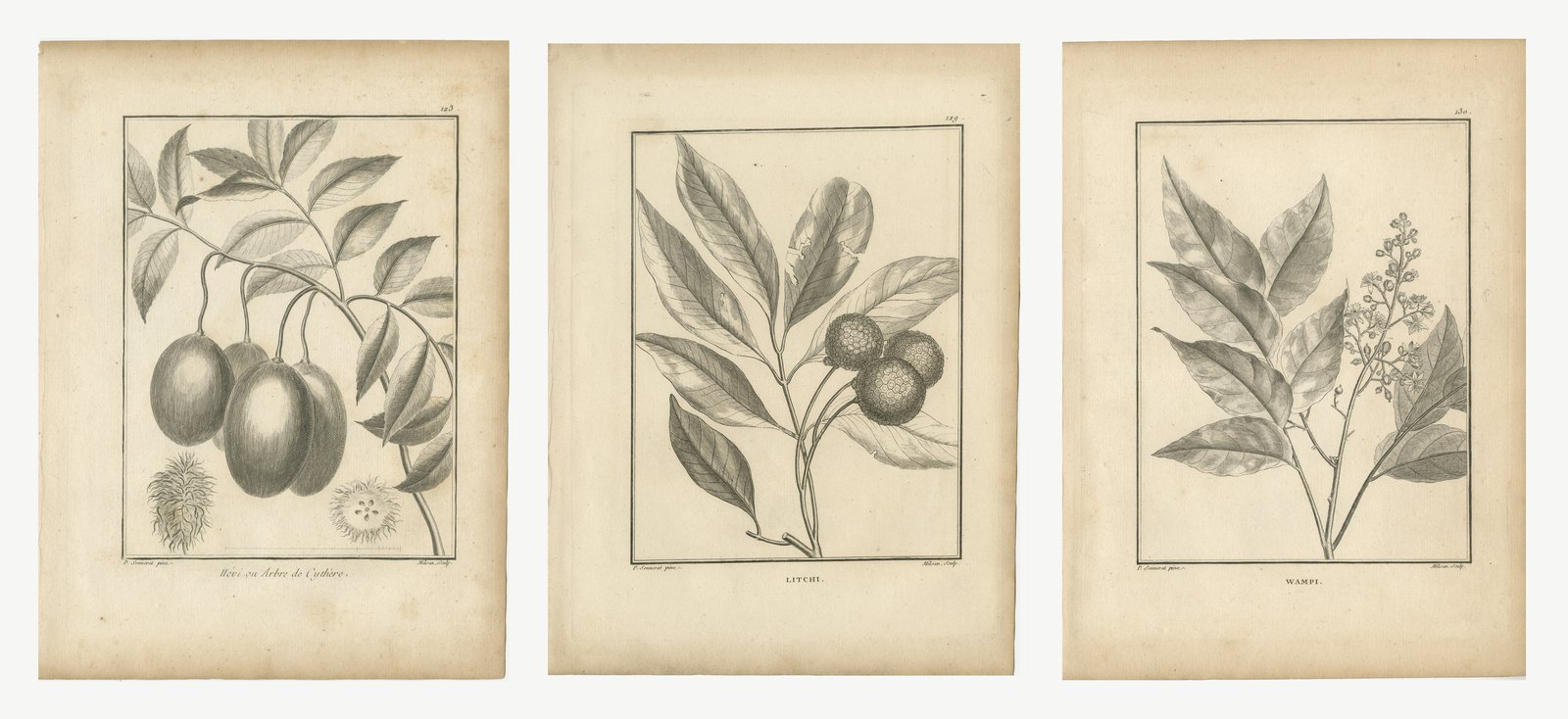
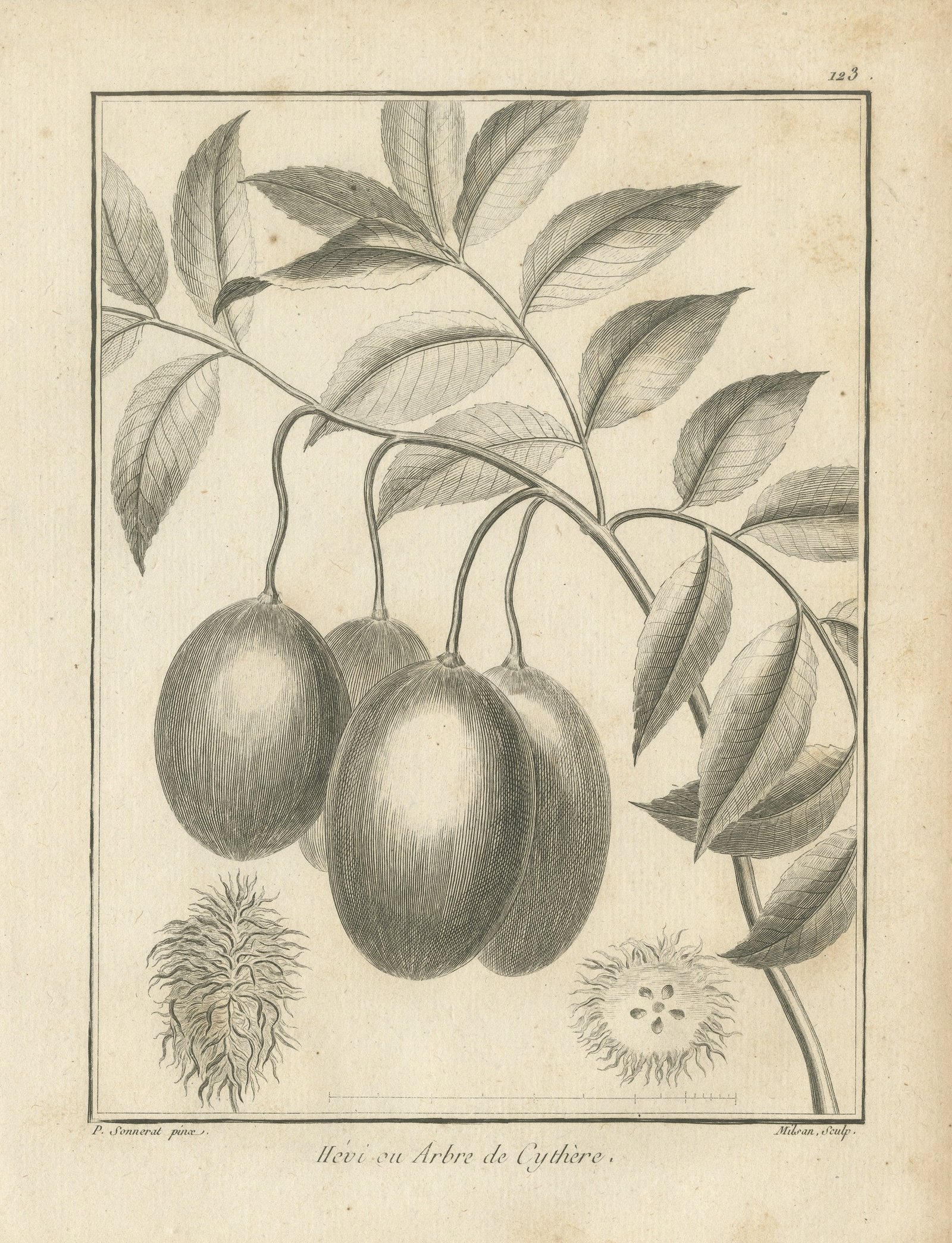
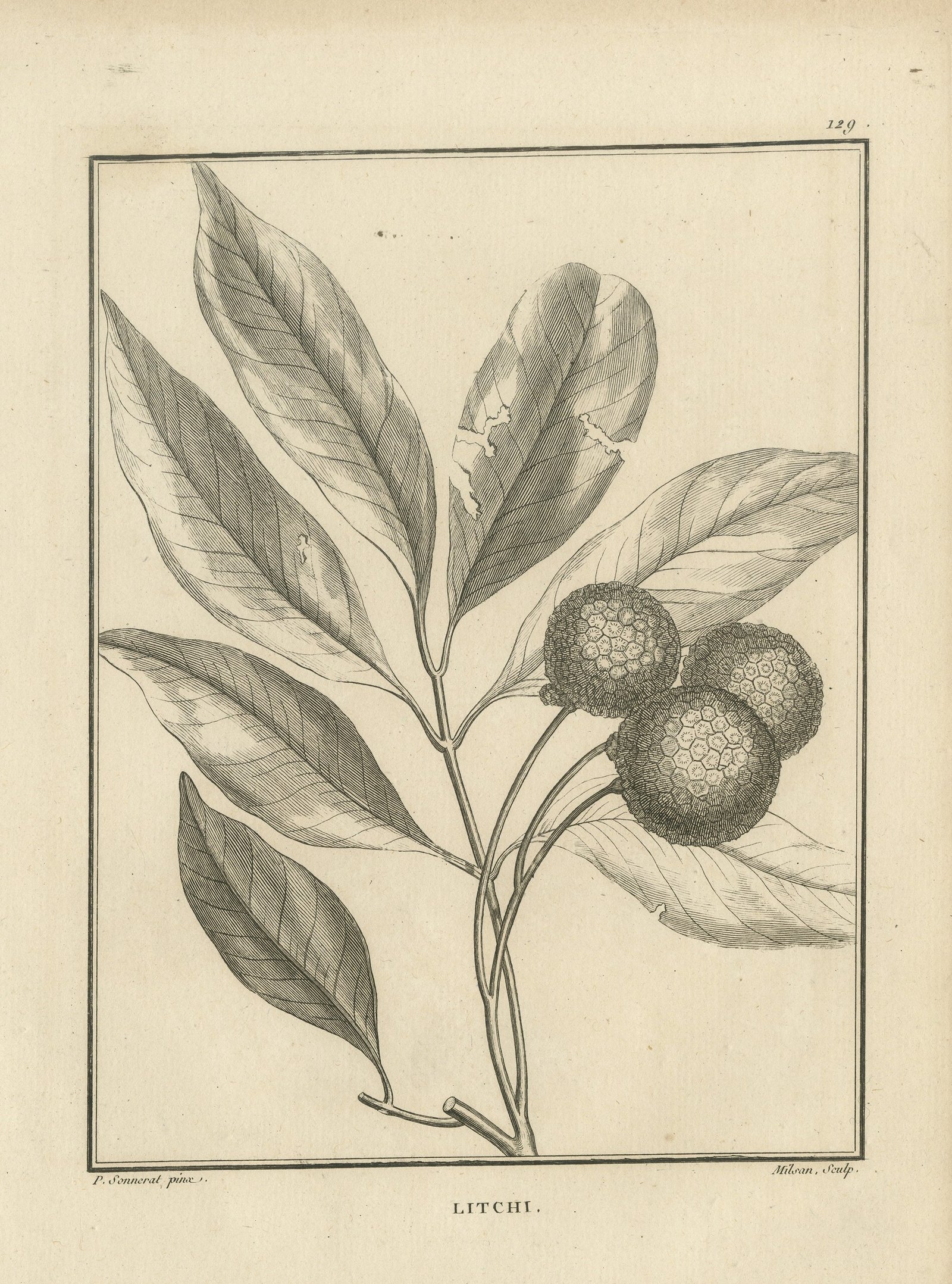
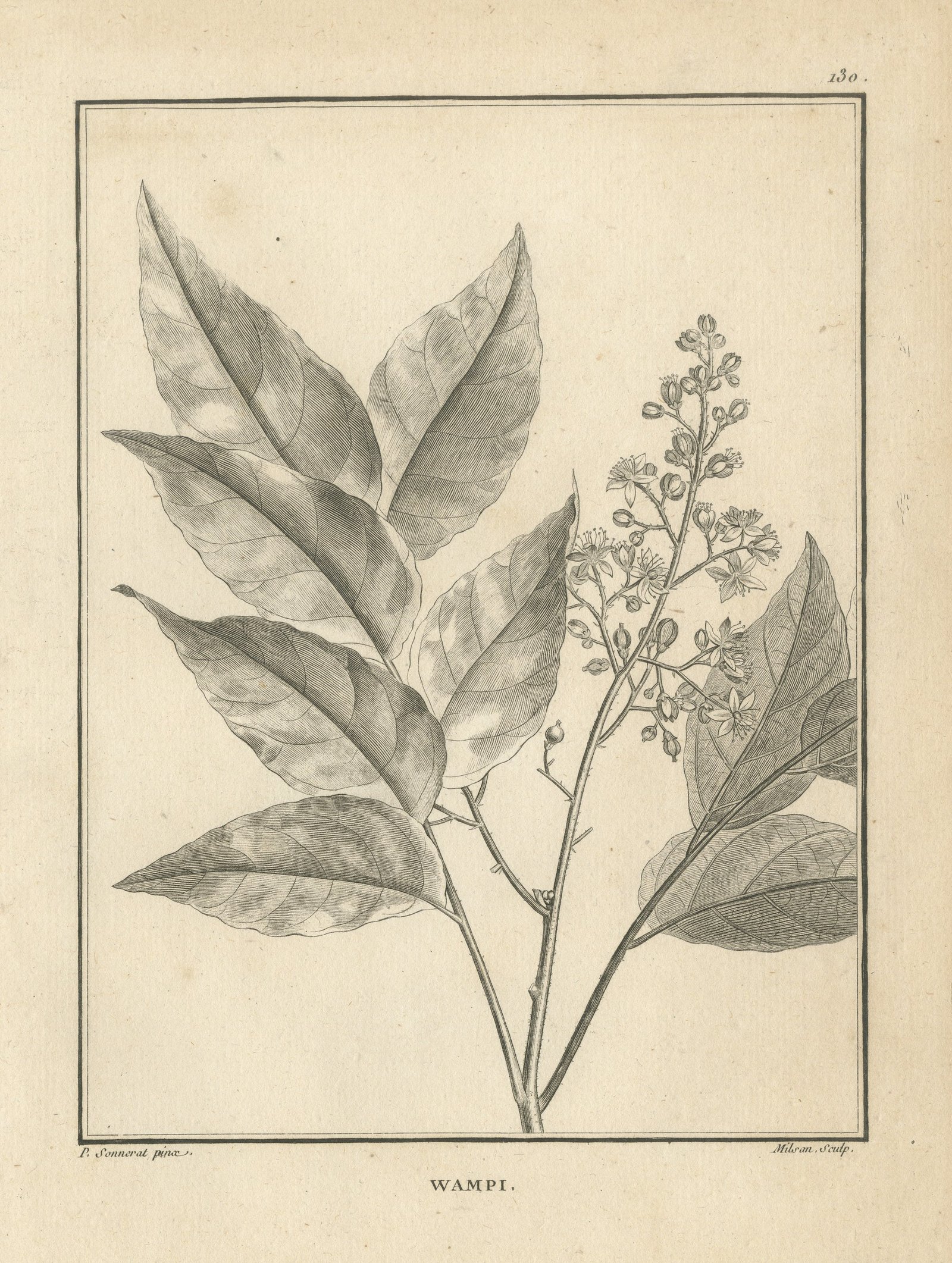
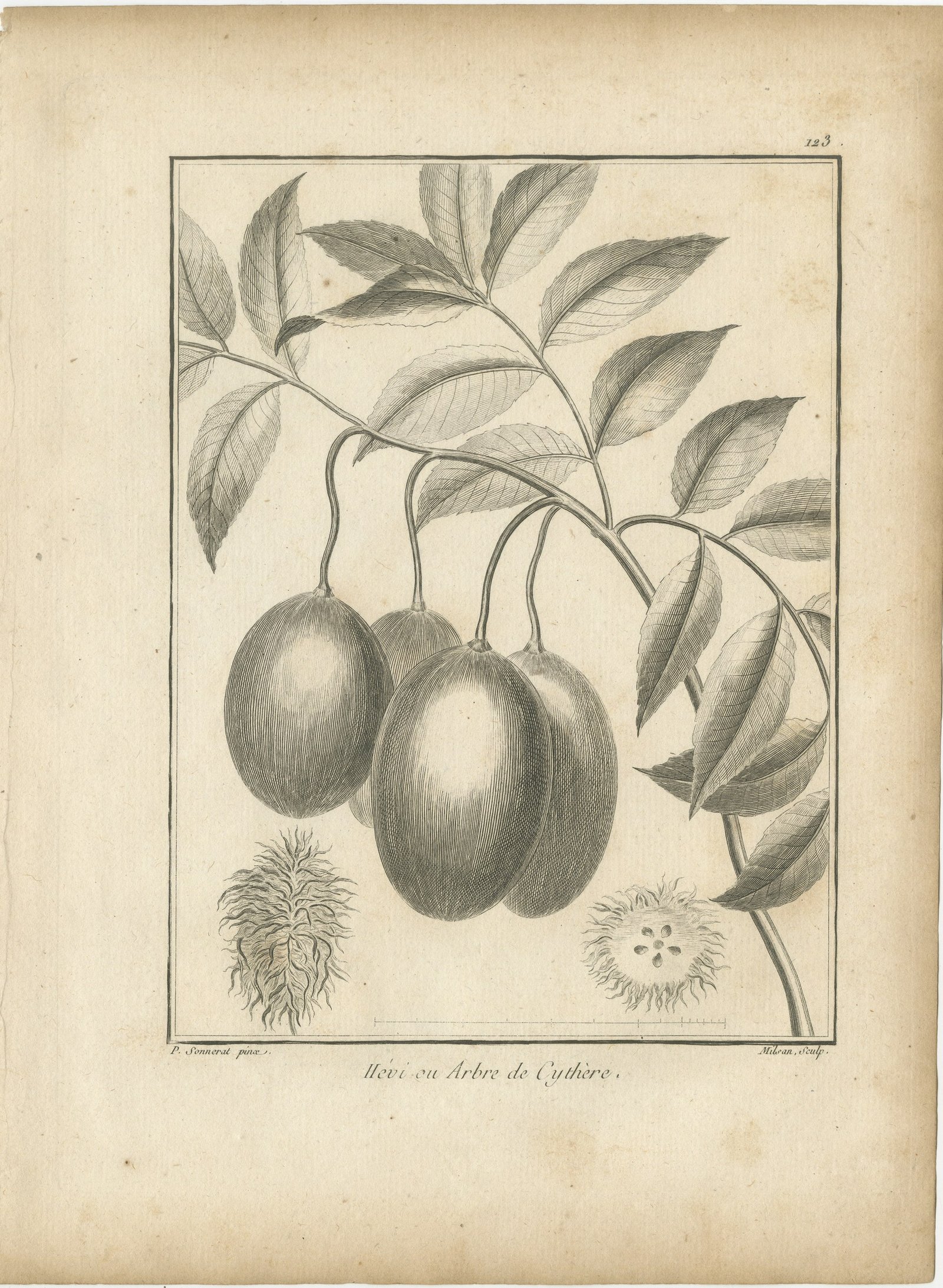
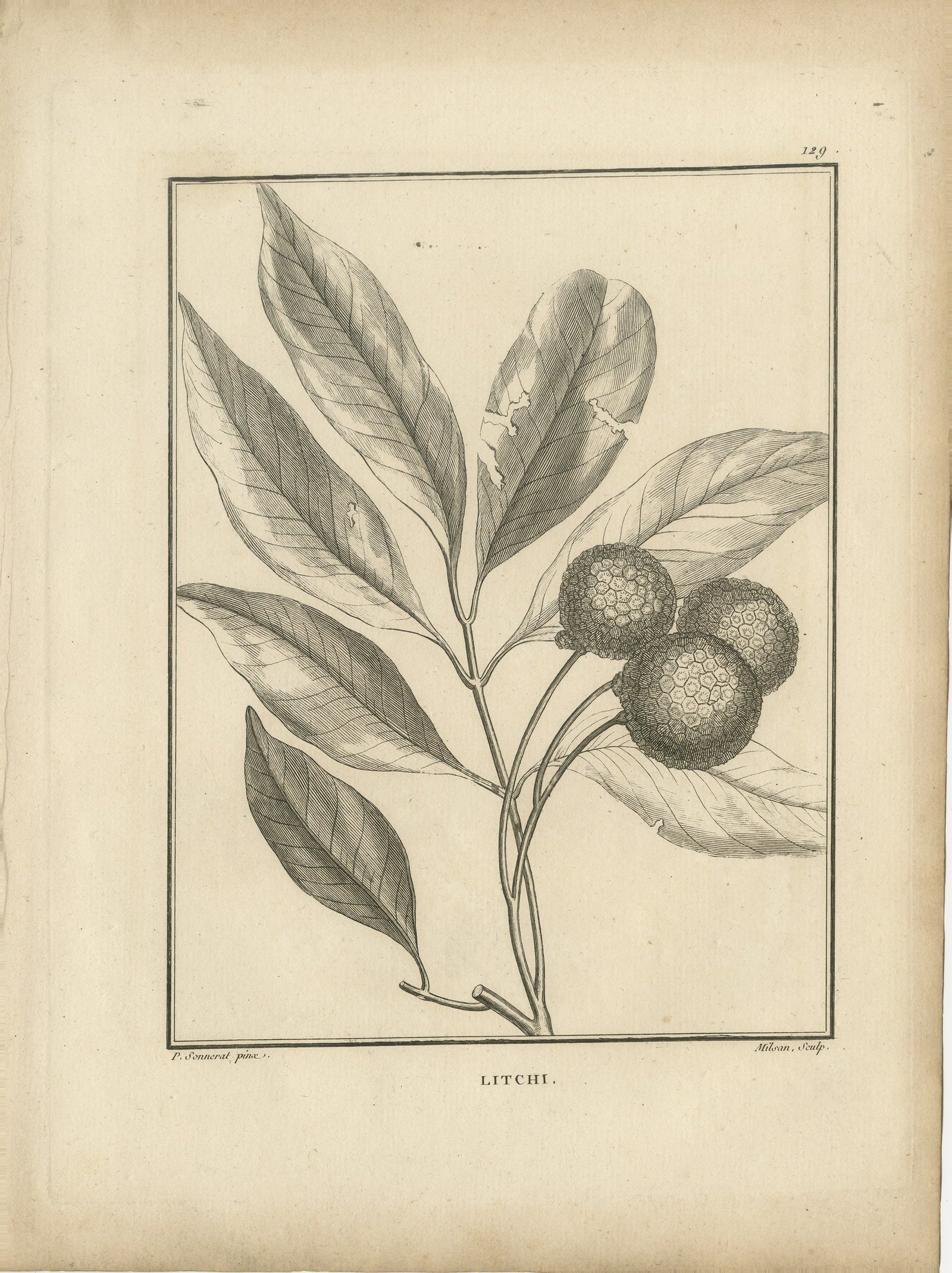
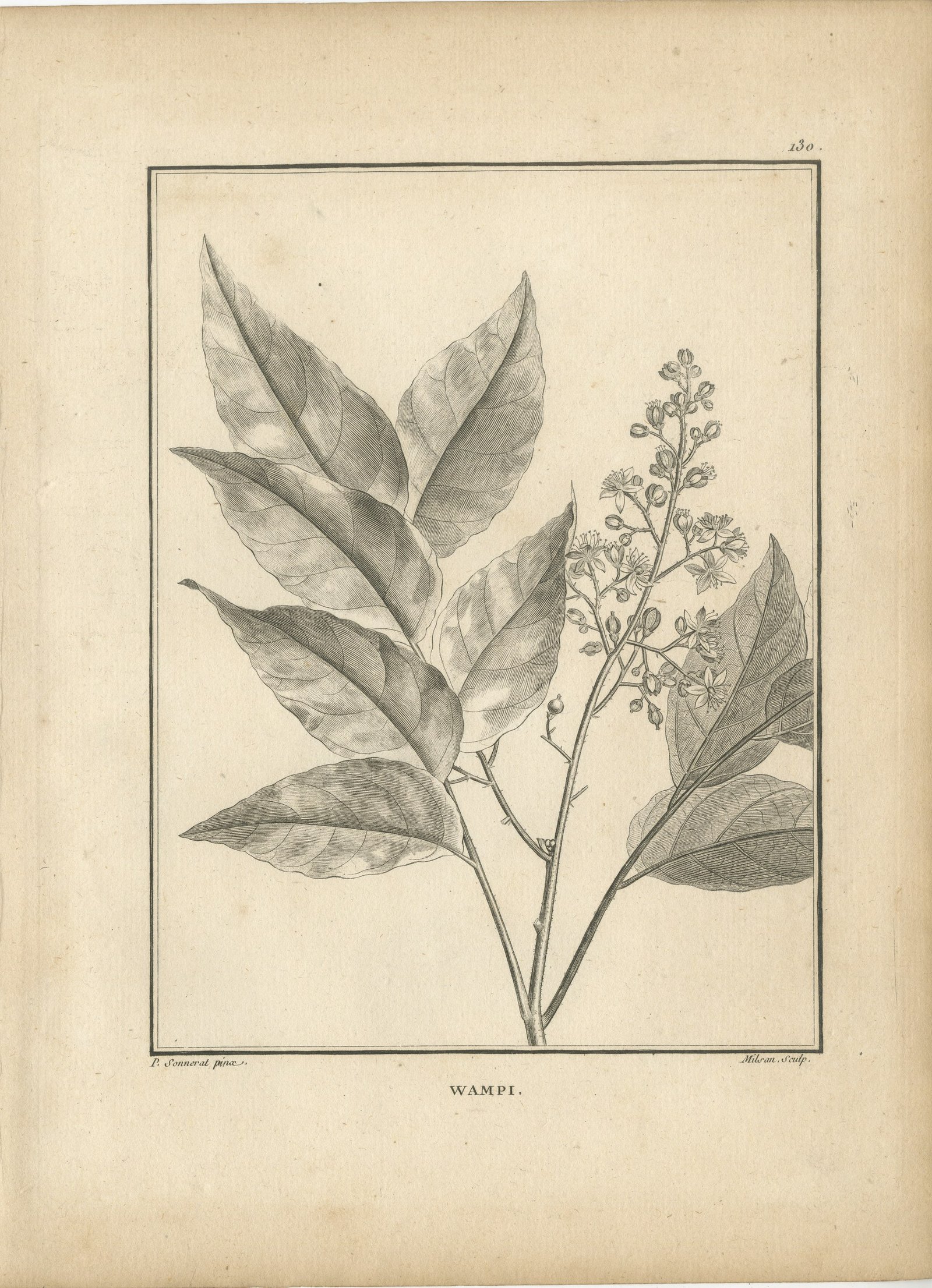
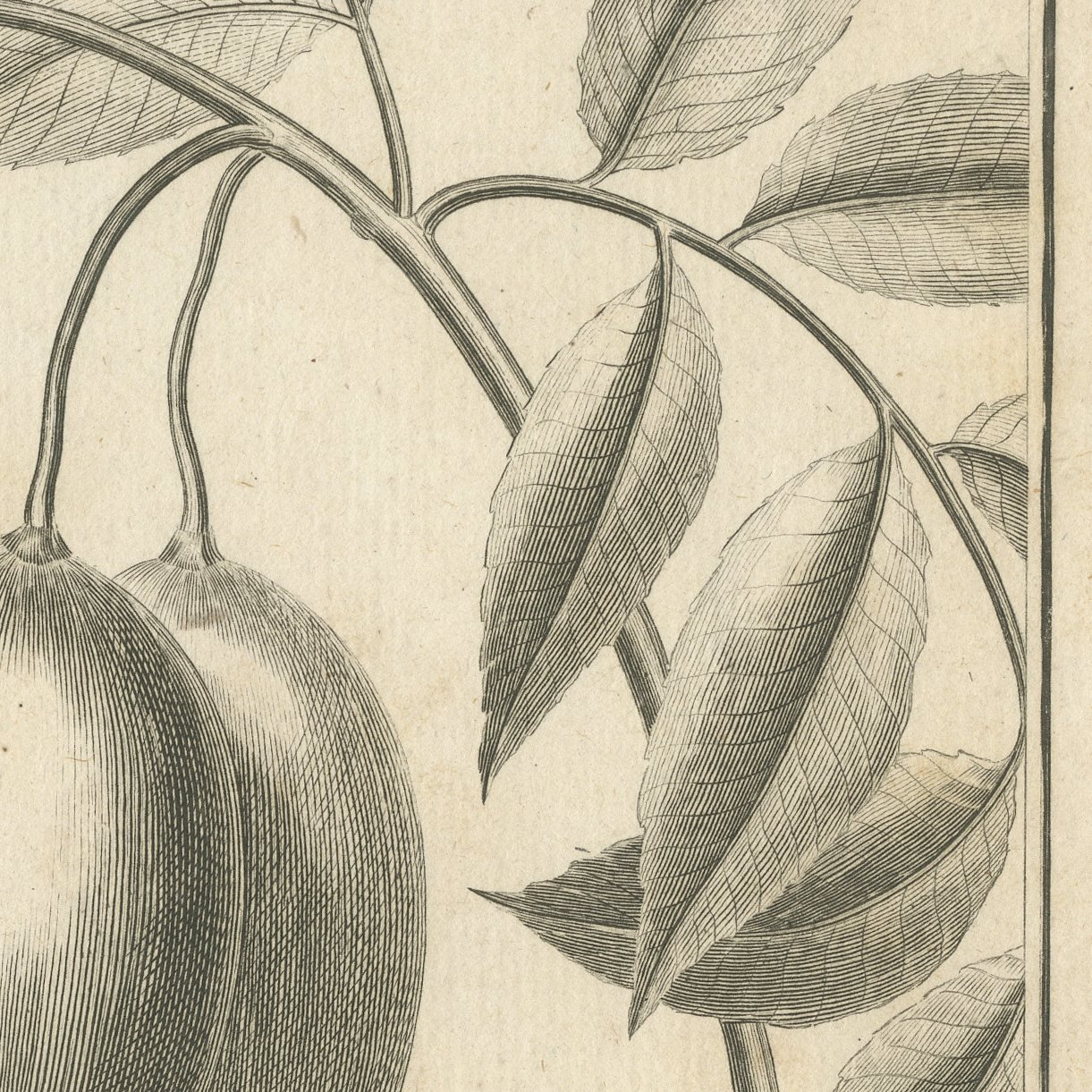
This set of three original antique copper engravings, Plates 123, 129 and 130 from Sonnerat's Voyage aux Indes Orientales et a la Chine, is sold as one set. They are three original sheets sold together as one lot, and the set is never split. Plate 123 shows the hevi or tree of Cythera, a branch hung with four large oval fruits, with a fibrous seed and a sectioned fruit drawn below and a scale bar. Plate 129 shows a litchi branch carrying three ripe fruits with their characteristic tuberculate skin, among long pointed leaves. Plate 130 shows a wampee branch in flower, the loose panicle of small starry flowers set against broad veined leaves. Each sheet carries its engraved plate number at the upper right, the artist and engraver credits at the foot of the image and its caption lettered beneath.
Pierre Sonnerat published his Voyage aux Indes Orientales et a la Chine in Paris in 1782, and the plates were reissued in this separate folio volume by Dentu in 1806 under the title Collection de planches pour servir au Voyage aux Indes Orientales et a la Chine. Every image was drawn by Sonnerat himself during the voyage he made for the French crown between 1774 and 1781 and then cut on copper by the Paris engravers who worked for him. They are original copperplate engravings, printed from the intaglio plates onto laid paper. The engraved plate number stands at the upper right, the artist and engraver credits run along the foot of the image and the caption is lettered beneath. The sheets are uncolored, as the plate volume was issued.
The botanical plates close the volume and are the quietest sheets in it. Sonnerat drew the useful and the strange: the spice plants, the fruit trees and the flowering trees of the Indian Ocean, generally with a fruit or a flower taken apart and drawn separately so that the structure can be read. All three sheets are the same size and the same orientation and come from one volume of one book, which is why they are offered as a set and not one at a time. Sonnerat is remembered in the names of the things he found. The mangrove genus Sonneratia carries his name, so does the gray junglefowl Gallus sonneratii, and the botanical author abbreviation Sonn. stands for him. He was the first to put the name aye-aye into print, and the name indri entered European use through him as well. The plates in this volume are the record of that work.
Light uneven toning, browner towards the edges. Marked handling soiling along the edges of all three sheets. Scattered light foxing in the margins of all three sheets. Slight wear at the corners of two of the three sheets.
These are original antique prints, not modern reproductions. This item is sold unframed.