Close-ups
Framed and on the wall
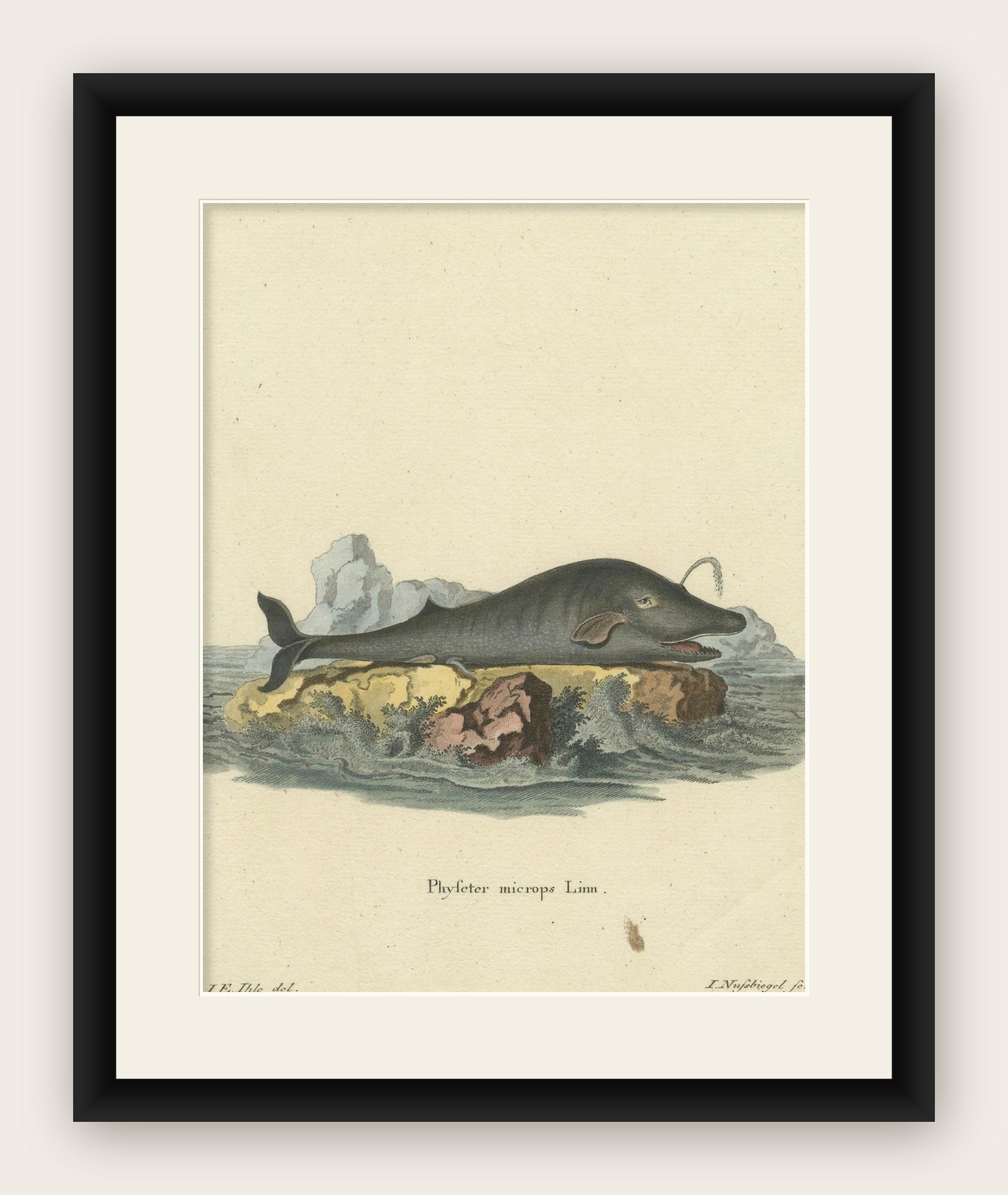
Frame and rooms are illustrations of how the print could look; the description says what is included.
Leviathan of the Depths: The Sperm Whale in 18th Century Scientific Art, 1775
£185 ($245, €220)
Period original, not a reproduction.
Shipped from the Netherlands, flat, insured and tracked, worldwide. Returns accepted within 14 days.
- Date
- 1775
- Size
- 9.8 × 7.9 in (25 × 20 cm)
- Condition
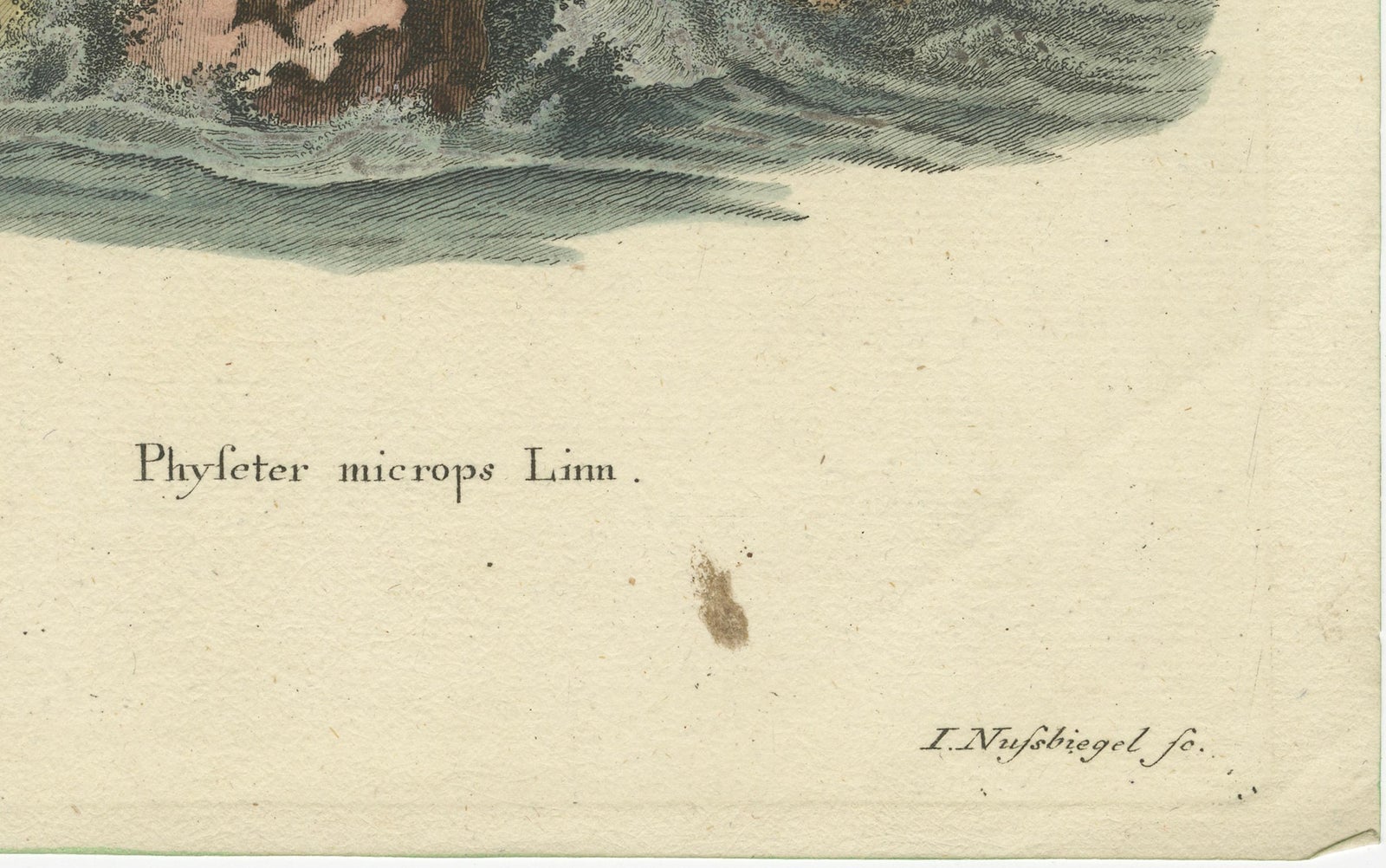
- Good. Good. Original old handcoloring on handpressed paper. Some soiling overall due to age and handling, adding to its patina. Left site is rough, but outside of the plate mark. One brown spot just below title. Study the images carefully.
- Period
- 18th century
- Section
- Fish and shells
- Reference
- f_41193602
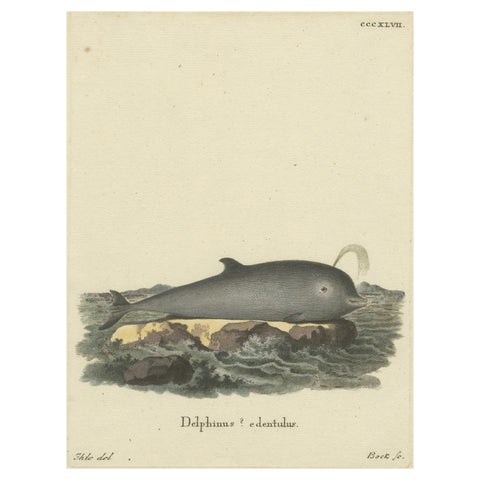
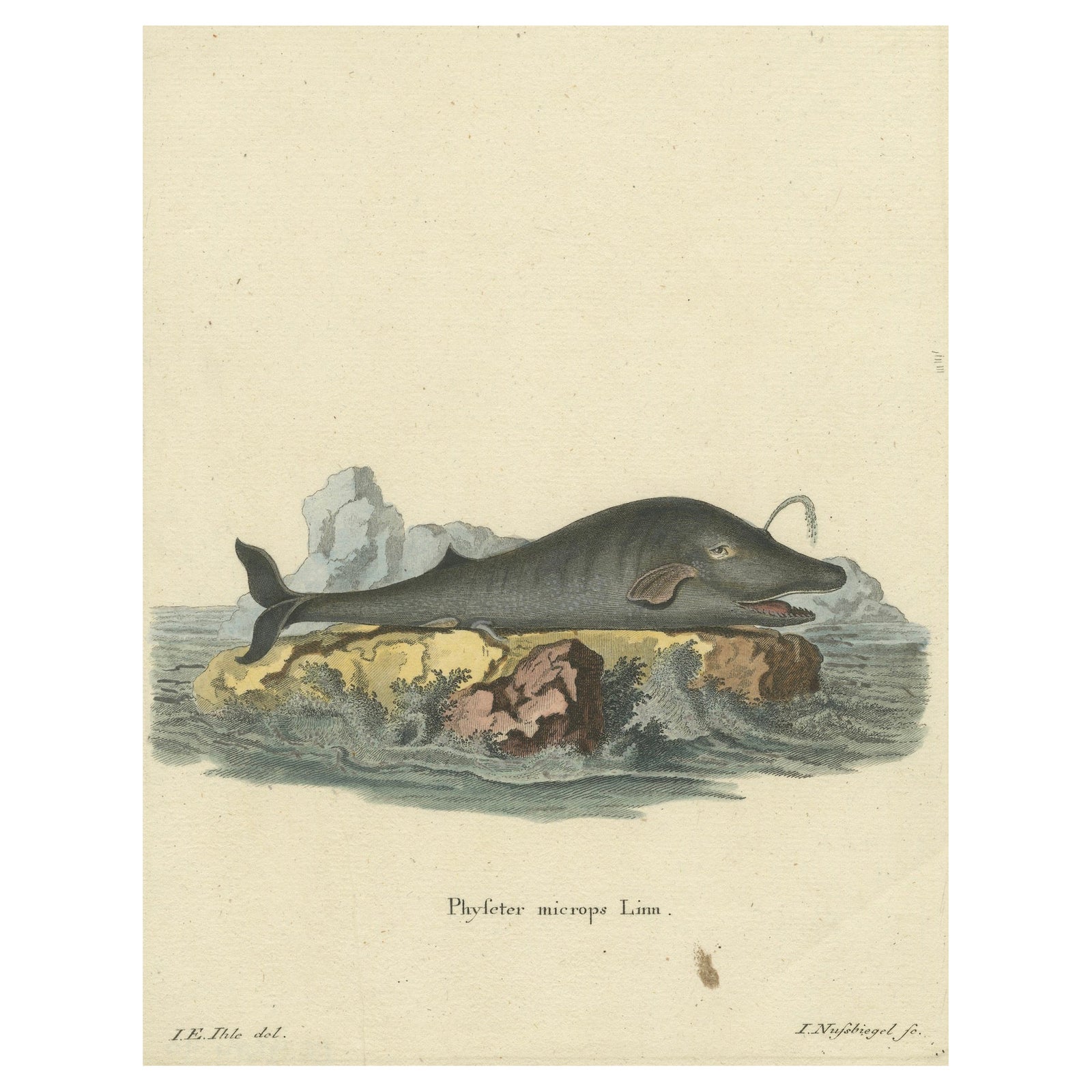
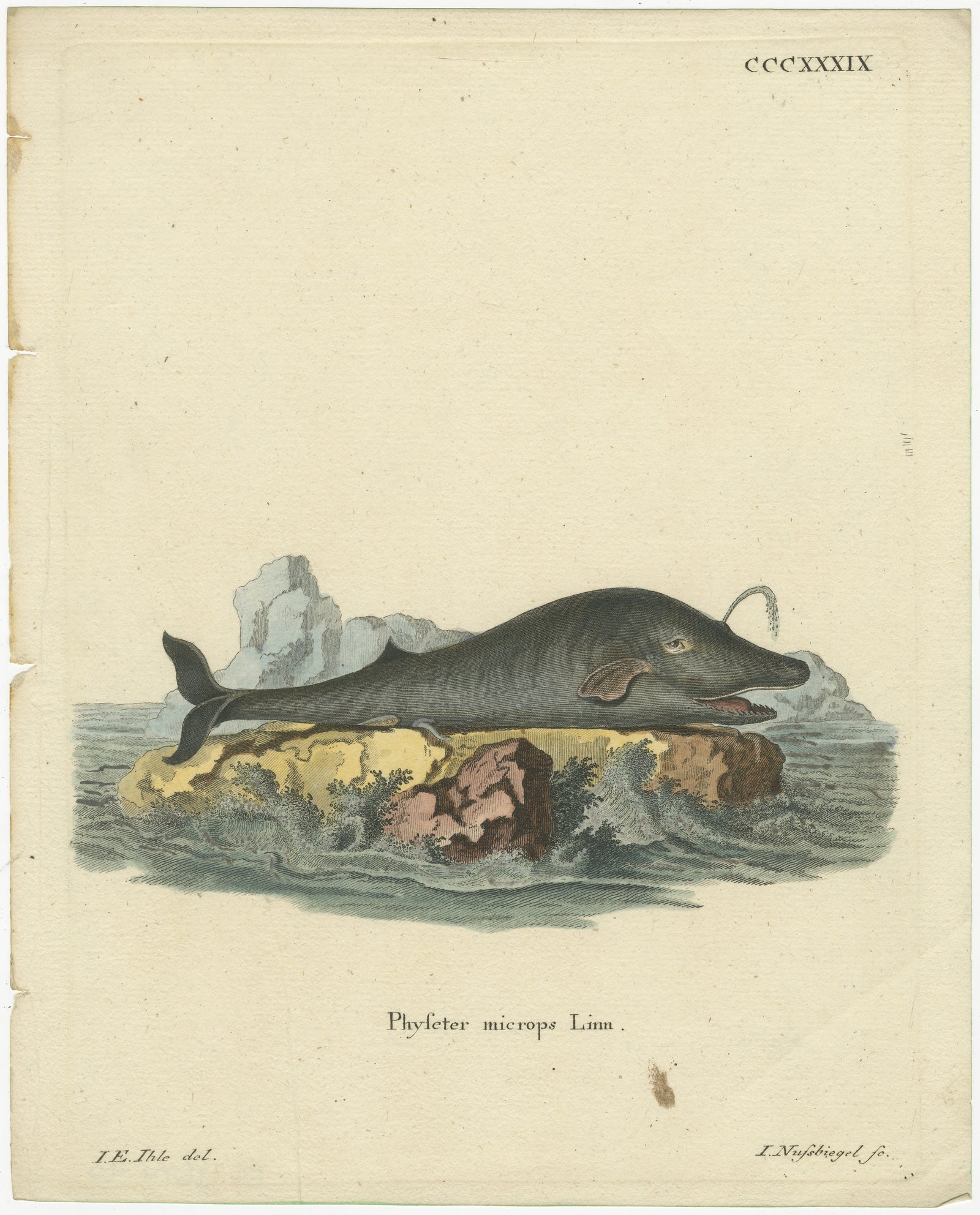
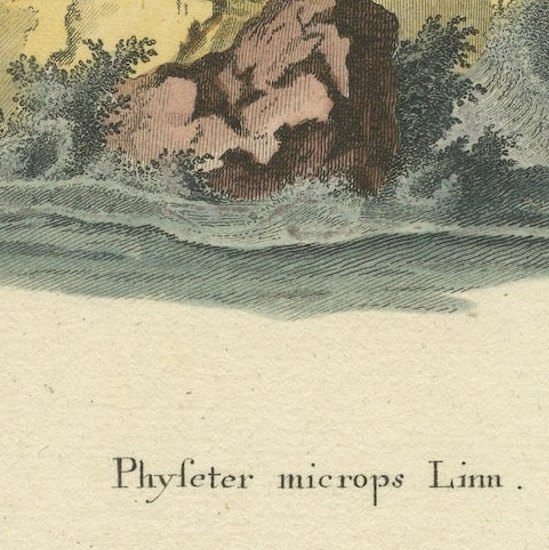
The illustration features the species labeled as "Physeter microcephalus Linn.," historically referred to with this name but now known commonly as the sperm whale. This depiction, given its accuracy and detail, was likely part of an educational or scientific series aimed at documenting various marine species.
Description of the Illustration
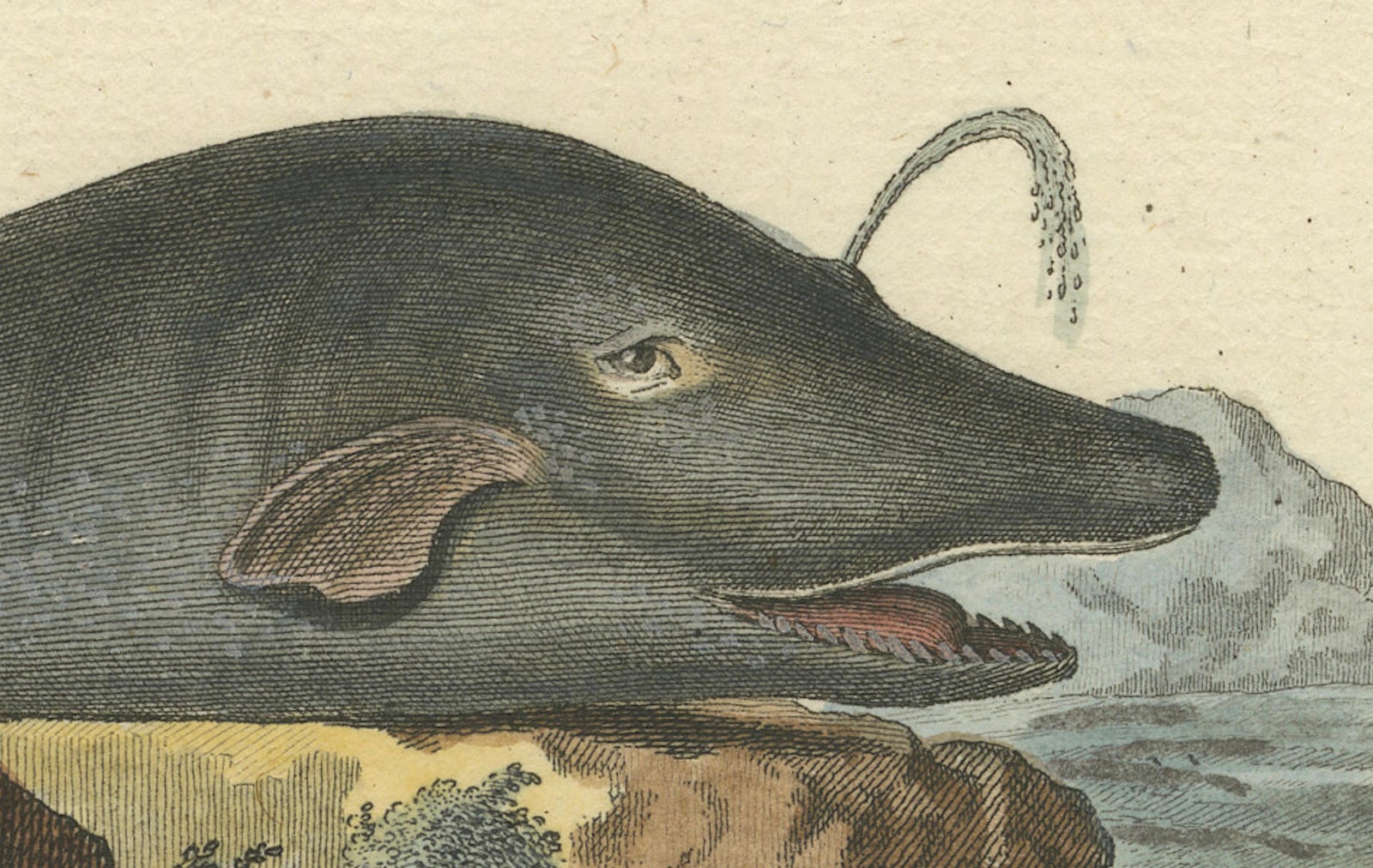
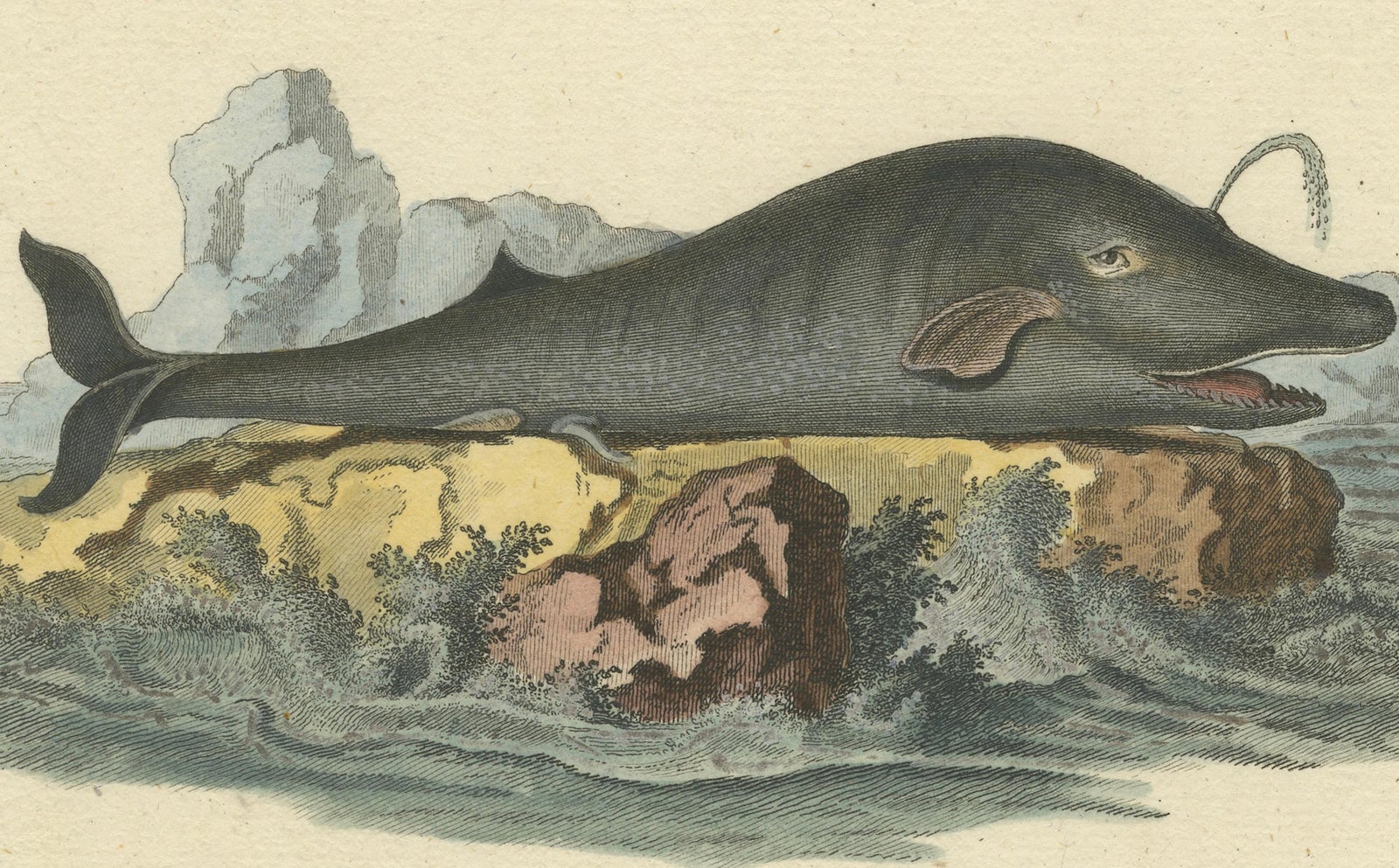
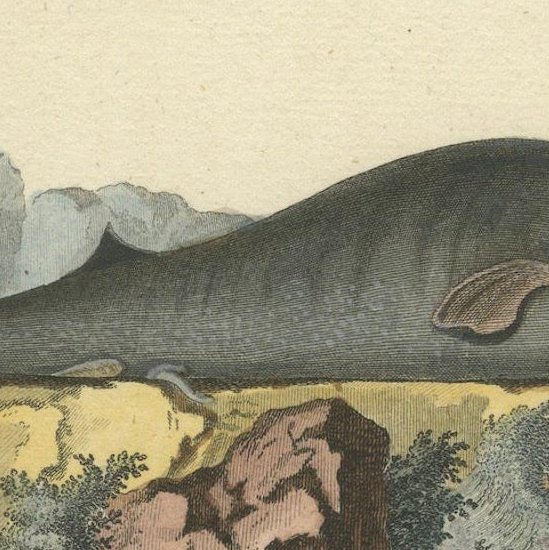
The sperm whale is depicted with notable attention to its distinct body shape and features, such as the large, block-shaped head which is characteristic of the species. The coloration is muted, reflecting the typical dark grey to black hues of the sperm whale.
The background includes a detailed portrayal of a rocky underwater seascape with algae and other marine plants, suggesting the deep ocean habitats where these whales are typically found. The surface and spray around the whale add a dynamic element, capturing the moment of the whale at or near the surface.
This hand-colored engraving combines precise line work with subtle coloring, a technique that enhances the scientific utility of the piece while also providing aesthetic appeal.
Description:
Venture into the mysterious world of the deep sea with this striking 18th to 19th-century illustration of the sperm whale, historically referred to as Physeter microcephalus. This piece is from the distinguished series "Die Säugthiere in Abbildungen nach der Natur, mit Beschreibungen," known for its precise and detailed natural history illustrations.
This entry aims to highlight the illustration's value as a work of art and a piece of scientific heritage, appealing to a broad audience interested in natural history, marine biology, and antique scientific illustrations.
Provenance:
- Authors: Associated with respected naturalists of the time, such as Georg August Goldfuss, Johann Christian Daniel Schreber, and Andreas Johann Wagner.
- Publication Date: Between 1774 and 1846.
- Source: From "Die Säugthiere in Abbildungen nach der Natur, mit Beschreibungen," a critical work in the development of mammalian studies.
- Medium: Hand-colored engraving.
Collector's Note:
This print is a treasure for collectors interested in marine life, historical artwork, and the development of zoological sciences. It offers a window into the artistic and scientific endeavors of the late Enlightenment and Victorian periods, celebrating the orca's iconic status in marine ecology.
This entry not only highlights the illustration's beauty and historical importance but also underscores its scientific and educational significance, appealing to a broad audience of collectors, historians, and marine enthusiasts.