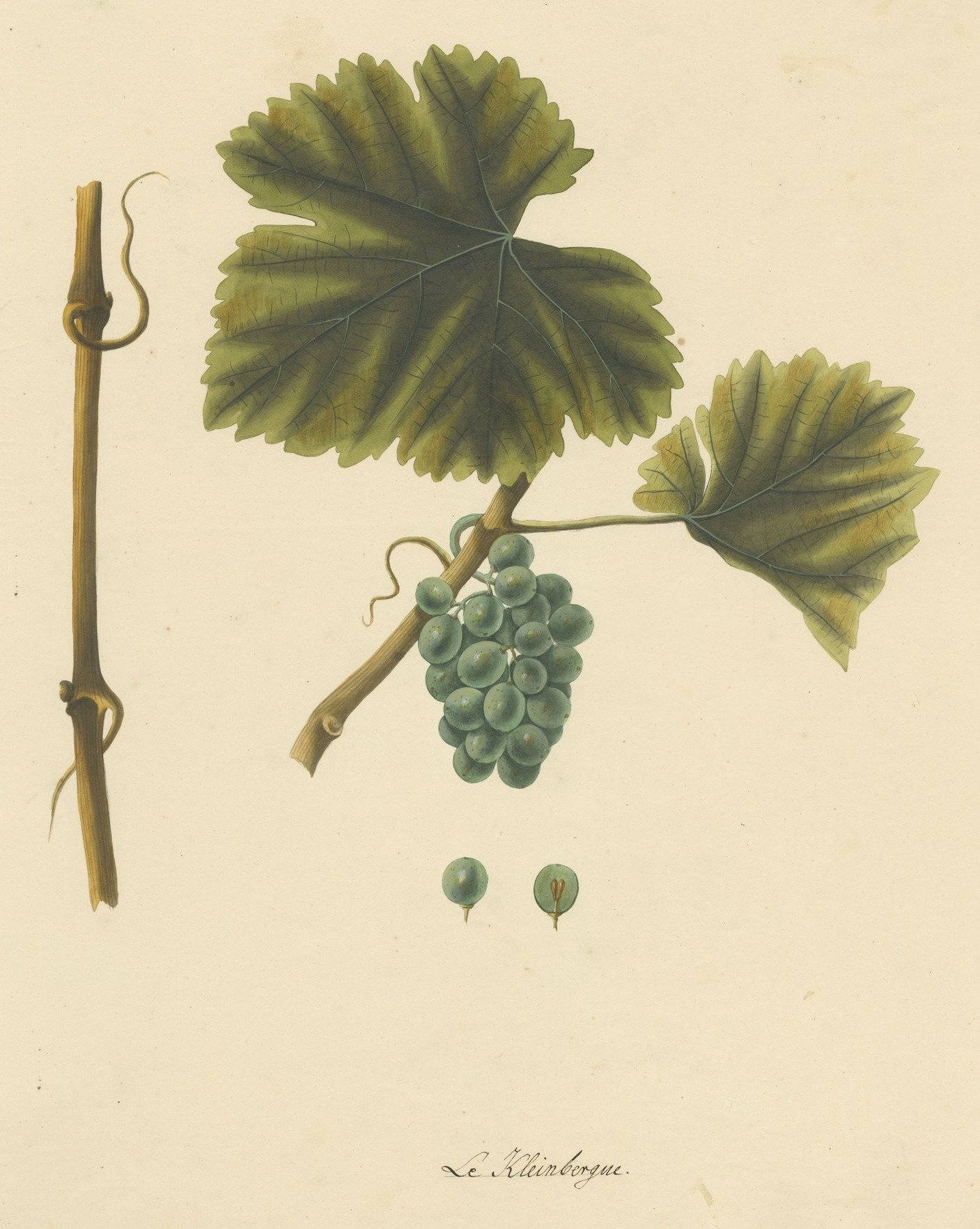
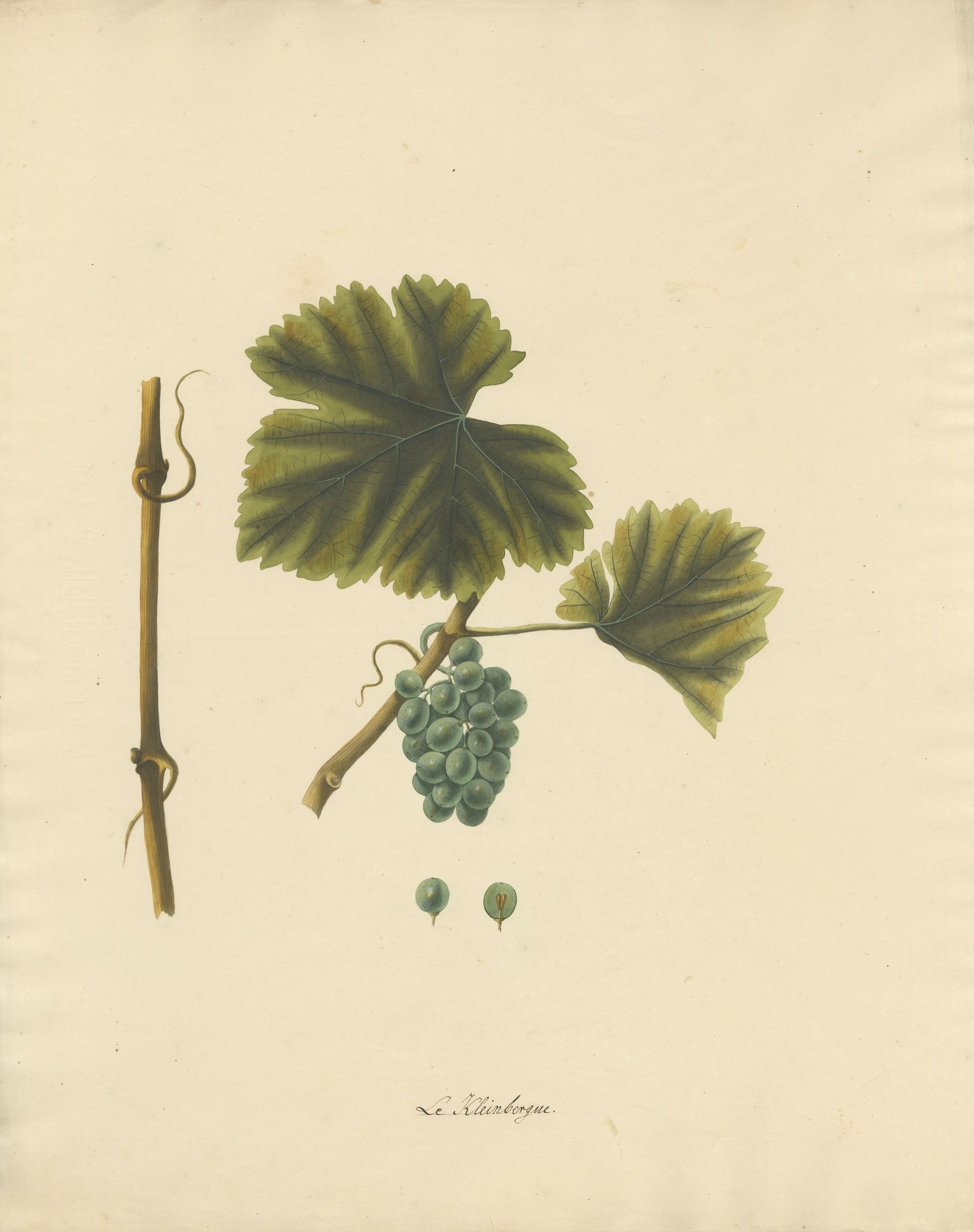
Close-ups
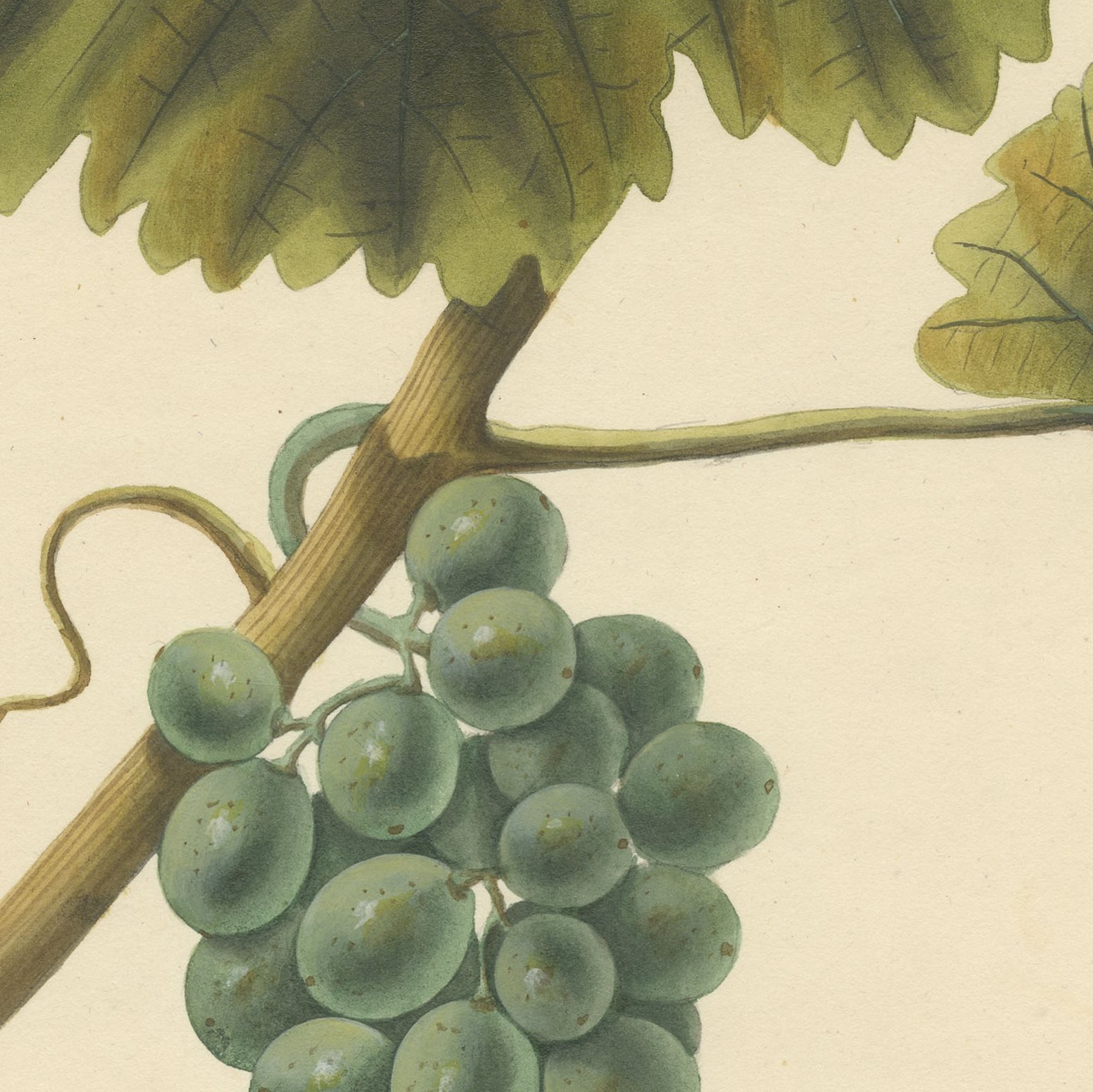
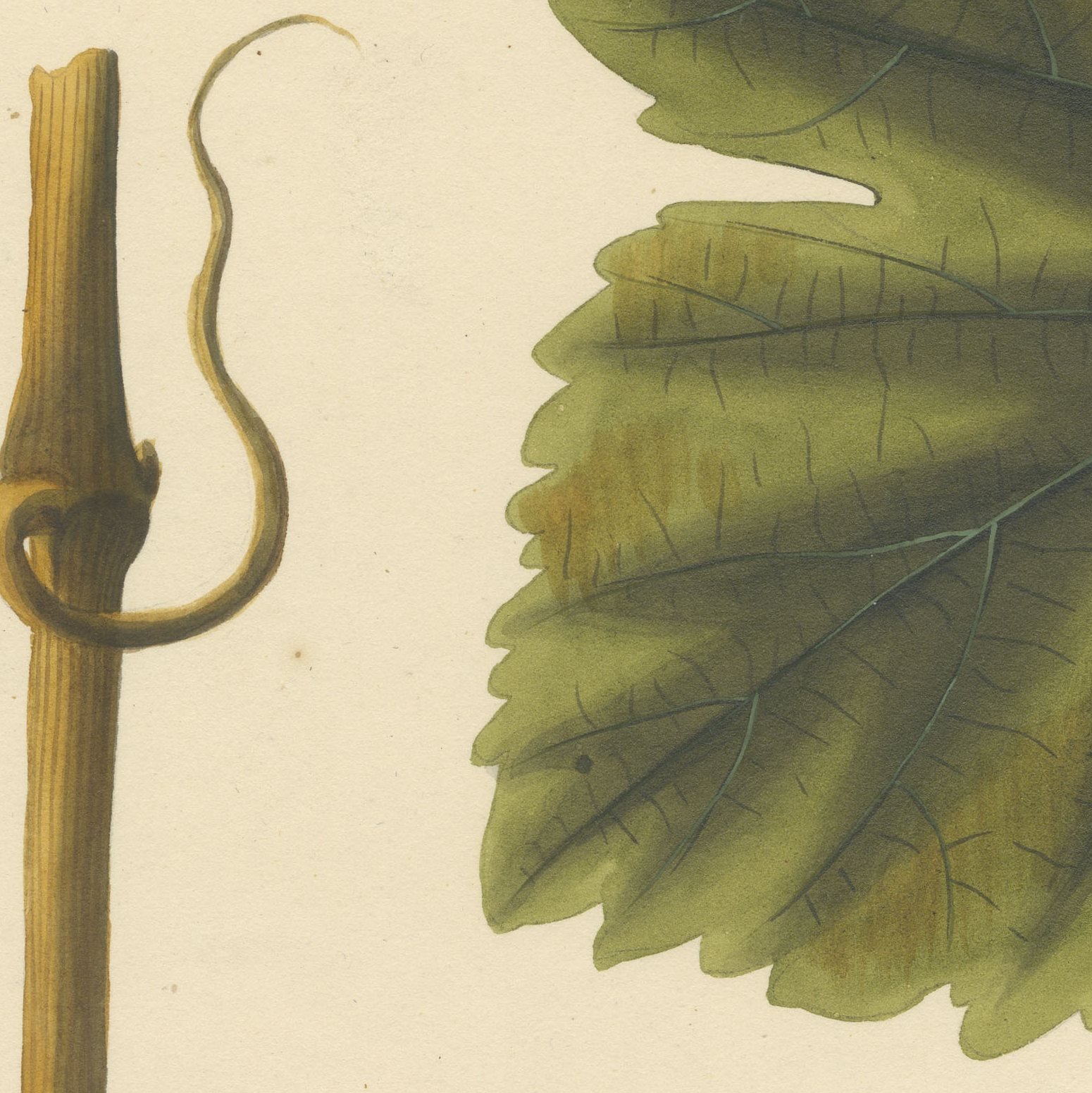
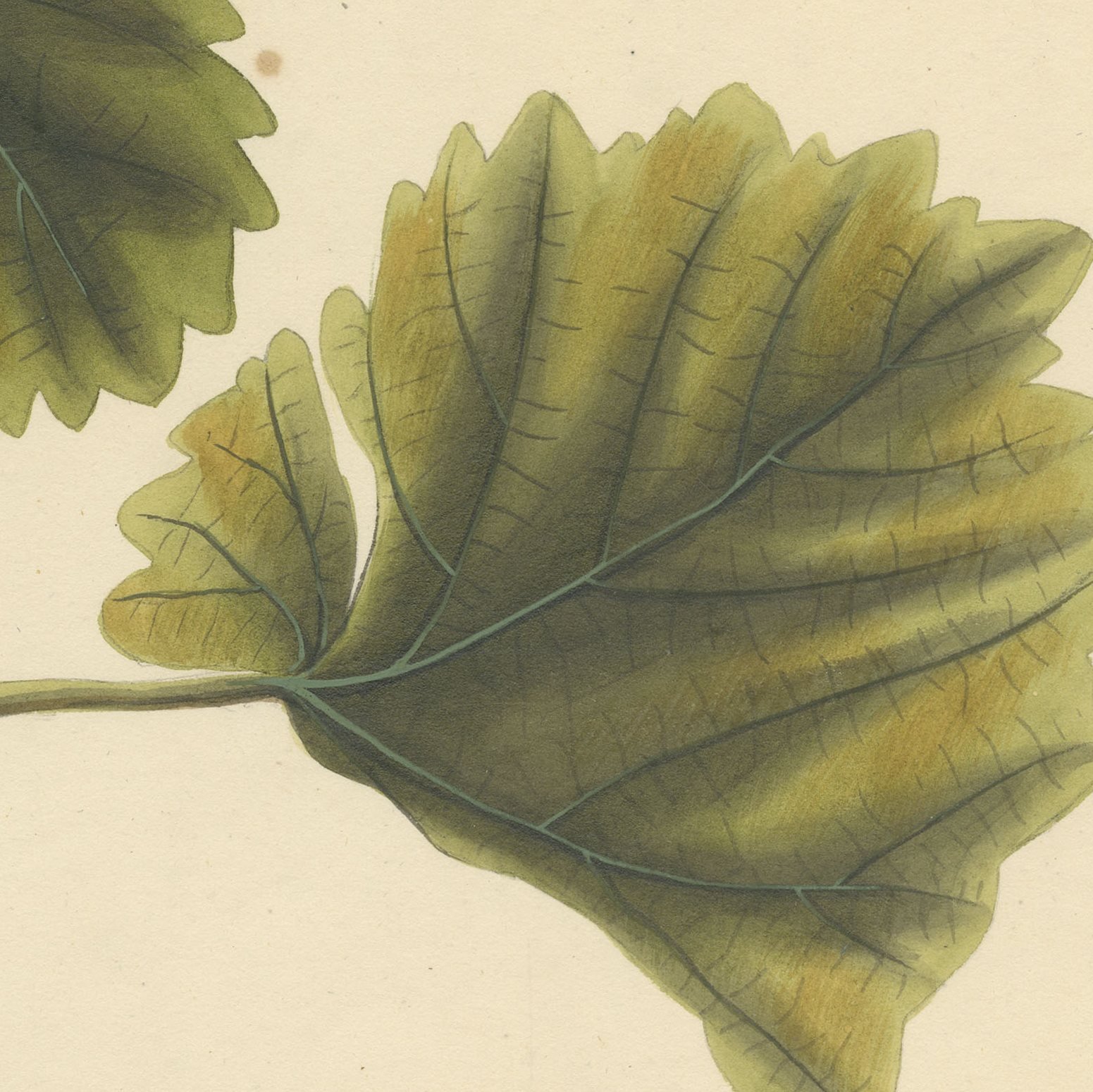
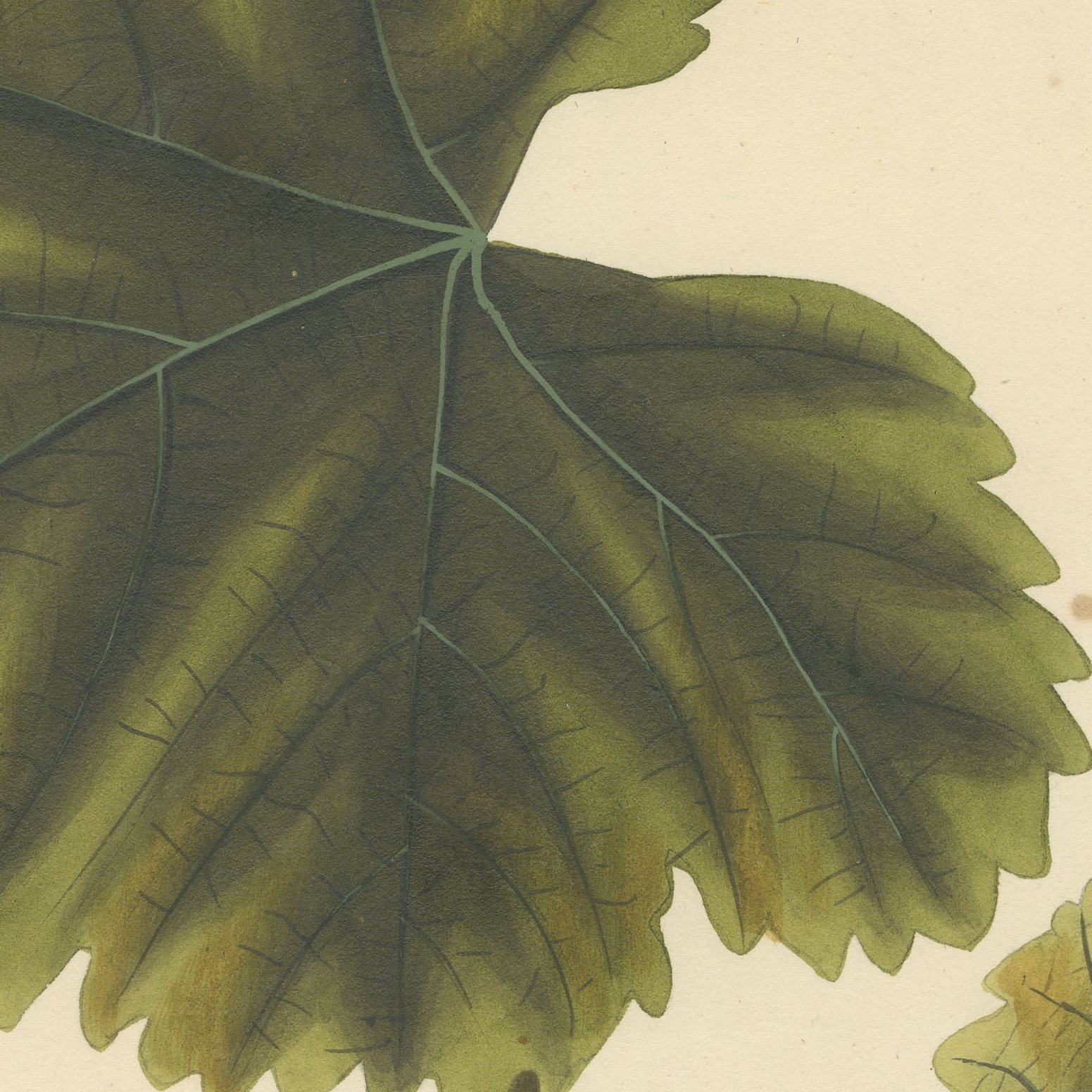
Framed and on the wall
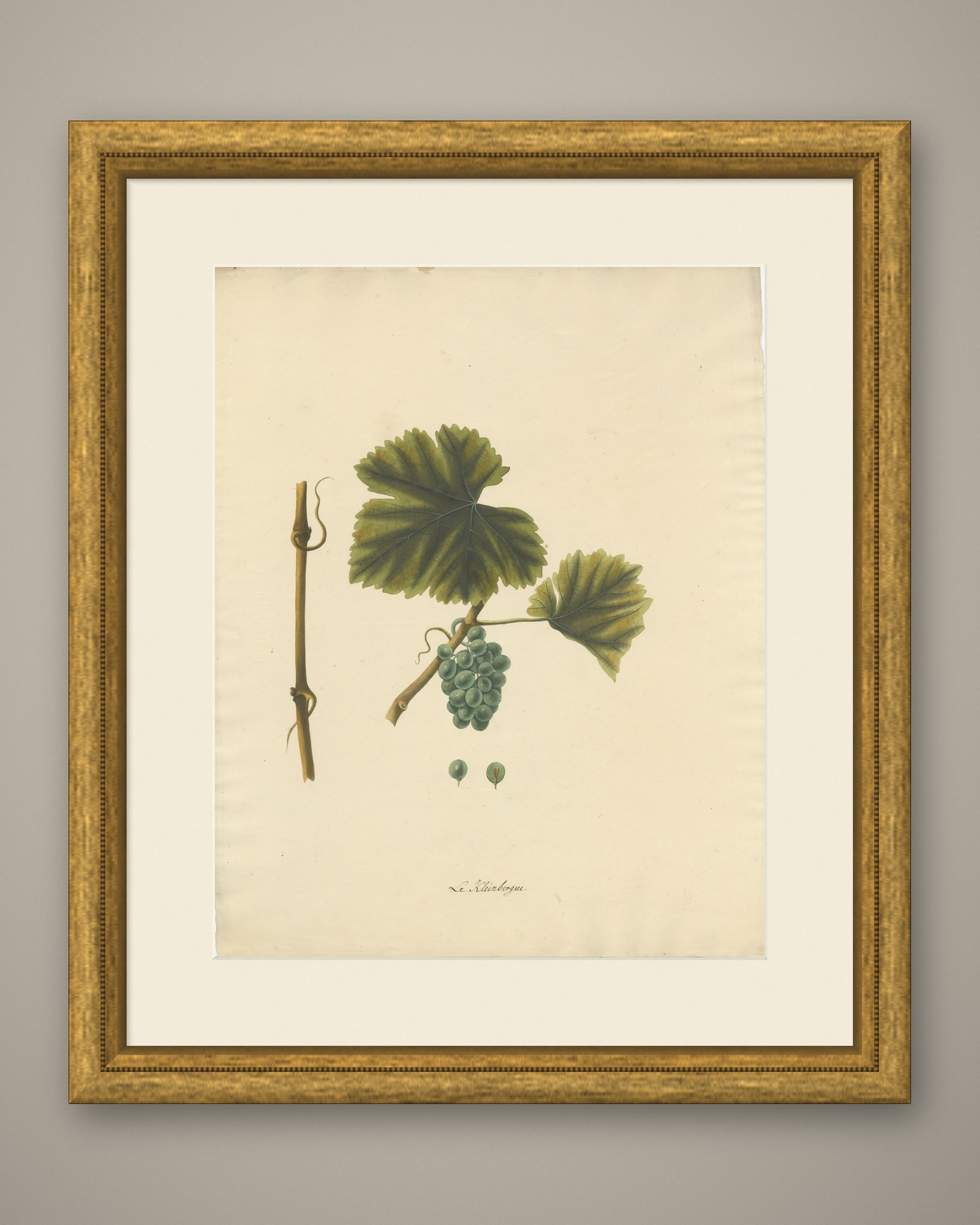
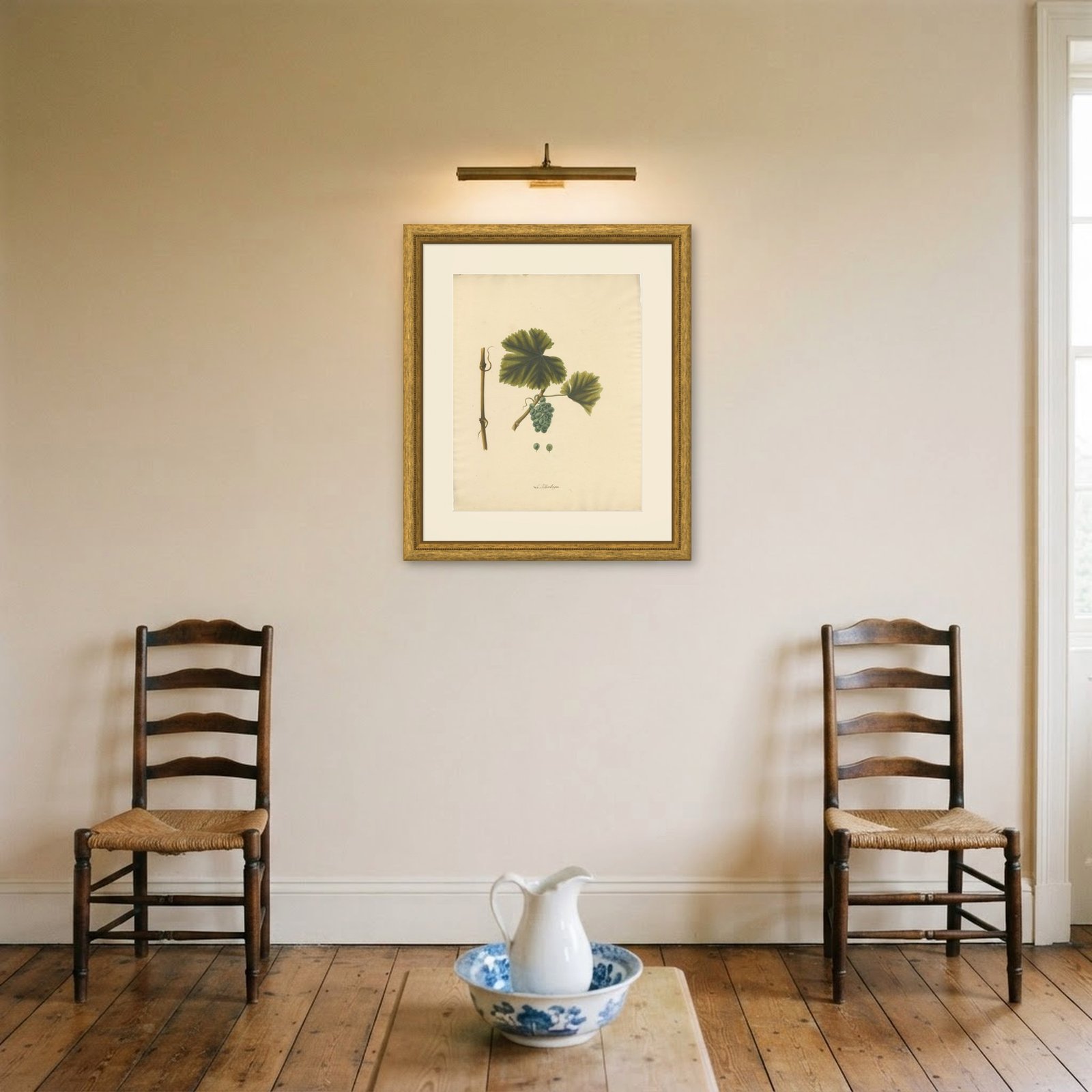
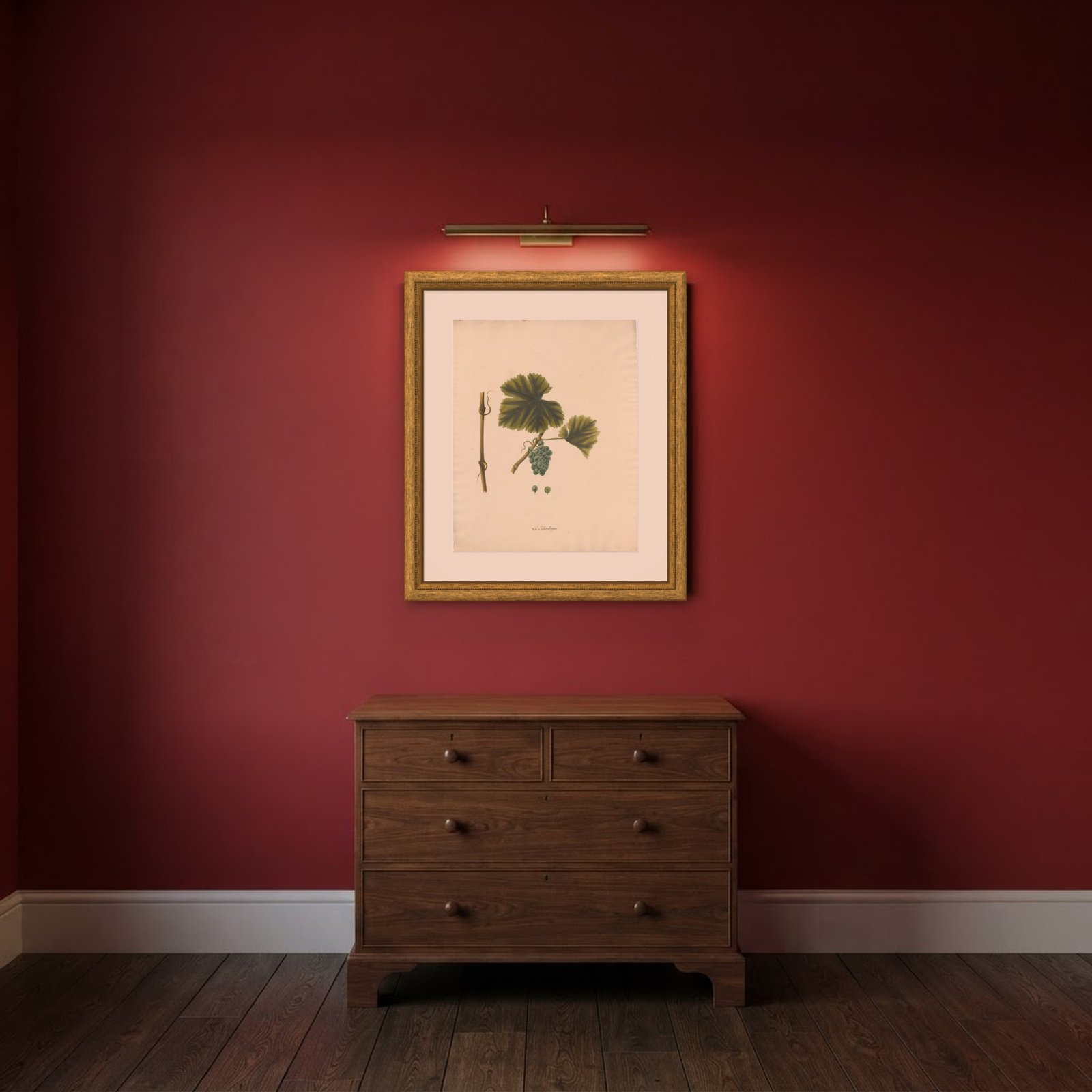
Frame and rooms are illustrations of how the print could look; the description says what is included.
Le Kleinbergue, Kerner Hand Colored Grape Engraving, circa 1811
£935 ($1,240, €1,120)
Period original, not a reproduction.
Shipped from the Netherlands, flat or rolled, insured and tracked, worldwide. Returns accepted within 14 days.
- Date
- circa 1811
- Size
- 23.4 × 19 in (59.5 × 48.2 cm)
- Technique
- Stipple engraving
- Coloring
- Original hand color
- Condition
- Good. Even age toning. Handling soiling along the bottom and top edges. Scattered light foxing in the margin. All four corners complete. Minor edge wear, shallow nicks along the right.
- Period
- Early 19th century
- Section
- Botanical
- Reference
- BG-14458-2
What the condition grades mean
- Excellent
- Bright and clean, with no faults worth mentioning.
- Very good
- Only light signs of age, such as faint toning.
- Good
- Normal signs of age for a sheet of this period: toning, some foxing, small marks or neat old repairs.
- Fair
- Clear faults such as staining, tears or repairs, priced to match.
Every fault we see is written in the condition note, and the whole sheet is shown uncropped in the photos.
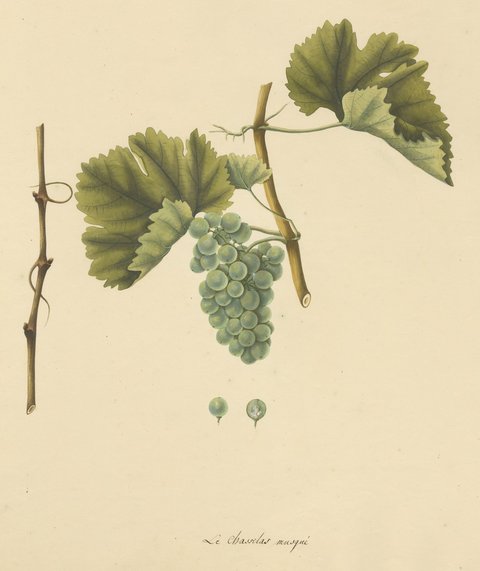
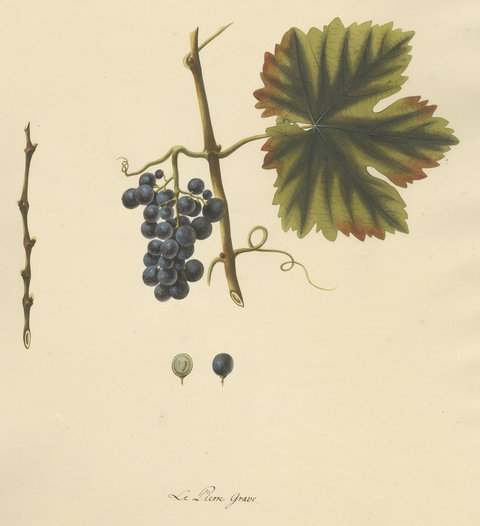
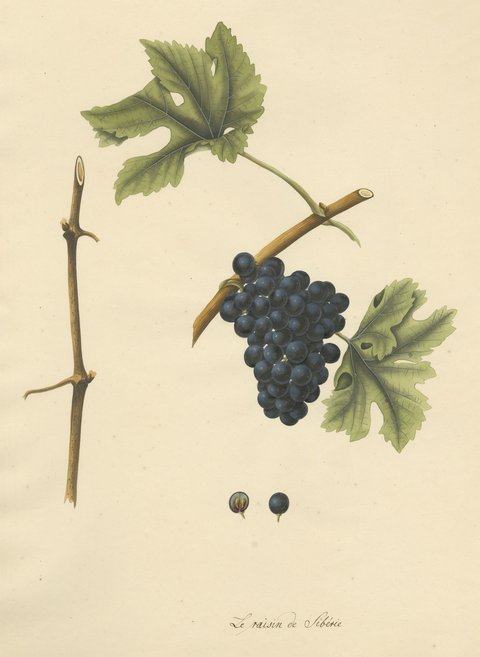
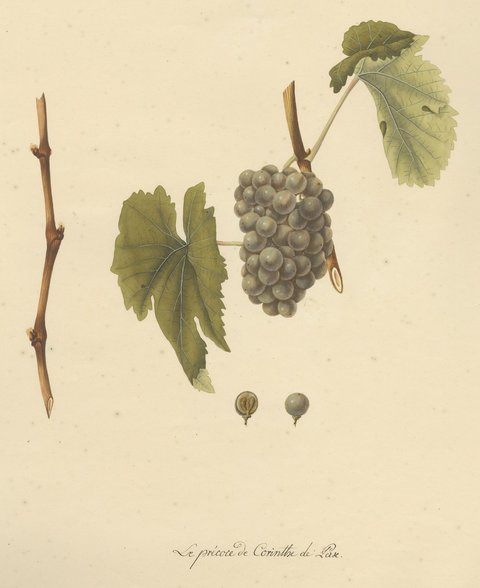
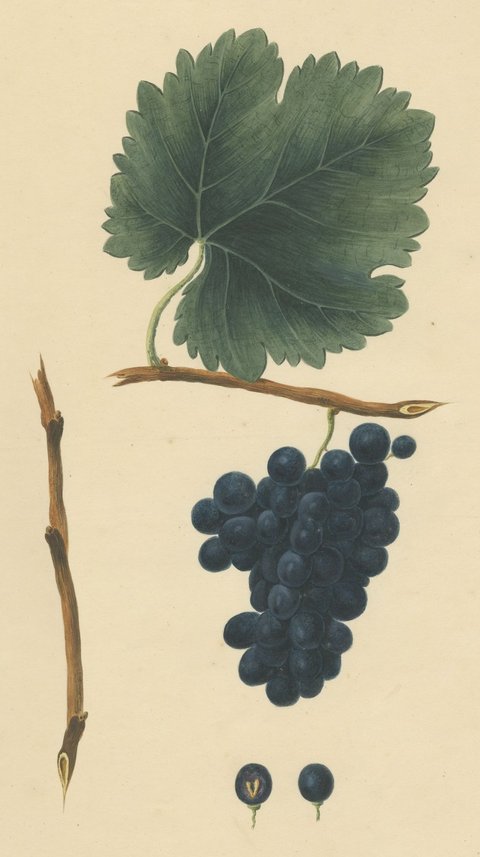
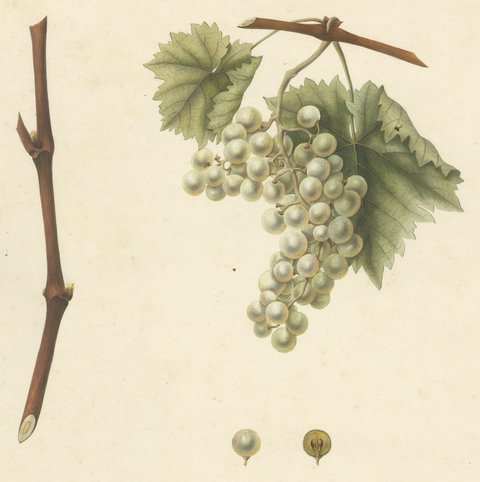
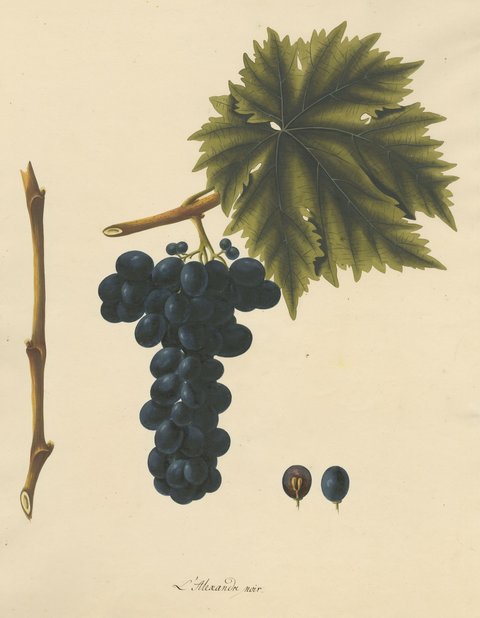
This antique stipple engraving, finished by hand in watercolor and body color, of the grape variety Le Kleinbergue comes from Johann Simon von Kerner's Le Raisin, ses especes et varietes, made at Stuttgart about 1811. The sheet shows a vine cane rising at the left of the sheet with its tendril curled around itself, two deeply cut leaves spreading to the right and a tight conical bunch of green white berries hanging at the center, with two loose berries painted below the bunch.
This sheet comes from Johann Simon von Kerner's Le Raisin, ses especes et varietes, Stuttgart, about 1811. Kerner was born at Kirchheim in 1755 and died at Stuttgart in 1830, and he spent his working life painting plants for the Wuerttemberg court in a wine growing country. The sheets are printed on wove paper watermarked C and I Honig, the Dutch paper that European artists of the period bought for work they intended to last.
The sheet is a good example of how the work is built: every variety is given the same elements in the same arrangement, so that a reader could lay two plates side by side and compare leaf shape, bunch form and berry size directly. That consistency is what made the work useful to growers and is what makes the sheets hang so well as a group. The medium is a stipple engraving finished by hand in watercolor with gouache. The transparent washes carry the leaf and the flesh of the fruit, and the opaque body color is reserved for the bloom on the dark berries and for the highlights on the cane, which is the finishing a trained botanical colorist of the period gave a plate worked from the living plant. It hangs beautifully singly above a sideboard, and two or three sheets from the work on one wall give a dining room or a hallway the kind of botanical sequence that is almost impossible to assemble from loose plates at this scale.
Even age toning. Handling soiling along the bottom and top edges. Scattered light foxing in the margin. All four corners complete. Minor edge wear, shallow nicks along the right.
This is an original antique print, not a modern reproduction. This item is sold unframed.