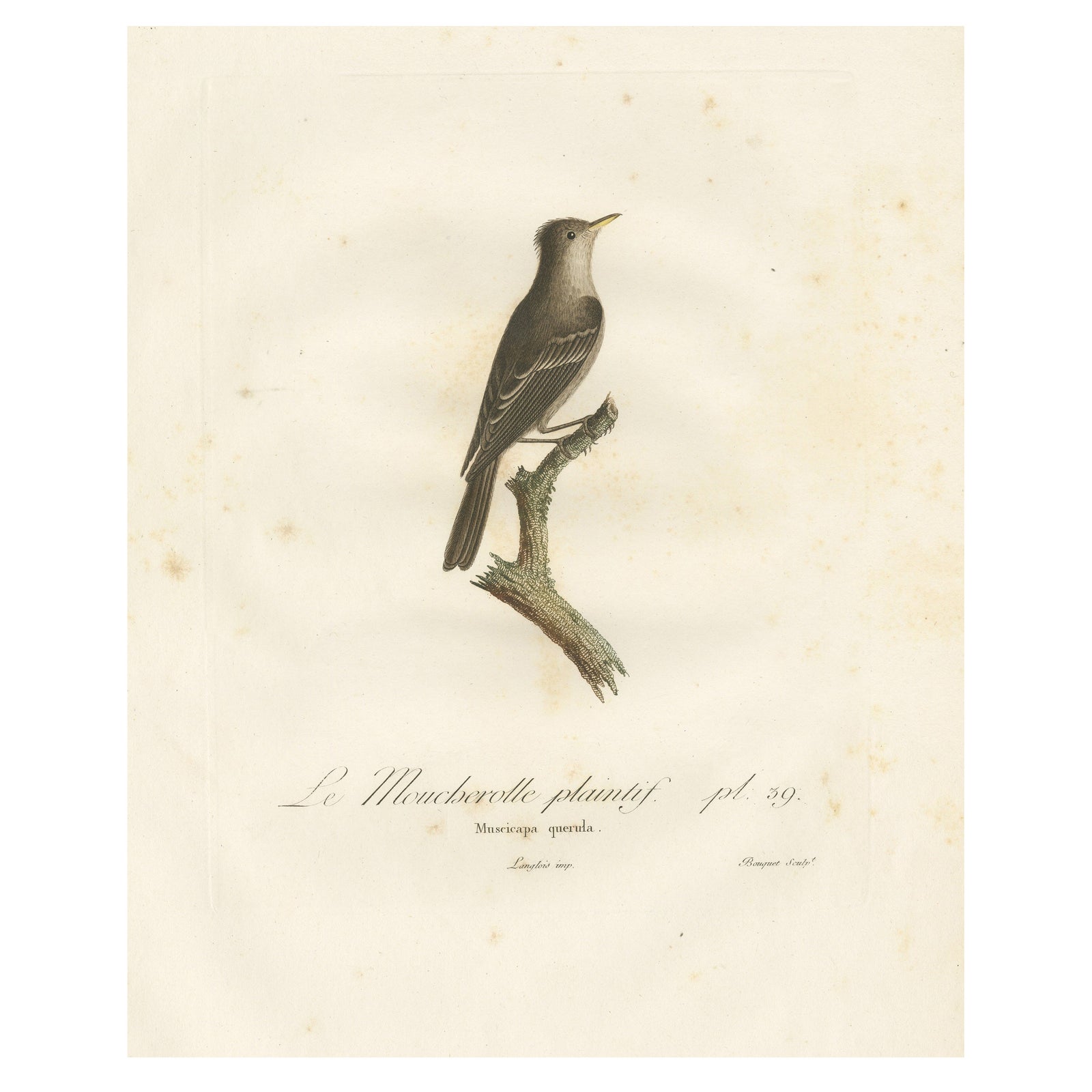
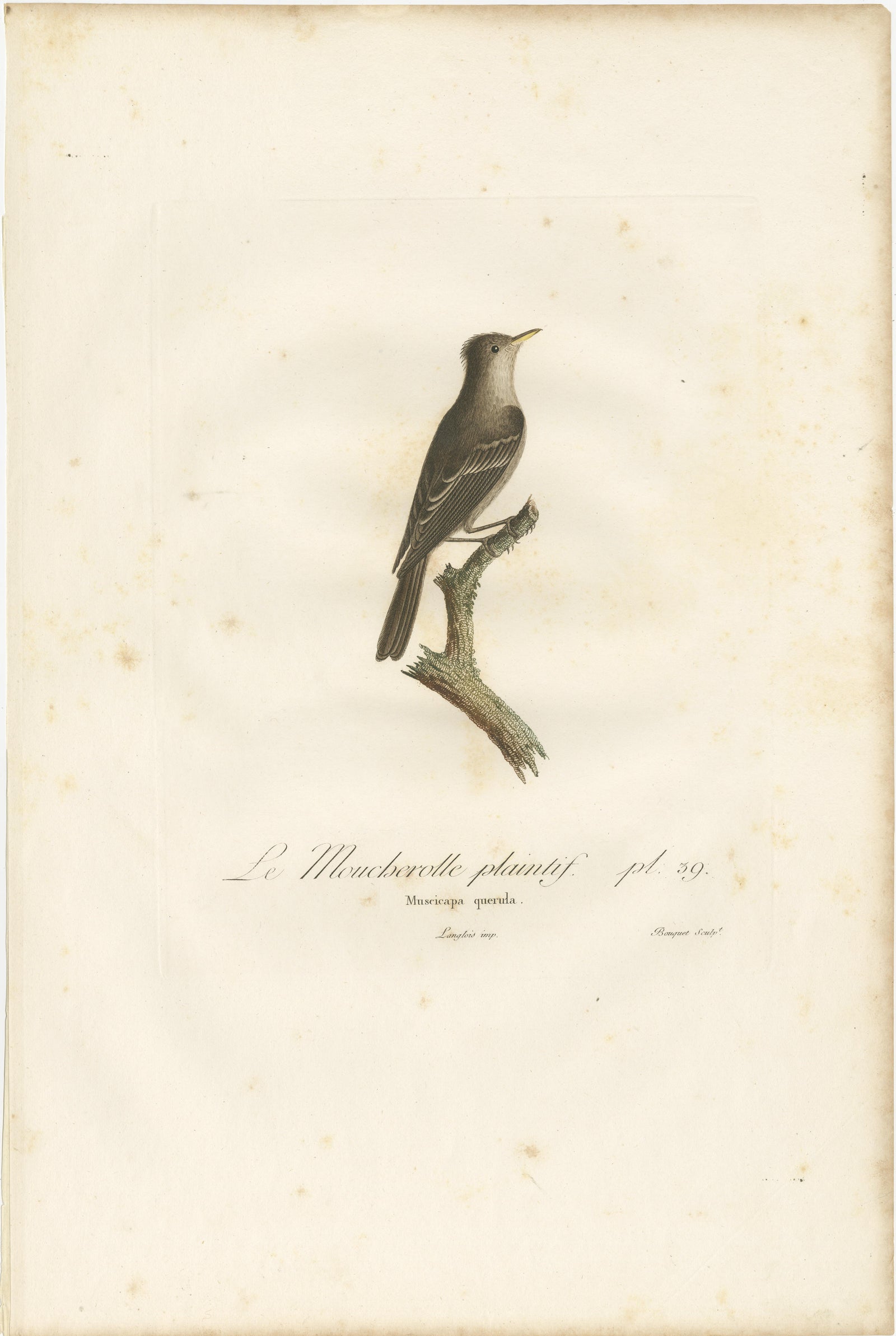
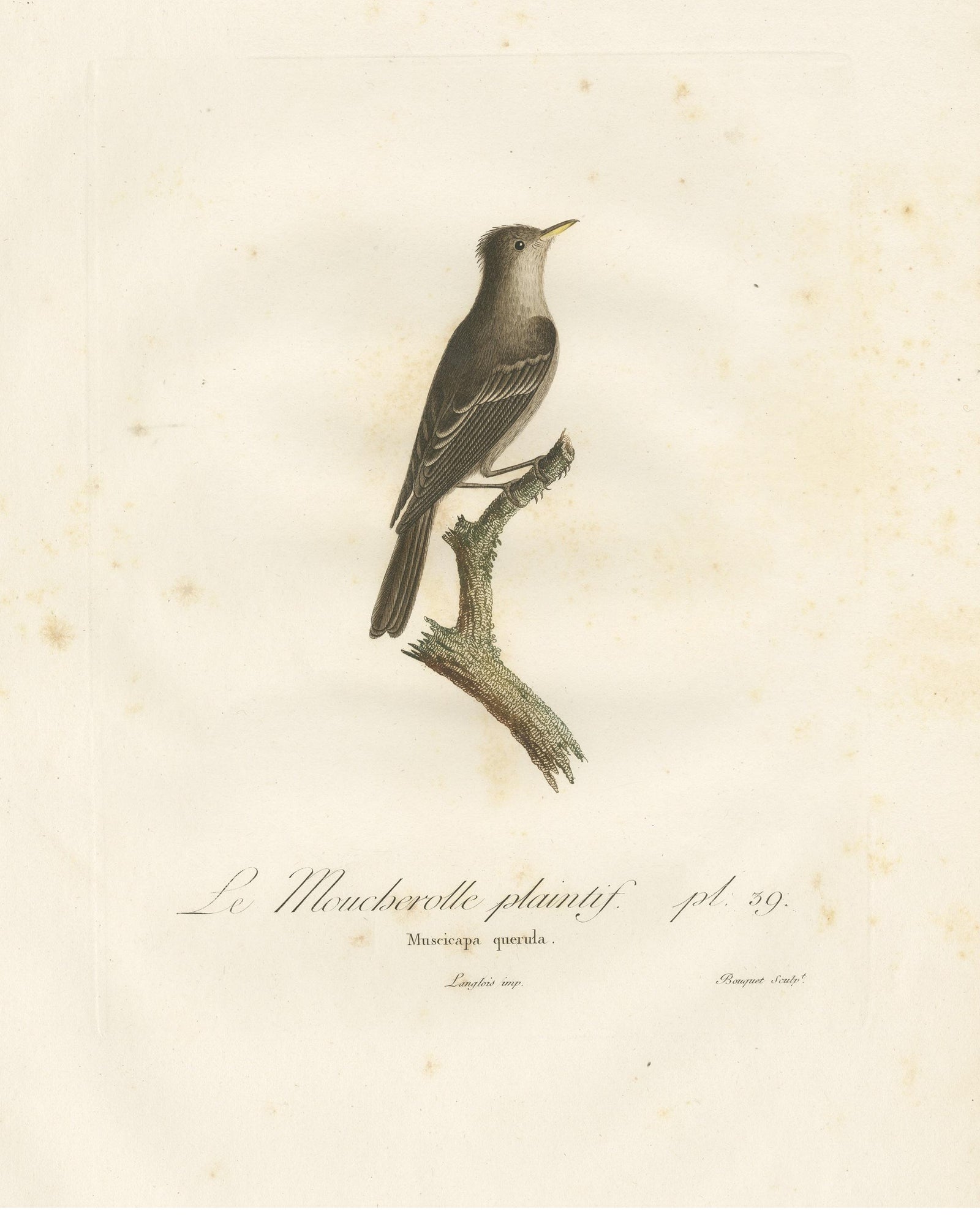
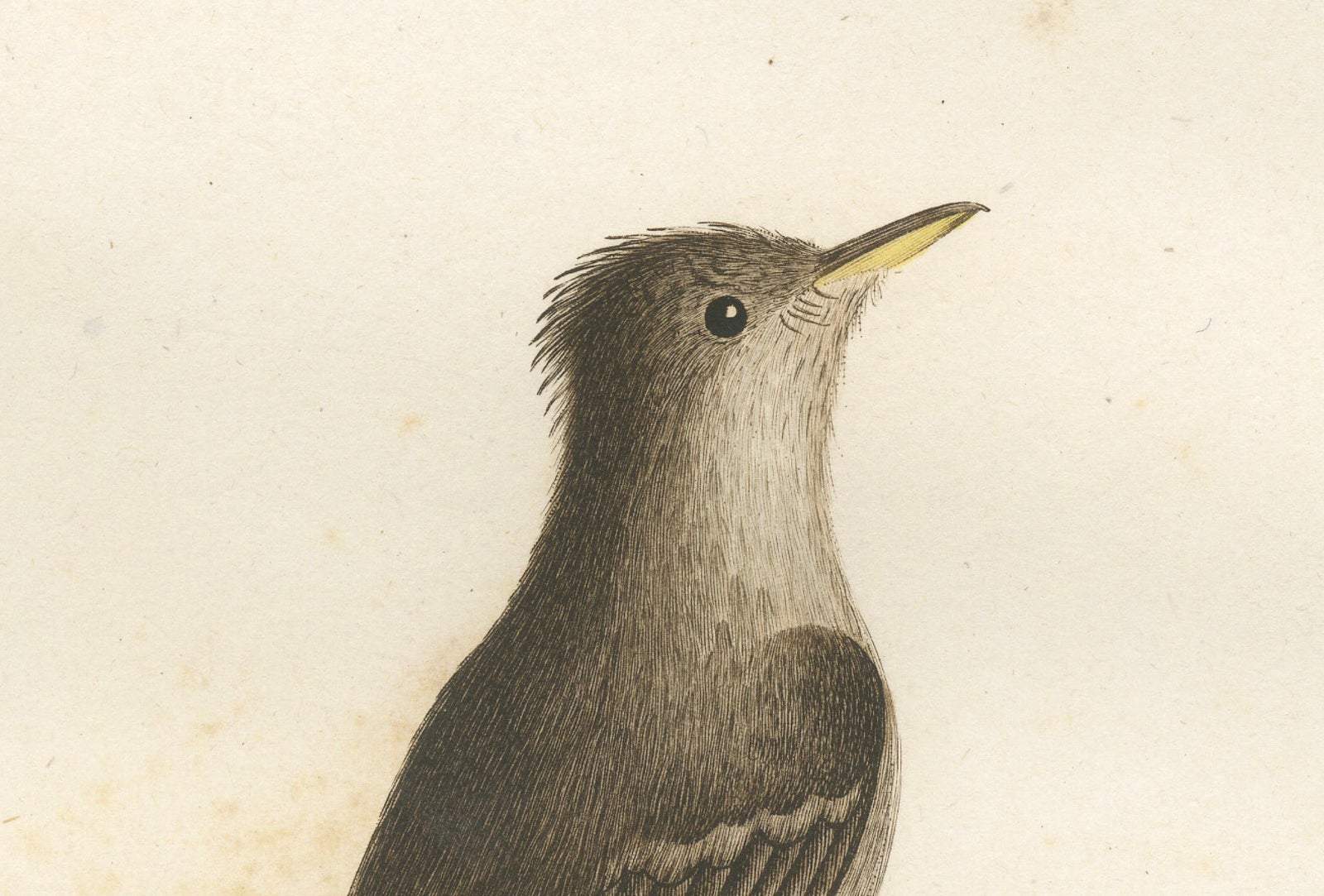
Close-ups
Framed and on the wall
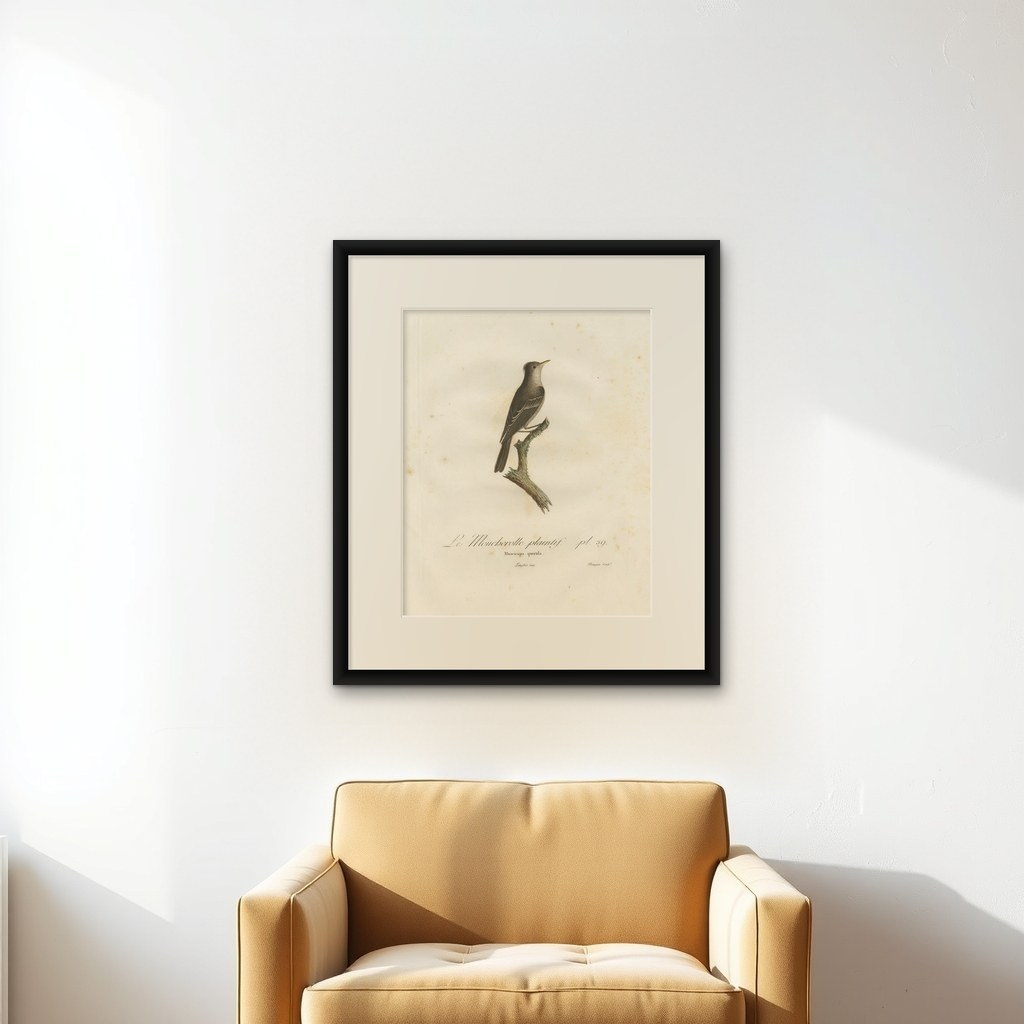
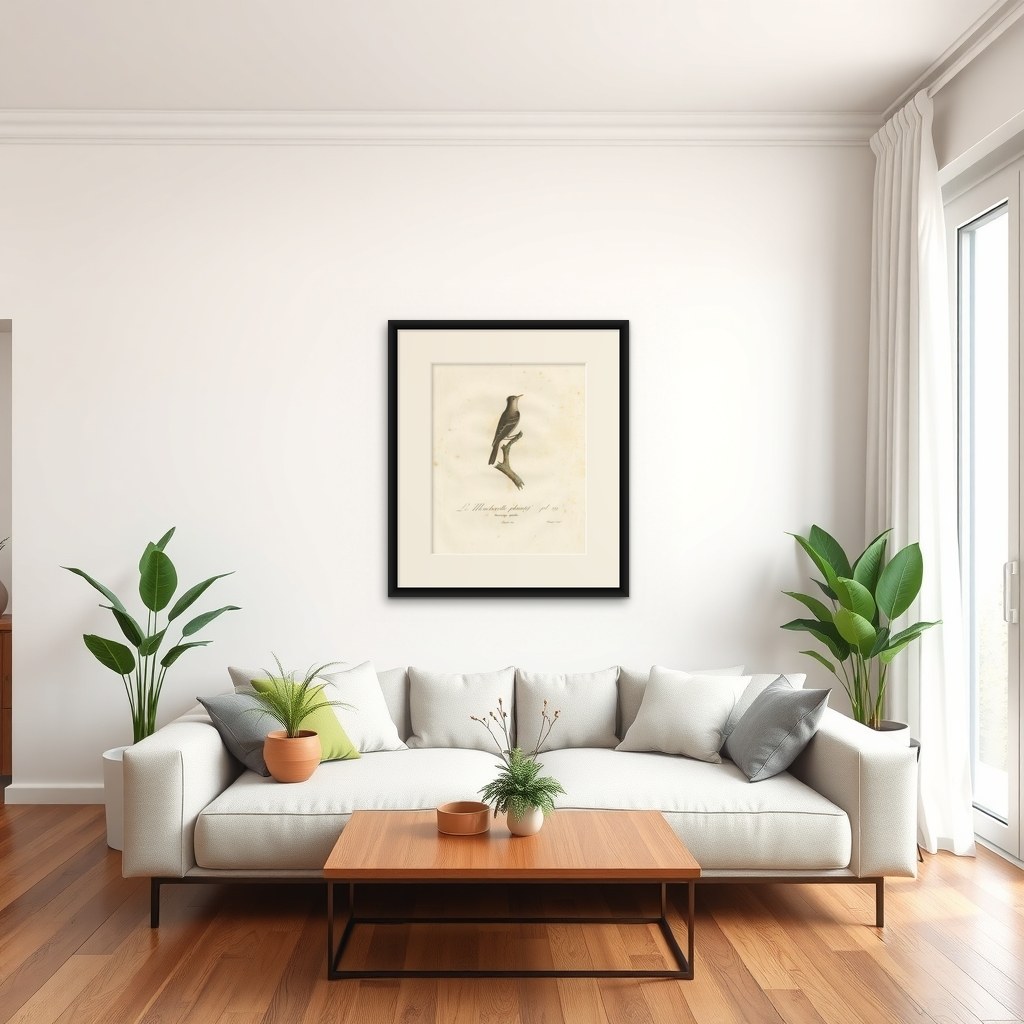
Frame and rooms are illustrations of how the print could look; the description says what is included.
Large Antique Bird Print of an Eastern Wood Pewee
$425 (£320, €380)
Period original, not a reproduction.
Shipped from the Netherlands, flat, insured and tracked, worldwide. Returns accepted within 14 days.
- Date
- Not stated
- Size
- 20.3 × 13.5 in (51.5 × 34.4 cm)
- Condition
- Good. General age-related toning. Minor wear and foxing, blank verso. Please study image carefully.
- Section
- Birds
- Reference
- f_39082472
- Colour
- Hand coloured
What the condition grades mean
- Excellent
- Bright and clean, with no faults worth mentioning.
- Very good
- Only light signs of age, such as faint toning.
- Good
- Normal signs of age for a sheet of this period: toning, some foxing, small marks or neat old repairs.
- Fair
- Clear faults such as staining, tears or repairs, priced to match.
Every fault we see is written in the condition note, and the whole sheet is shown uncropped in the photos.
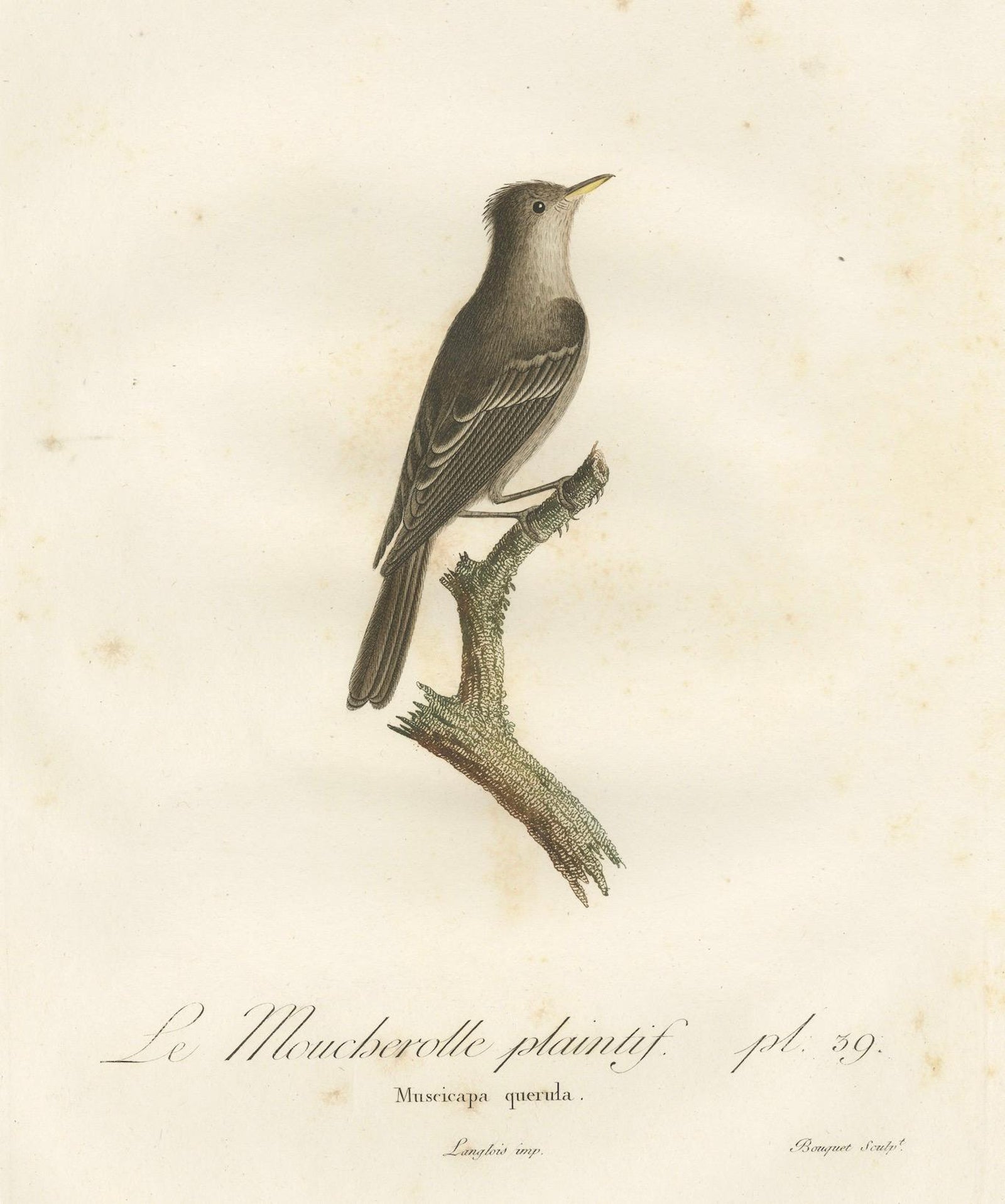
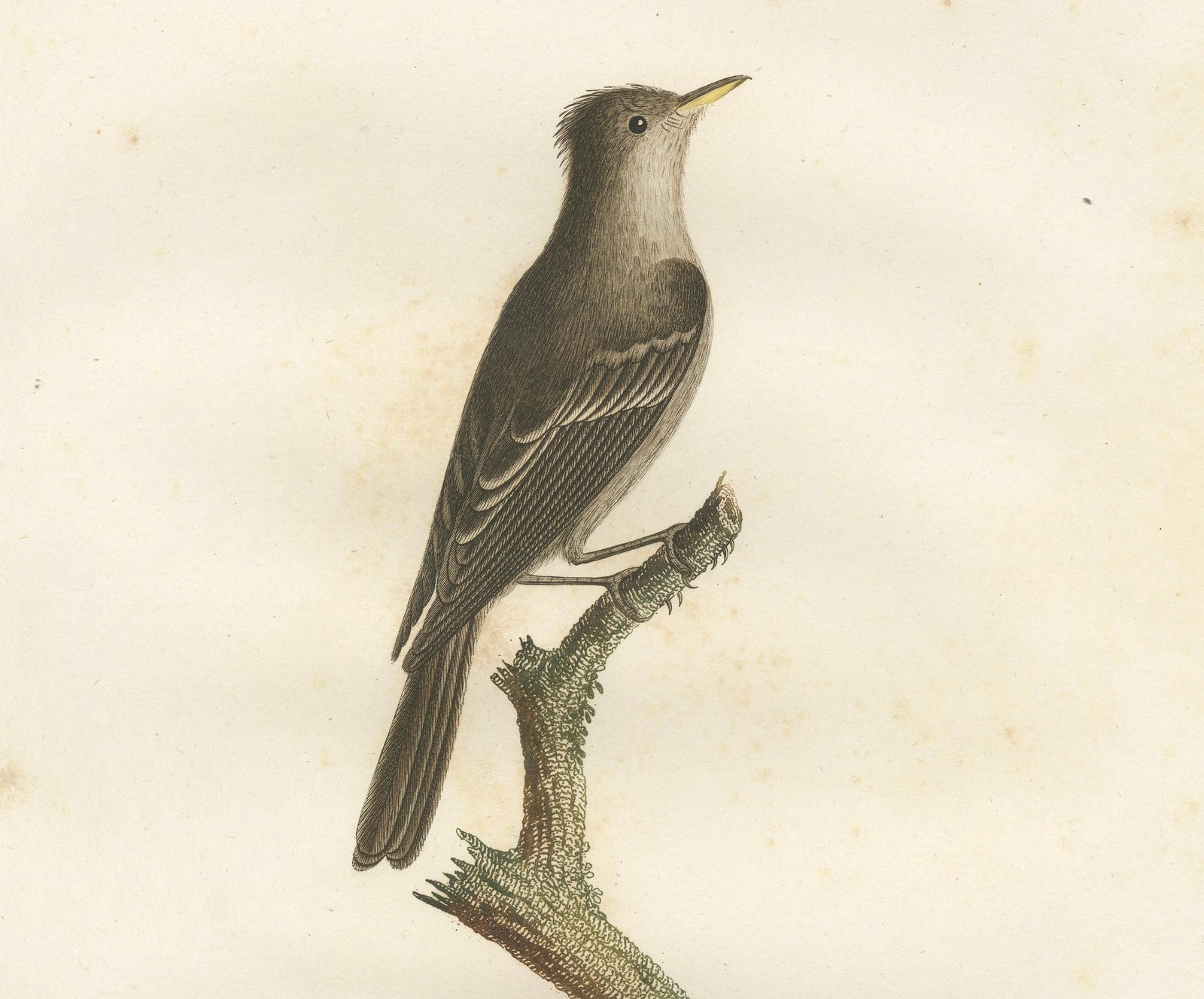
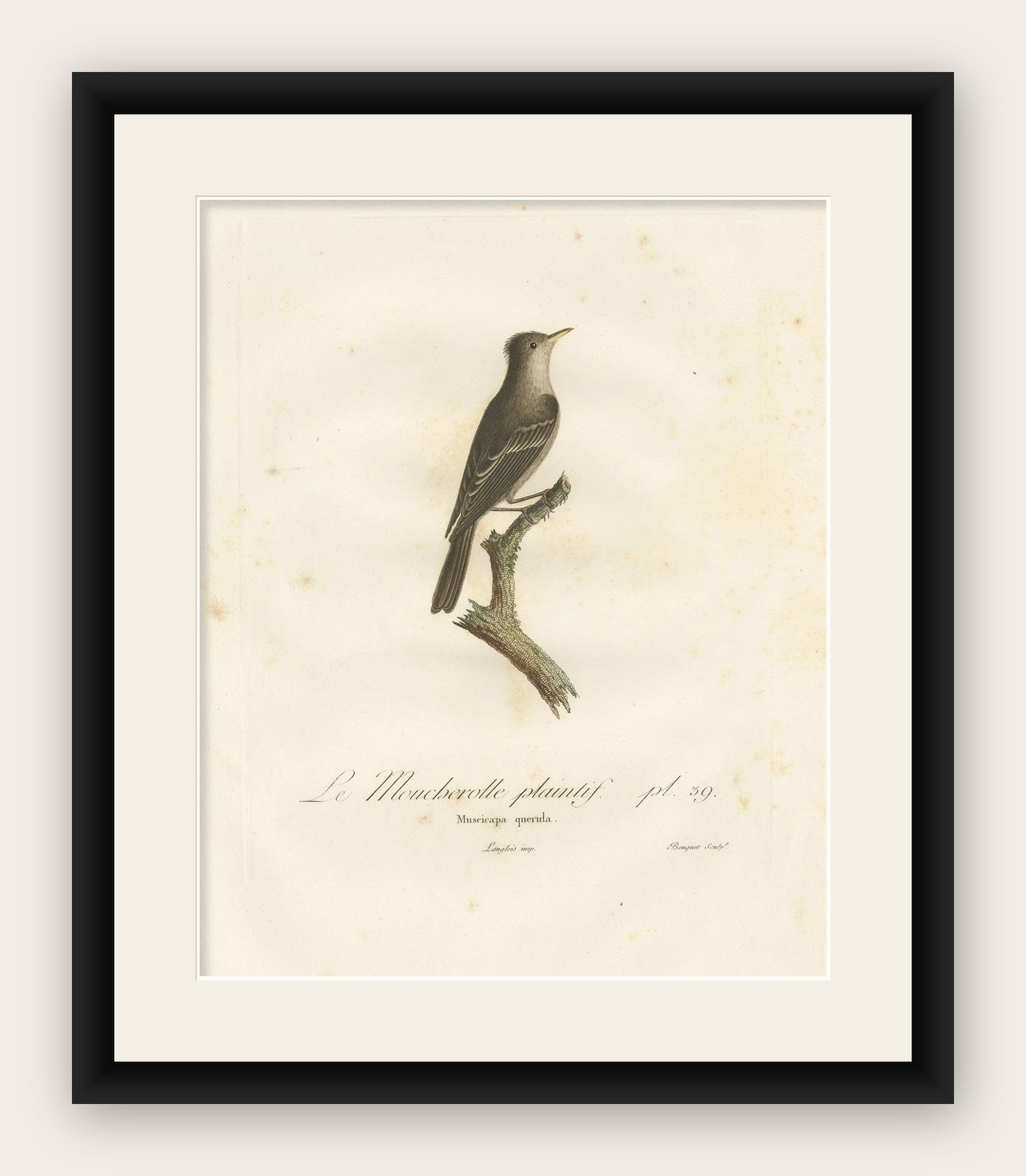
This vintage image is a handcolored antique print of an eastern wood pewee, also known as 'Le Moucherolle plaintif'. The bird is depicted perched on a branch, shown in profile facing left. It features delicate coloring with a predominance of gray tones on its plumage, with darker gray wings and tail, as well as a hint of olive green on the upper body. Its bill is pointed and slightly open as if it were calling or singing. The bird's eye is rendered with a simple black dot, yet it captures the alertness characteristic of the species.
Below the illustration, the text reads 'Le Moucherolle plaintif', 'Musciapa querula', along with 'Langlois sculp.', indicating the engraver, and 'Bouquet', potentially referring to the artist who worked on the print, and 'Pretre pinxt.', suggesting that J.G. Pretre was the original painter of the bird. The finishing by hand is attributed to 'Langlois', and it is marked as 'pl. 29', indicating its sequence in the publication. The additional text 'Histoire Naturelle des Oiseaux de l'Amerique Septentrionale' and 'L. Bouquet, impr. de Langlois', provides the context of the publication where this print was included, authored by Louis Jean Pierre Vieillot circa 1807.
The condition of the print reflects its age, with visible foxing, brownish spots, scattered across the paper, a common issue with antique prints. The edges show slight wear, and there is a discoloration that suggests the paper has aged over time. Despite these conditions, the print retains a clear and detailed representation of the bird, and the hand coloring remains vivid, highlighting the quality of the work done by the artists involved in its creation. It's a fine example of early ornithological illustration that combines scientific accuracy with artistic merit.