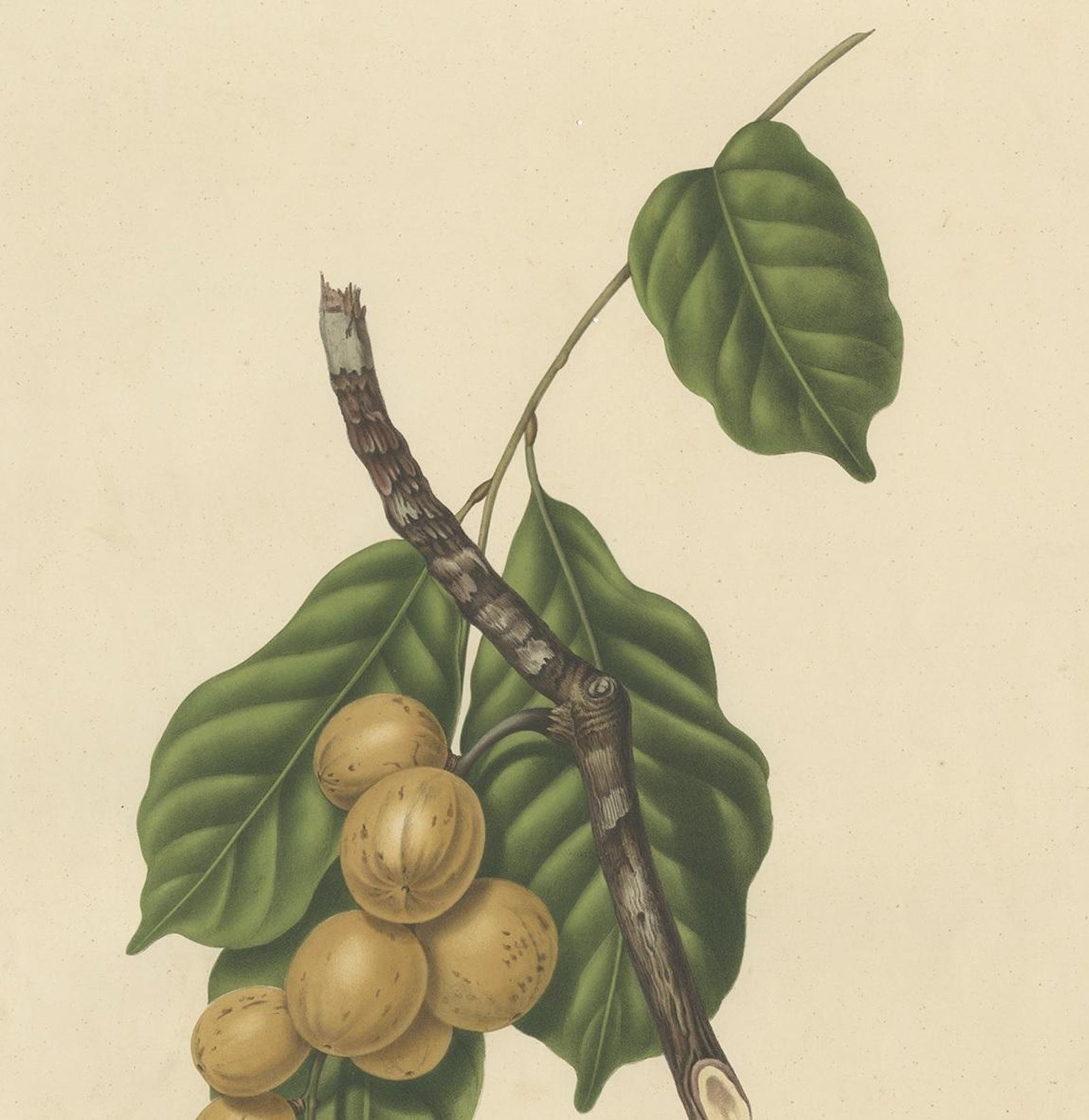
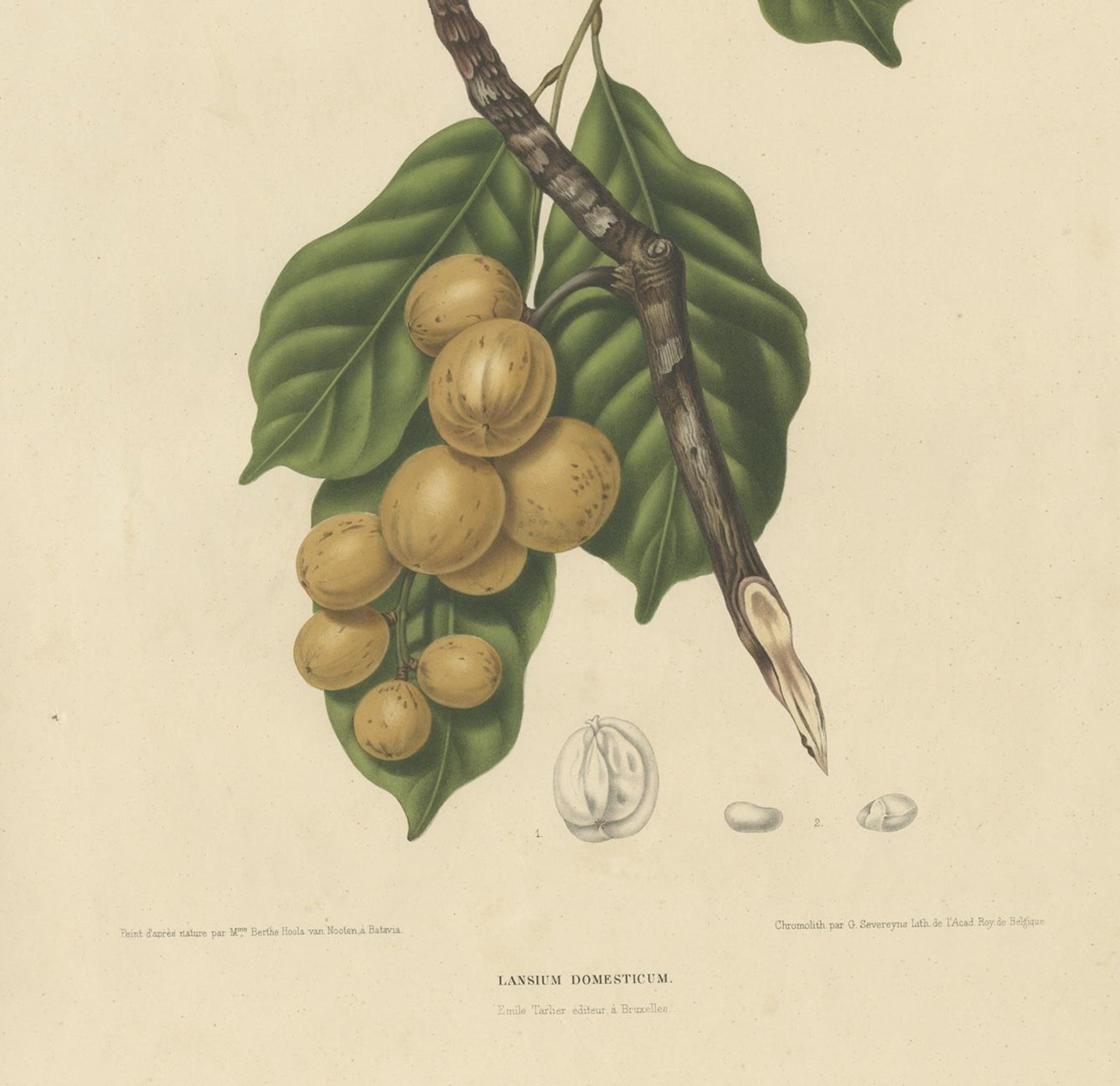
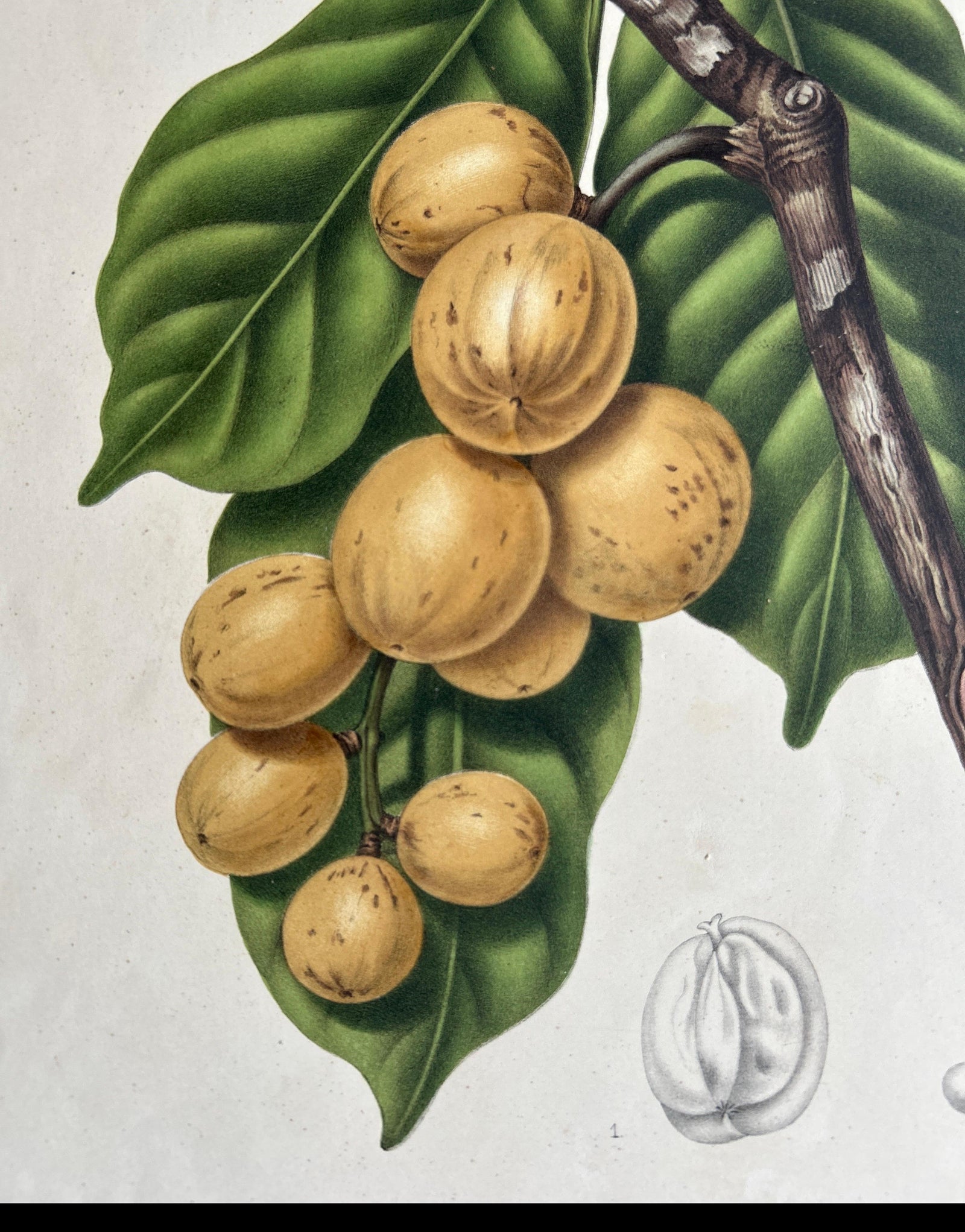
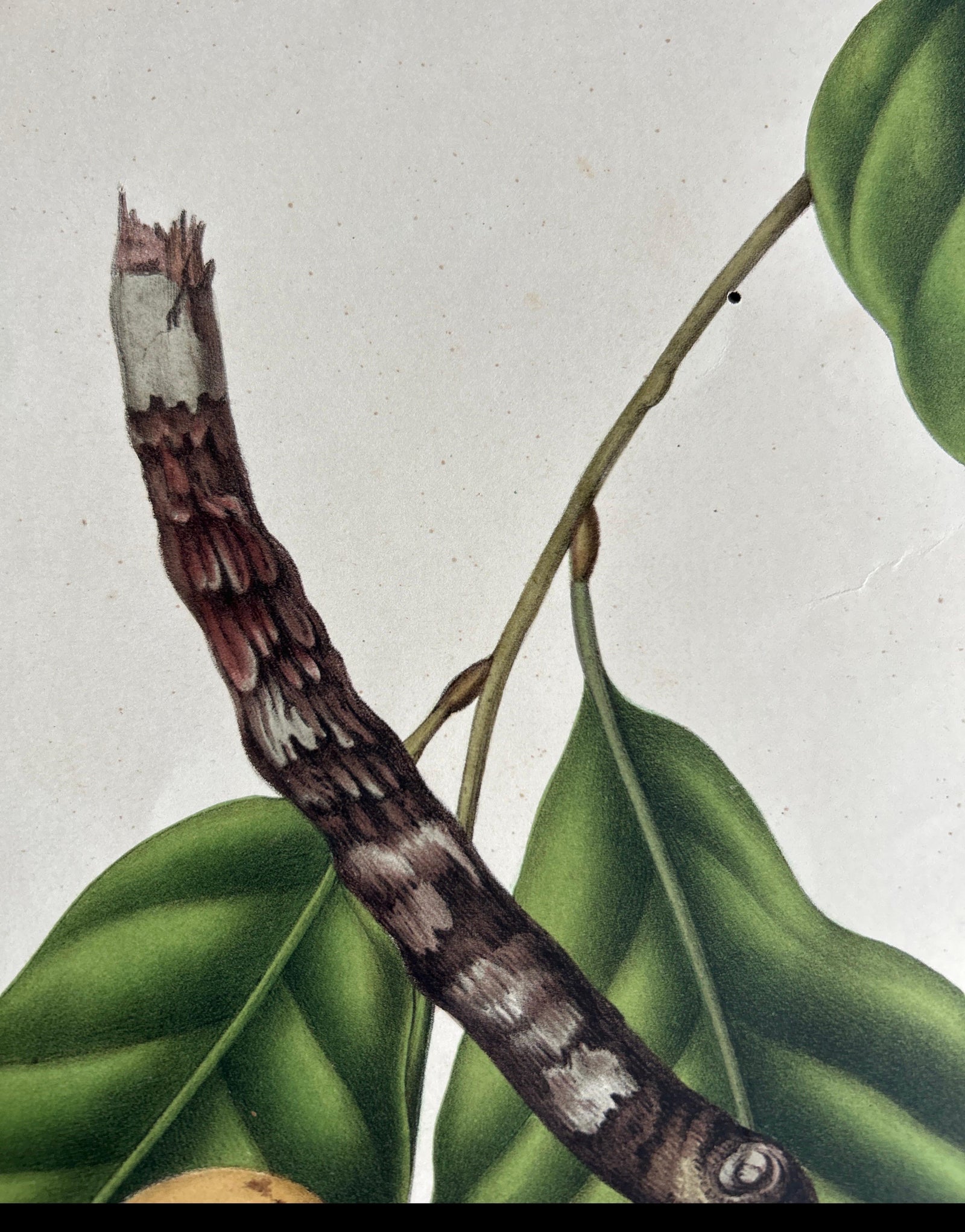
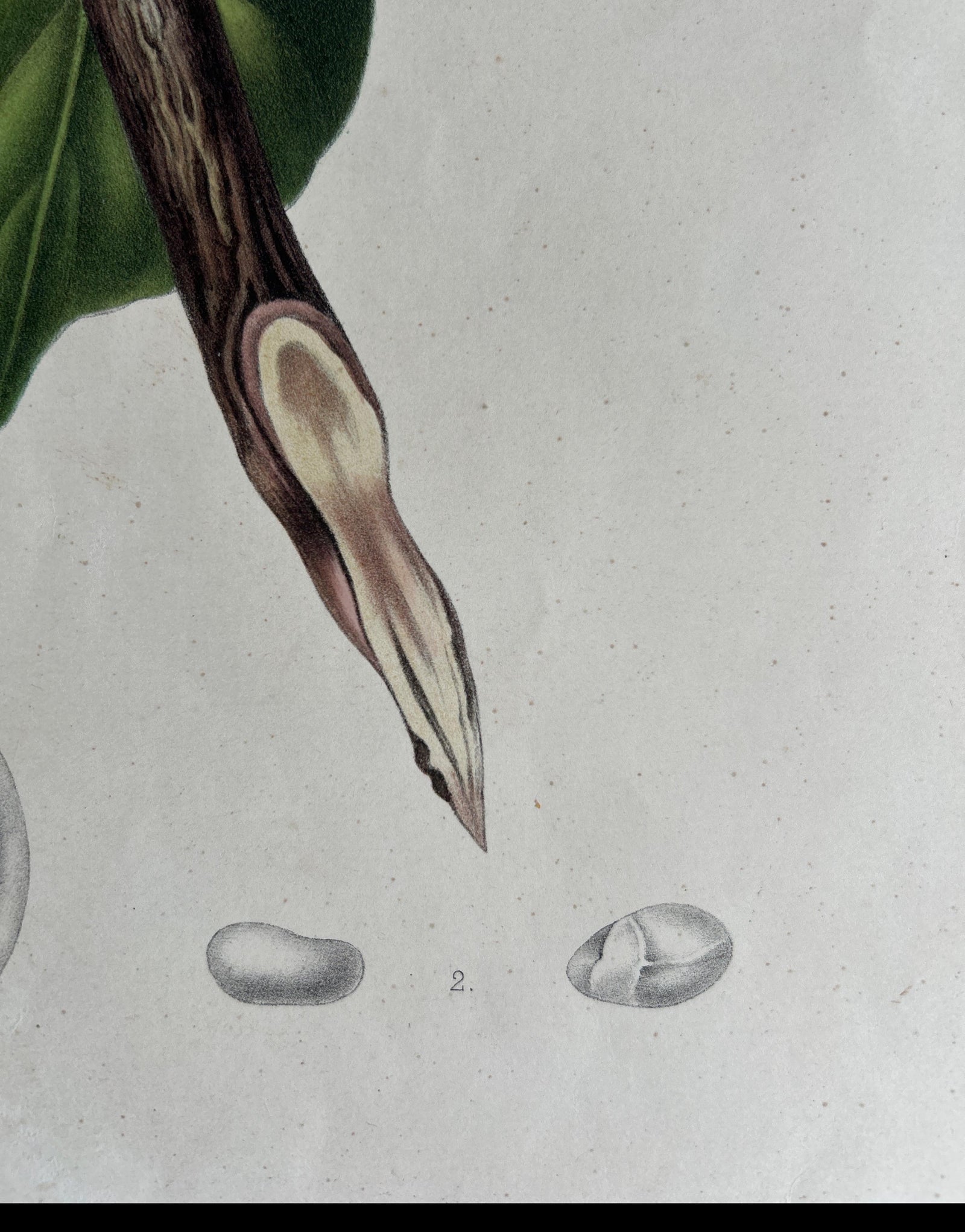
Close-ups
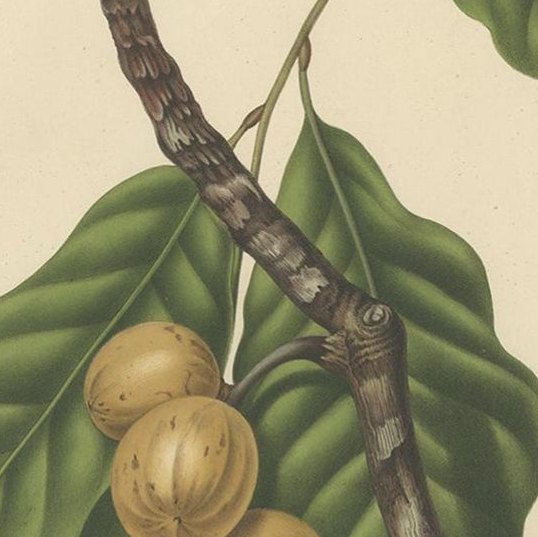
Framed and on the wall
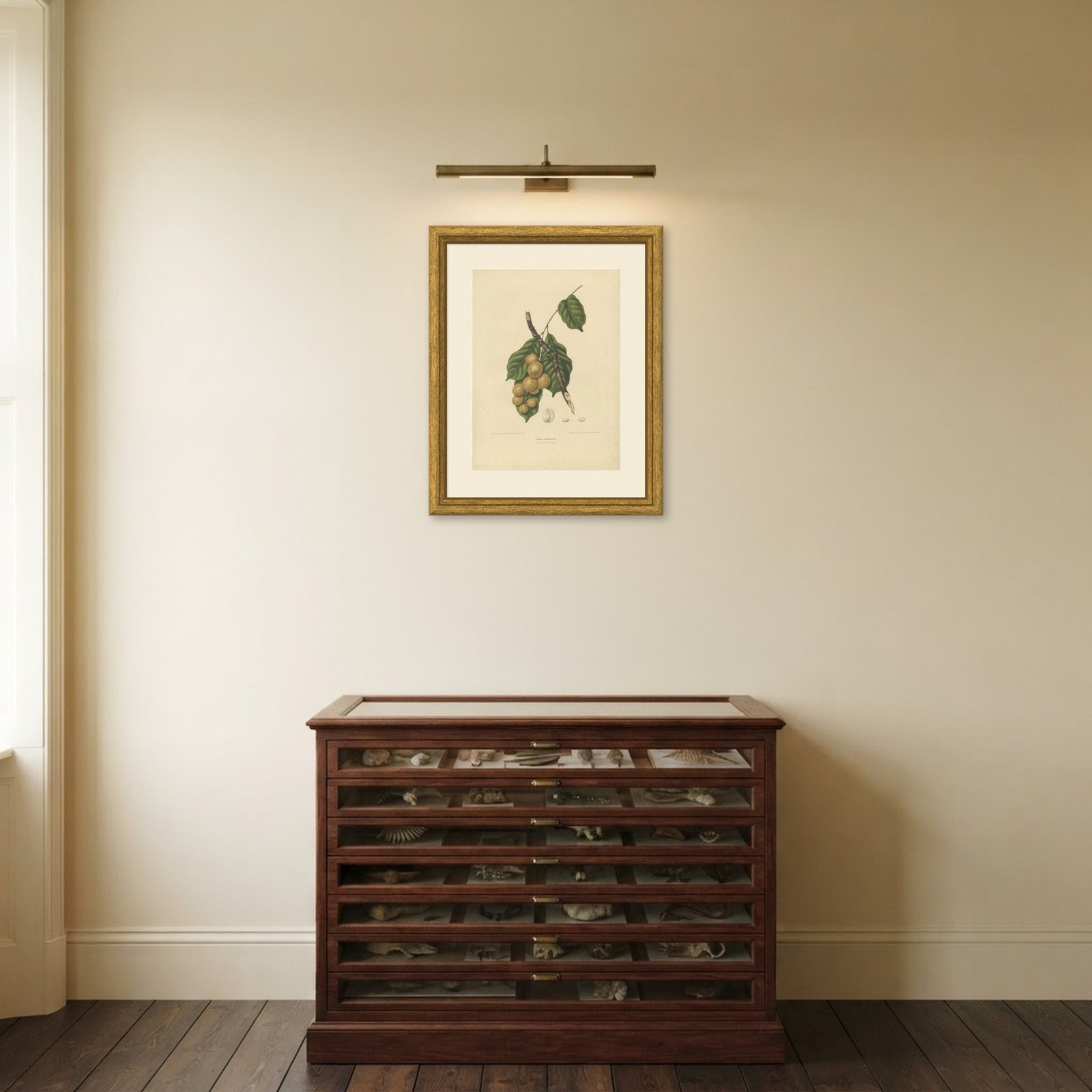
Frame and rooms are illustrations of how the print could look; the description says what is included.
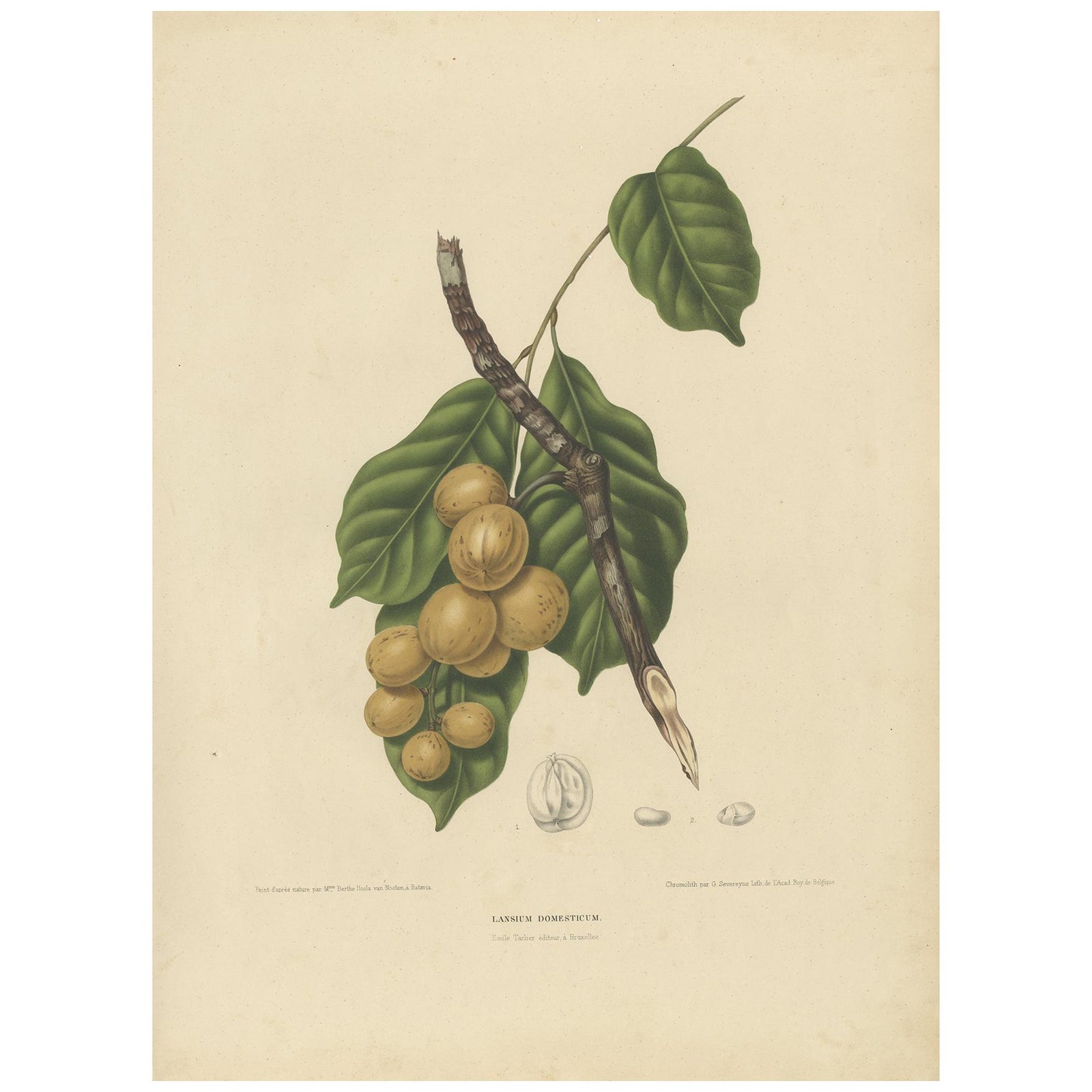
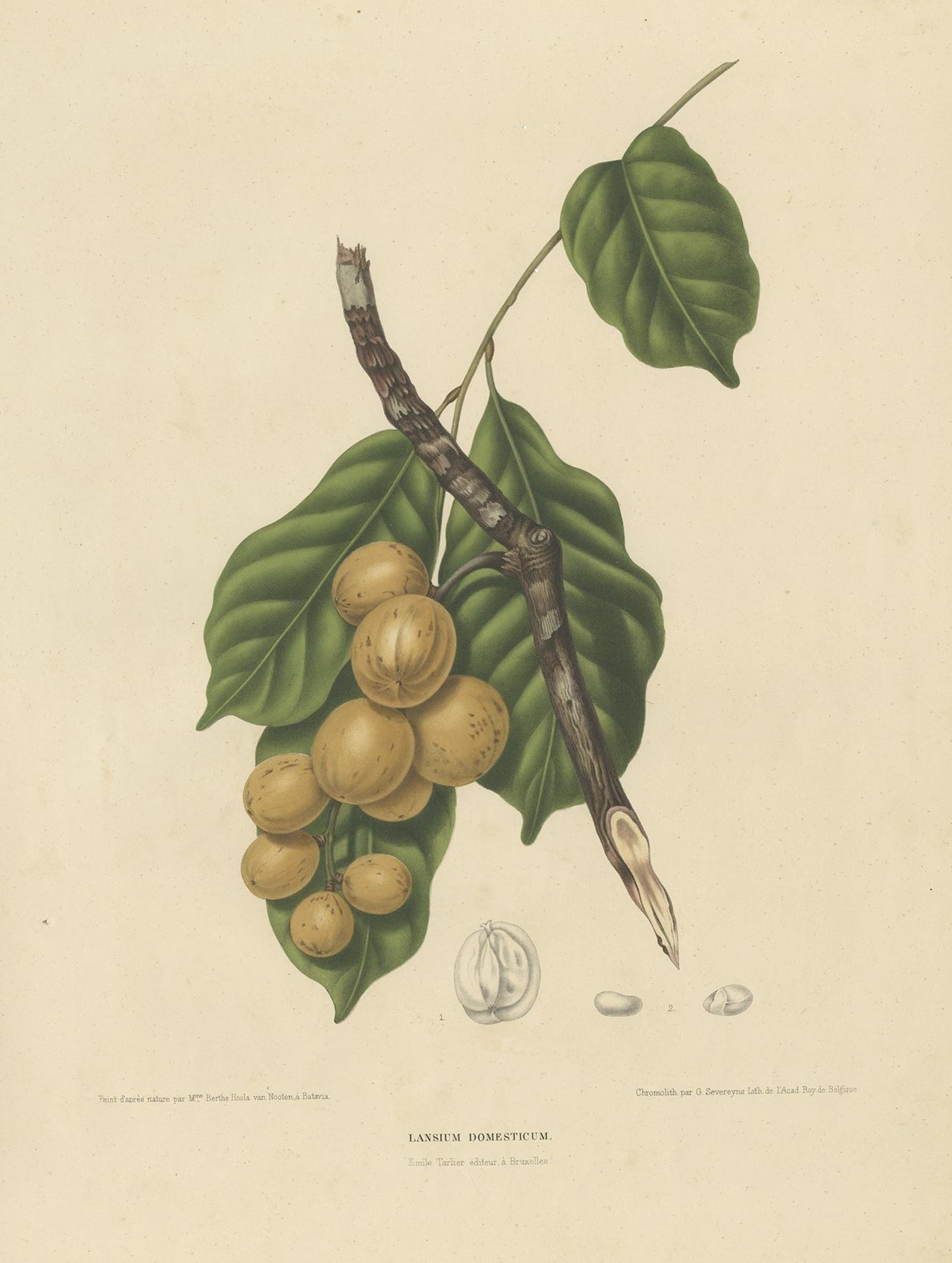
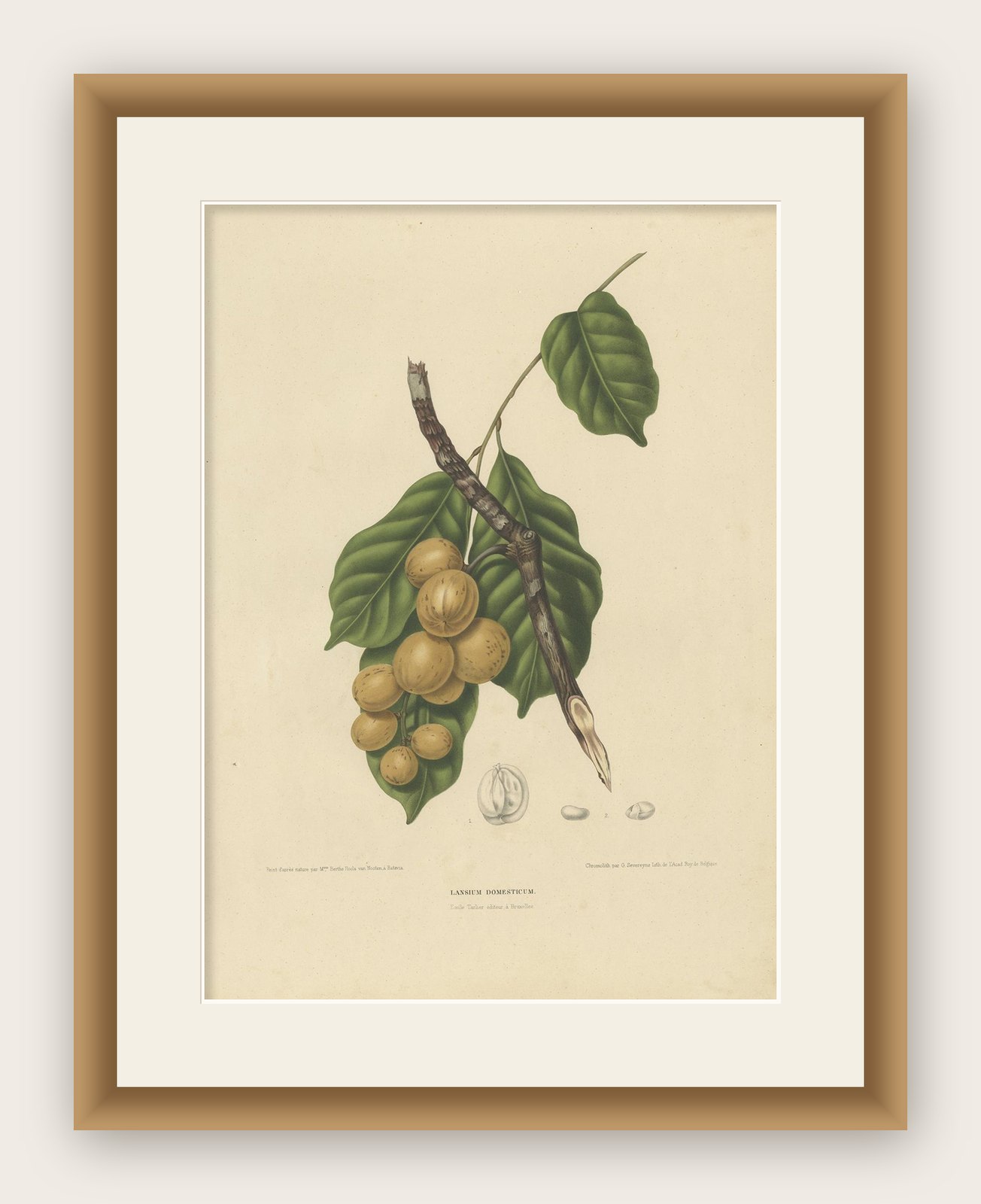
Lansium Domesticum, Langsat Botanical Lithograph c.1863
£670£47030% off ($615, €560)
Period original, not a reproduction.
Shipped from the Netherlands, flat or rolled, insured and tracked, worldwide. Returns accepted within 14 days.
- Date
- 1863
- Size
- 21.7 × 16.3 in (55 × 41.5 cm)
- Condition
- Good. Good condition with strong impressions and vibrant hand coloring. Minor age-toning and no tears or repairs. Has some small worm holes at the top. The paper is stable and well-preserved.
- Period
- Late 19th century
- Section
- Botanical
- Reference
- f_20282552
- Color
- Hand colored
What the condition grades mean
- Excellent
- Bright and clean, with no faults worth mentioning.
- Very good
- Only light signs of age, such as faint toning.
- Good
- Normal signs of age for a sheet of this period: toning, some foxing, small marks or neat old repairs.
- Fair
- Clear faults such as staining, tears or repairs, priced to match.
Every fault we see is written in the condition note, and the whole sheet is shown uncropped in the photos.
Lansium Domesticum, Langsat Botanical Lithograph c.1863
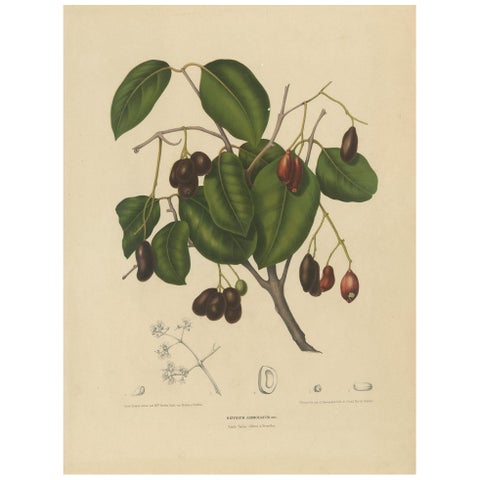
This antique botanical print features Lansium domesticum, commonly known as langsat, lanzones, or buahluku. The lithograph beautifully illustrates a fruiting branch with clusters of round, pale yellowish-brown fruits hanging in groups beneath broad, glossy green leaves. The fruits, which grow directly from the woody stem, are shown both whole and in cross-section at the bottom of the print, revealing their translucent segmented flesh and seeds. The detailed scientific drawings provide additional clarity on the plant’s morphology, making this plate both decorative and educational.
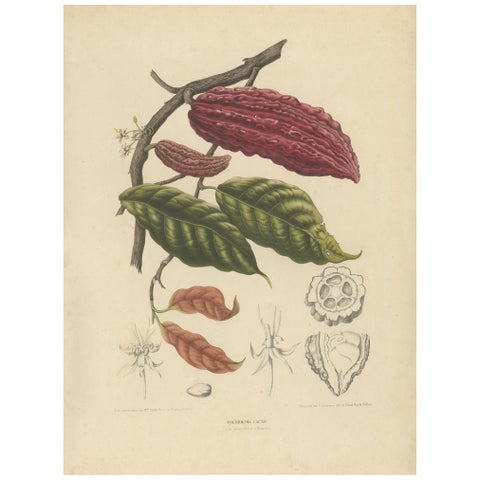
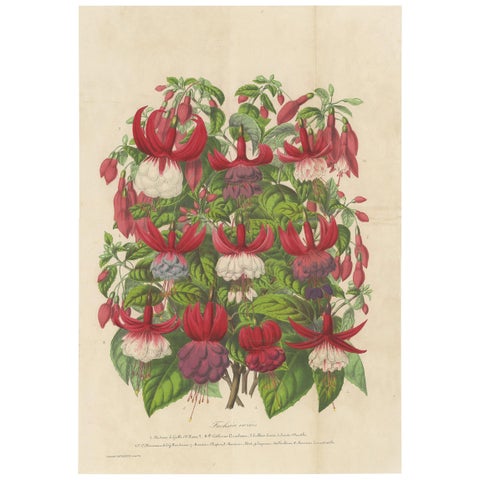
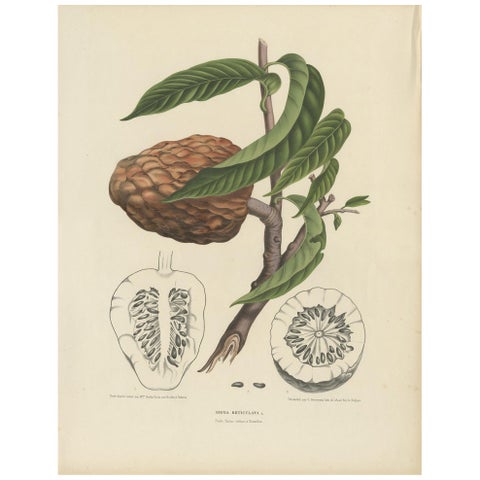
This print originates from Fleurs, fruits et feuillages choisis de la flore et de la pomone de l' Ile de Java peints d'après nature by Berthe Hoola Van Nooten, published between 1863 and 1864. A Dutch botanical artist, Hoola Van Nooten created this work while living in Java (now Indonesia), capturing the diversity and beauty of the island’s tropical flora. Her illustrations were lithographed in Paris by Severeyns, one of the most skilled chromolithographers of the period, known for reproducing botanical specimens with vivid color and scientific precision.
The technique used is chromolithography, a high-quality color printing method that used multiple stones, each carrying a different color layer, to create lush, lifelike botanical images. These prints were praised not only for their scientific accuracy but also for their striking aesthetic appeal, and remain highly collectible today.
Condition summary: Very good condition with strong impressions and vibrant hand coloring. Minor age-toning and a few faint spots of foxing in the margins but no tears or repairs. The paper is stable and well-preserved.
Framing tips: A light cream or pale green mount will bring out the yellow and green tones of the fruit and leaves. Consider a simple dark wood or bamboo-style frame to complement the tropical subject matter. UV-protective glass is recommended to preserve the colors of the chromolithograph.