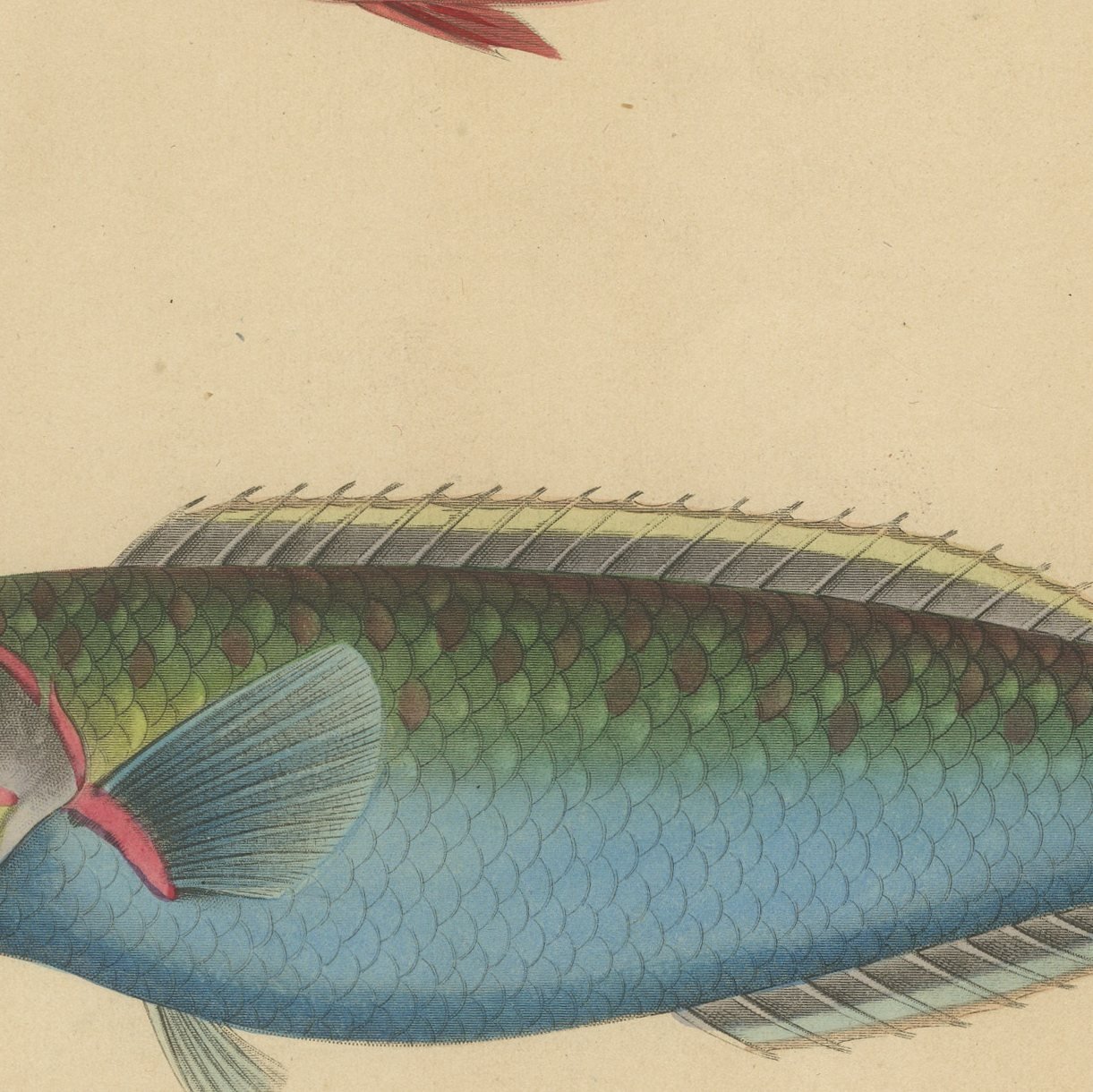
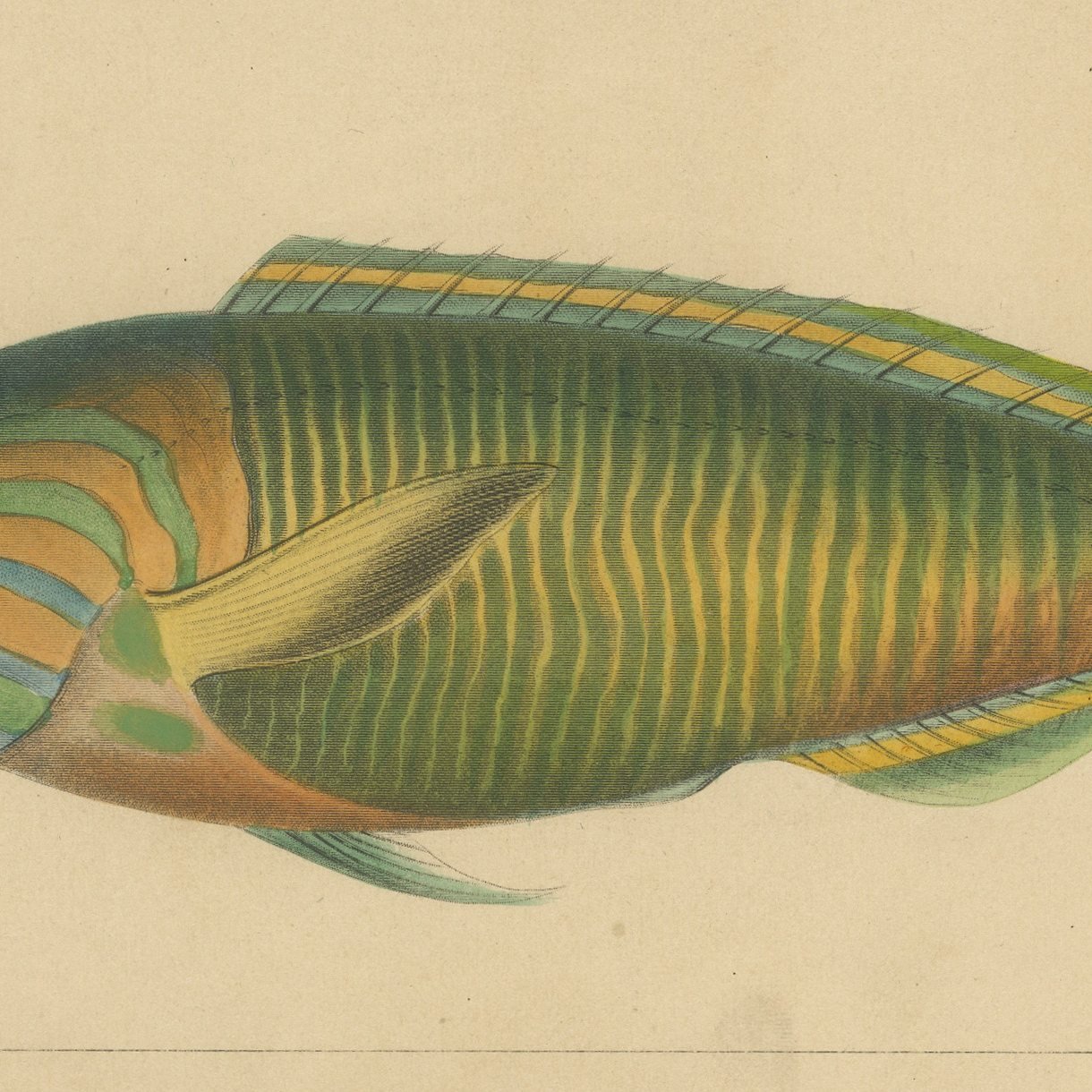
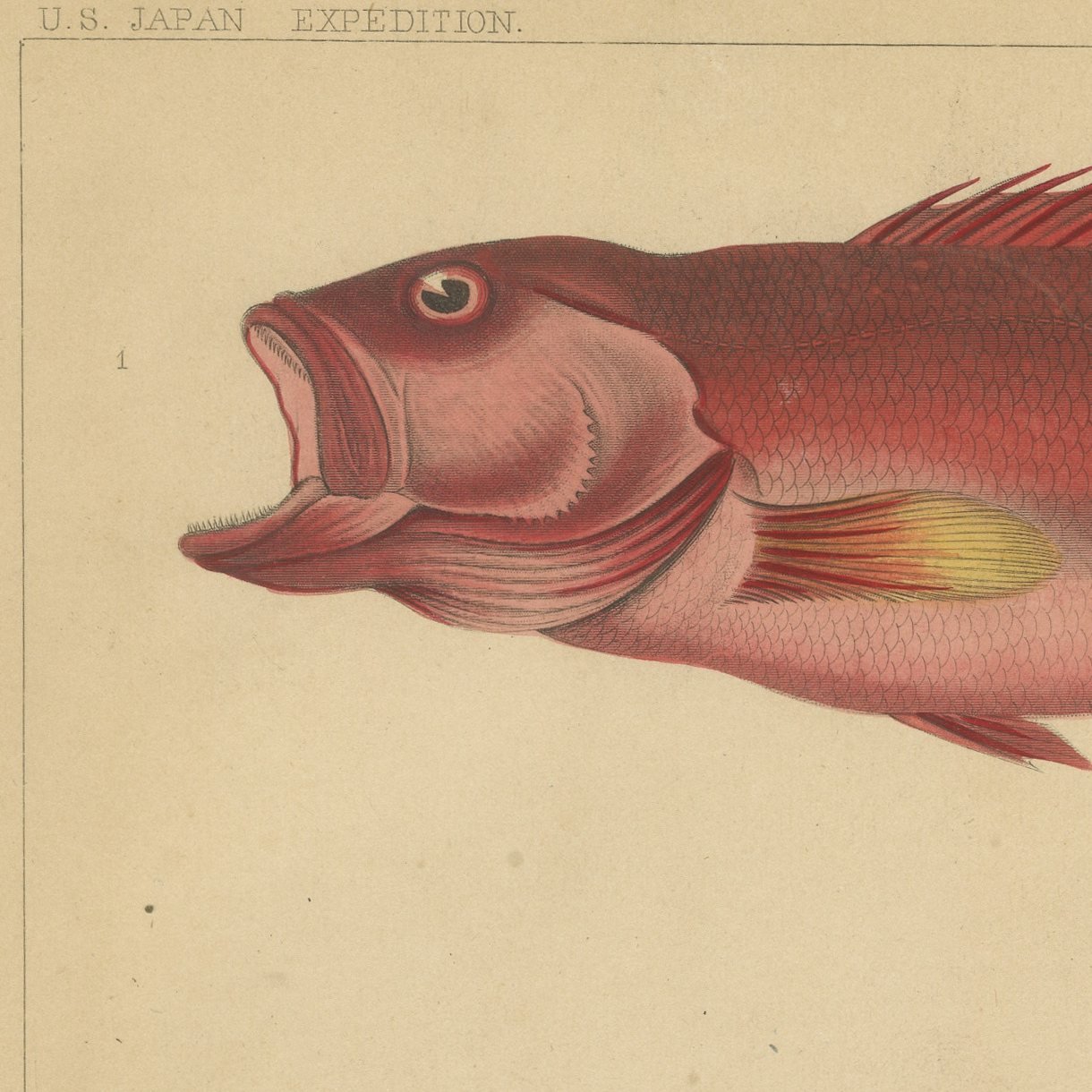
Close-ups
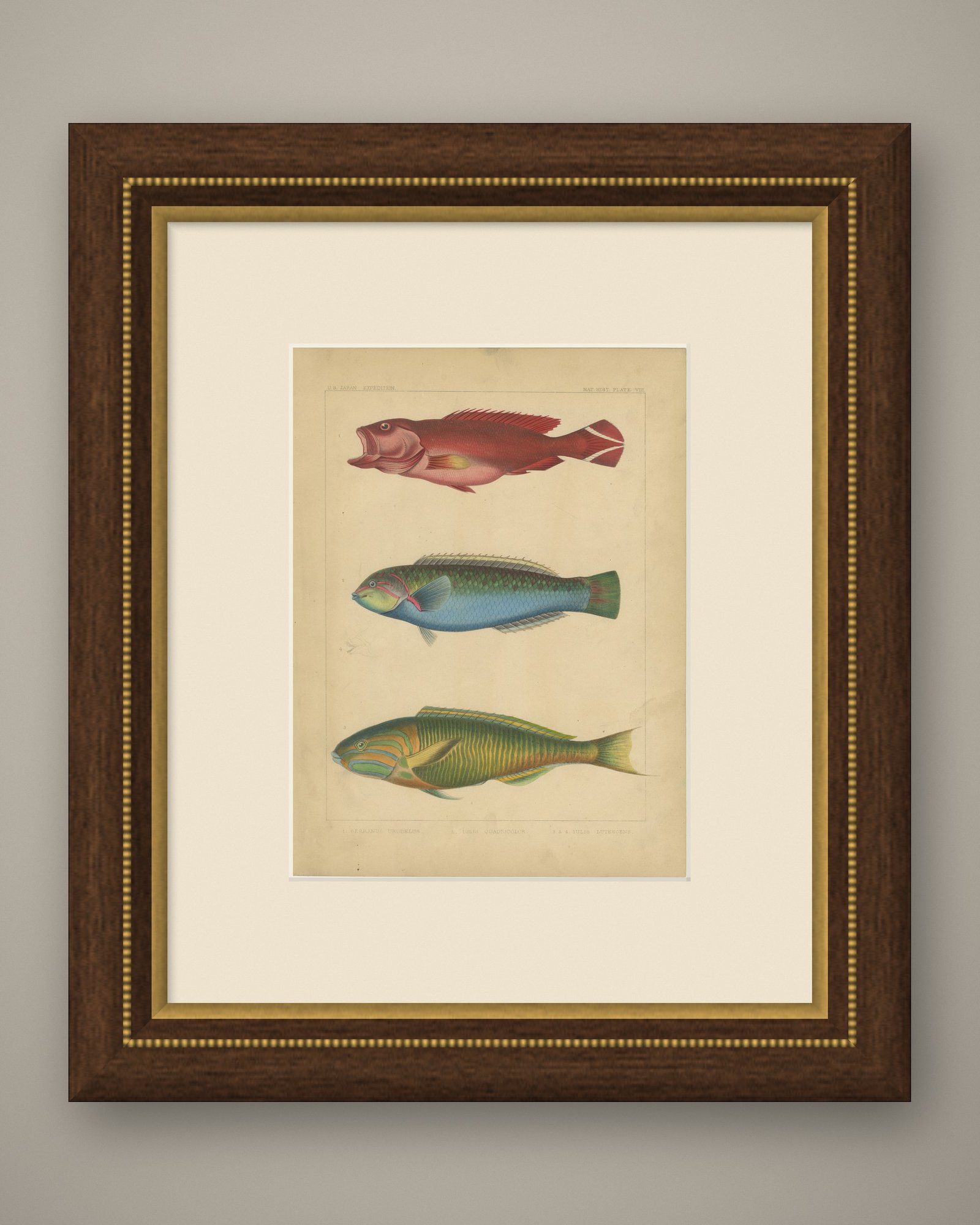
Framed and on the wall
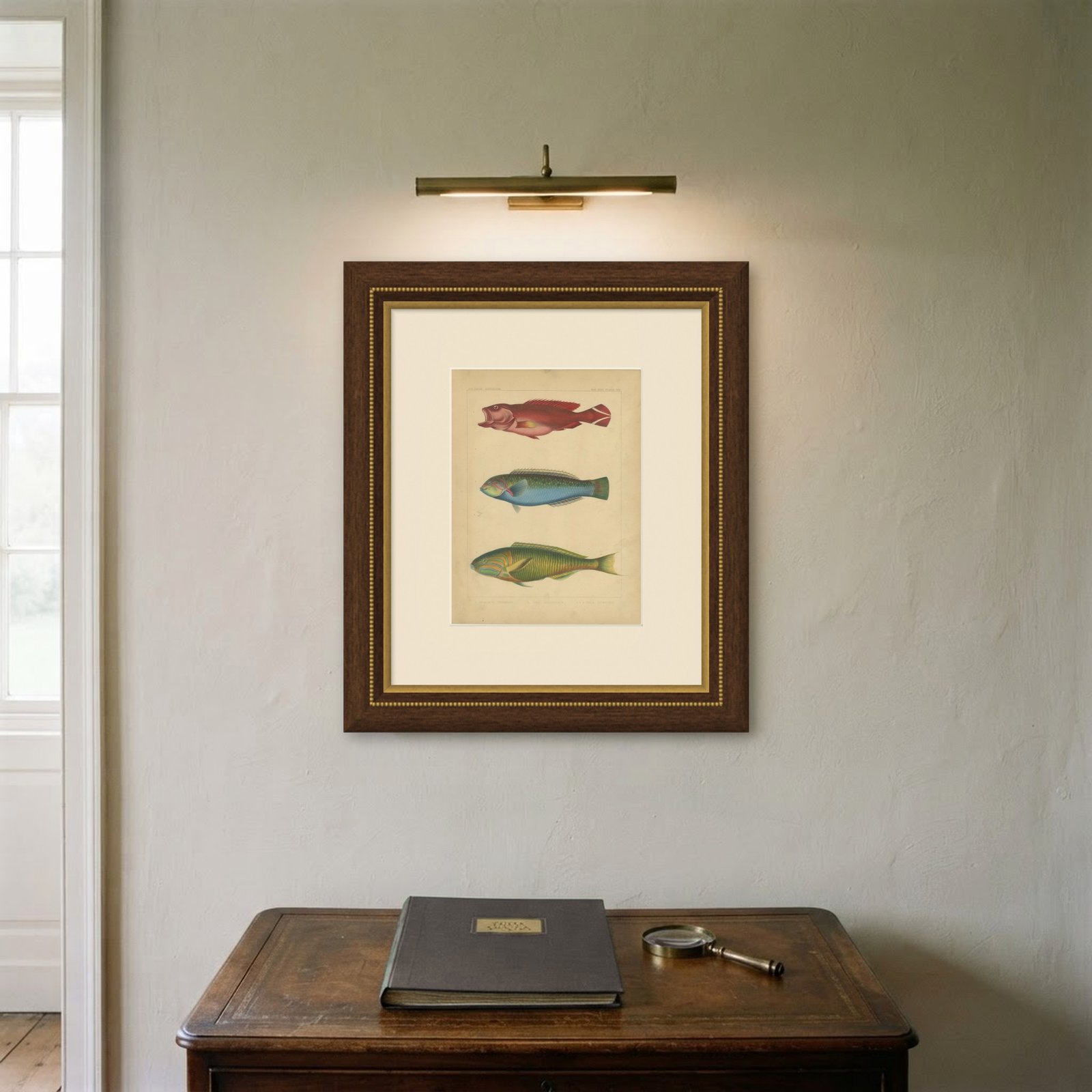
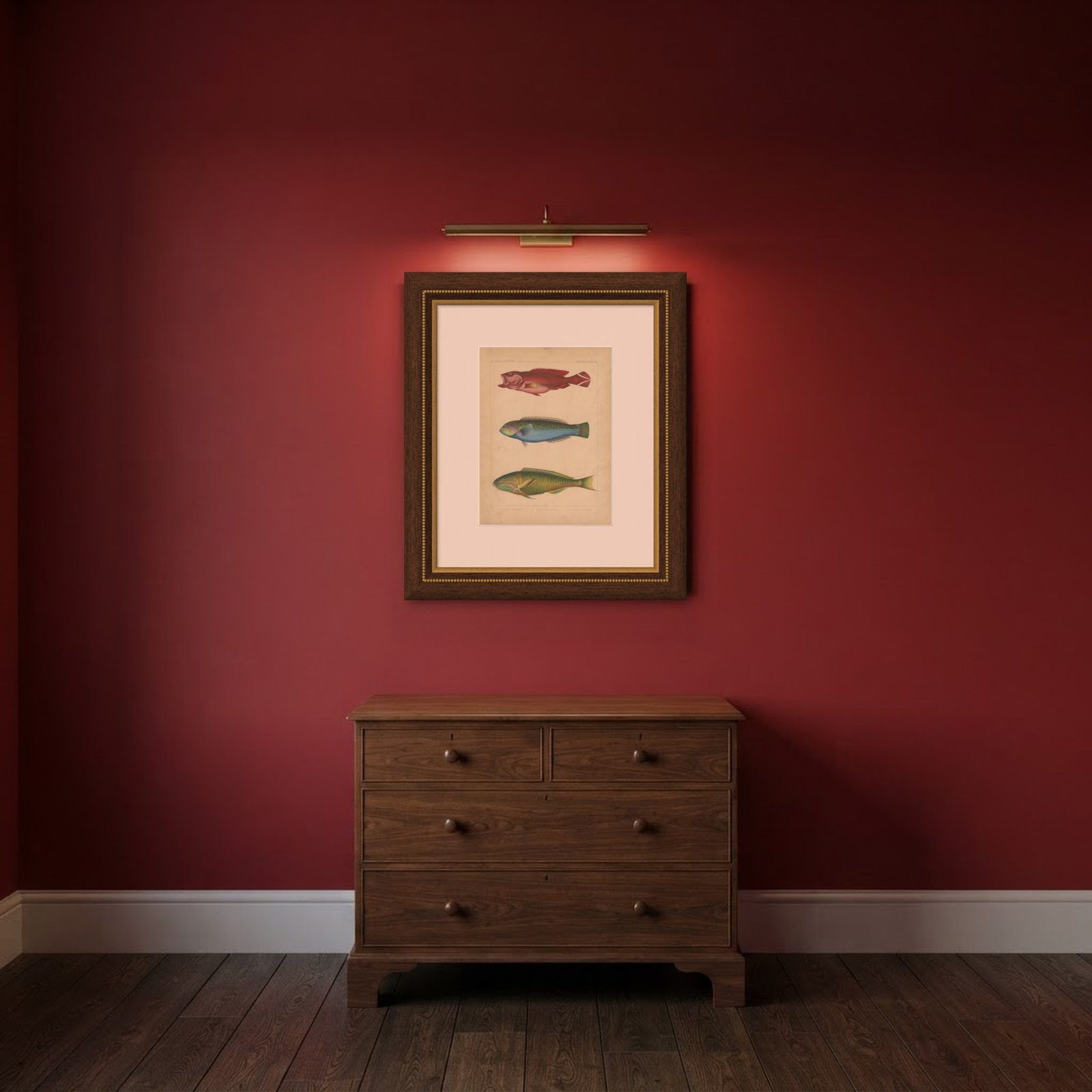
Frame and rooms are illustrations of how the print could look; the description says what is included.
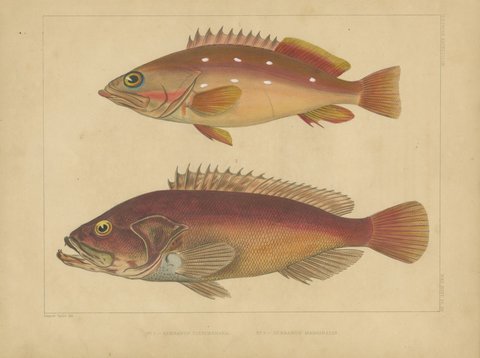
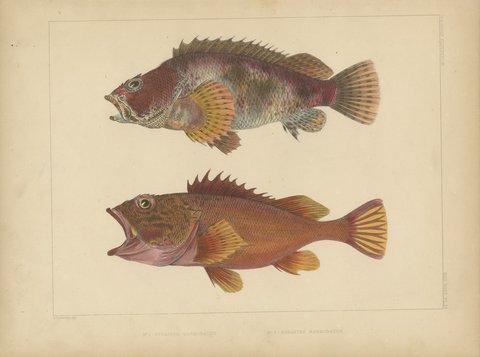
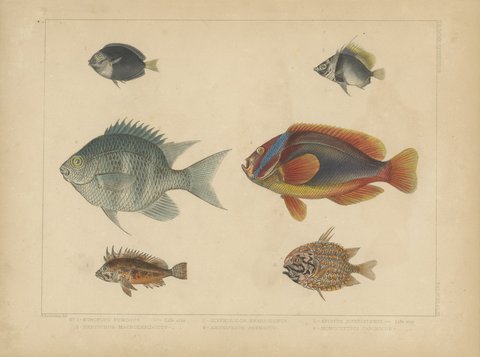
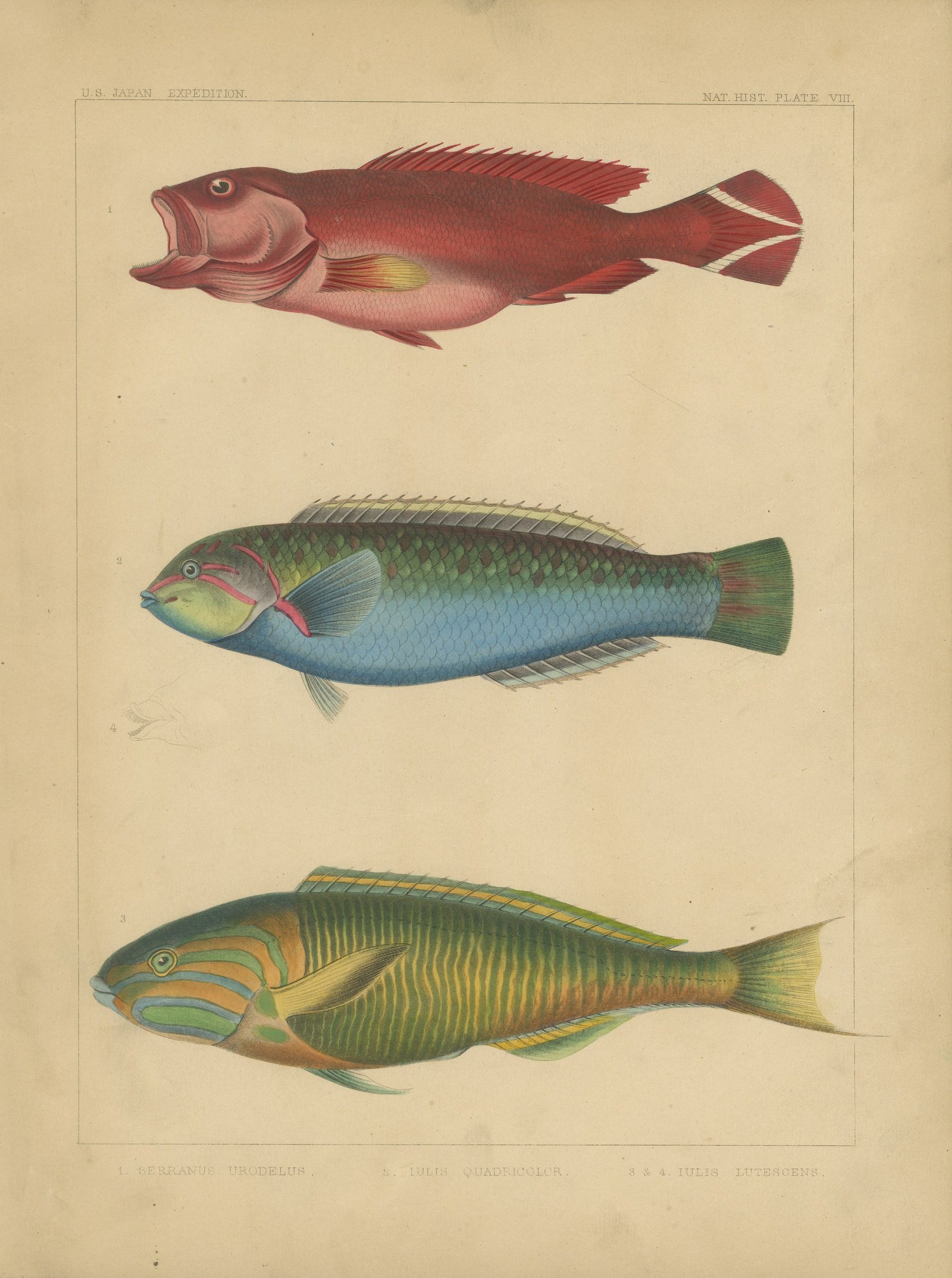
Japanese Wrasse and Coral Grouper, Perry Expedition Print, 1856
£240 ($320, €290)
Period original, not a reproduction.
Shipped from the Netherlands, flat or rolled, insured and tracked, worldwide. Returns accepted within 14 days.
- Date
- 1856
- Size
- 11.6 × 8.7 in (29.5 × 22 cm)
- Technique
- Lithograph
- Coloring
- Printed color
- Condition
- Good. Light uneven toning, browner toward the edges. Handling soiling along the bottom and top edges. All four corners complete.
- Period
- Late 19th century
- Section
- Fish and shells
- Reference
- BG-14475-2-6
What the condition grades mean
- Excellent
- Bright and clean, with no faults worth mentioning.
- Very good
- Only light signs of age, such as faint toning.
- Good
- Normal signs of age for a sheet of this period: toning, some foxing, small marks or neat old repairs.
- Fair
- Clear faults such as staining, tears or repairs, priced to match.
Every fault we see is written in the condition note, and the whole sheet is shown uncropped in the photos.
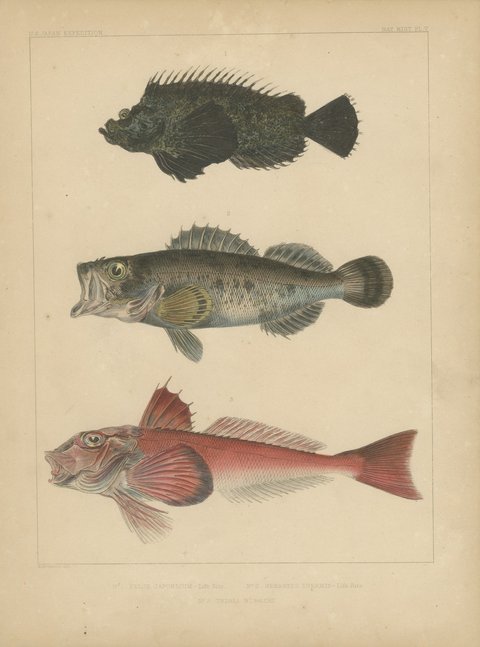
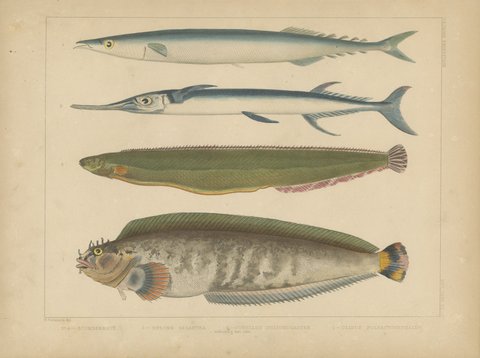
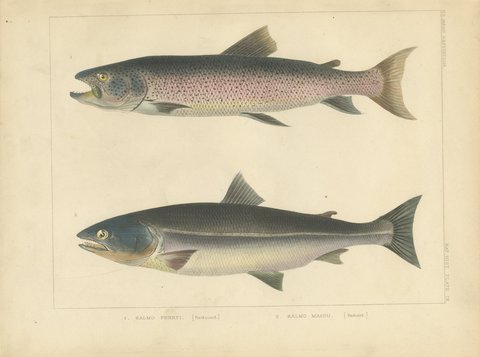
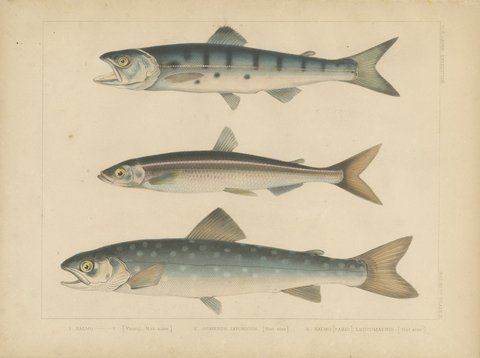
This is an original antique lithographed plate of Japanese fishes from the official report of Commodore Perry's expedition to Japan, the eighth plate of its natural history series. Four figures are printed in color and named at the foot: the red coral grouper Serranus urodelus with its barred tail, the four colored wrasse Iulis quadricolor, and two figures of Iulis lutescens showing the difference between its phases. The sheet is headed Natural History Plate the eighth.
The plate was issued with the official Narrative of the Expedition of an American Squadron to the China Seas and Japan under Commodore Matthew Calbraith Perry, printed at Washington in 1856 by order of Congress. The fish were drawn from fresh specimens by the expedition's own artists while the squadron lay in Japanese waters, and the notes on them were written by the naturalist James Carson Brevoort. The drawing on this plate is credited to H. Patterson.
Wrasses change color and pattern as they grow and switch sex, which is why two figures of the one species appear here, and the plate catches a piece of natural history that was barely understood at the time. The reds and yellows are among the strongest in the series. The plates frame well in a simple pale frame and look well in a run of two or three along a hallway, a kitchen or a bathroom wall.
Light uneven toning, browner toward the edges. Handling soiling along the bottom and top edges. All four corners complete.
This is an original antique print, not a modern reproduction. This item is sold unframed.