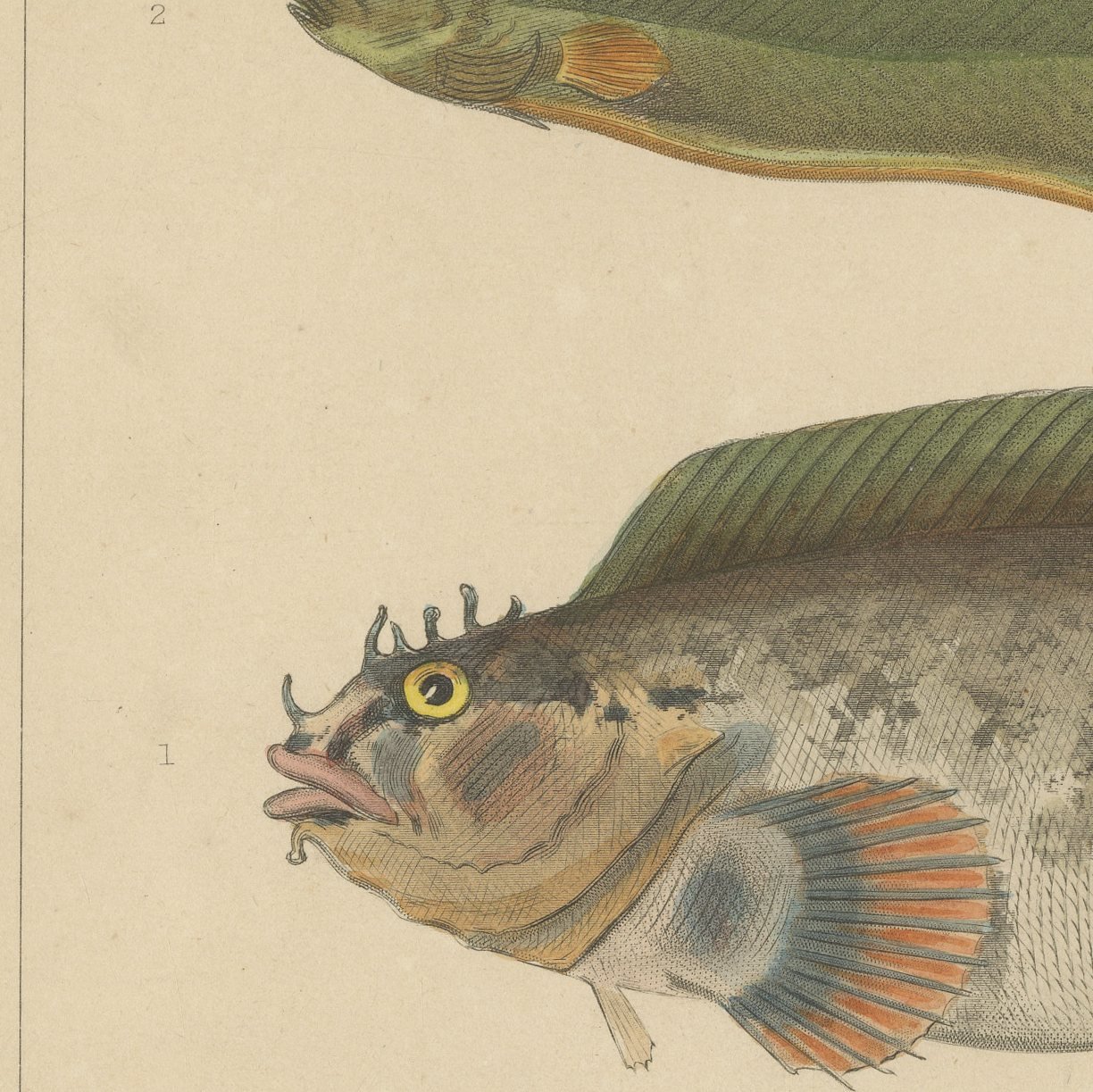
Close-ups
Framed and on the wall
Frame and rooms are illustrations of how the print could look; the description says what is included.
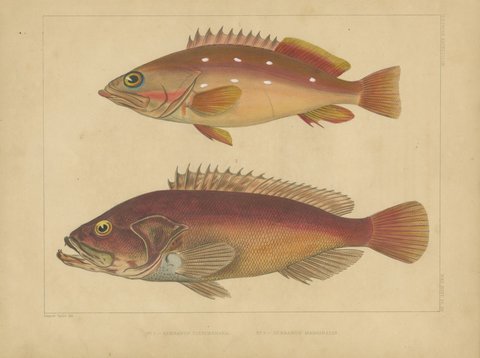
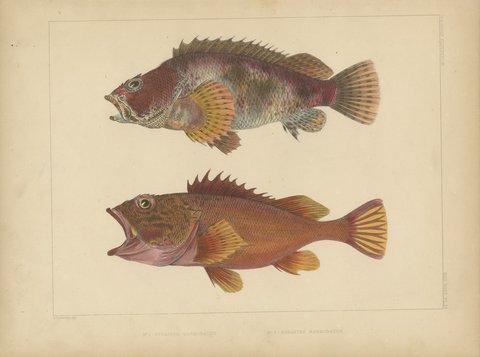
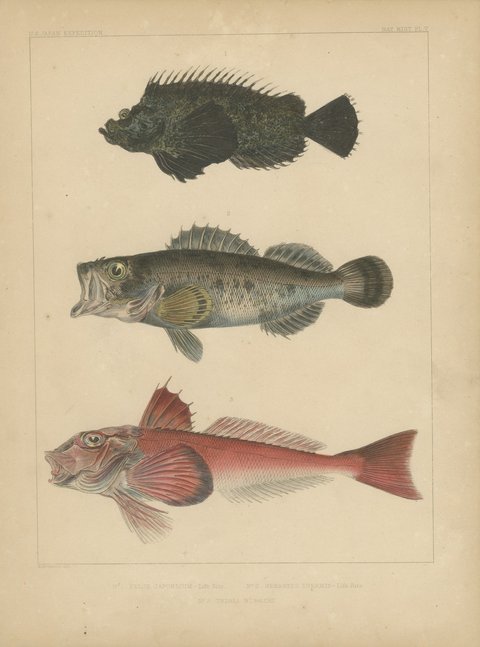
Japanese Needlefish and Blenny, Perry Expedition Lithograph, 1856
€255 ($285, £215, €255)
Period original, not a reproduction.
Shipped from the Netherlands, flat or rolled, insured and tracked, worldwide. Returns accepted within 14 days.
- Date
- 1856
- Size
- 8.7 × 11.6 in (22 × 29.5 cm)
- Technique
- Lithograph
- Coloring
- Printed color
- Condition
- Good. Light uneven toning, browner toward the edges. Marked handling soiling along the bottom, left and right edges. A few small foxing spots in the margin. All four corners complete.
- Period
- Late 19th century
- Section
- Fish and shells
- Reference
- BG-14475-2-5
What the condition grades mean
- Excellent
- Bright and clean, with no faults worth mentioning.
- Very good
- Only light signs of age, such as faint toning.
- Good
- Normal signs of age for a sheet of this period: toning, some foxing, small marks or neat old repairs.
- Fair
- Clear faults such as staining, tears or repairs, priced to match.
Every fault we see is written in the condition note, and the whole sheet is shown uncropped in the photos.
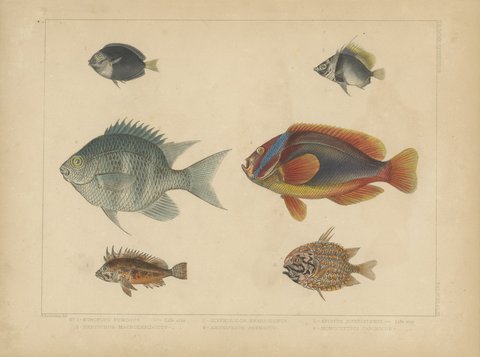
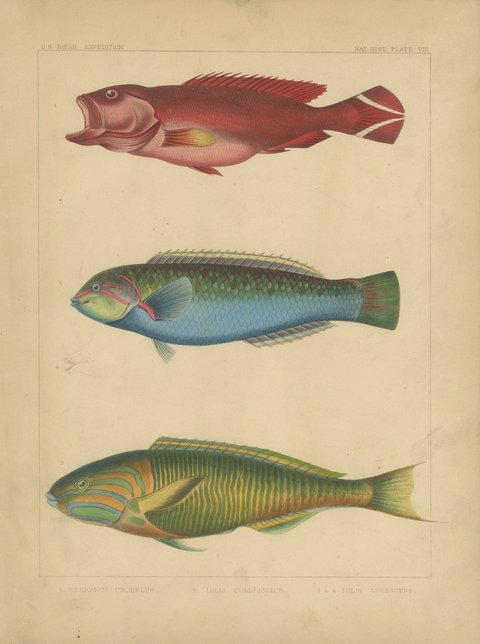
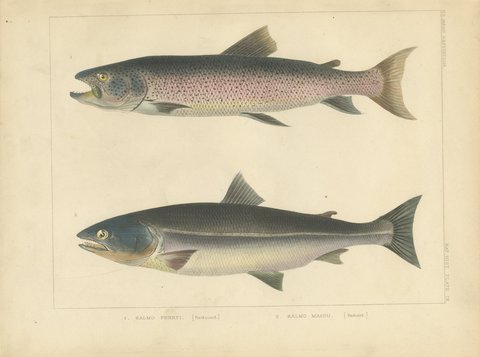
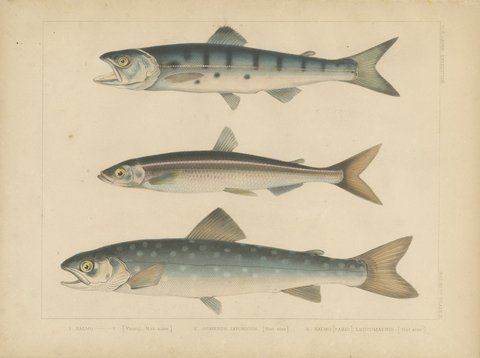
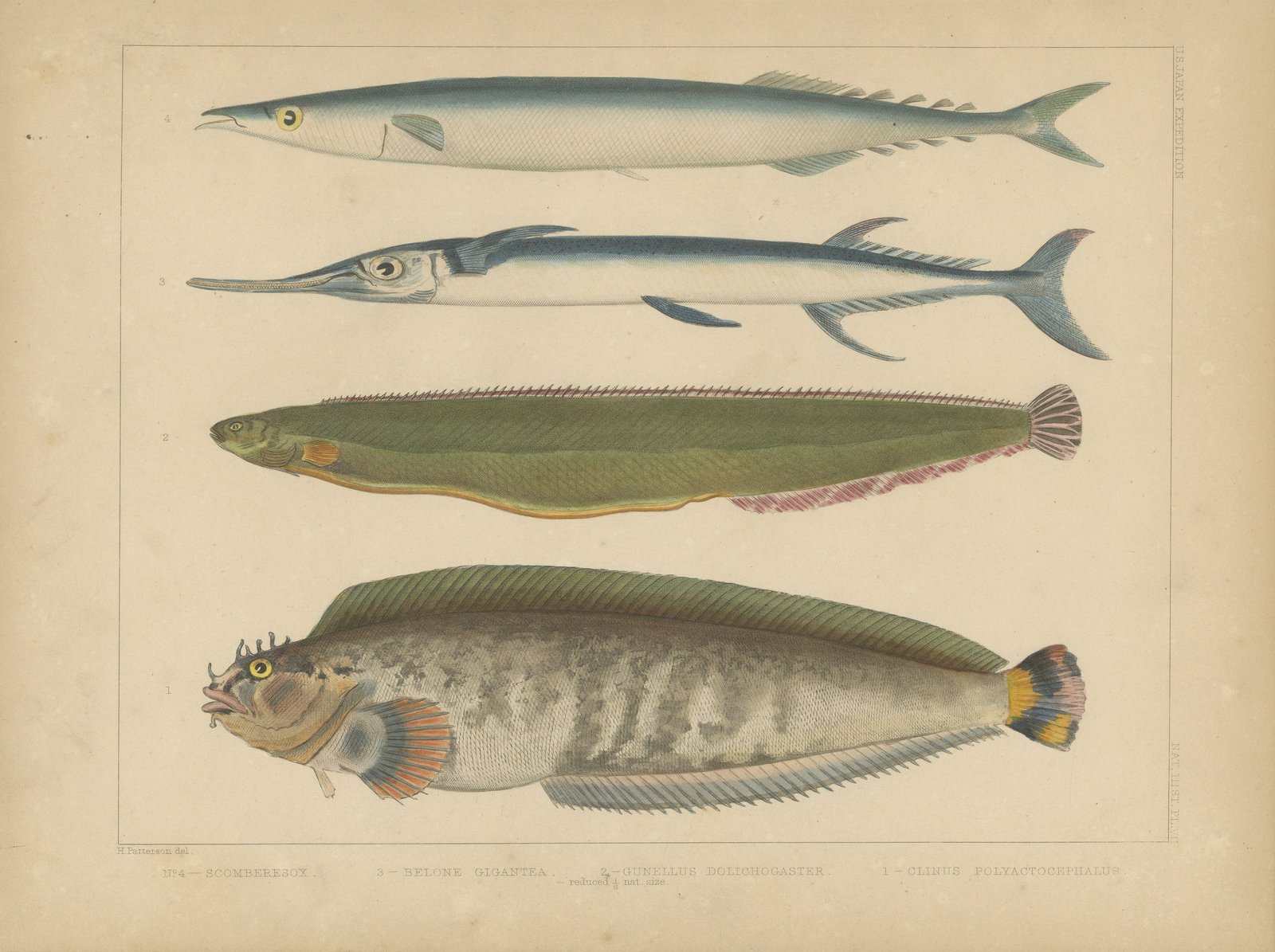
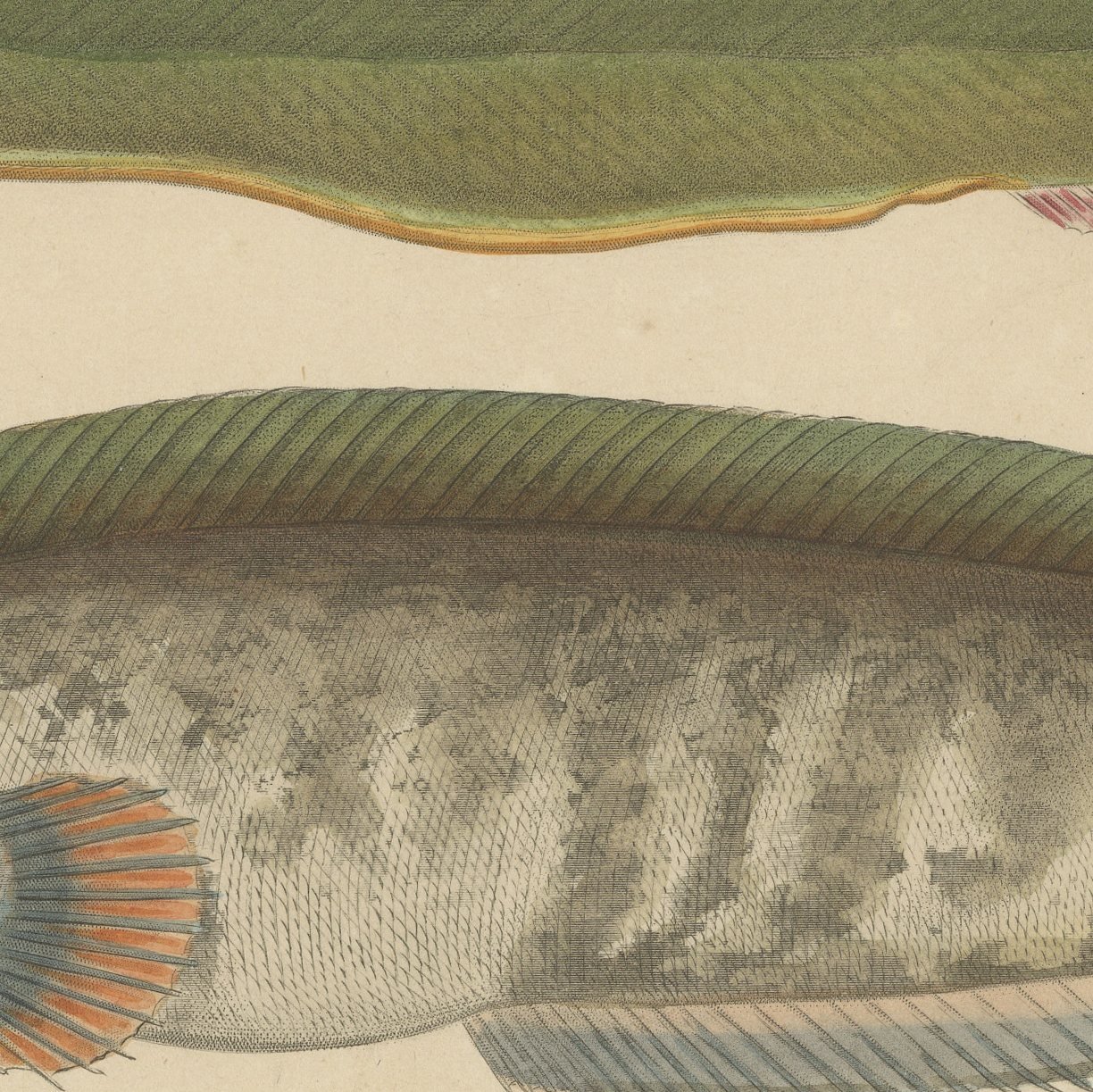
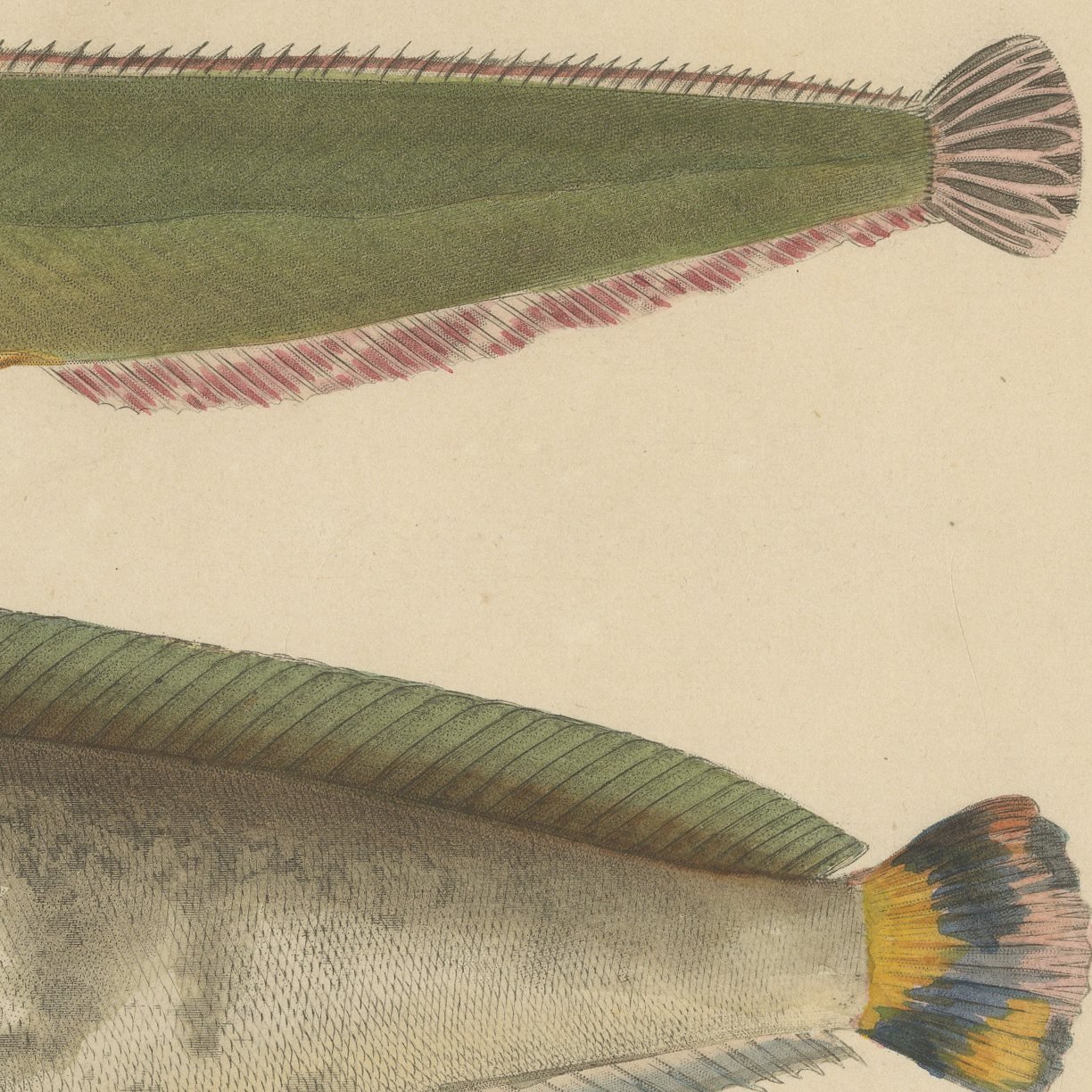
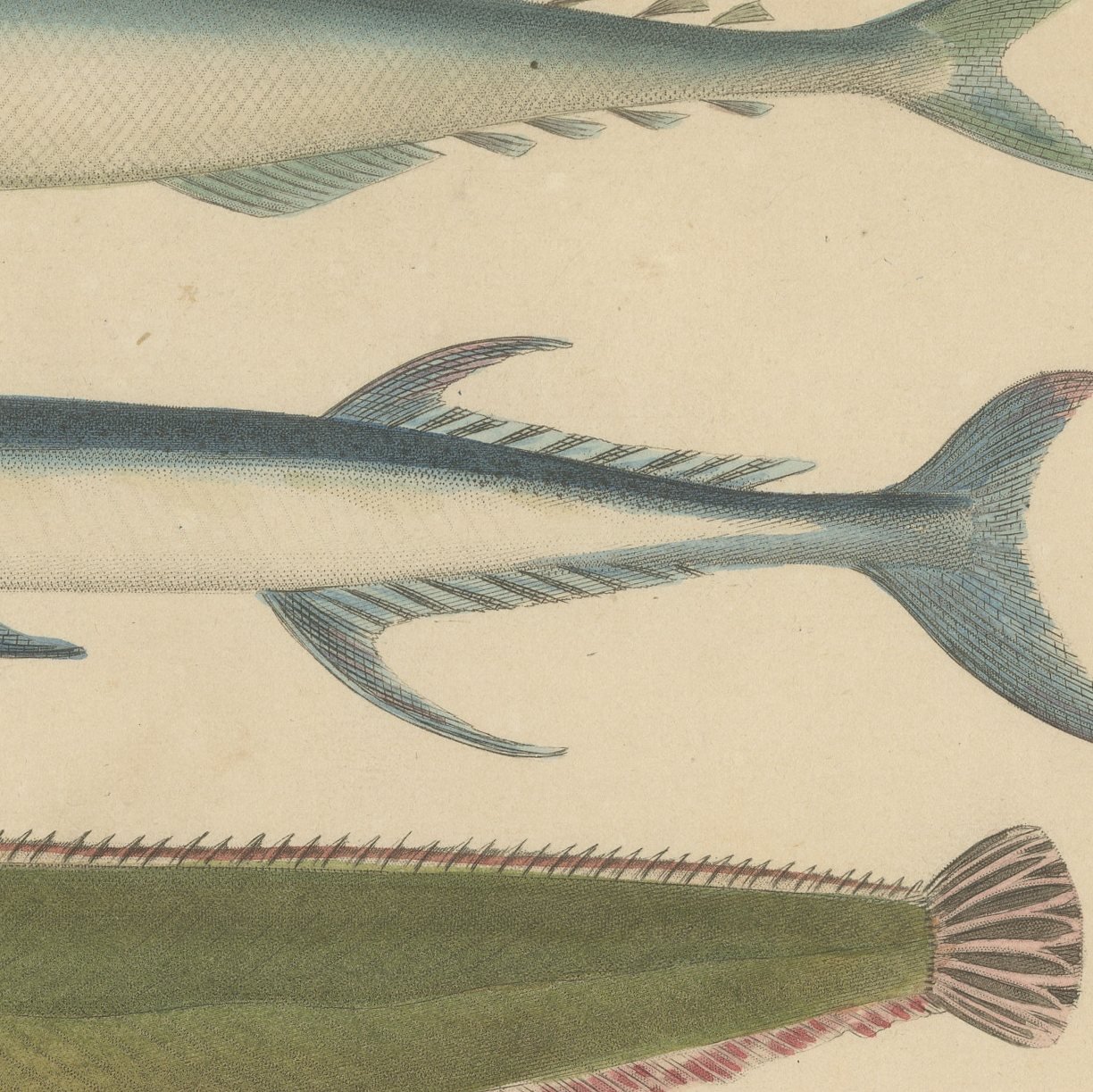
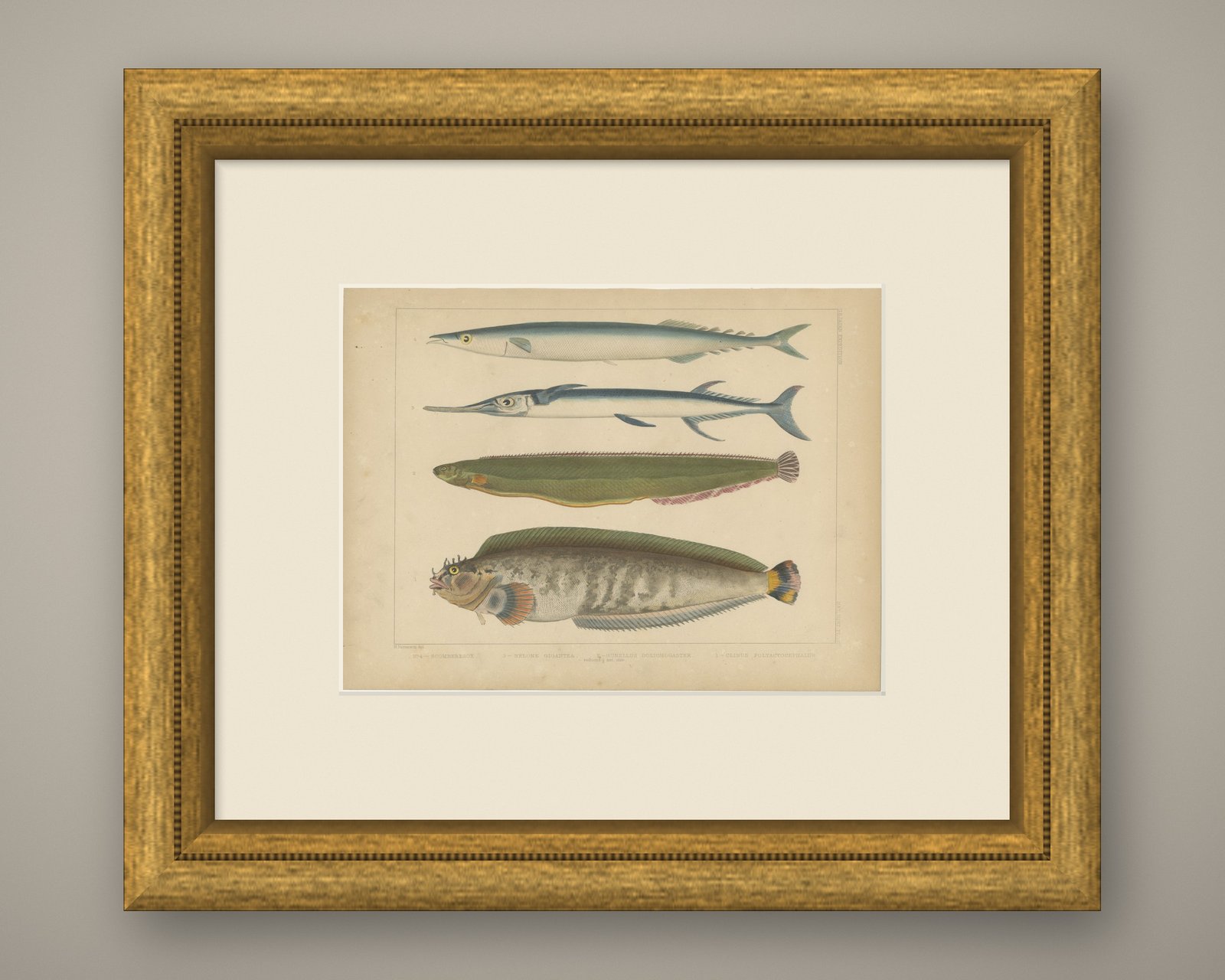
This is an original antique lithographed plate of Japanese fishes from the official report of Commodore Perry's expedition to Japan, the seventh plate of its natural history series. Four long bodied fishes lie in parallel bands across the plate, numbered from the foot upward: the blenny Clinus polyactocephalus, the gunnel Gunellus dolichogaster, the great needlefish Belone gigantea and a saury of the genus Scomberesox. Each is lettered in Latin and the sheet is headed Natural History Plate the seventh.
This sheet comes from Notes on some Figures of Japanese Fish by James Carson Brevoort, issued with the official account of Commodore Perry's expedition to Japan, Washington, 1856. The drawings were made on the spot from fresh fish by the expedition artists, which is why the colors are those of a living animal rather than a faded museum specimen. The drawing on this plate is credited to H. Patterson.
Four slender fishes stacked one above another make a plate with a strong horizontal rhythm that suits a long narrow wall or the space above a door. The needlefish with its beak of teeth is the figure people stop at. The plates frame well in a simple pale frame and look well in a run of two or three along a hallway, a kitchen or a bathroom wall.
Light uneven toning, browner toward the edges. Marked handling soiling along the bottom, left and right edges. A few small foxing spots in the margin. All four corners complete.
This is an original antique print, not a modern reproduction. This item is sold unframed.