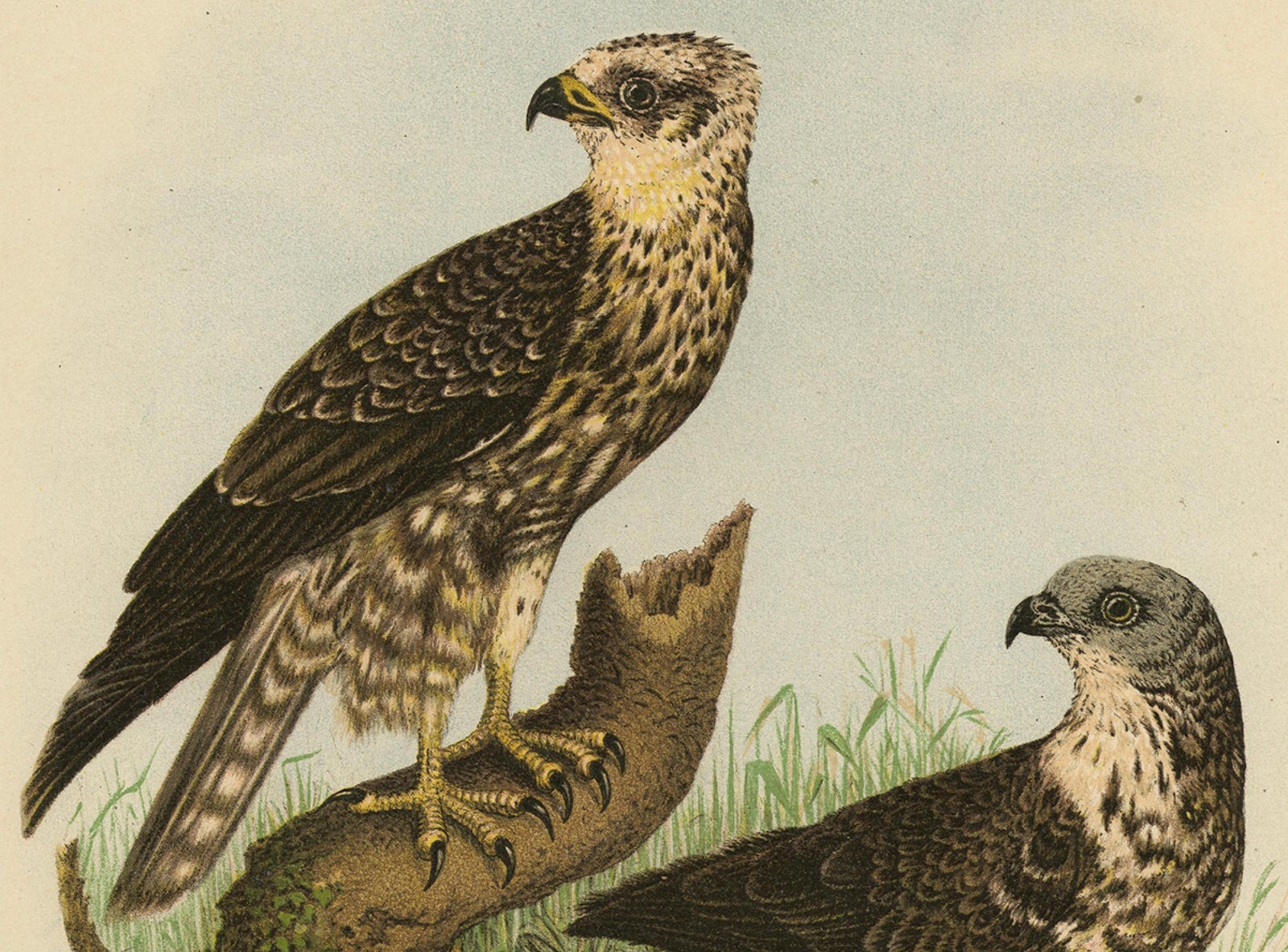
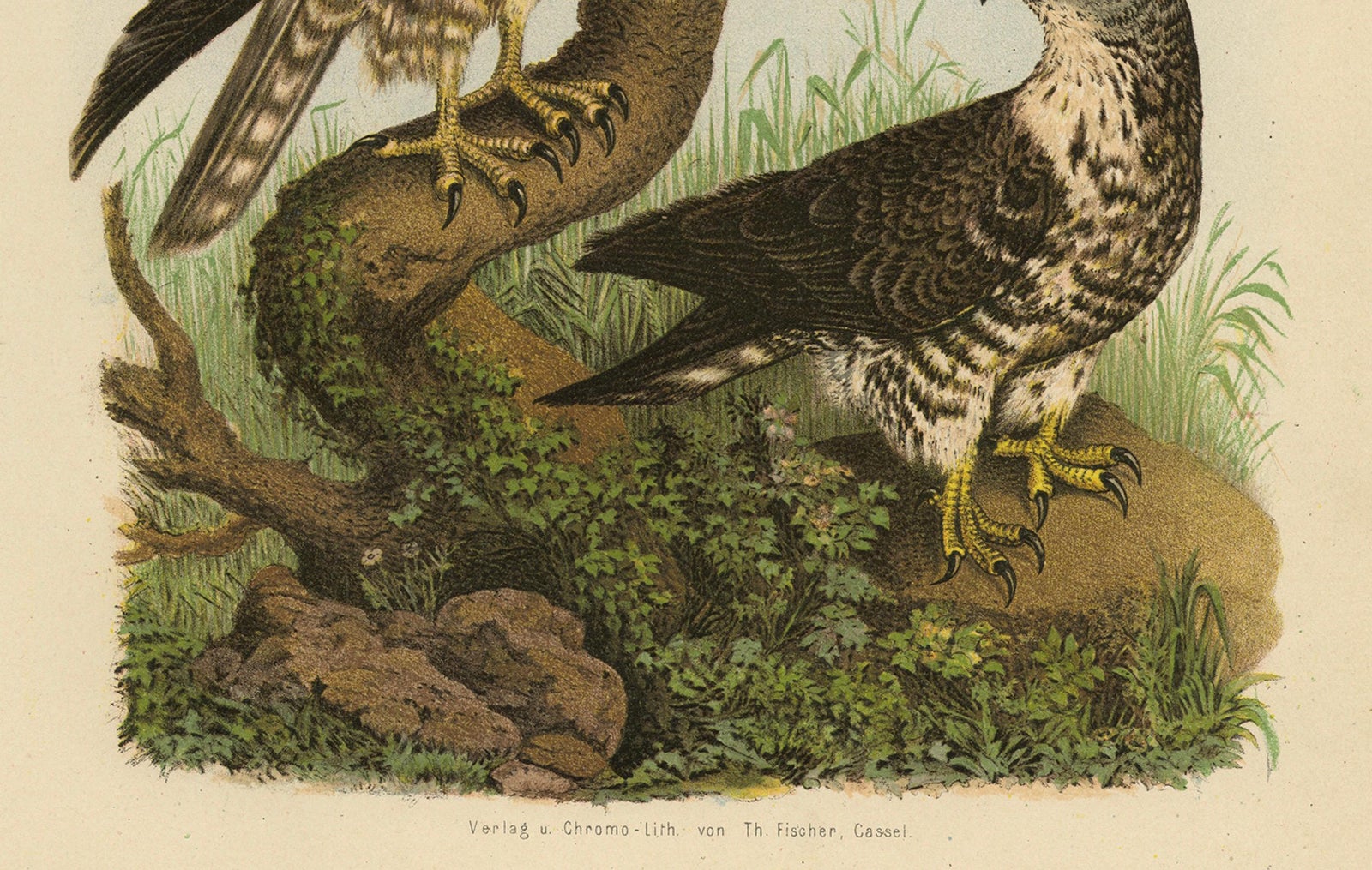
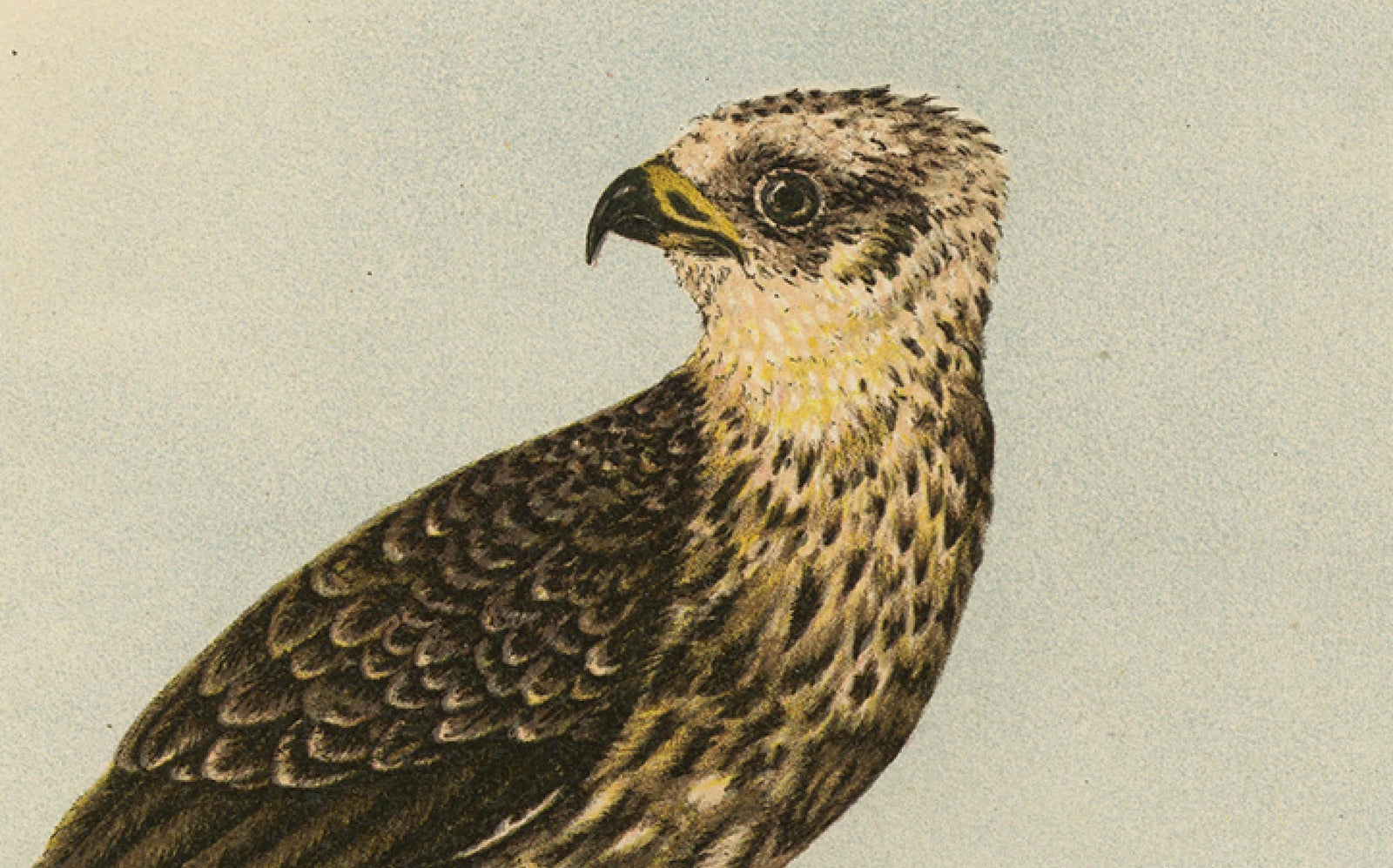
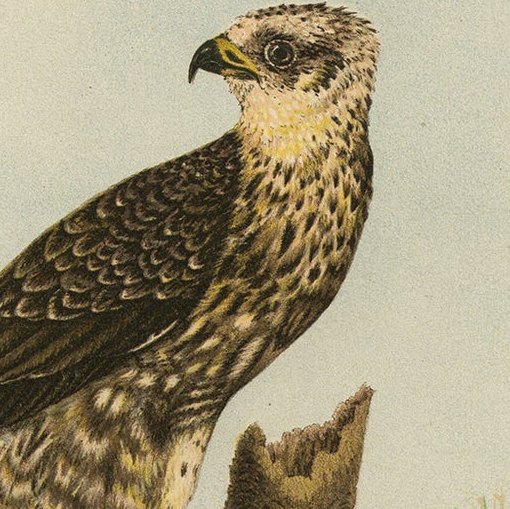
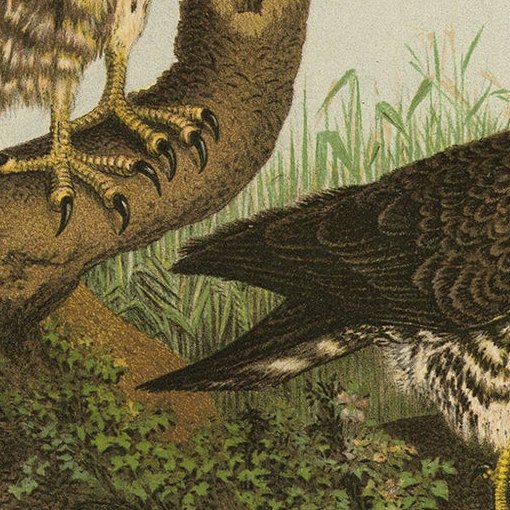
Close-ups
Framed and on the wall
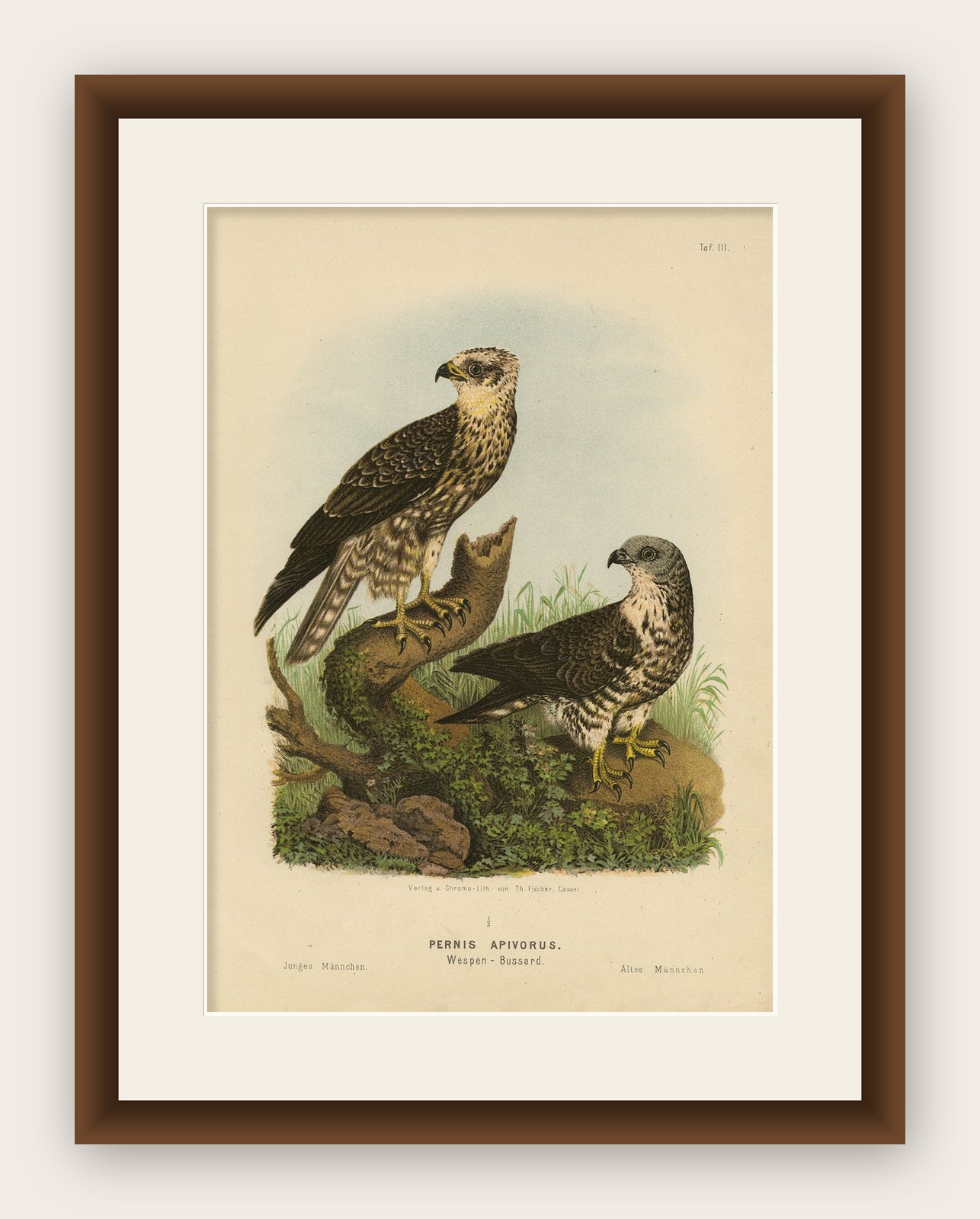
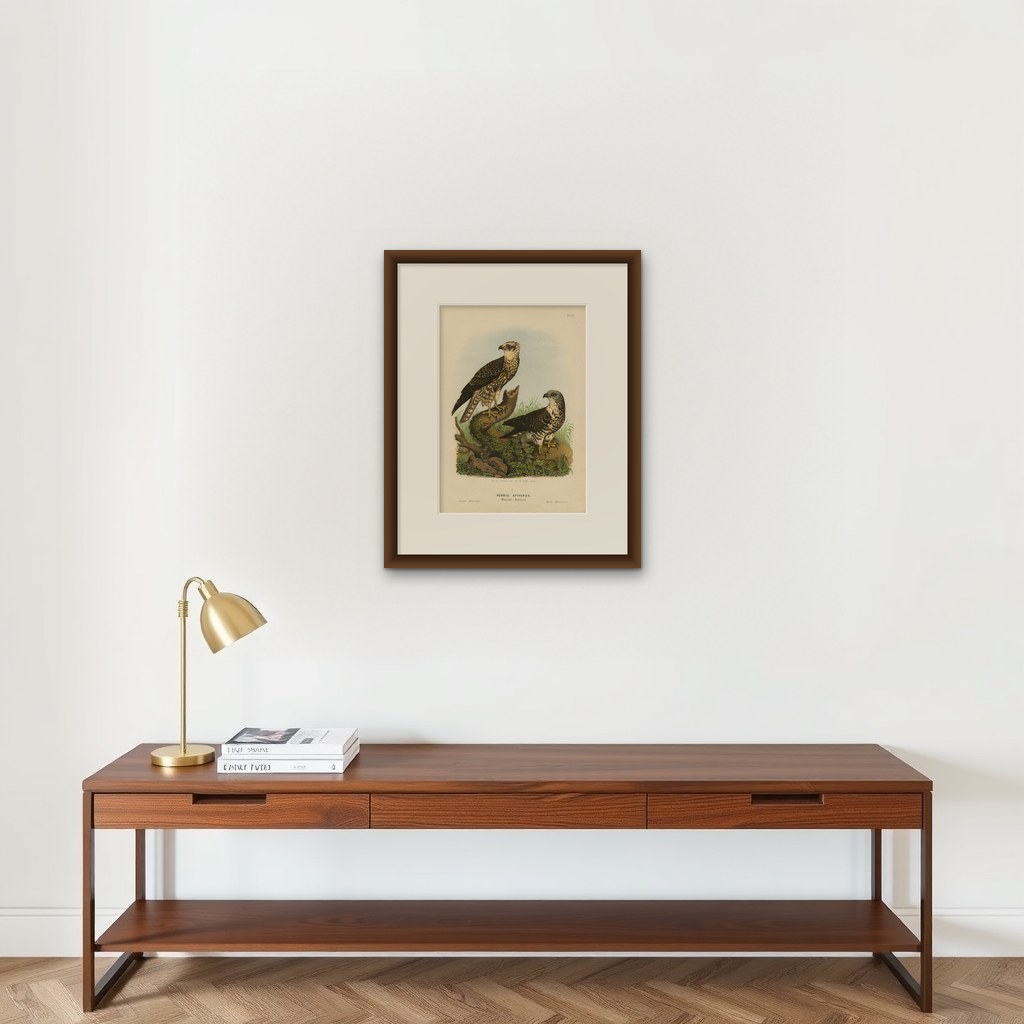

Frame and rooms are illustrations of how the print could look; the description says what is included.
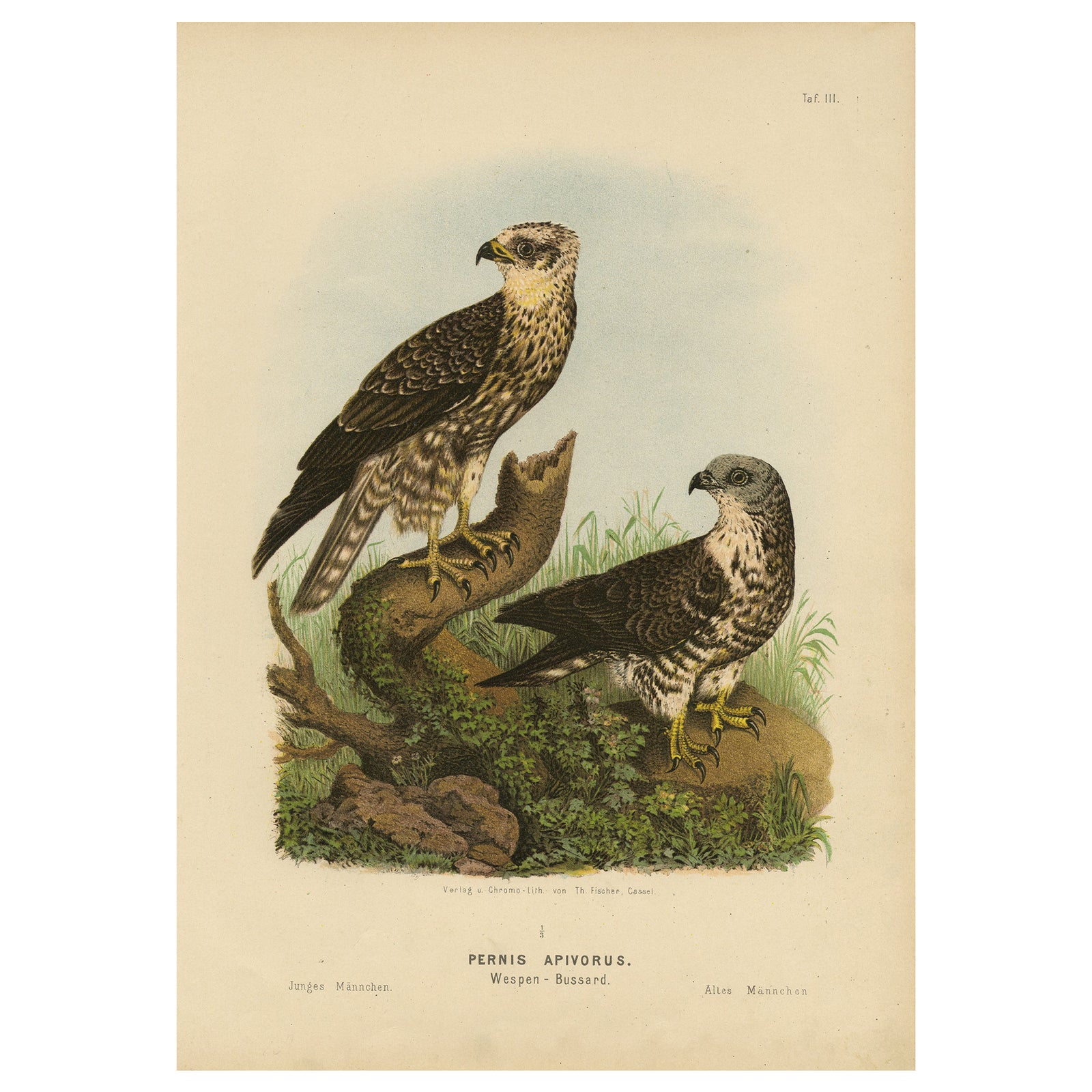
Honey Buzzards, Antique Bird of Prey Print, Natural History Illustration, 1894
£185 ($245, €220)
Period original, not a reproduction.
Shipped from the Netherlands, flat, insured and tracked, worldwide. Returns accepted within 14 days.
- Date
- 1894
- Size
- 15.6 × 11.3 in (39.5 × 28.7 cm)
- Condition
- Very good example with strong coloring. Mild toning and occasional light spotting at the margins, consistent with age, not affecting the image.
- Period
- Late 19th century
- Section
- Birds
- Reference
- f_46592532
Antique Print of Honey Buzzards by Oskar von Riesenthal, 1894
Description: Antique print (unframed), titled: 'Taf. III. Pernis Apivorus, Wespen-Bussard.', This finely detailed plate illustrates the European Honey Buzzard (*Pernis apivorus*), showing both a young male and an older male. The birds are depicted in a natural setting among foliage and rocks, highlighting their distinctive plumage and slender head shape, which differentiates them from the common buzzard. Known for their specialized diet of wasp larvae, honey buzzards are migratory raptors found across Europe and wintering in Africa.
This original antique print originates from 'Die Raubvögel Deutschlands und des angrenzenden Mitteleuropas' by Oskar von Riesenthal. Published in Gera by S. B. Griesbach in 1894. This is from the second edition of this celebrated plate set, first issued in 1876–78. Riesenthal’s work is regarded as one of the finest ornithological studies of Central European birds of prey, valued for its balance of scientific precision and artistic rendering.
Artists and Engravers: Julius Adolf Oskar von Riesenthal (1830–1898), German forester, ornithologist, hunter, and writer, after an anonymous artist. His illustrations are widely admired for their lifelike depictions and naturalistic detail.
Condition: Very good example with strong coloring. Mild toning and occasional light spotting at the margins, consistent with age, not affecting the image. The print is sold without a frame or matting board.
Framing tips: A double ivory mat paired with a dark walnut or black frame will emphasize the earthy tones of the birds, while a slim gilt inner liner adds a refined finish. Displayed alongside other raptor plates from the series, this print makes a strong visual and scientific statement.
Technique: Chromolithograph
Maker: Oskar von Riesenthal, Gera, 1894