Close-ups
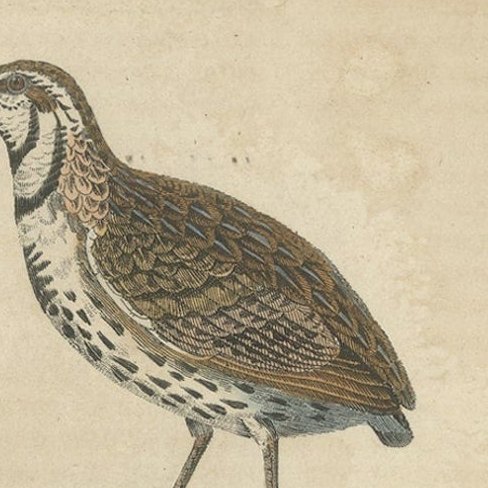
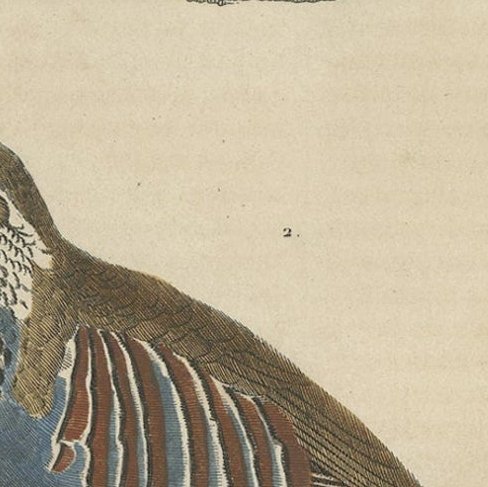
Framed and on the wall
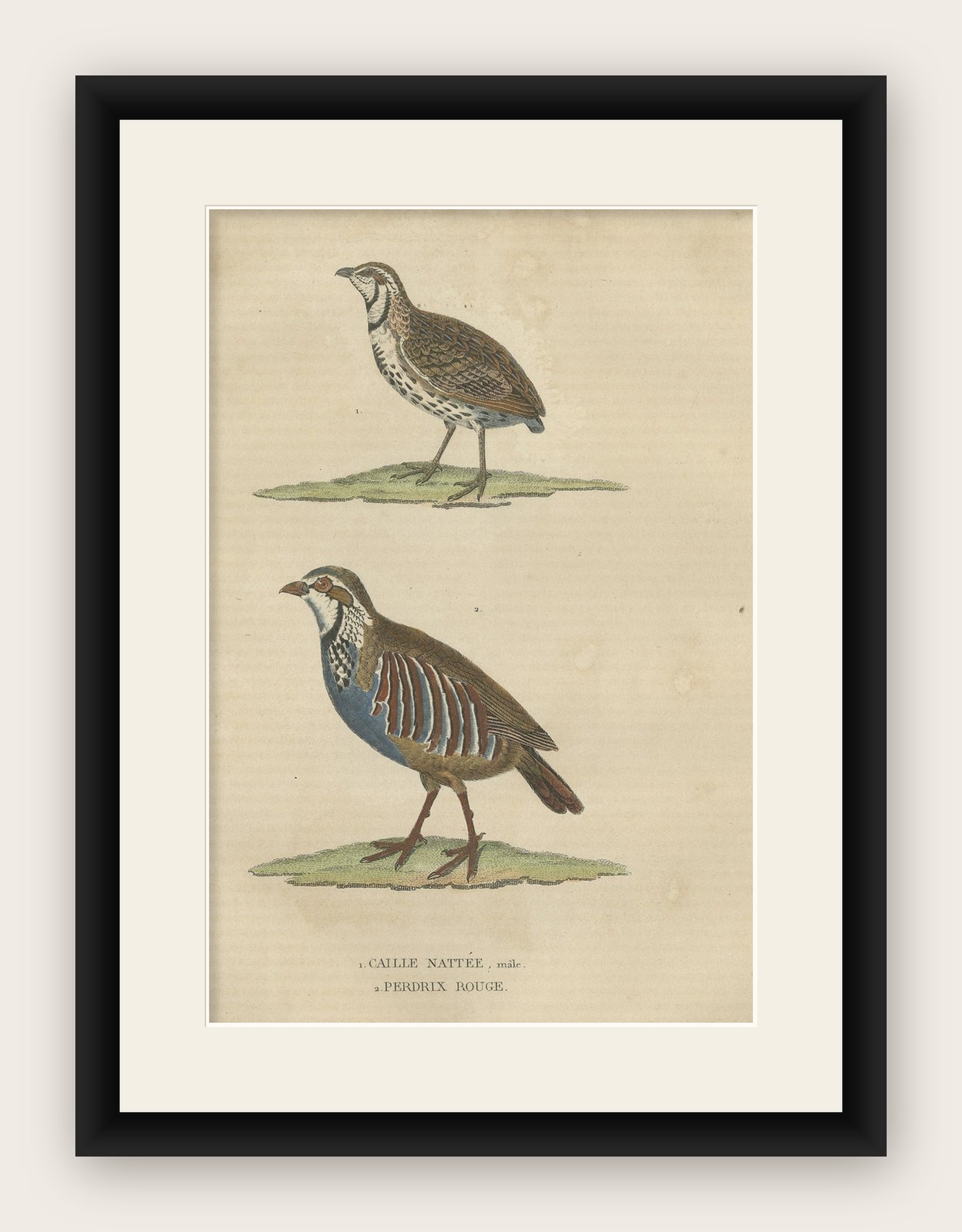
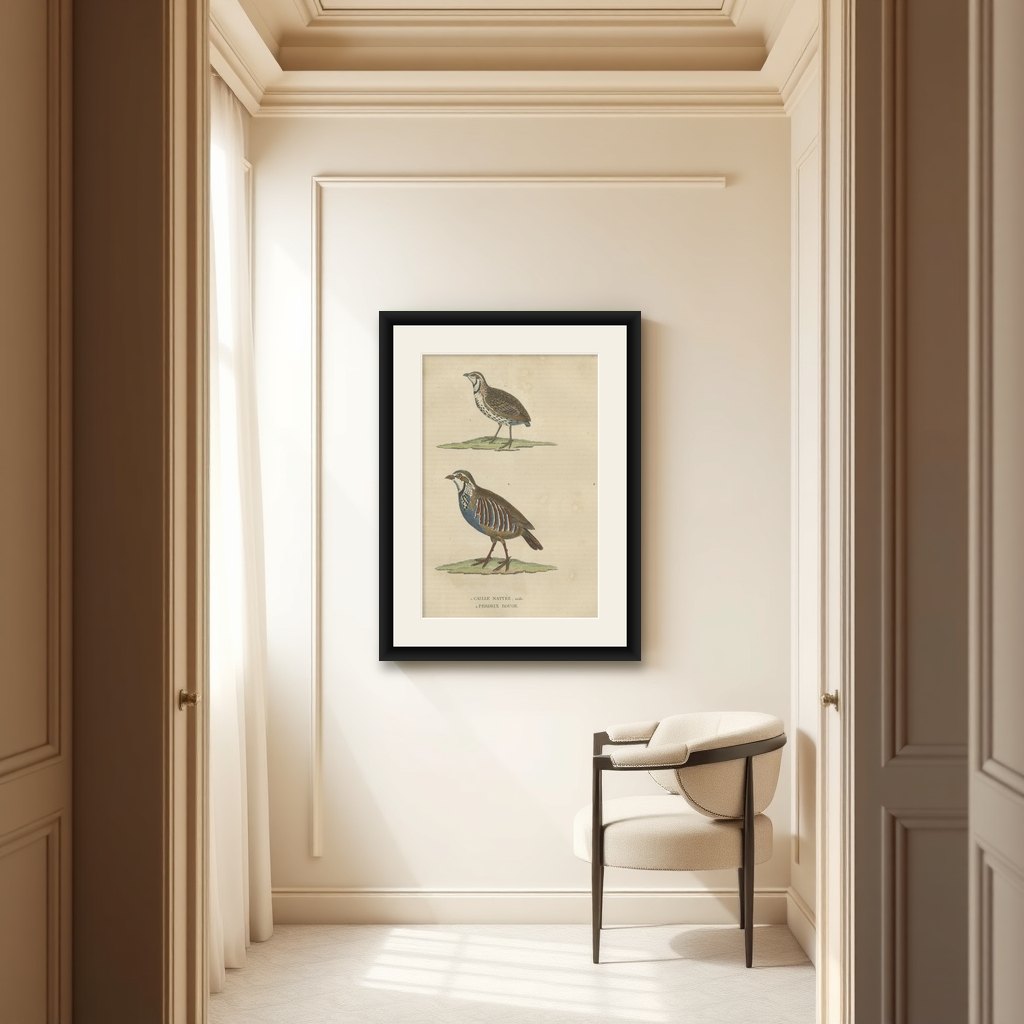
Frame and rooms are illustrations of how the print could look; the description says what is included.
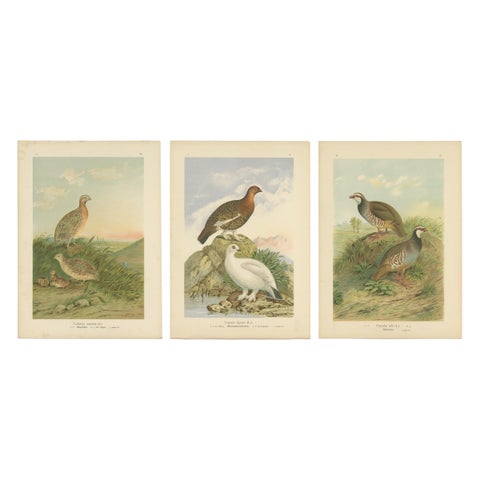
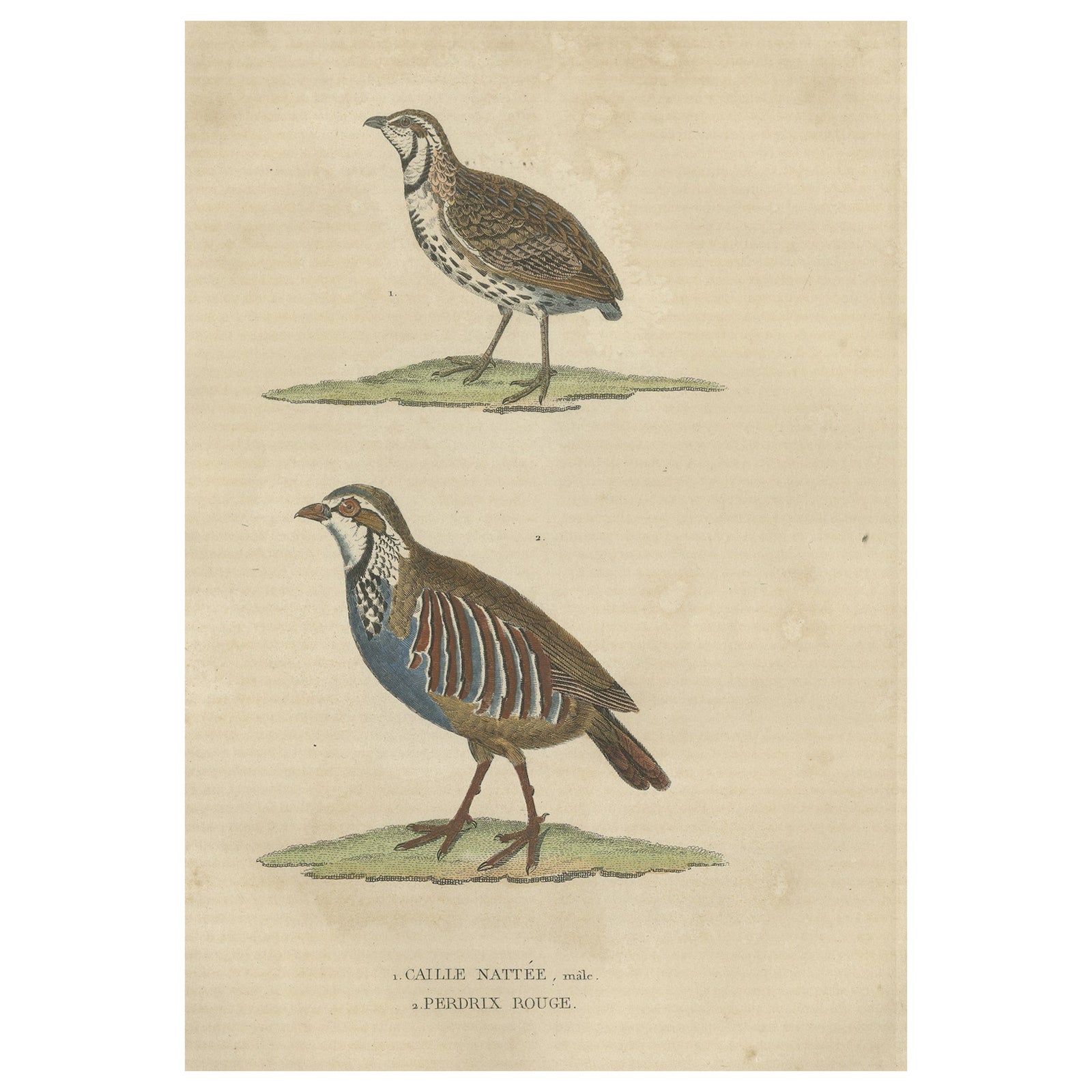
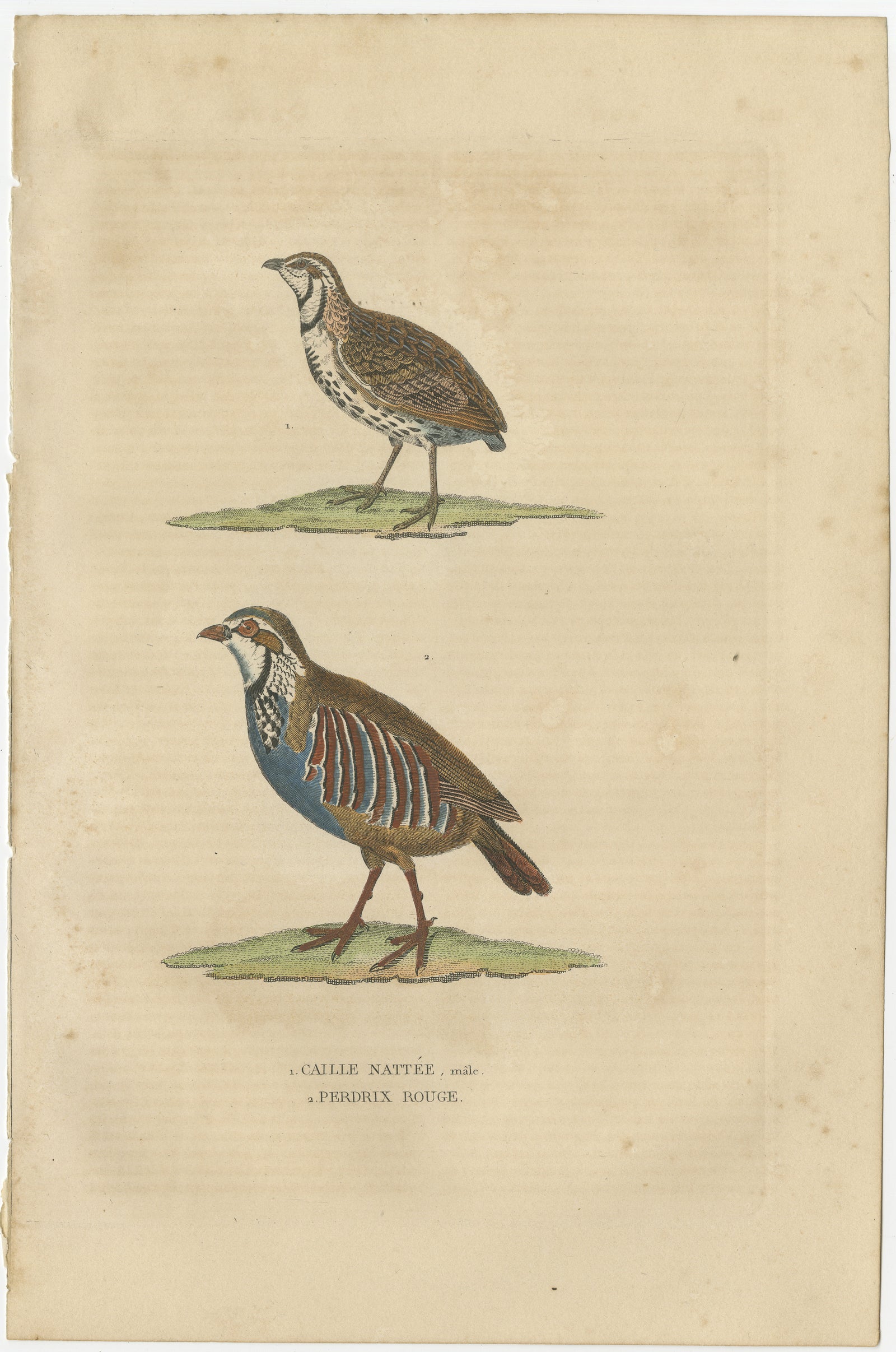
Handcolored Bird Print of a Male Quail and a Red-Legged Partridge
€170 ($190, £145, €170)
Period original, not a reproduction.
Shipped from the Netherlands, flat, insured and tracked, worldwide. Returns accepted within 14 days.
- Date
- Not stated
- Size
- 10.4 × 6.7 in (26.5 × 17 cm)
- Condition
- Good, given age. General age-related toning and/or occasional minor defects from handling. This small print is ideal for framing. Please study scan carefully.
- Section
- Birds
- Reference
- f_37301052
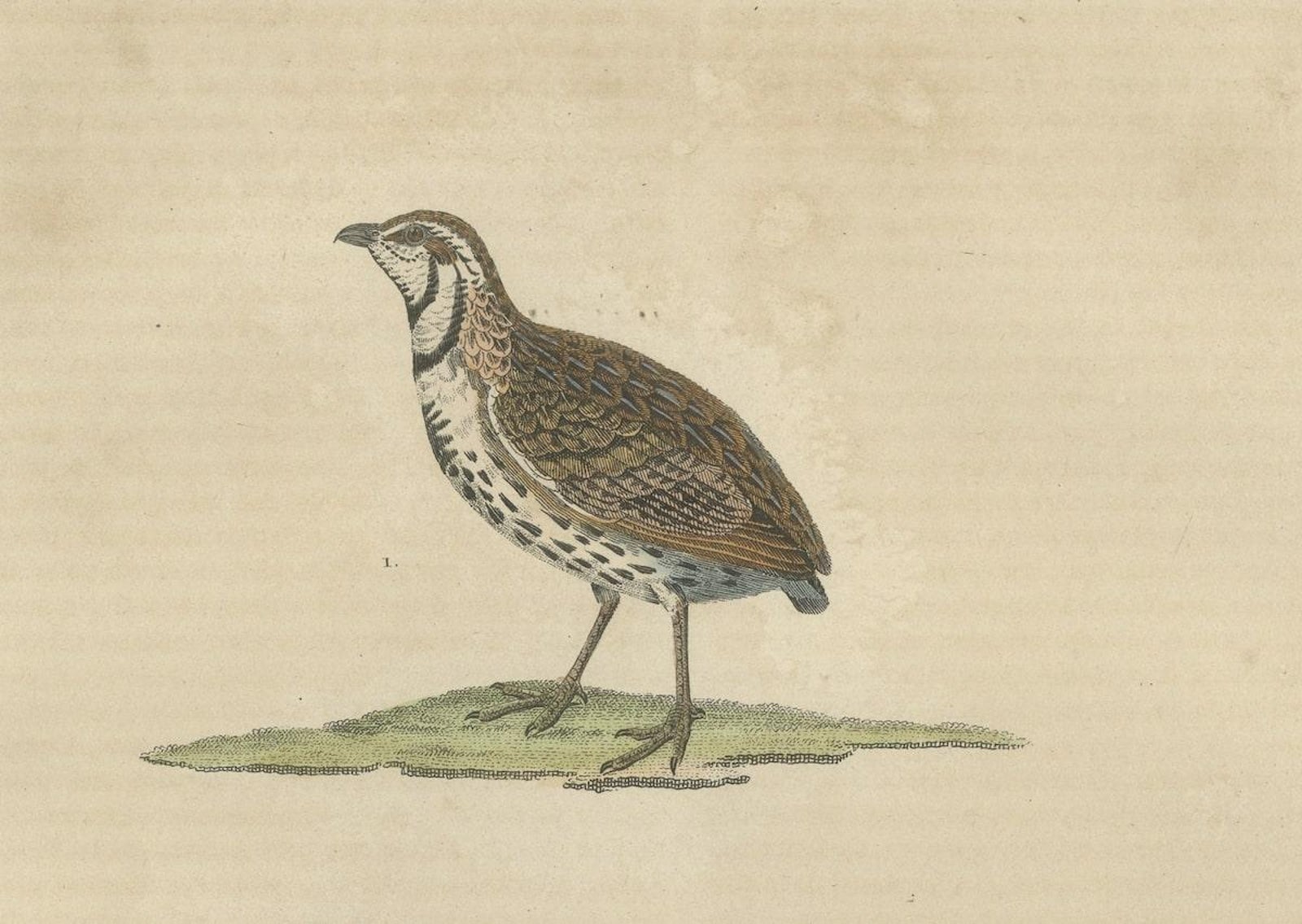
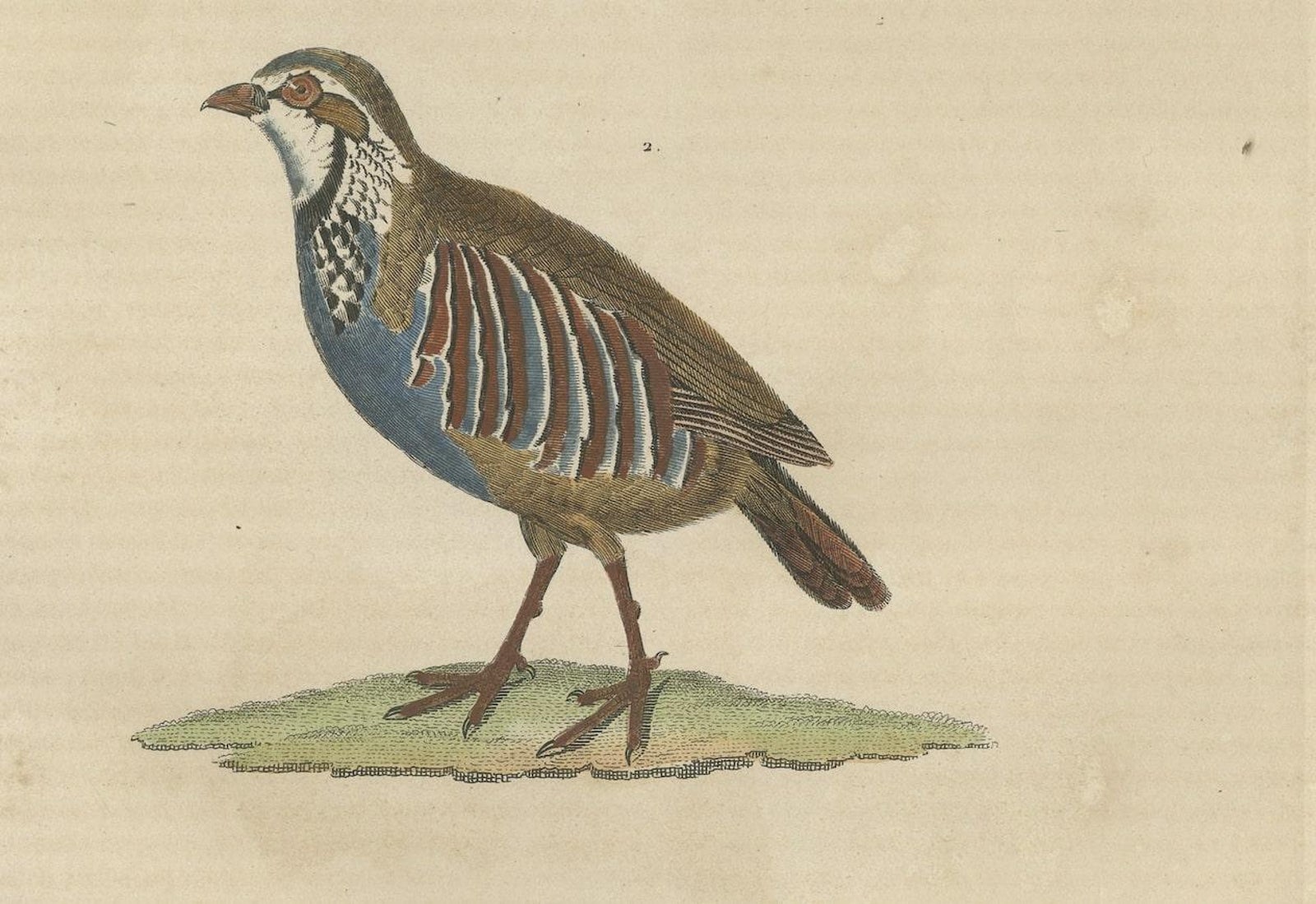
1. CAILLE NATTEE (MALE), 2. PERDRIX ROUGE.
The male Quail, a modestly sized ground-dwelling bird, features intricate speckled plumage, often showcasing warm earthy tones that blend seamlessly with its habitat. Its unassuming appearance belies its melodious call that resonates across grasslands and meadows during the breeding season, an enchanting element of its courtship ritual. Favored for its delicious flesh, this bird, though small, holds cultural significance in various cuisines worldwide.
Contrastingly, the Red-legged Partridge boasts striking features: a russet face adorned with vibrant red legs, contrasting sharply against its mottled brown plumage. A staple of European countryside landscapes, this game bird's robust build and distinctive call contribute to its iconic presence. With an affinity for nesting on the ground, these birds epitomize resilience, thriving in diverse habitats and captivating with their spirited behavior.
More info on the book in which it was published:
The 'Dictionnaire Classique des Sciences Naturelles' by Pierre Auguste Joseph Drapiez stands as a remarkable testament to 19th-century natural sciences. Published in Brussels in 1845, this work represents an expansive collation of knowledge, building upon the pioneering works of Buffon, Daubenton, Lacepede, Cuvier, de Jussieu, and other influential naturalists.
The prints within this compendium likely showcase a rich amalgamation of artistic precision and scientific accuracy. Drapiez, himself a Belgian naturalist, would have aimed for detailed representations of flora, fauna, and scientific phenomena, mirroring the illustrative styles prevalent during his time. Given the era's emphasis on illustration, these prints were likely engraved meticulously, possibly portraying intricate anatomical details or lifelike depictions of the natural world.
With Drapiez's background in natural history, the prints might bear testament to his commitment to scientific authenticity, aiming to educate and inspire scholars and enthusiasts alike. These engravings would have complemented the text, offering visual aids that elucidate the concepts and specimens discussed in the volume.
Overall, the prints of 'Dictionnaire Classique des Sciences Naturelles' likely serve as both artistic representations and invaluable scientific resources, encapsulating the essence of 19th-century natural history exploration and documentation.