Close-ups
Framed and on the wall
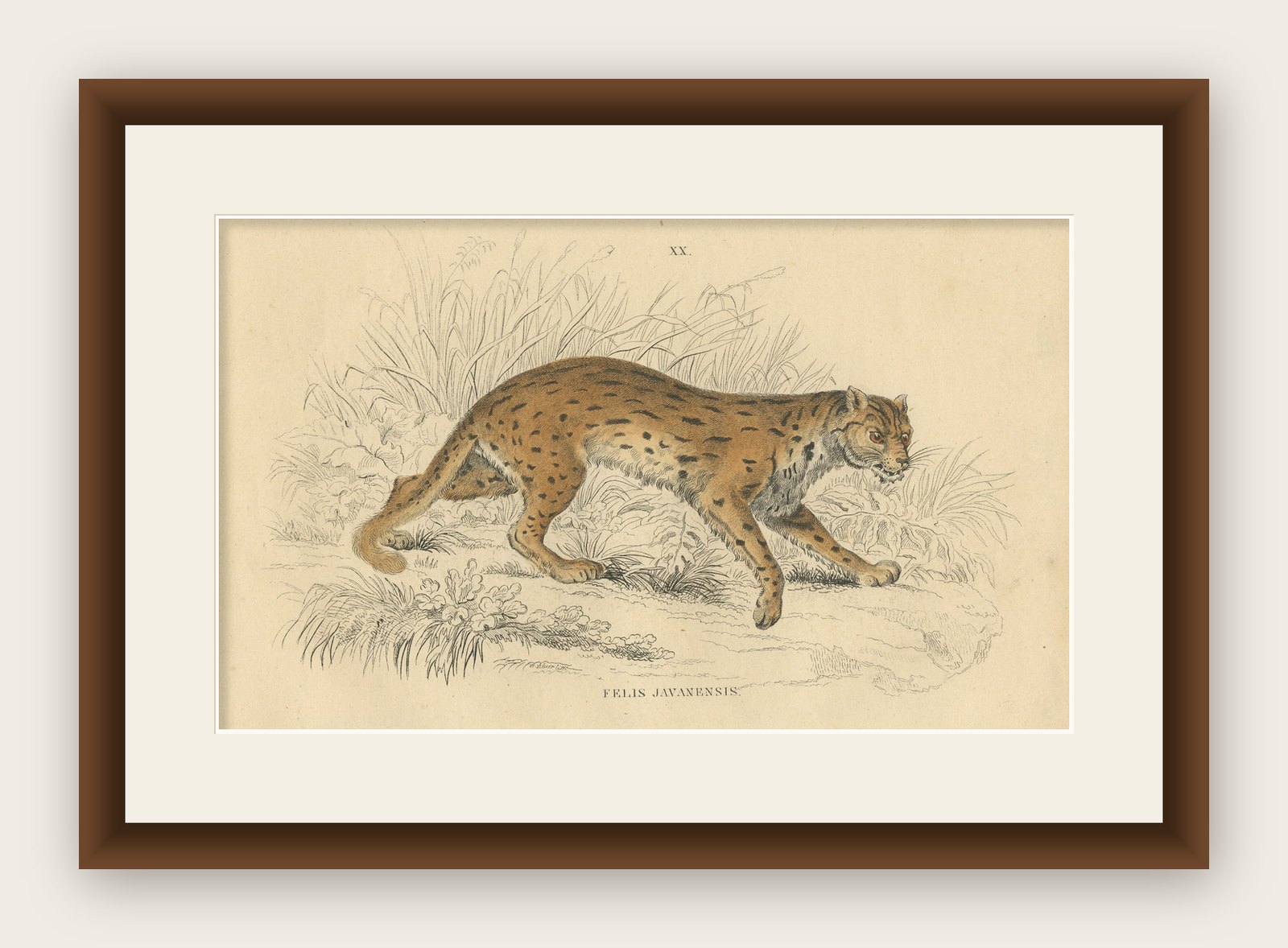



Frame and rooms are illustrations of how the print could look; the description says what is included.
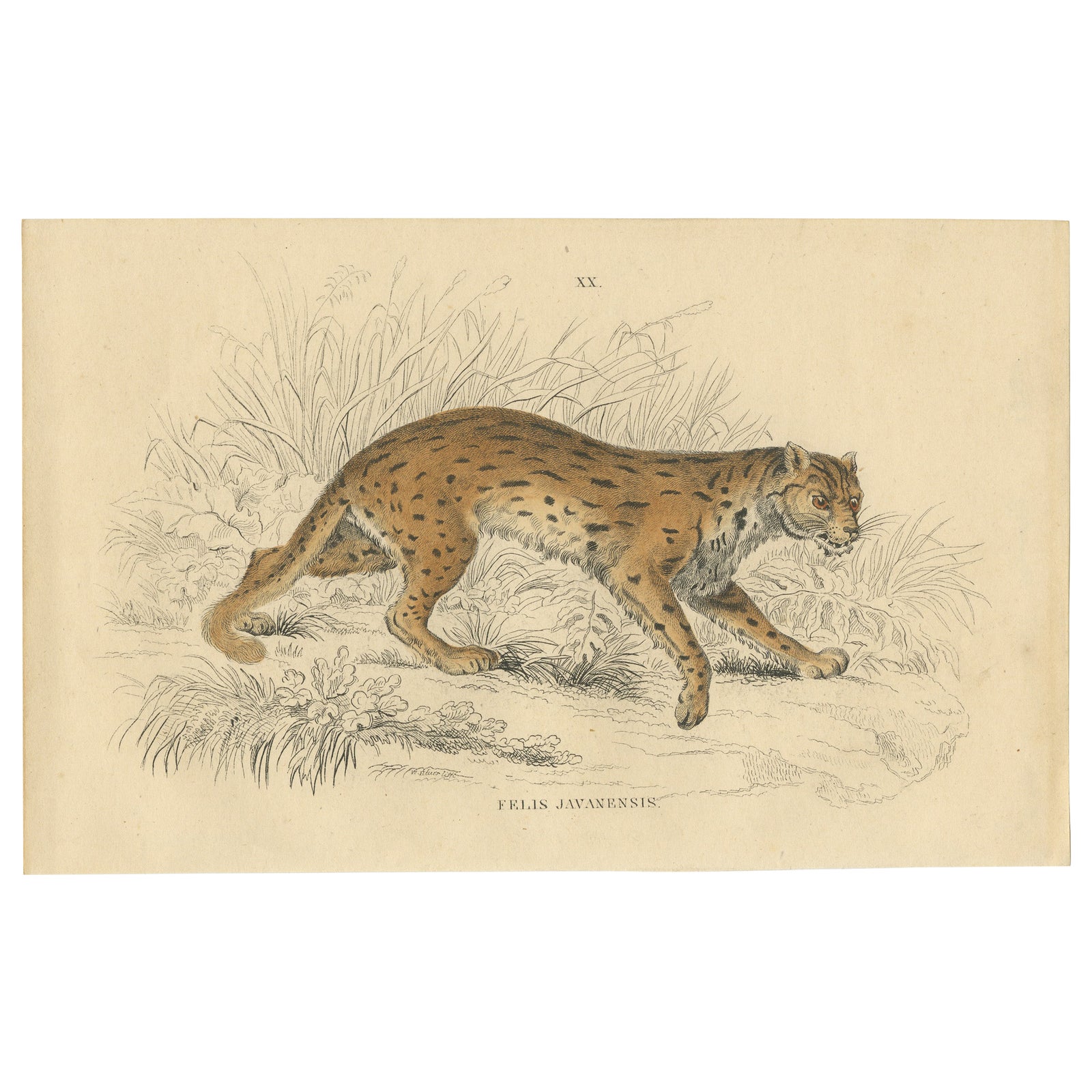
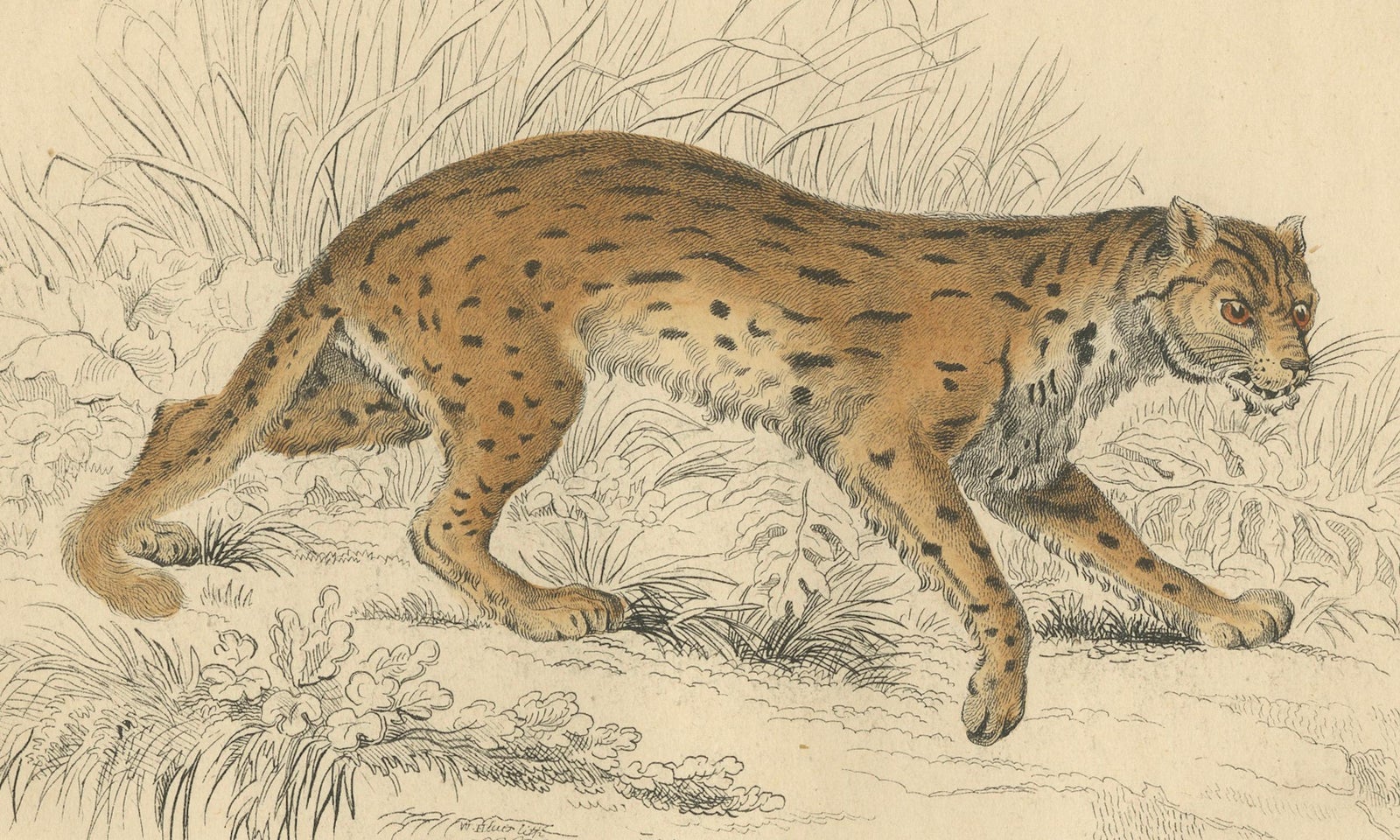
Hand-Colored Print of the Javan Leopard from Jardine's Natural History, 1860
€95 ($105, £80, €95)
Period original, not a reproduction.
Shipped from the Netherlands, flat or rolled, insured and tracked, worldwide. Returns accepted within 14 days.
- Date
- 1860
- Size
- 4.3 × 6.9 in (11 × 17.5 cm)
- Condition
- Good, given age. Some soiling and eneral age-related toning and/or occasional minor defects from handling. Please study scan carefully.
- Period
- Late 19th century
- Artist or book
- Sir William Jardine
- Section
- Mammals
- Reference
- f_39952042
- Color
- Hand colored
What the condition grades mean
- Excellent
- Bright and clean, with no faults worth mentioning.
- Very good
- Only light signs of age, such as faint toning.
- Good
- Normal signs of age for a sheet of this period: toning, some foxing, small marks or neat old repairs.
- Fair
- Clear faults such as staining, tears or repairs, priced to match.
Every fault we see is written in the condition note, and the whole sheet is shown uncropped in the photos.
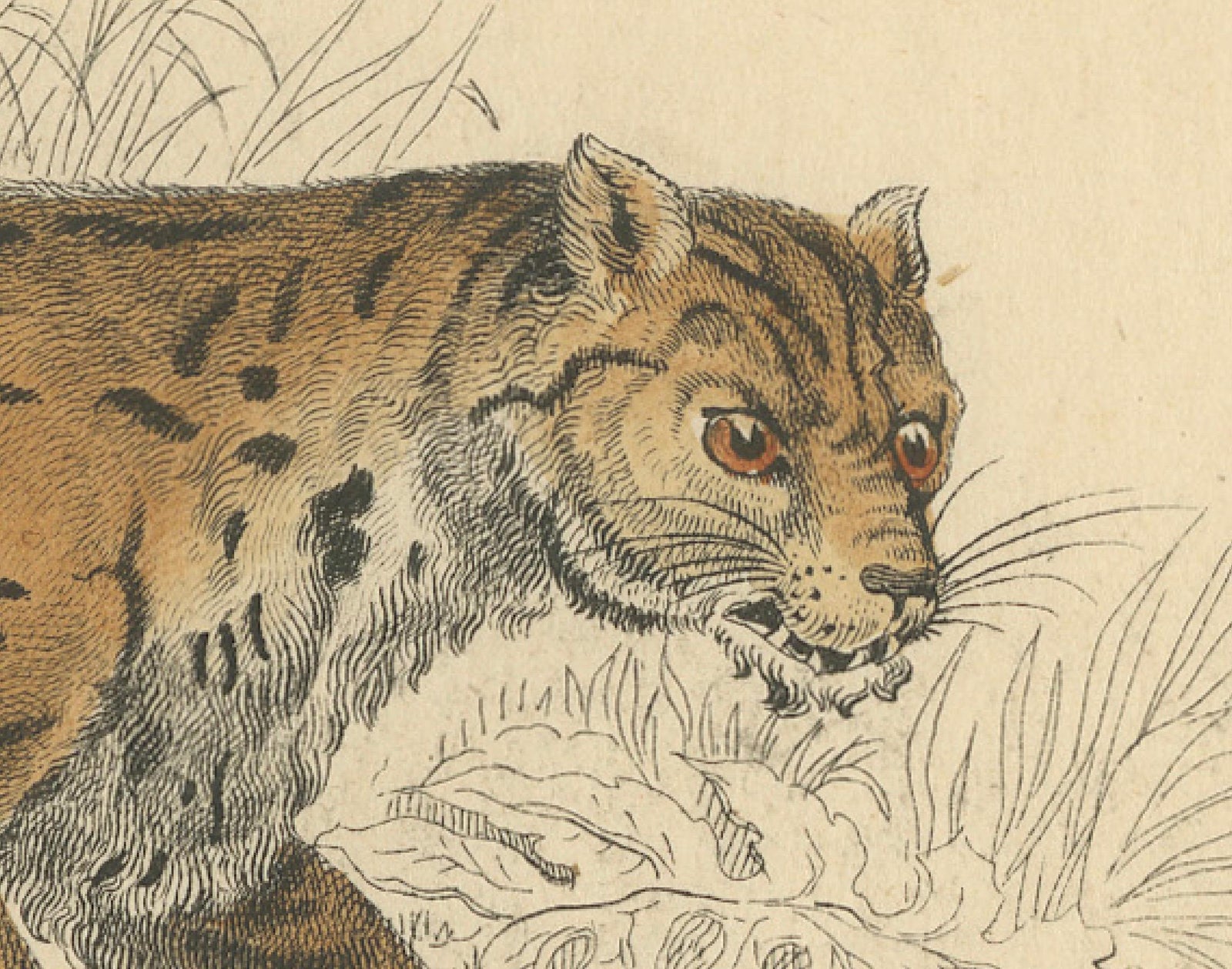
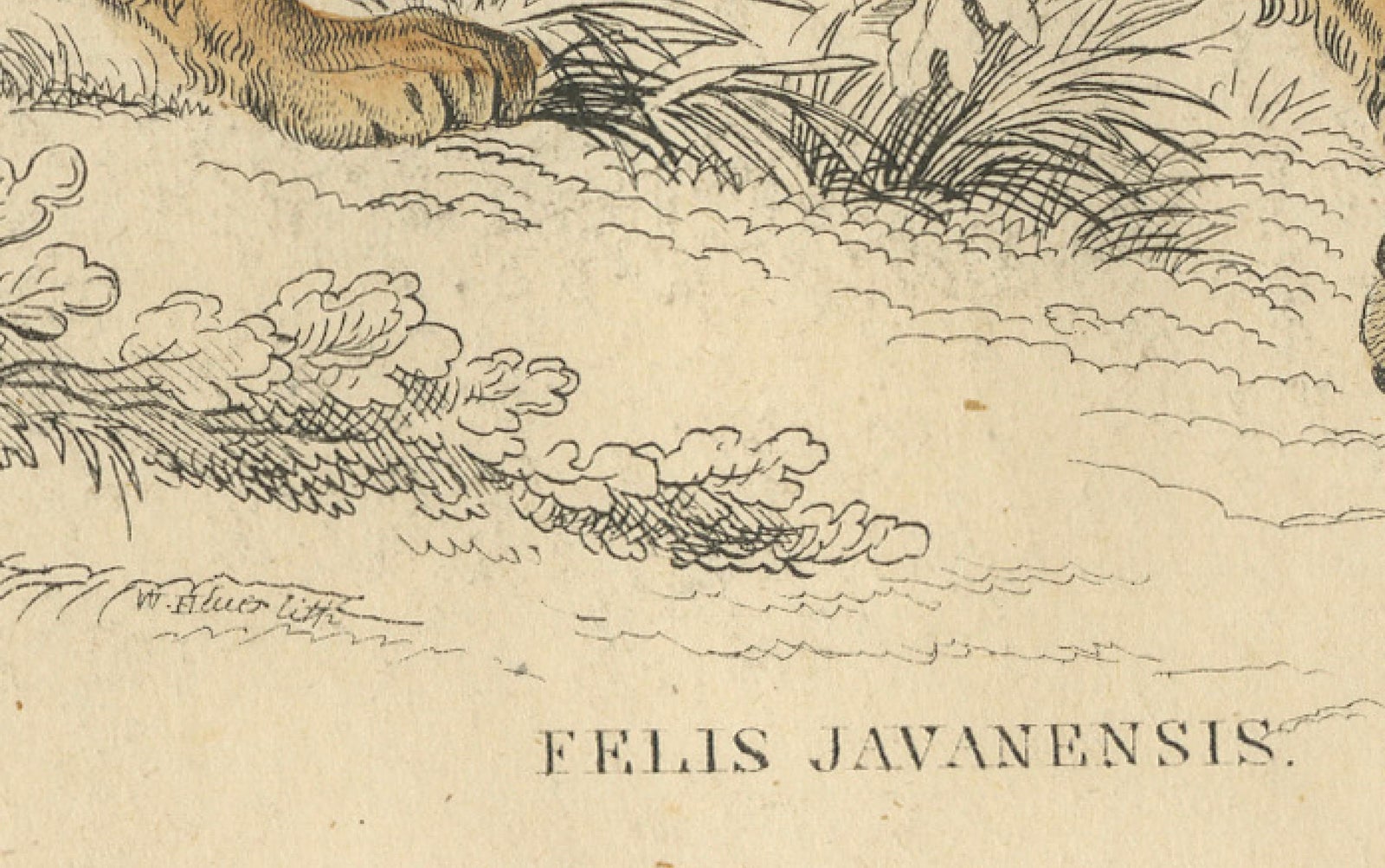
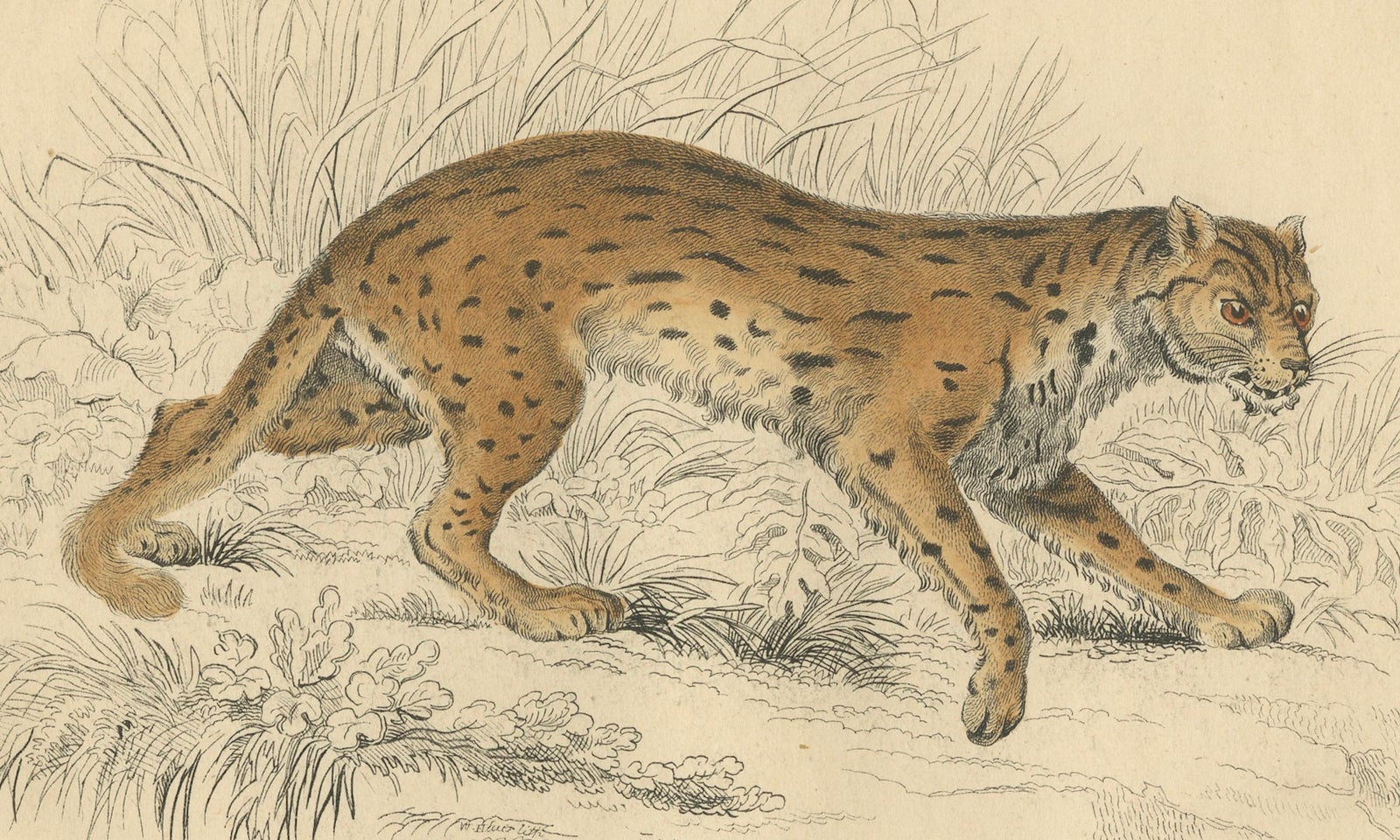
A hand-colored illustration from Jardine's Natural History, published around 1860. It depicts the species Felis Javanensis, commonly known as the Javan leopard. The illustration is a detailed, hand-drawn and colored depiction of the leopard in a naturalistic pose, walking through a grassy environment. The leopard has a slender body with distinct spots and a long tail, indicative of its species. The background features detailed foliage, adding to the natural setting of the illustration. The name "Felis Javanensis" is inscribed below the image, confirming the species depicted. The drawing style is characteristic of 19th-century natural history illustrations, combining scientific accuracy with artistic detail.
The Javan leopard (Panthera pardus melas), previously referred to as Felis javanensis, still exists. It is a subspecies of leopard native to the Indonesian island of Java. However, the Javan leopard is critically endangered due to habitat loss, poaching, and depletion of its natural prey. Conservation efforts are ongoing to protect and preserve the remaining population of this rare leopard.
The Javan leopard (Panthera pardus melas), an endangered subspecies of leopard native to the Indonesian island of Java, has an estimated population of around 188 to 571 mature individuals. This population is fragmented across 22 isolated landscapes, with only a few areas capable of supporting long-term survival due to habitat fragmentation and human encroachment.
Recent efforts to obtain more accurate data on the Javan leopard population include extensive surveys using surveillance cameras across various landscapes in Java. Preliminary estimates suggest that there might be around 319 individuals remaining in the wild. Conservation initiatives focus on habitat protection, creating corridors to connect isolated populations, and addressing human-leopard conflicts to ensure the species' survival.