Close-ups
Framed and on the wall
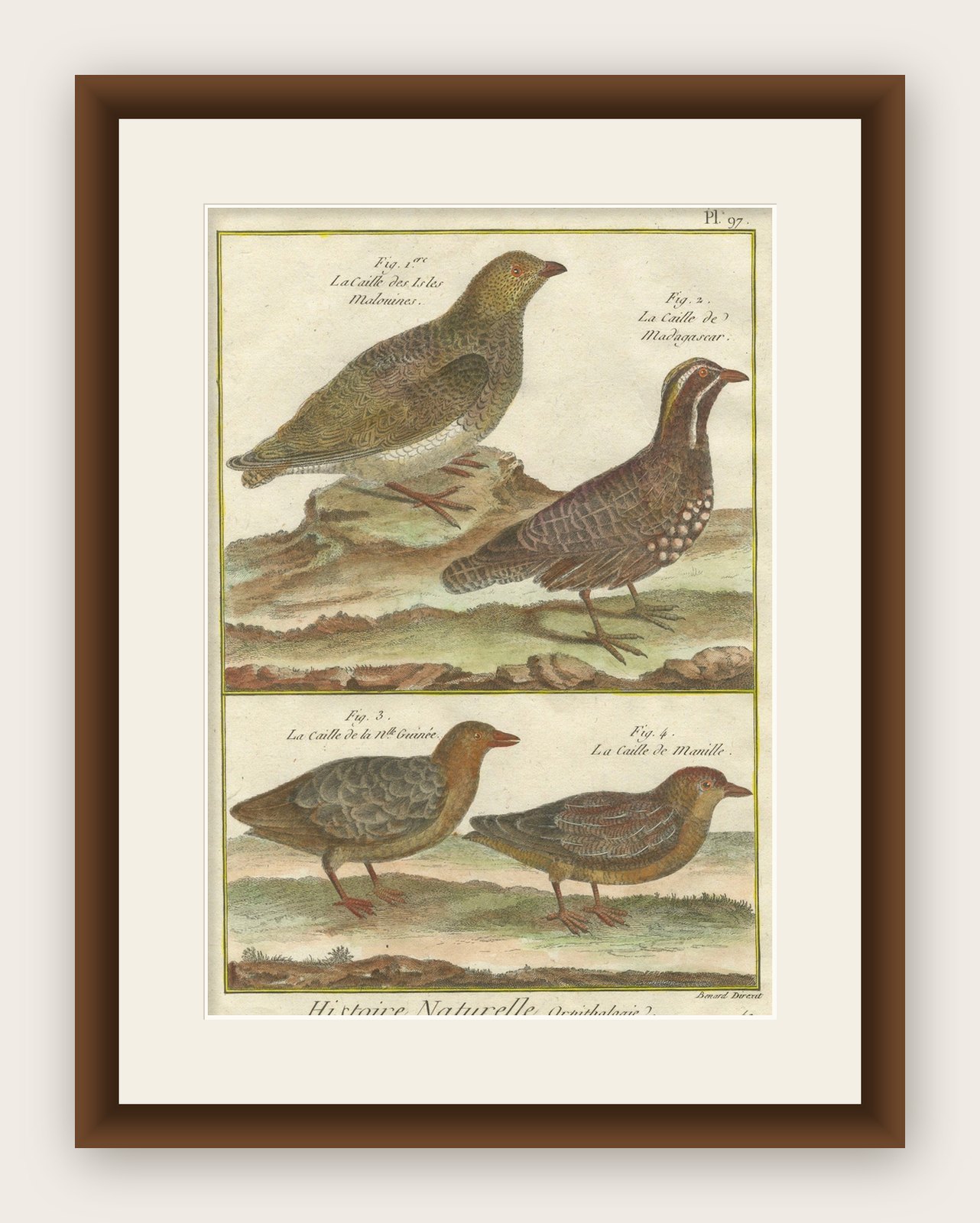
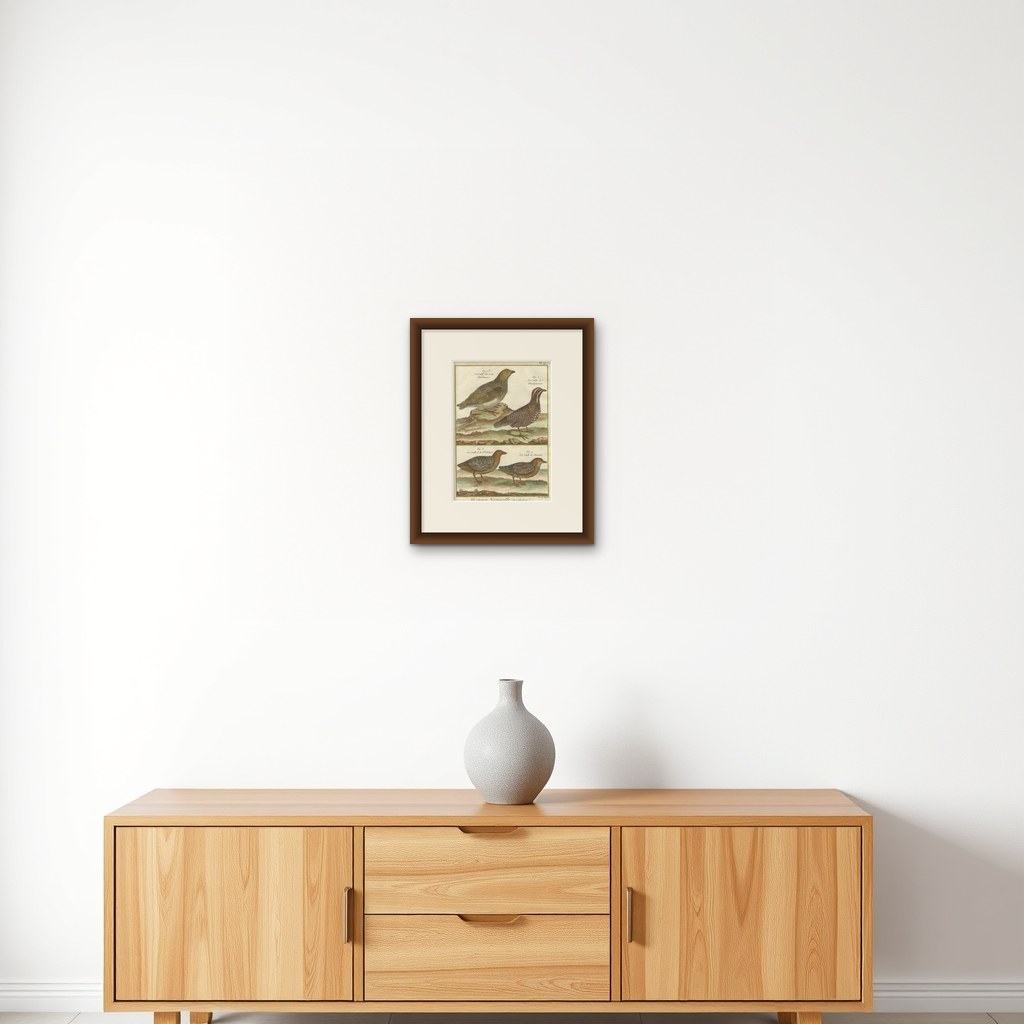
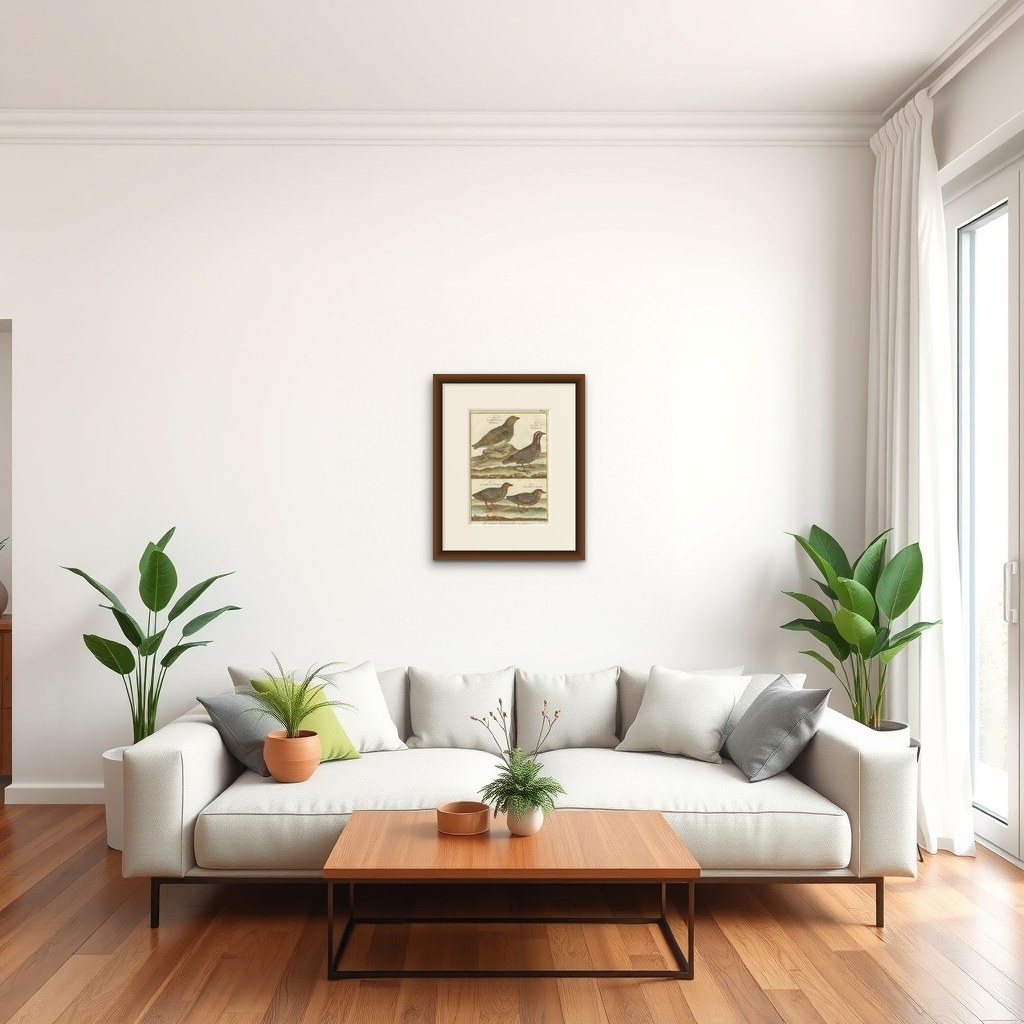
Frame and rooms are illustrations of how the print could look; the description says what is included.
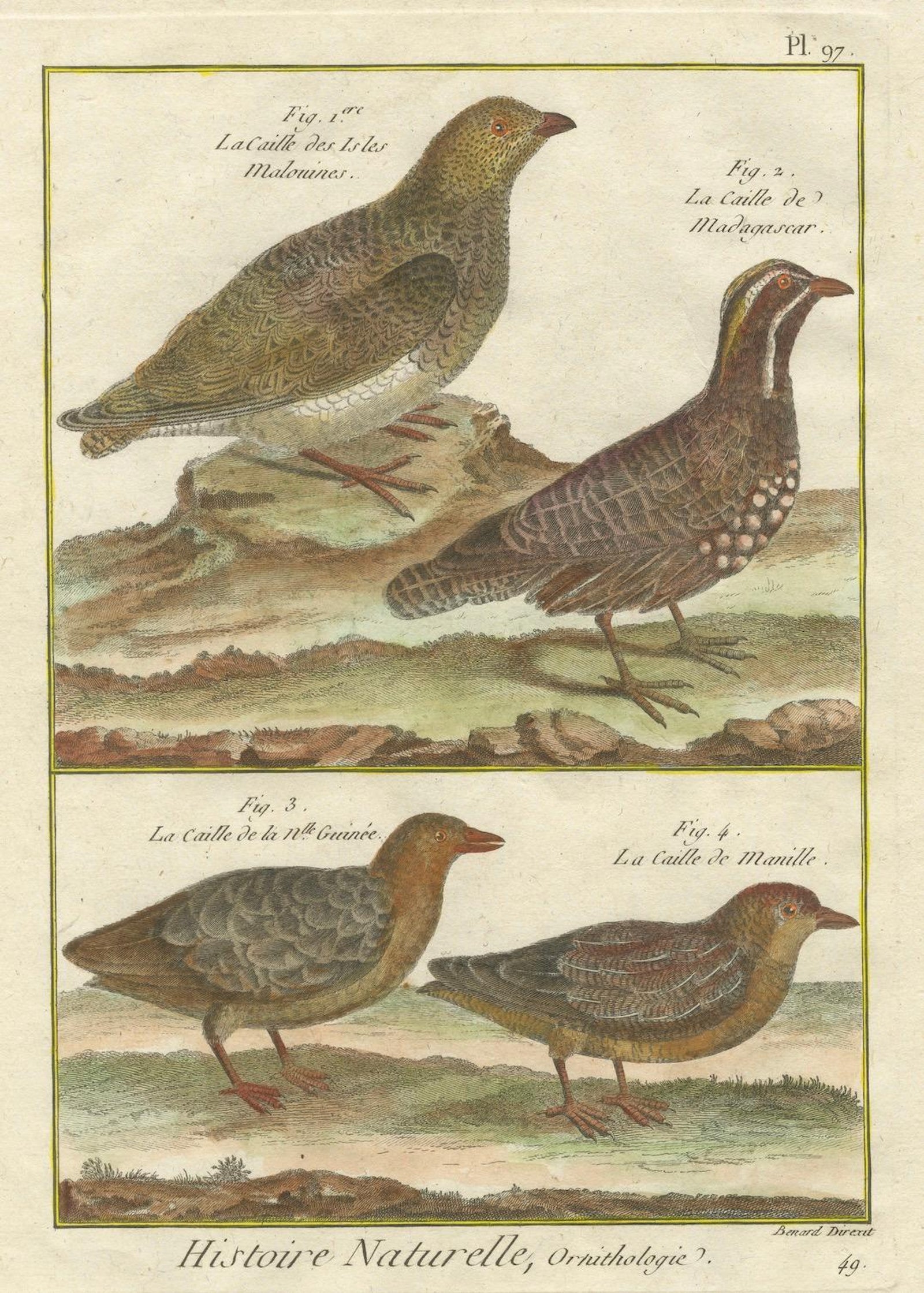
Hand-Colored Engraving of Global Quail Species from Histoire Naturelle, 1790
£110 ($145, €130)
Period original, not a reproduction.
Shipped from the Netherlands, flat, insured and tracked, worldwide. Returns accepted within 14 days.
- Date
- 1790
- Size
- 12.2 × 8.7 in (31 × 22 cm)
- Condition
- Good, given age. Rough outside the platemark but image is fine. Contemporary hand-colouring. General age-related toning and occasional minor defects from handling. Please study scans carefully.
- Period
- 18th century
- Section
- Birds
- Reference
- f_41462582
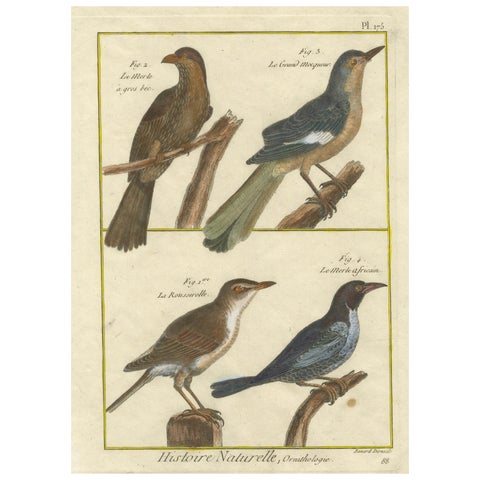
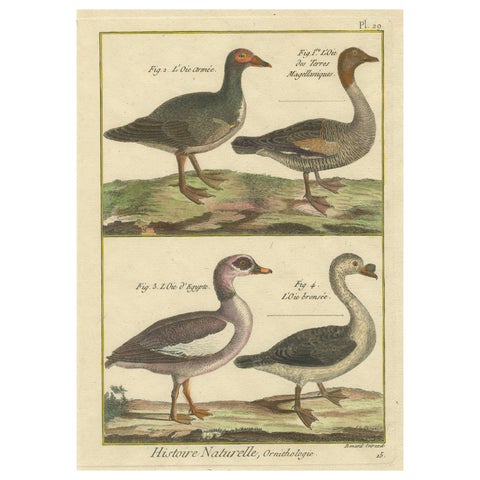
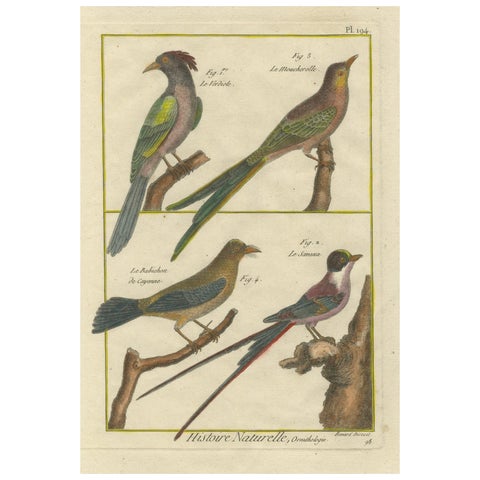
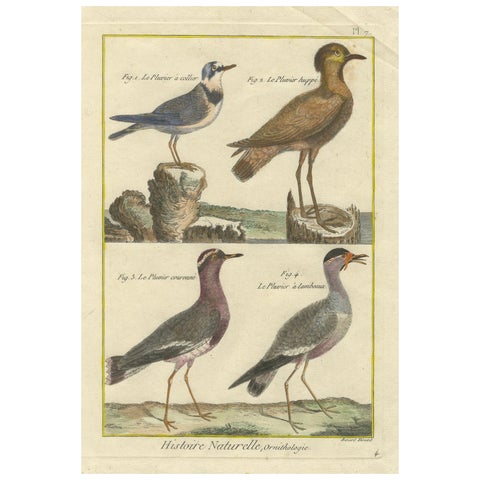
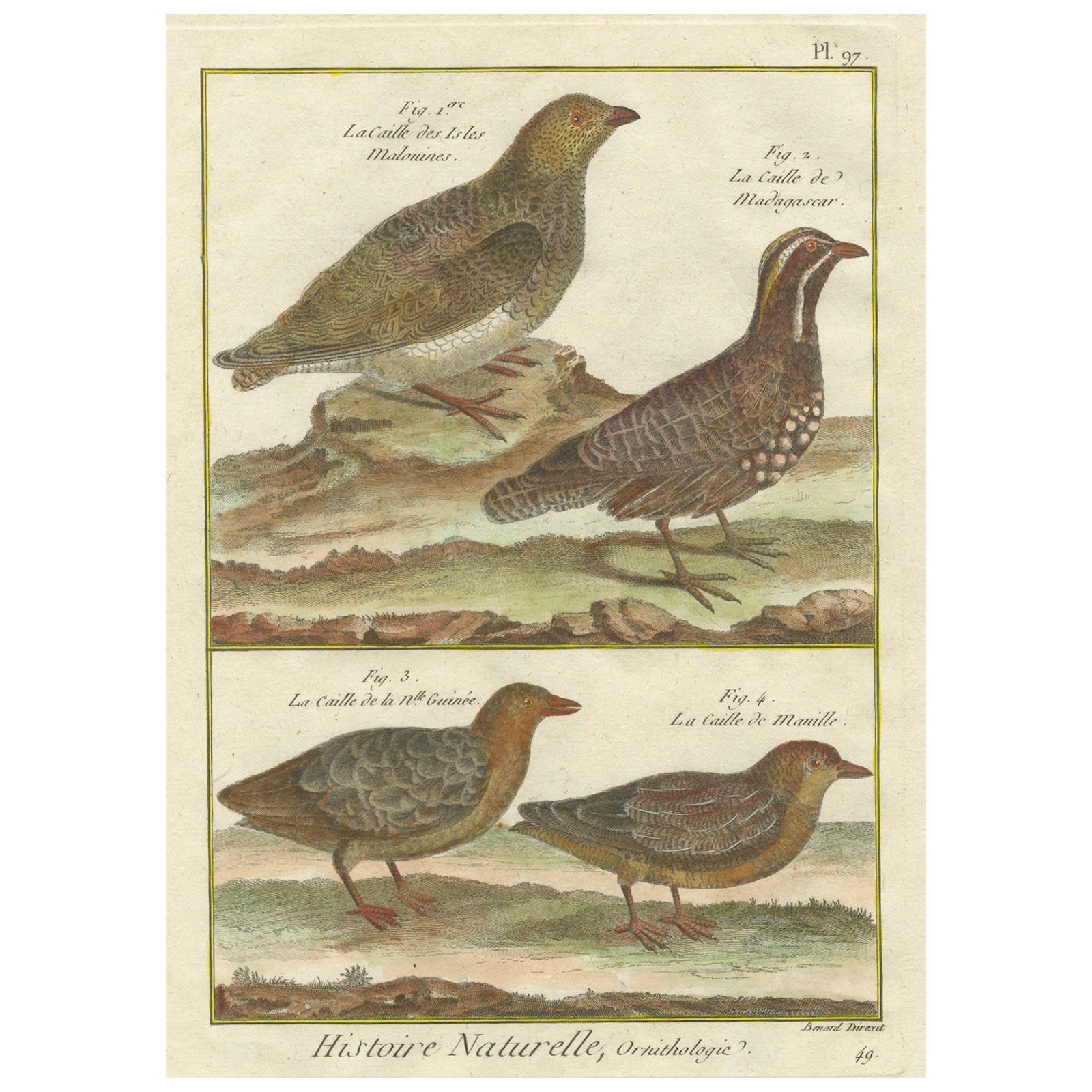
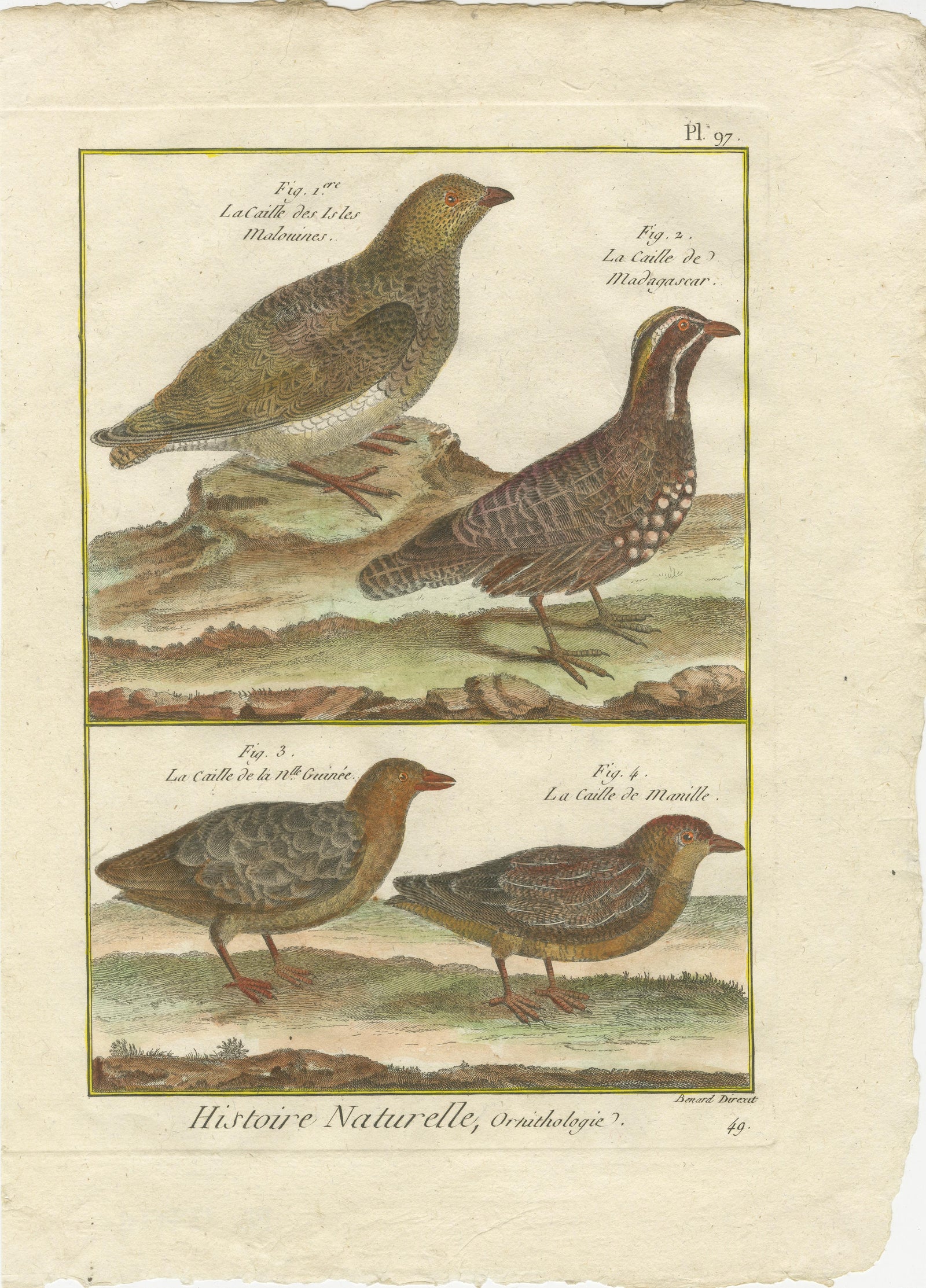
This engraving is a hand-colored copperplate print by Robert Benard, part of the *Histoire Naturelle* from the *Encyclopédie Méthodique*, circa 1790. It depicts various species of quails (*Cailles*), which were commonly found in different parts of the world. The engraving displays four distinct types of quails, illustrating their regional differences.
Birds Depicted (Translation and Descriptions):
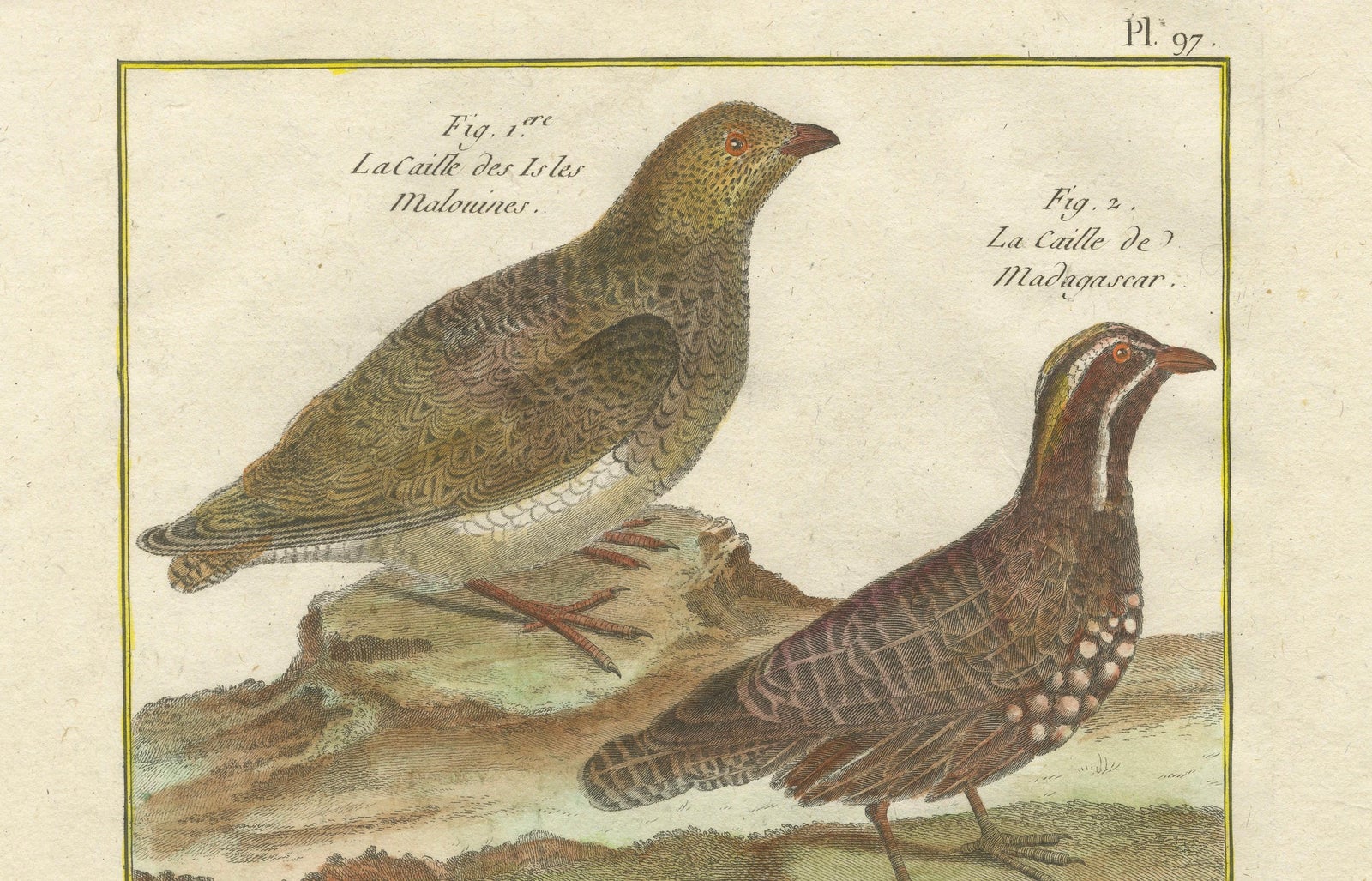
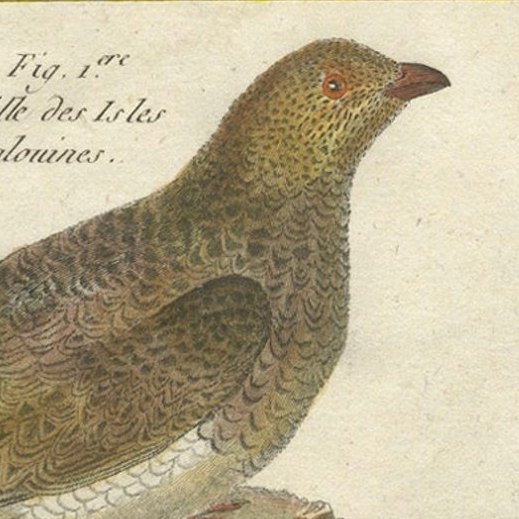
1. Fig. 1: La Caille des Isles Malouines (Falkland Islands Quail):
- The bird illustrated is a quail species native to the Falkland Islands (*Malouines* in French). Quails are small, ground-dwelling birds that are known for their short, stocky builds and their rapid bursts of flight. The plumage in this engraving shows detailed feather patterning, likely representing the earthy tones typical of quails.
2. Fig. 2: La Caille de Madagascar (Madagascar Quail):
- This bird represents a species of quail native to Madagascar, an island with rich biodiversity. Quails on Madagascar would likely inhabit grasslands and open areas. The detailed engraving shows a bird with distinctive stripes, suggesting a species with unique regional characteristics, adapted to the specific ecosystems of Madagascar.
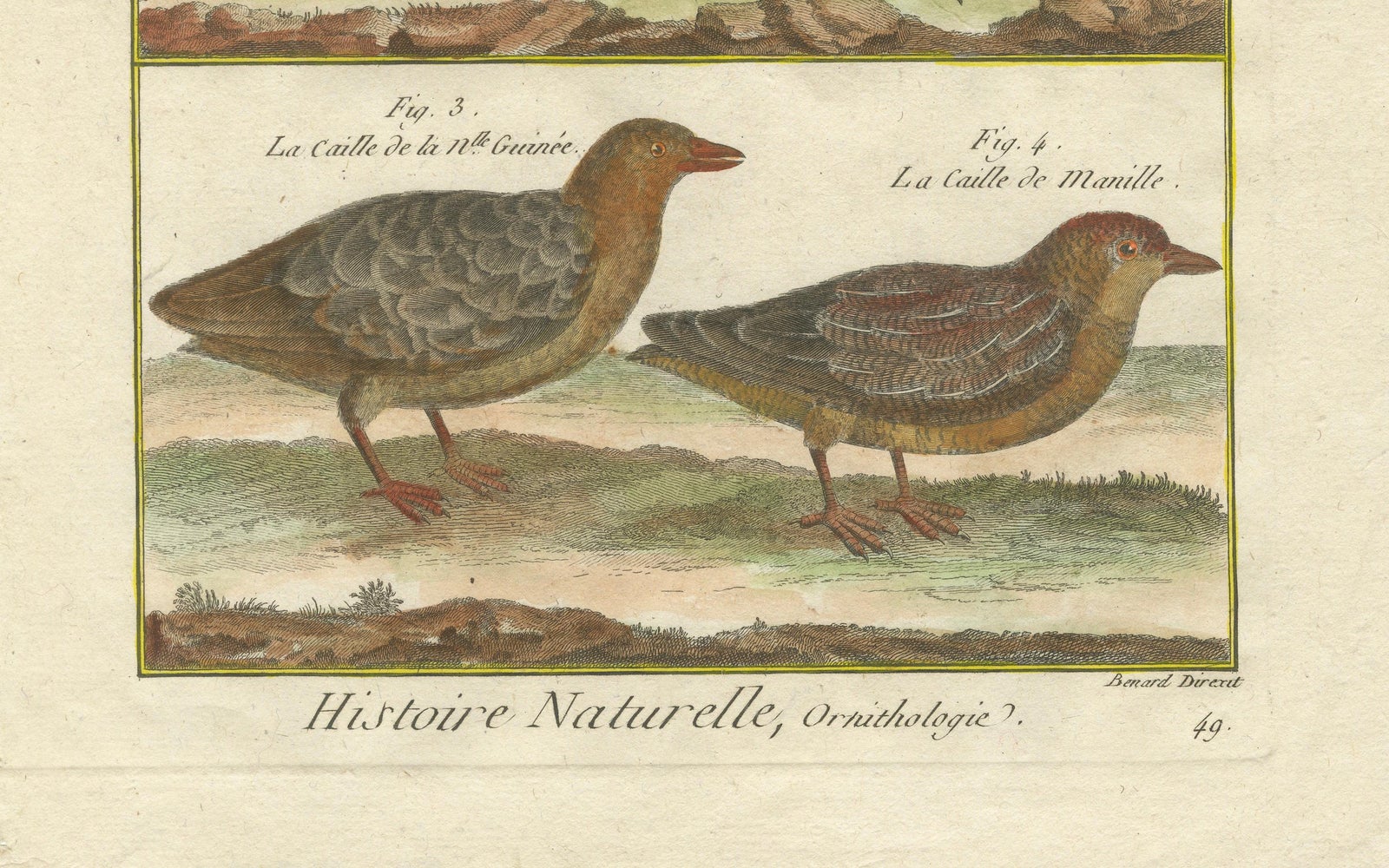
3. Fig. 3: La Caille de la Nlle Guinée (New Guinea Quail):
- This bird represents a quail species from New Guinea. The bird’s compact body and simple coloring reflect the typical traits of ground-dwelling quails. Quails from New Guinea would inhabit dense forests or savannas, and the engraving emphasizes their small size and stout appearance.
4. Fig. 4: La Caille de Manille (Manila Quail):
- This quail species is depicted as being from Manila (Philippines). Quails in this region are often found in tropical or subtropical forests, as well as in cultivated fields. The engraving captures the bird’s proportions, with its short legs and rounded body, typical of quails.
Current Habitat and Conservation Status:
- Falkland Islands Quail: Although specific species of quails in the Falkland Islands are not well documented, quails generally inhabit grasslands and open areas. Quails in these regions are likely not under immediate threat.
- Madagascar Quail: Quails from Madagascar would typically inhabit grasslands or forests. Madagascar is known for its high biodiversity, but habitat loss is a concern for many species on the island.
- New Guinea Quail: Found in New Guinea’s diverse habitats, from dense forests to open grasslands. Many species in this region face habitat destruction.
- Manila Quail: Quails from the Philippines are often associated with cultivated lands and forests. Many bird species in the Philippines face threats due to deforestation and habitat destruction.
Printmaking Technique:
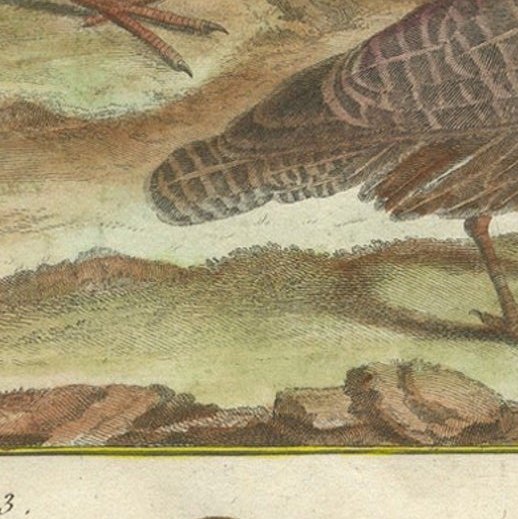
The copperplate engraving technique is used once again in this illustration, with intricate line work that captures the delicate feather patterns and small details of these quail species. The hand-coloring emphasizes the natural, earthy tones of the birds, which helps bring the species to life for the viewer. As part of the *Histoire Naturelle*, this engraving was designed not only for scientific study but also as an artistic representation of the diversity of species across the globe.
These quails were likely included in the *Encyclopédie Méthodique* to introduce European audiences to birds from remote and lesser-known regions, reflecting the widespread interest in global exploration and natural history during the 18th century.