Close-ups
Framed and on the wall

Frame and rooms are illustrations of how the print could look; the description says what is included.
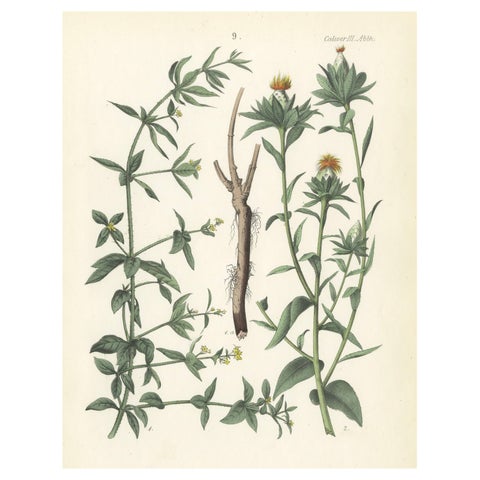
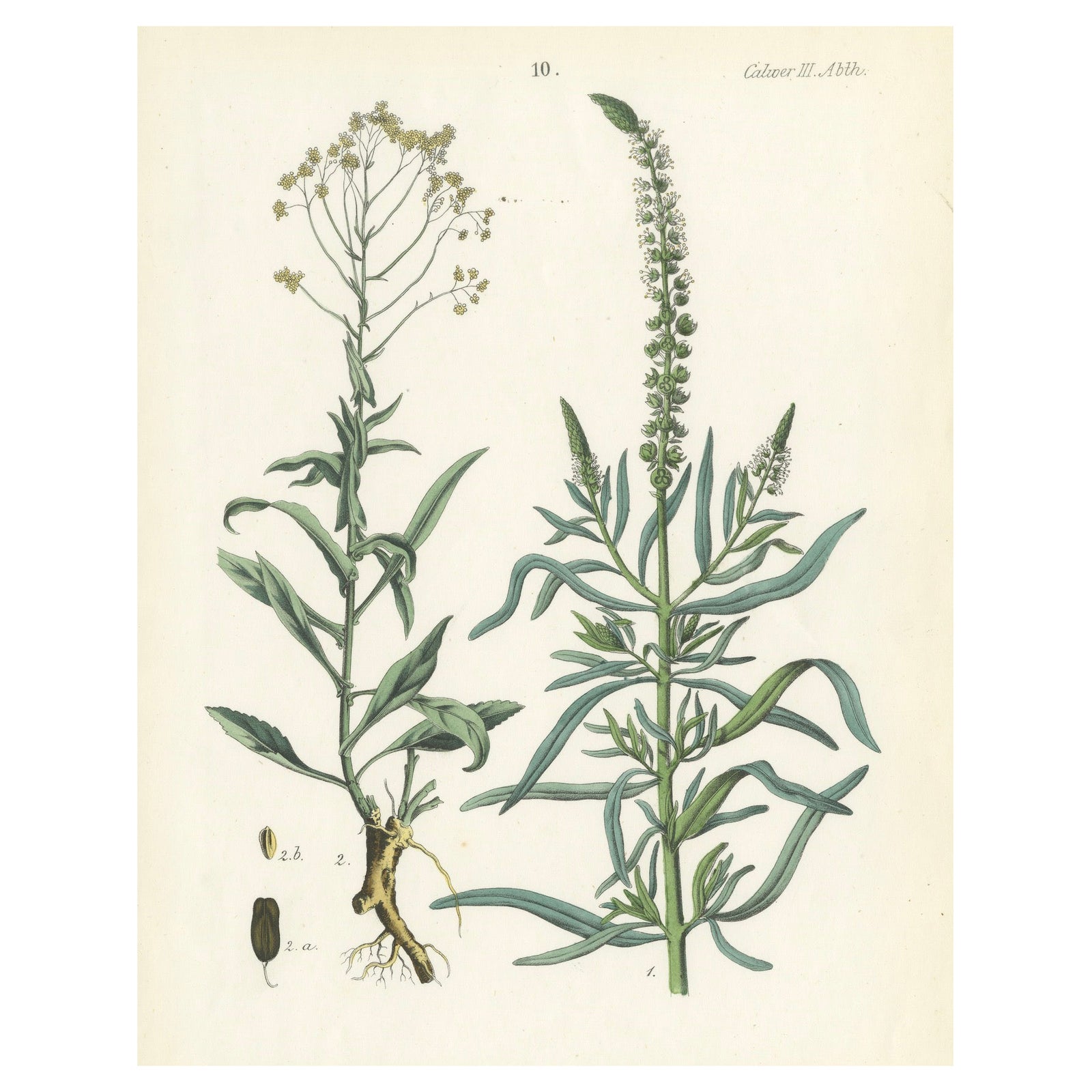
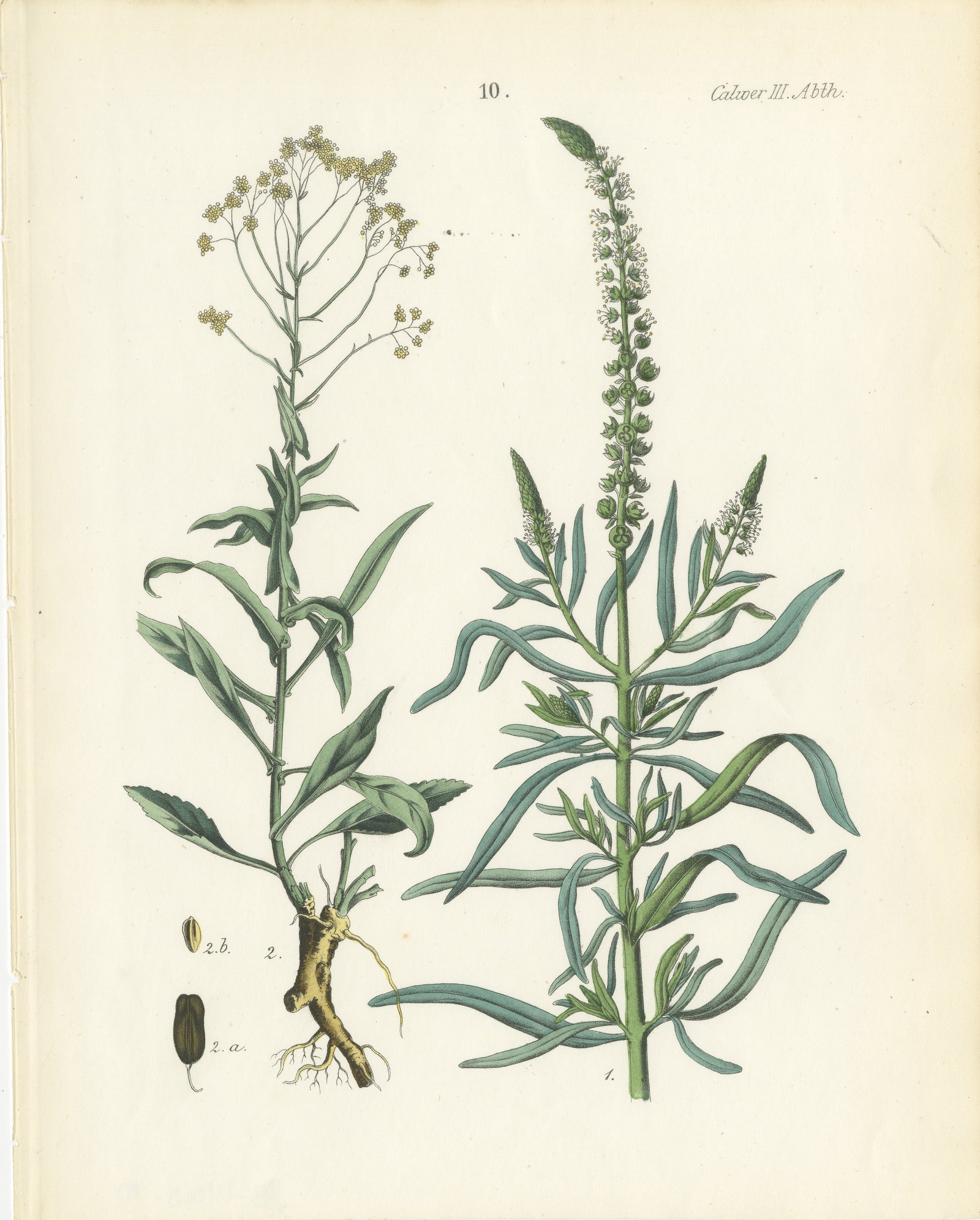
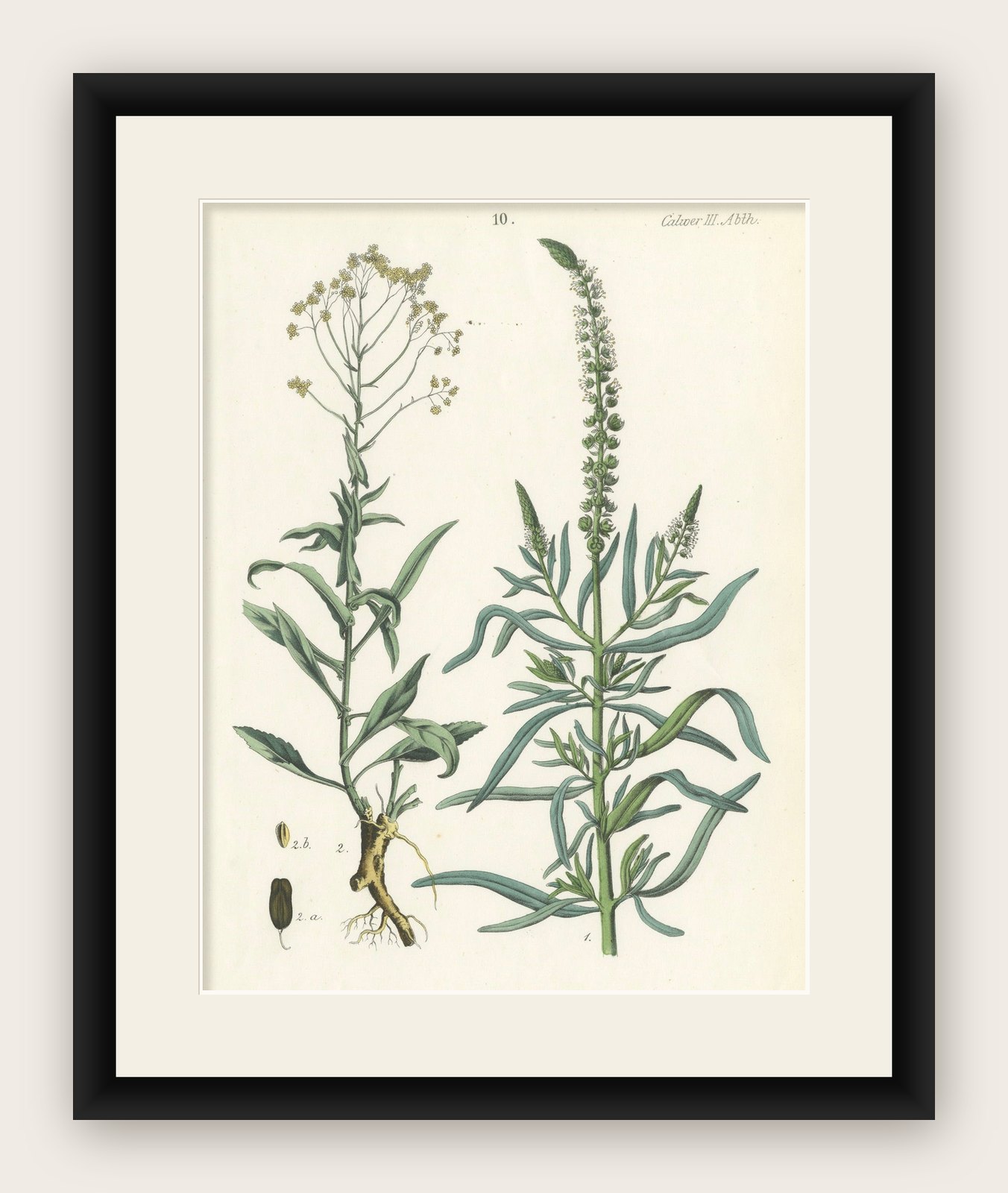
Hand-Colored Botanical Lithograph of Woad and White Goosefoot, Calwer, 1854
€230 ($255, £195, €230)
Period original, not a reproduction.
Shipped from the Netherlands, flat, insured and tracked, worldwide. Returns accepted within 14 days.
- Date
- 1854
- Size
- 10.2 × 8.1 in (26 × 20.5 cm)
- Condition
- The print is in excellent condition with minimal foxing and slight edge wear. The colors remain vivid, and the fine details are crisp, ensuring its quality as a historical and artistic artifact.
- Period
- Late 19th century
- Artist or book
- Calwer's Käferbuch
- Section
- Botanical
- Reference
- f_43020082
- Colour
- Hand coloured
What the condition grades mean
- Excellent
- Bright and clean, with no faults worth mentioning.
- Very good
- Only light signs of age, such as faint toning.
- Good
- Normal signs of age for a sheet of this period: toning, some foxing, small marks or neat old repairs.
- Fair
- Clear faults such as staining, tears or repairs, priced to match.
Every fault we see is written in the condition note, and the whole sheet is shown uncropped in the photos.
Hand-Colored Botanical Lithograph of Woad and White Goosefoot, Calwer, 1854
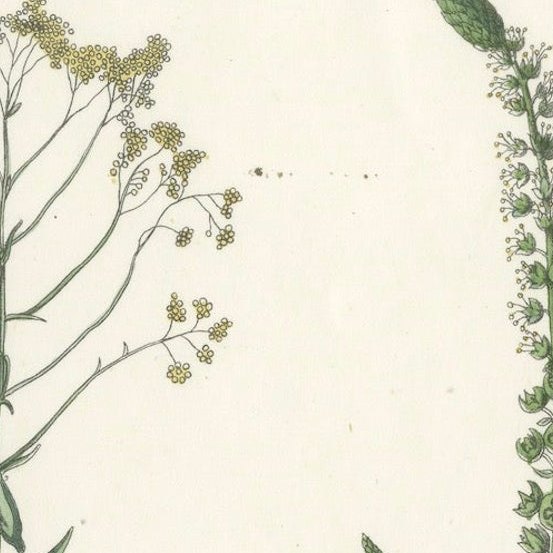
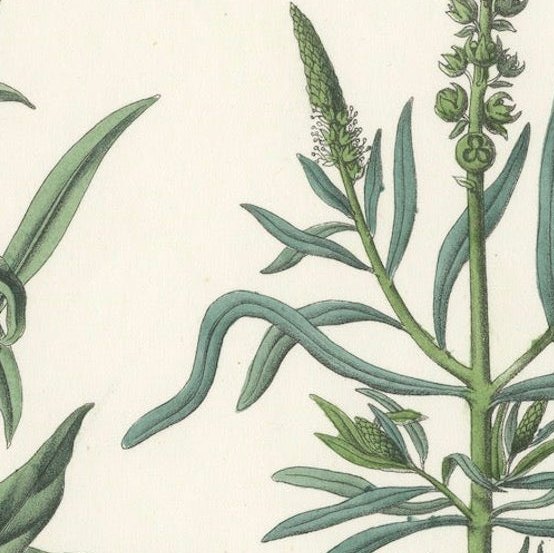
This rare and meticulously crafted botanical lithograph is from Carl Georg Calwer’s *Deutschlands Technische Pflanzen* (1854), a celebrated collection of Germany’s industrial and agricultural plants. The illustration features Isatis tinctoria (woad) and Chenopodium album (white goosefoot), both essential plants in historical industries. Woad, with its delicate yellow flowers and sturdy roots, was a primary source of blue dye for textiles before the advent of indigo. White goosefoot, characterized by its dense flowering spikes and narrow leaves, was historically cultivated for its edible seeds and leaves, which were used as a vegetable.
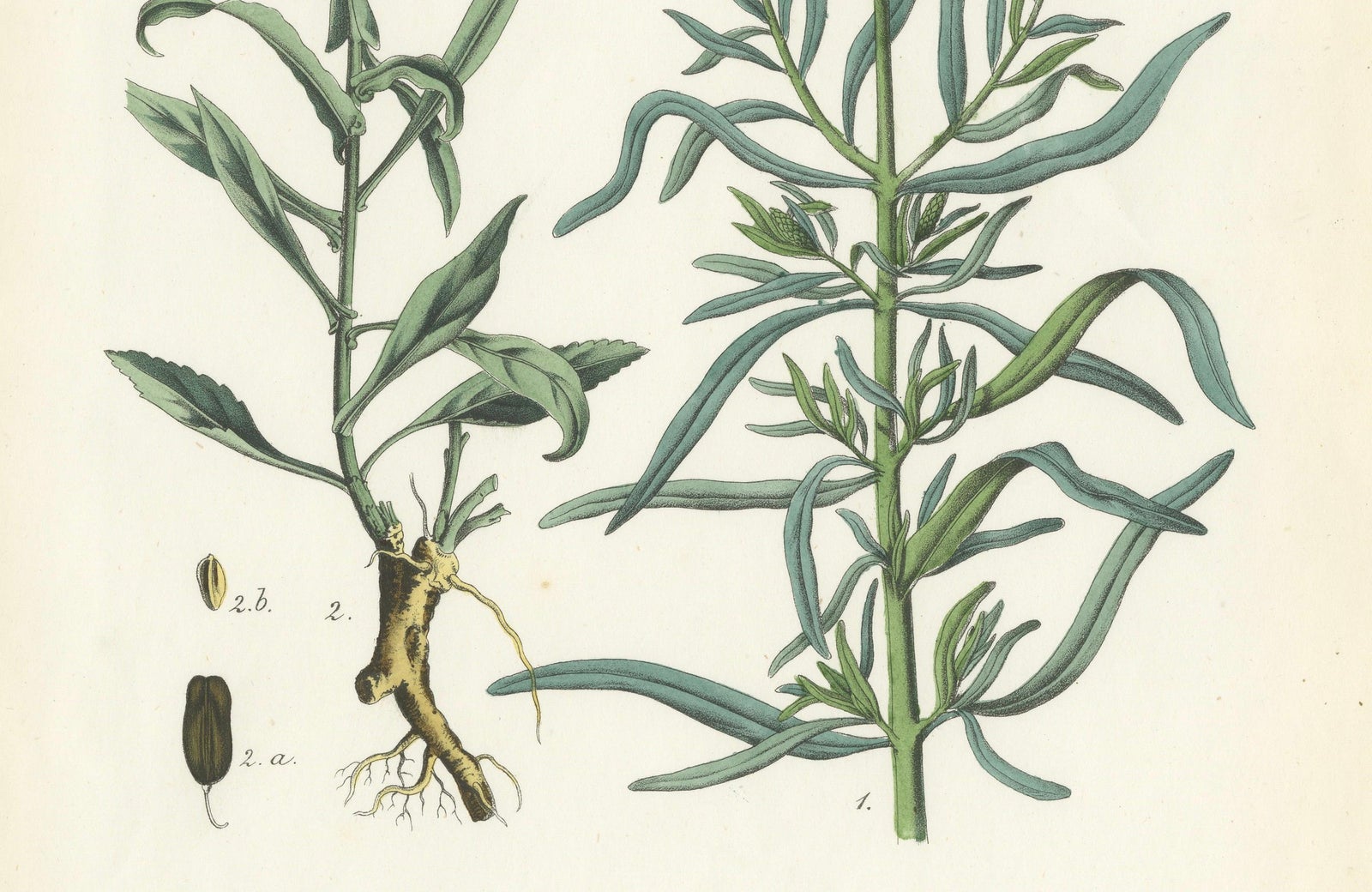
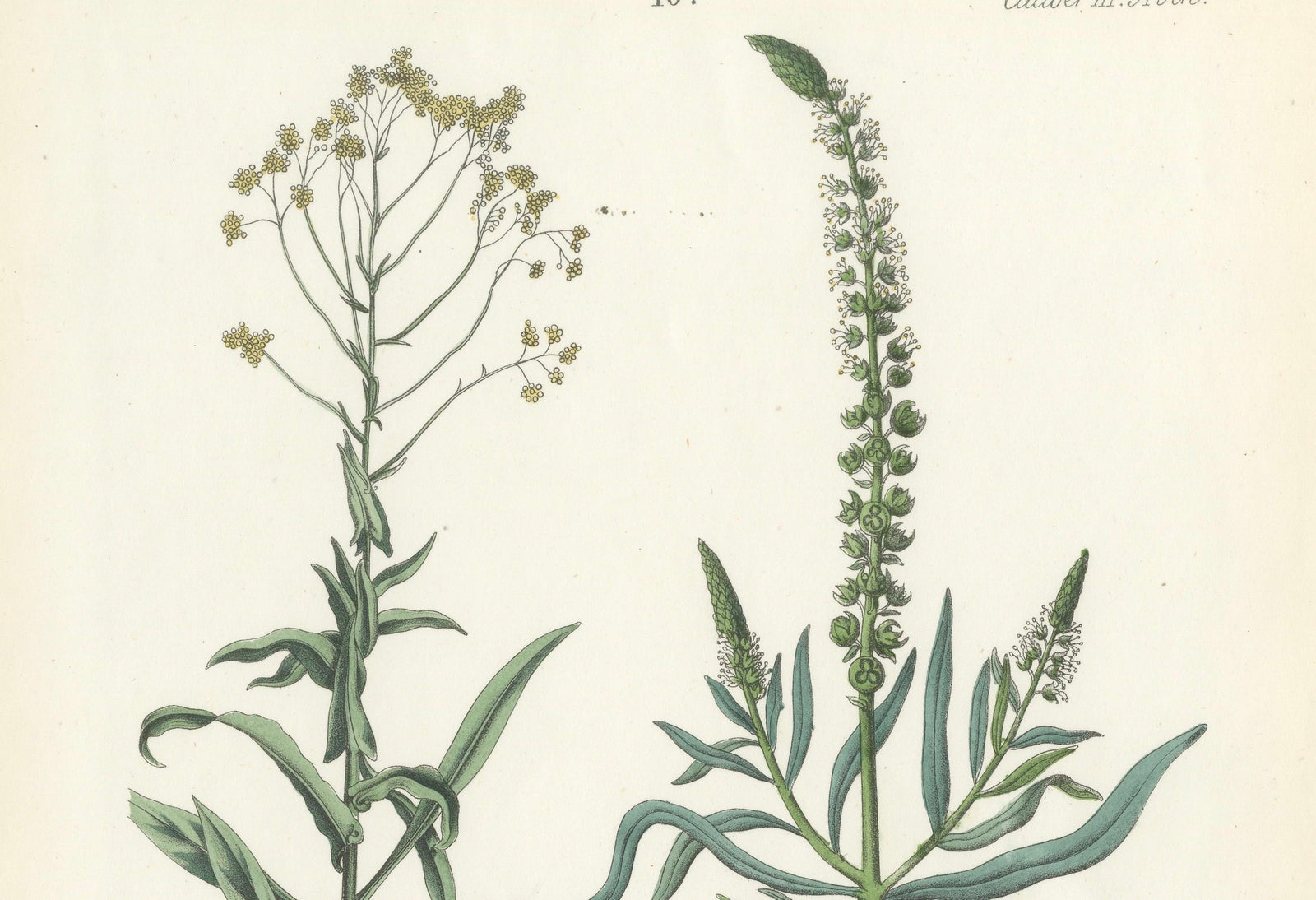
This hand-colored lithograph beautifully captures the fine details of both species, showcasing the roots, stems, flowers, and leaves with artistic and scientific accuracy. The annotations provide insight into the significance of these plants in 19th-century society, reflecting their agricultural and industrial value.
Measuring approximately 24 x 30 cm, this lithograph is an excellent addition to any collection of antique botanical prints or natural history artifacts. Perfect for framing and display, it brings a blend of educational depth and timeless beauty to libraries, galleries, or personal collections.
Condition: The print is in excellent condition with minimal foxing and slight edge wear. Colors remain vivid, and the intricate details are sharp and well-preserved, making it a valuable and attractive historical piece.