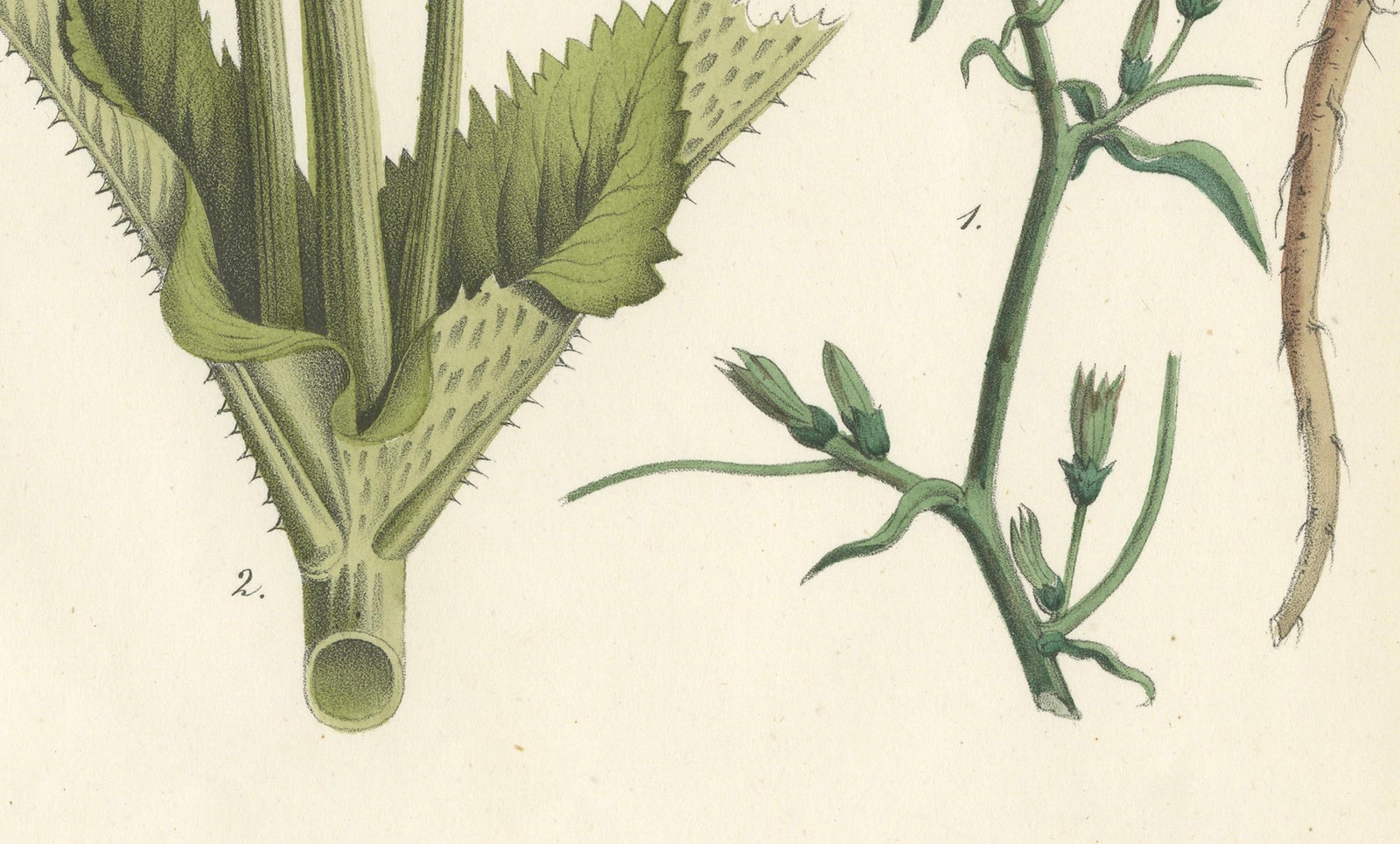
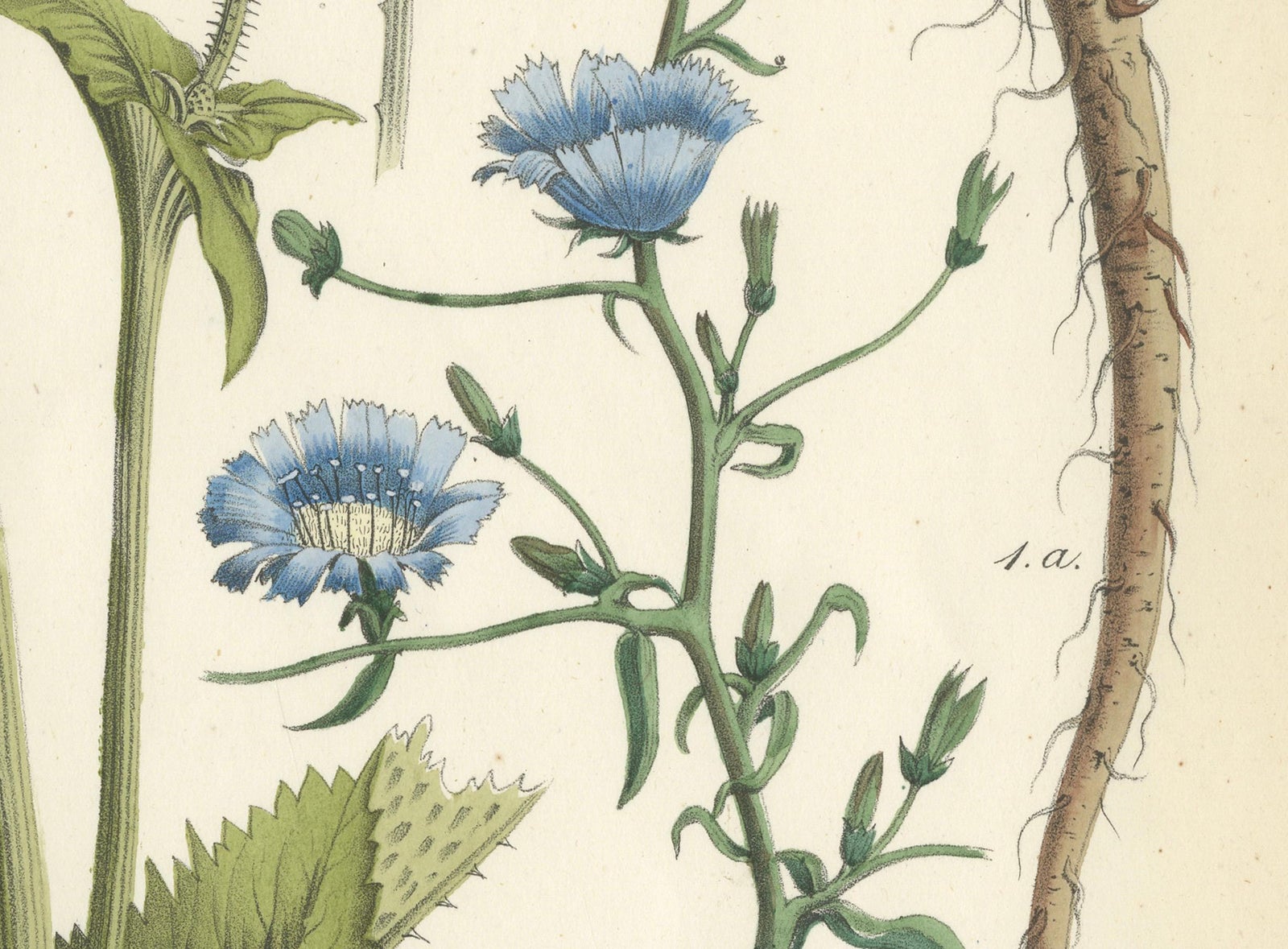
Close-ups
Framed and on the wall
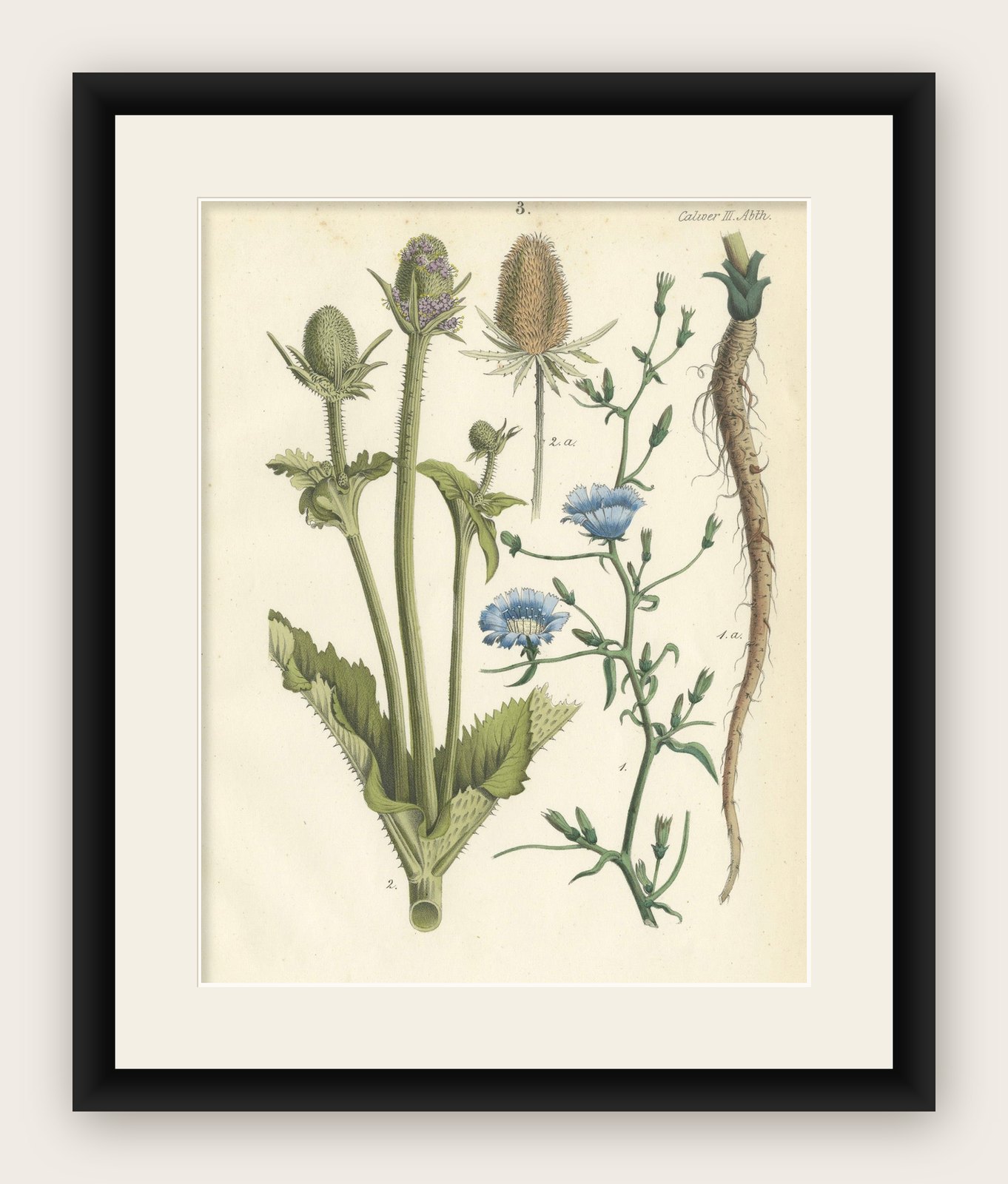
Frame and rooms are illustrations of how the print could look; the description says what is included.
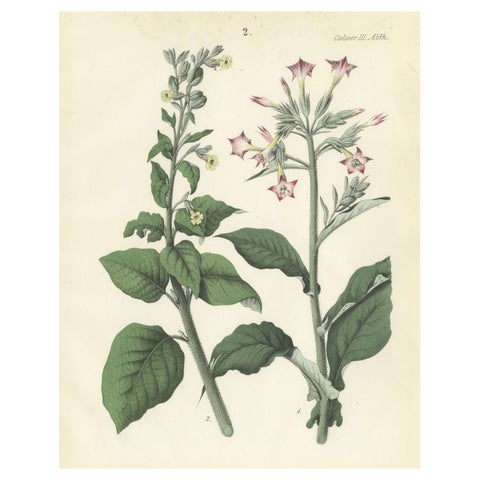
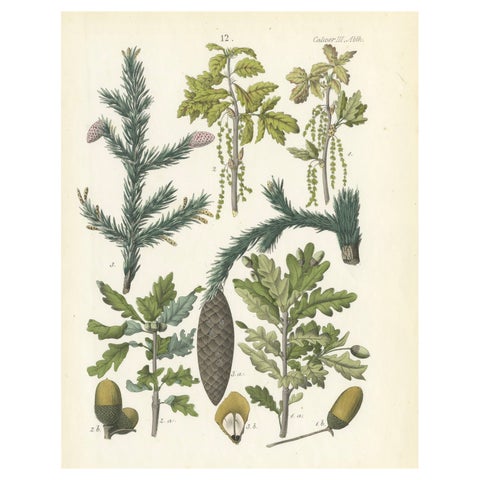
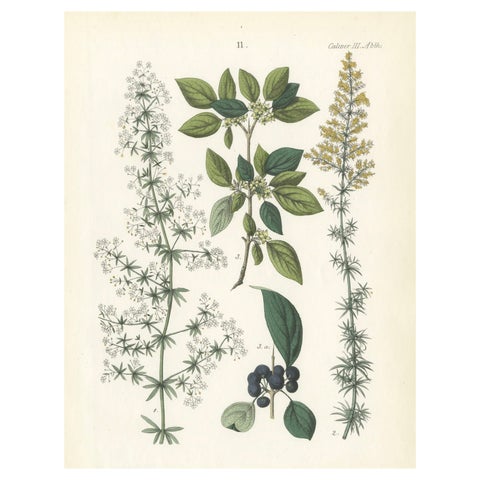
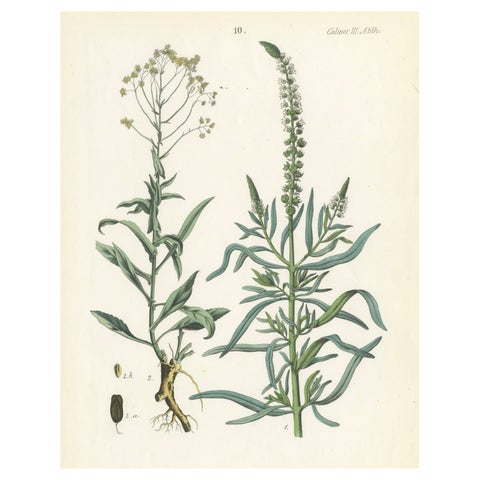
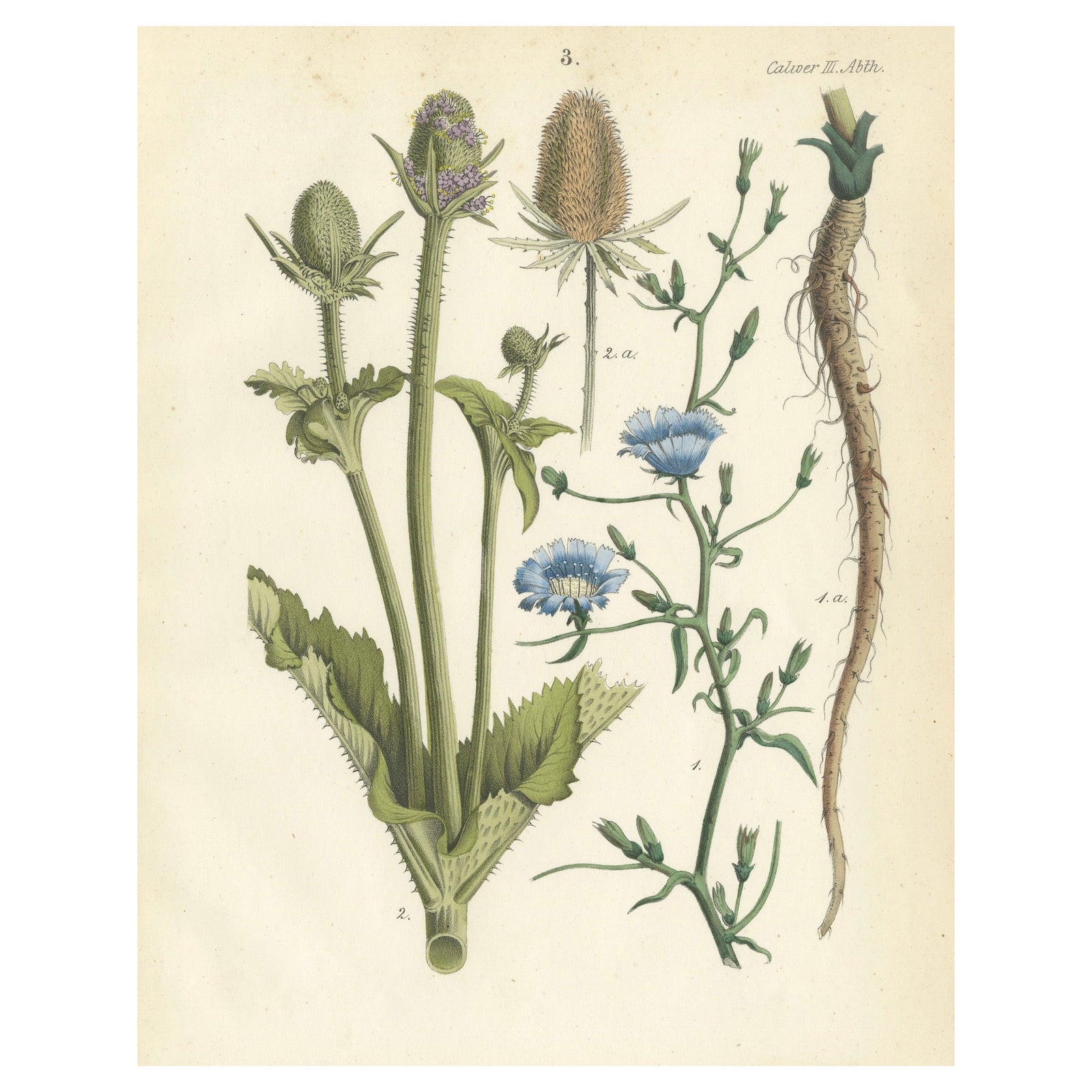
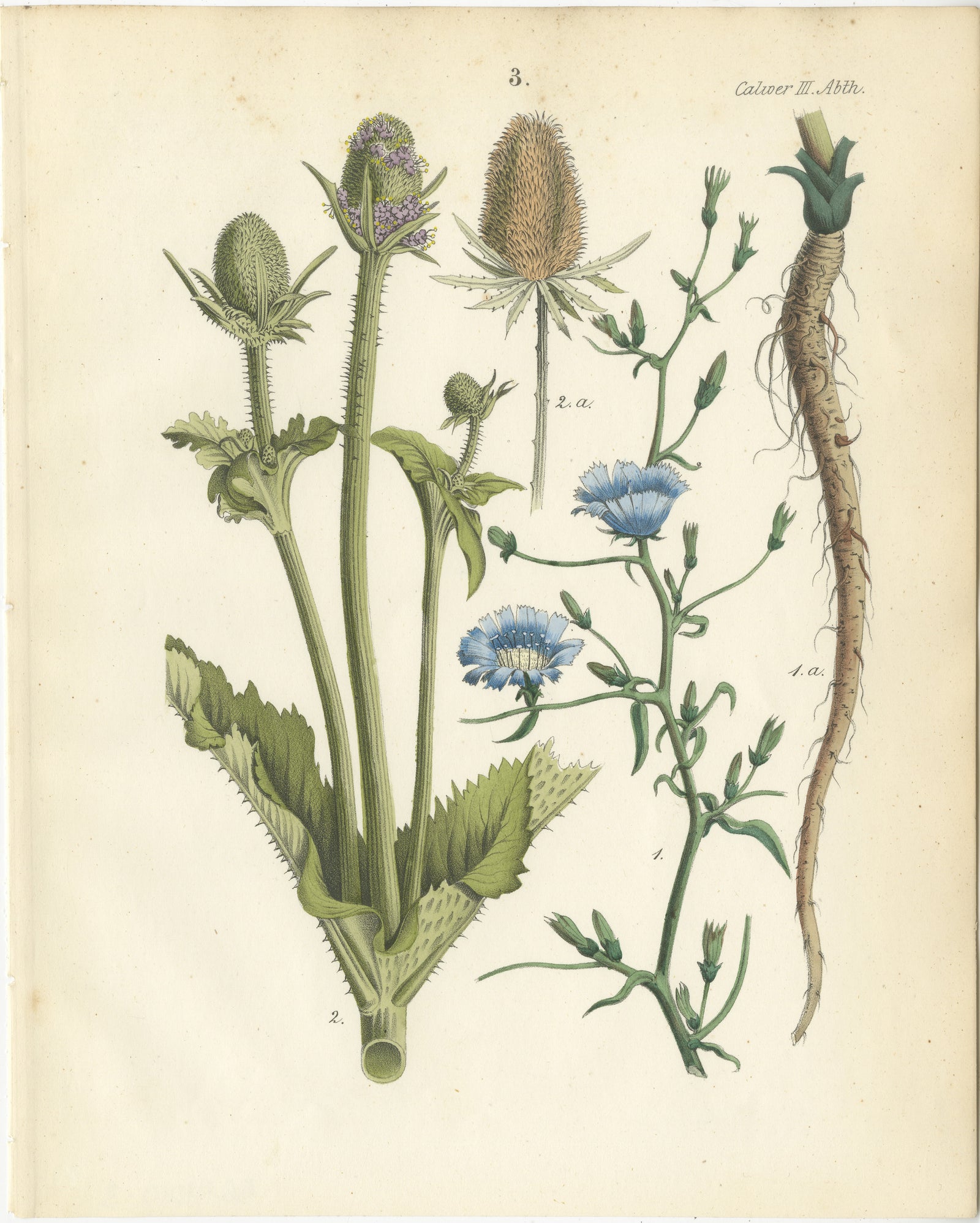
Hand-Colored Botanical Lithograph of Teasel and Chicory, Calwer, 1854
£195 ($260, €230)
Period original, not a reproduction.
Shipped from the Netherlands, flat, insured and tracked, worldwide. Returns accepted within 14 days.
- Date
- 1854
- Size
- 10.2 × 8.1 in (26 × 20.5 cm)
- Condition
- The print is in excellent condition with minor signs of age-related foxing and light edge wear. Colors remain bright and vibrant, with sharp detailing throughout.
- Period
- Late 19th century
- Artist or book
- Calwer's Käferbuch
- Section
- Botanical
- Reference
- f_43019922
Hand-Colored Botanical Lithograph of Teasel and Chicory, Calwer, 1854
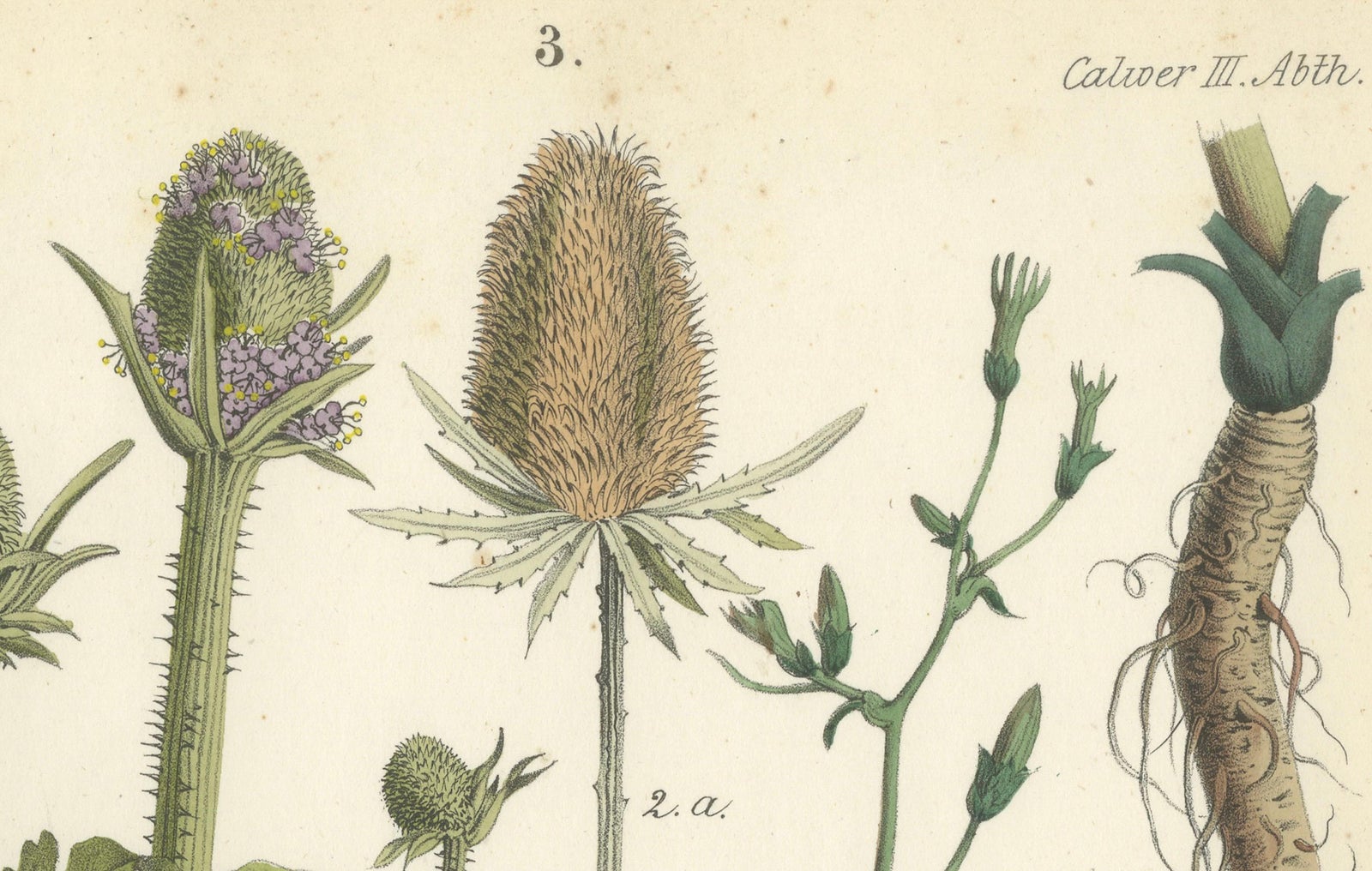
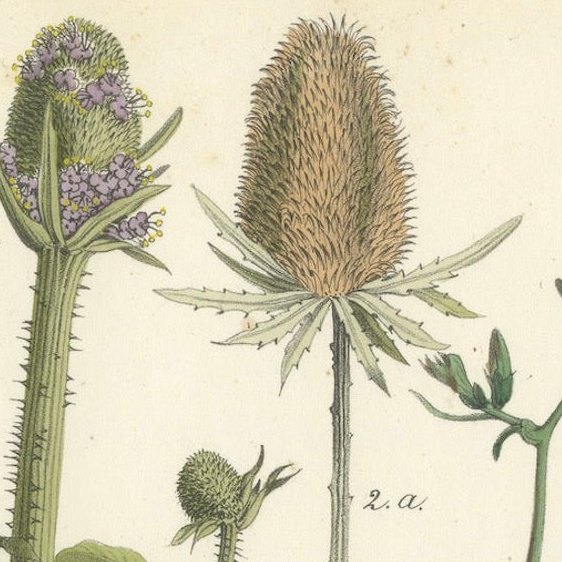
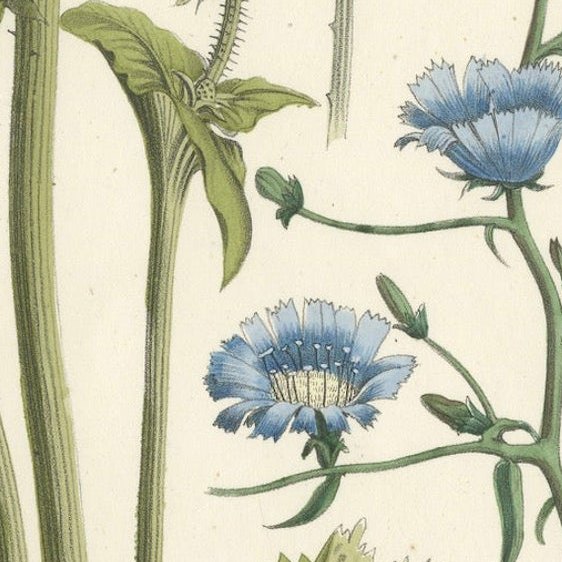
This finely detailed botanical lithograph is from Carl Georg Calwer’s 'Deutschlands Technische Pflanzen' (1854), an iconic work showcasing the technical plants of Germany. The illustration highlights Dipsacus fullonum (teasel) and Cichorium intybus (chicory), both meticulously hand-colored to capture their natural beauty and botanical intricacies. The teasel, with its spiked stem and distinct seed heads, was historically used in textile production for raising the nap on fabrics. Chicory, known for its vibrant blue flowers, holds significance in culinary and medicinal applications, particularly as a coffee substitute and digestive aid.
The scientific annotations and detailed representation of leaves, flowers, and roots demonstrate the importance of these plants in 19th-century society, both for their practical utility and ornamental value. The composition reflects the precision and artistry synonymous with historical botanical prints.
This lithograph is a rare and valuable addition to any collection, perfect for framing or displaying in libraries, studies, or galleries. It embodies the aesthetic charm and educational value of botanical art.
Condition: The print is in excellent condition with minor signs of age-related foxing and light edge wear. Colors remain bright and vibrant, with sharp detailing throughout.