Close-ups
Framed and on the wall

Frame and rooms are illustrations of how the print could look; the description says what is included.
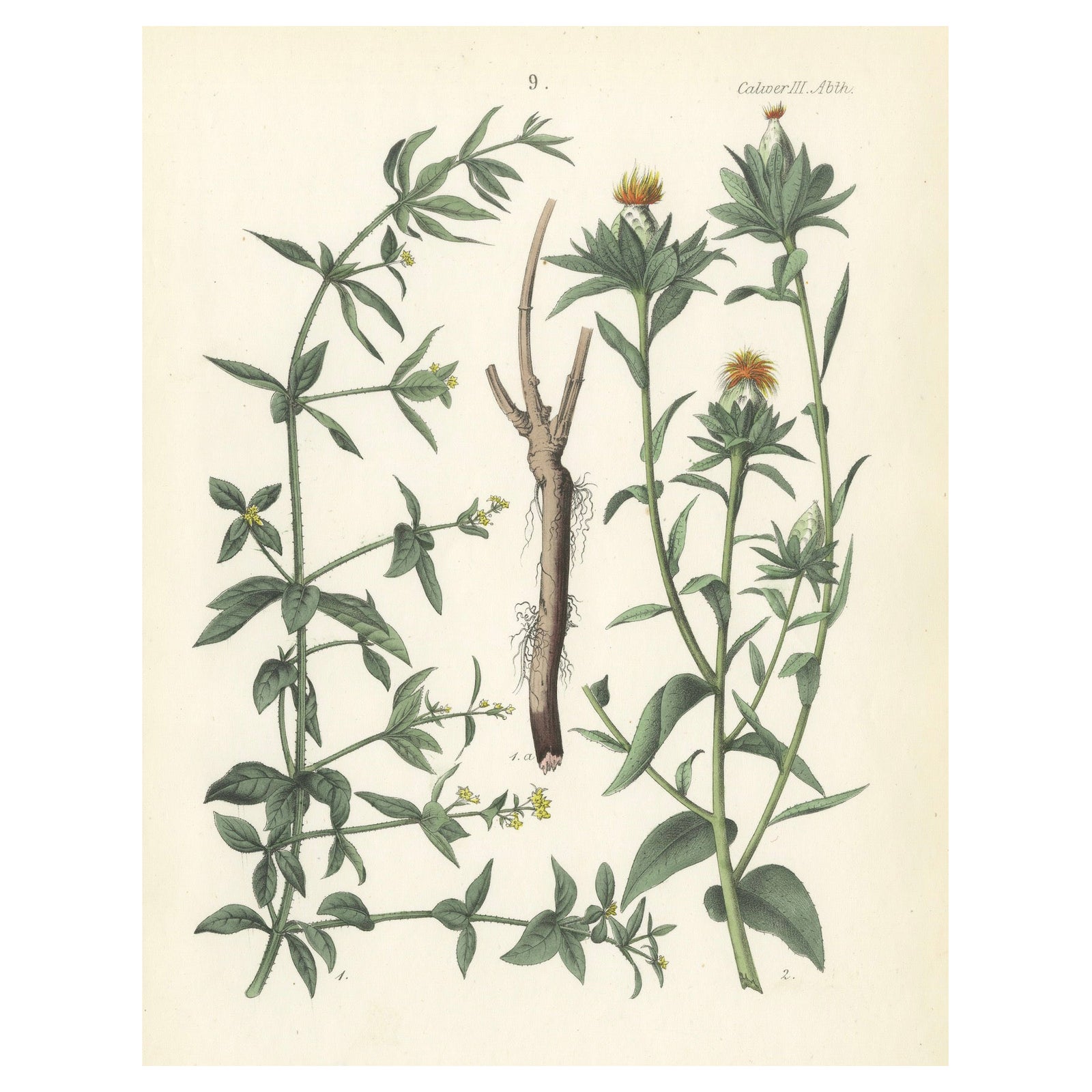
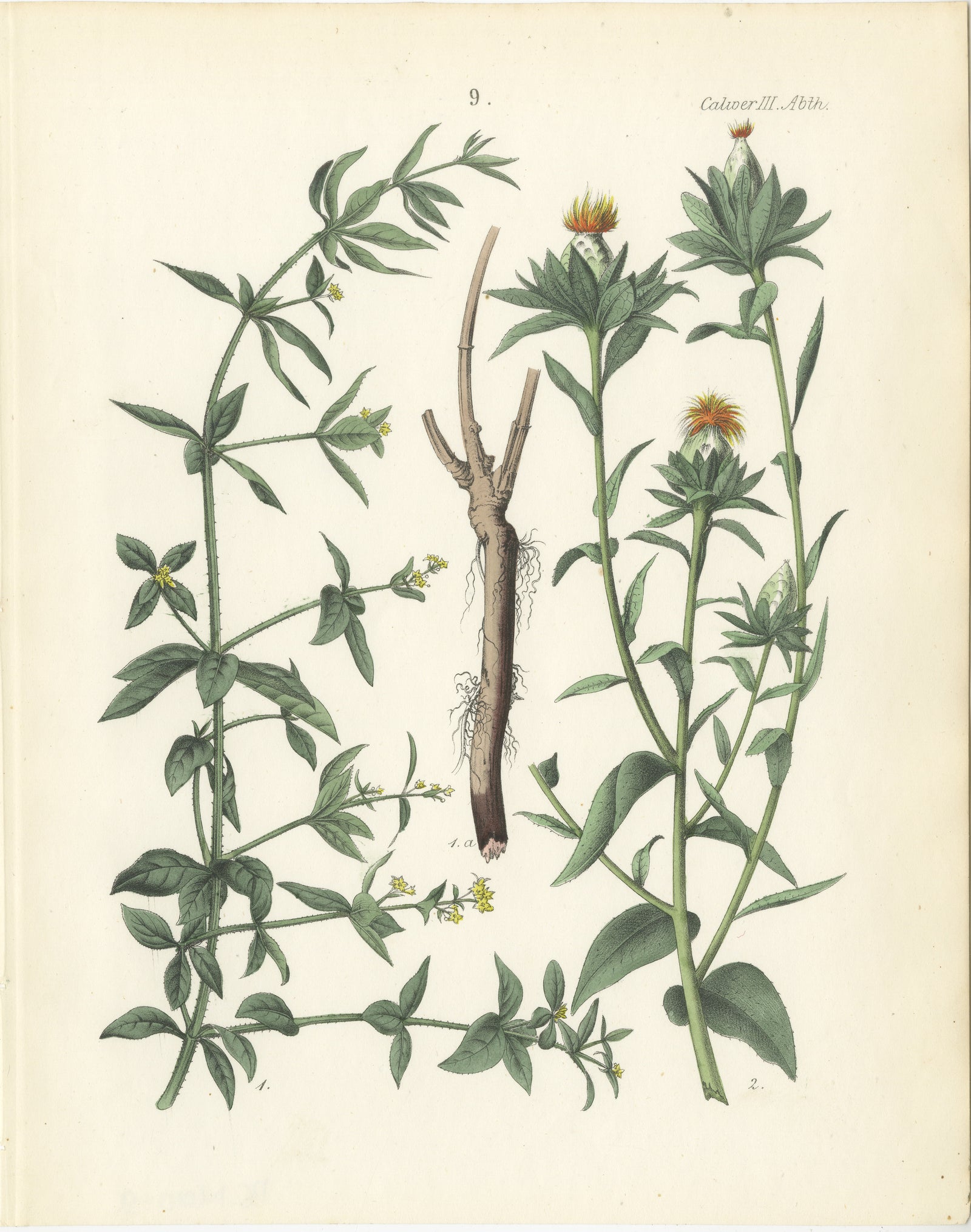
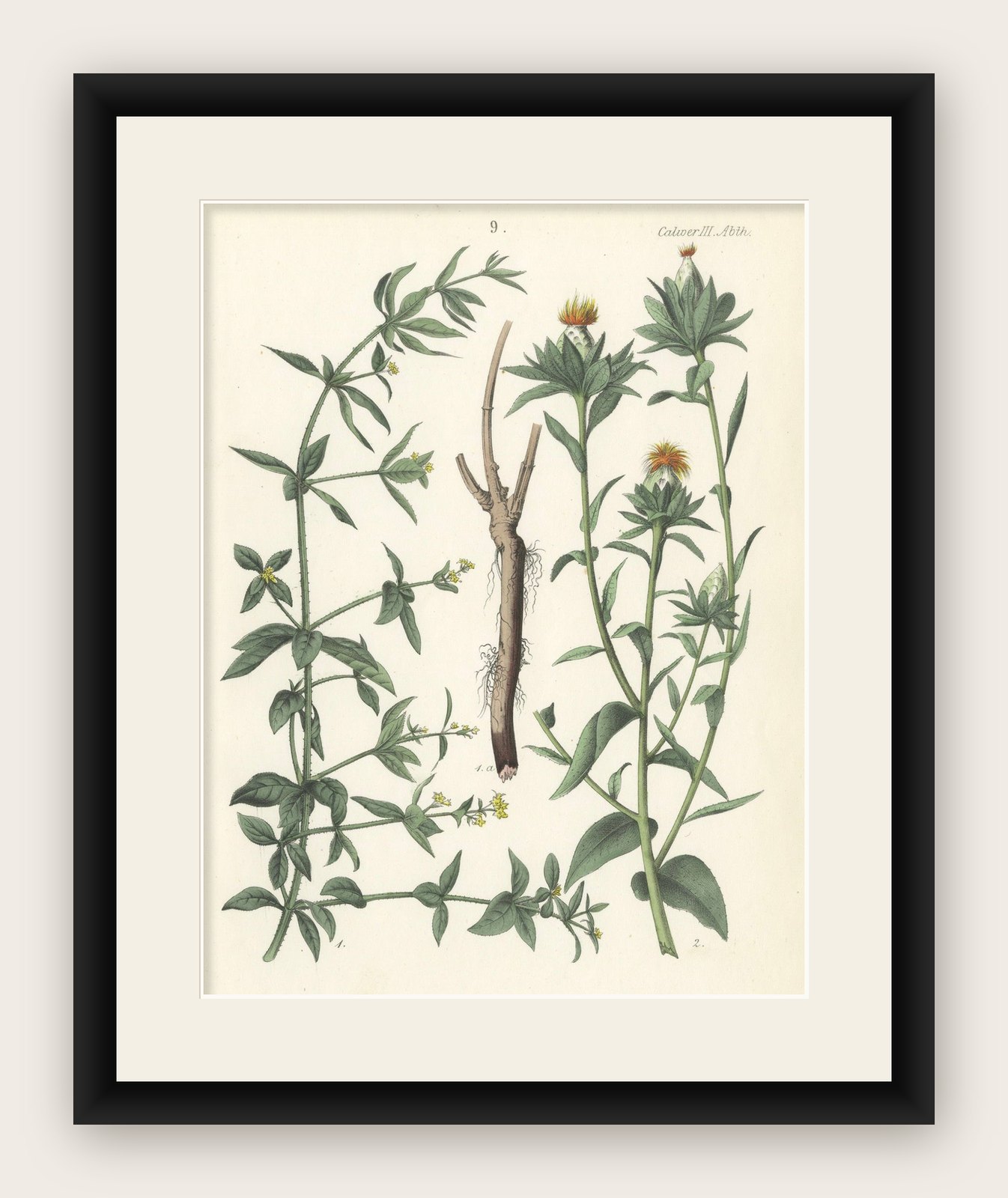
Hand-Colored Botanical Lithograph of Madder and Safflower, 1854
$280 (£210, €250)
Period original, not a reproduction.
Shipped from the Netherlands, flat, insured and tracked, worldwide. Returns accepted within 14 days.
- Date
- 1854
- Size
- 10.2 × 8.1 in (26 × 20.5 cm)
- Condition
- The print is in excellent condition with minimal foxing and slight edge wear. The colors remain vivid, and the fine details are crisp, ensuring its quality as a historical and artistic artifact.
- Period
- Late 19th century
- Artist or book
- Calwer's Käferbuch
- Section
- Botanical
- Reference
- f_43020042
Hand-Colored Botanical Lithograph of Madder and Safflower, Calwer, 1854
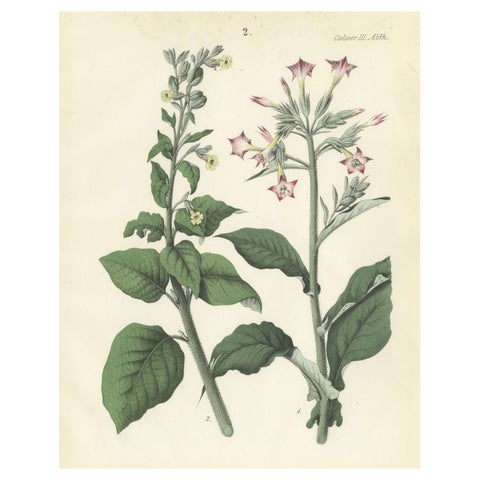
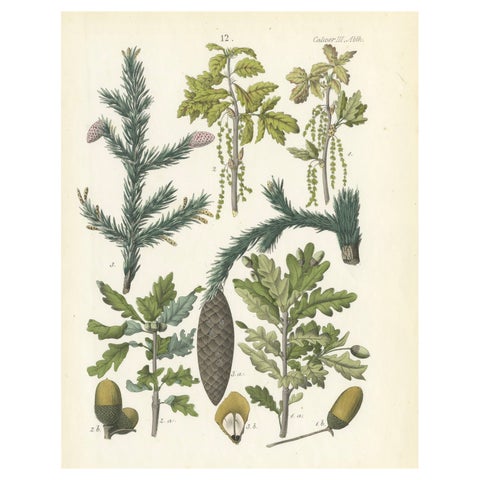
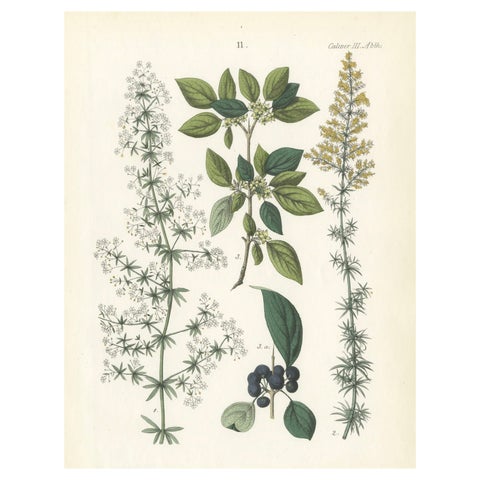
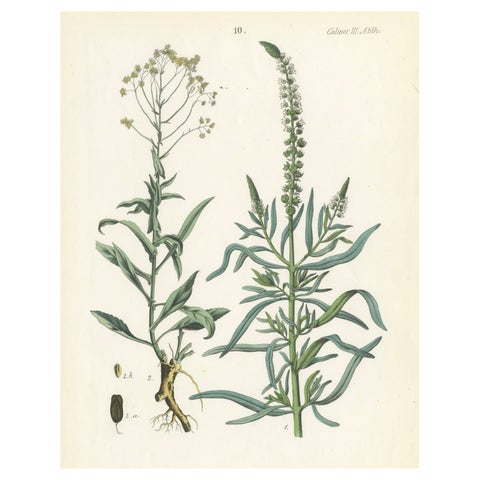
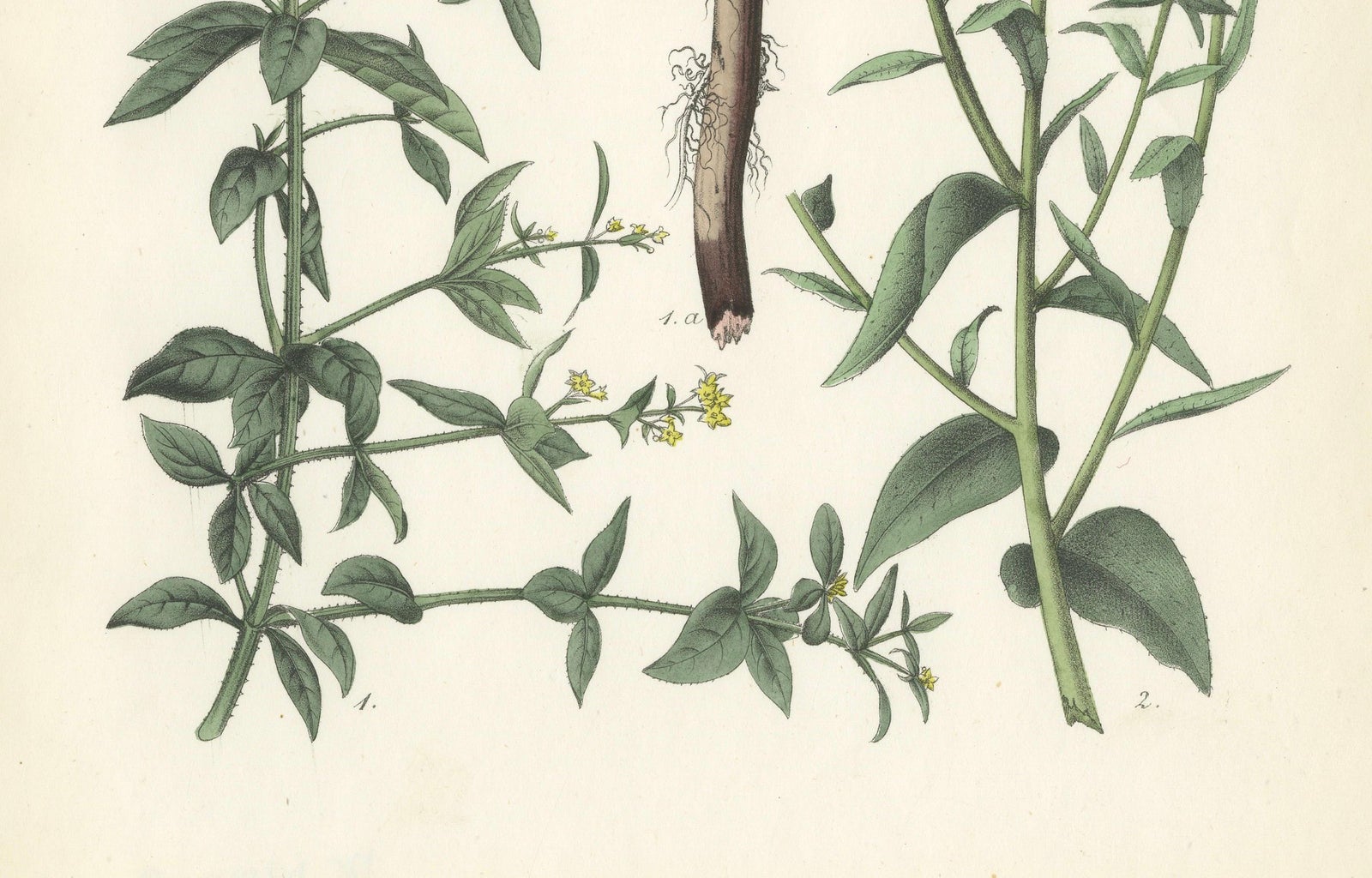
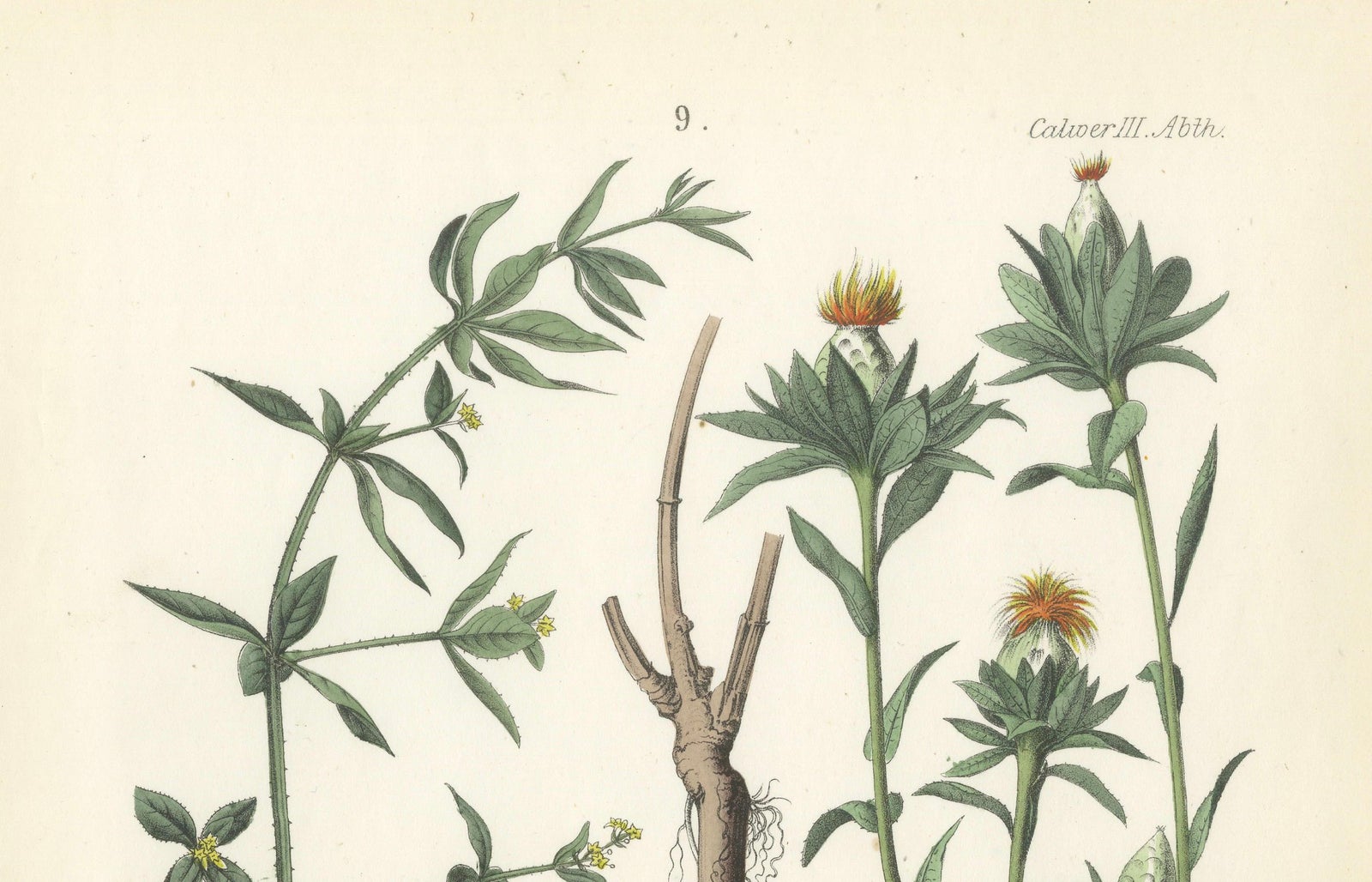
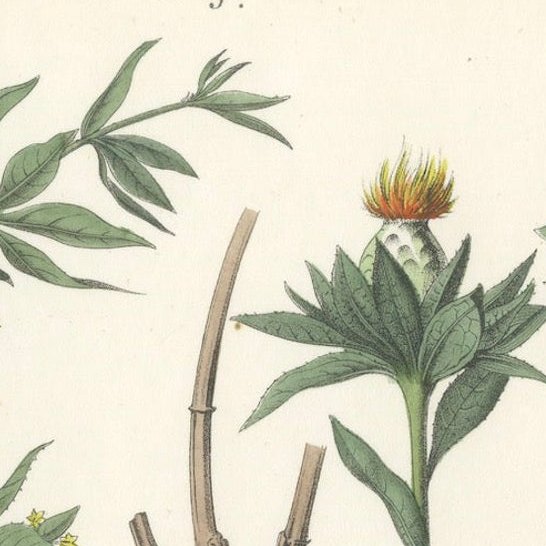
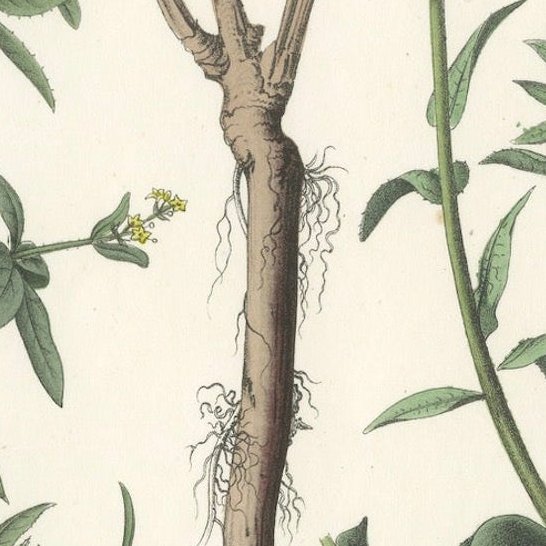
This detailed botanical lithograph is from Carl Georg Calwer’s *Deutschlands Technische Pflanzen* (1854), a classic work on Germany’s technical and industrial plants. The illustration features Rubia tinctorum (madder) and Carthamus tinctorius (safflower), both meticulously hand-colored to highlight their defining features. Madder, with its climbing stems and small yellow flowers, was an essential source of red dye for textiles, widely used in ancient and medieval Europe. Safflower, known for its vibrant orange flower heads, provided dye for textiles and cosmetics and was used as a substitute for saffron in culinary applications.
The composition showcases the intricate botanical structures of both plants, including the roots, stems, leaves, and flowers, combining artistic precision with scientific accuracy. The annotations offer insight into the historical and practical roles of these plants, reflecting their significance in 19th-century industry and trade.
Measuring approximately 24 x 30 cm, this original lithograph is a valuable piece for collectors, historians, and natural history enthusiasts. Perfect for framing, it makes a striking decorative addition to libraries, studies, or galleries, blending educational value with timeless beauty.
Condition: The print is in excellent condition with minimal foxing and slight edge wear. The colors remain vivid, and the fine details are crisp, ensuring its quality as a historical and artistic artifact.