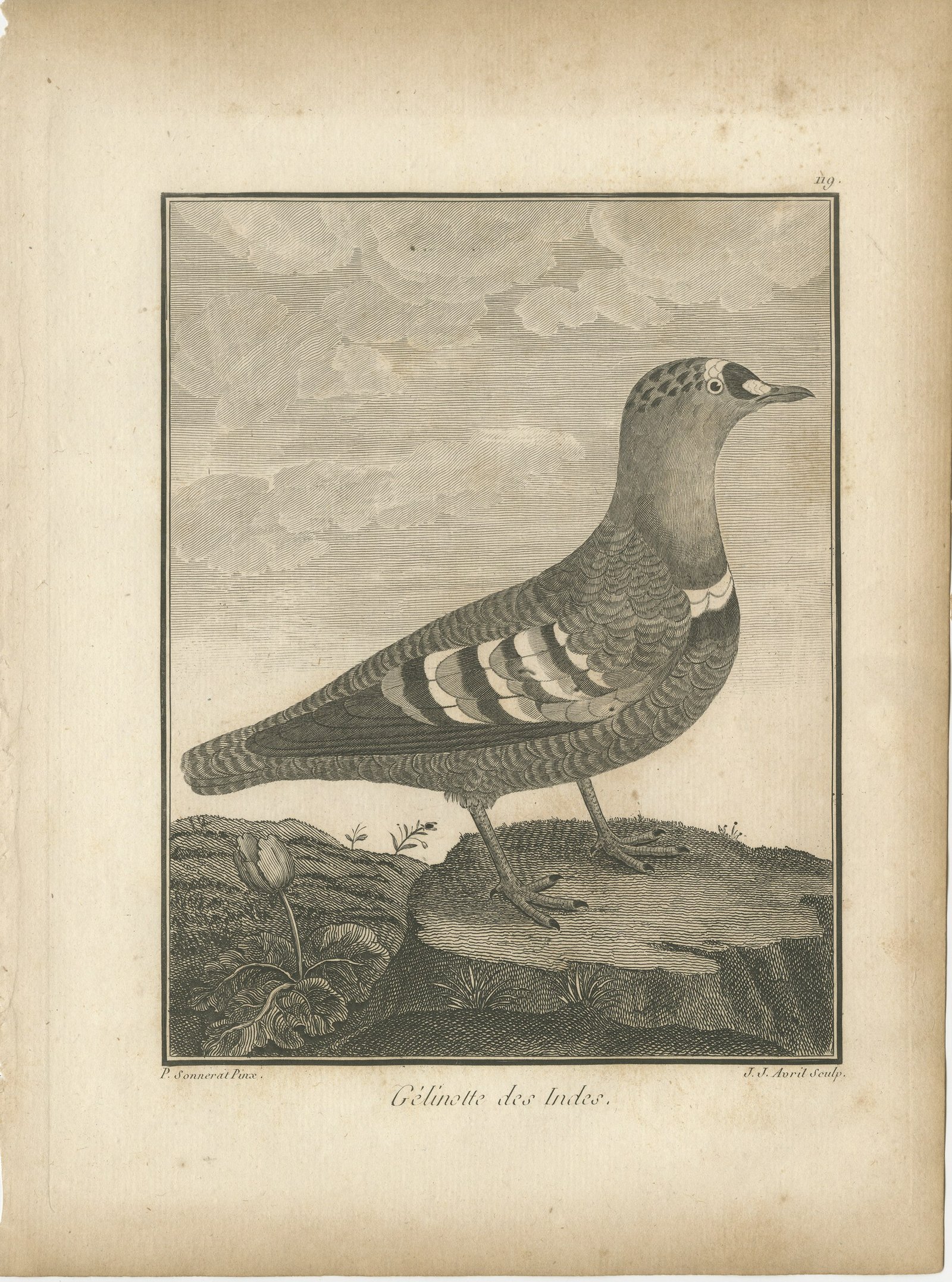
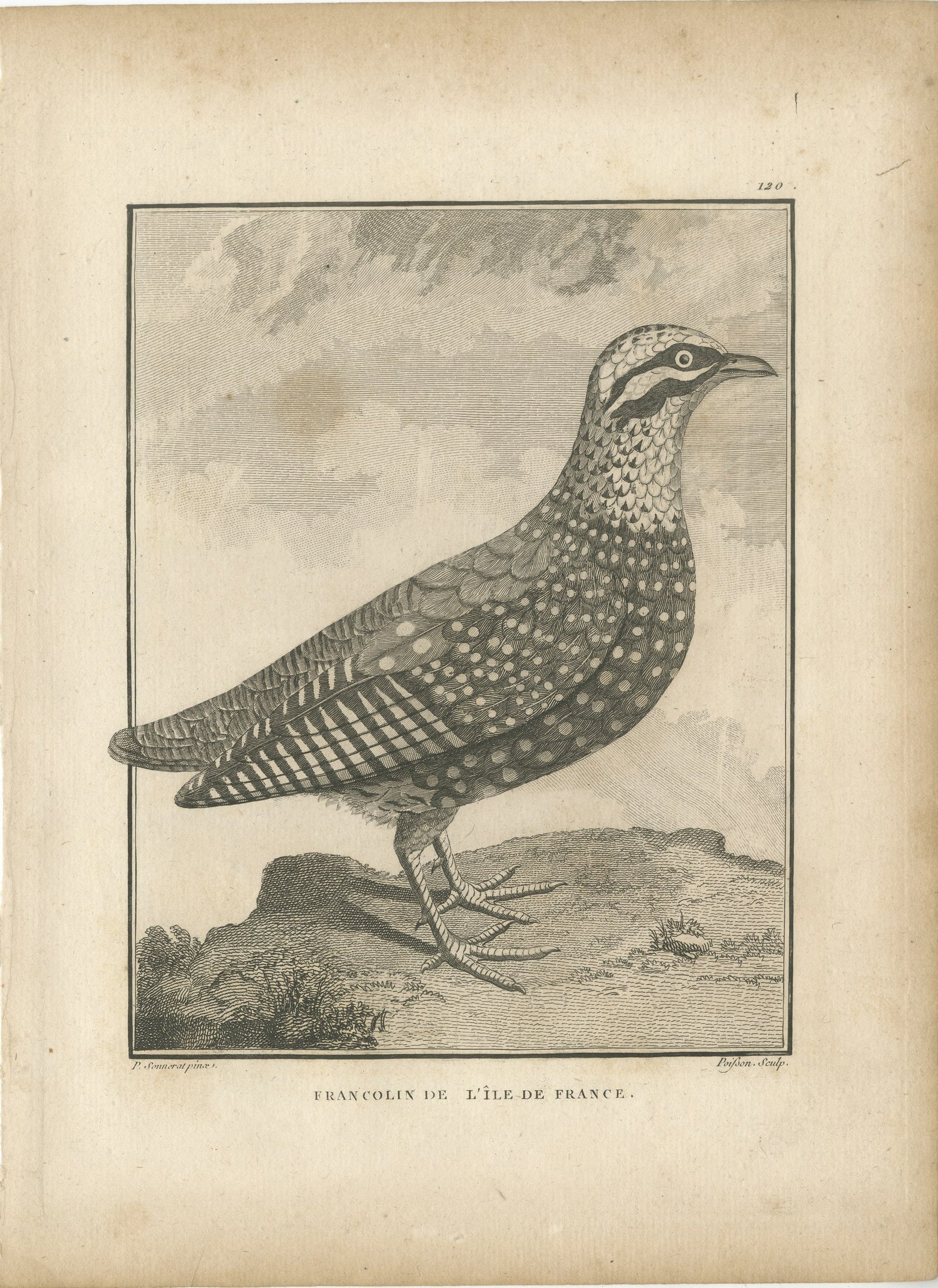
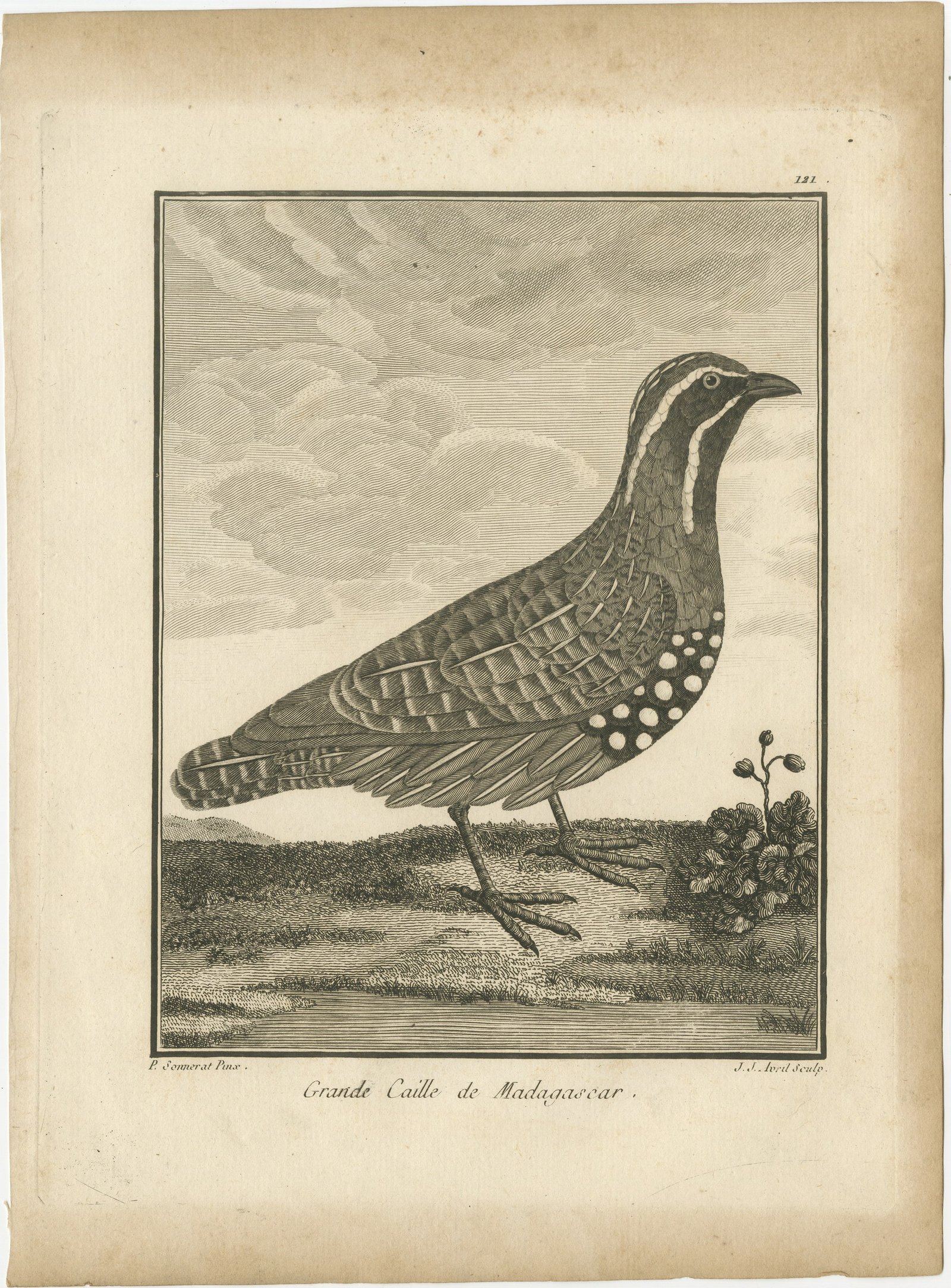
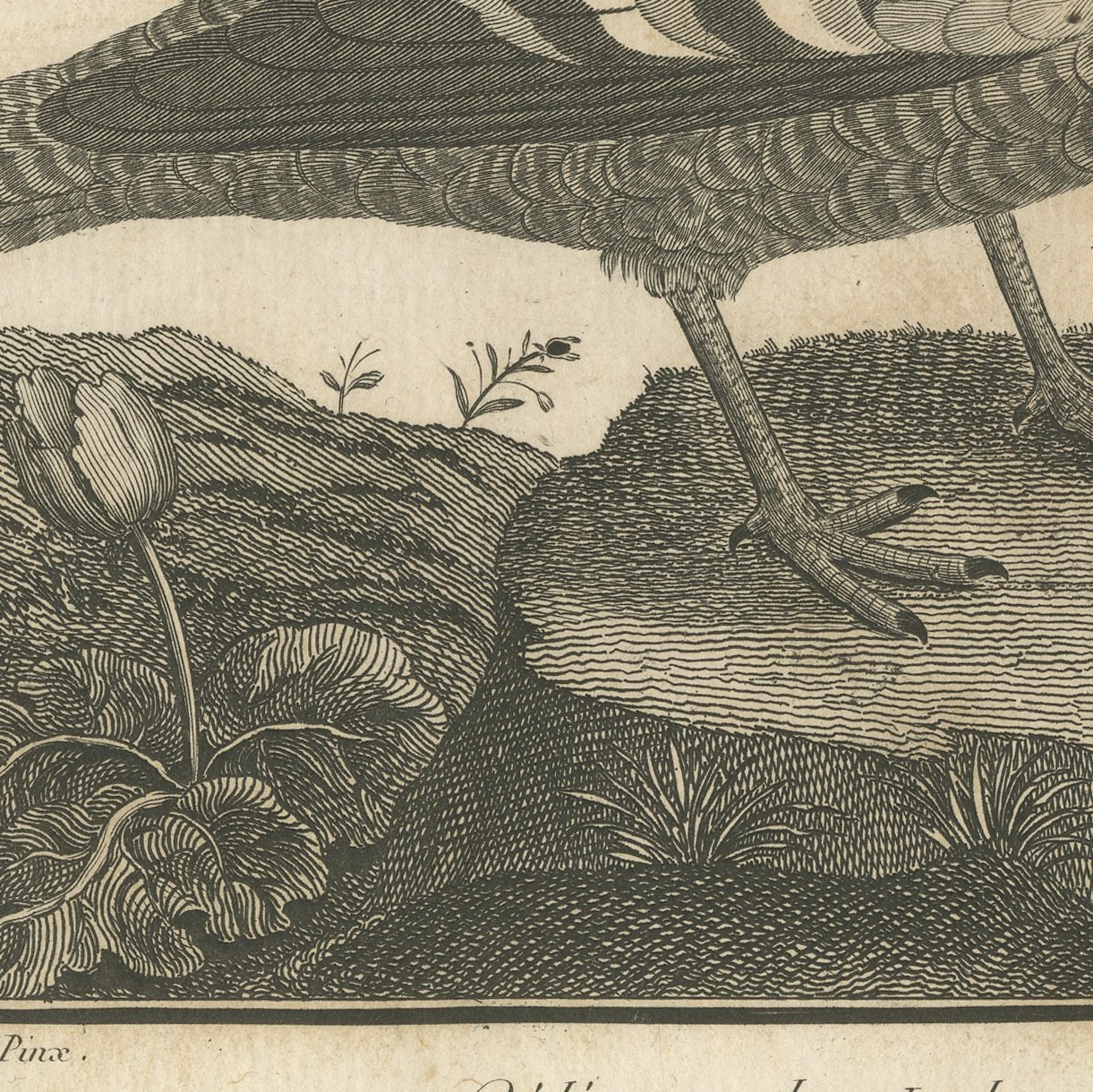
Close-ups
Framed and on the wall
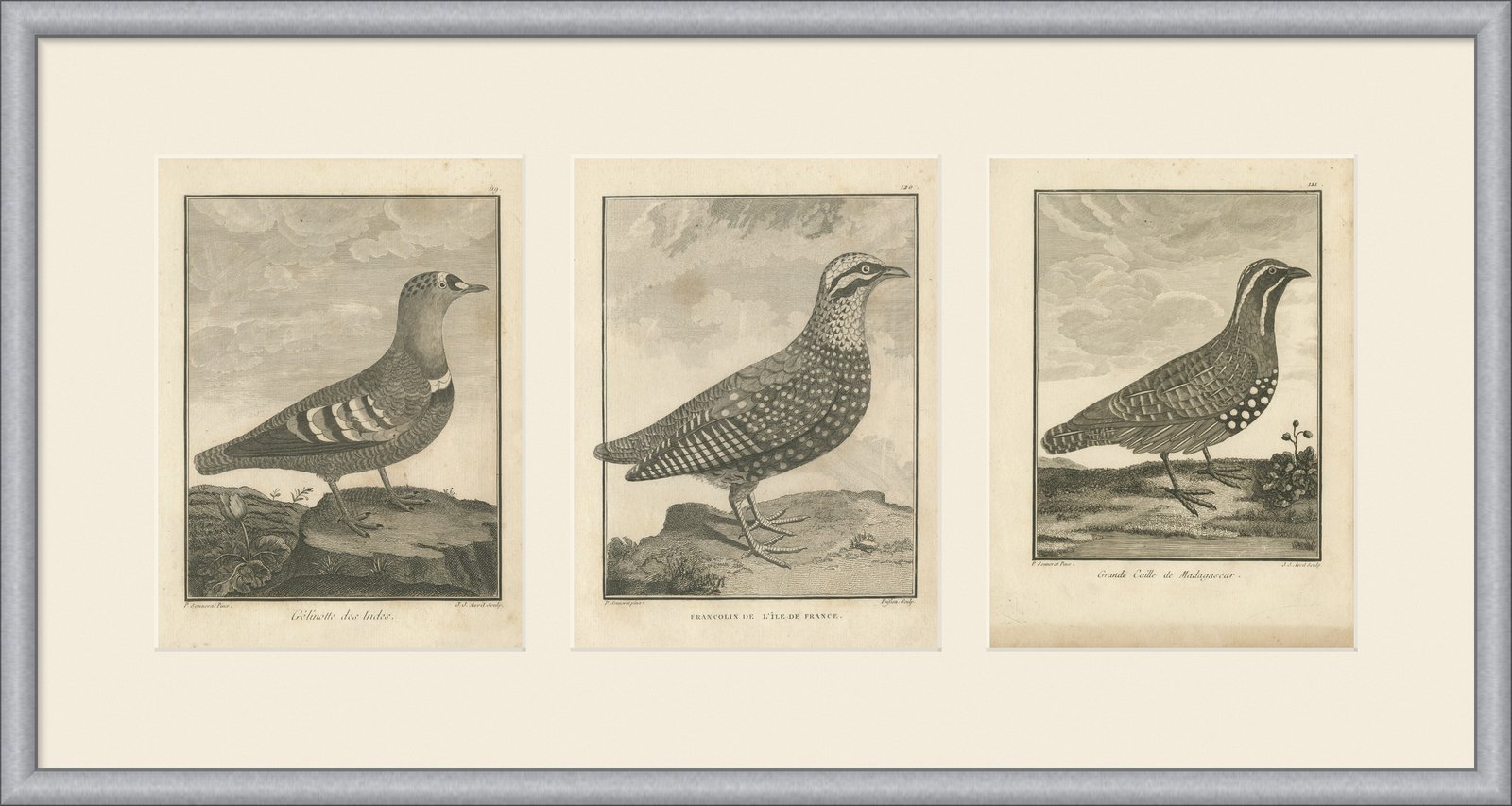
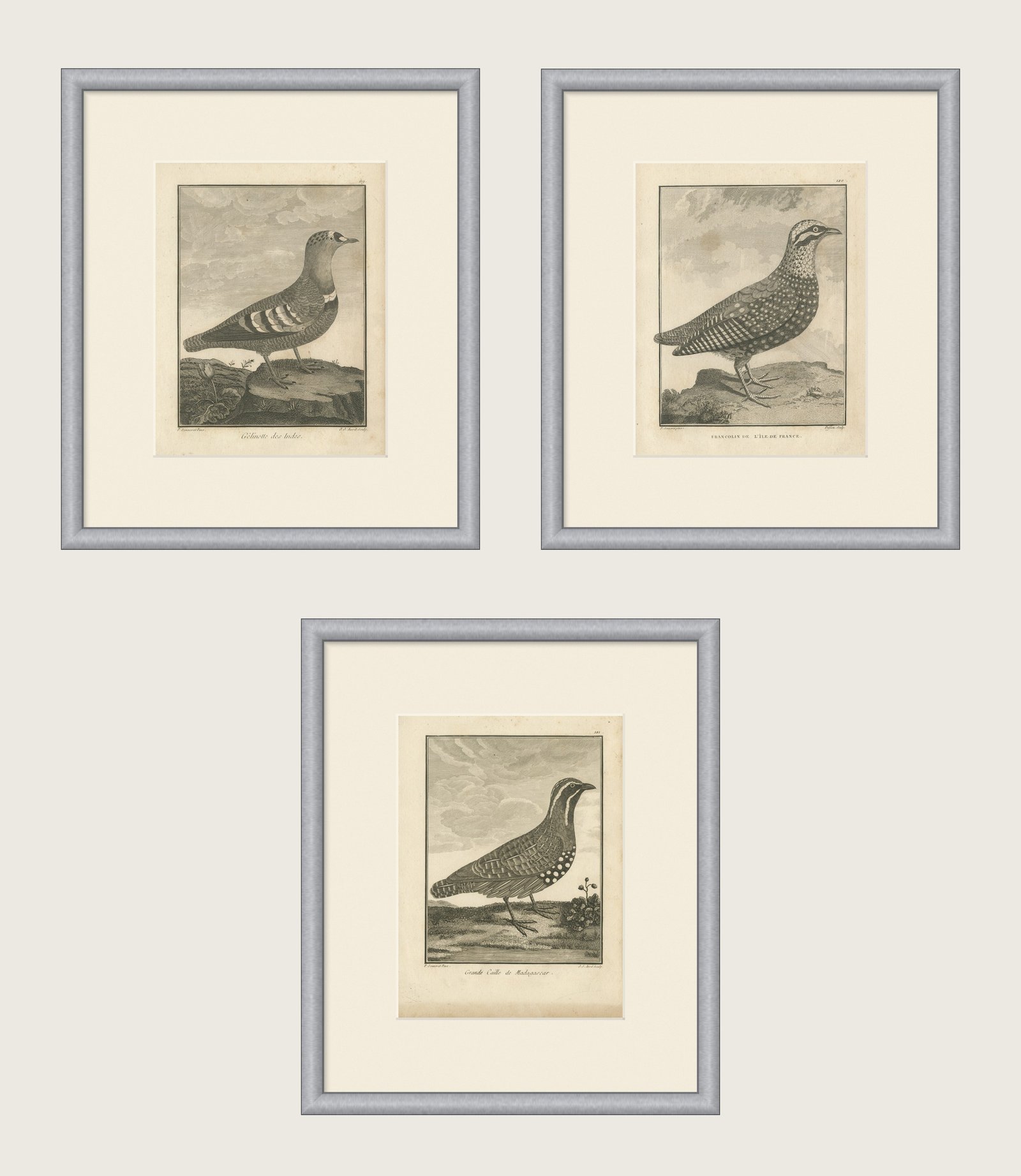


Frame and rooms are illustrations of how the print could look; the description says what is included.
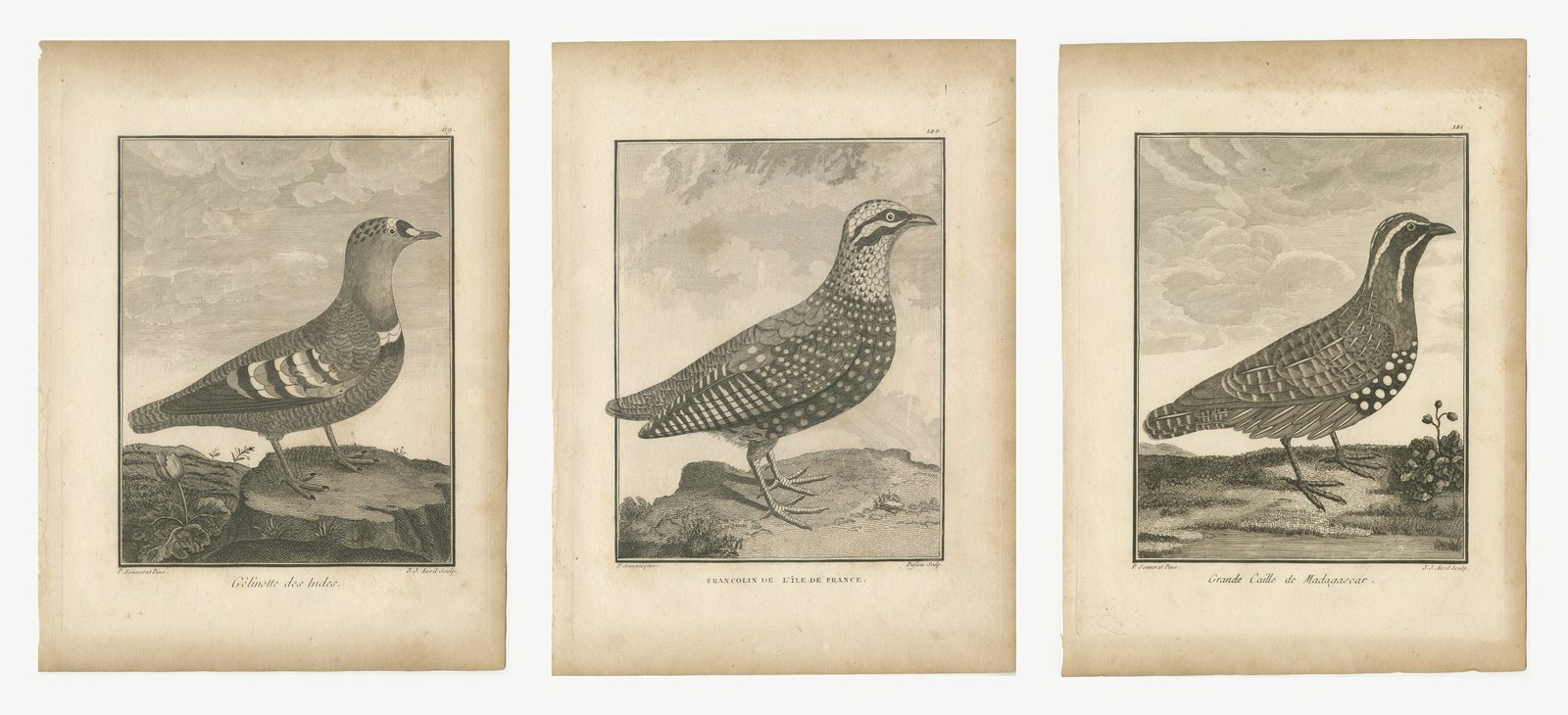
Grouse, Francolin and Quail of the Indies, Three Antique Plates, 1806
$520 (£395, €470)
Period original, not a reproduction.
Shipped from the Netherlands, flat or rolled, insured and tracked, worldwide. Returns accepted within 14 days.
- Date
- 1806
- Size
- 11.2 × 8.3 in (28.5 × 21 cm)
- Technique
- Copper Engraving
- Coloring
- Uncolored
- Condition
- Good. Noticeable uneven toning on some sheets. Marked handling soiling along the edges of all three sheets. Scattered light foxing in the margins of all three sheets. Slight wear at the corners of two of the three sheets.
- Period
- Early 19th century
- Section
- Birds
- Reference
- BG-13429-117
What the condition grades mean
- Excellent
- Bright and clean, with no faults worth mentioning.
- Very good
- Only light signs of age, such as faint toning.
- Good
- Normal signs of age for a sheet of this period: toning, some foxing, small marks or neat old repairs.
- Fair
- Clear faults such as staining, tears or repairs, priced to match.
Every fault we see is written in the condition note, and the whole sheet is shown uncropped in the photos.
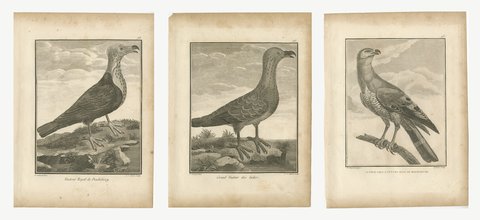
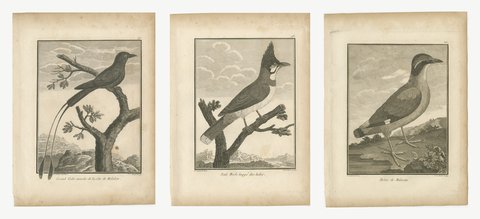
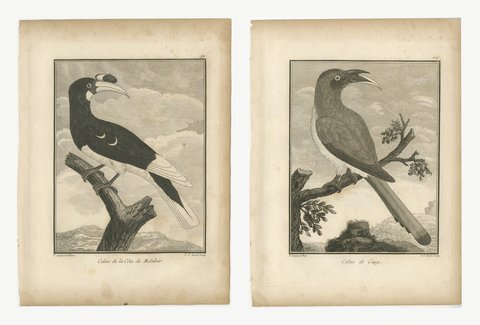
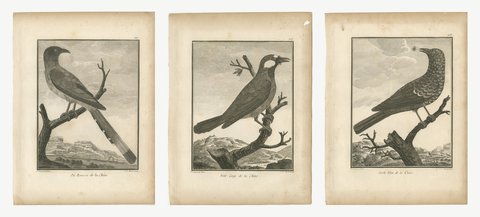
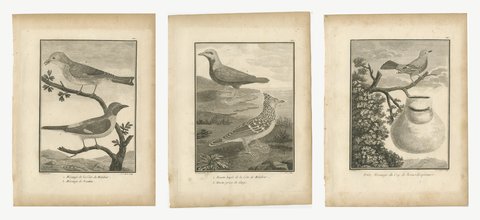
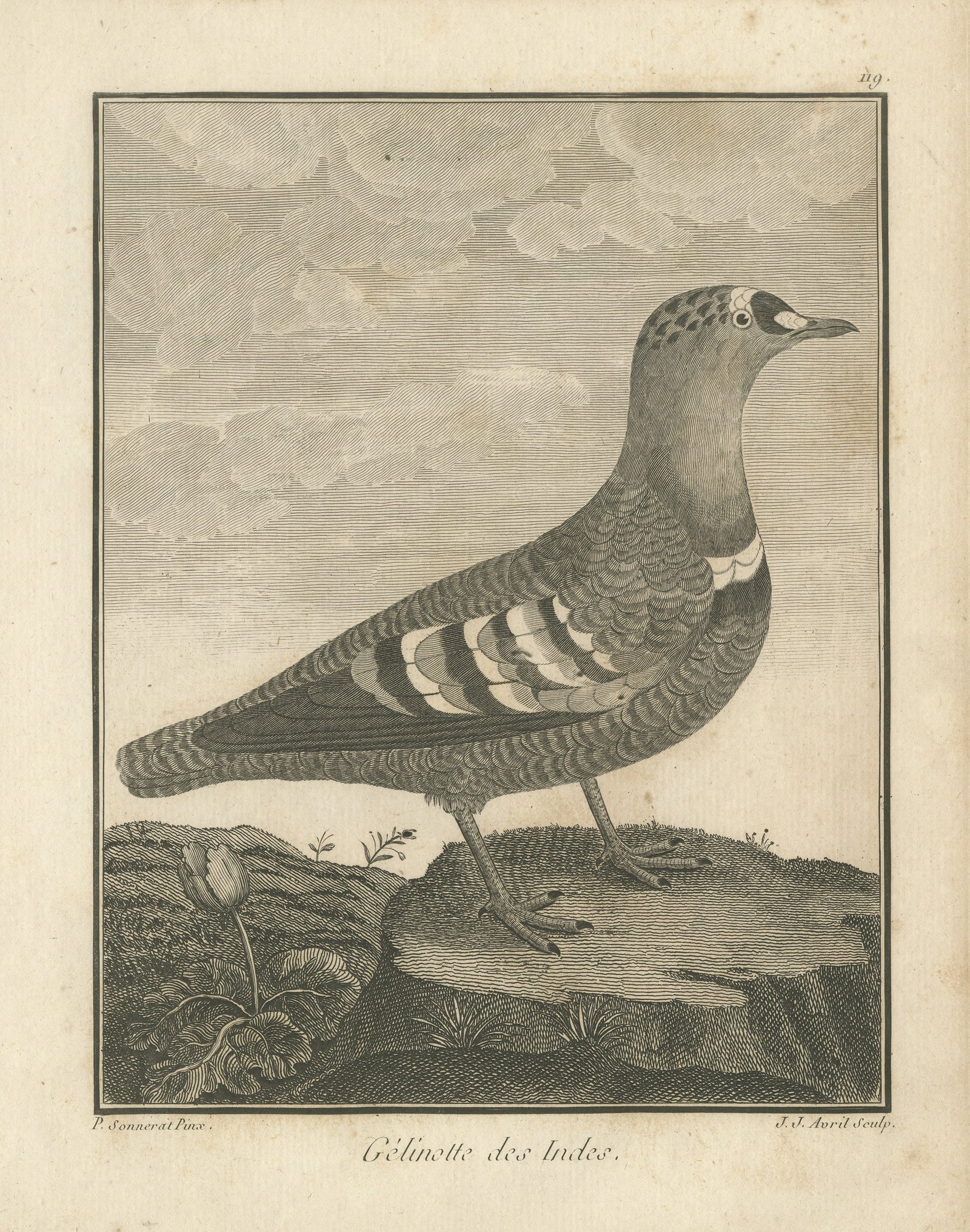
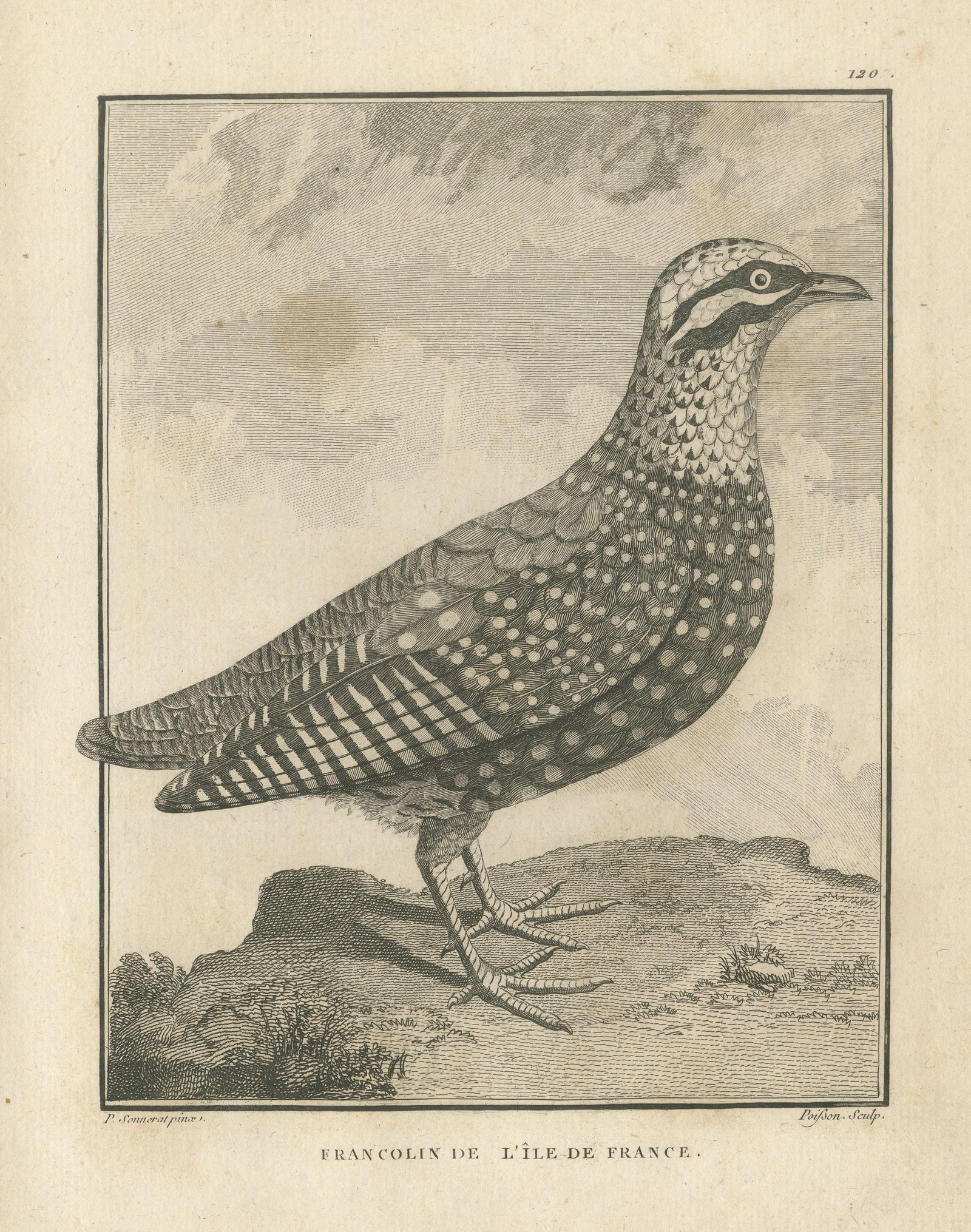
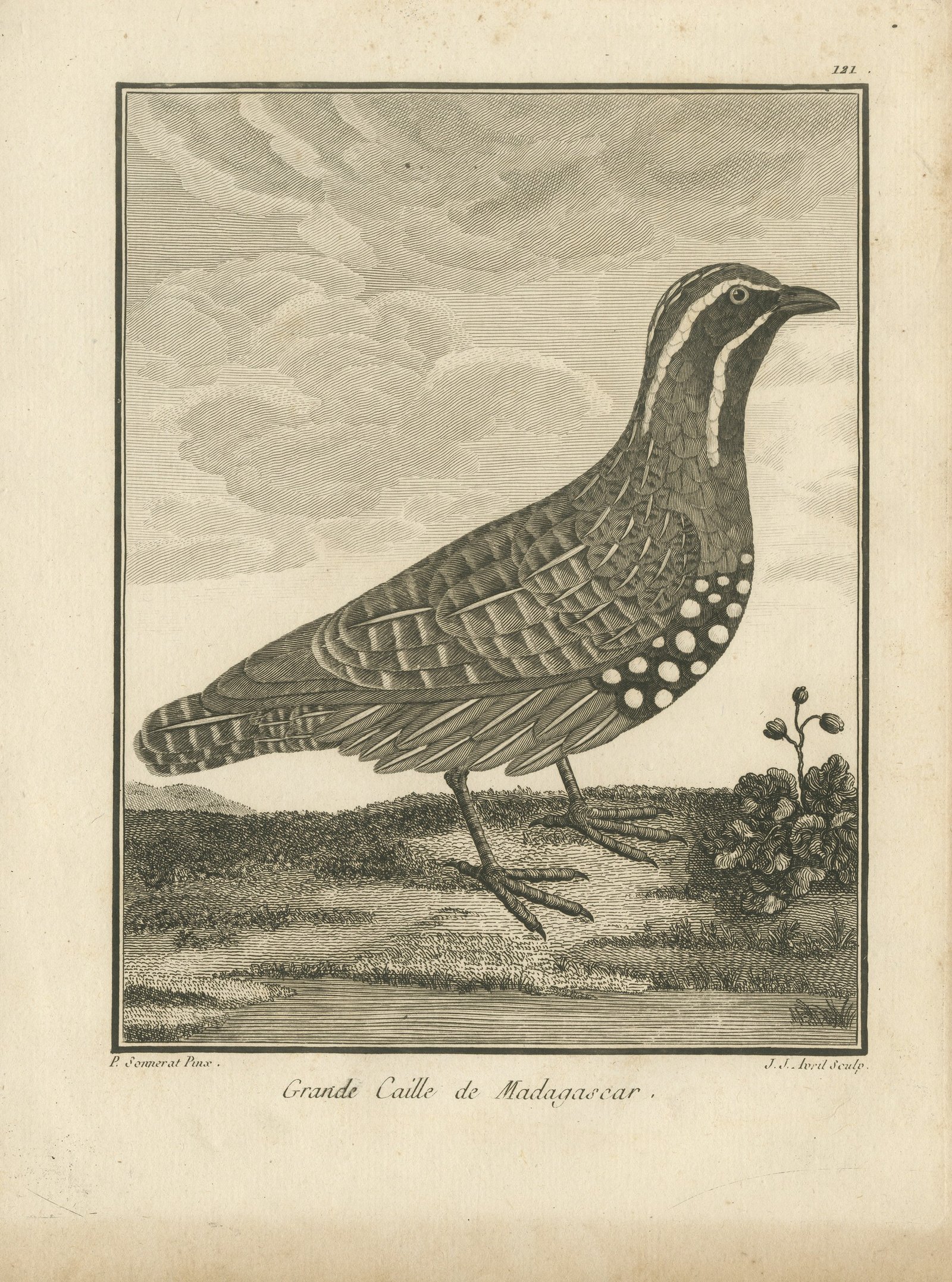
This set of three original antique copper engravings, Plates 119, 120 and 121 from Sonnerat's Voyage aux Indes Orientales et a la Chine, is sold as one set. They are three original sheets sold together as one lot, and the set is never split. Plate 119 shows a grouse of the Indies standing on the ground in profile, the mottled plumage and short rounded wing carefully worked. Plate 120 shows the francolin of the Isle of France, the island now called Mauritius, standing in profile among low plants. Plate 121 shows the great quail of Madagascar standing in profile, the rounded body and finely barred plumage shown in detail. Each sheet carries its engraved plate number at the upper right, the artist and engraver credits at the foot of the image and its caption lettered beneath.
The sheets come from the Collection de planches pour servir au Voyage aux Indes Orientales et a la Chine, the plate volume issued in Paris by Dentu, Imprimeur-Libraire of the quai des Augustins, in 1806. The plates were engraved on copper after drawings Pierre Sonnerat made in the field between 1774 and 1781, while he served the French crown as a naval commissary at Yanam and Pondicherry and traveled on from India to China, Malacca, Madagascar and the Cape of Good Hope. The images are copper engravings, printed in black on laid paper with a clear plate mark, the lettering cut below each image in the same plate. No color was applied, which is how the volume was issued.
The bird plates run for nearly thirty sheets through the middle of the volume and cover the Coromandel and Malabar coasts, Gingi and Pondicherry, Malacca, China, Madagascar and the Cape. Each bird is drawn at the full height of the plate against a plain ground, usually on a branch or a rock, with the plumage worked up line by line in the engraving. All three sheets are the same size and the same orientation and come from one volume of one book, which is why they are offered as a set and not one at a time. Pierre Sonnerat, born in Lyon in about 1748 and dead in Paris in 1814, was the nephew and private secretary of Pierre Poivre, the colonial administrator who broke the Dutch monopoly on the spice trade. Sonnerat traveled in the Philippines and the Moluccas, in Mauritius and Reunion, and then through India, China, Malacca, Madagascar and the Cape. He drew what he saw, which is why the plates have a directness that engravings worked up in Paris from other men's notes rarely have.
Noticeable uneven toning on some sheets. Marked handling soiling along the edges of all three sheets. Scattered light foxing in the margins of all three sheets. Slight wear at the corners of two of the three sheets.
These are original antique prints, not modern reproductions. This item is sold unframed.