Close-ups
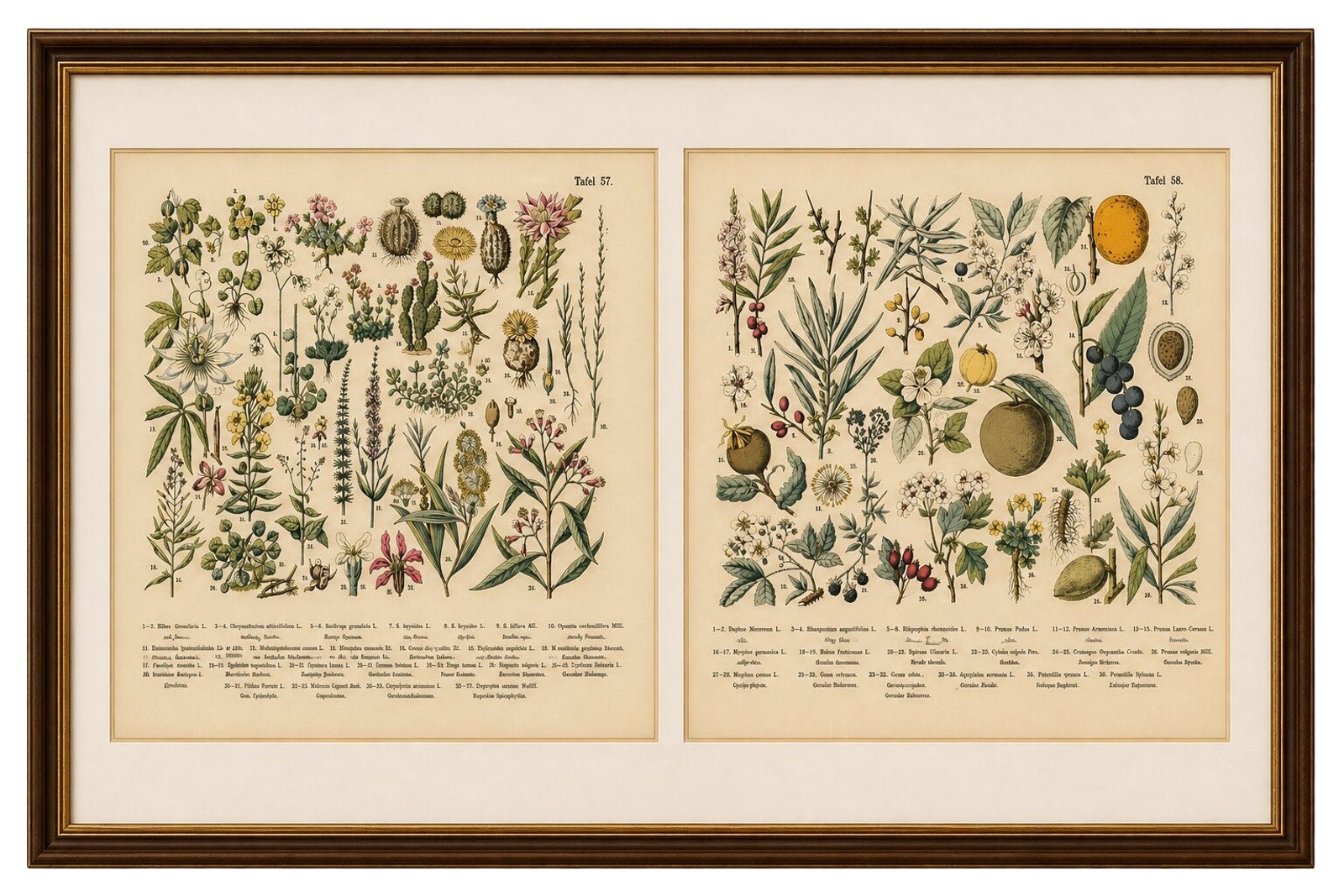
Framed and on the wall
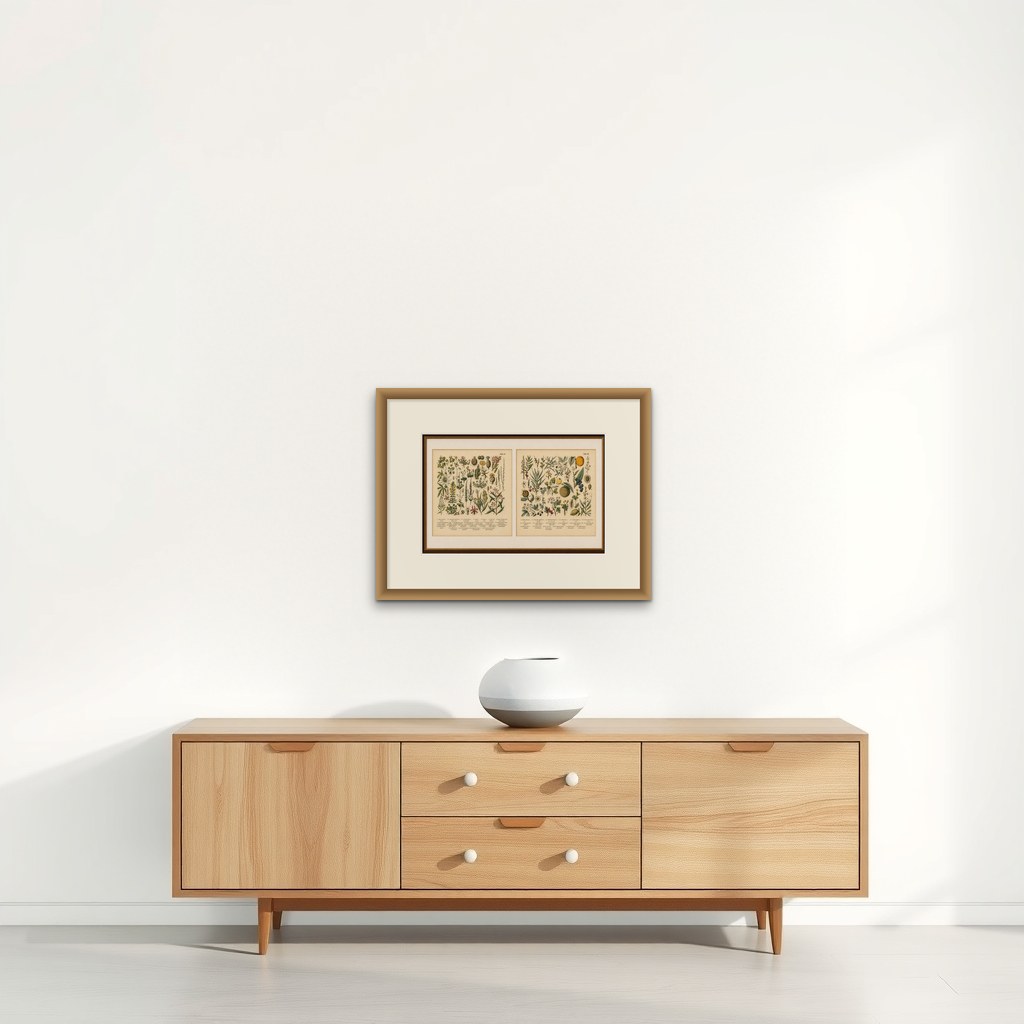

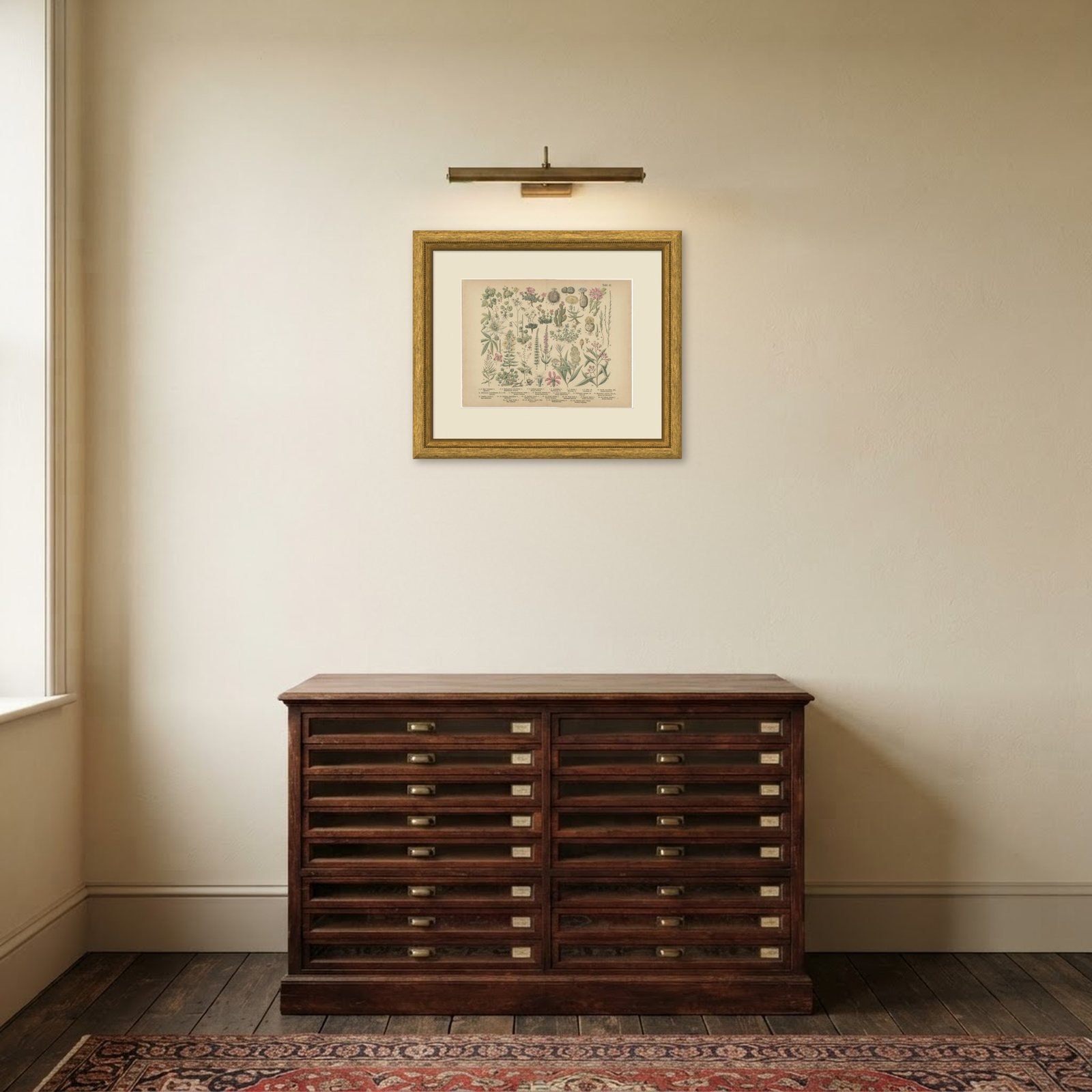
Frame and rooms are illustrations of how the print could look; the description says what is included.
German Botanical Plates, Exotic Plants & Fruit Trees, Stuttgart c.1890
€310€21730% off ($240, £180, €217)
Period original, not a reproduction.
Shipped from the Netherlands, flat or rolled, insured and tracked, worldwide. Returns accepted within 14 days.
- Date
- 1890
- Size
- 12.6 × 16.5 in (32 × 42 cm)
- Condition
- Good. Overall in good condition for age. Light toning consistent with late 19th-century chromolithographs. Original fold lines visible as issued. Minor spotting or faint foxing may be present.
- Period
- Late 19th century
- Section
- Botanical
- Reference
- f_49919902
- Color
- Printed color
What the condition grades mean
- Excellent
- Bright and clean, with no faults worth mentioning.
- Very good
- Only light signs of age, such as faint toning.
- Good
- Normal signs of age for a sheet of this period: toning, some foxing, small marks or neat old repairs.
- Fair
- Clear faults such as staining, tears or repairs, priced to match.
Every fault we see is written in the condition note, and the whole sheet is shown uncropped in the photos.
German Botanical Plates, Exotic Plants & Fruit Trees, Stuttgart c.1890
Description:
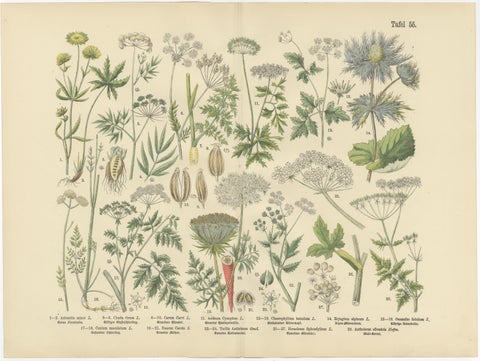
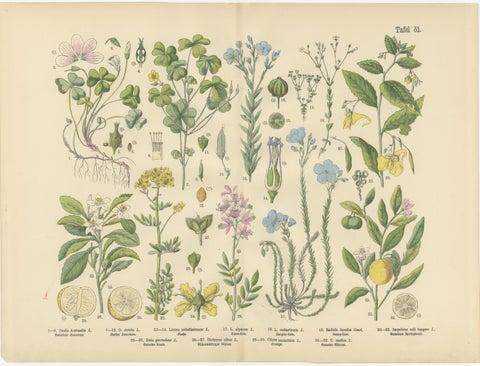
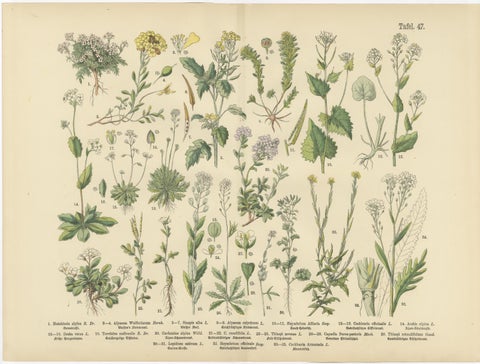
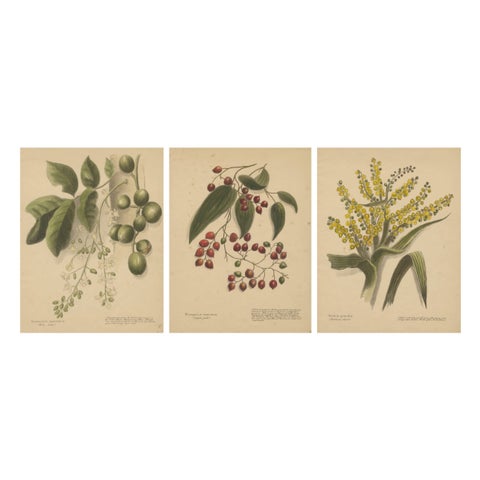
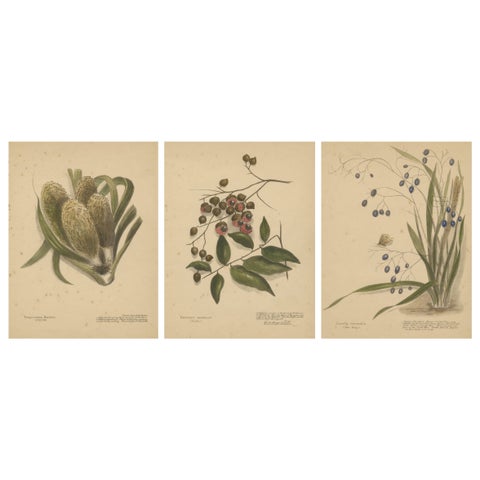
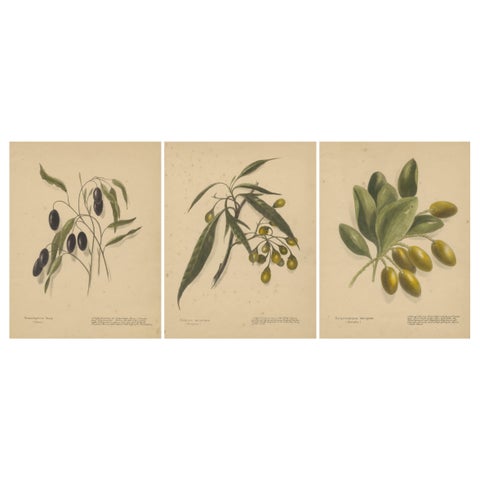
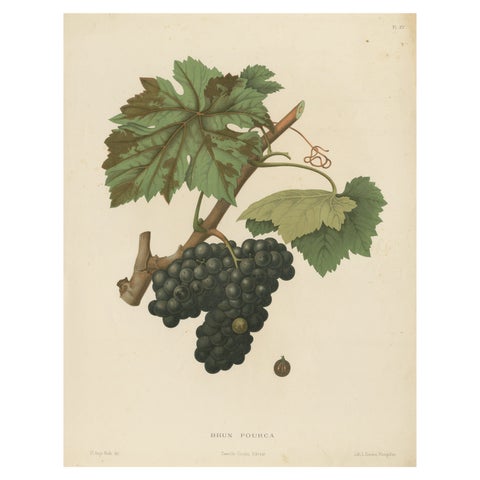
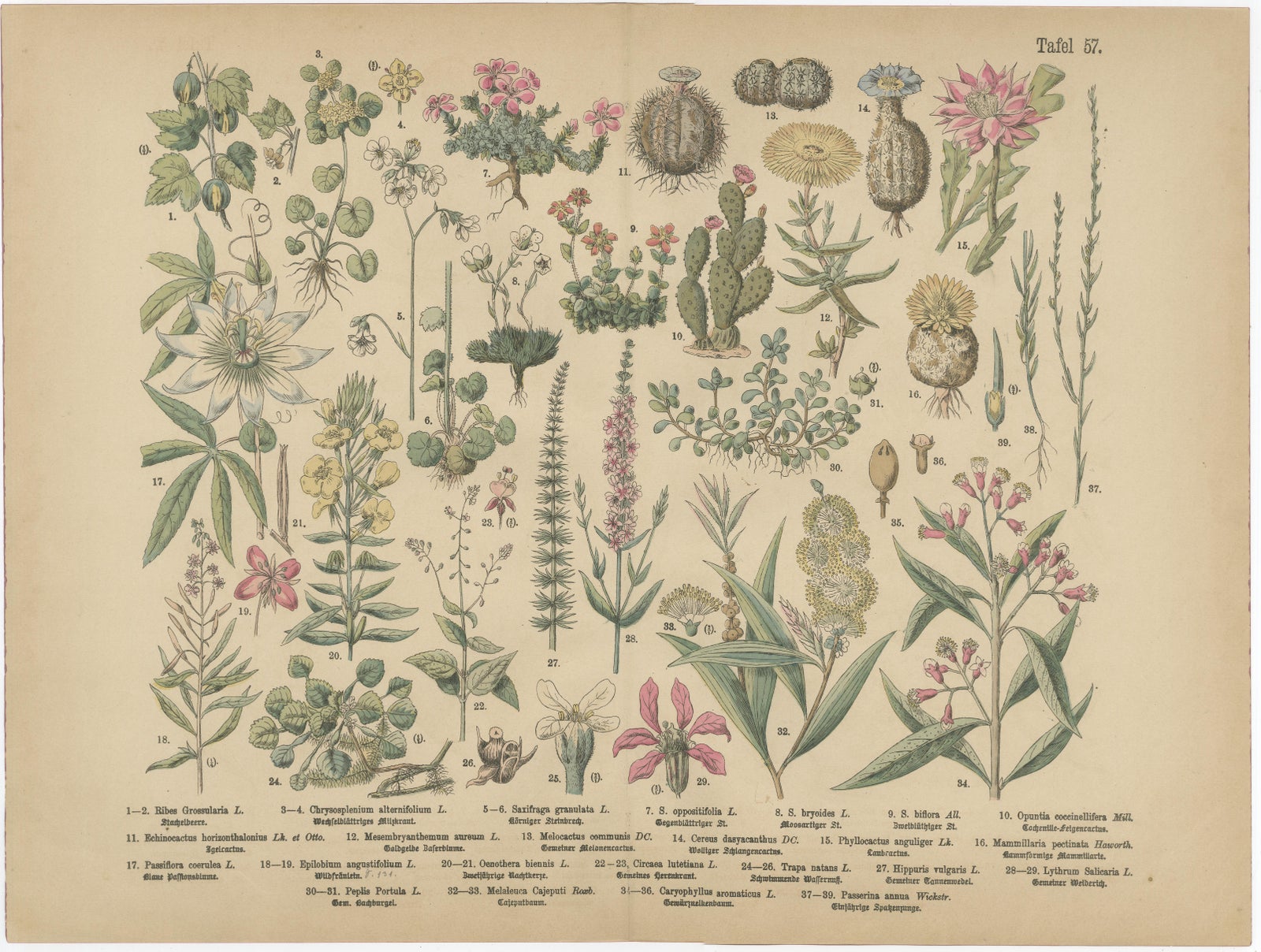
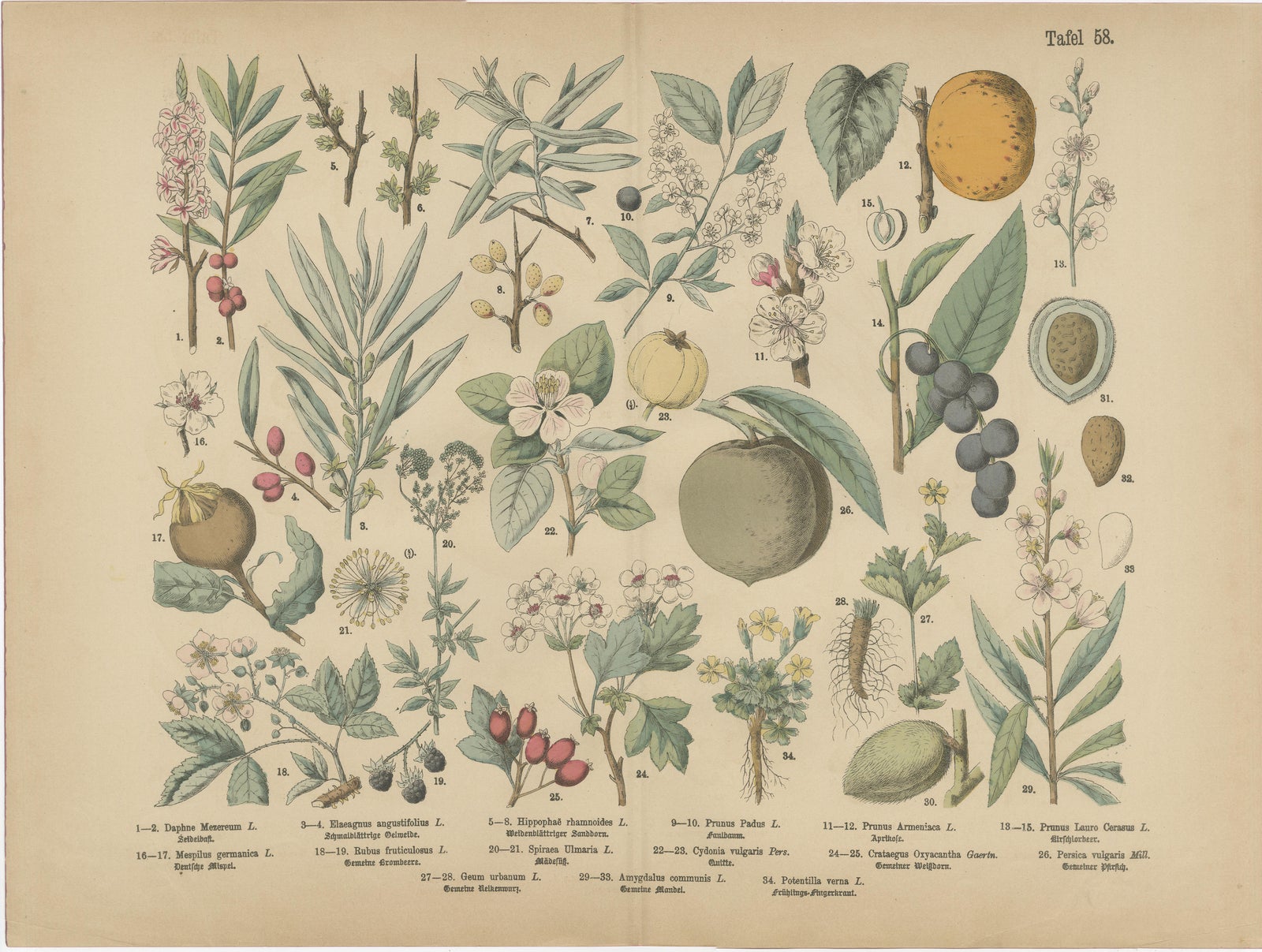
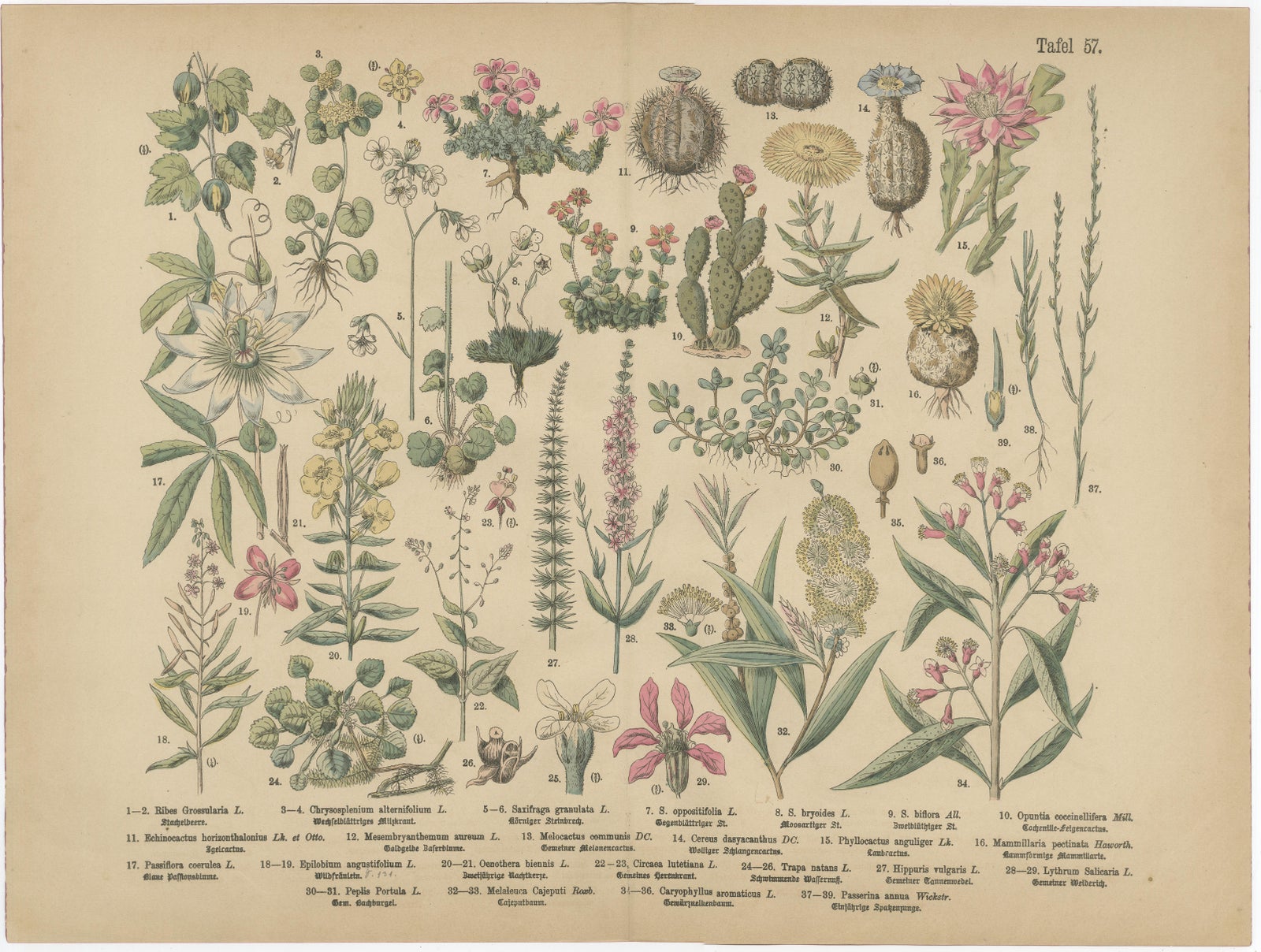
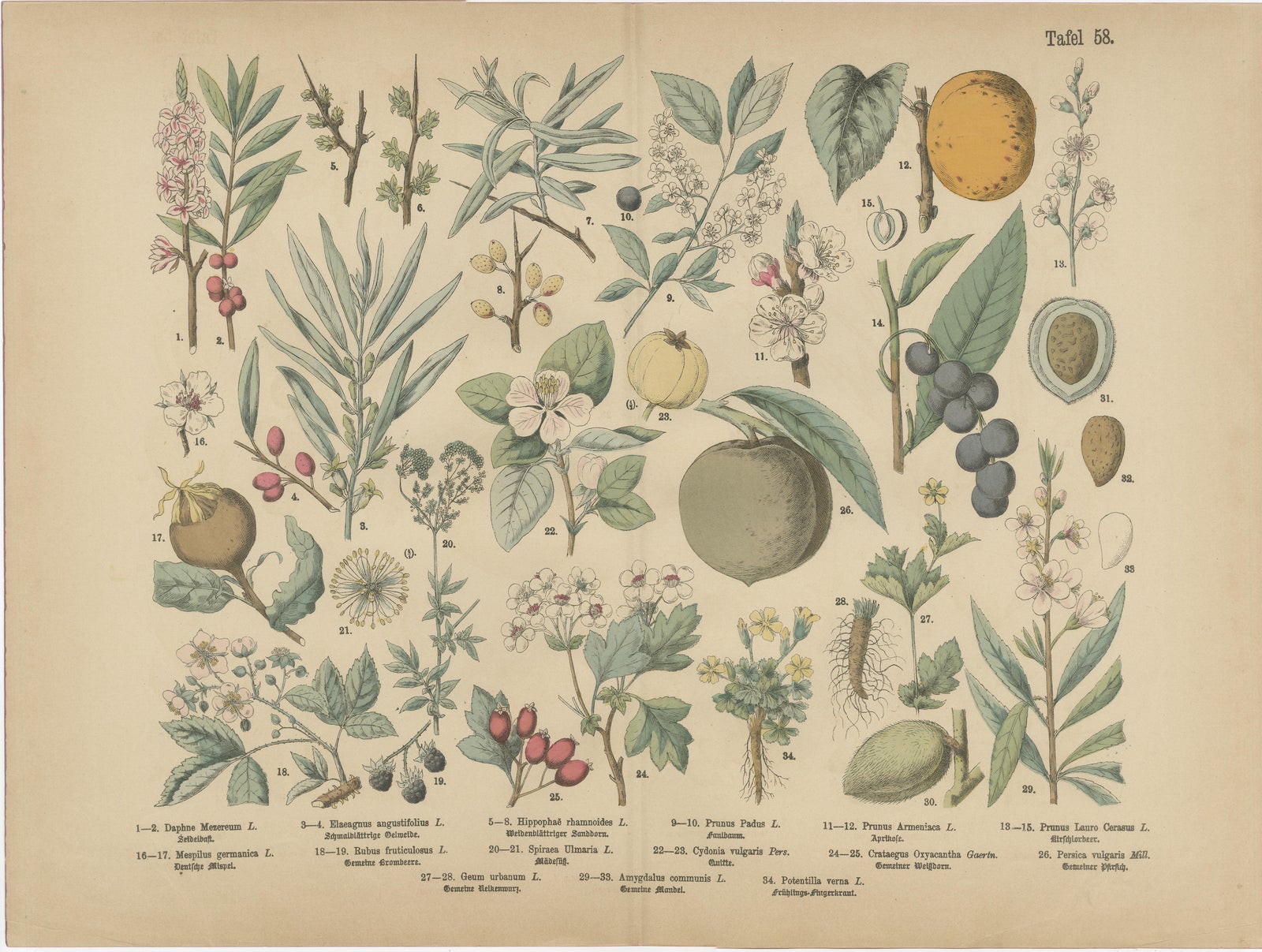
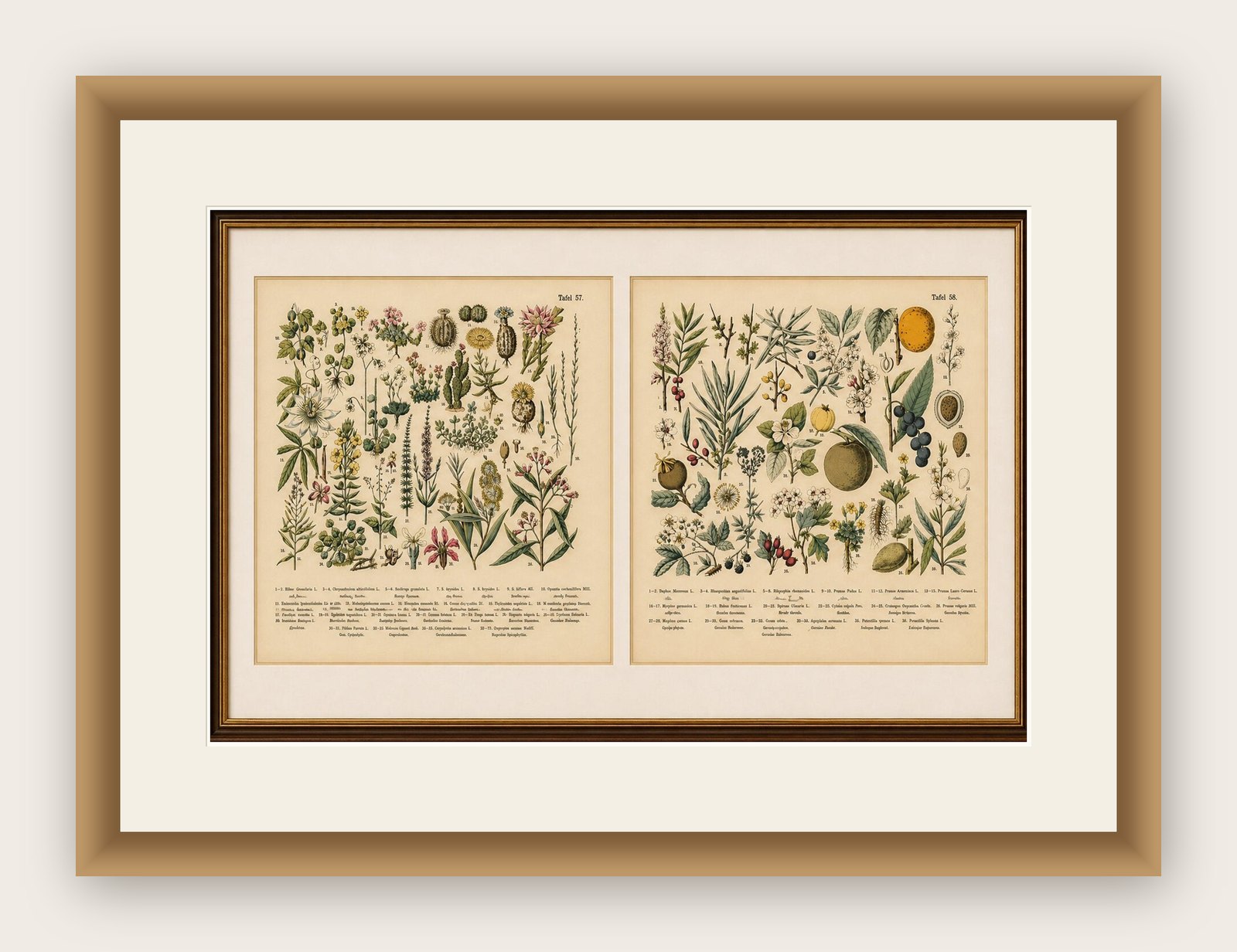
A striking and visually diverse pair of antique botanical plates (Tafeln 57–58), published in Stuttgart circa 1890 as part of Naturgeschichte des Pflanzenreichs by M. Fünfstück. These chromolithographs stand out within the series for their lively mix of ornamental flowers, exotic plants, cacti, and fruit-bearing trees, combining scientific illustration with strong decorative appeal.
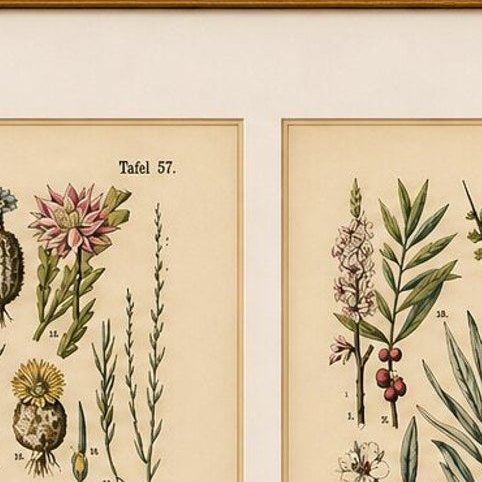
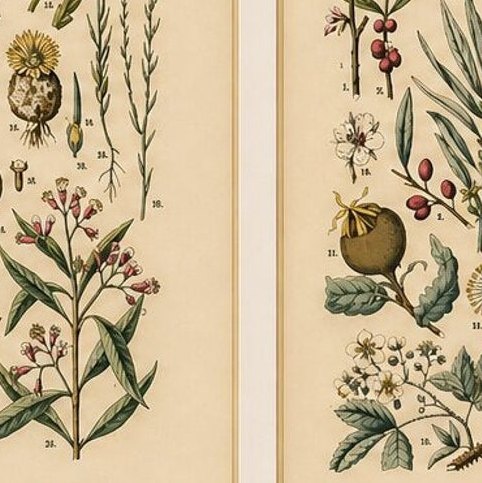
Plate 57 presents an eclectic botanical composition including Passionflower (Passiflora), Evening Primrose (Oenothera), Stonecrop (Sedum), Loosestrife (Lythrum), and several cactus varieties such as Opuntia and Mammillaria. The contrast between delicate blossoms and sculptural succulents creates a dynamic and visually engaging plate, further enriched by detailed seed pods and floral sections.
Plate 58 shifts toward fruiting shrubs and trees, featuring recognizable species such as Apricot (Prunus armeniaca), Peach (Prunus persica), Almond (Prunus dulcis), Hawthorn (Crataegus), Medlar (Mespilus germanica), and Sea Buckthorn (Hippophae rhamnoides). The inclusion of fruits, blossoms, and branching structures gives this plate a warm, almost orchard-like character, making it particularly appealing for both collectors and interior designers.
Together, these prints exemplify the late 19th-century German approach to botanical illustration, precise, informative, yet carefully composed for visual harmony. The soft, natural color palette, accented by warm fruit tones and subtle floral hues, allows these works to integrate beautifully into both classic and contemporary interiors.
This is an original antique chromolithograph, not a reproduction.
Condition report:
Overall in good condition for age. Light toning consistent with late 19th-century chromolithographs. Original fold lines visible as issued. Minor spotting or faint foxing may be present. Edges show light age-related wear. Colors remain fresh and attractive.
Framing tips:
These plates work beautifully as a pair or as part of a larger botanical grouping. For a refined contemporary look, use thin black or dark bronze frames with wide off-white mats. For a warmer, classic presentation, choose walnut frames with ivory mats. Ideal for kitchens, dining areas, or garden rooms due to the fruit and plant themes.
Technique: chromolithograph
Maker: M. Fünfstück, Stuttgart, circa 1890