Close-ups
Framed and on the wall
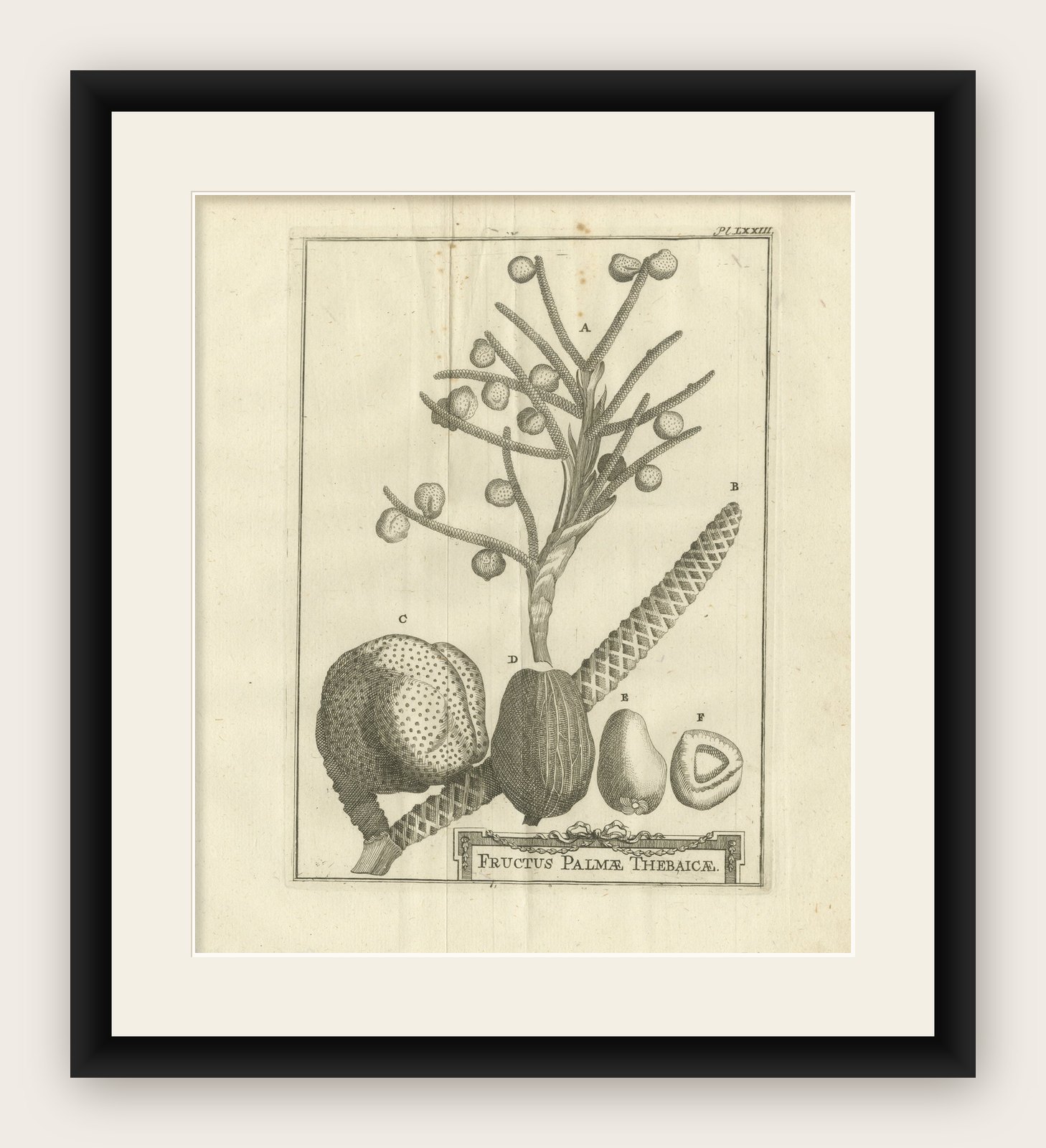


Frame and rooms are illustrations of how the print could look; the description says what is included.
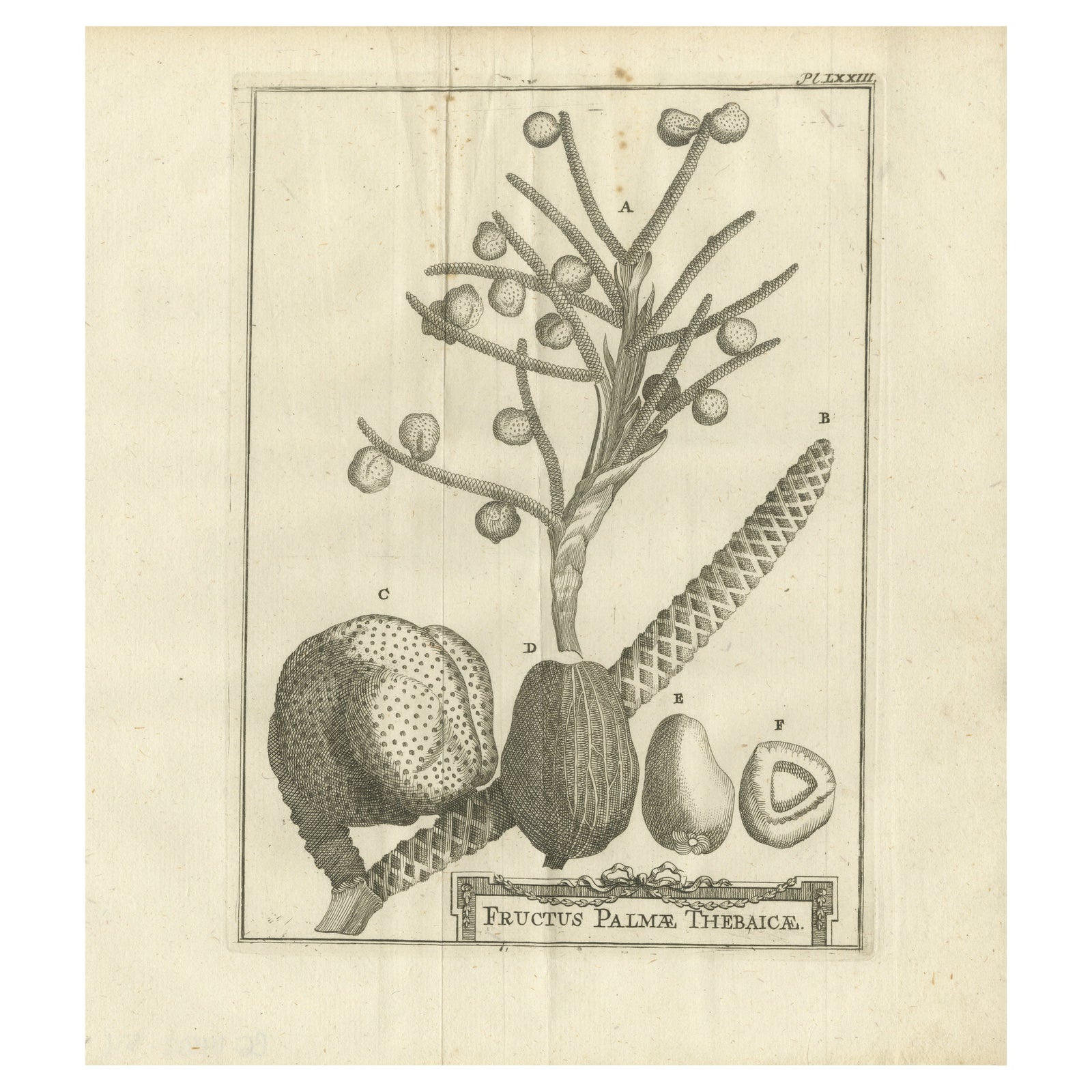
Fruits of the Theban Palm, Botanical Study of Date Palm Egypt c.1776
£205 ($270, €240)
Period original, not a reproduction.
Shipped from the Netherlands, flat, insured and tracked, worldwide. Returns accepted within 14 days.
- Date
- 1776
- Size
- 10.7 × 9.8 in (27.3 × 25 cm)
- Condition
- Good. Condition report: Very good condition. Some minor toning and a vertical centerfold as issued. Plate mark visible. Edges slightly browned but with no distracting flaws.
- Period
- 18th century
- Section
- Botanical
- Reference
- f_46050952
What the condition grades mean
- Excellent
- Bright and clean, with no faults worth mentioning.
- Very good
- Only light signs of age, such as faint toning.
- Good
- Normal signs of age for a sheet of this period: toning, some foxing, small marks or neat old repairs.
- Fair
- Clear faults such as staining, tears or repairs, priced to match.
Every fault we see is written in the condition note, and the whole sheet is shown uncropped in the photos.
Fruits of the Theban Palm, Botanical Study of Date Palm Egypt c.1776
Description:
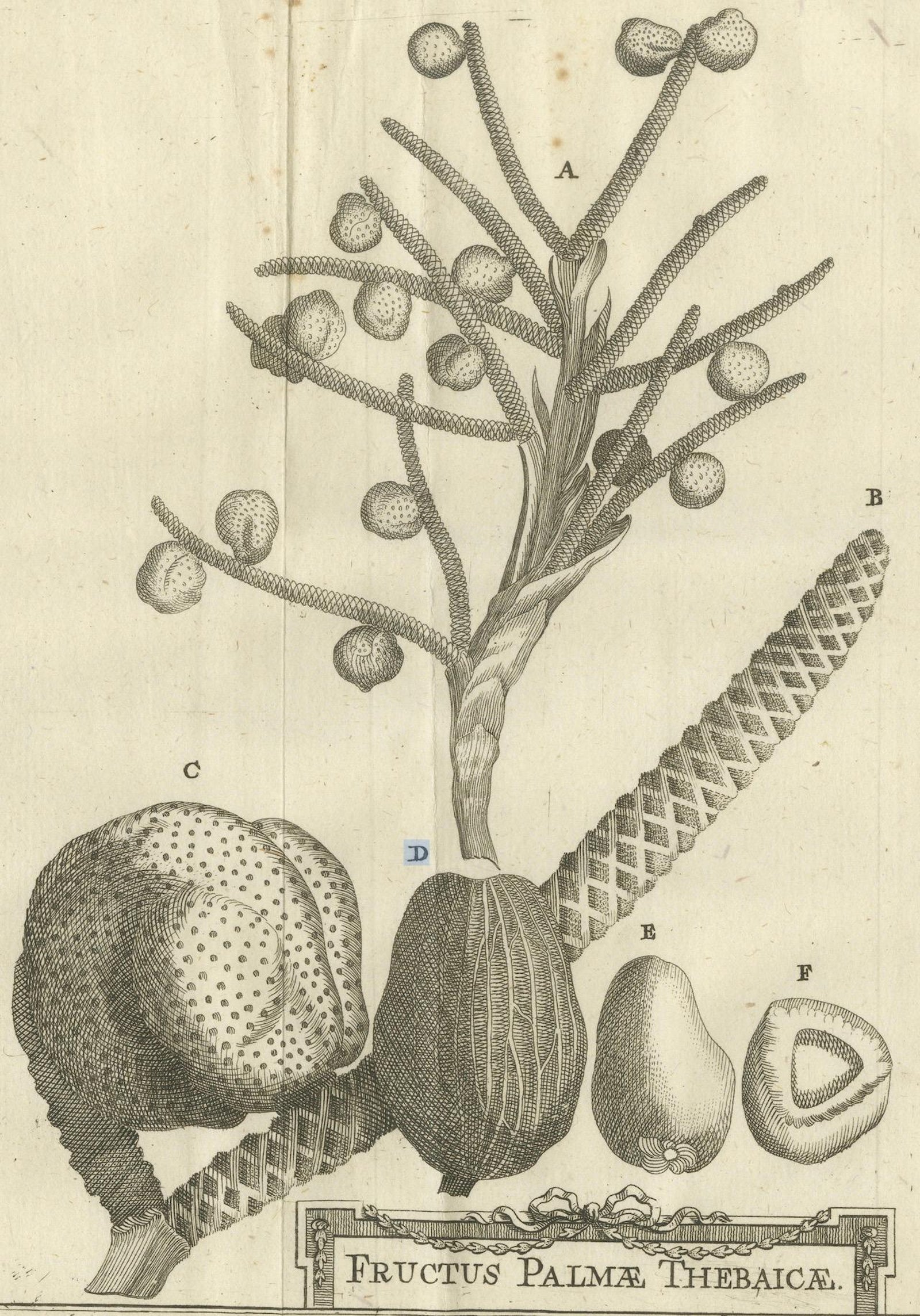
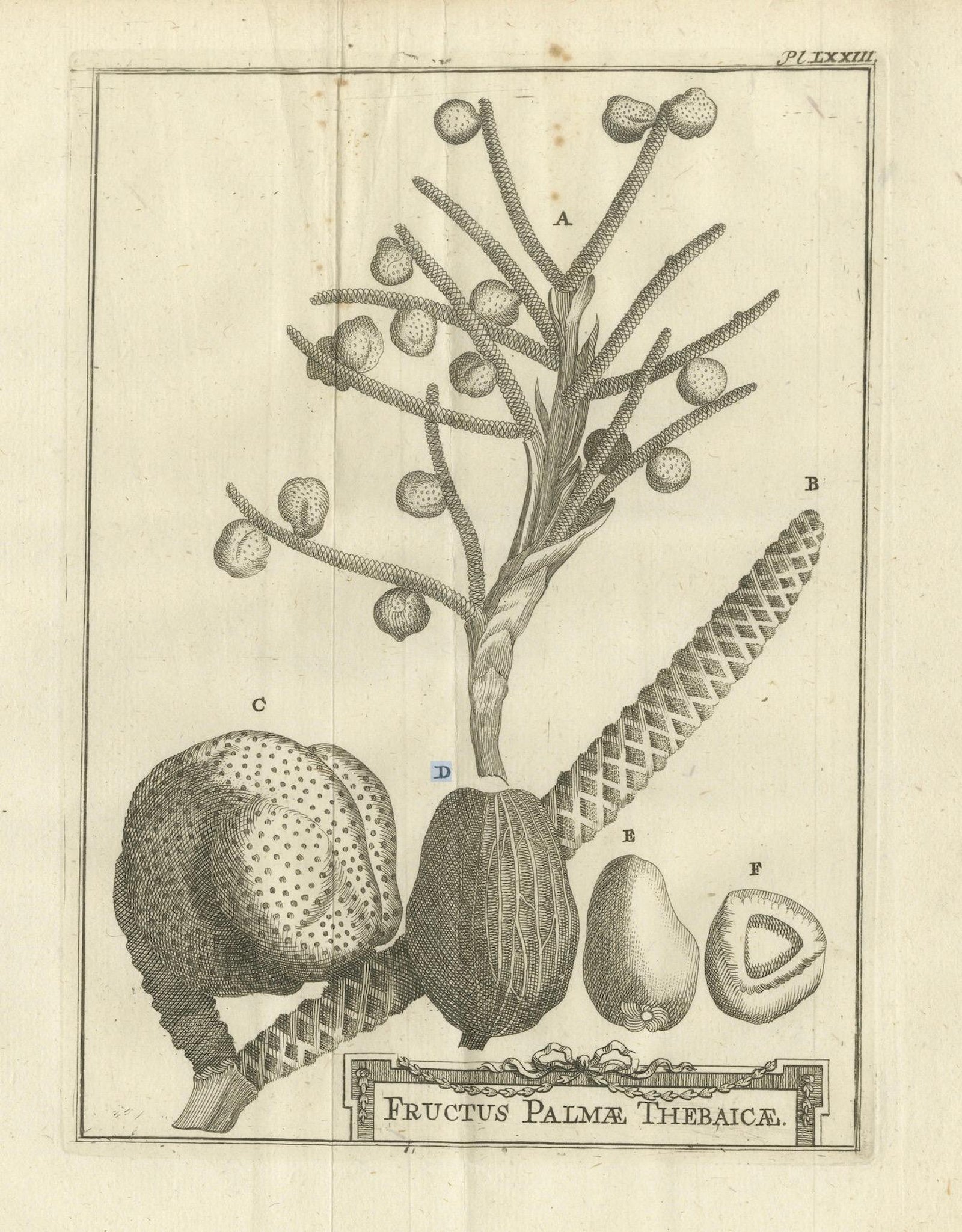
This antique botanical engraving, titled "Fructus Palmæ Thebaicæ," offers a striking and detailed study of the fruit-bearing parts of the Theban date palm, a variety native to Upper Egypt. Dating from around 1776, this print is a fine example of Enlightenment-era scientific illustration, combining aesthetic beauty with botanical accuracy.
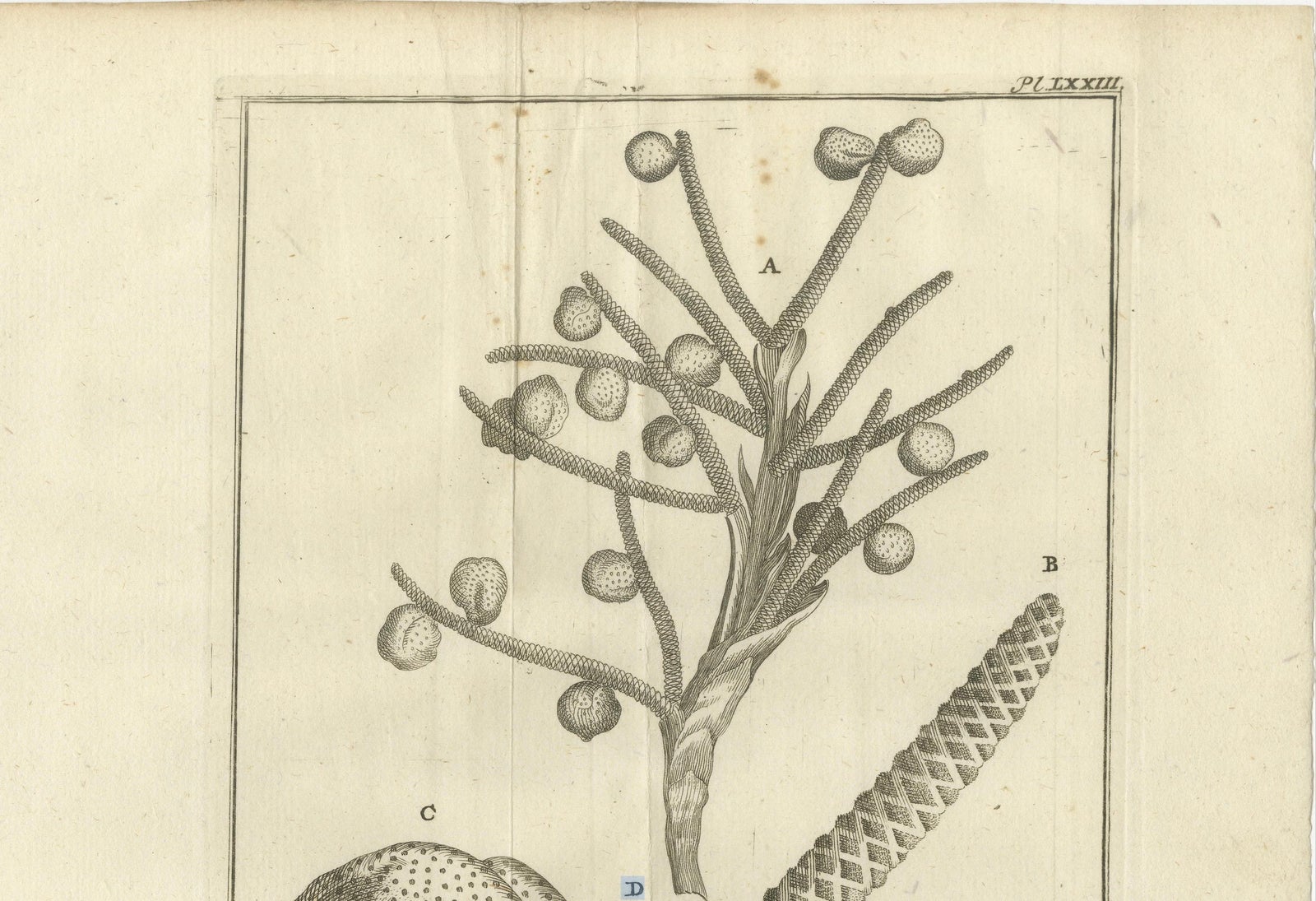
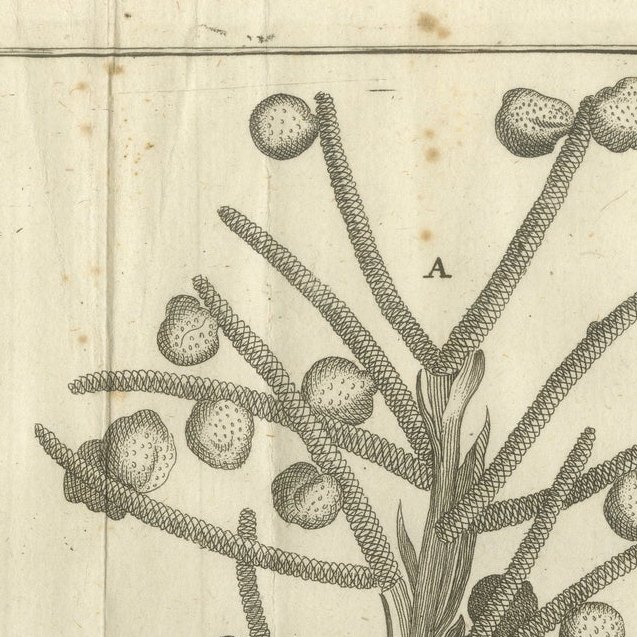
The central illustration (marked A) shows the branching stalks laden with developing fruit and pollen clusters of the palm tree. The texture and shading vividly convey the fibrous nature of the stems and the structure of the fruit-bearing segments. At right (B), a tightly bound unopened palm spathe is depicted with its characteristic scaly surface.
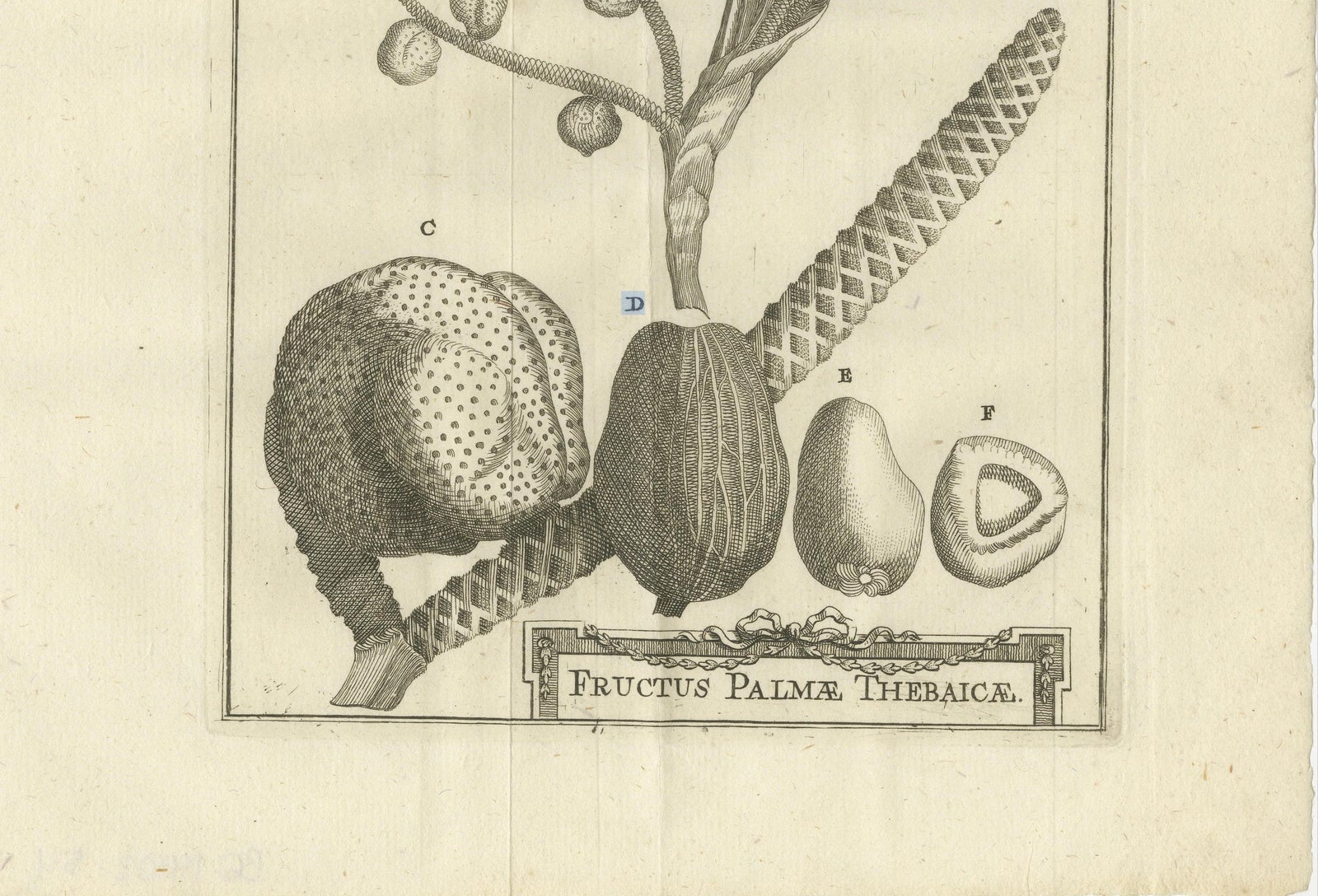
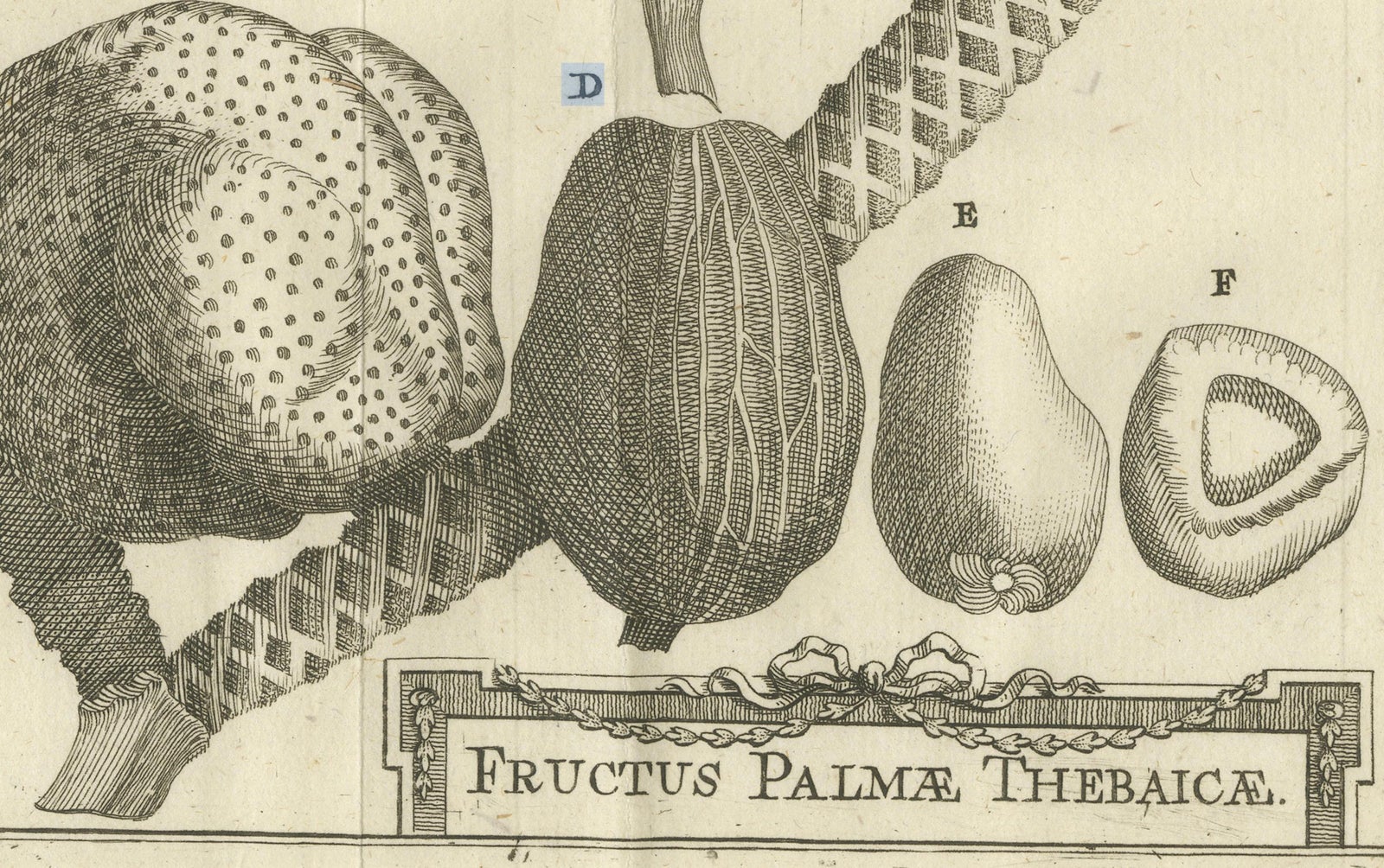
On the lower left (C), the print shows a larger, split fruit body, possibly a ripe date or inflorescence, rendered with impressive texture, capturing the fine dotted surface. At the center bottom (D), a mature fruit or seedpod is presented in full. Figures E and F show detailed views of the seed or pit from two perspectives, one revealing a triangular cavity within the core.
This engraving was likely published in a Dutch or German encyclopedic work or travel account during the late 18th century, reflecting the period’s growing interest in natural history and exotic flora. The Theban palm (Phoenix thebaica or a local variant of the date palm, *Phoenix dactylifera*) was a significant agricultural and cultural symbol in ancient Egypt, valued for its sweet fruits and versatile fibers.
This print would appeal to collectors of botanical prints, scholars of Egyptology, or those with an interest in the early scientific documentation of the natural world.
Condition report: Very good condition. Some minor toning and a vertical centerfold as issued. Plate mark visible. Edges slightly browned but with no distracting flaws.
Framing tips: Best displayed in a natural wood or black frame with a pale ivory or soft olive mat to highlight the earthy, organic detail of the drawing.
Technique: Engraving
Maker: Anonymous, Dutch or German school, circa 1776