Close-ups
Framed and on the wall


Frame and rooms are illustrations of how the print could look; the description says what is included.
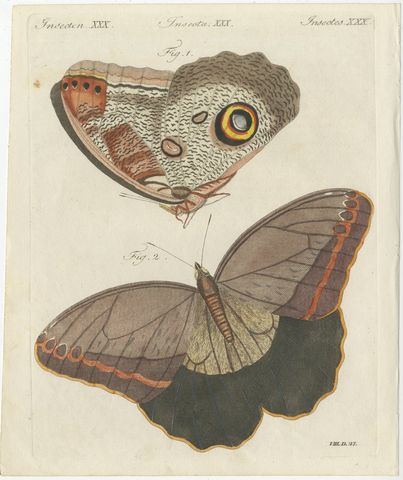
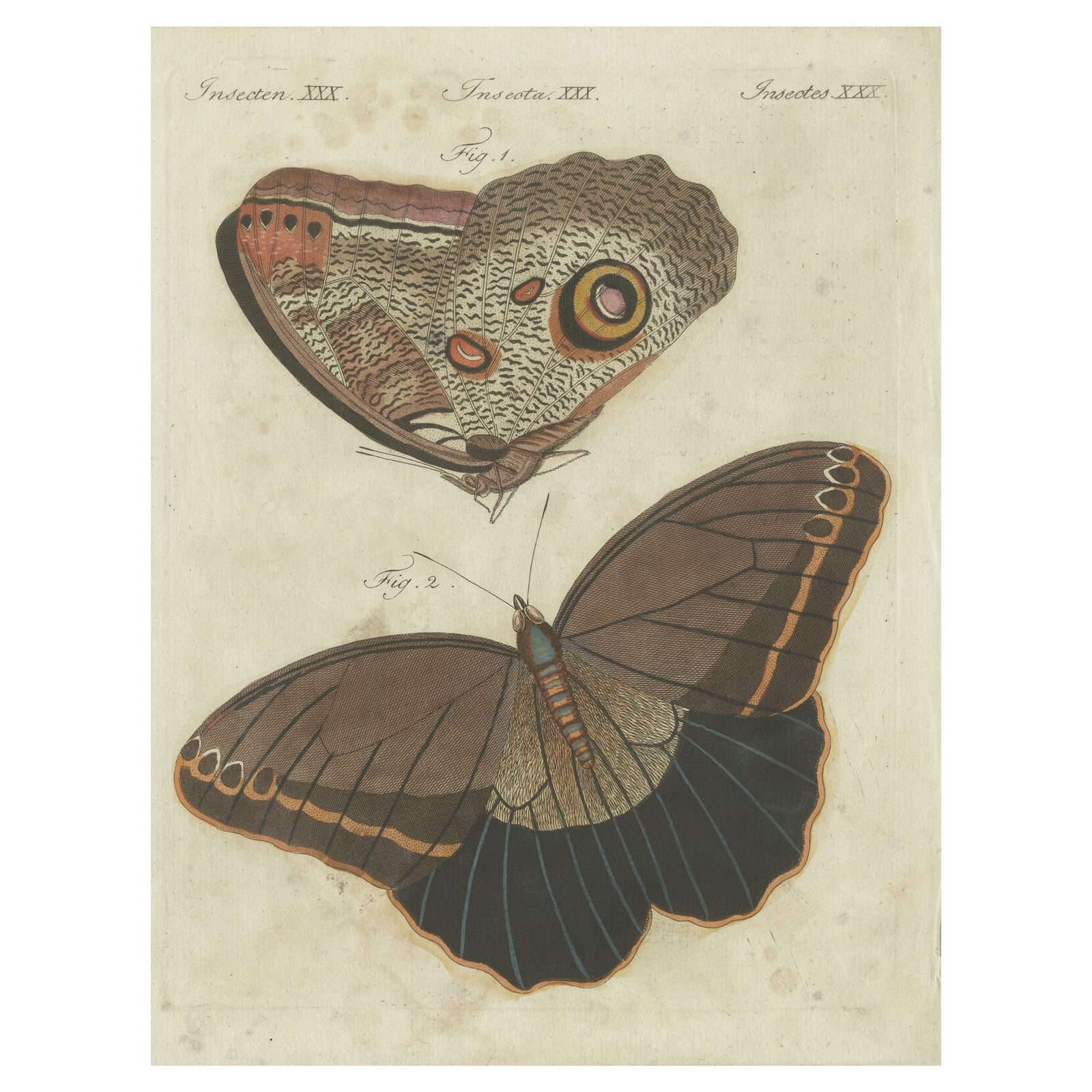
Forest Giant Owl Butterfly (Caligo eurilochus) from Suriname, Published in 1802
$100 (£75, €90)
Period original, not a reproduction.
Shipped from the Netherlands, flat, insured and tracked, worldwide. Returns accepted within 14 days.
- Date
- 1802
- Size
- 9.8 × 7.5 in (25 × 19 cm)
- Condition
- Fair. Handcoloured engraving from 1802 shows light foxing and minor toning consistent with age. Colors remain vivid, paper edges slightly worn but no major tears or creases. Suitable for framing with care to preserve current condition.
- Period
- Early 19th century
- Artist or book
- Bertuch
- Section
- Insects and butterflies
- Reference
- f_42445052
Title: Forest Giant Owl Butterfly (Caligo eurilochus)
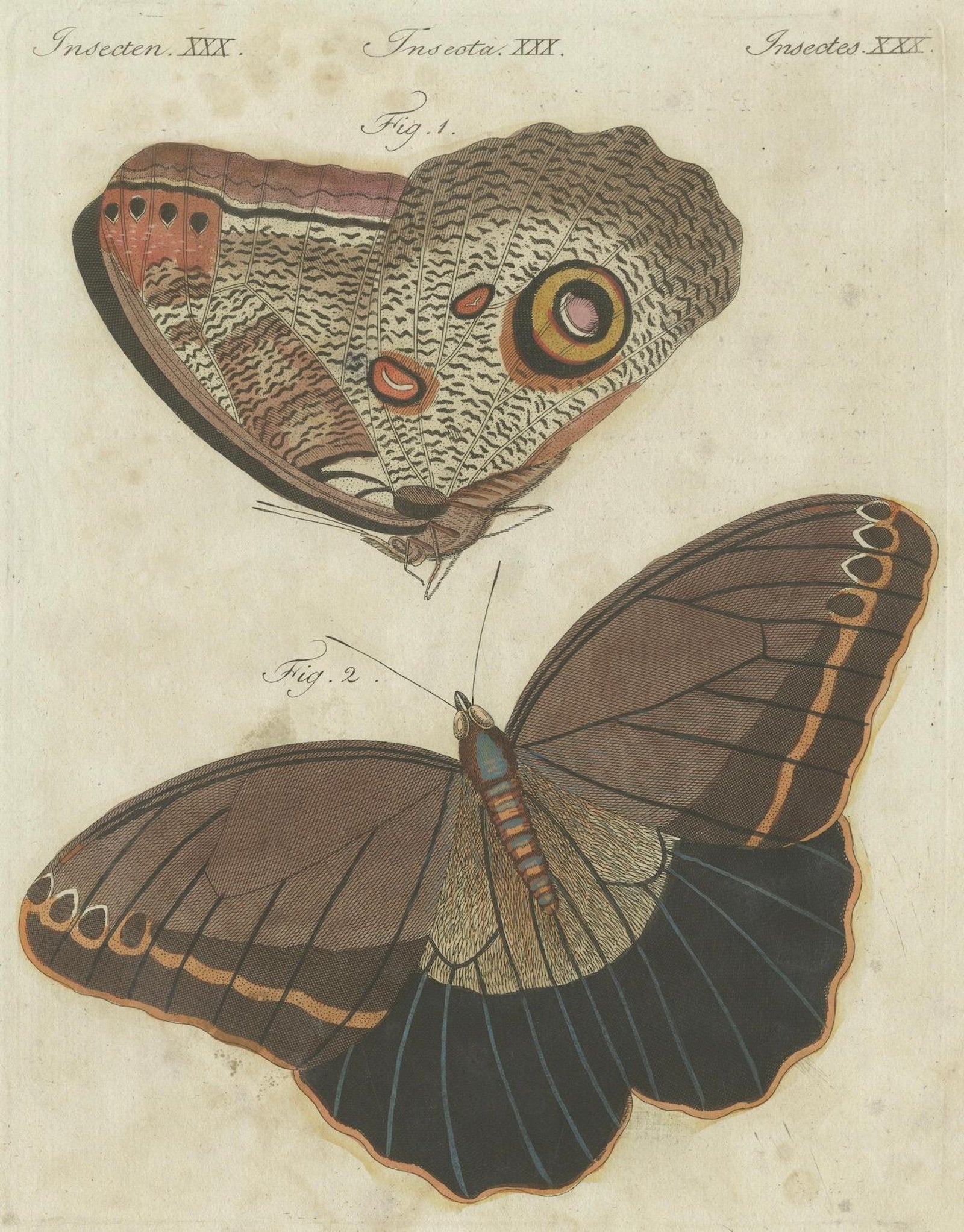
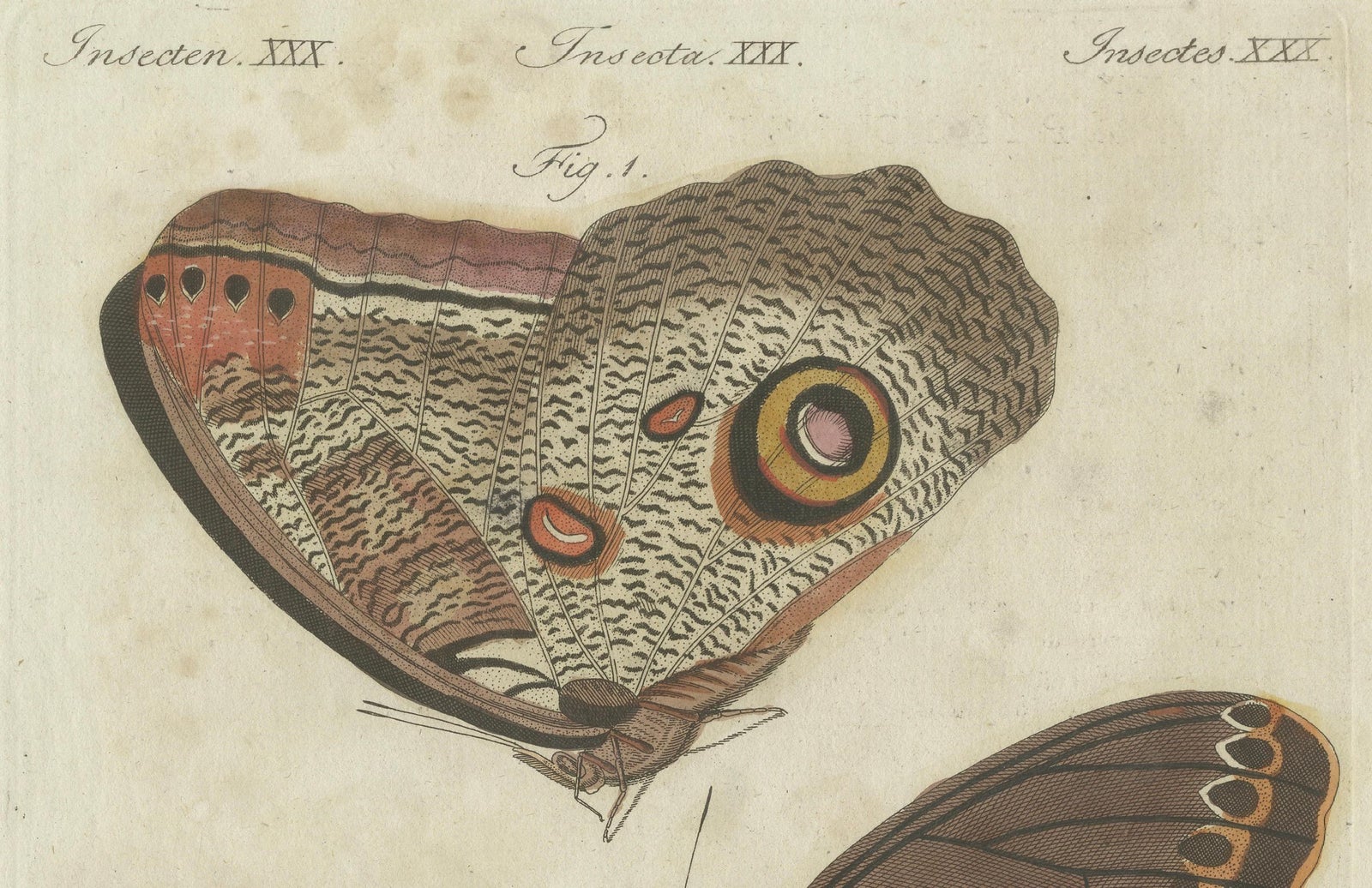
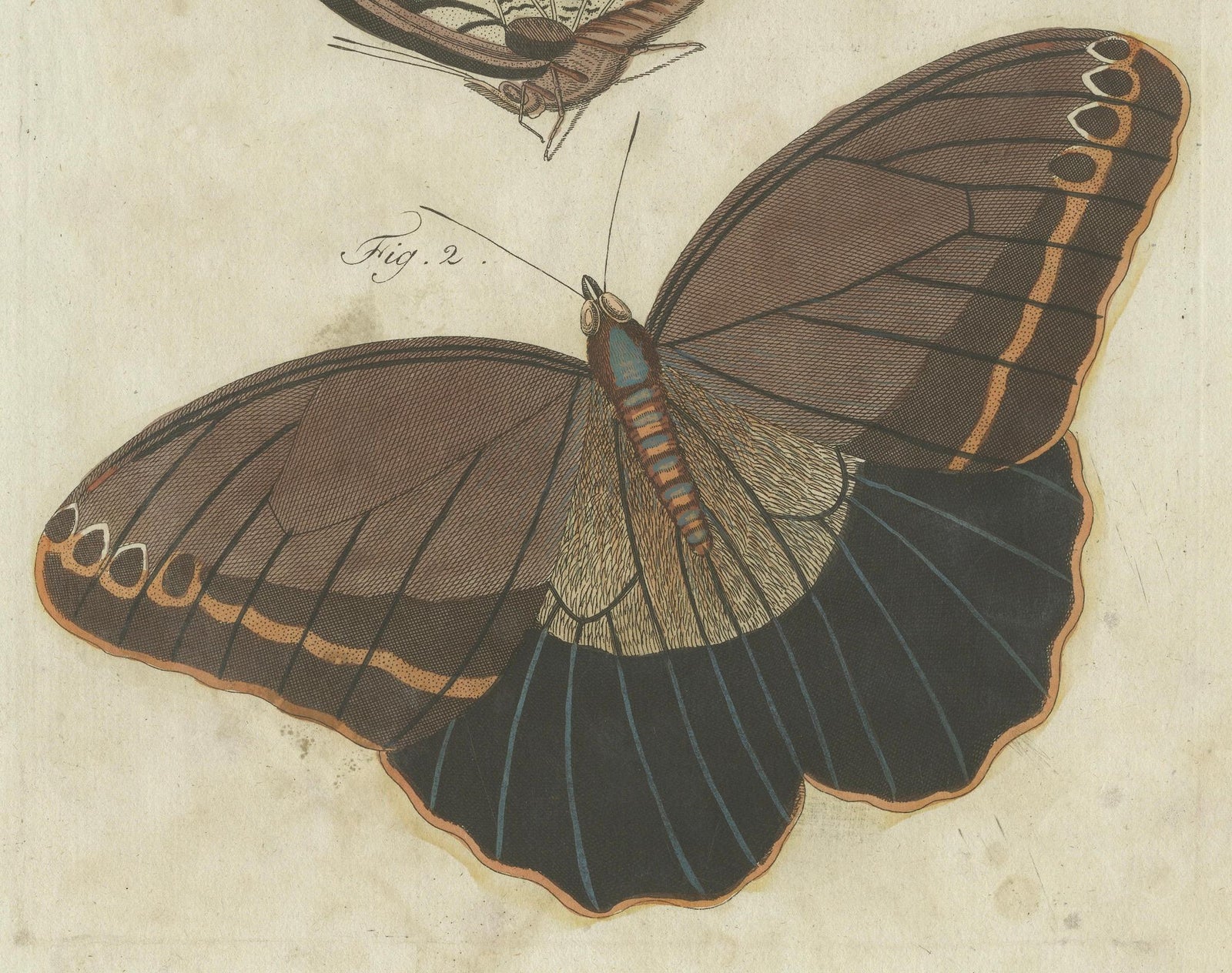
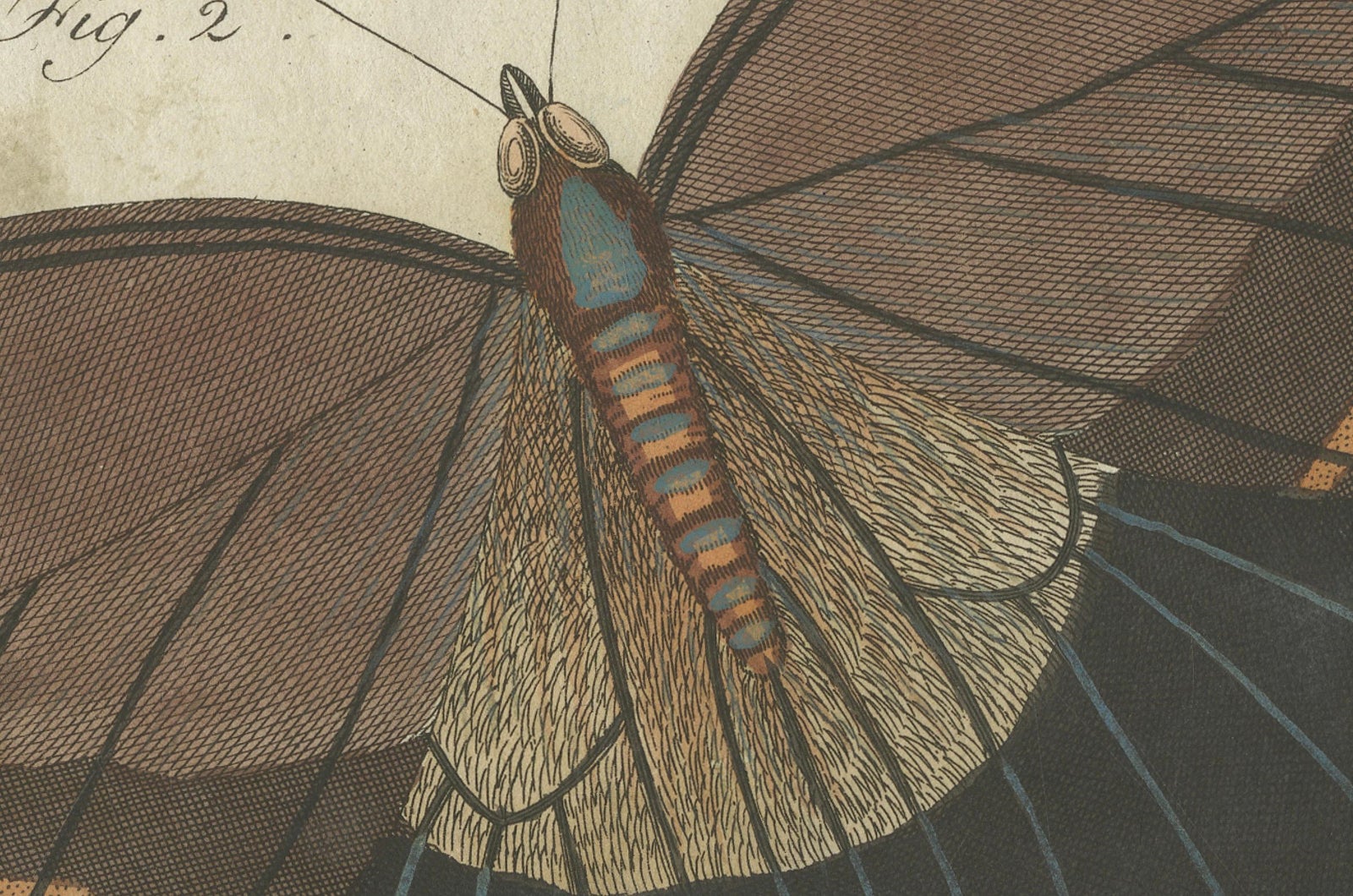
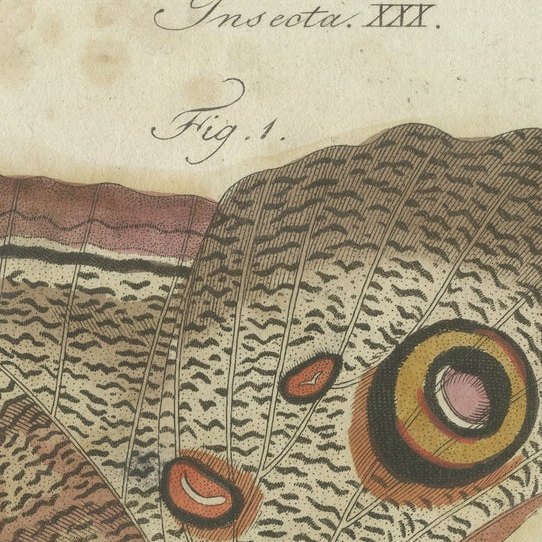
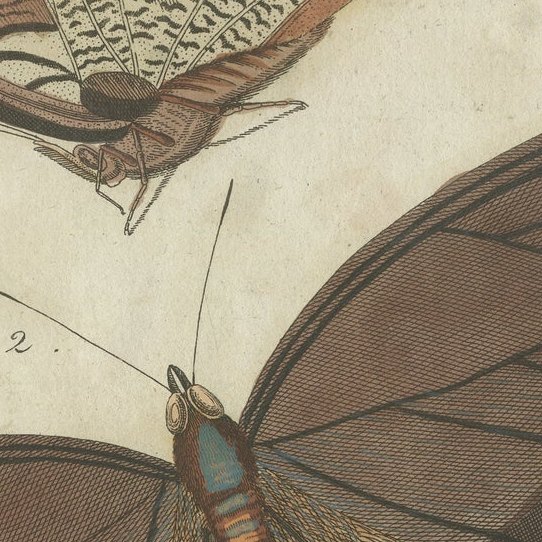
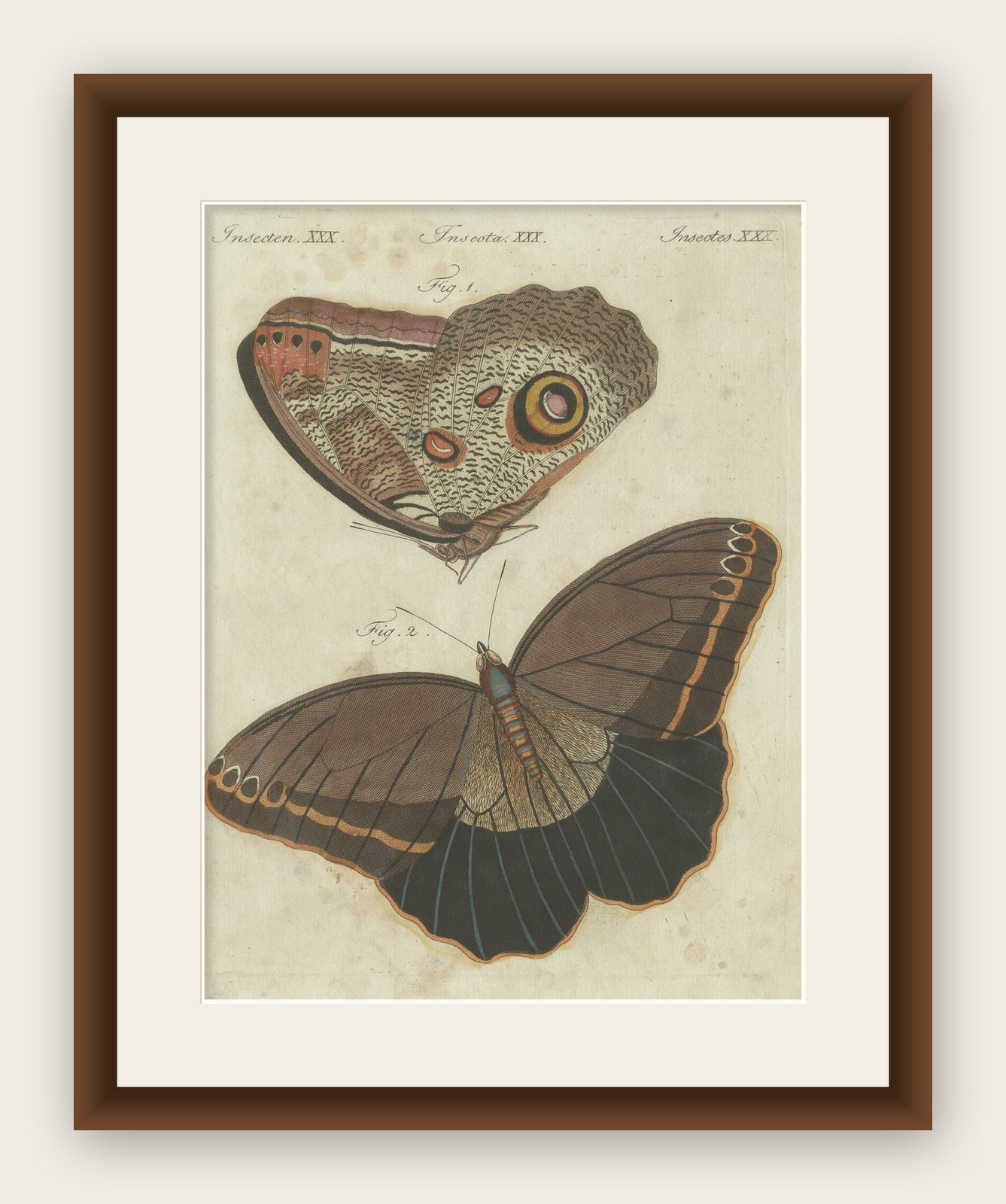
Description: Handcoloured copperplate engraving of the Forest Giant Owl Butterfly, depicting the upperside (figure 2) and underside (figure 1). The butterfly is native to tropical regions, including Suriname, where it thrives in the rich biodiversity of the rainforest.
This detailed artwork showcases the striking eye spots on the wings, a characteristic feature of the species used to deter predators. Taken from Friedrich Johann Bertuch's *Bilderbuch für Kinder* (Picture Book for Children), published in Weimar in 1802, the engraving vividly represents the butterfly's unique coloration and patterns from both perspectives.
The Forest Giant Owl Butterfly (Caligo eurilochus) is fascinating for several reasons:
1. Eye Spots for Defense: The most notable feature of this butterfly is the large, eye-like spots on the underside of its wings. These "owl eyes" resemble those of a predator, which can intimidate and deter potential threats, such as birds. This unique adaptation gives the butterfly an edge in avoiding predation.
2. Crepuscular Behavior: Unlike many other butterfly species that are active during the day, Caligo eurilochus is crepuscular, meaning it is most active during twilight, early morning or late afternoon. This behavior helps it avoid many diurnal predators and makes it a bit of an outlier in the butterfly world.
3. Large Size: These butterflies are quite large, with a wingspan that can reach up to 15 cm (about 6 inches), which makes them one of the largest butterflies in the regions they inhabit. Their sheer size adds to their striking appearance and visual interest, especially when seen gliding through the forest.
4. Mimicry and Camouflage: Besides the prominent eye spots, the wing patterns also have a remarkable ability to blend in with their surroundings. When resting with their wings closed, they often resemble the texture of tree bark or dead leaves, providing excellent camouflage from predators.
5. Host Plant Specificity: The caterpillars of the Caligo species feed primarily on banana and heliconia plants, which are abundant in their native tropical habitats, such as Suriname. This feeding relationship is crucial for local ecosystems and banana plantations, as the butterfly can act as both a pollinator and a potential pest, depending on its life stage.
6. Symbol of Rainforest Diversity: The 'Caligo eurilochus' is a symbol of the rich biodiversity of tropical rainforests. Its presence in areas like Suriname highlights the complex relationships in these ecosystems and the adaptation strategies that tropical species develop to survive and thrive.
These combined characteristics, their defensive adaptations, behavior, size, mimicry, and ecological role, make the Forest Giant Owl Butterfly an intriguing species to both scientists and nature enthusiasts.
Handcoloured engraving from 1802 shows light foxing and minor toning consistent with age. Colors remain vivid, paper edges slightly worn but no major tears or creases. Suitable for framing with care to preserve current condition.