Close-ups
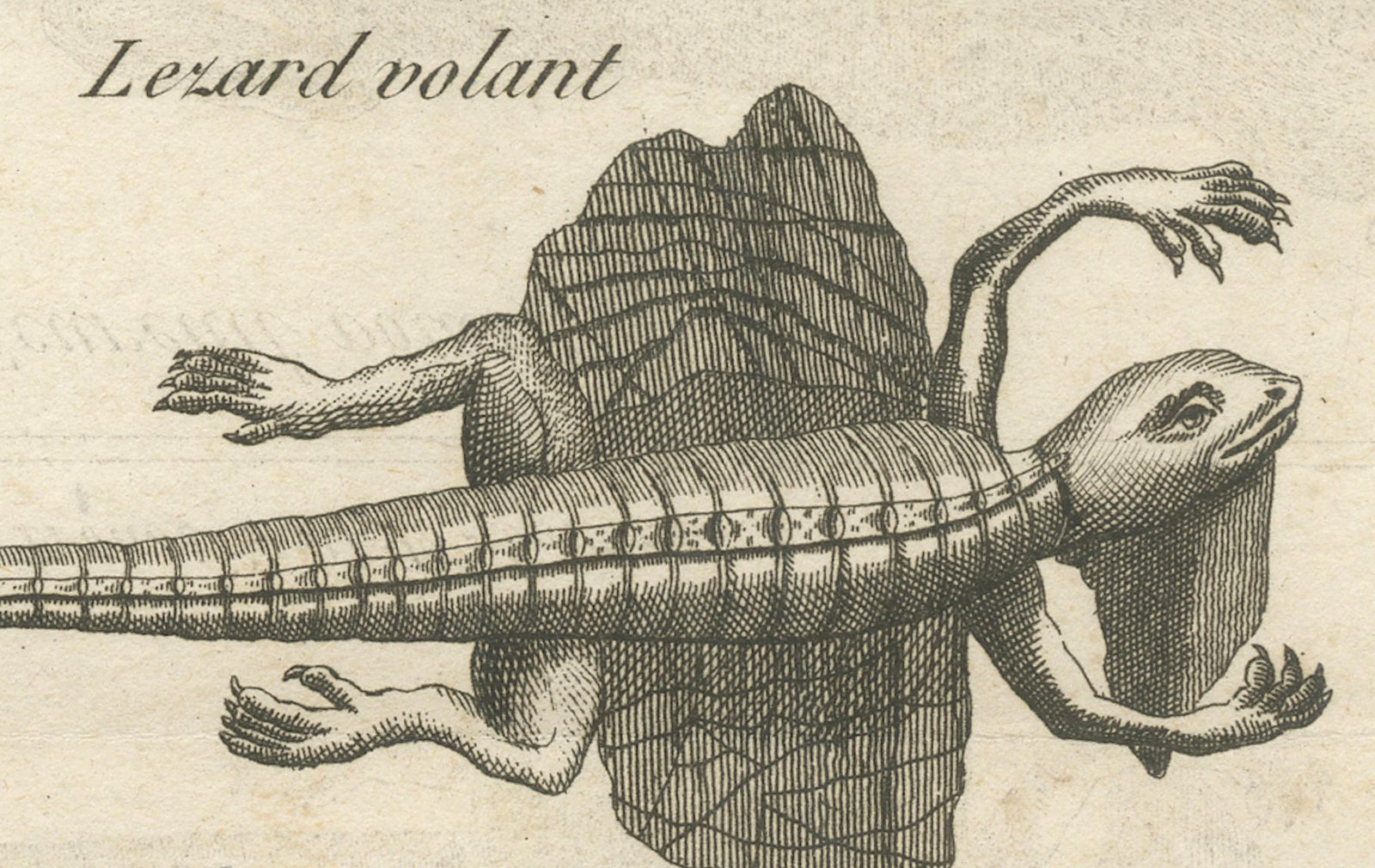
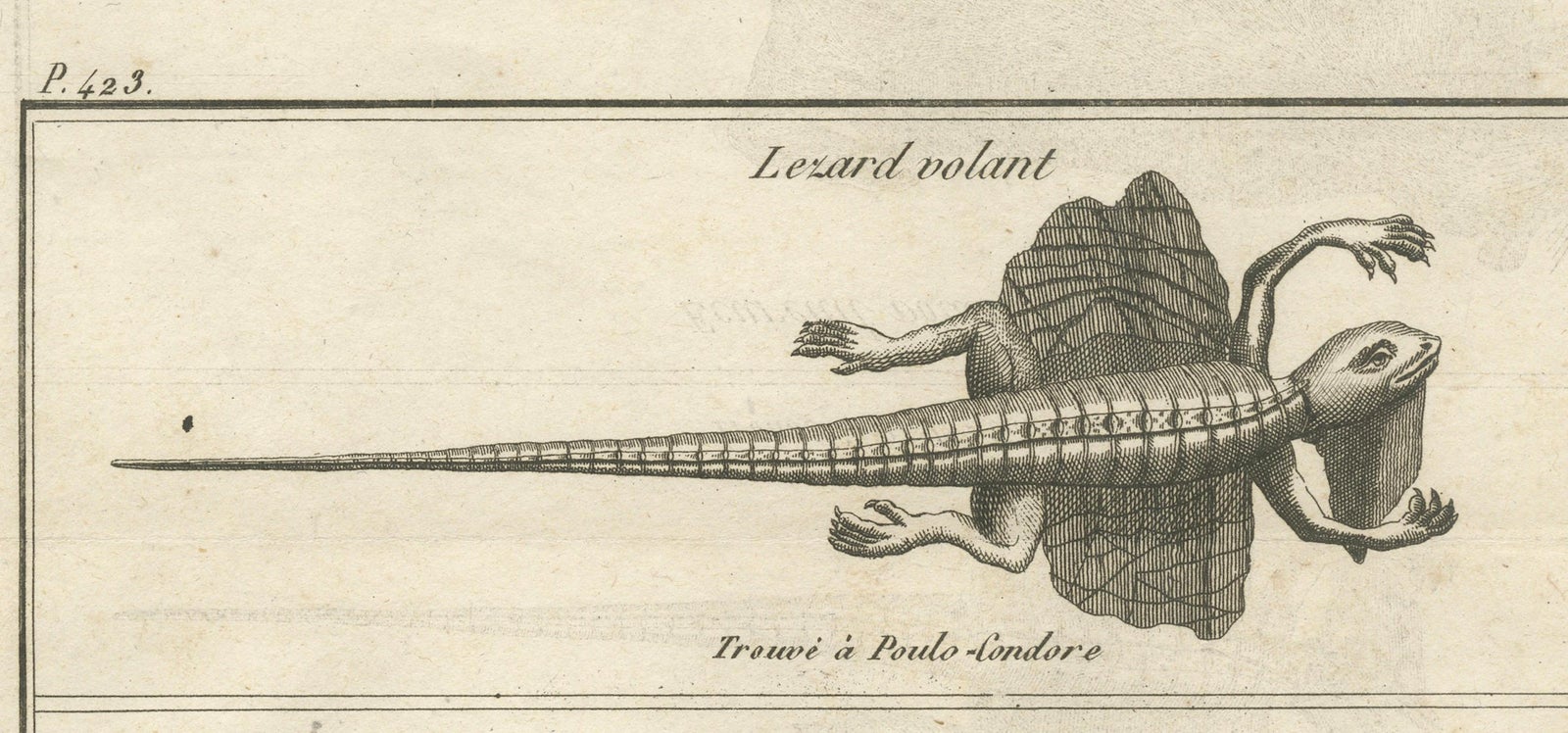
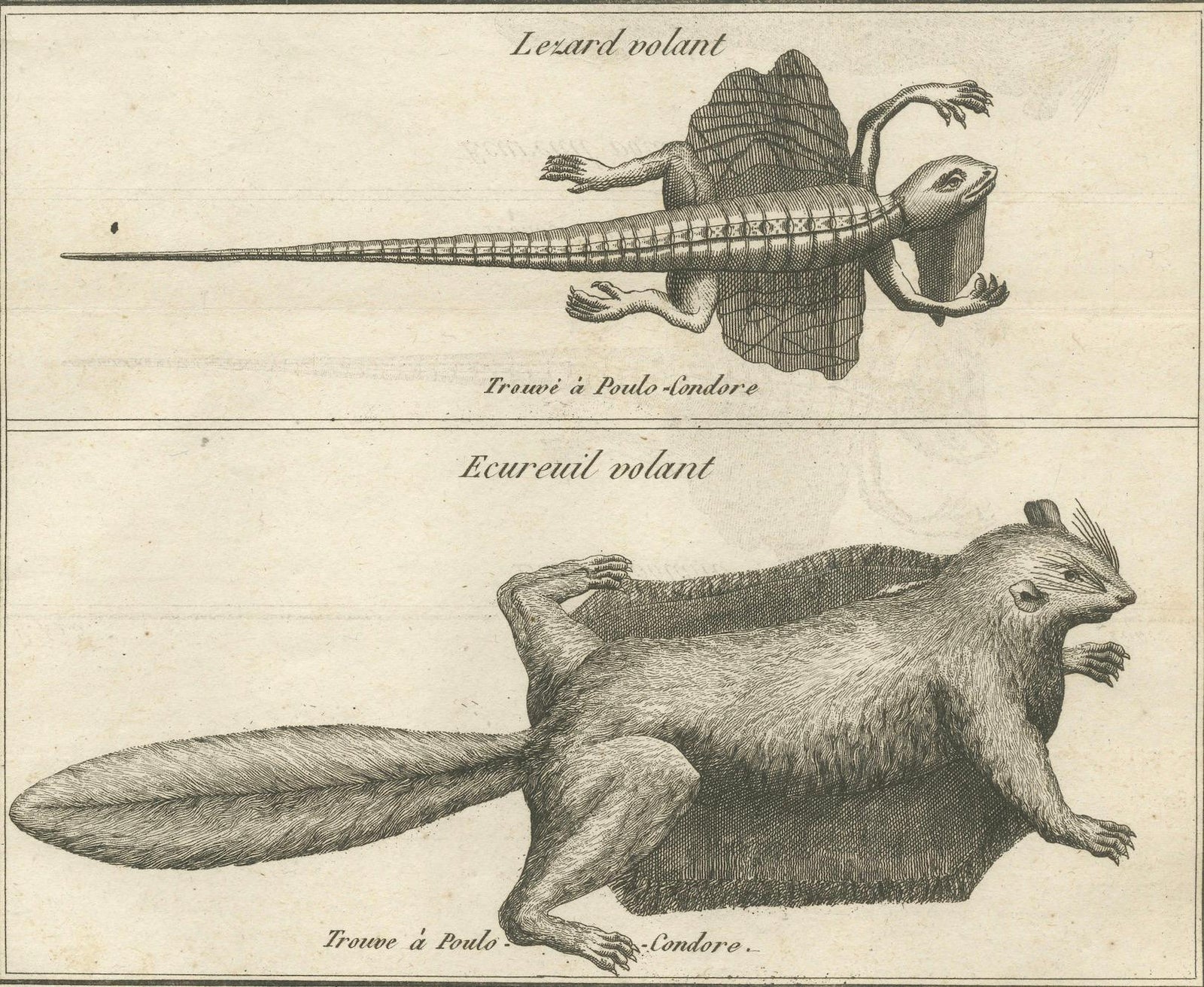
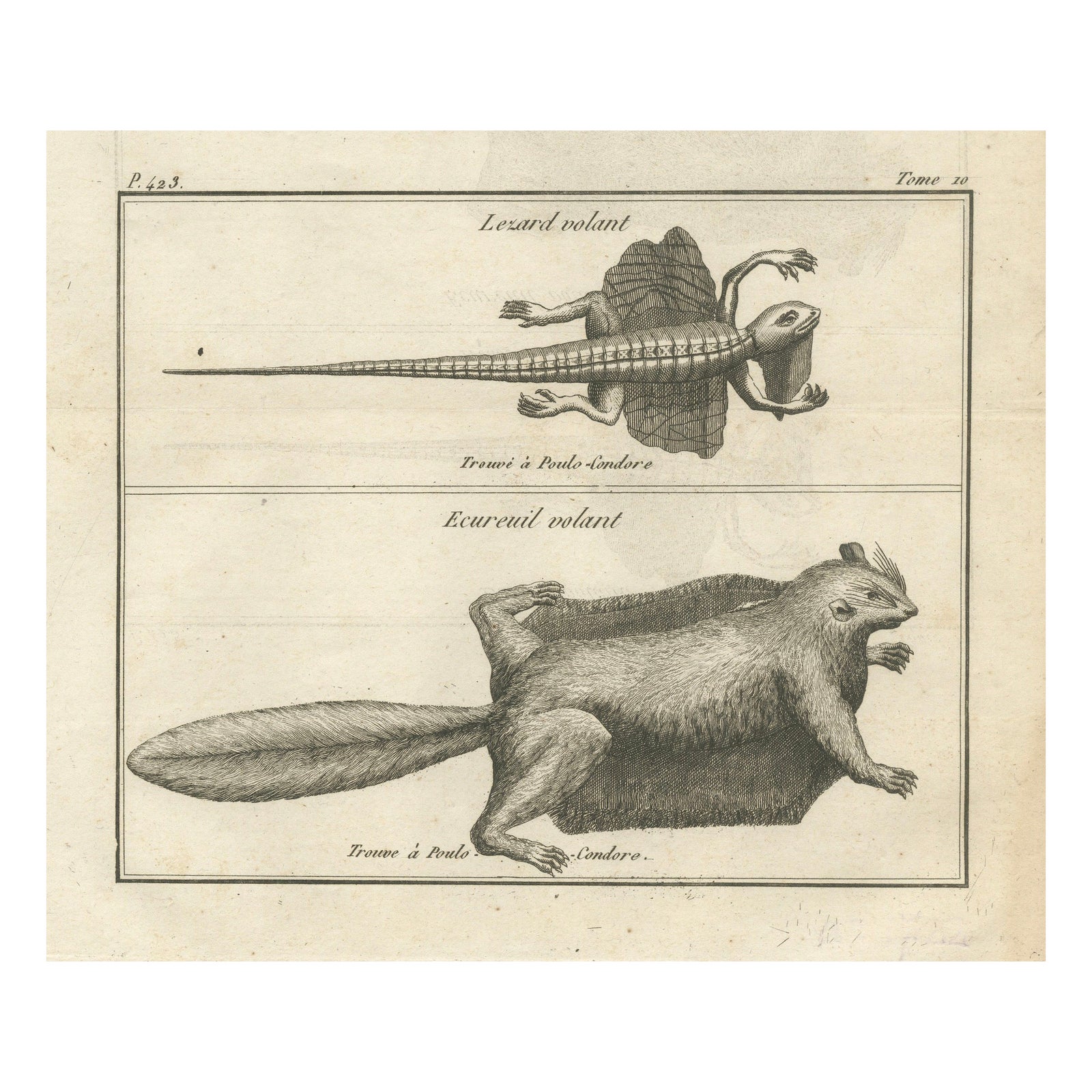
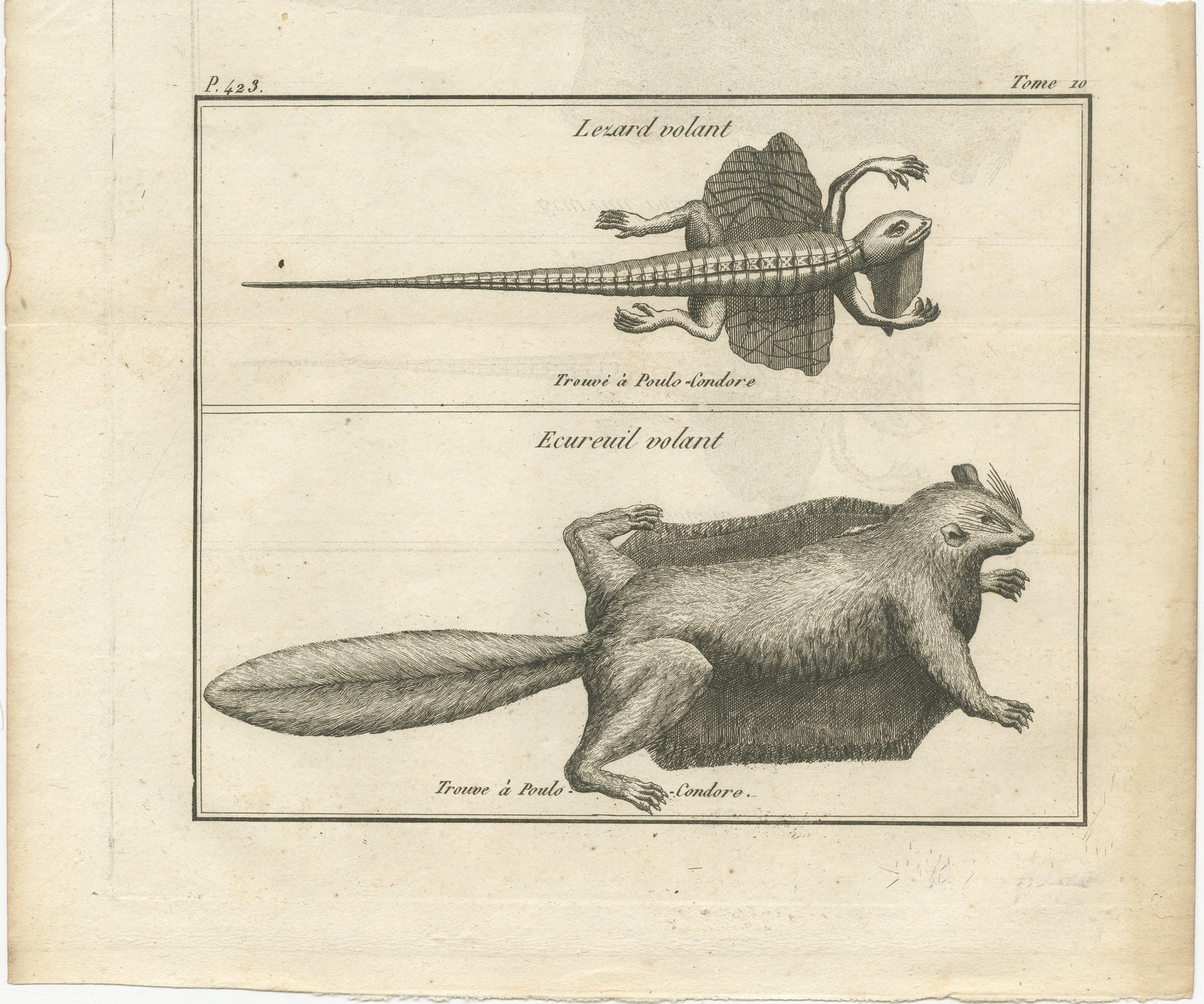
Flying Lizard and Flying Squirrel, Antique Engraving, Poulo Condore, c.1770
£220 ($290, €260)
Period original, not a reproduction.
Shipped from the Netherlands, flat, insured and tracked, worldwide. Returns accepted within 14 days.
- Date
- 1770
- Size
- 6.6 × 7.9 in (16.7 × 20 cm)
- Condition
- Very good for age, with faint toning and a central fold as issued. Minor handling marks and light foxing in margins. Strong plate impression with crisp detail.
- Period
- 18th century
- Section
- Reptiles and amphibians
- Reference
- f_46212352
What the condition grades mean
- Excellent
- Bright and clean, with no faults worth mentioning.
- Very good
- Only light signs of age, such as faint toning.
- Good
- Normal signs of age for a sheet of this period: toning, some foxing, small marks or neat old repairs.
- Fair
- Clear faults such as staining, tears or repairs, priced to match.
Every fault we see is written in the condition note, and the whole sheet is shown uncropped in the photos.
Flying Lizard and Flying Squirrel, Antique Engraving, Poulo Condore, c.1770
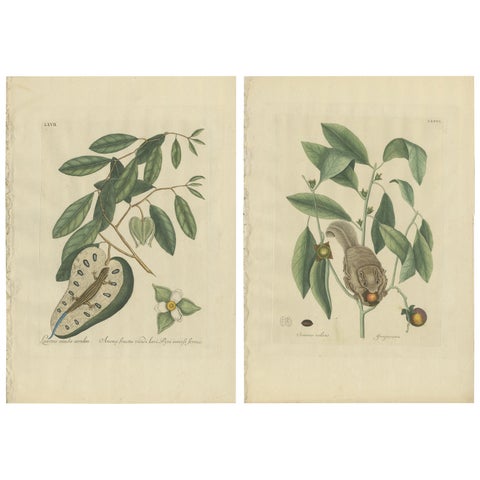
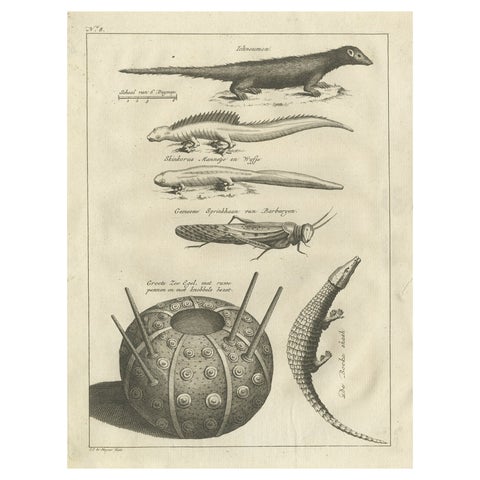
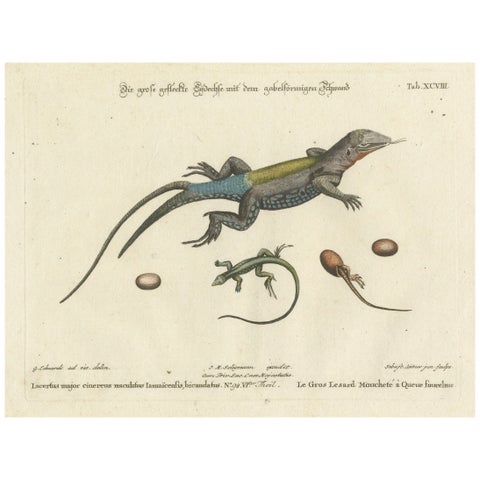
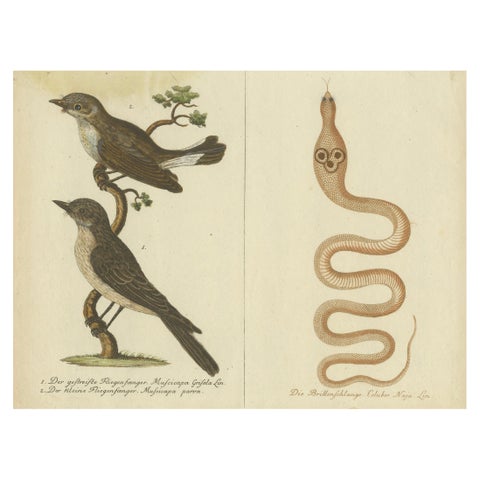
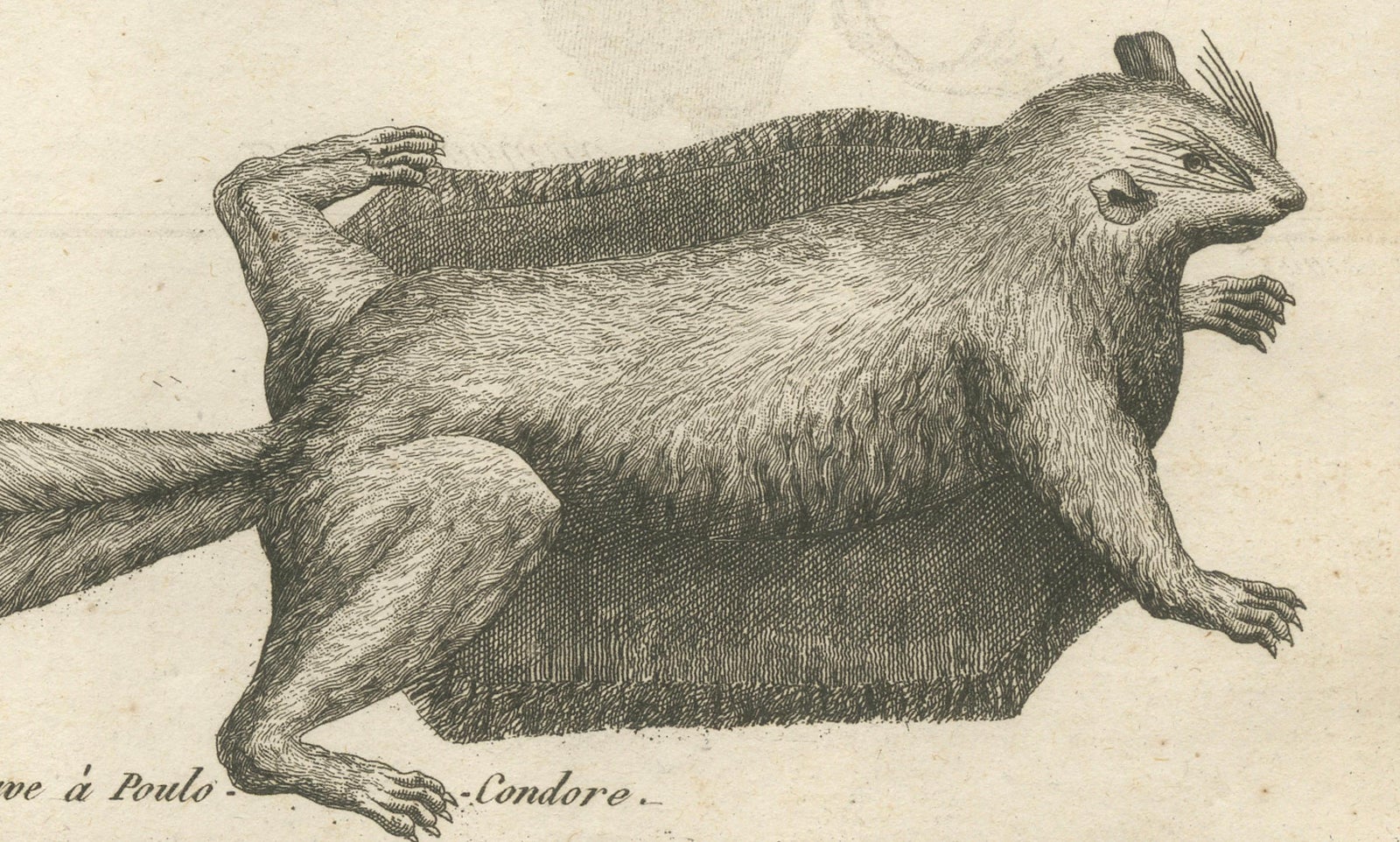
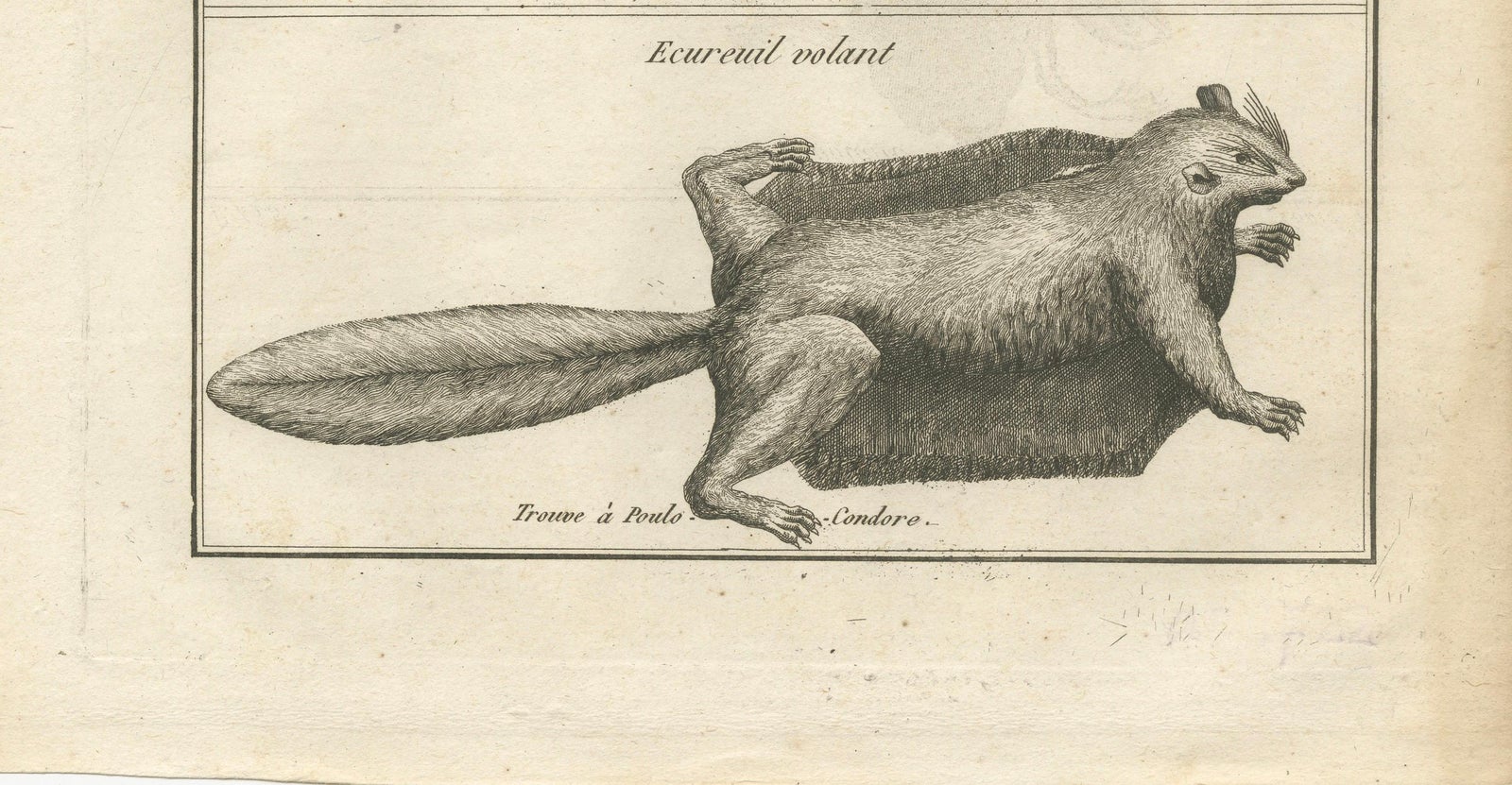
This fine 18th-century engraving presents two remarkable animals observed on the Con Dao Islands (historically known as Poulo Condore), off the southern coast of Vietnam. The upper figure, titled “Lézard volant” (Flying Lizard), shows a dorsal view of a Draco lizard, complete with its extended rib-supported wing membranes used for gliding between trees. The artist has rendered the animal with meticulous line work, showing the delicate scaling, long tail, and extended limbs that contribute to its aerial ability. Below, the plate features the “Écureuil volant” (Flying Squirrel), depicted with its limbs splayed to reveal the patagium, the fur-covered skin membrane that allows it to glide. Its broad, bushy tail and finely engraved fur texture provide an engaging contrast to the reptilian subject above.
The mention “Trouvé à Poulo Condore” anchors these illustrations to a location of great significance in 18th-century exploration and natural history. During the period of European scientific voyages, Poulo Condore was a stopover for naturalists collecting specimens from Southeast Asia. Such engravings were often based on field sketches or preserved specimens brought back by explorers, then translated into copperplate prints by skilled engravers. The page reference “P. 423” and “Tome 10” suggest this plate came from a multi-volume natural history or travel compendium, likely one of the great French encyclopedic works of the Enlightenment era.
These images are as much a record of early zoological knowledge as they are works of art. While modern biology gives us precise taxonomy, 18th-century engravings such as this blend observation with a certain stylized charm, revealing the curiosity and wonder that accompanied early encounters with exotic fauna. This print would appeal to collectors interested in zoology, herpetology, mammalogy, or Southeast Asian natural history, as well as those drawn to the aesthetic of Enlightenment-era scientific illustration.
Condition: Very good for age, with faint toning and a central fold as issued. Minor handling marks and light foxing in margins. Strong plate impression with crisp detail.
Framing tips: A dark walnut or ebonized frame with a warm ivory or light cream mount would complement the aged paper and highlight the fine engraving lines. For a more formal presentation, a double mount with a thin black inner bevel could enhance contrast and depth.
Technique: Copperplate engraving
Maker: French school, c.1770