Framed and on the wall
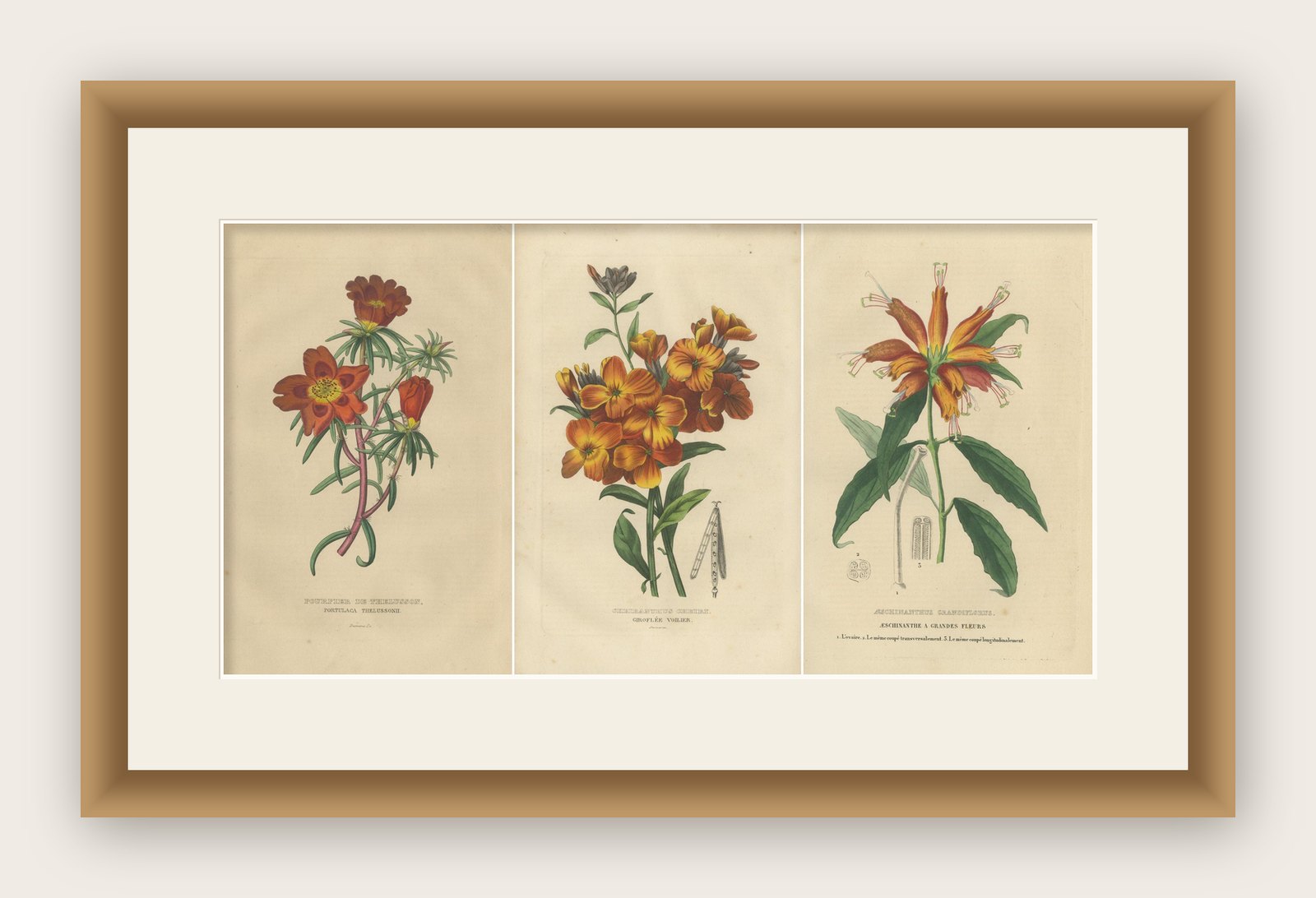
Frame and rooms are illustrations of how the print could look; the description says what is included.
Floral Elegance: A Collection of Hand-Colored Engravings from 1845
$495 (£375, €440)
Period original, not a reproduction.
Shipped from the Netherlands, flat, insured and tracked, worldwide. Returns accepted within 14 days.
- Date
- 1845
- Size
- 10.4 × 6.9 in (26.5 × 17.5 cm)
- Condition
- Good. Good condition. Please study the images carefully. Minor toning due to age and handling, especially around the edges.
- Period
- Early 19th century
- Artist or book
- Buffon
- Section
- Botanical
- Reference
- f_37692752
The engravings presented here are exquisite botanical illustrations from the 'Dictionnaire Classique des Sciences Naturelles', an authoritative work published in Brussels in 1845 under the editorship of the Belgian naturalist Pierre Auguste Joseph Drapiez. This dictionary was a monumental assemblage of natural sciences, standing on the shoulders of giants such as Buffon, Daubenton, Lacepede, Cuvier, and de Jussieu.
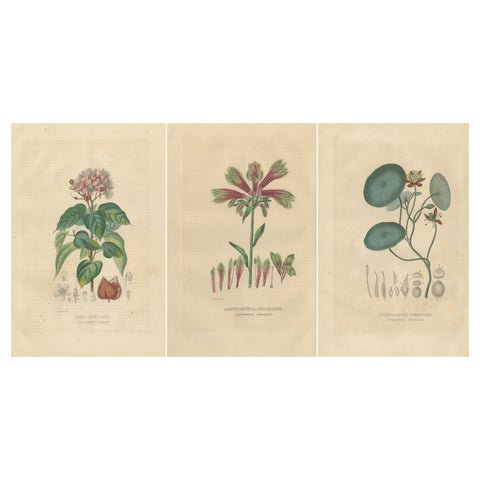
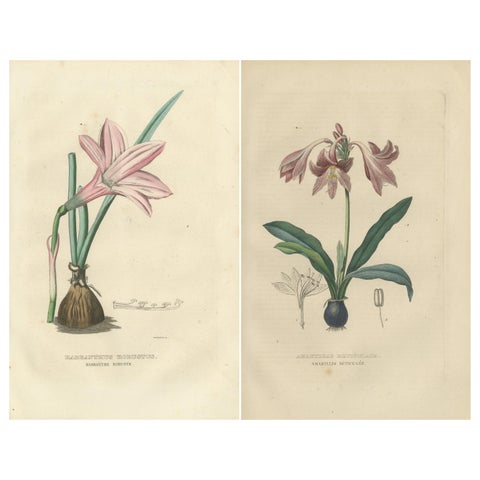
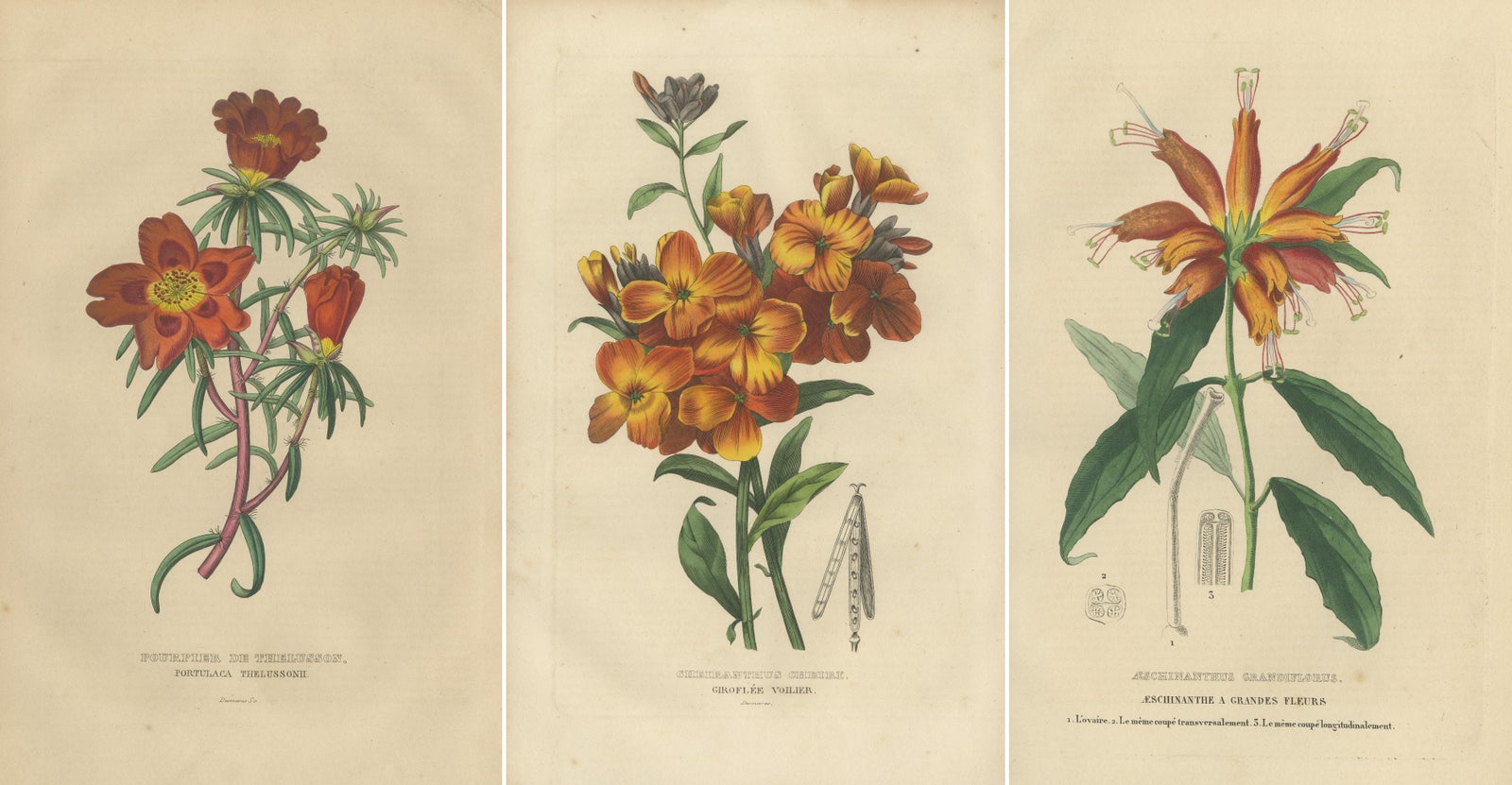
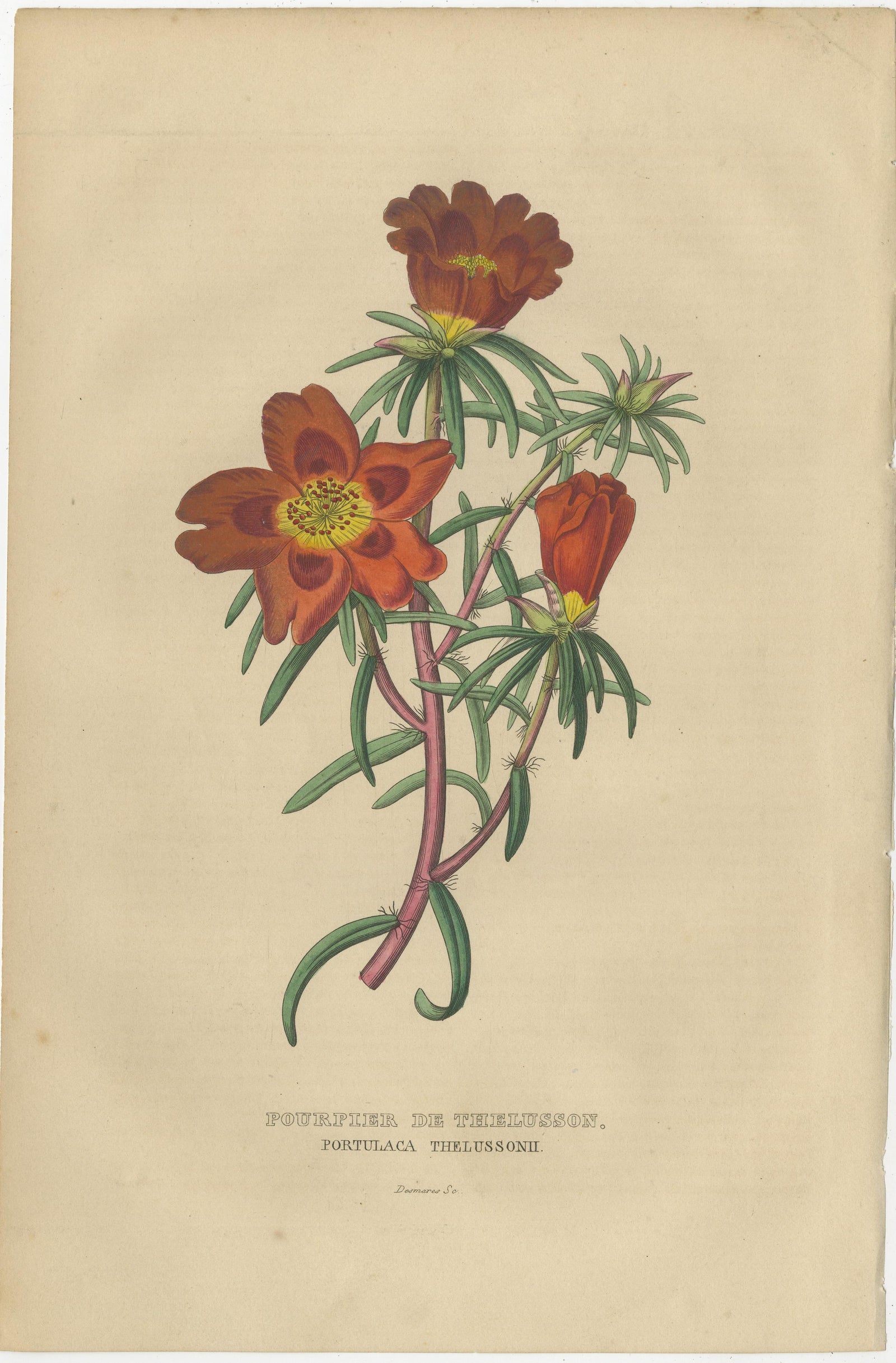
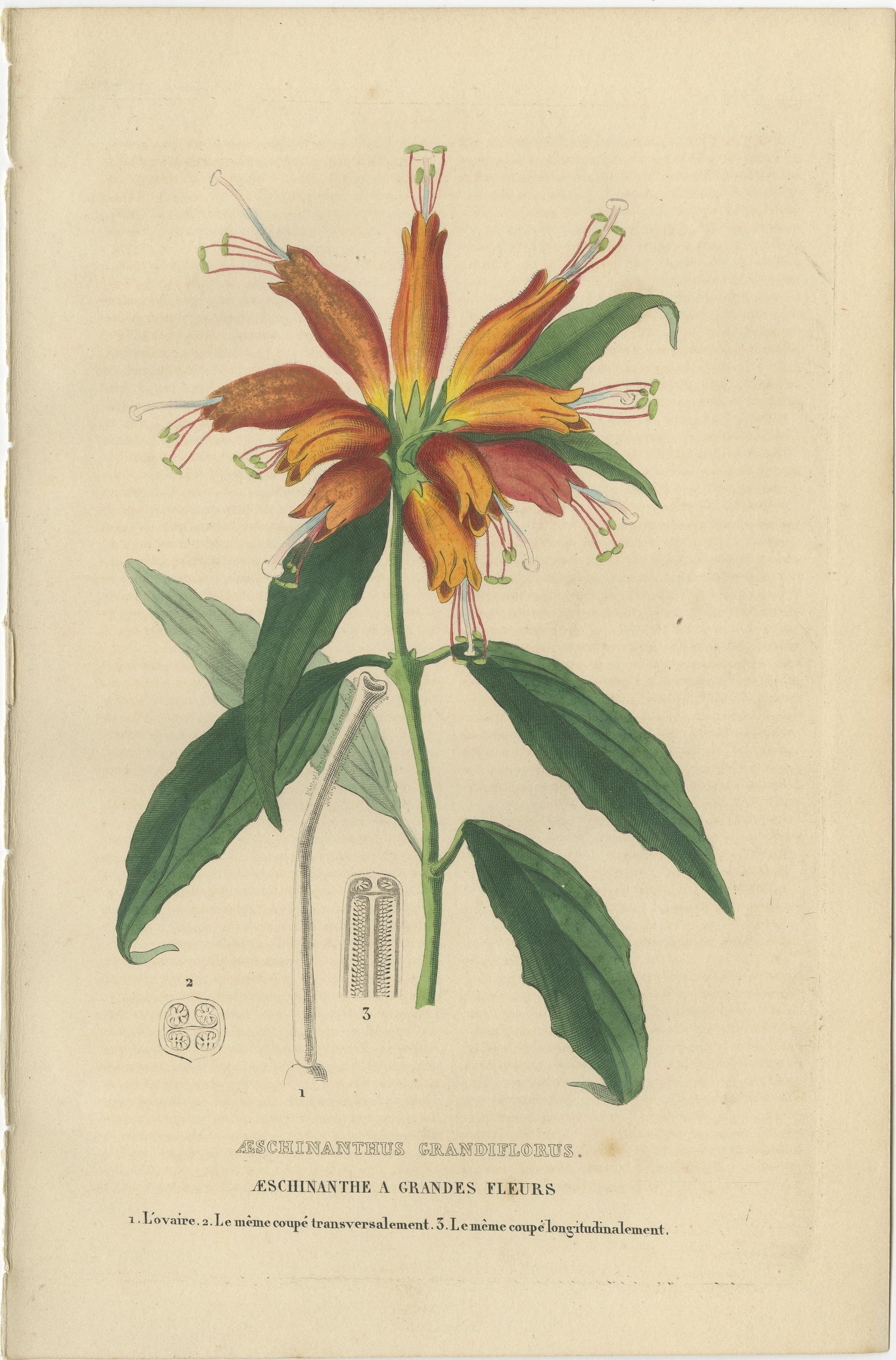
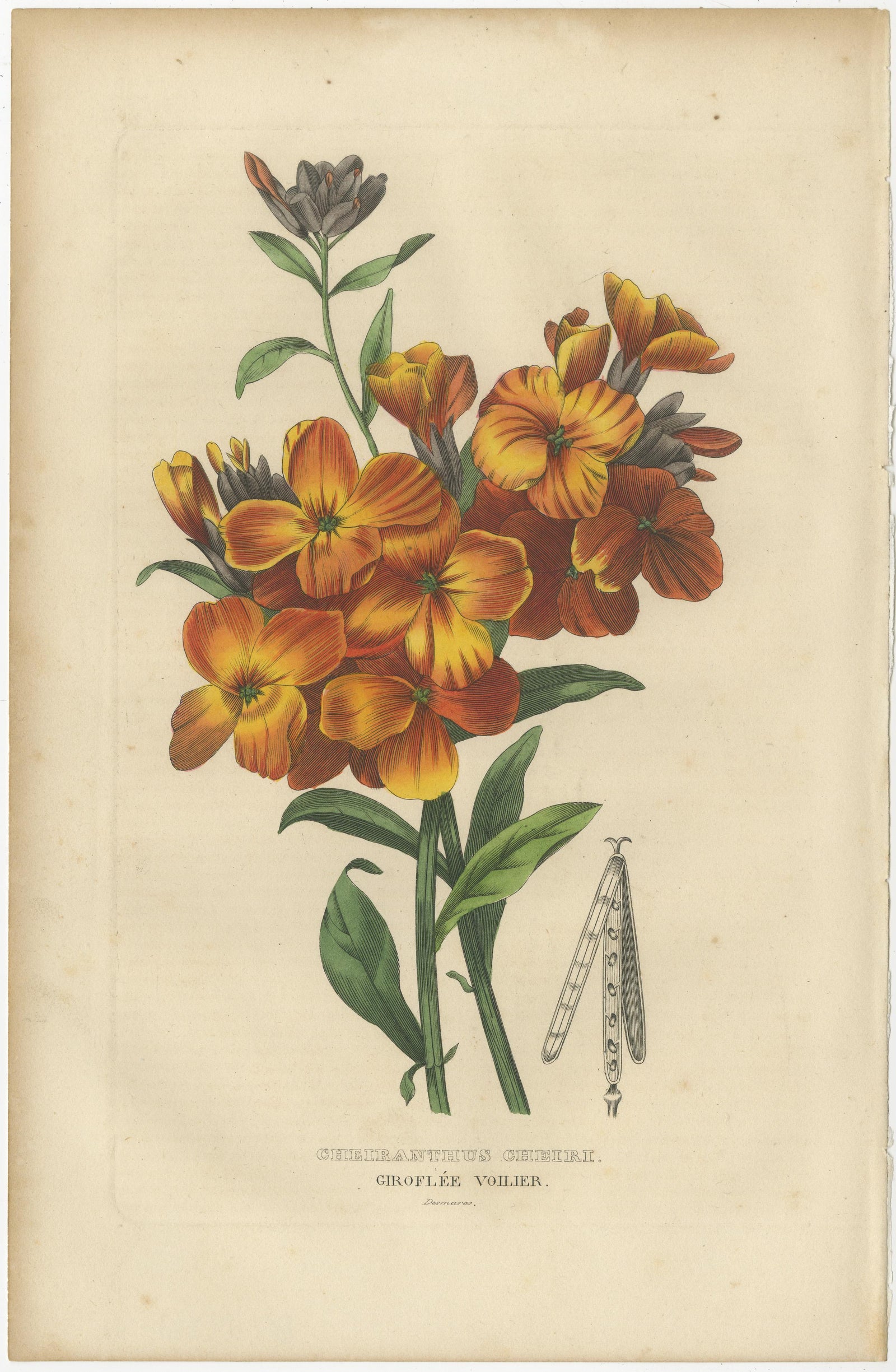
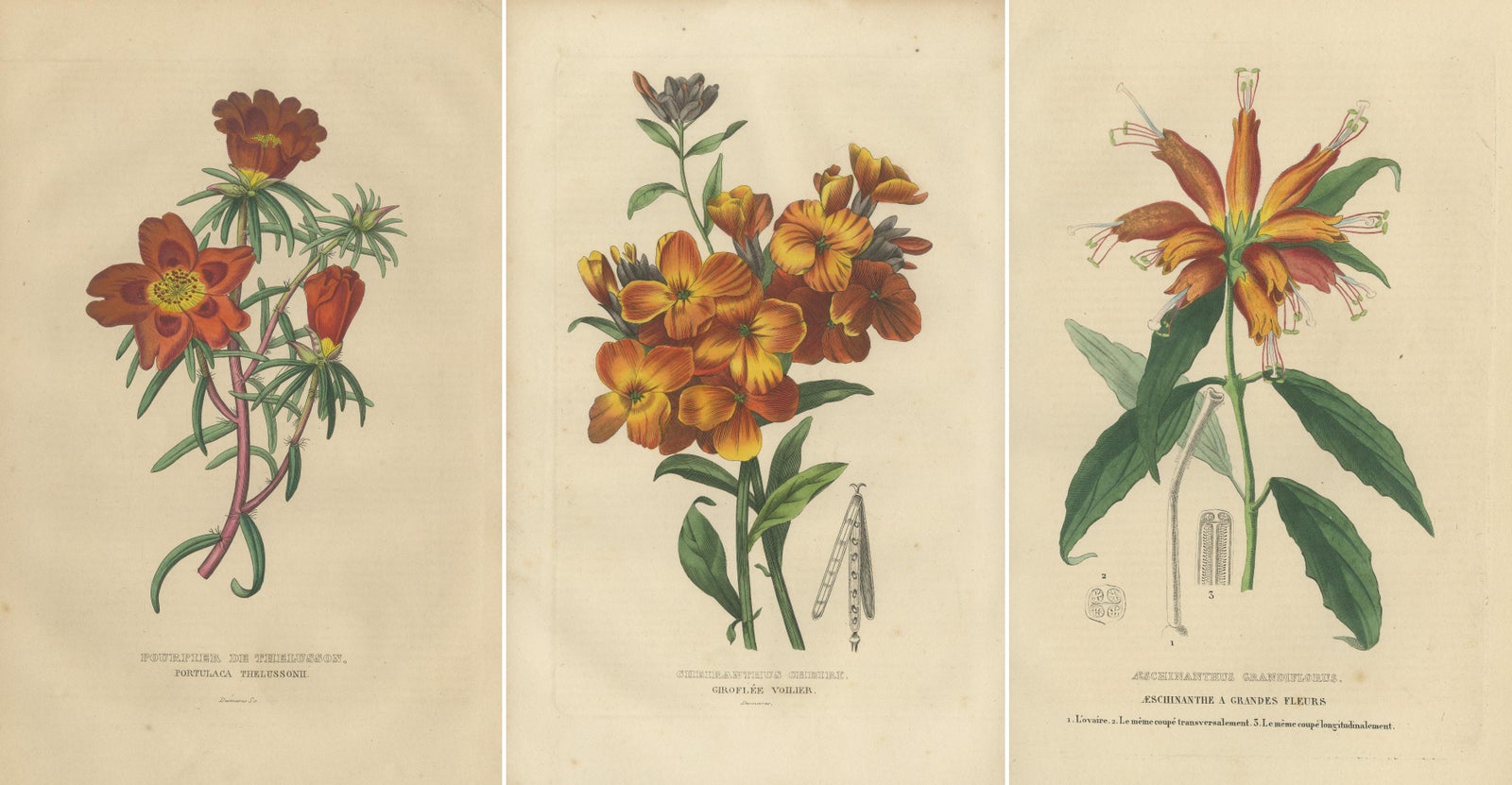
Each print in this collection captures the delicate intricacies of its subject with remarkable accuracy and artistic finesse, consistent with the illustrative standards of the time. The first print displays the vibrant 'Portulaca Thellusonii,' a testament to Drapiez's dedication to scientific detail. The second print features the radiant 'Cheiranthus Cheiri,' commonly known as Wallflower, depicted with precision and care. The third and final print in the trio showcases 'Aeschynanthus Grandiflorus,' a plant whose striking appearance is brought to life through the engraver's skilled hands.
These hand-colored engravings are more than just visual delights; they are educational tools designed to complement the comprehensive text, providing scholars and naturalists with visual representations of the subjects discussed. Drapiez’s commitment to scientific authenticity is evident in each stroke and hue, ensuring that each plant is not only aesthetically pleasing but also botanically precise.
The images serve as a bridge between art and science, capturing the essence of 19th-century natural history and the quest for knowledge. They are a valuable resource for understanding the natural world as it was perceived during a time of great explorations and discoveries in botany and biology.