Close-ups
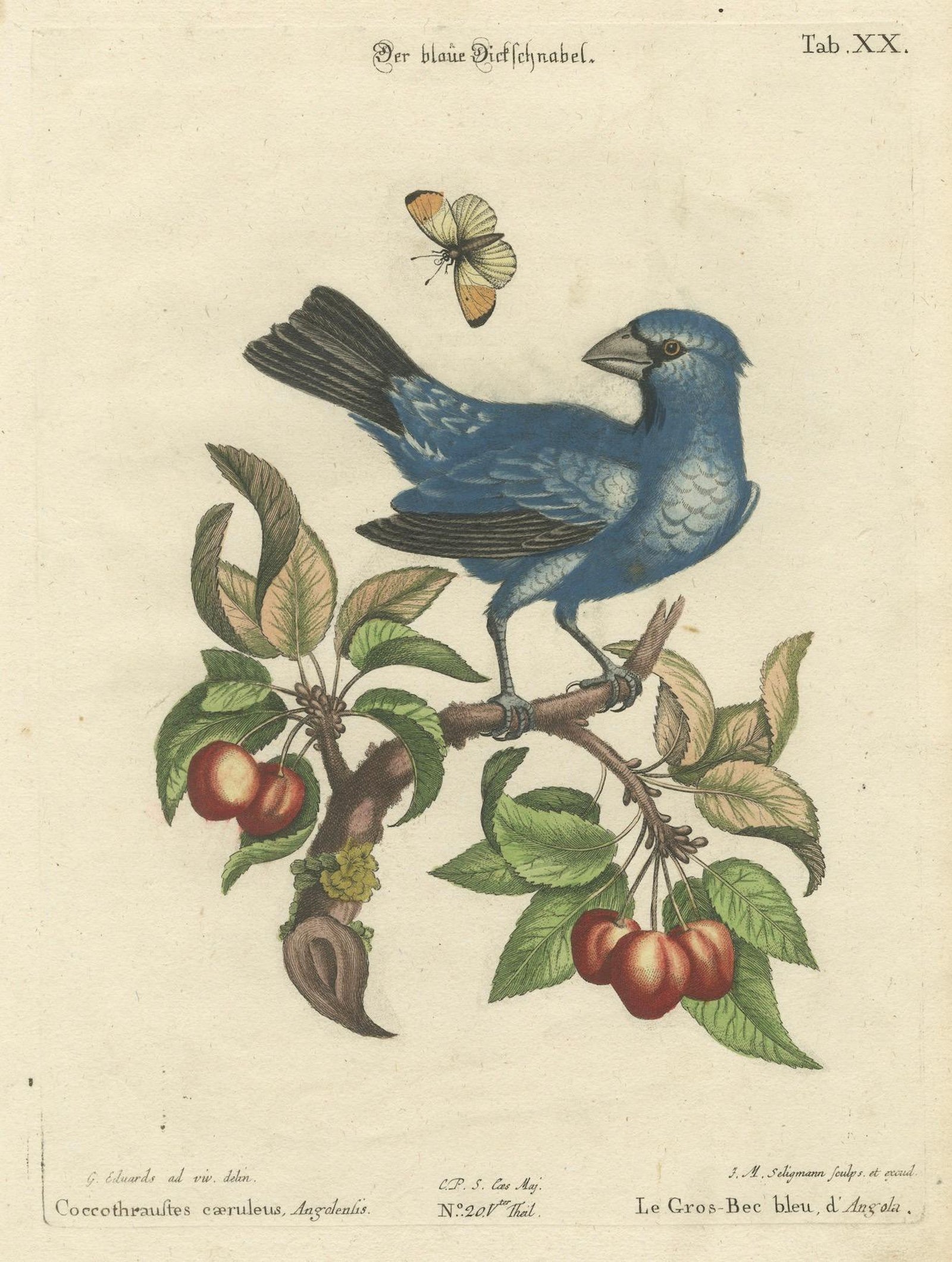
Exotic Blue Grosbeak of Angola: An 18th-Century Hand-Colored Engraving
$775 (£585, €690)
Period original, not a reproduction.
Shipped from the Netherlands, flat, insured and tracked, worldwide. Returns accepted within 14 days.
- Date
- Not stated
- Size
- 14.6 × 9.8 in (37 × 25 cm)
- Condition
- Very good. Vibrant colors, minimal fading. Paper shows light toning and minor foxing in margins. Edges sharp; no tears, no folds. Slight handling marks, not affecting image quality.
- Section
- Birds
- Reference
- f_42291082
- Color
- Hand colored
What the condition grades mean
- Excellent
- Bright and clean, with no faults worth mentioning.
- Very good
- Only light signs of age, such as faint toning.
- Good
- Normal signs of age for a sheet of this period: toning, some foxing, small marks or neat old repairs.
- Fair
- Clear faults such as staining, tears or repairs, priced to match.
Every fault we see is written in the condition note, and the whole sheet is shown uncropped in the photos.
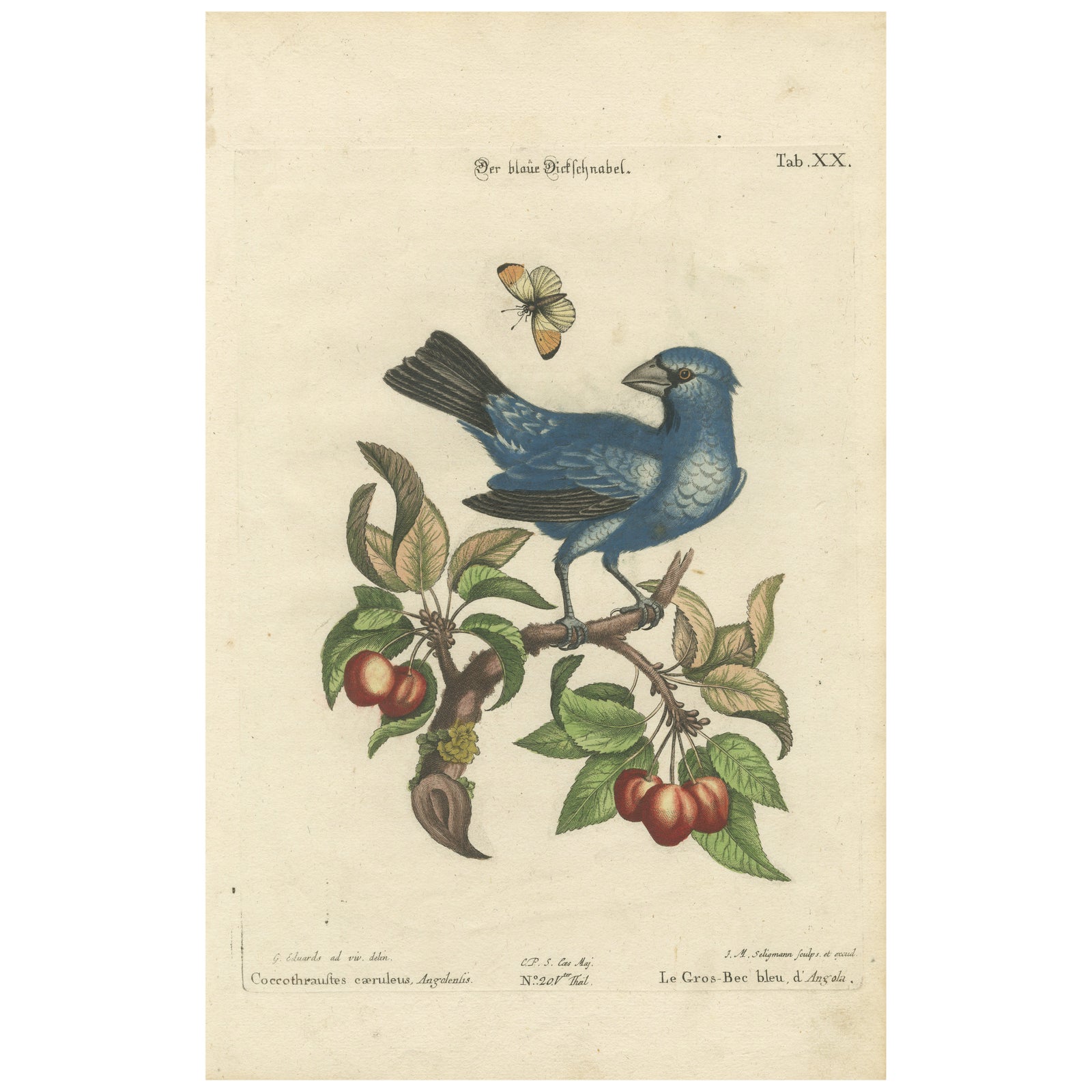
An 18th-century hand-colored copper engraving by Johann Michael Seligmann, based on an illustration by George Edwards.
The print is from Seligmann’s Sammlung verschiedener ausländischer und seltener Vögel (Collection of Various Foreign and Rare Birds), published in Nuremberg between 1770 and 1773.
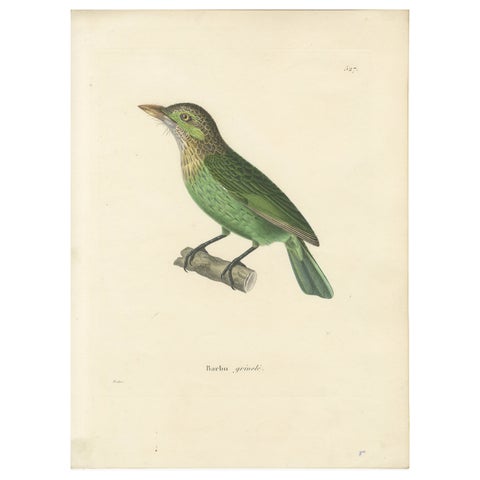
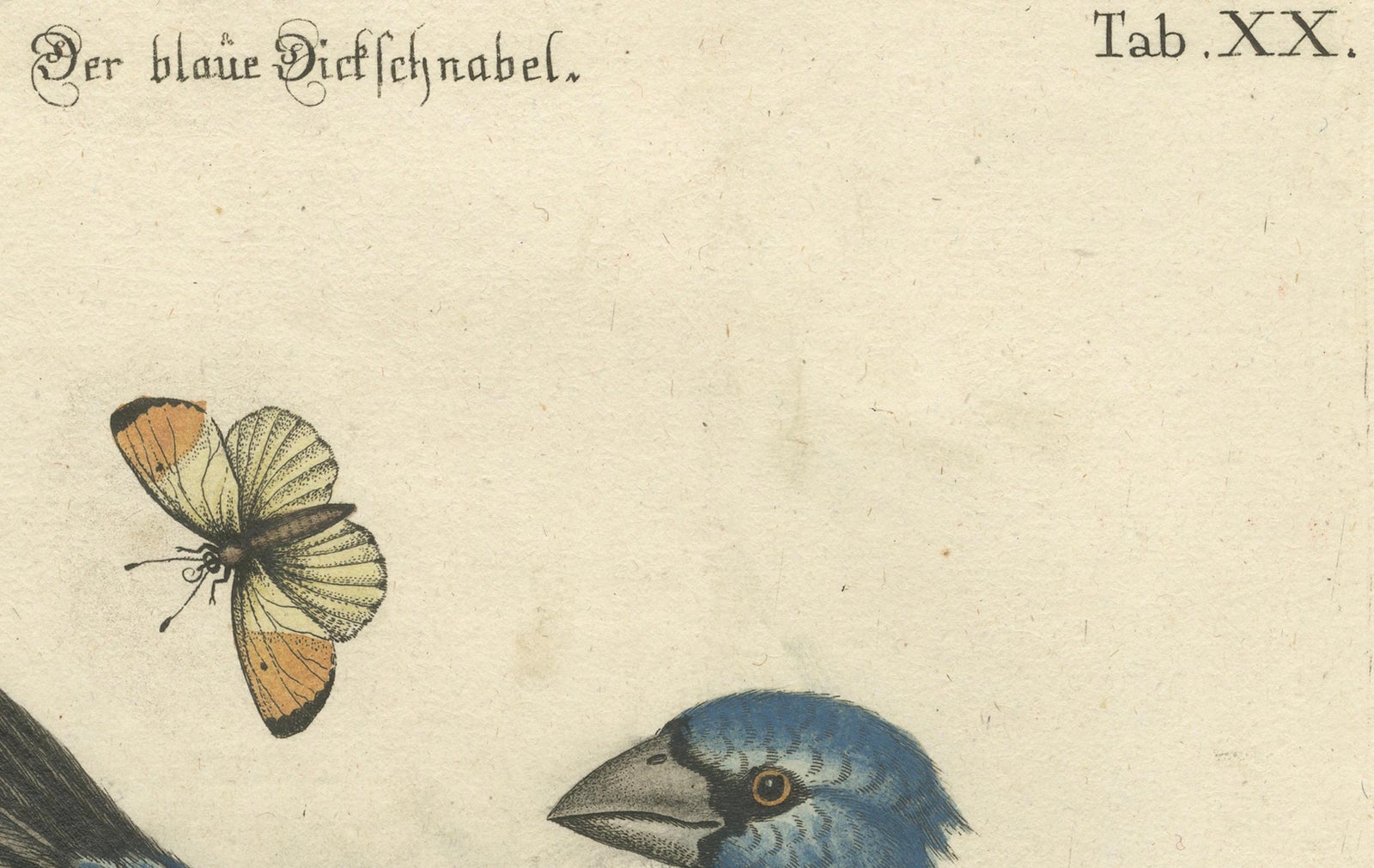
The title, "Der blaue Dickschnabel" (The Blue Grosbeak), identifies the bird depicted.
The engraving features:
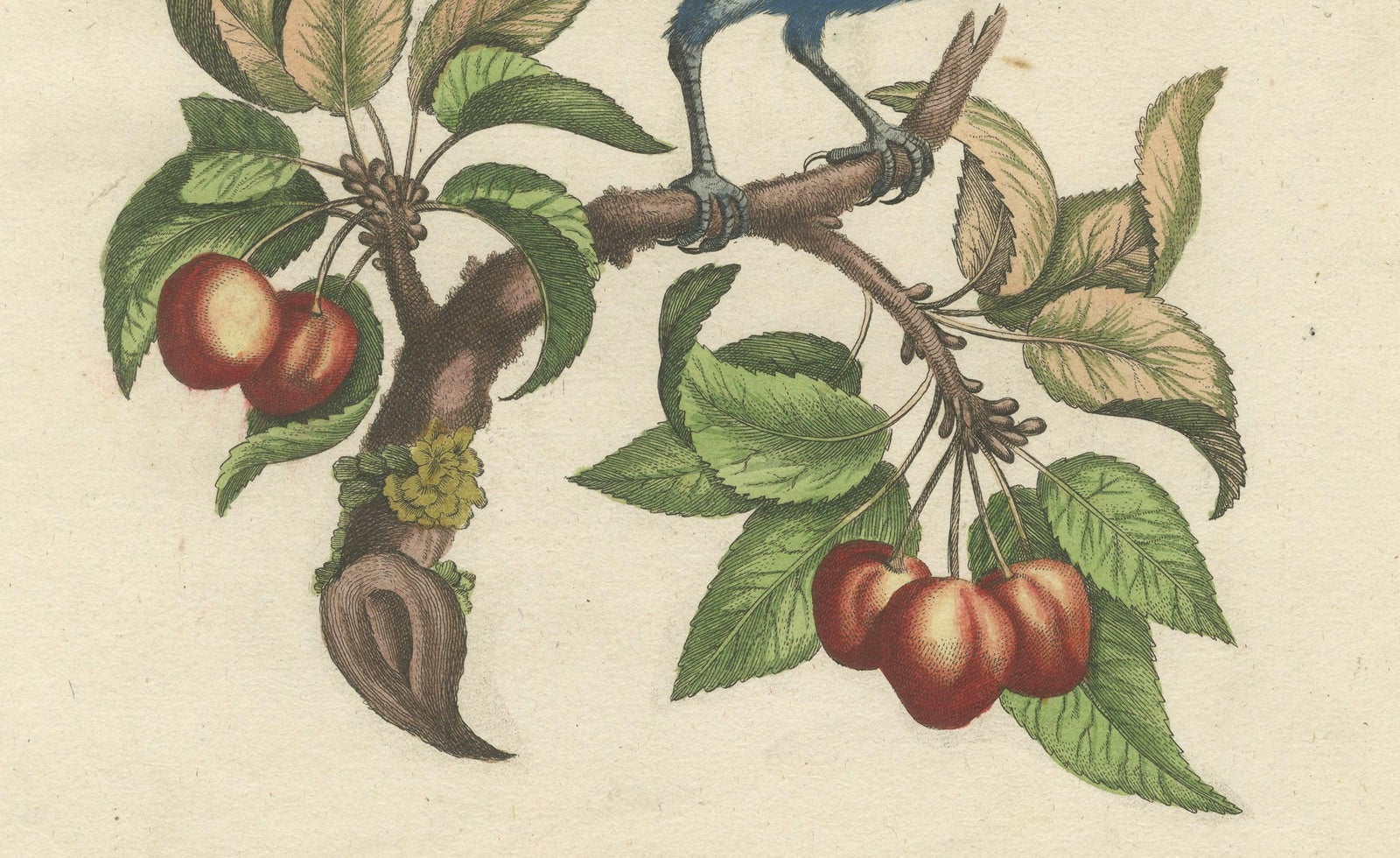
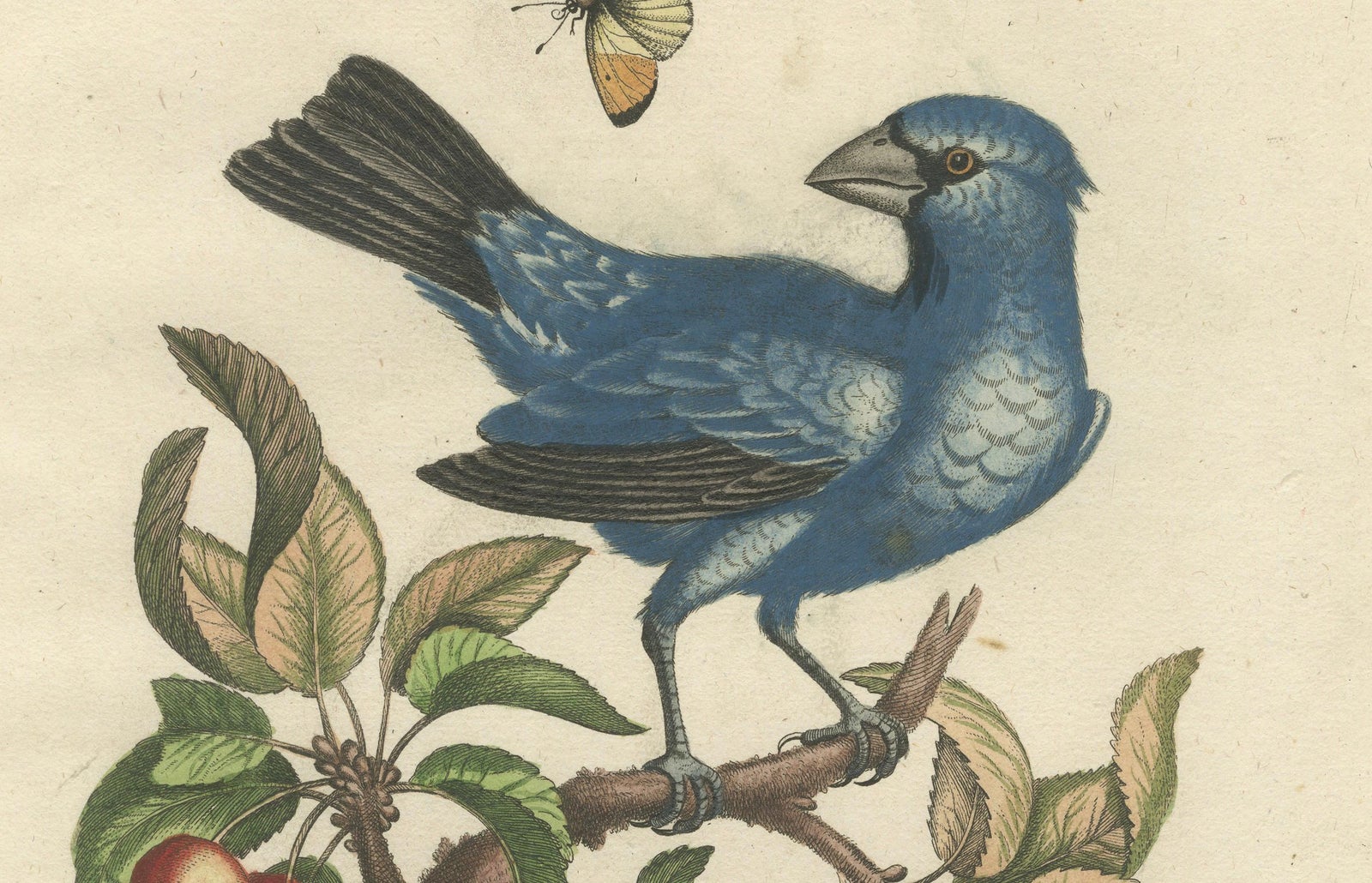
1. The Blue Grosbeak (Coccothraustes caeruleus, Angolensis) - A beautifully colored bird with striking blue plumage, perched on a branch laden with cherries and foliage.
2. Butterfly - A small, delicately colored butterfly hovering nearby, adding an element of naturalism and interest to the scene.
The Latin and French titles below translate as "The Blue Grosbeak from Angola," highlighting its exotic origin. Seligmann's use of copperplate engraving, hand-colored with fine detail, illustrates both the bird’s vibrant coloration and the lush botanical setting, combining scientific observation with artistic elegance.