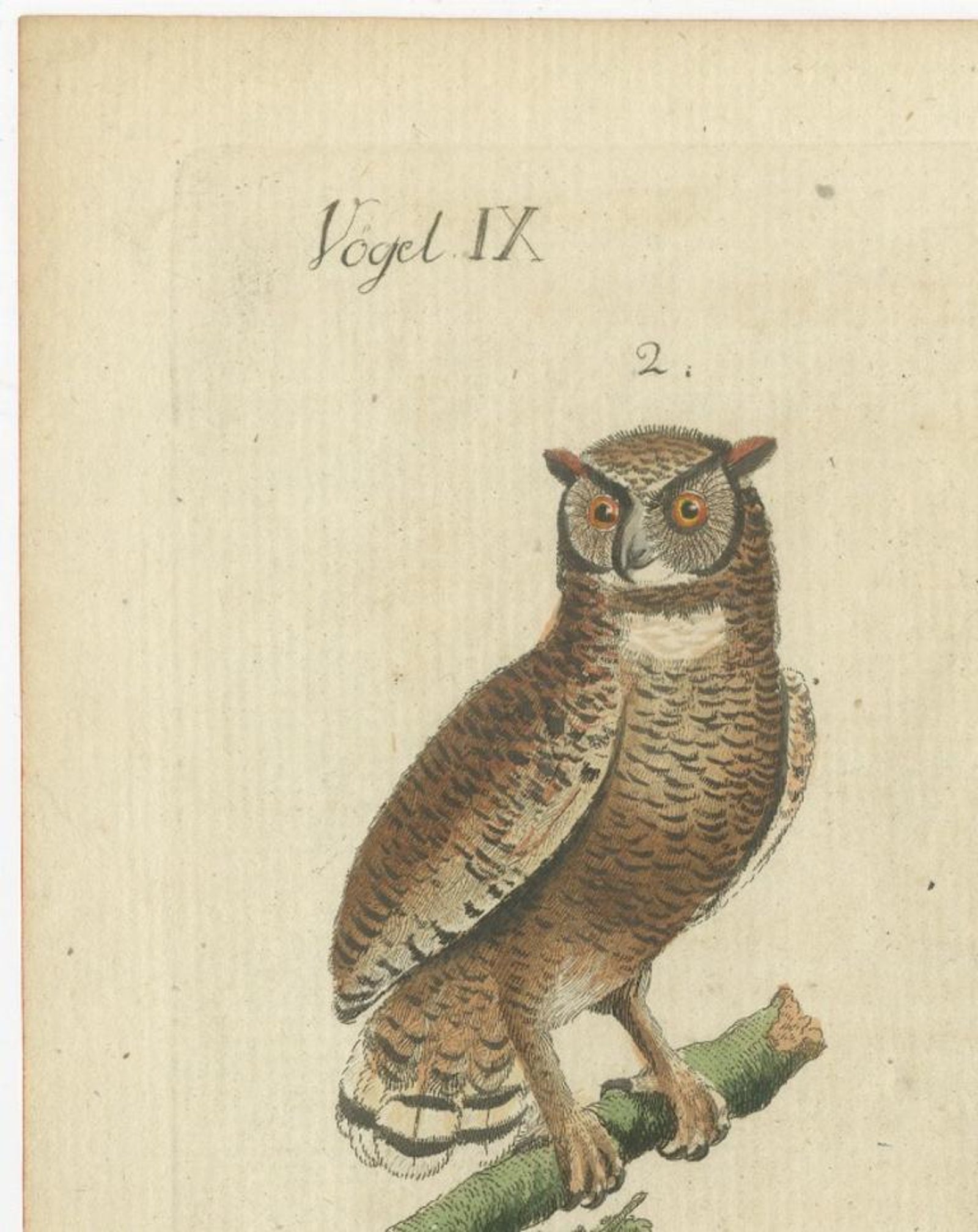
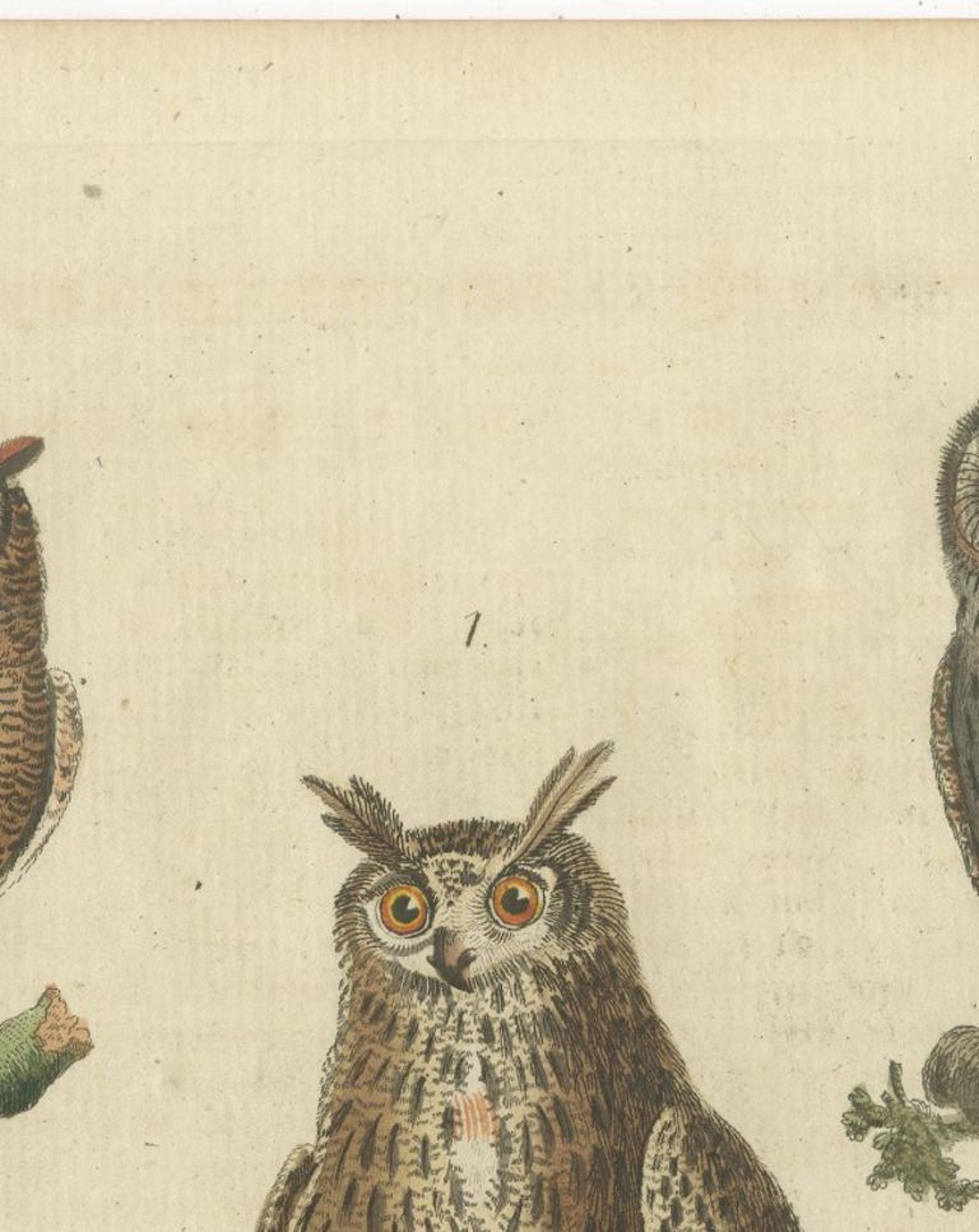
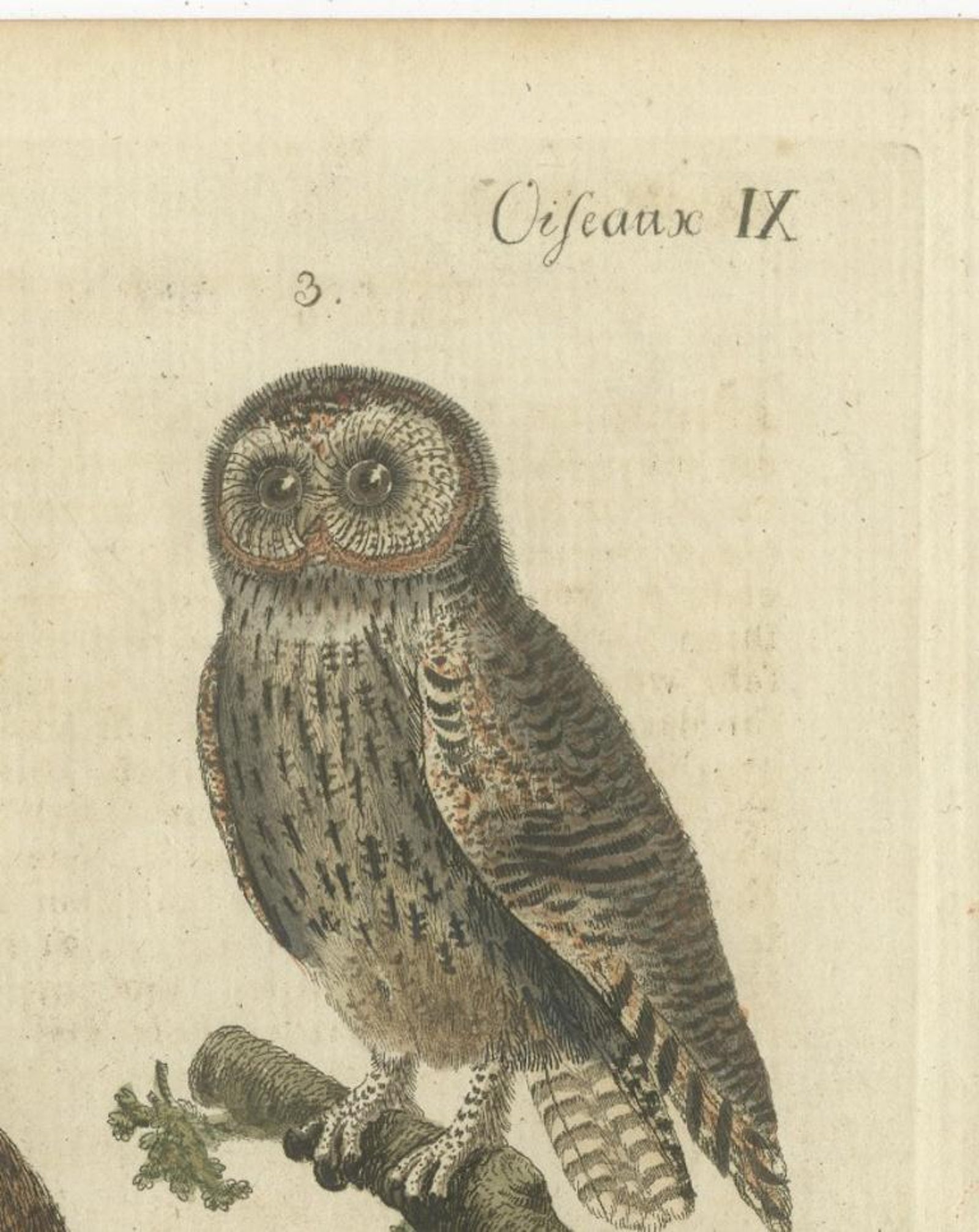
Close-ups
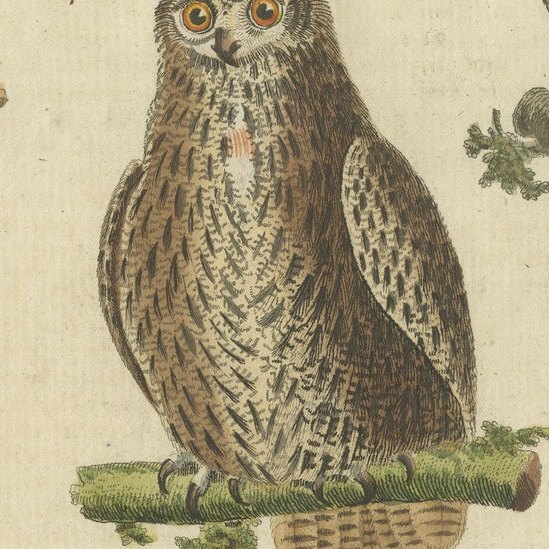
Framed and on the wall
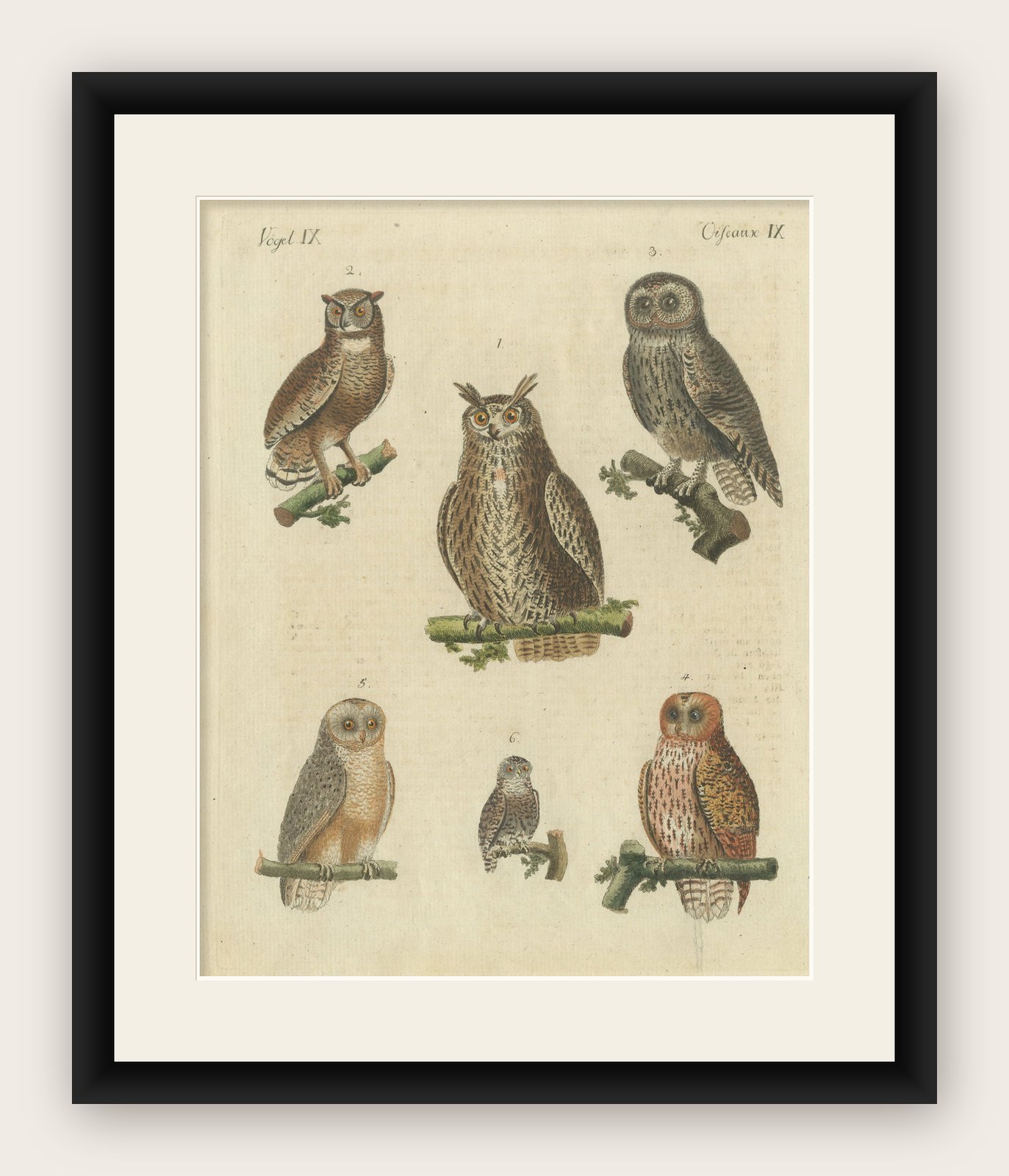



Frame and rooms are illustrations of how the print could look; the description says what is included.
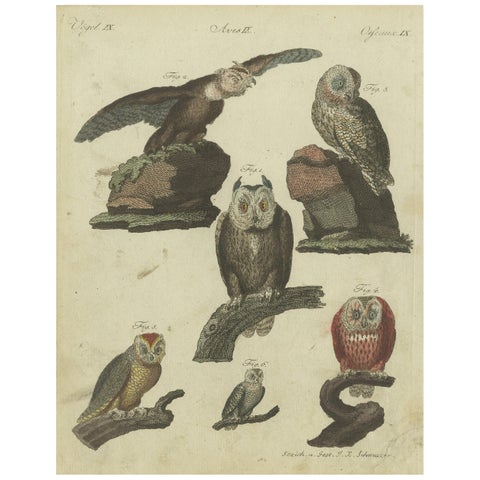
European Owls, Antique Hand-Colored Bird Engraving, Vogel IX, c.1800
€240€16830% off ($185, £140, €168)
Period original, not a reproduction.
Shipped from the Netherlands, flat or rolled, insured and tracked, worldwide. Returns accepted within 14 days.
- Date
- 1800
- Size
- 9.8 × 7.9 in (24.9 × 20 cm)
- Condition
- Good. Good condition. Original hand coloring. Noticeable age toning and patina throughout, with scattered foxing and light surface marks consistent with age. Minor edge wear and small discolorations visible. No modern restoration observed.
- Period
- Early 19th century
- Section
- Birds
- Reference
- f_48613792
- Color
- Hand colored
What the condition grades mean
- Excellent
- Bright and clean, with no faults worth mentioning.
- Very good
- Only light signs of age, such as faint toning.
- Good
- Normal signs of age for a sheet of this period: toning, some foxing, small marks or neat old repairs.
- Fair
- Clear faults such as staining, tears or repairs, priced to match.
Every fault we see is written in the condition note, and the whole sheet is shown uncropped in the photos.
European Owls, Antique Hand-Colored Bird Engraving, Vogel IX, c.1800
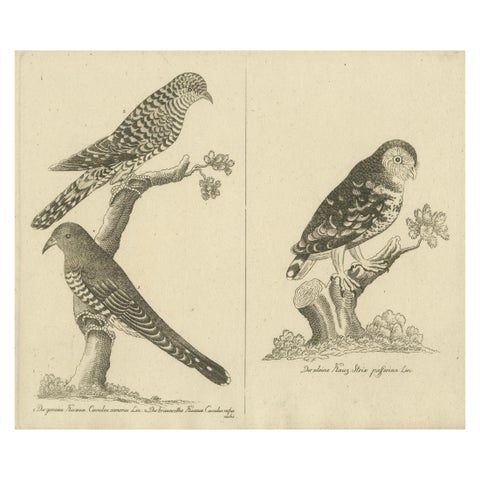
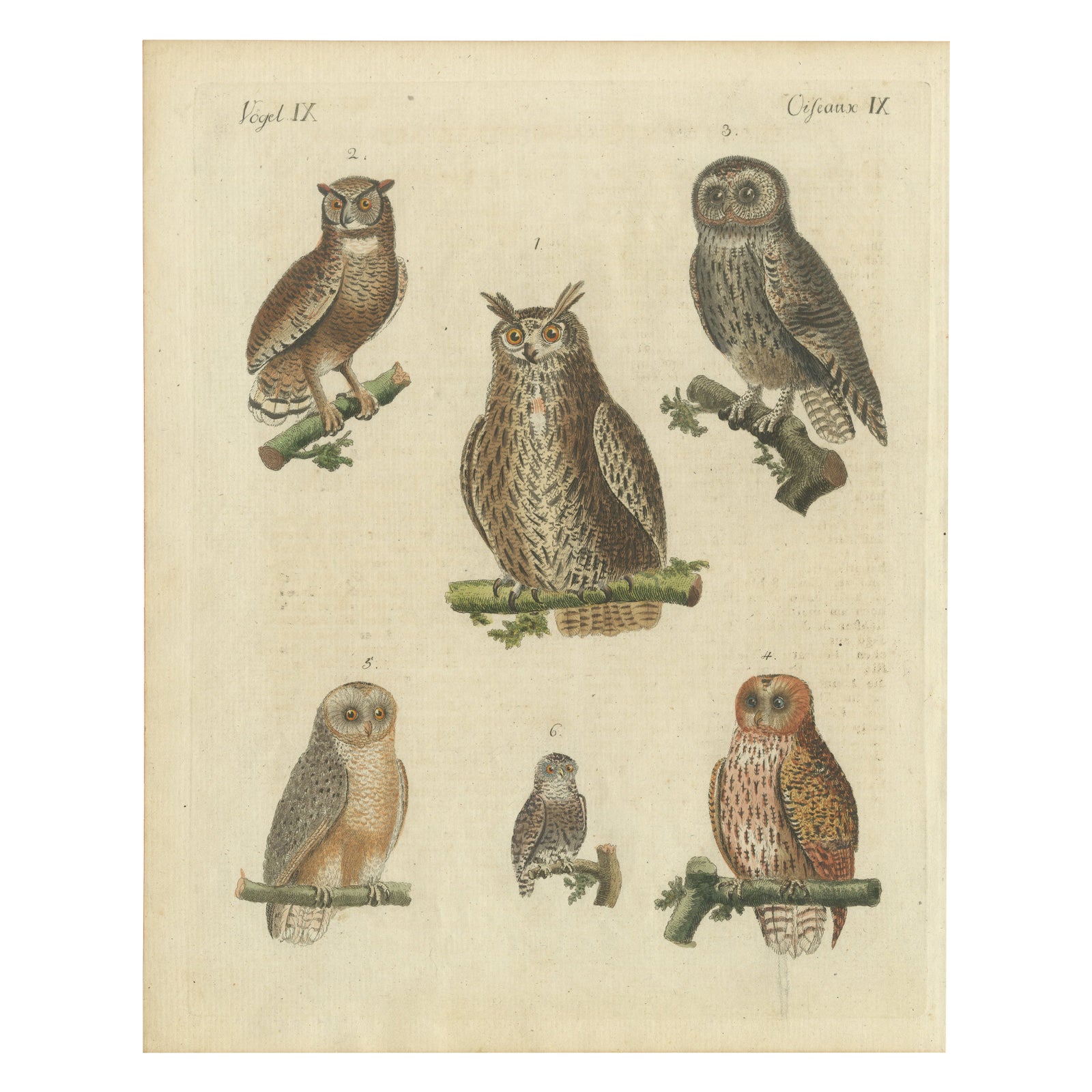
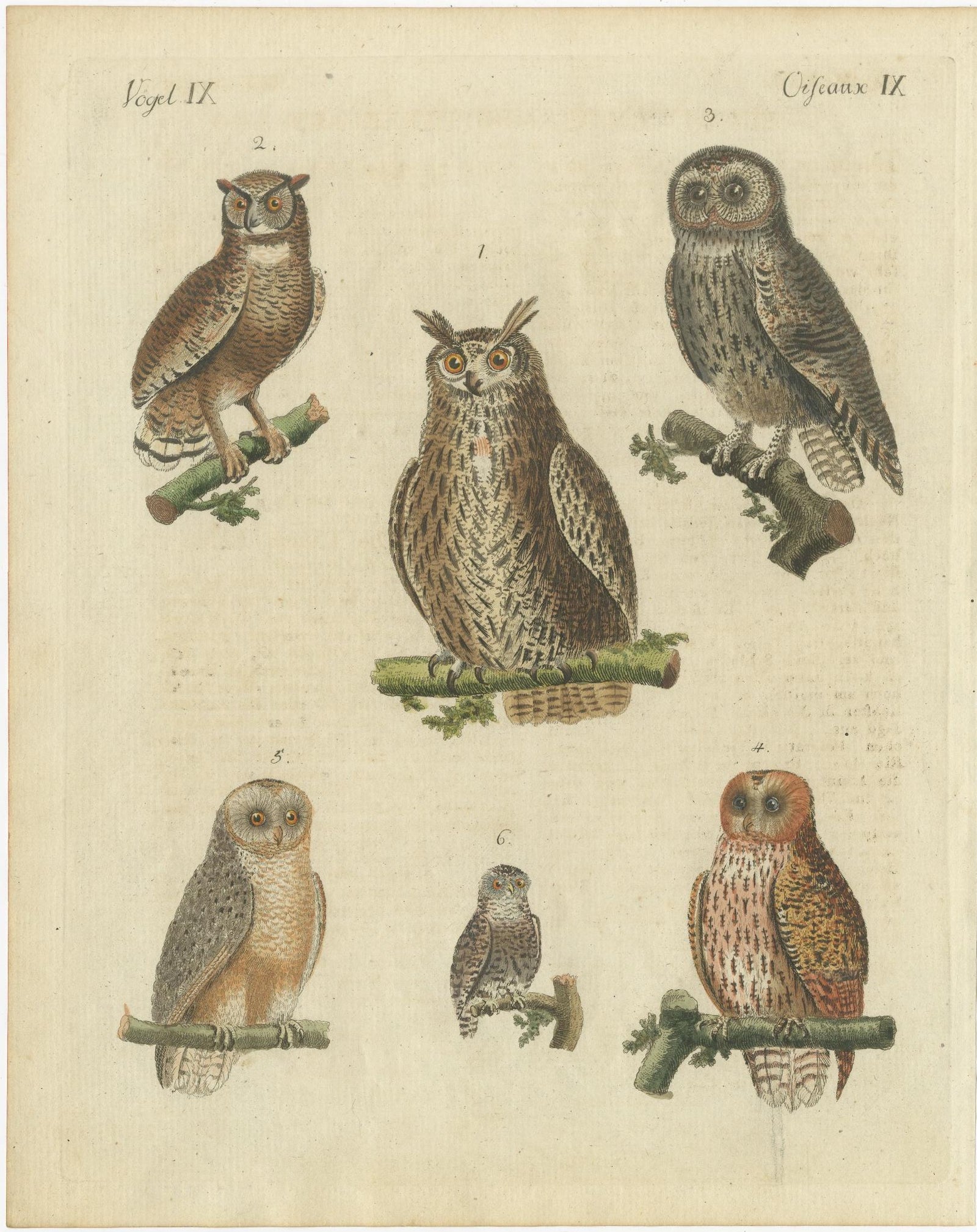
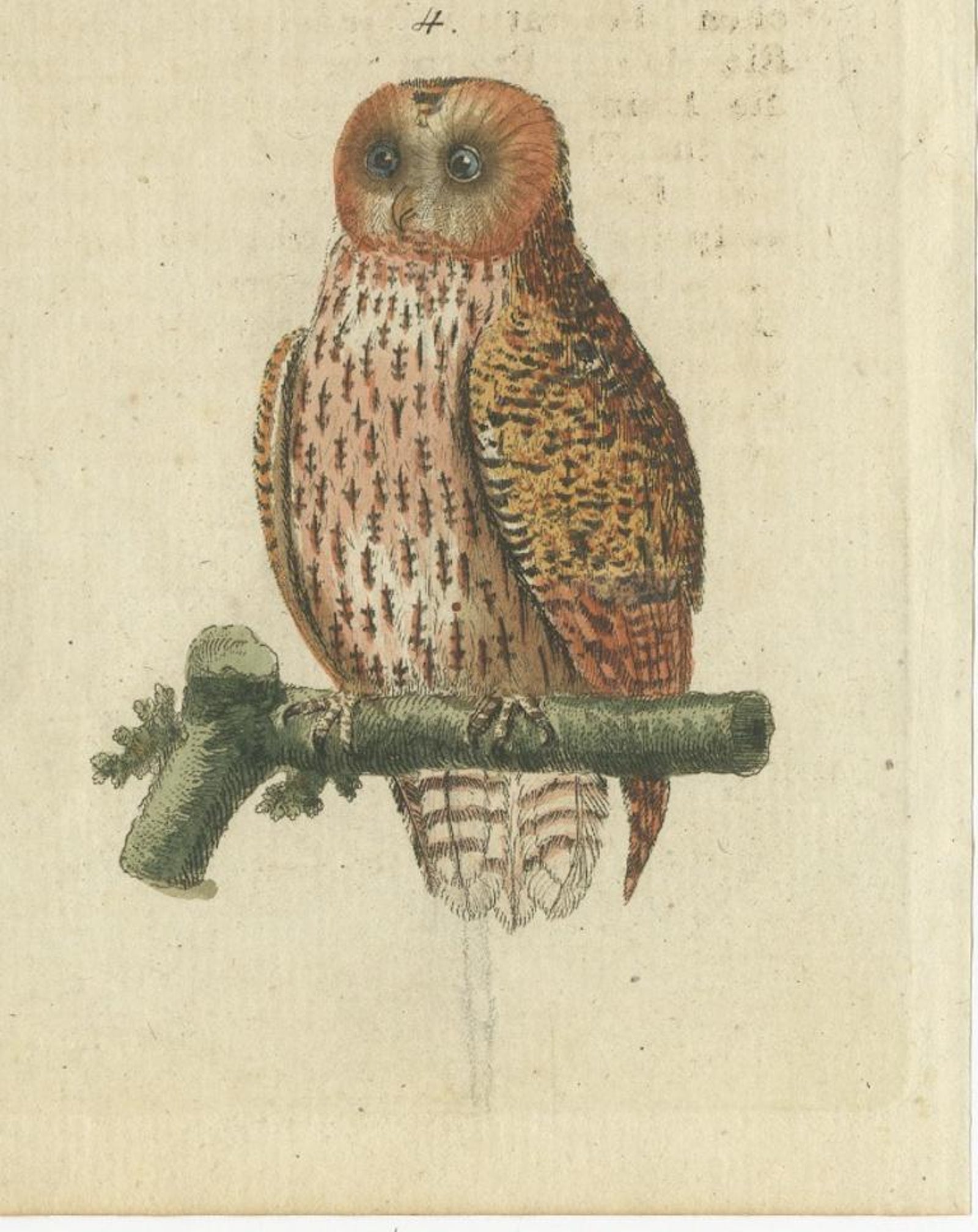
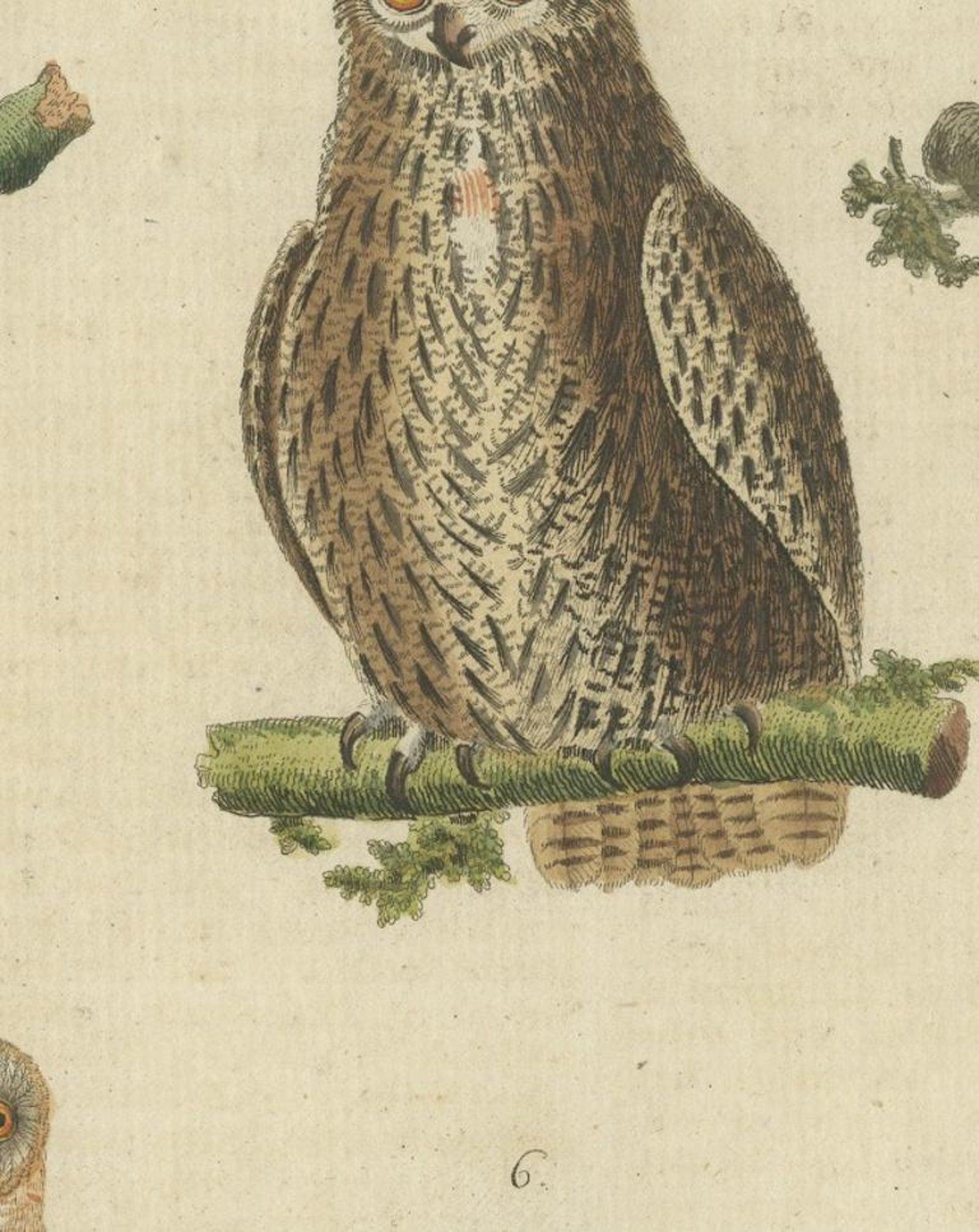
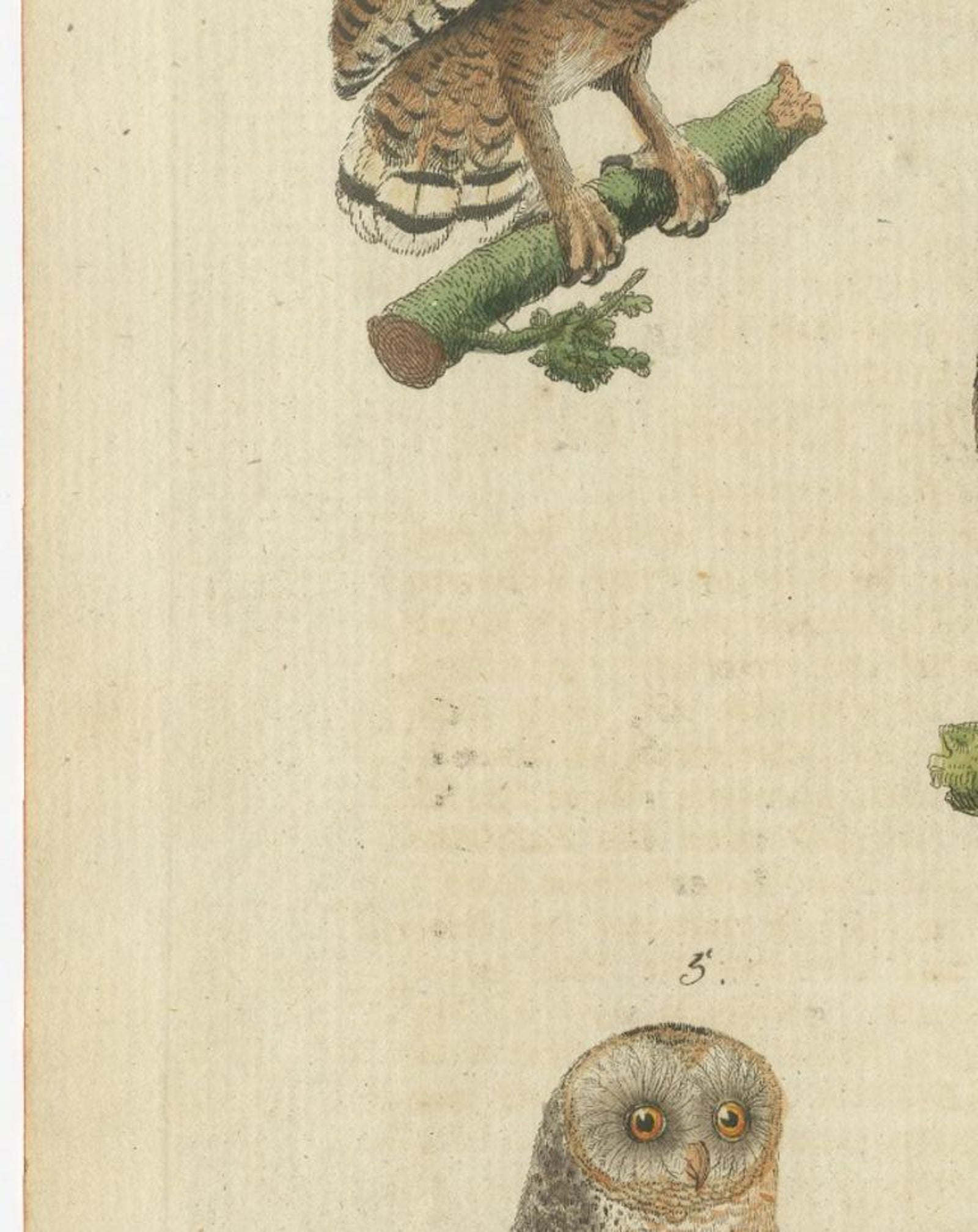
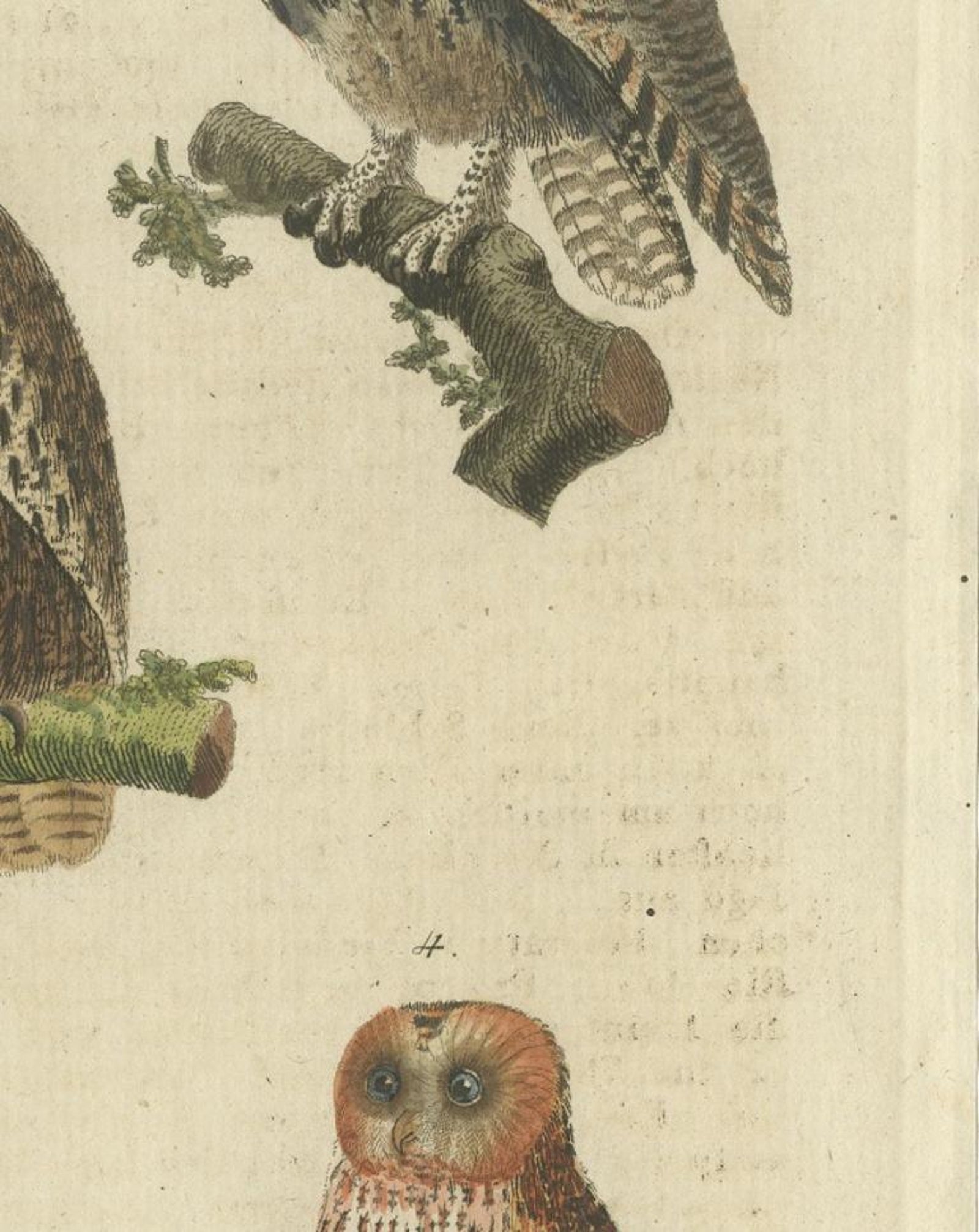
This finely executed hand-colored engraving presents six European owl species arranged in comparative study, issued as Plate IX (Vogel IX / Oiseaux IX). The plate belongs to the late 18th–early 19th century tradition of scientific ornithology, in which birds were illustrated side by side to support identification, classification, and study.
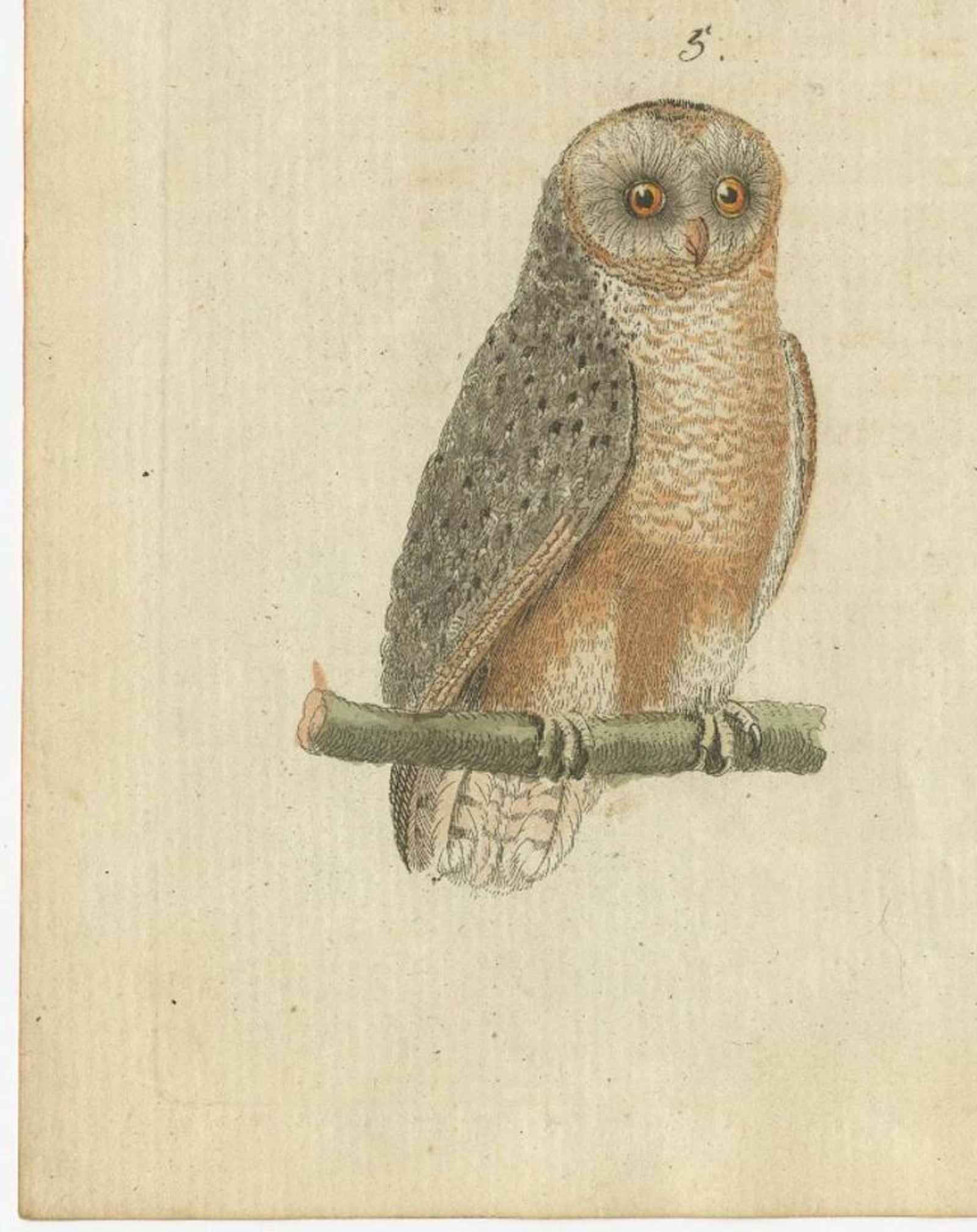
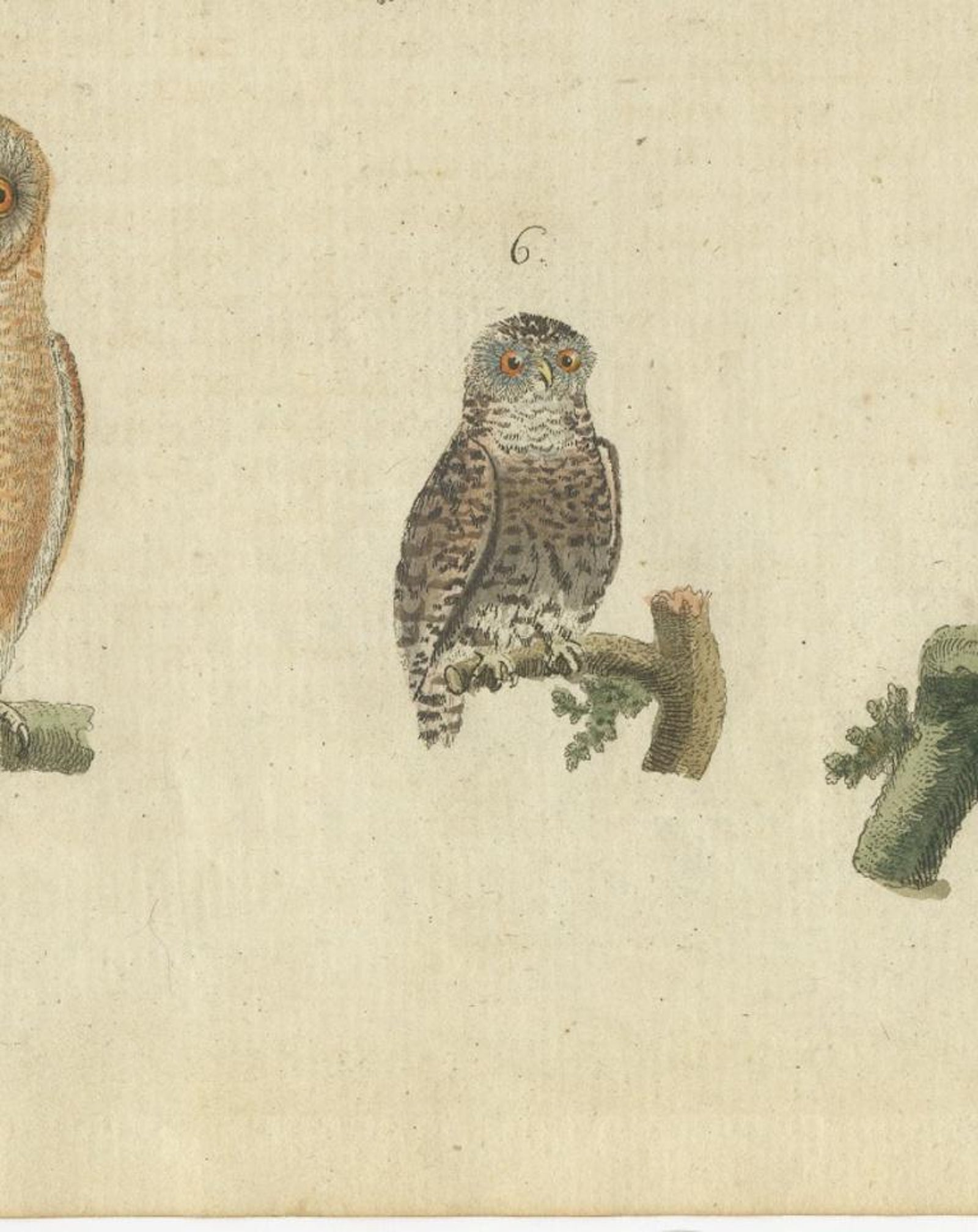
The owls depicted correspond to species recognized today as the Long-eared Owl (Asio otus), shown prominently with its upright posture and distinct ear tufts; the Tawny Owl (Strix aluco), represented in both its gray-brown form and its warmer rufous color morph; the Short-eared Owl (Asio flammeus), identifiable by its paler facial disc and reduced ear tufts; the small but expressive Little Owl (Athene noctua); and a larger, more powerfully built owl commonly identified as the Eurasian Eagle-Owl (Bubo bubo), included to demonstrate contrast in scale and form.
Each bird is depicted perched on a branch against a neutral ground, allowing close observation of plumage texture, facial structure, and stance. The hand-applied coloring enhances the naturalistic effect, particularly in the subtle gradations of brown, gray, cream, and rust tones characteristic of owl plumage. The bilingual German and French headings reflect the international scholarly audience for whom such plates were produced during this period of expanding scientific exchange.
Plates like this were originally issued in ornithological volumes intended for scholars, collectors, and educated amateurs. Today they are valued both for their scientific relevance and their decorative appeal. The balanced composition of six distinct species on a single sheet makes this print especially attractive to collectors of natural history, bird enthusiasts, and interior designers seeking refined, nature-inspired wall art.
Condition report:
Good condition. Original hand coloring. Noticeable age toning and patina throughout, with scattered foxing and light surface marks consistent with age. Minor edge wear and small discolorations visible. No modern restoration observed.
Framing tips:
This print is well suited to a classic museum-style presentation. A soft ivory or light beige mat will complement the aged paper and muted coloration, paired with a medium walnut, light oak, or ebonized frame depending on the desired contrast. UV-protective glazing is recommended to preserve the original hand coloring.
Technique: Hand-colored engraving
Maker: European school, late 18th–early 19th century