Close-ups
Framed and on the wall


Frame and rooms are illustrations of how the print could look; the description says what is included.
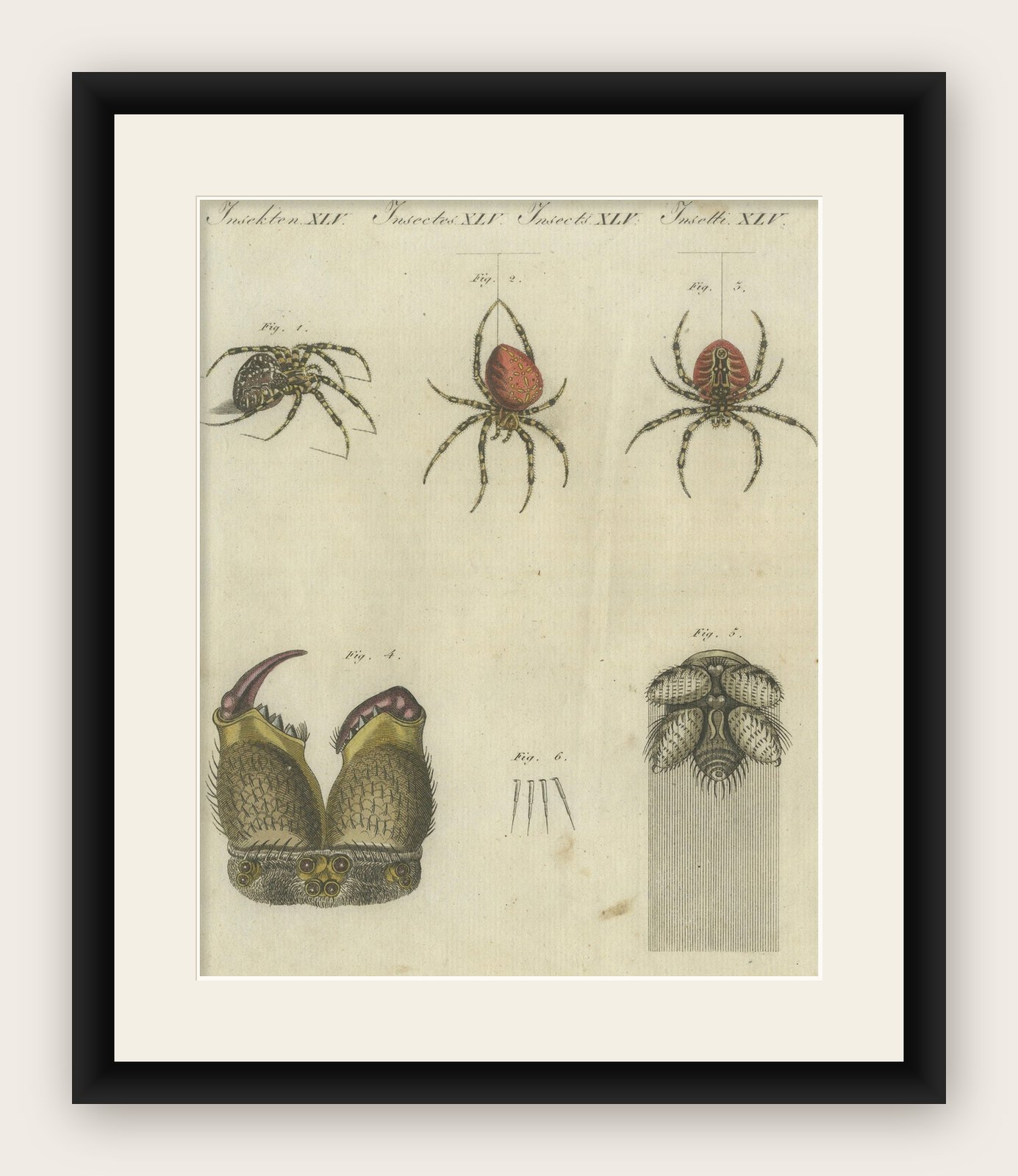
European Garden Spider Anatomy: Variations, Silk Spinnerets, and Mandibles, 1805
$160 (£120, €140)
Period original, not a reproduction.
Shipped from the Netherlands, flat, insured and tracked, worldwide. Returns accepted within 14 days.
- Date
- 1805
- Size
- 9.1 × 7.5 in (23 × 19 cm)
- Condition
- Good. Good condition with vibrant original hand coloring. Slight foxing and light toning on margins, consistent with age. Plate edges intact.
- Period
- Early 19th century
- Artist or book
- Bertuch
- Section
- Insects and butterflies
- Reference
- f_43180582
"European Garden Spider Anatomy: Variations, Silk Spinnerets, and Mandibles"
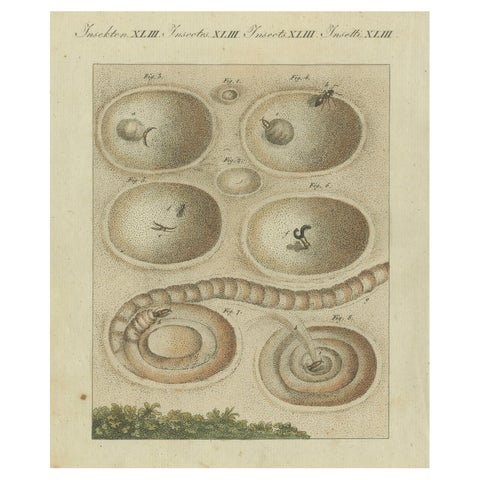
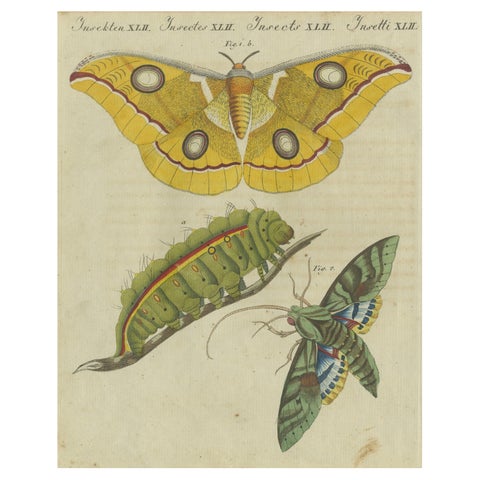
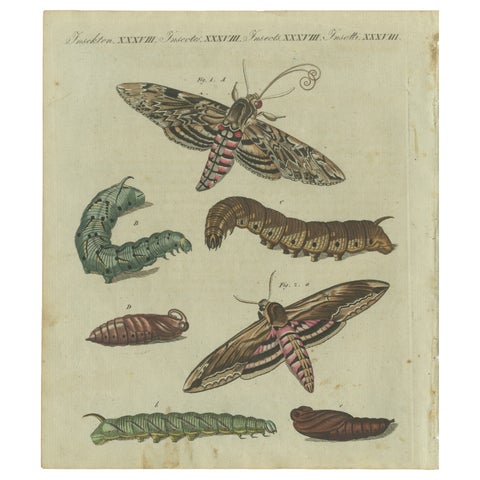
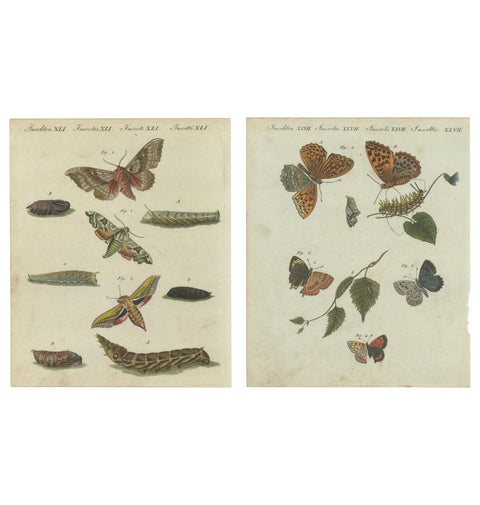
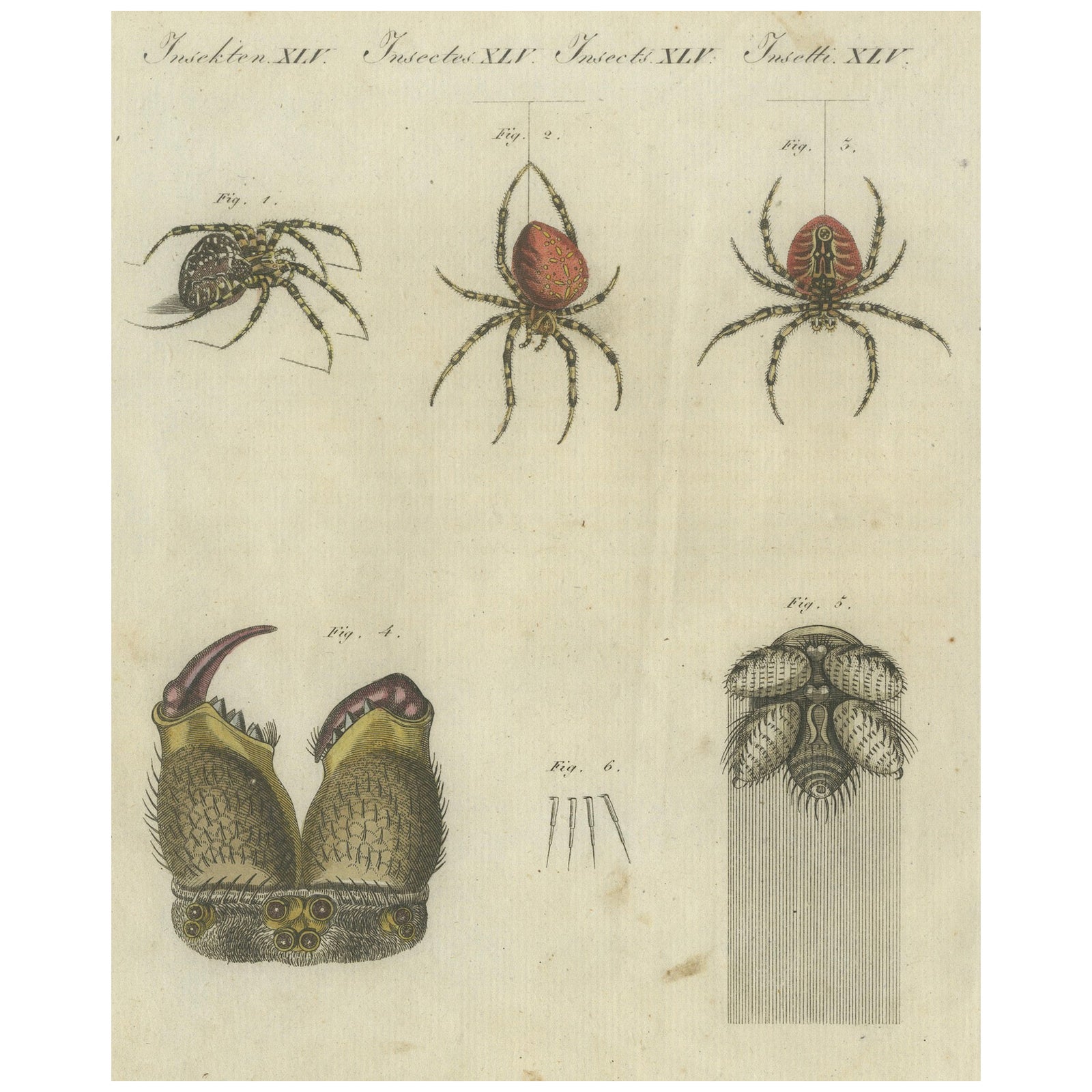
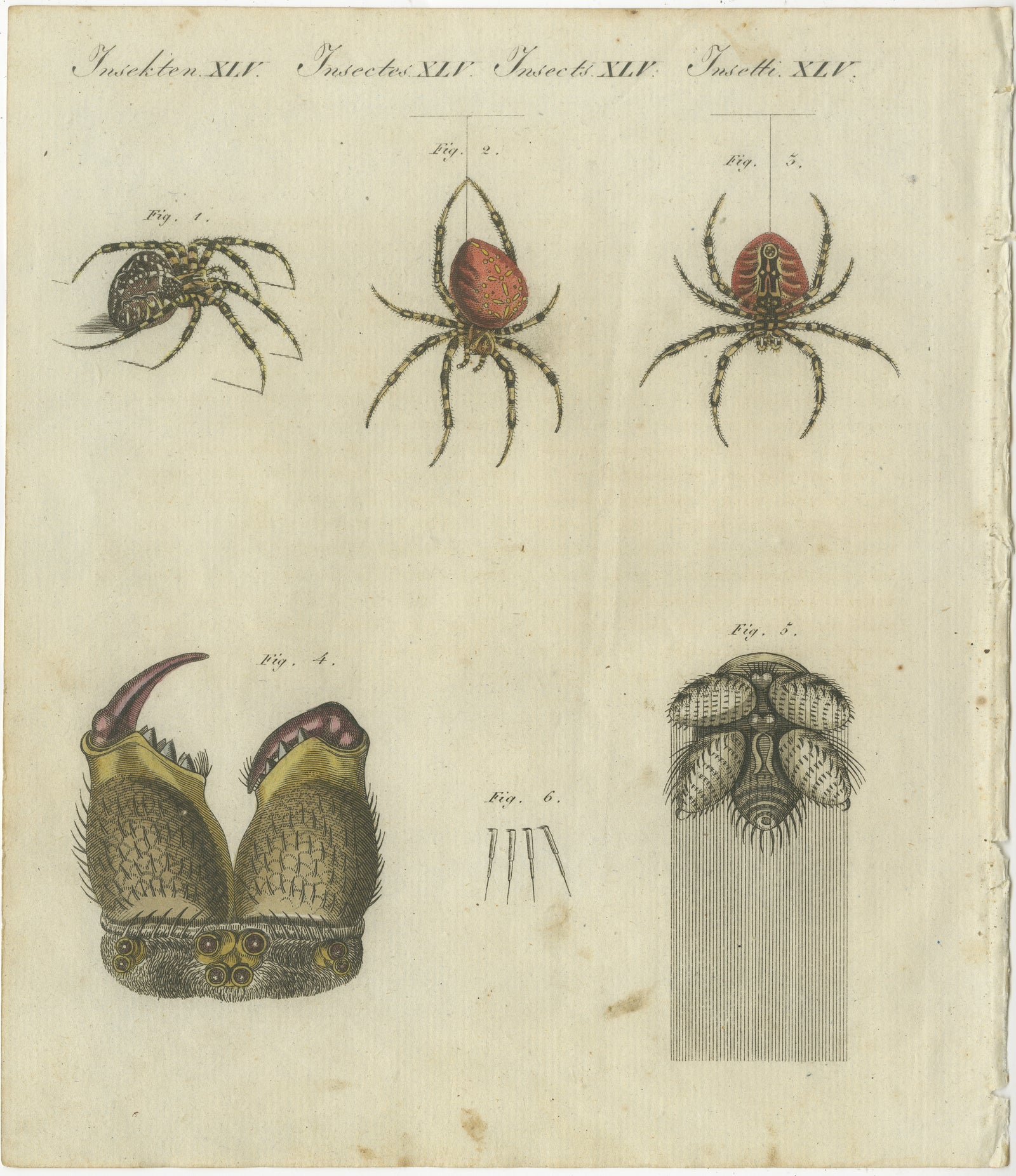
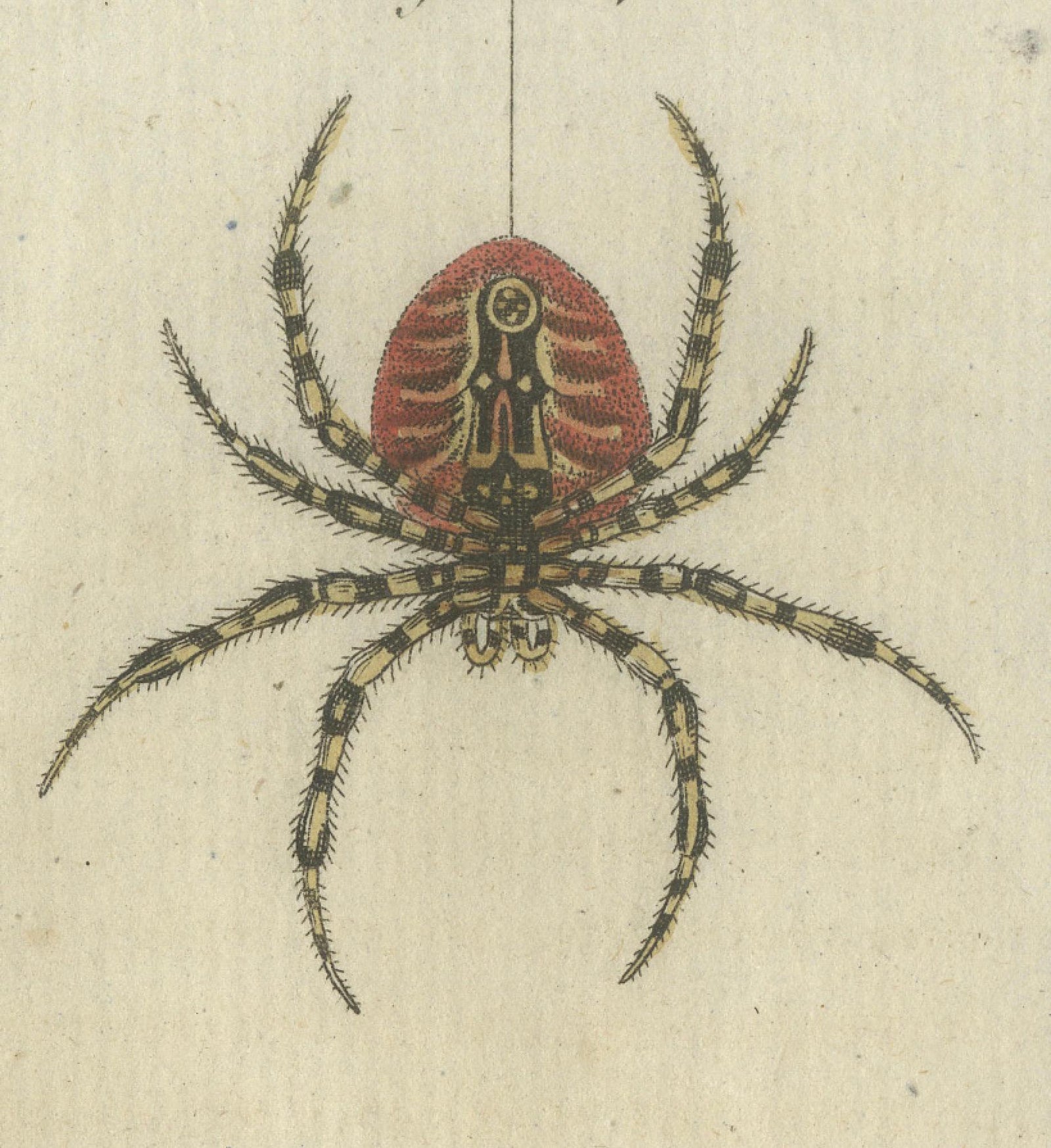
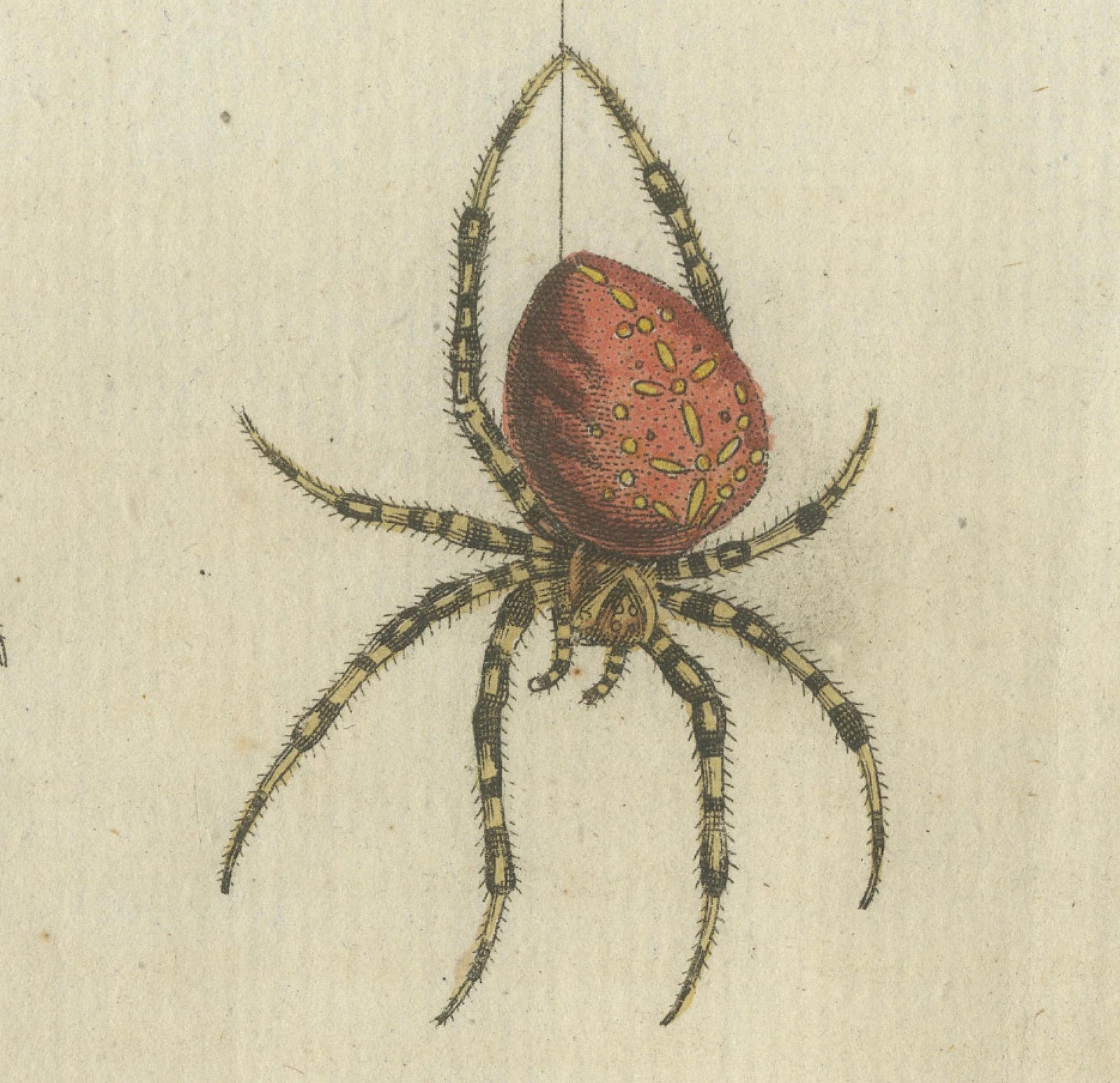
This captivating hand-colored copperplate engraving, from Friedrich Johann Bertuch’s *Bilderbuch für Kinder* (Picture Book for Children), Weimar, 1805, offers a detailed study of the European garden spider, also known as the diadem spider (*Araneus diadematus*). The illustration explores anatomical features and behavioral traits, combining scientific accuracy with artistic beauty.
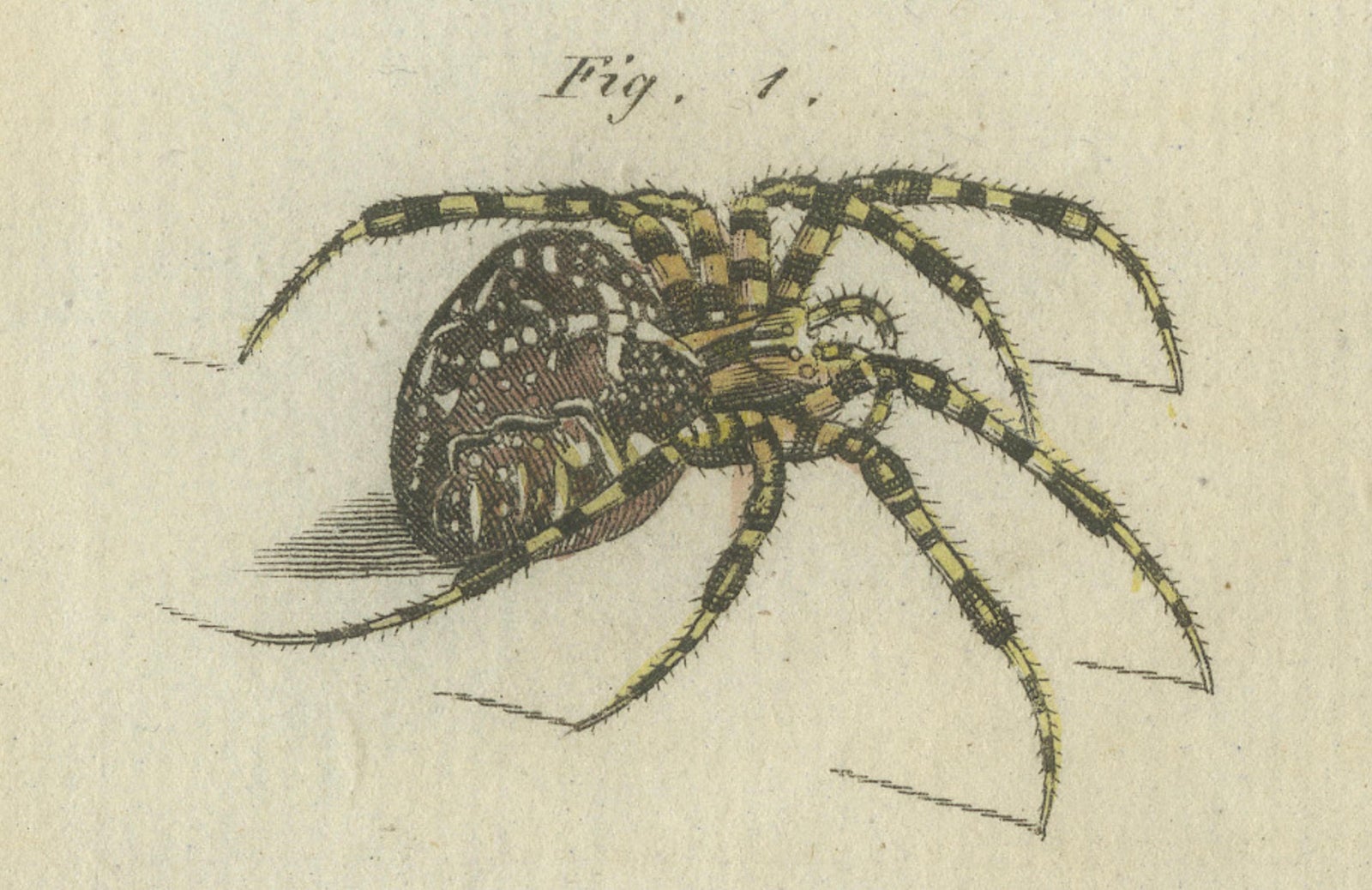
1. Figure 1: Depicts the black variety of the European garden spider, highlighting its characteristic round abdomen and intricate leg structure.
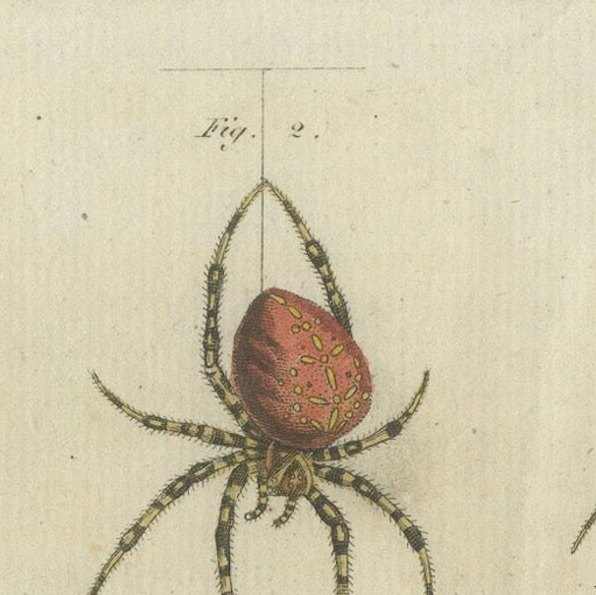
2. Figures 2-3: Illustrate the striking red variety of the spider, shown hanging from a silk line. The vibrant red markings and fine details emphasize the diversity within this species.
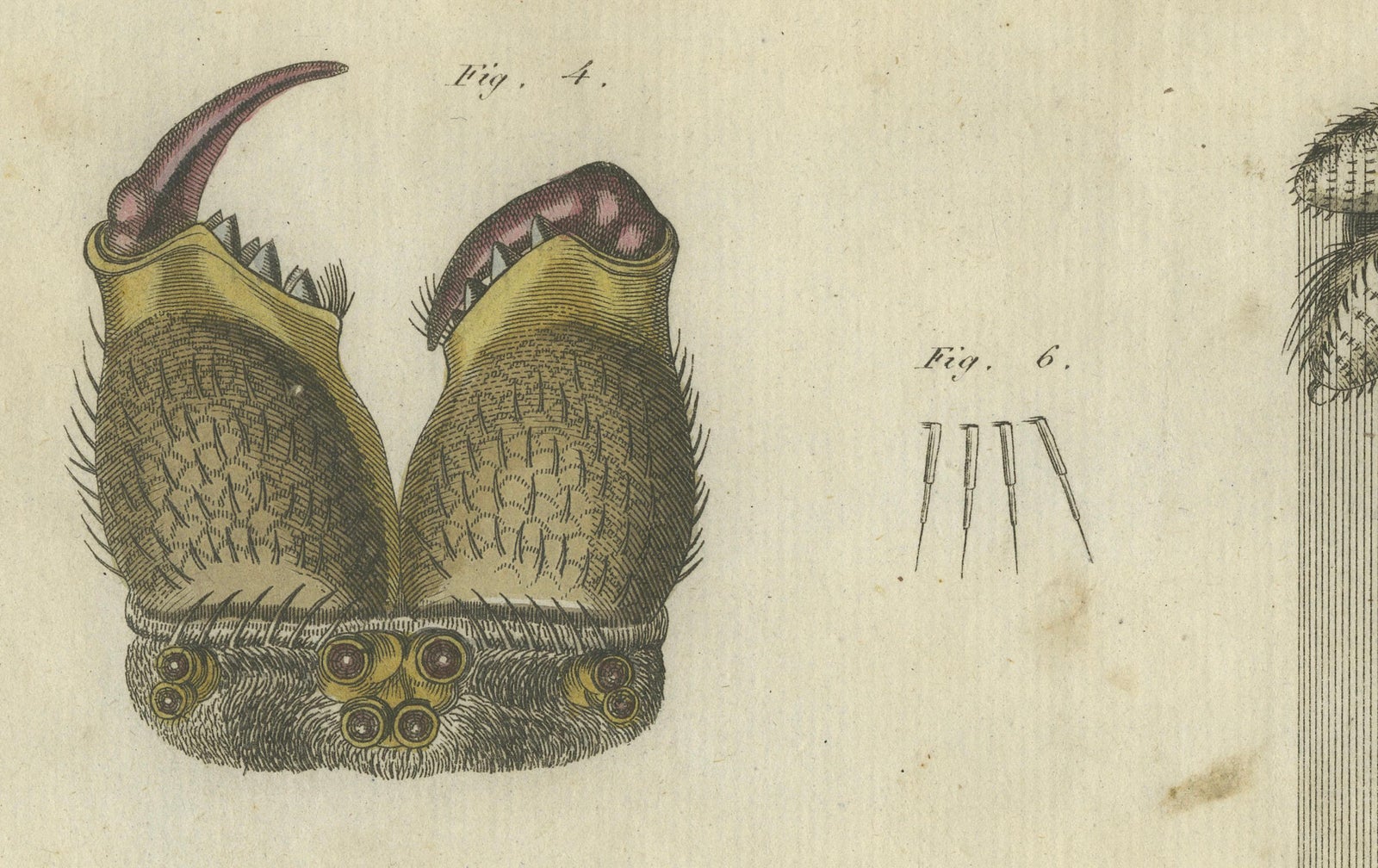
3. Figure 4: Provides a close-up view of the spider’s head, showcasing the mandibles and prominent eyes used for hunting and web construction.
4. Figure 5: Presents the silk spinnerets, revealing the intricate anatomy involved in spinning silk fibers. This fascinating aspect of spider biology is a testament to their evolutionary adaptability.
5. Figure 6: Displays detailed silk tubes, demonstrating how the spider produces and uses its web-building material.
This engraving exemplifies Bertuch’s dedication to educating young readers and adults alike, combining visual appeal with scientific observation. It is a remarkable piece of 19th-century natural history art.
### Condition Report
Very good condition with vibrant original hand coloring. Slight foxing and light toning on margins, consistent with age. Plate edges intact.
### Framing Tip
To highlight the intricate details, use a neutral mat and a simple, natural wood frame. UV-resistant glass will help preserve the engraving’s vibrant colors and delicate inkwork. This piece is perfect for an entomology-themed gallery or a scientific study display.