Close-ups
Framed and on the wall
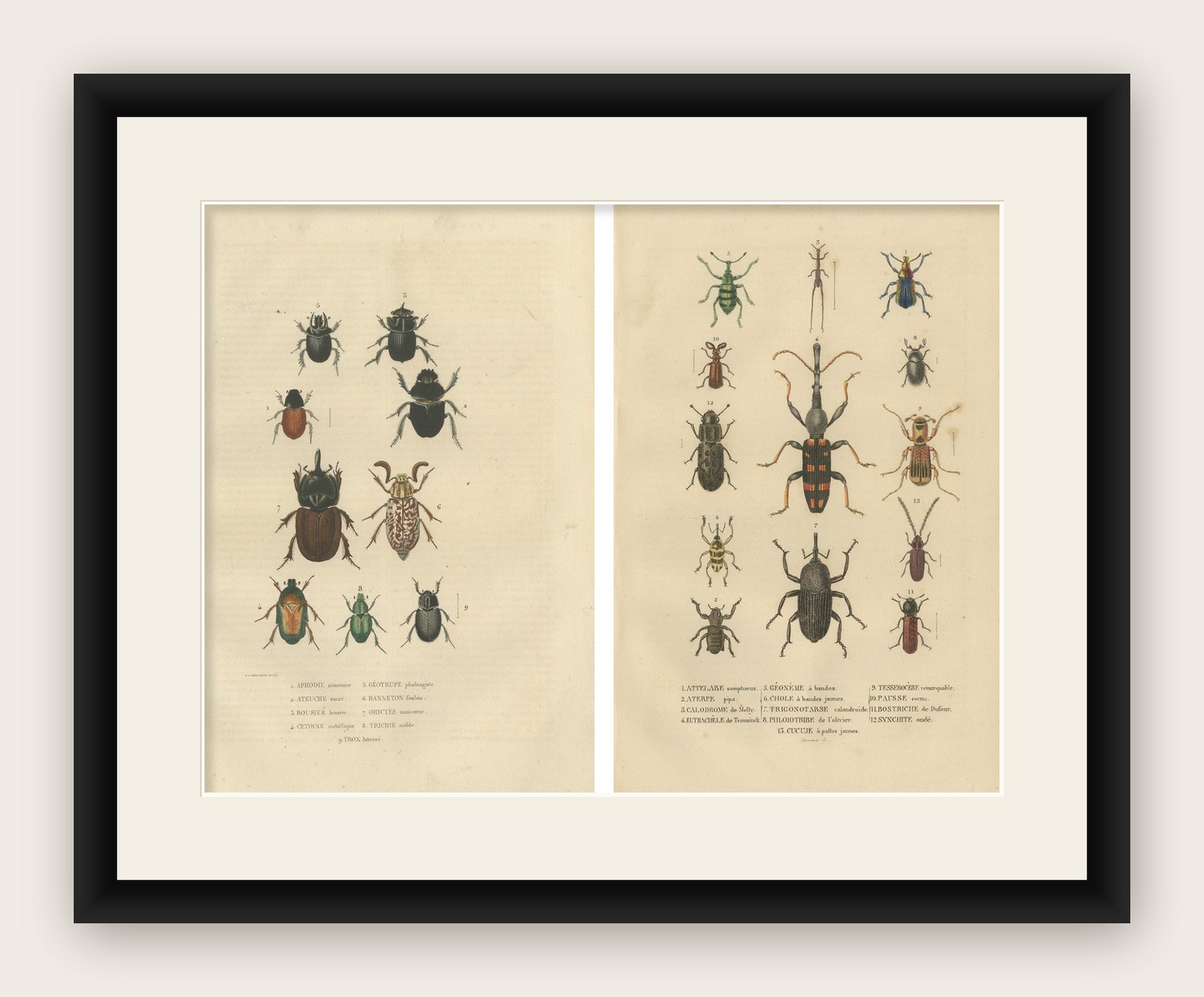


Frame and rooms are illustrations of how the print could look; the description says what is included.
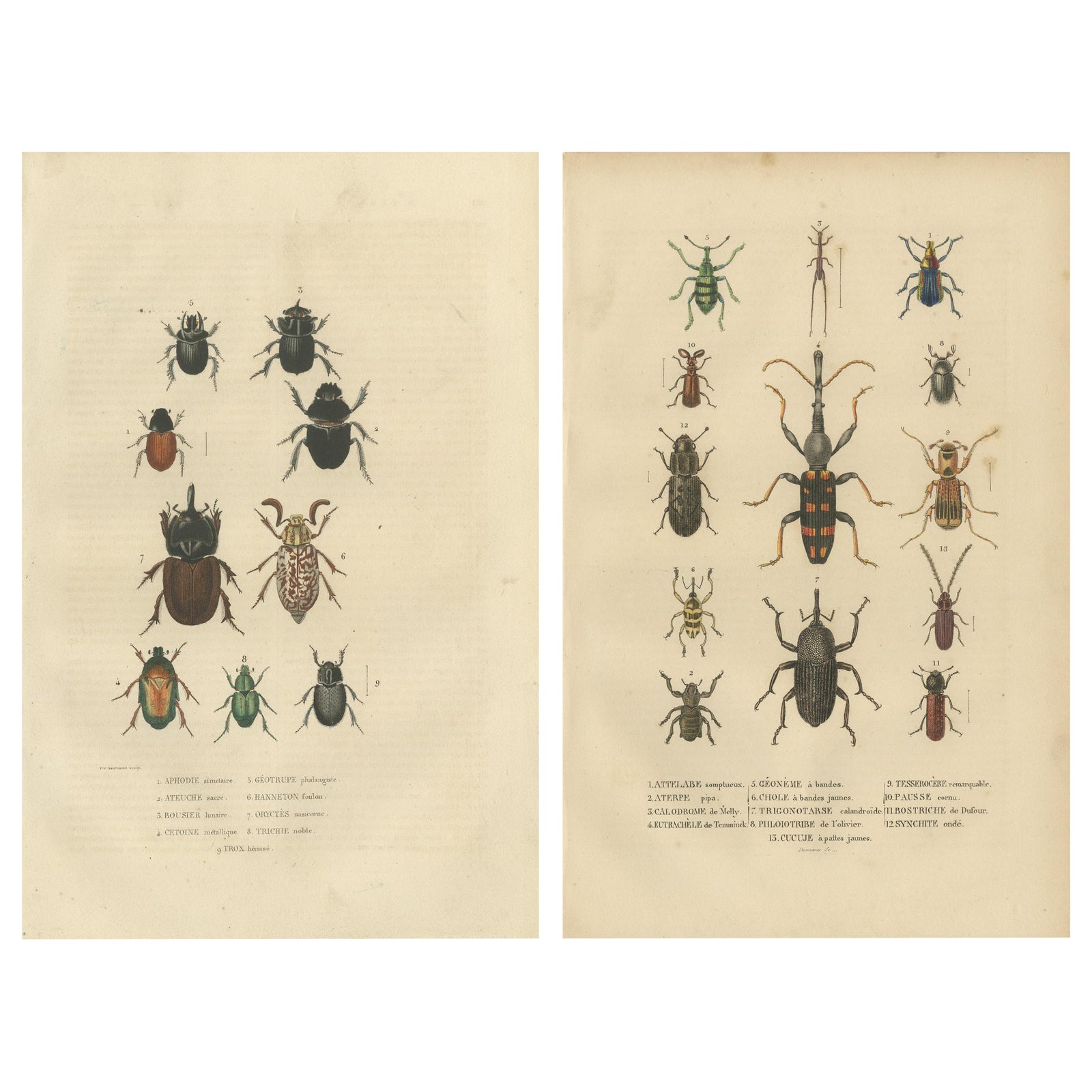
Entomological Elegance: A Collection of 19th Century Beetle Engravings
€250 ($280, £210, €250)
Period original, not a reproduction.
Shipped from the Netherlands, flat, insured and tracked, worldwide. Returns accepted within 14 days.
- Date
- Not stated
- Size
- 10.4 × 6.7 in (26.5 × 17 cm)
- Condition
- Good. Good, especially considering their age. No tears or significant creases. The prints are well-preserved with vibrant colors and clear details, showing some age-related discoloration and minimal foxing.
- Section
- Insects and butterflies
- Reference
- f_37684502
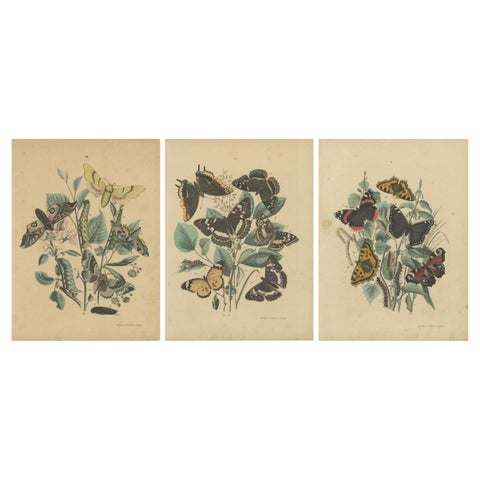
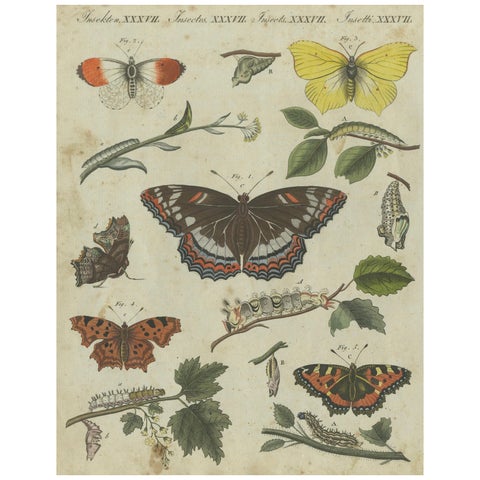
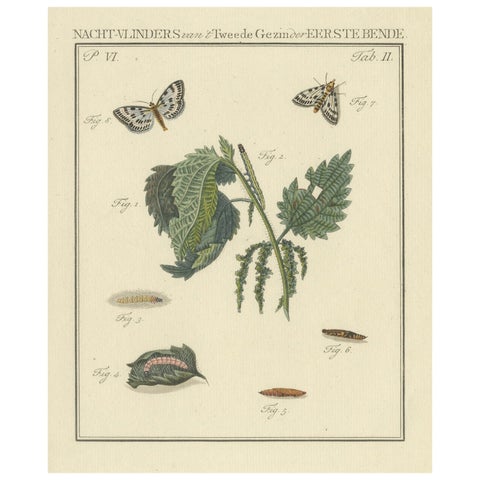
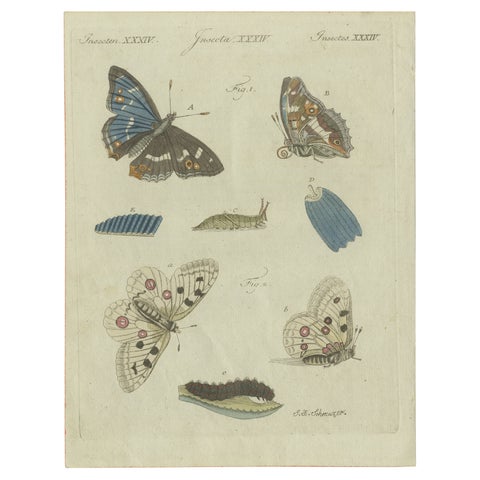
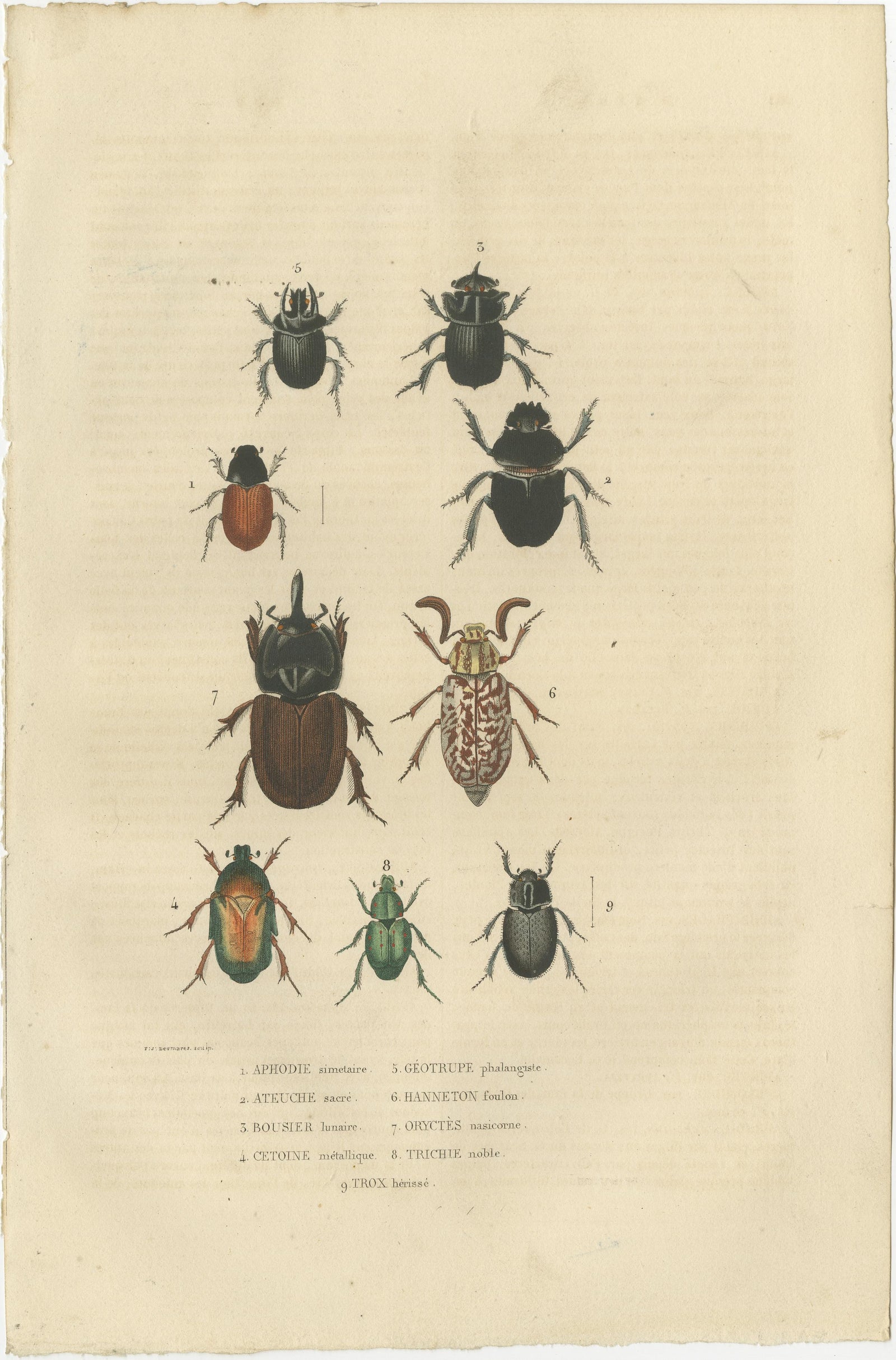
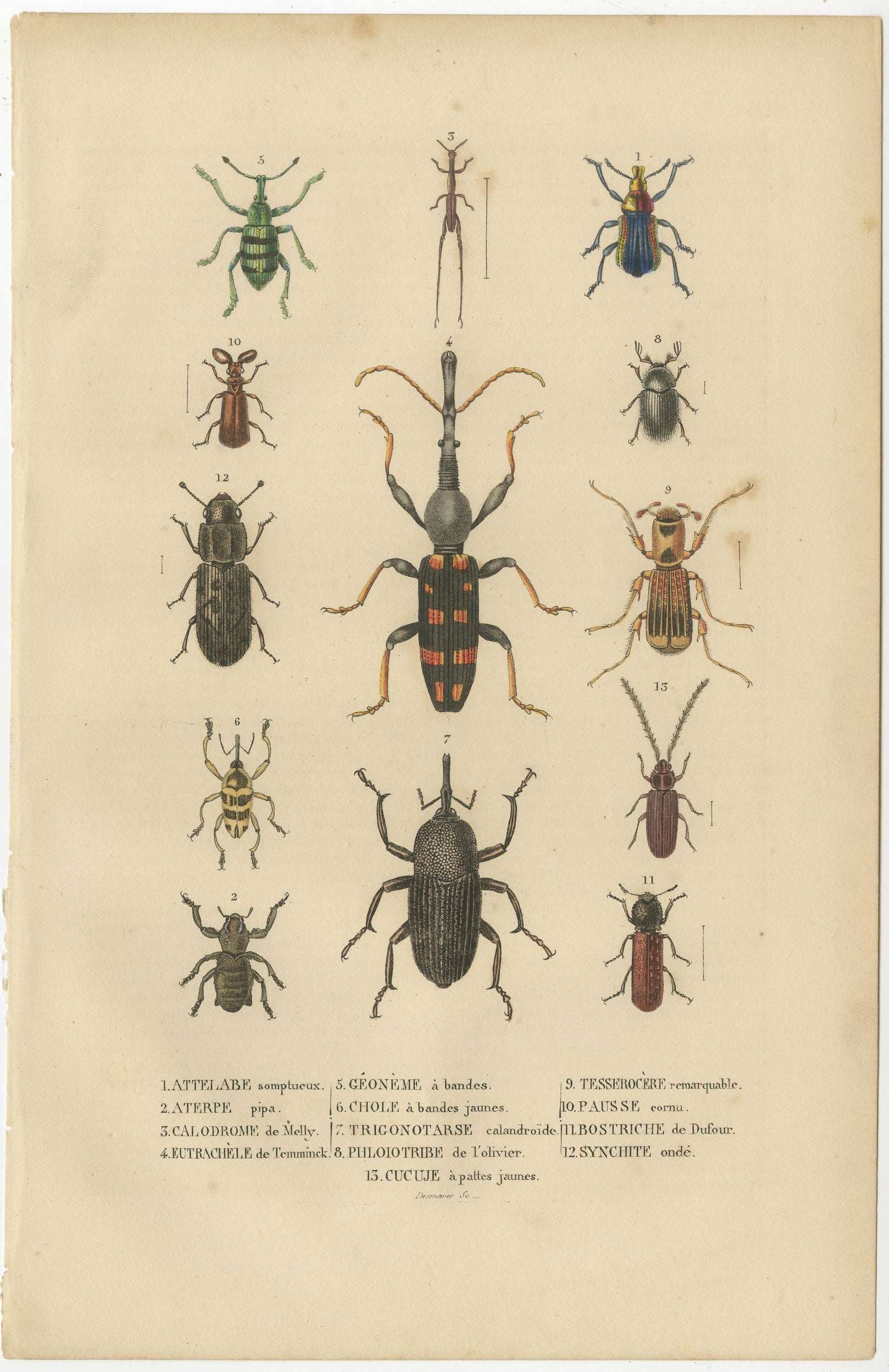
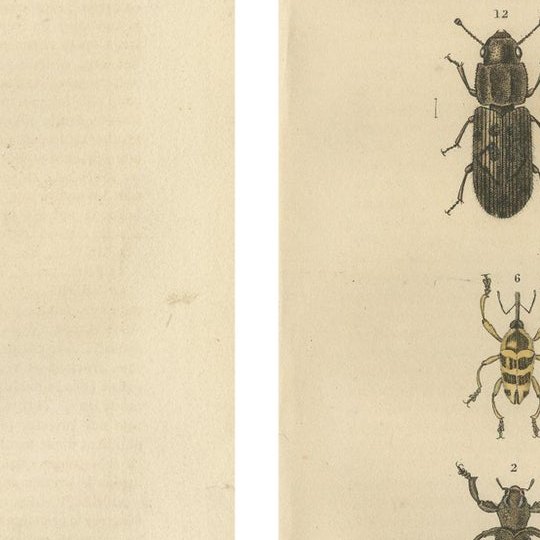
The images are finely detailed engravings of beetles from a 19th-century scientific collection. Each beetle is rendered with precision, showcasing their unique physical characteristics, such as the segmentation of their bodies, the texture of their carapaces, the patterns and colors of their wing covers (elytra), and the varying shapes and lengths of their antennae and legs.
The species, as labeled in the engravings, are as follows:
From the first image:
1. **Apidie** - Possibly a reference to the Apidae family, which includes bees, but in this context, it likely refers to a type of beetle.
2. **Attelabe** - Likely a variant of the name for beetles in the family Attelabidae, known as leaf-rolling beetles.
3. **Bousier** - Common French name for dung beetles, which are part of the Scarabaeidae family.
4. **Cétoine** - Refers to beetles in the subfamily Cetoniinae, known as flower beetles.
5. **Geotrupe** - A genus of earth-boring dung beetles.
6. **Hanneton** - Common French name for beetles in the family Scarabaeidae, particularly the June beetles or May bugs.
7. **Oryctes** - A genus that includes the rhinoceros beetles.
8. **Trichie** - Refers to beetles in the genus Trichius, which are often found in flowers and resemble small bumblebees.
From the second image:
1. **Attelabe** - Again, likely referring to the Attelabidae family of leaf-rolling beetles.
2. **Calosoma** - A genus of ground beetles known for their predatory habits, particularly on caterpillars.
3. **Carabe** - Refers to the ground beetles of the family Carabidae.
4. **Cicindèle** - Known as tiger beetles, this genus is noted for its speed and predatory efficiency.
5. **Scarites** - A genus of ground beetles known for their distinctive appearance and burrowing lifestyle.
6. **Staphylin** - Refers to the rove beetles of the family Staphylinidae, which have very short elytra and an elongated abdomen.
These names might not be entirely accurate according to modern taxonomy, and some may be antiquated or regional terms for these beetles. Each species is beautifully represented, likely intended for educational or scientific purposes to highlight the biodiversity of beetles and their importance in various ecosystems.
More info on the book in which it was published:
The 'Dictionnaire Classique des Sciences Naturelles' by Pierre Auguste Joseph Drapiez stands as a remarkable testament to 19th-century natural sciences. Published in Brussels in 1845, this work represents an expansive collation of knowledge, building upon the pioneering works of Buffon, Daubenton, Lacepede, Cuvier, de Jussieu, and other influential naturalists.
The prints within this compendium likely showcase a rich amalgamation of artistic precision and scientific accuracy. Drapiez, himself a Belgian naturalist, would have aimed for detailed representations of flora, fauna, and scientific phenomena, mirroring the illustrative styles prevalent during his time. Given the era's emphasis on illustration, these prints were likely engraved meticulously, possibly portraying intricate anatomical details or lifelike depictions of the natural world.
With Drapiez's background in natural history, the prints might bear testament to his commitment to scientific authenticity, aiming to educate and inspire scholars and enthusiasts alike. These engravings would have complemented the text, offering visual aids that elucidate the concepts and specimens discussed in the volume.
Overall, the prints of 'Dictionnaire Classique des Sciences Naturelles' likely serve as both artistic representations and invaluable scientific resources, encapsulating the essence of 19th-century natural history exploration and documentation.