Framed and on the wall
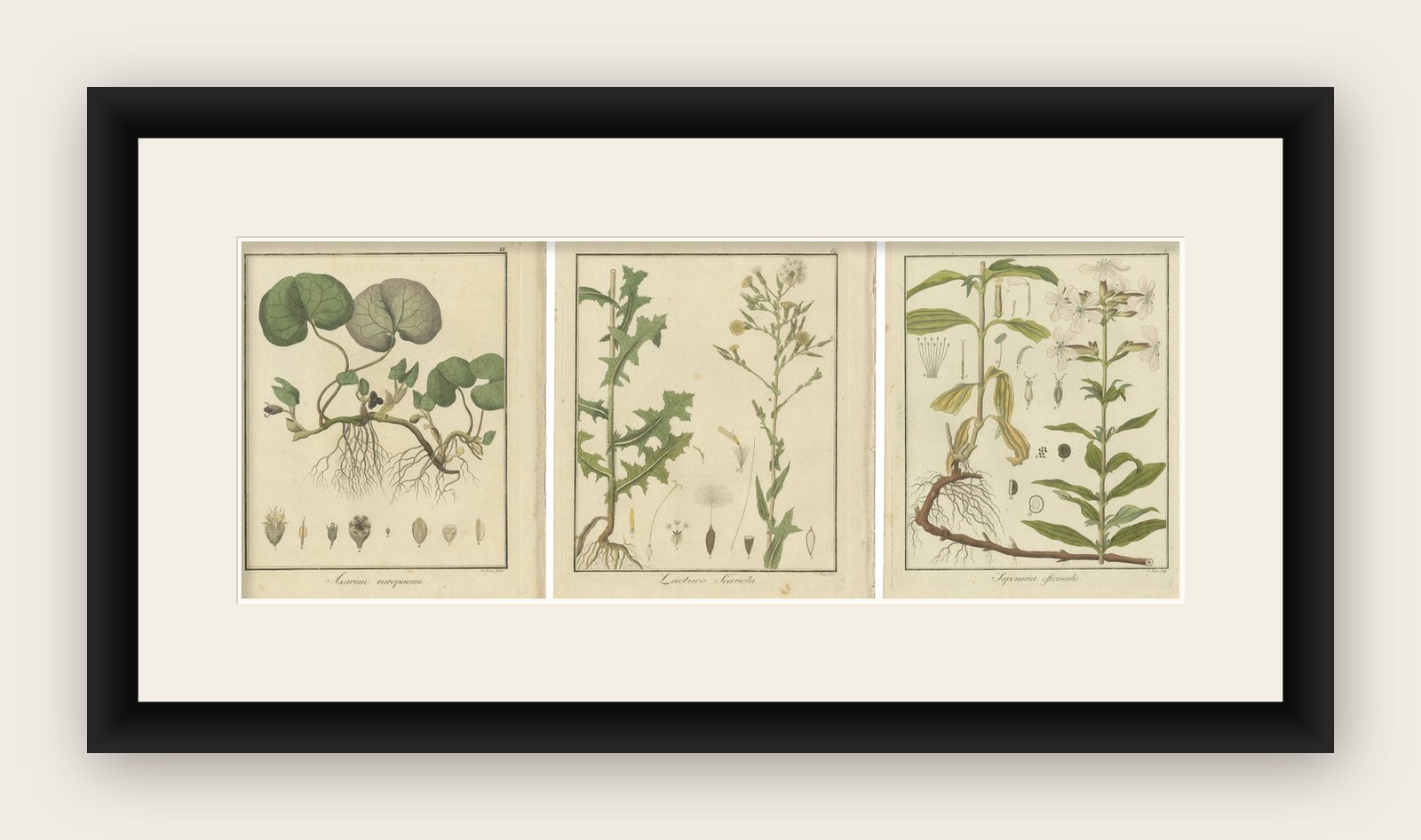


Frame and rooms are illustrations of how the print could look; the description says what is included.
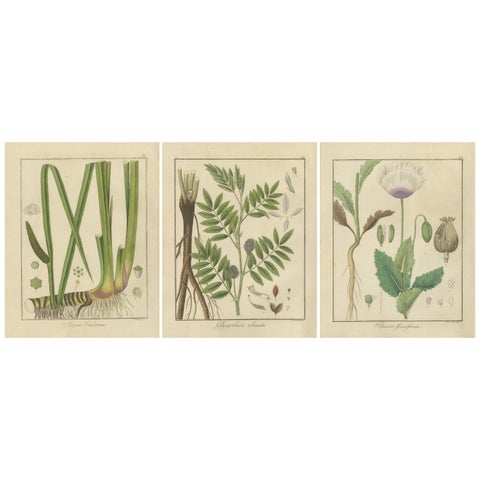
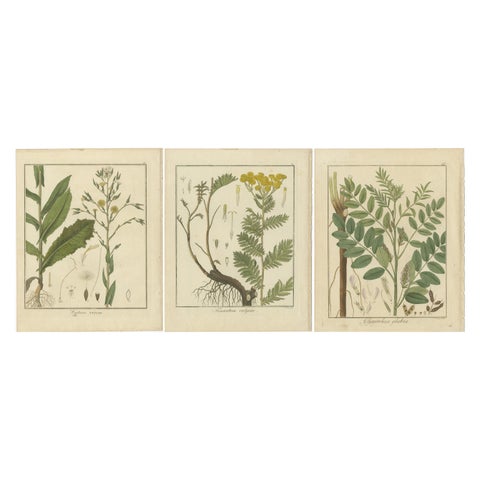
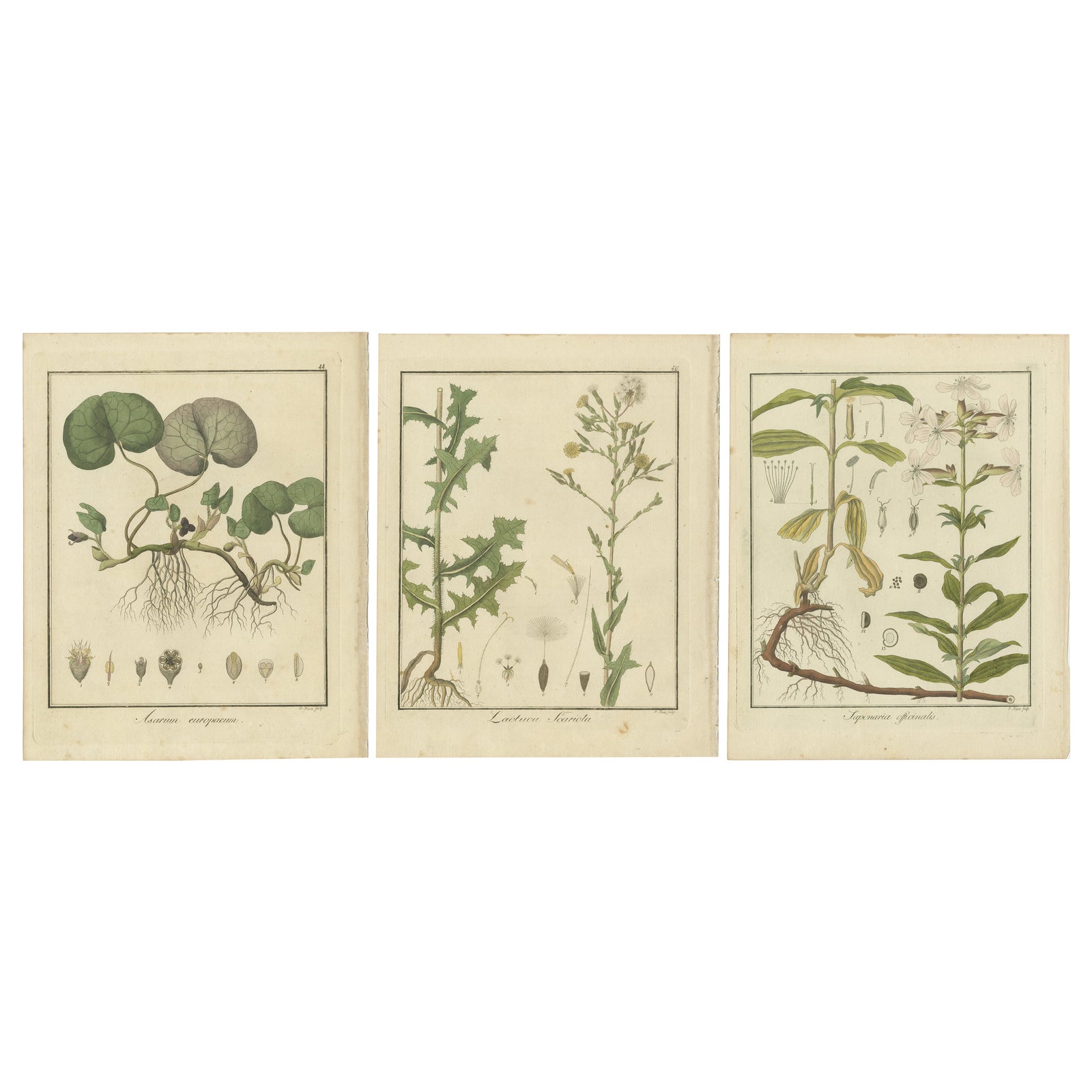
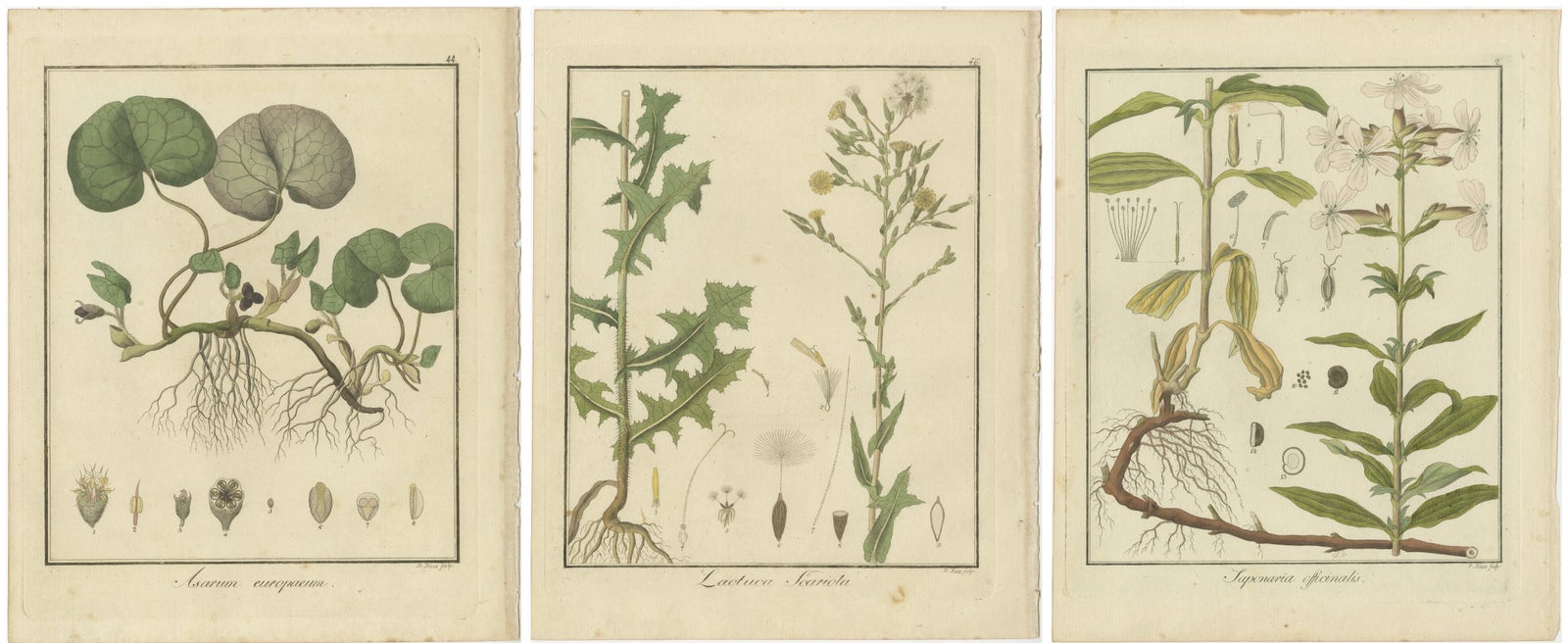
Engravings of European Wild Ginger, Prickly Lettuce, and Common Soapwort, 1819
$665 (£500, €590)
Period original, not a reproduction.
Shipped from the Netherlands, flat, insured and tracked, worldwide. Returns accepted within 14 days.
- Date
- 1819
- Size
- 10.8 × 8.5 in (27.5 × 21.7 cm)
- Condition
- Very good given age. General age-related toning and/or occasional minor brown spots. Original hand-colored etching / engraving on hand laid (verge) paper with matermark. The Please study scans carefully.
- Period
- Early 19th century
- Section
- Botanical
- Reference
- f_41258812
Description of the Plants in the three original engravings on offer:
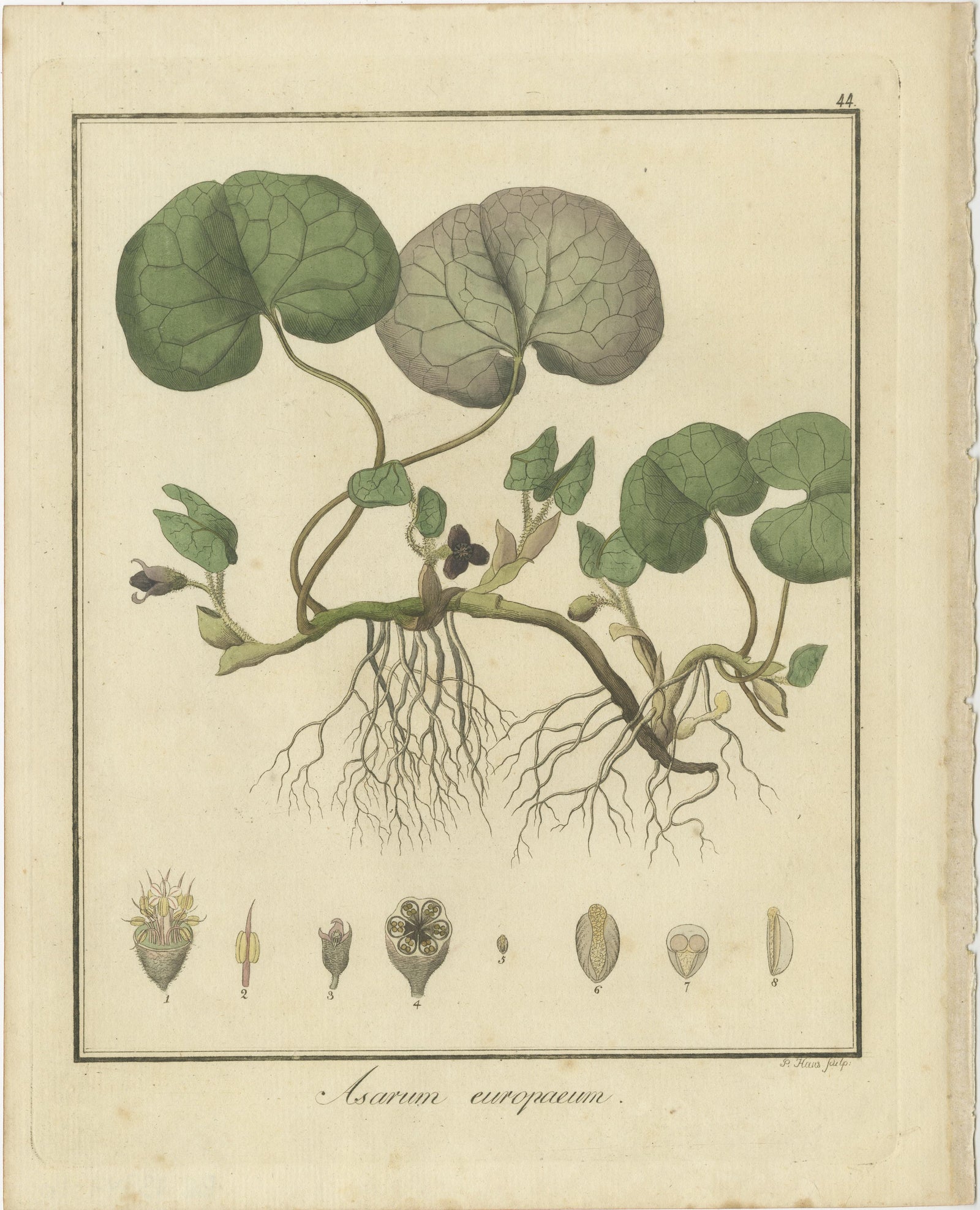
1. Asarum europaeum (Common Name: European Wild Ginger)
- This engraving depicts Asarum europaeum, commonly known as European Wild Ginger. It is a perennial herb native to Europe and is often found in shady, moist woodlands. The plant has distinctive kidney-shaped leaves and is used traditionally as a medicinal herb, particularly for its anti-inflammatory and diuretic properties.
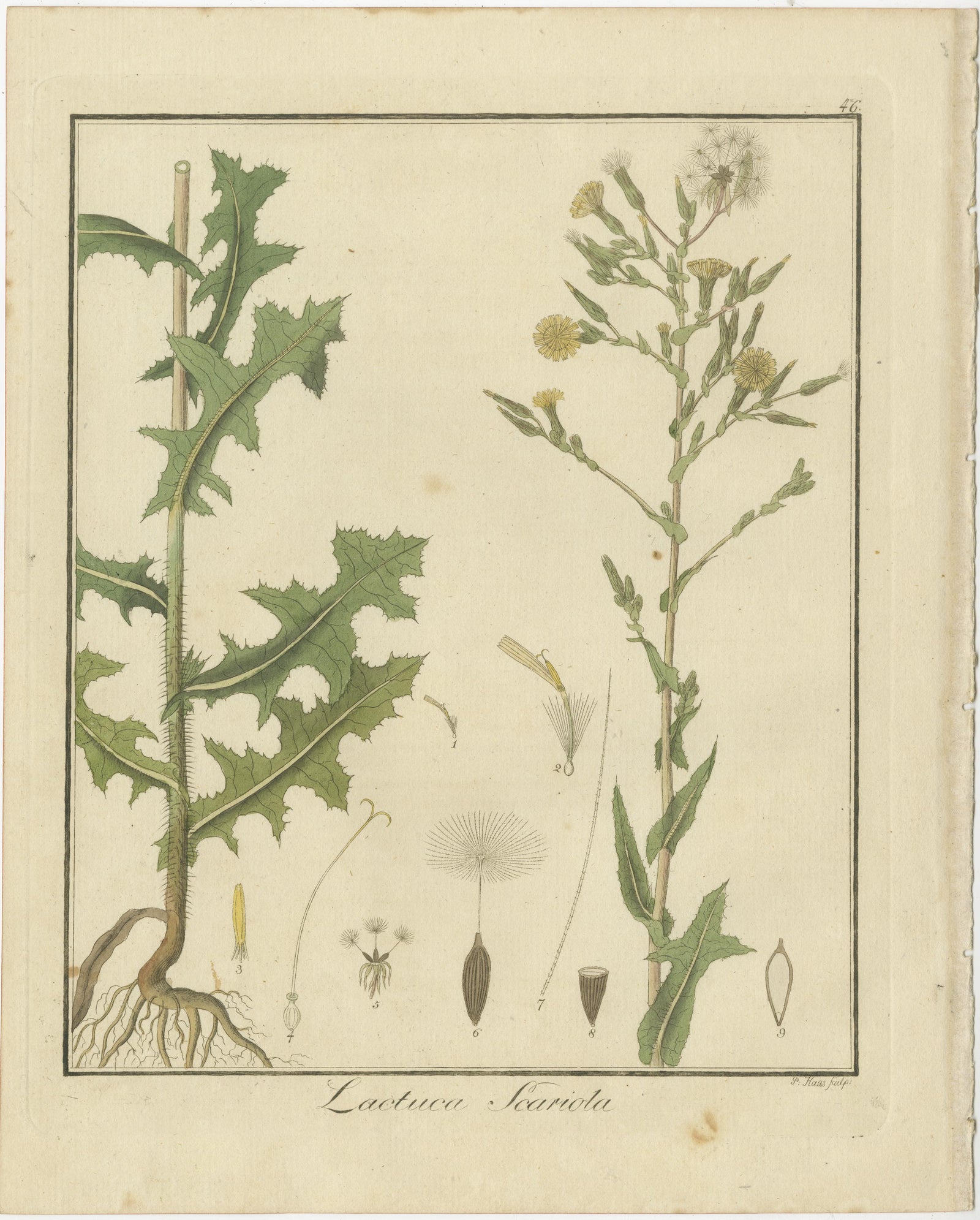
2. Lactuca serriola (Common Name: Prickly Lettuce)
- Lactuca serriola, or Prickly Lettuce, is shown in this engraving. Native to Europe, Asia, and North Africa, it is now widespread across the world. The plant is known for its spiny leaves and milky sap. It is closely related to cultivated lettuce and has been used in traditional medicine as a mild sedative and for digestive issues.
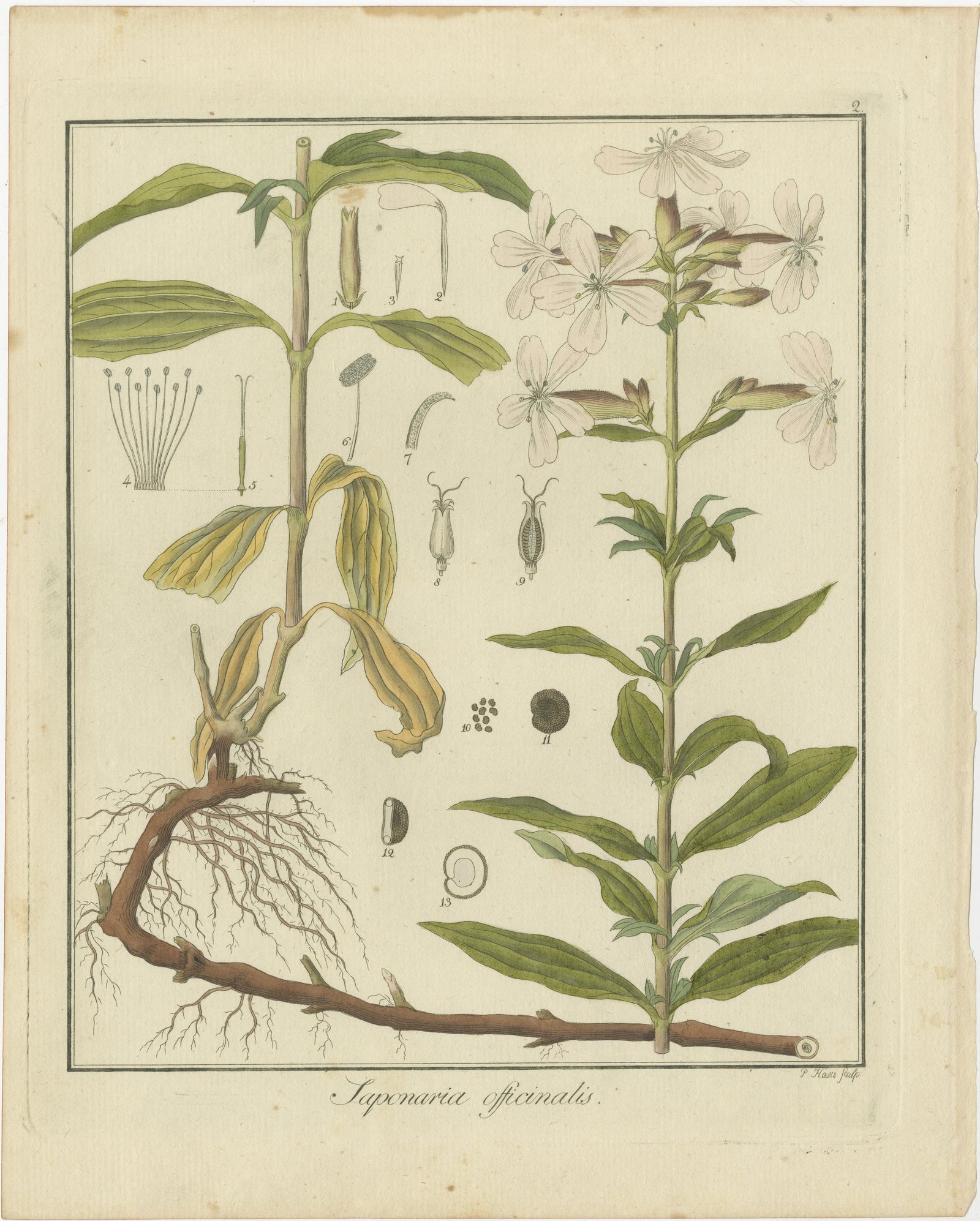
3. Saponaria officinalis (Common Name: Common Soapwort)
- The third engraving features *Saponaria officinalis*, commonly known as Common Soapwort. This plant is native to Europe and Asia and has been naturalized in North America. It grows in a variety of habitats, including roadsides and riverbanks. Soapwort is known for its saponin content, which creates a soapy lather when the plant is crushed in water, historically used for cleaning purposes.
These engravings are part of the 6th edition of "Getreue Darstellung und Beschreibung der in der Arzenykunde gebrauchlichen Gewächse" by Dr. Friedrich Gottlob Hayne, published in 1819. The illustrations were meticulously created to document the medicinal and botanical characteristics of these plants.