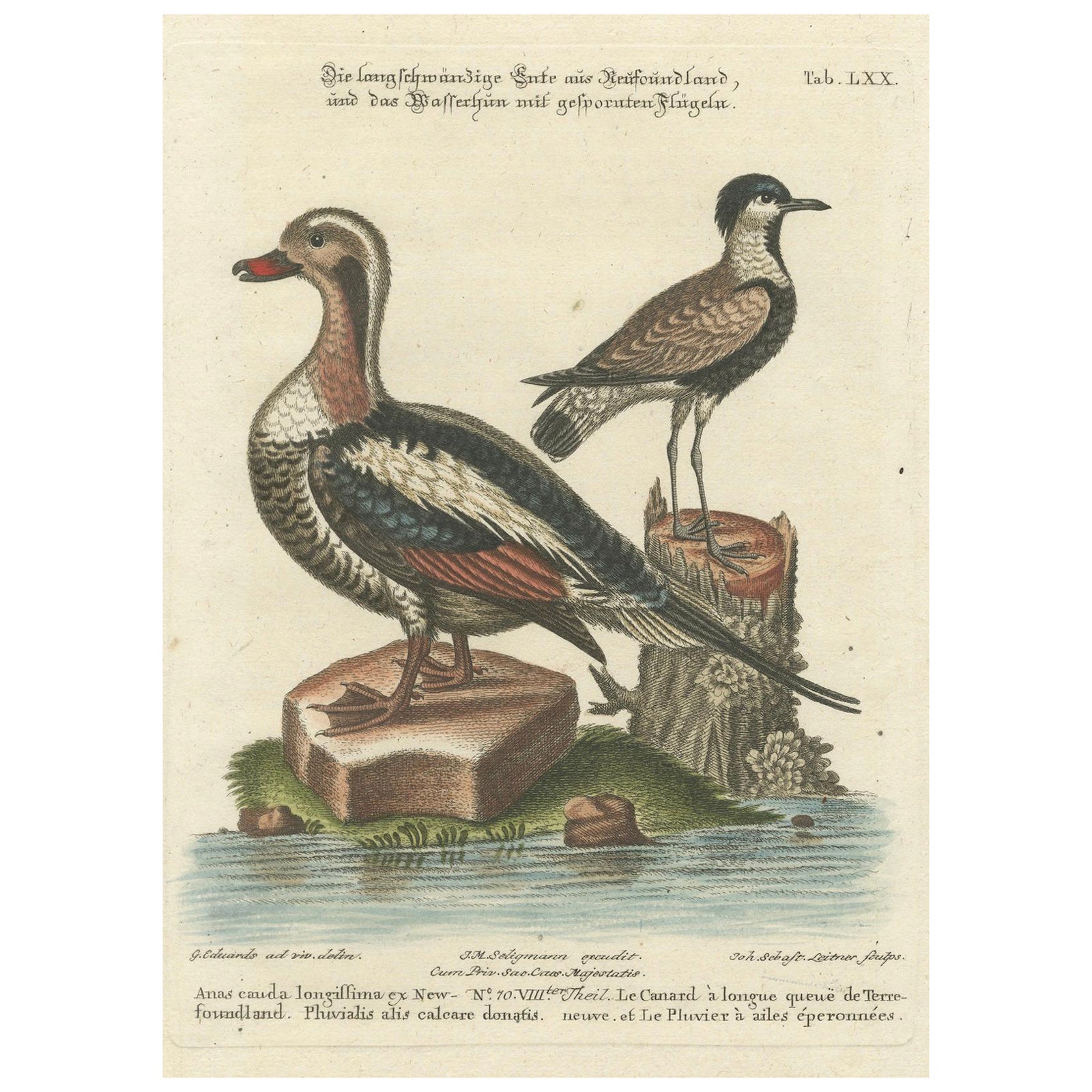
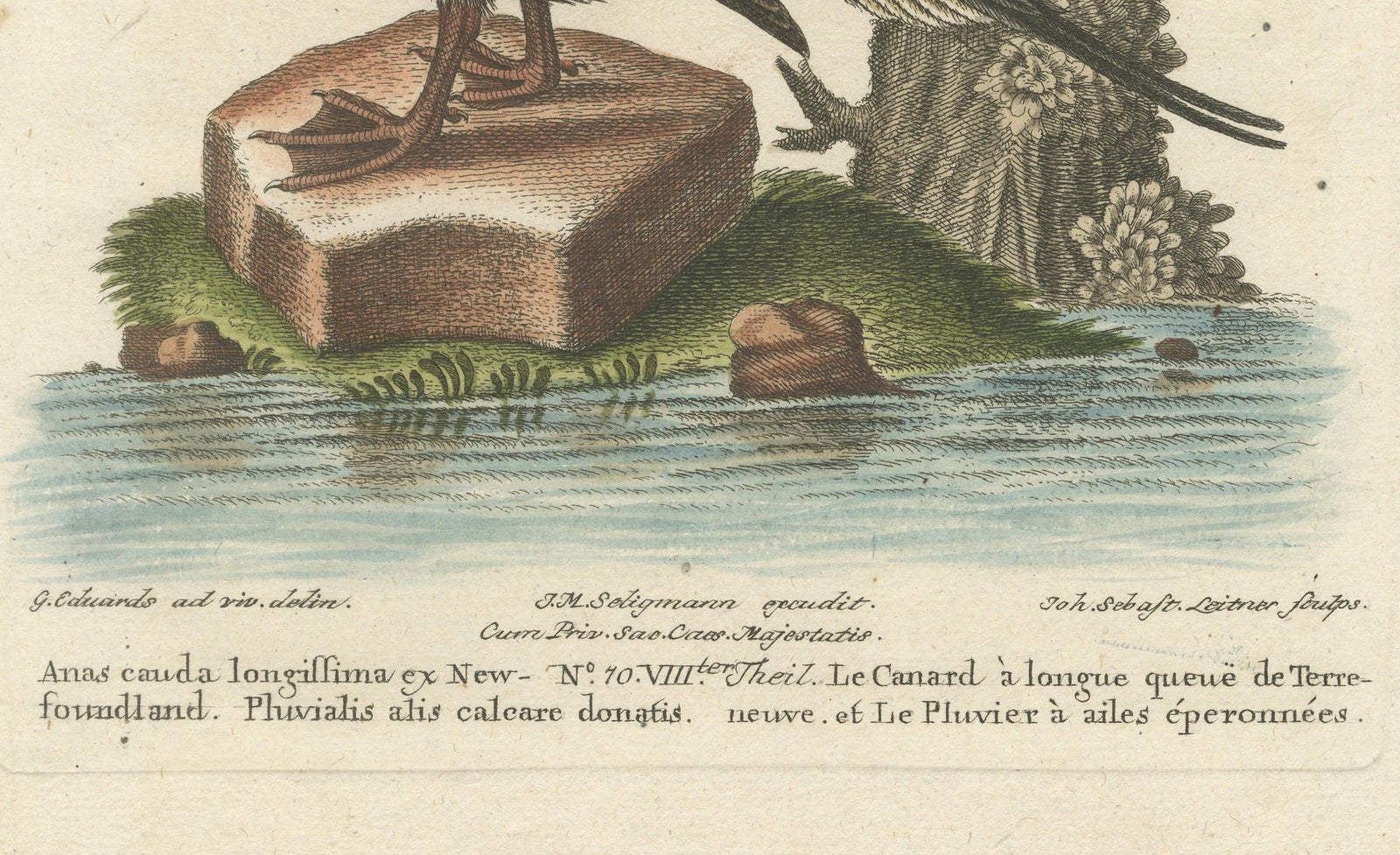
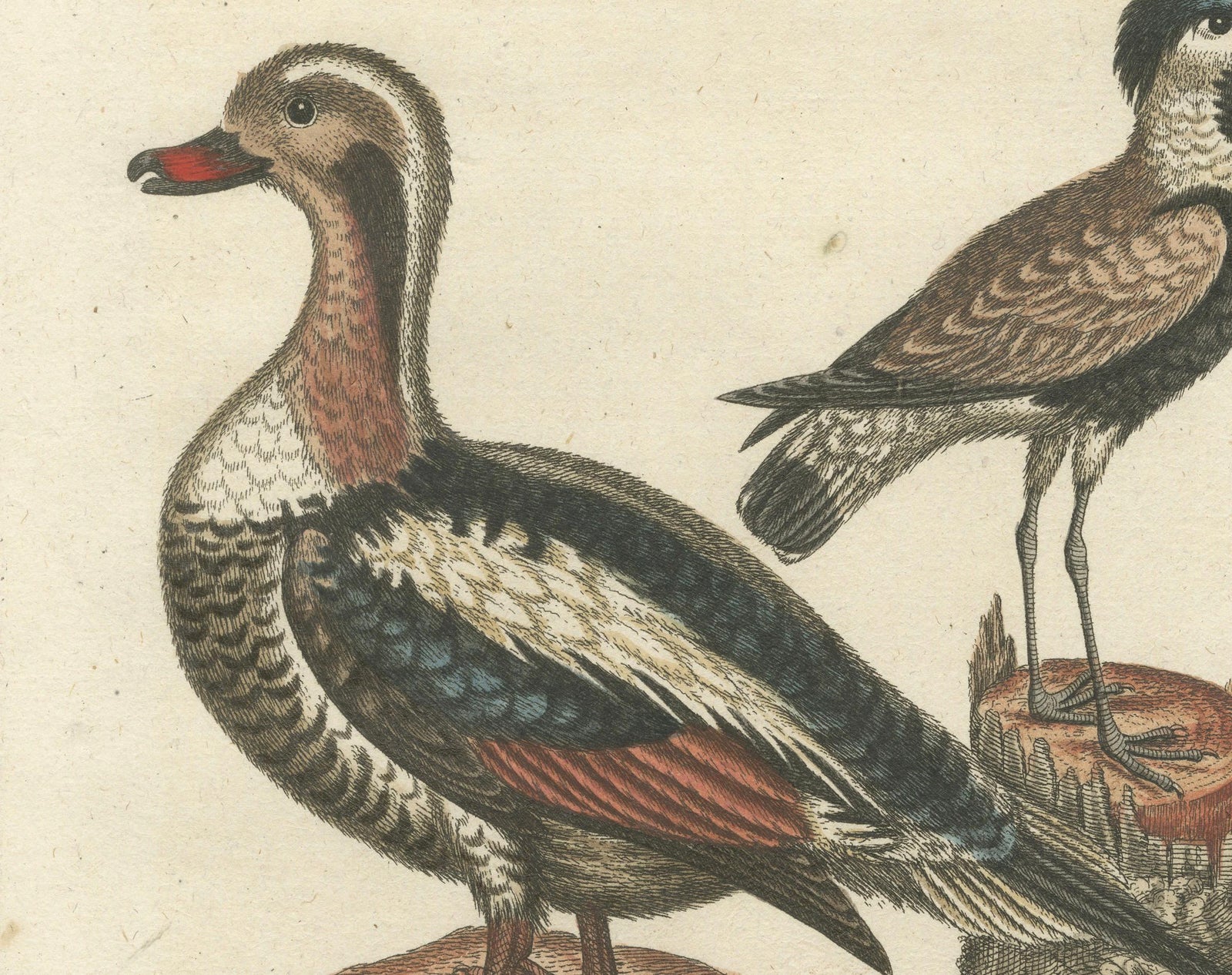
Close-ups
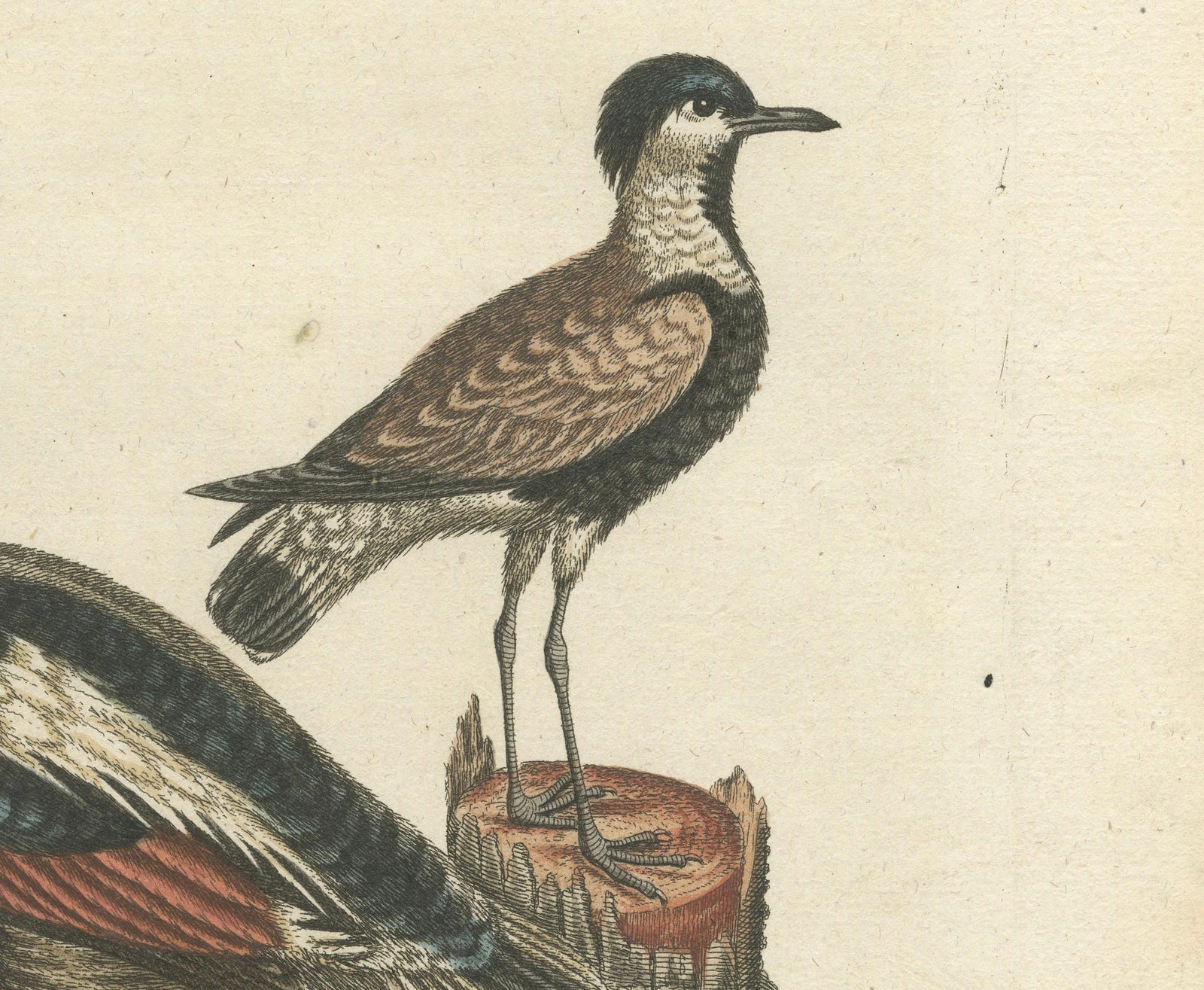
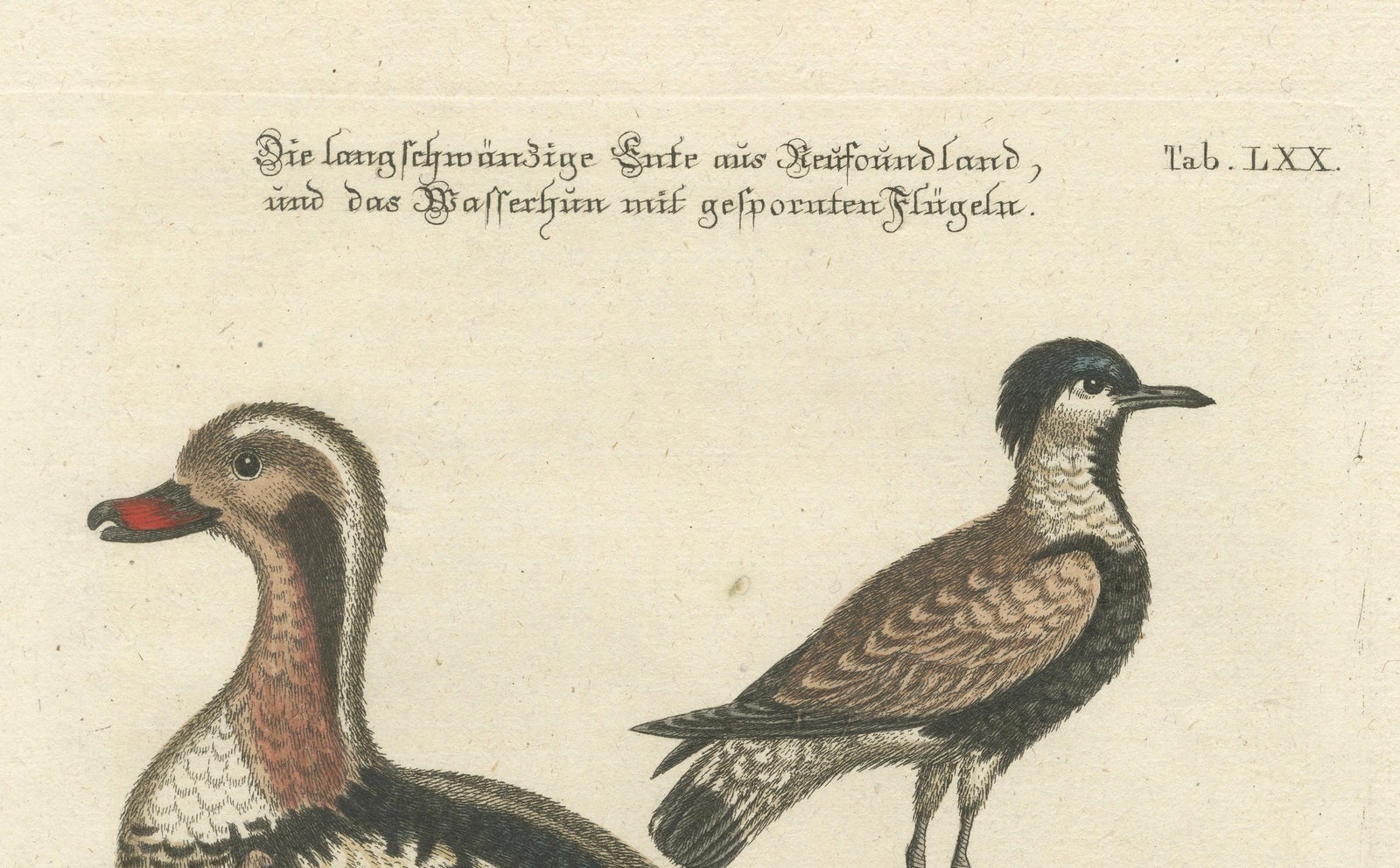
Framed and on the wall
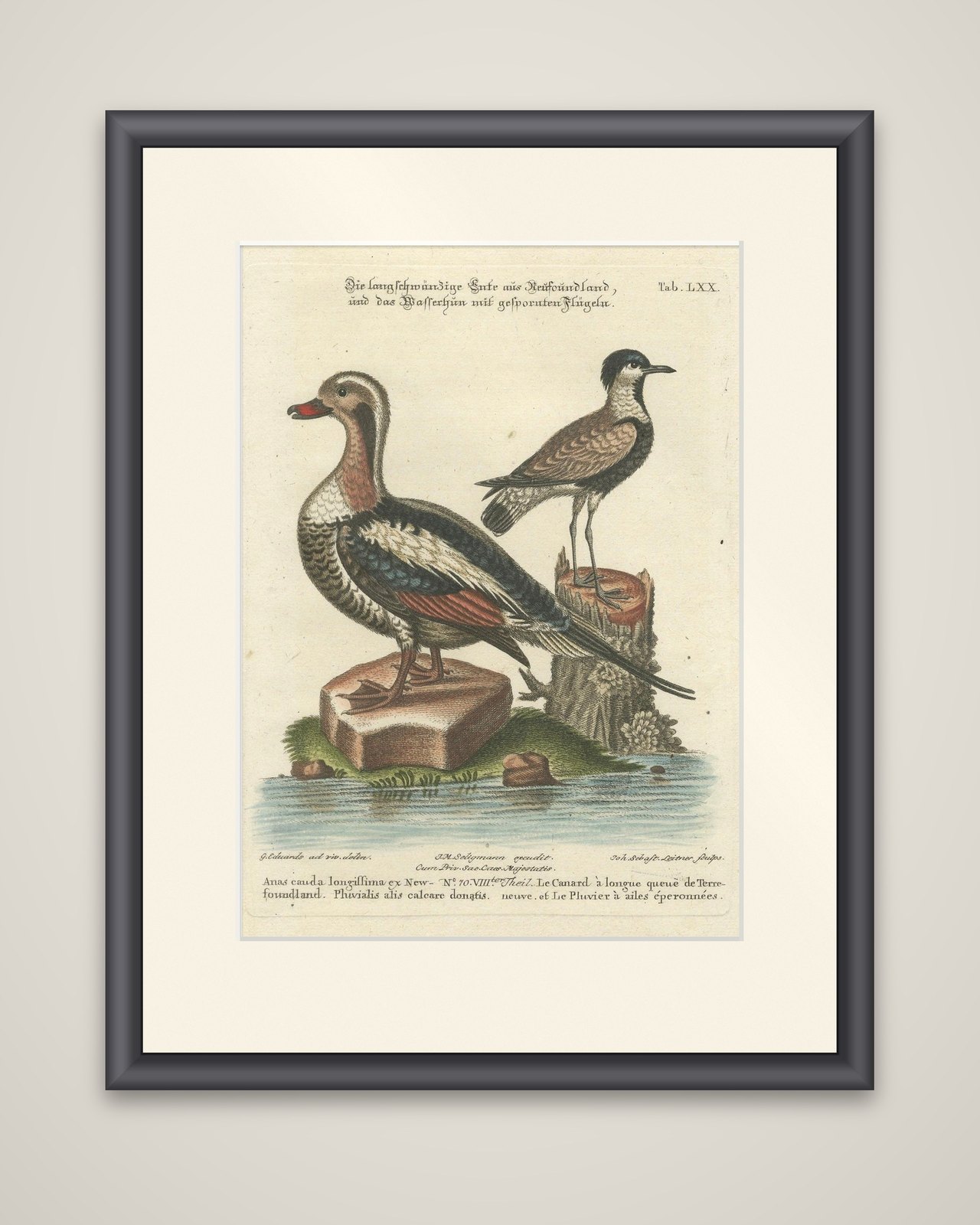
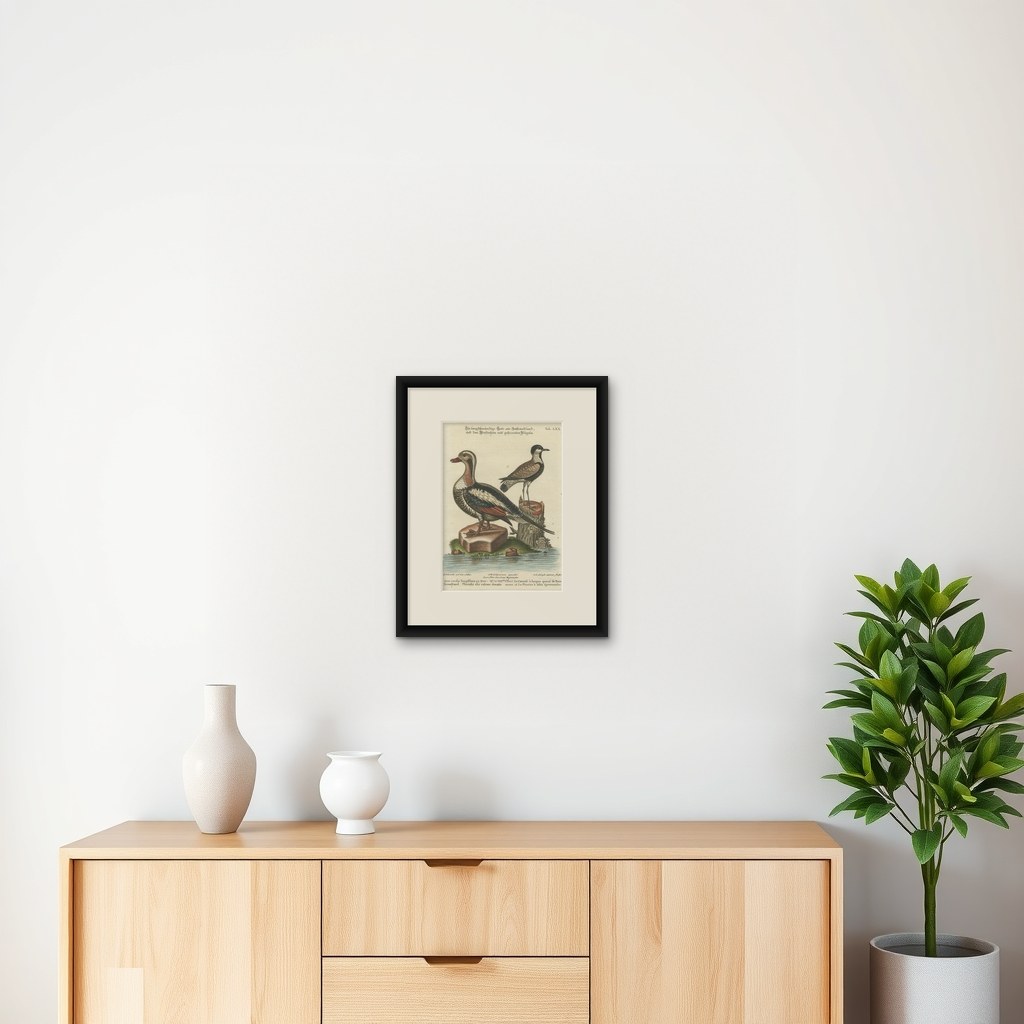
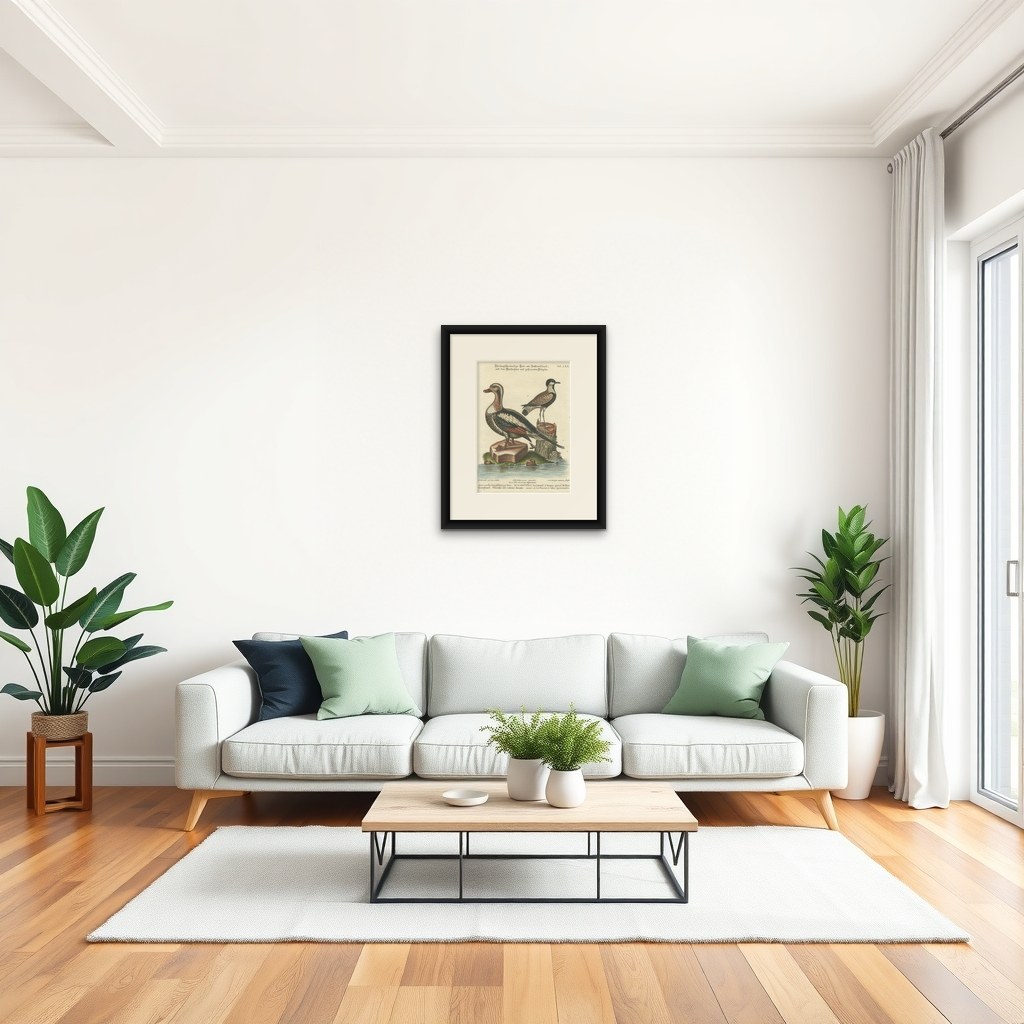
Frame and rooms are illustrations of how the print could look; the description says what is included.
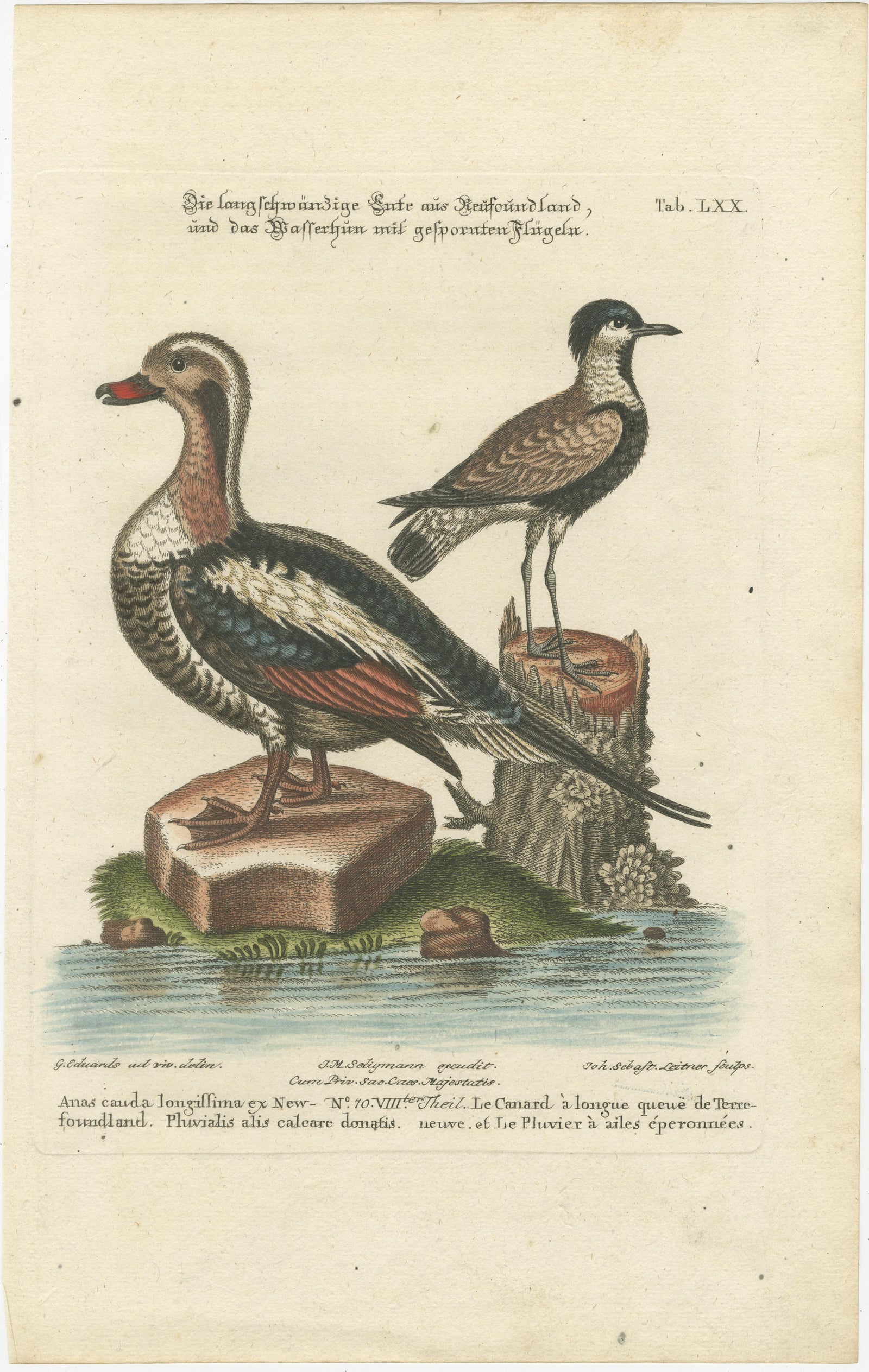
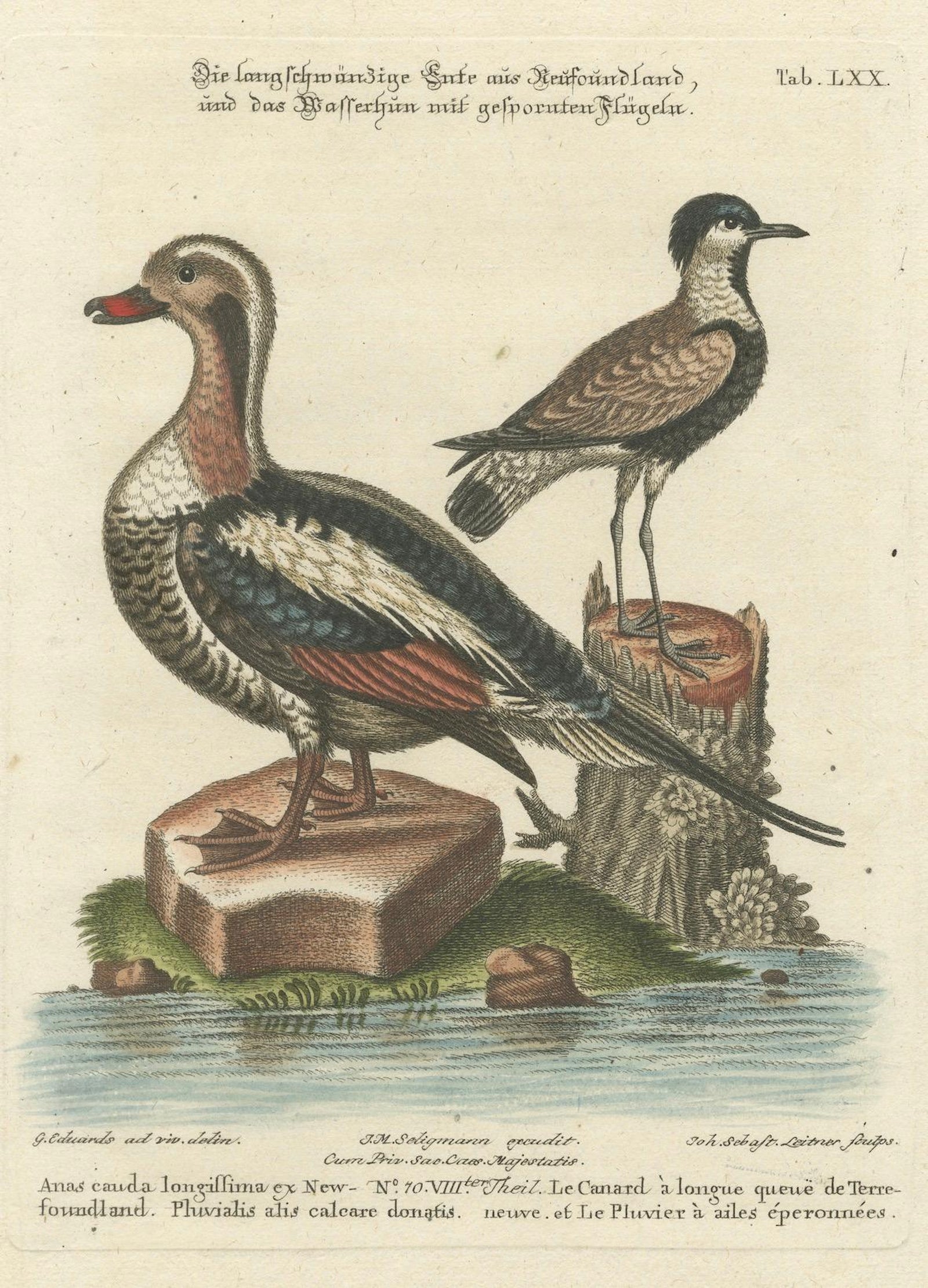
Engraving of the Long-Tailed Duck and Spur-Winged Lapwing by Seligmann, ca.1770
$650 (£490, €580)
Period original, not a reproduction.
Shipped from the Netherlands, flat, insured and tracked, worldwide. Returns accepted within 14 days.
- Date
- 1770
- Size
- 14.6 × 9.8 in (37 × 25 cm)
- Condition
- Good. Vibrant colors, minimal fading. Paper shows light toning and minor foxing. Some handling marks, mostly outside plate-mark, not affecting image quality.
- Period
- 18th century
- Section
- Birds
- Reference
- f_42320662
- Colour
- Hand coloured
What the condition grades mean
- Excellent
- Bright and clean, with no faults worth mentioning.
- Very good
- Only light signs of age, such as faint toning.
- Good
- Normal signs of age for a sheet of this period: toning, some foxing, small marks or neat old repairs.
- Fair
- Clear faults such as staining, tears or repairs, priced to match.
Every fault we see is written in the condition note, and the whole sheet is shown uncropped in the photos.
A long-tailed duck from Newfoundland and a spur-winged plover on one sheet, an original hand-colored copperplate engraving after George Edwards from Johann Michael Seligmann's Sammlung verschiedener ausländischer und seltener Vögel, Nuremberg, circa 1770. The plate is numbered "Tab. LXX" at the upper right and titled "Die langschwänzige Ente aus Neufoundland, und das Wasserhuhn mit gesporten Flügeln". Below the image are the Latin "Anas cauda longissima ex Newfoundland" and "Pluvialis alis calcare donatis", the French "Le Canard à longue queue de Terre-neuve et le Pluvier à ailes éperonnées", and the credits "G. Edwards ad viv. delin." and "Joh. Sebast. Leitner sculps."
The duck, in the foreground, stands on a flat pink rock at the water's edge, facing left, with a red bill, a pale head with a chestnut patch, black and white scapulars, a chestnut and blue wing and a very long tapering tail trailing to the right. Behind it, the plover perches on a weathered tree stump, a slender bird in brown and black with a white collar, a black cap and a dark chest. The ground is a small green islet in a blue band of water.
The Newfoundland bird is the American link in a plate that otherwise pairs it with a bird from elsewhere.