Close-ups
Framed and on the wall
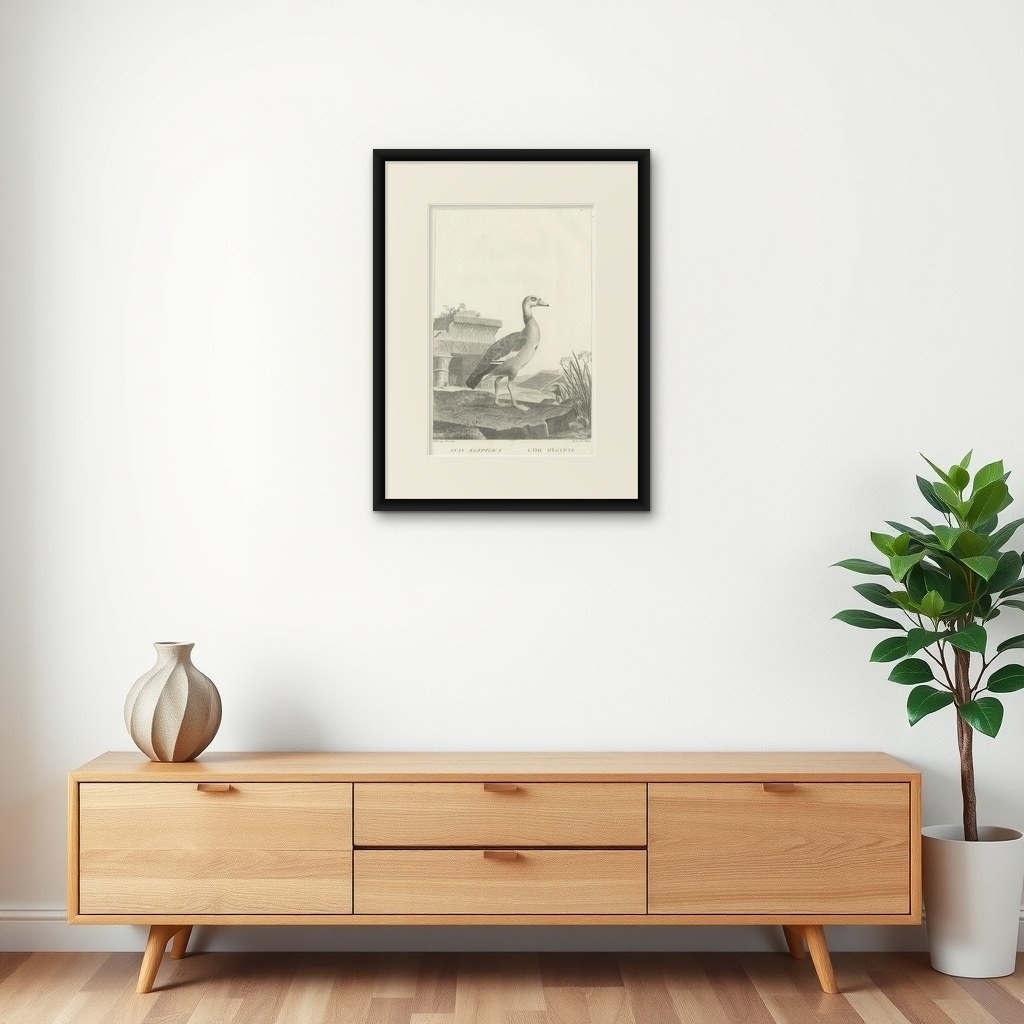

Frame and rooms are illustrations of how the print could look; the description says what is included.
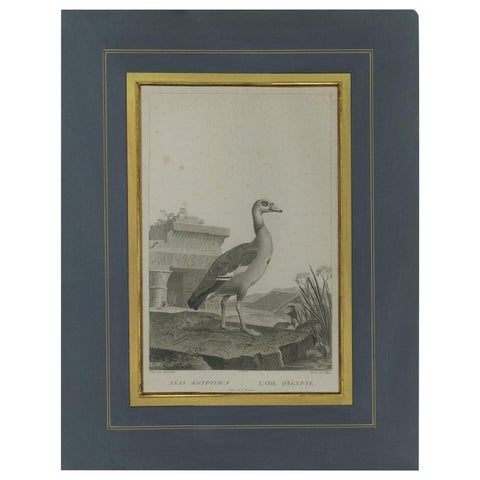
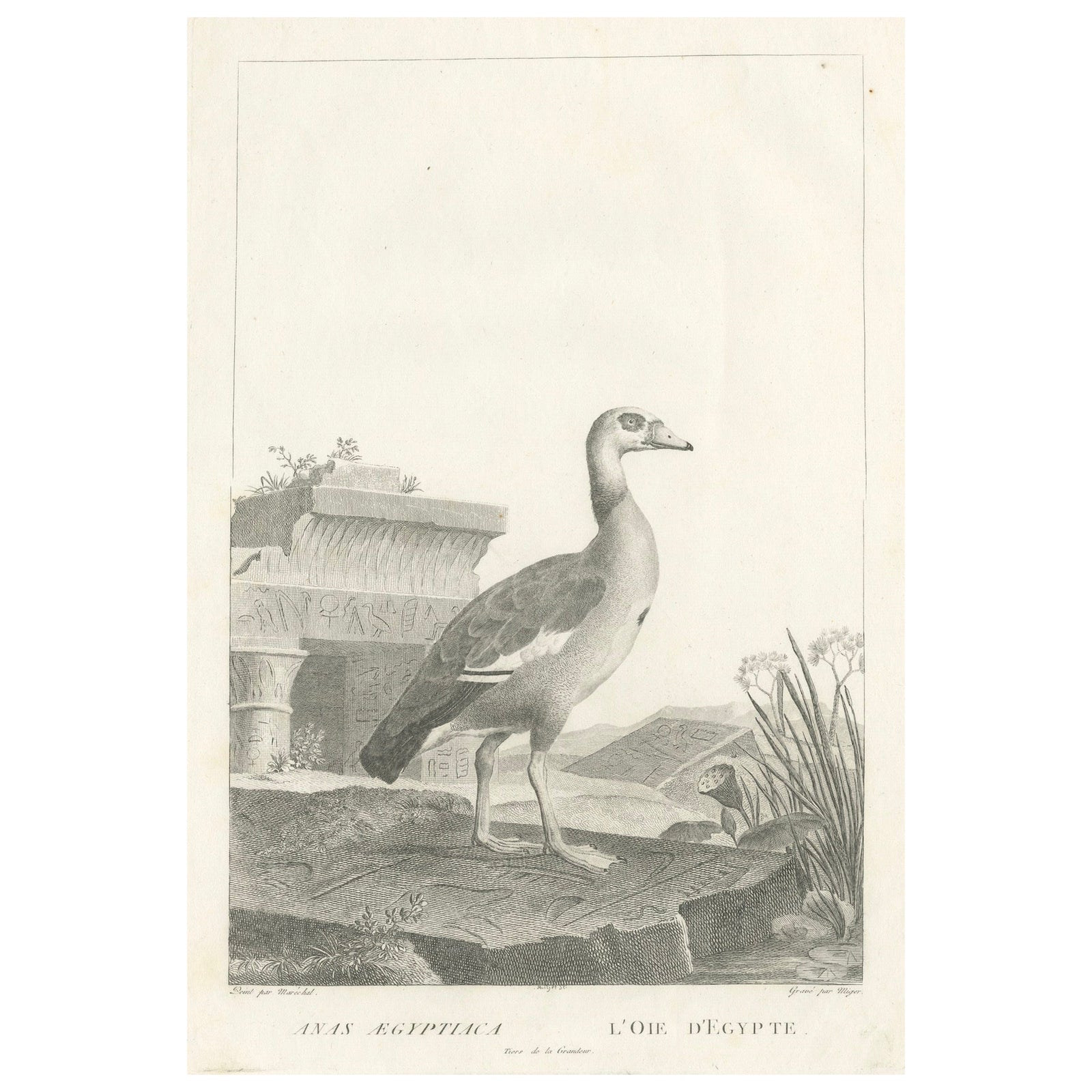
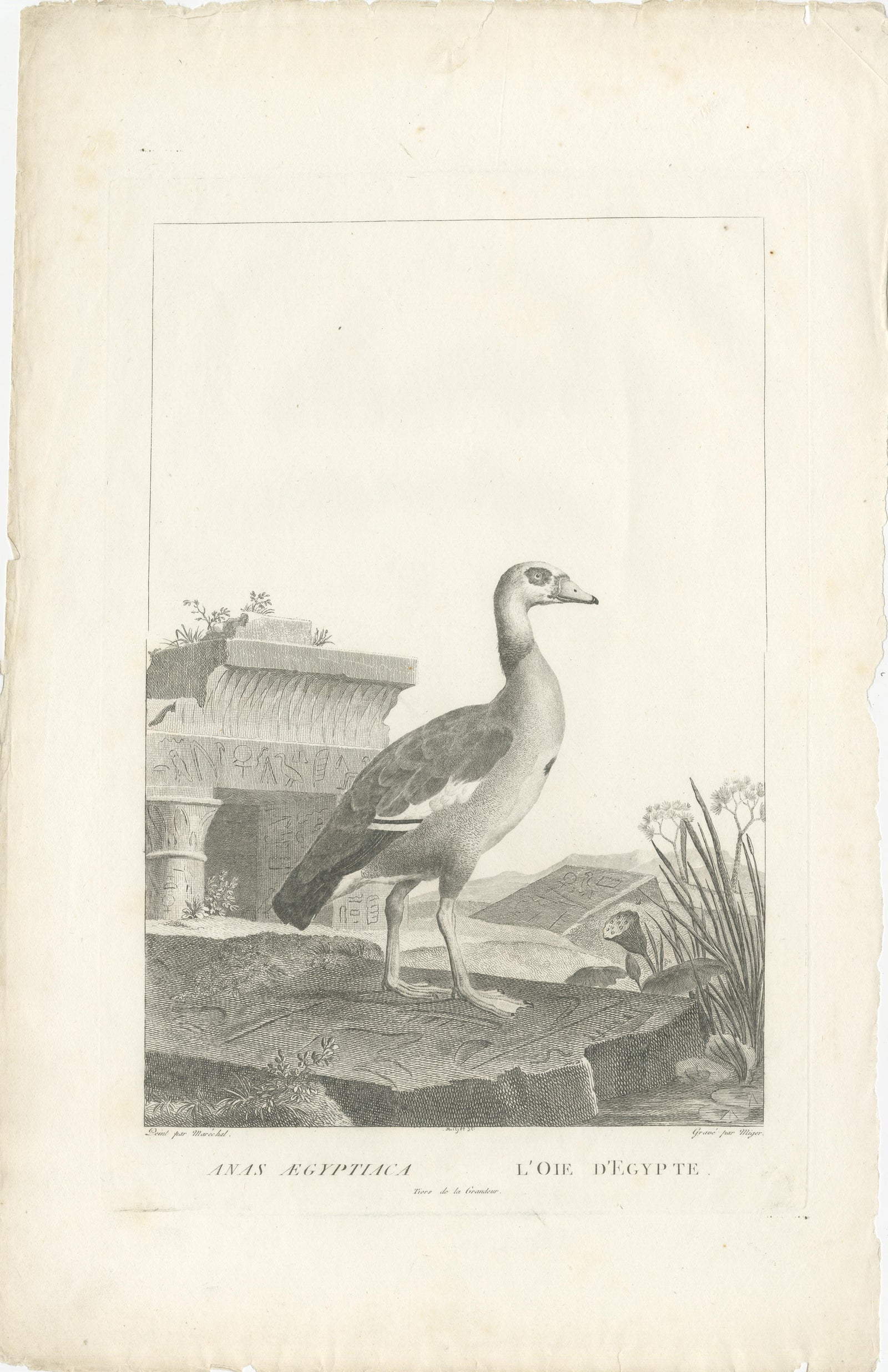
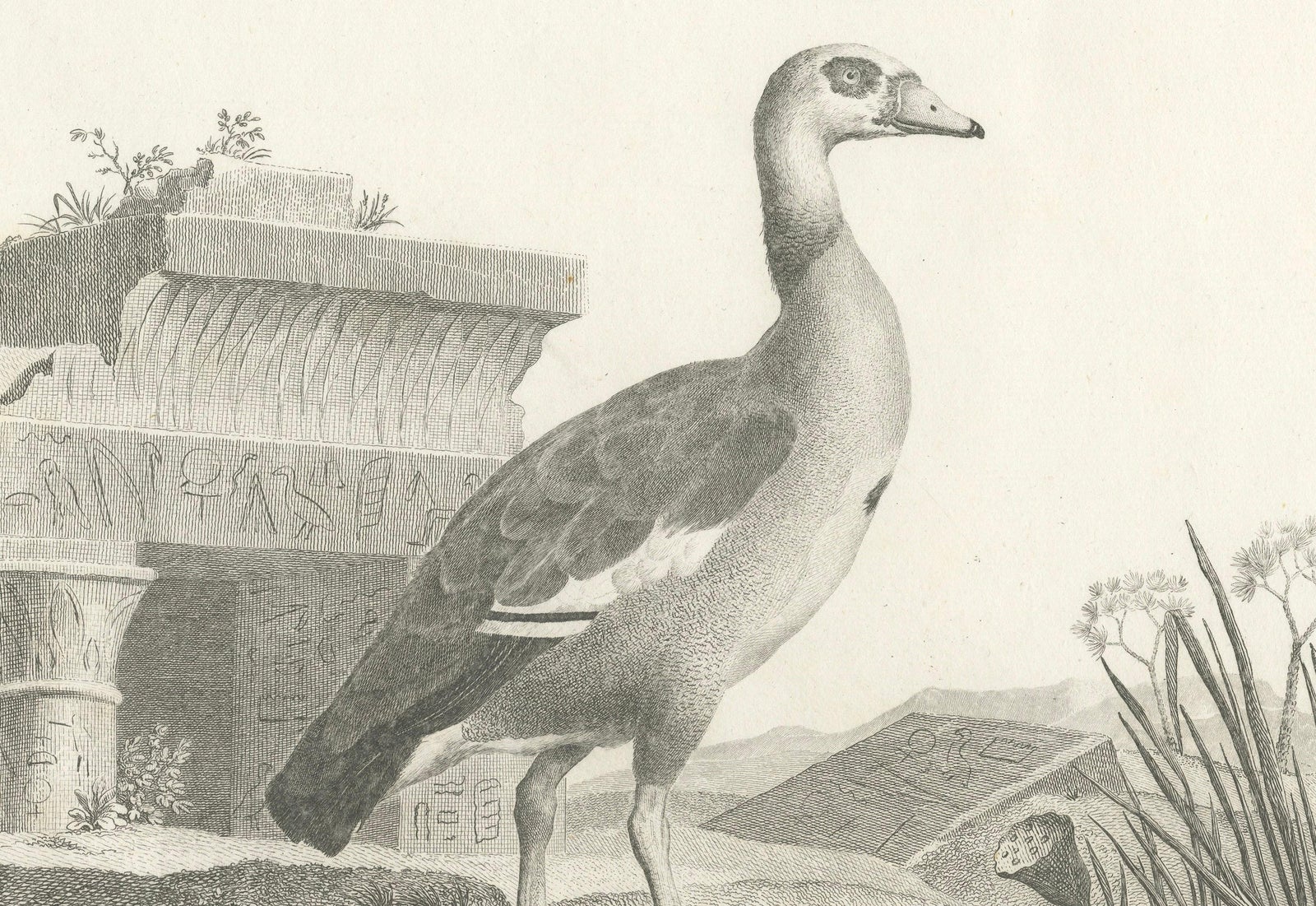
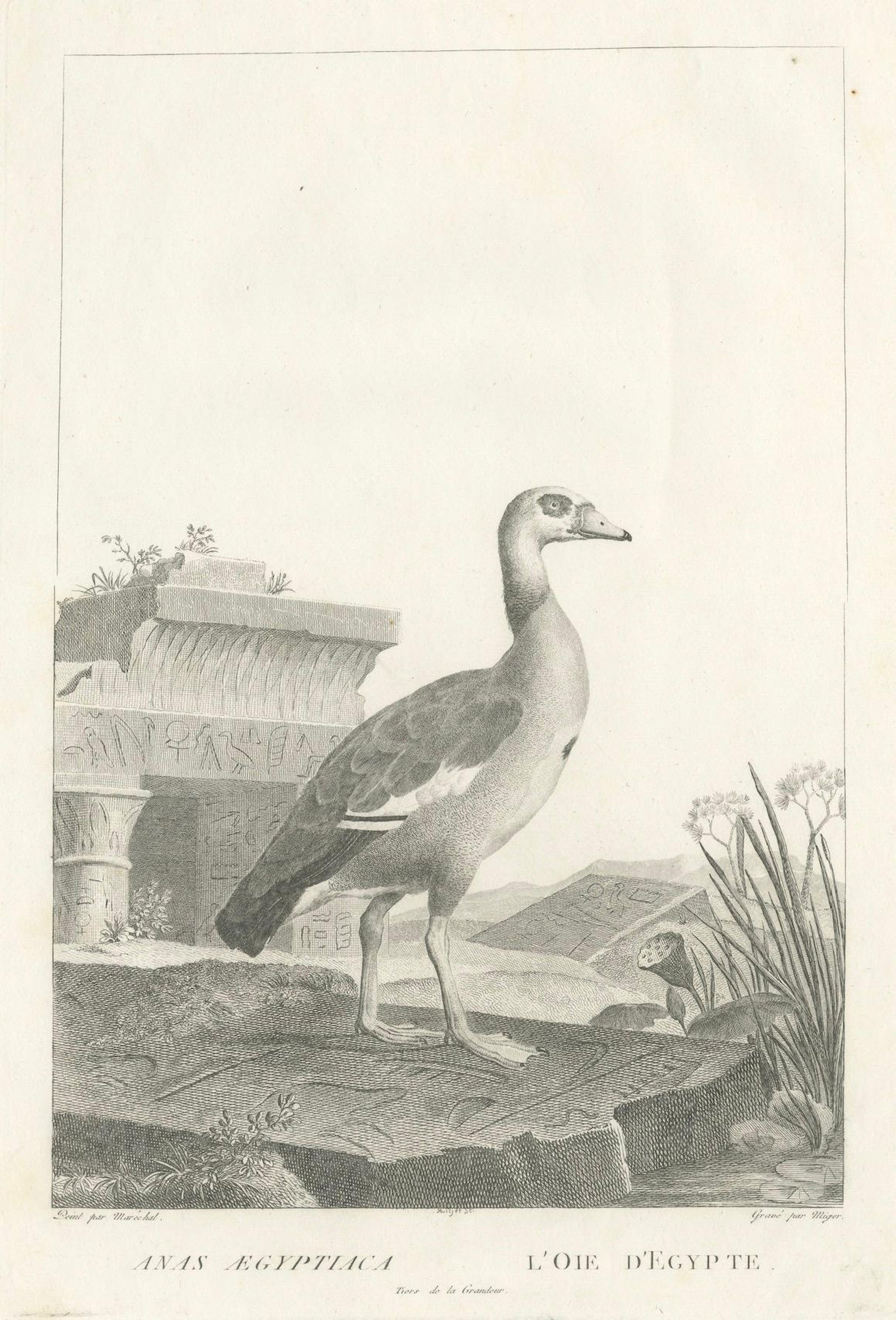
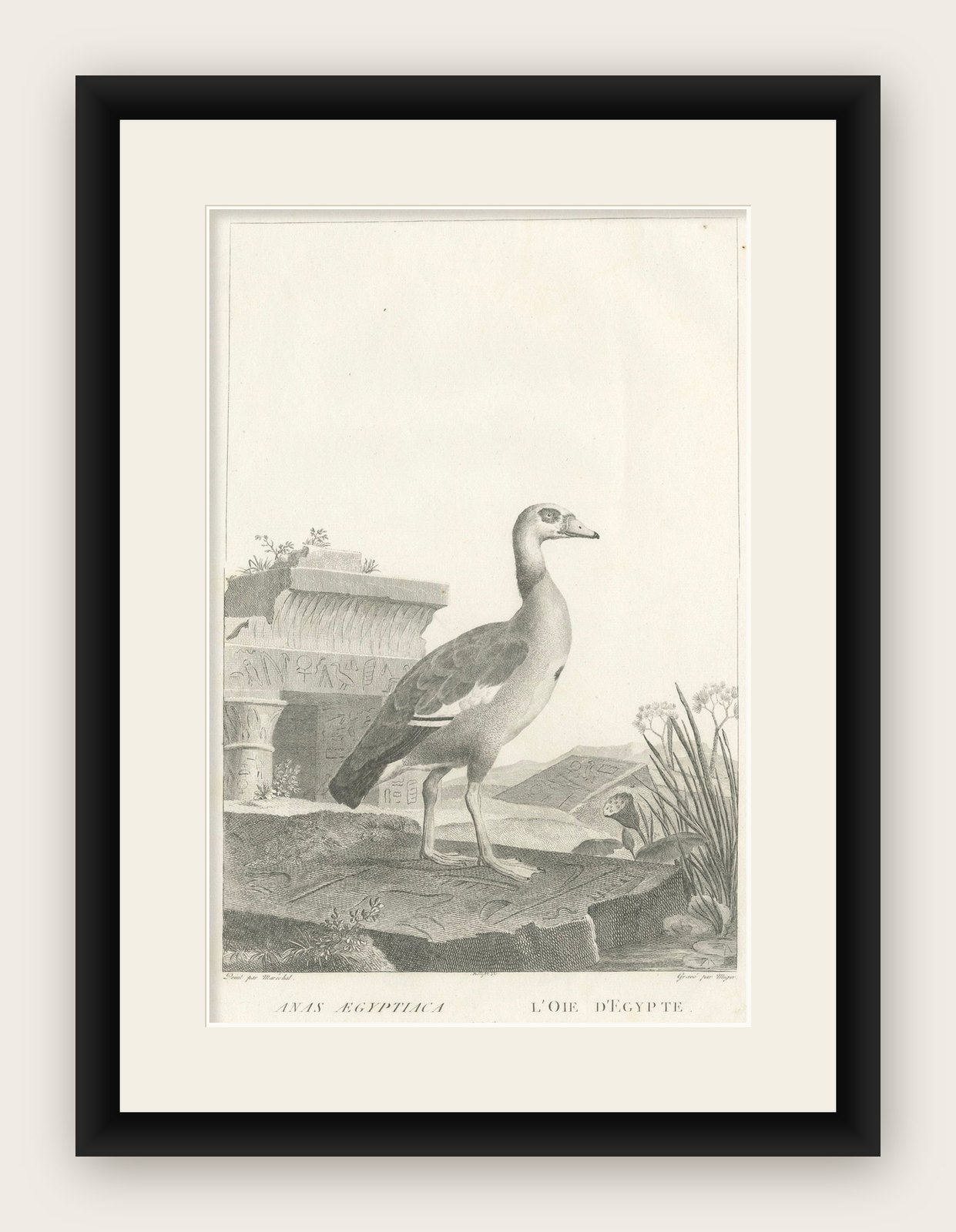
Engraving of Egyptian Goose by Nicolas Maréchal and S.C. Miger, 1808
€190 ($215, £160, €190)
Period original, not a reproduction.
Shipped from the Netherlands, flat, insured and tracked, worldwide. Returns accepted within 14 days.
- Date
- 1808
- Size
- 20.9 × 13.4 in (53 × 34 cm)
- Condition
- Good, given age. The paper has been cleaned. General age-related toning and/or occasional defects from handling around the borders. Please study scan carefully.
- Period
- Early 19th century
- Section
- Birds
- Reference
- f_41716142
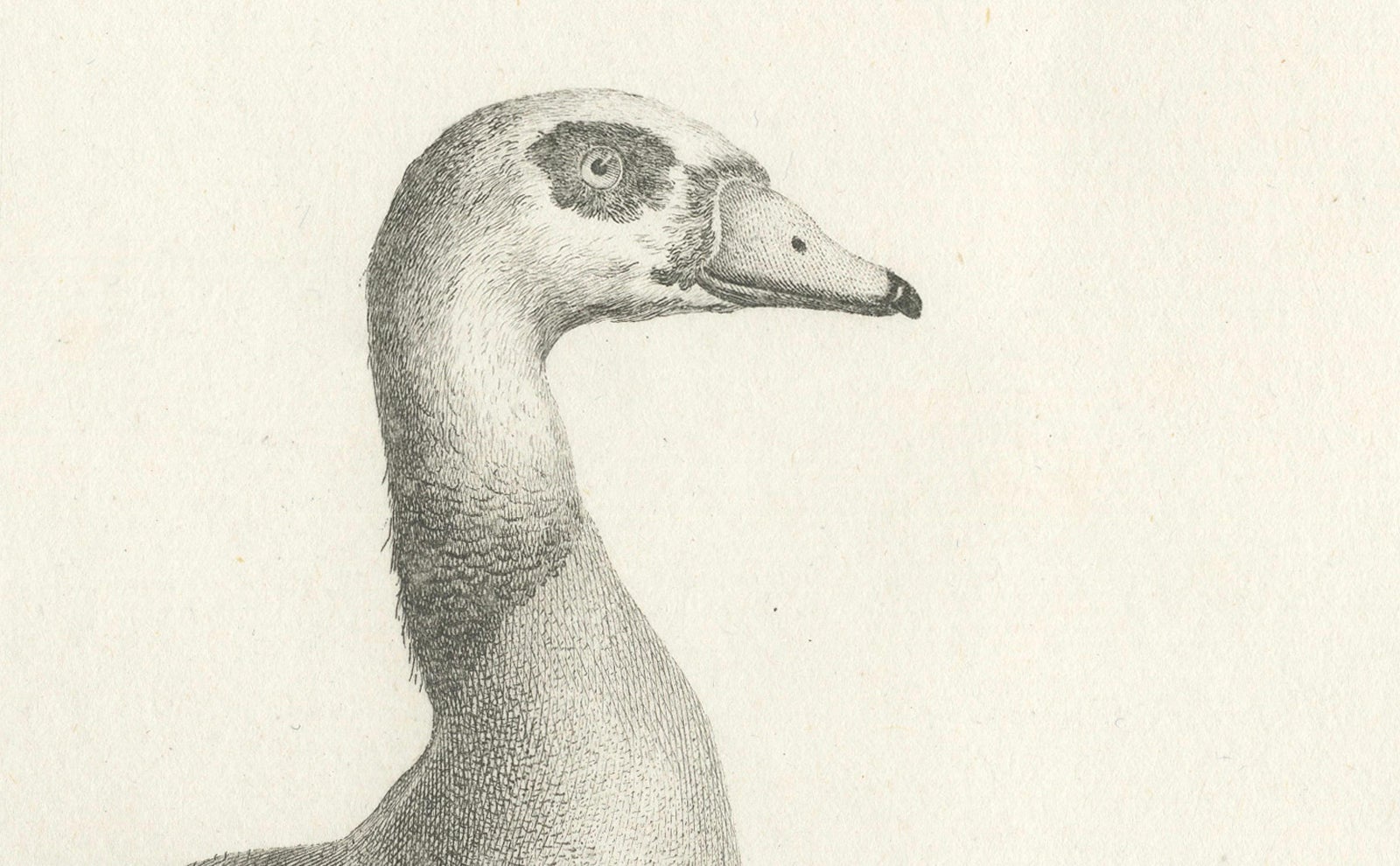
This engraving, titled *Anas Aegyptiaca - L’Oie d’Égypte* (Egyptian Goose), depicts the Egyptian goose, scientifically known as *Alopochen aegyptiaca*.
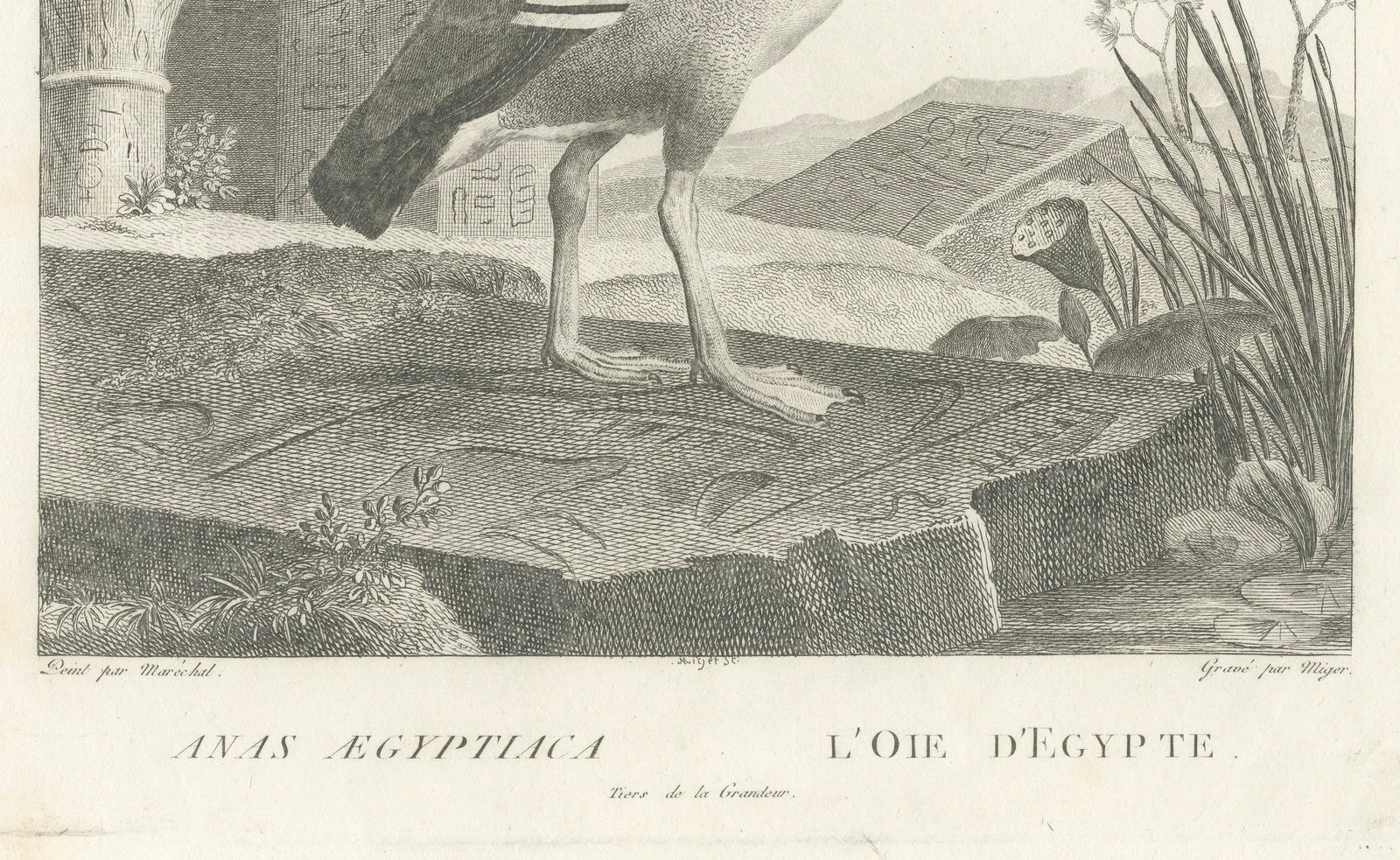
The artist is Nicolas Maréchal, and it was engraved by S.C. Miger, both active in the early 19th century.
The Egyptian goose was revered in ancient Egypt and often appears in Egyptian art. The detailed engraving shows the bird standing on what seems to be an ancient Egyptian structure, reinforcing its connection to the region's history and culture. This species is native to sub-Saharan Africa and the Nile Valley.