Close-ups
Framed and on the wall

Frame and rooms are illustrations of how the print could look; the description says what is included.
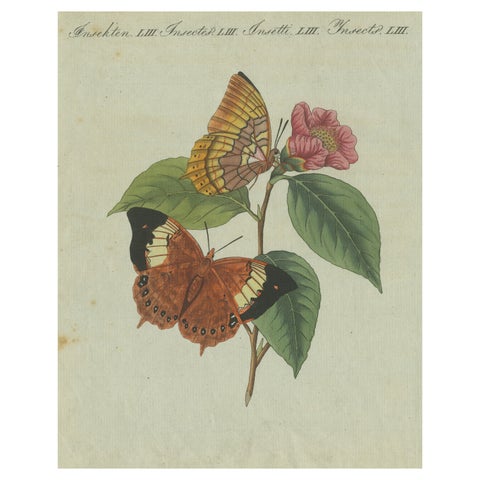
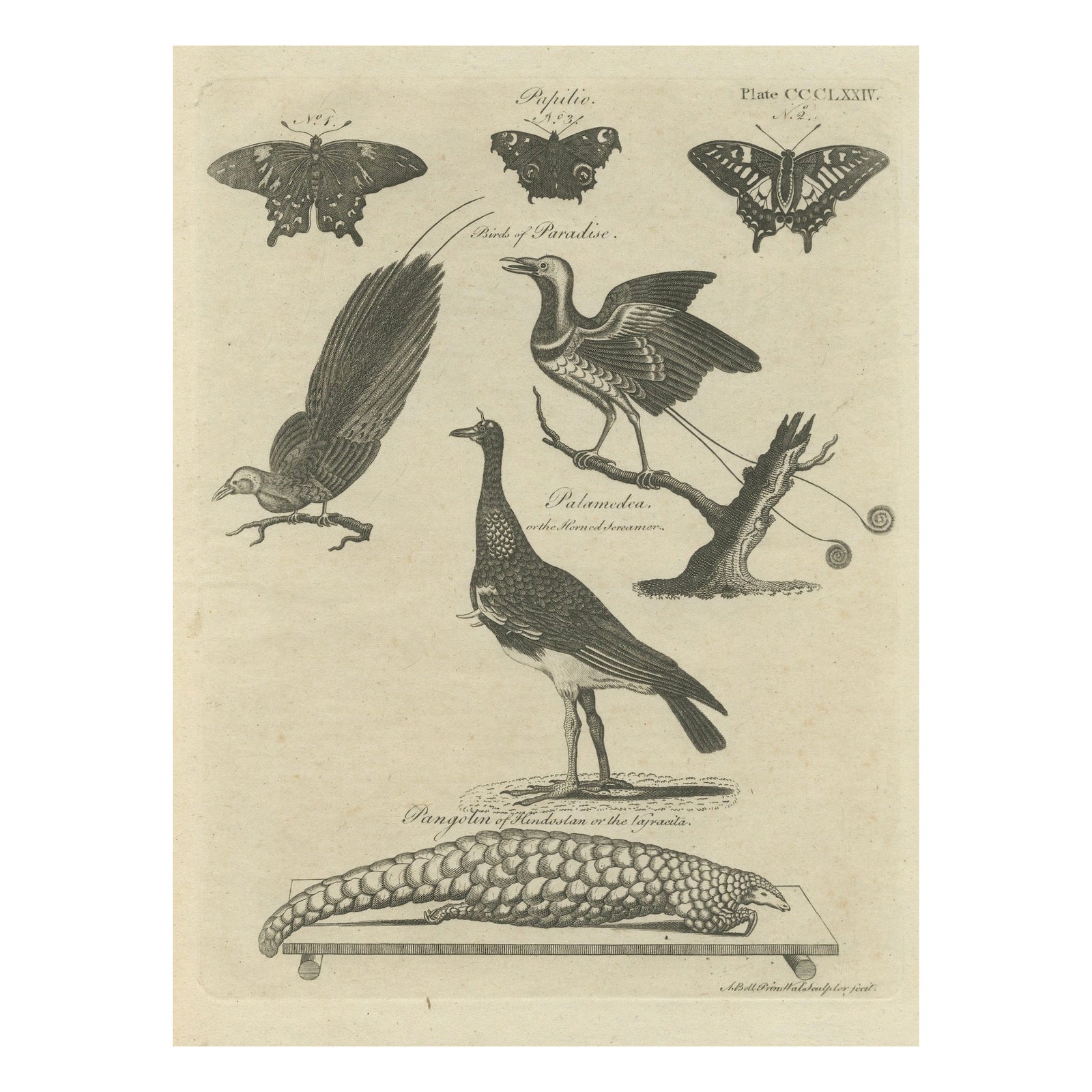
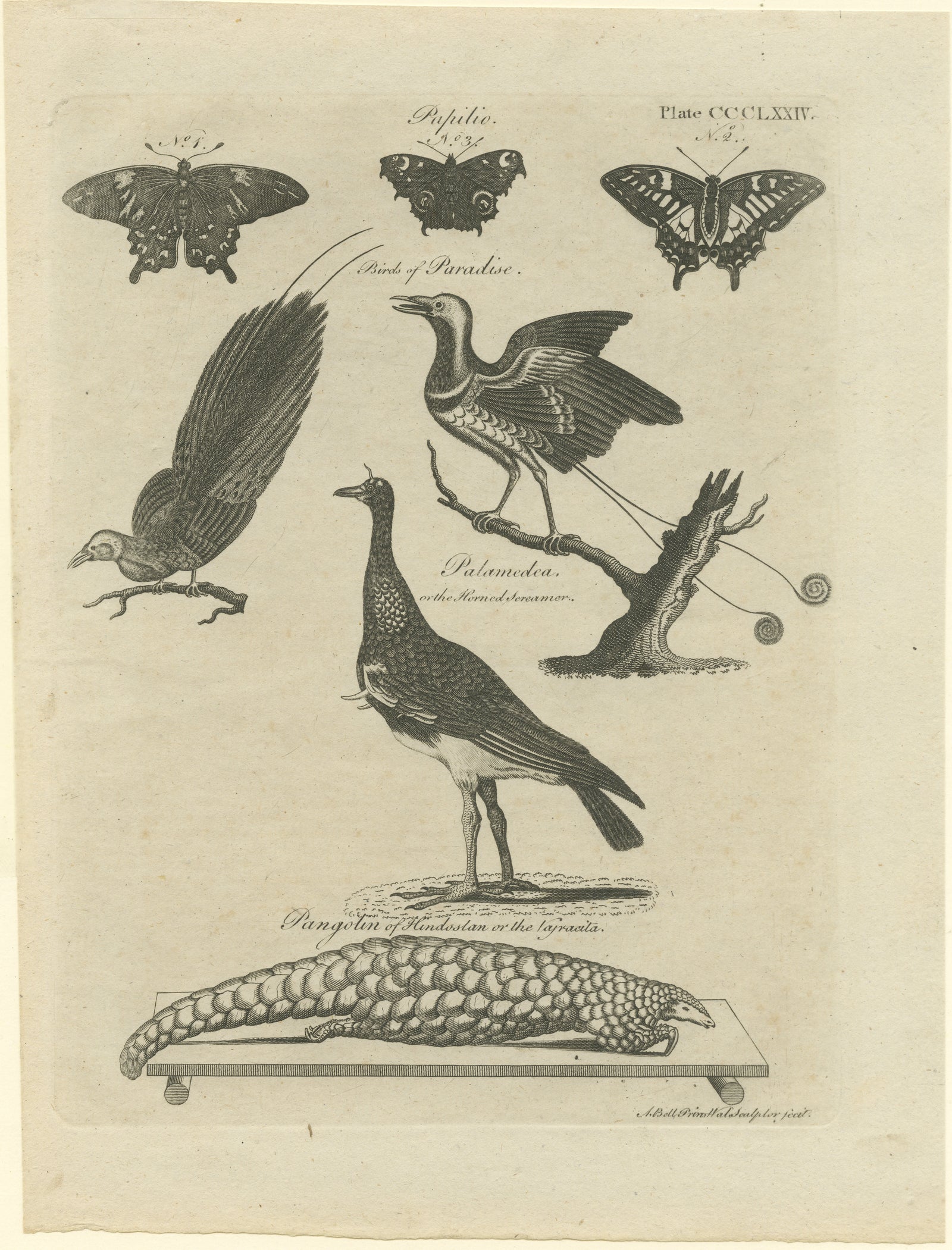
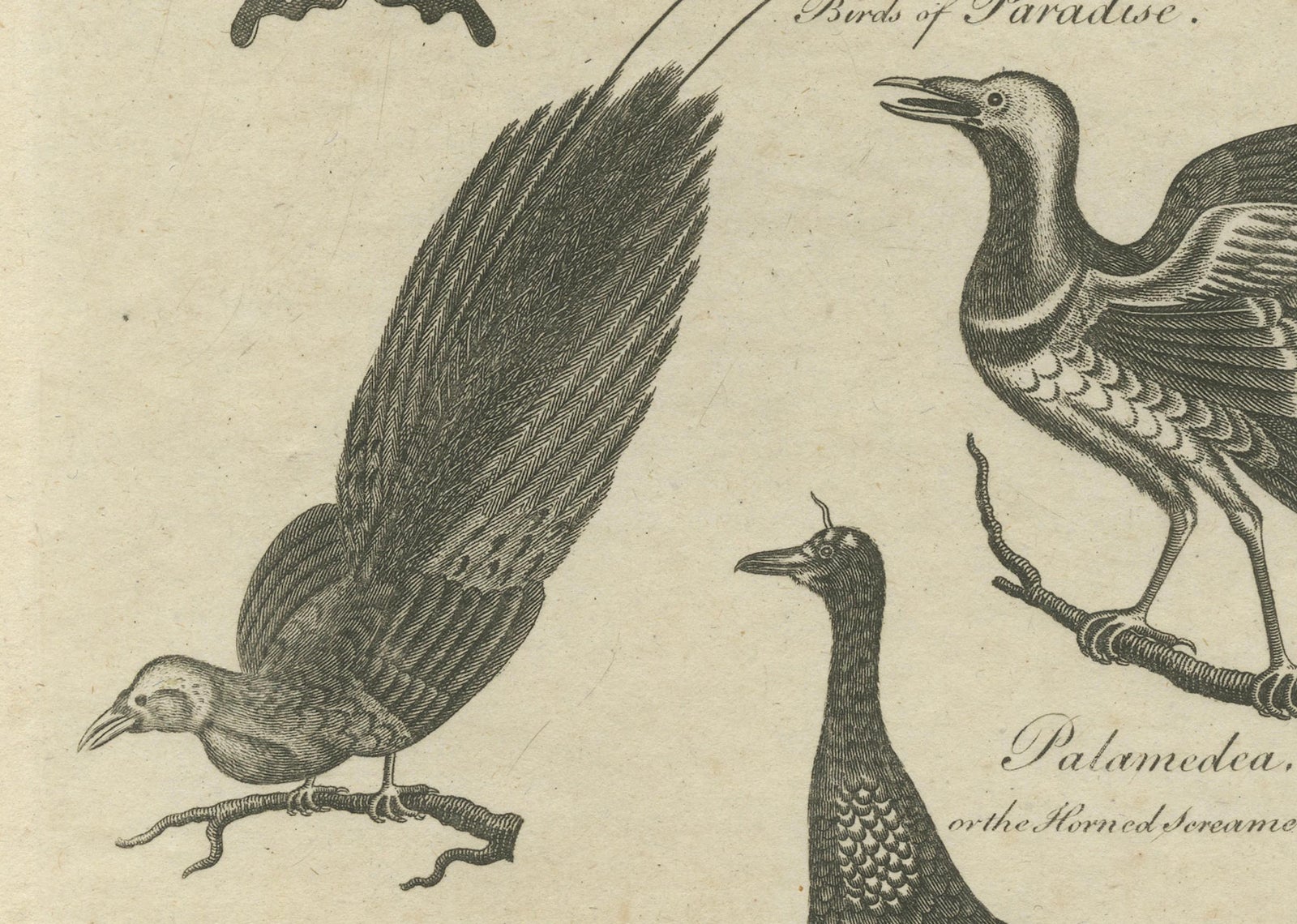
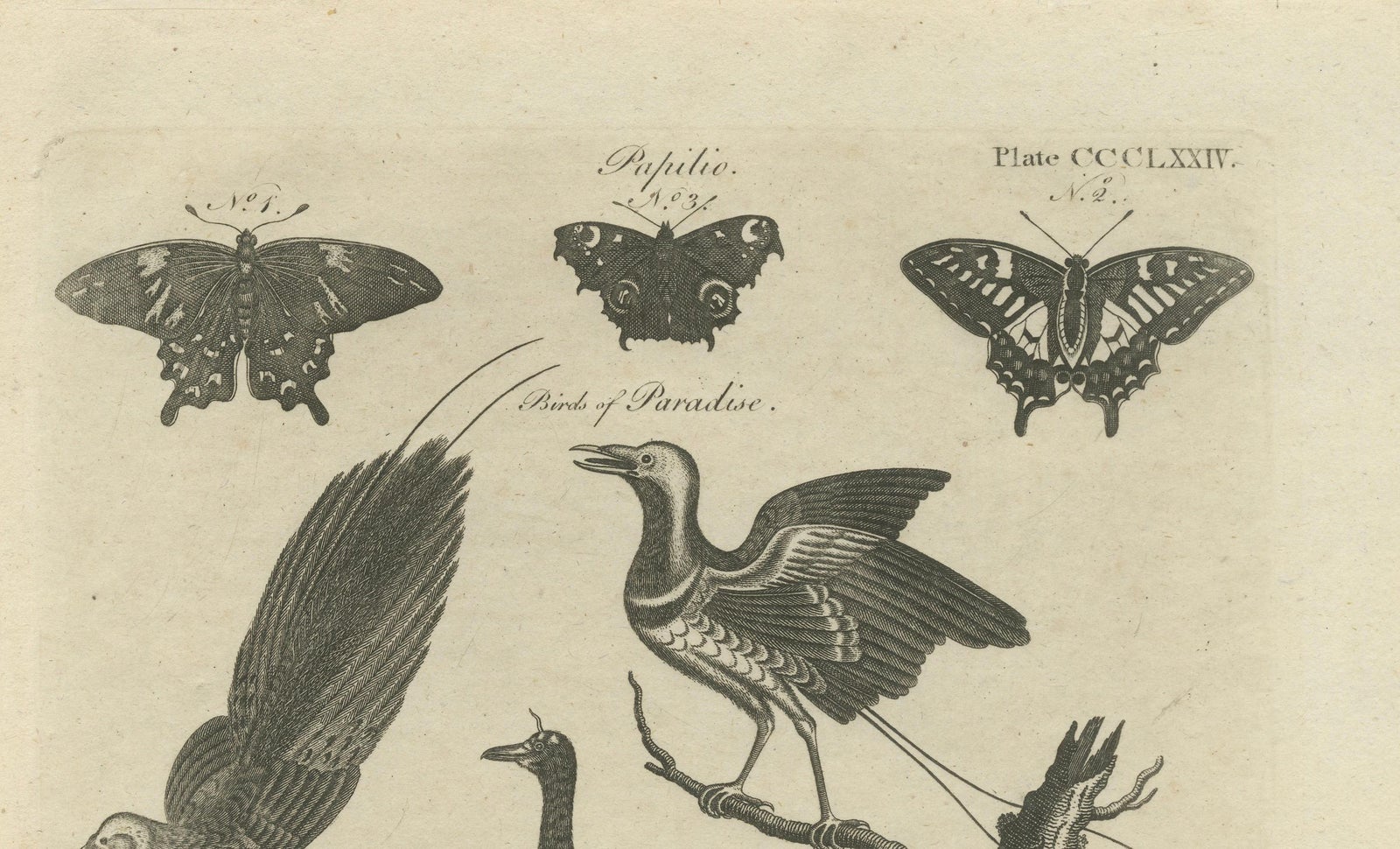
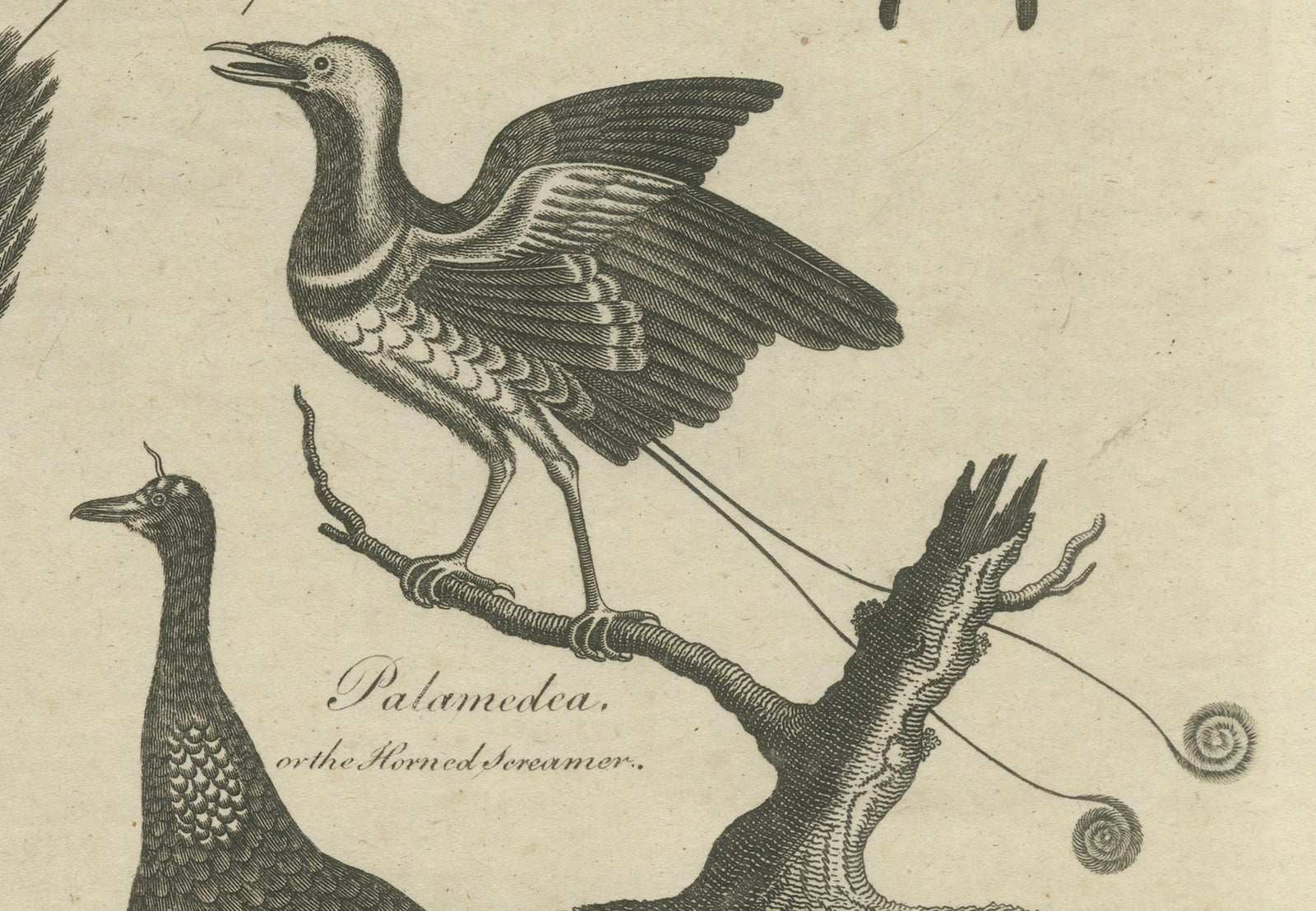
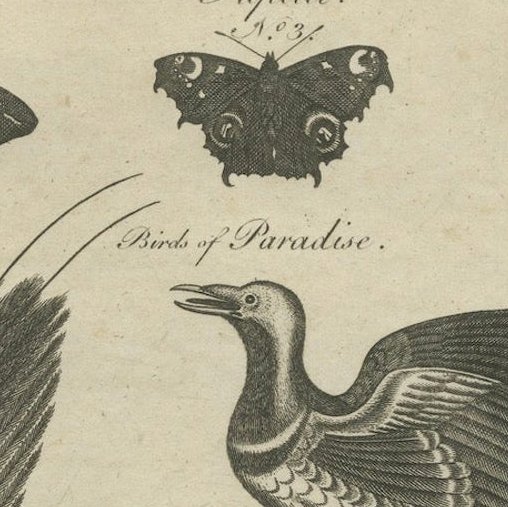
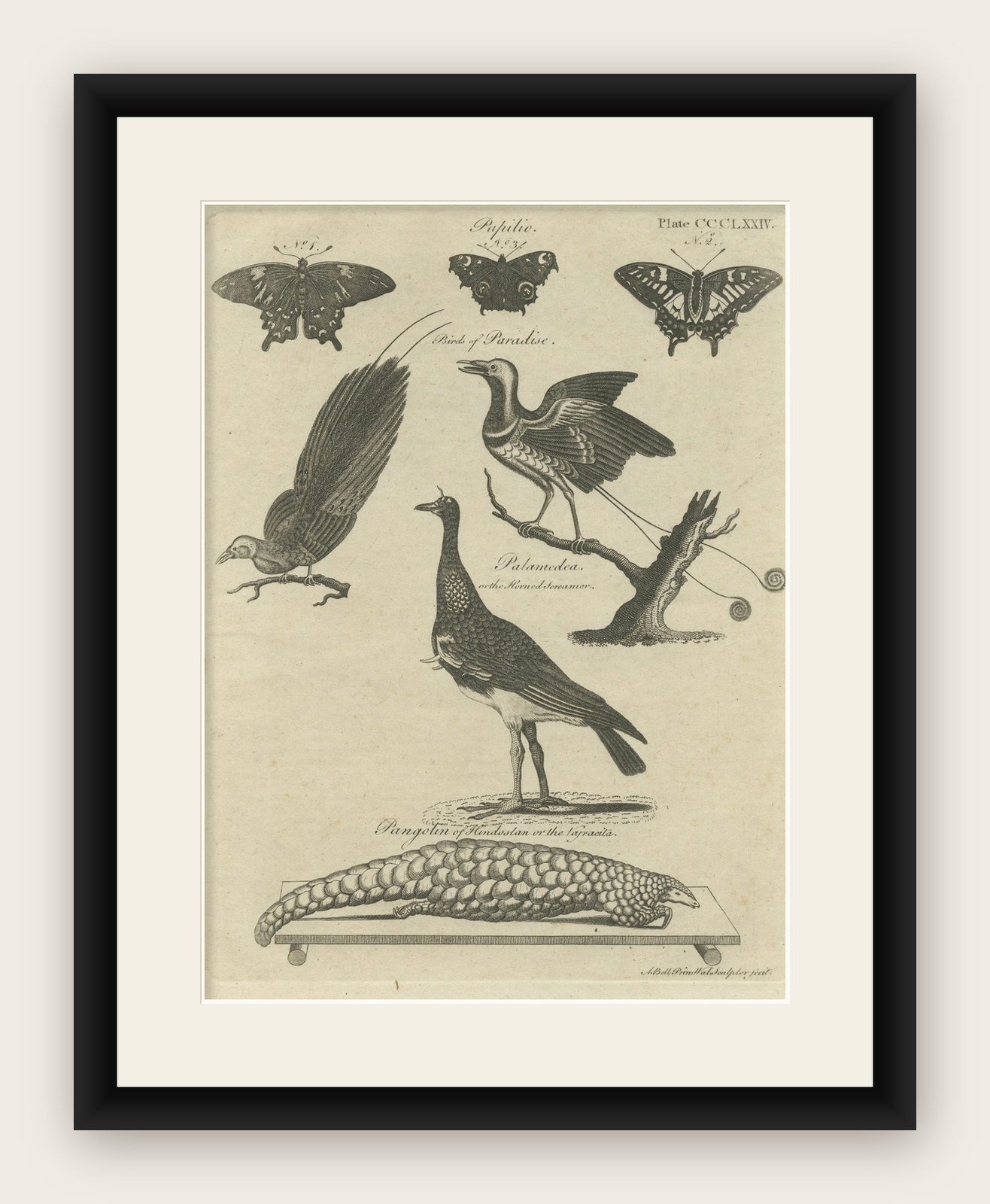
Engraving of Butterflies, Birds of Paradise, Horned Screamer, Pangolin, ca.1800
$255 (£195, €230)
Period original, not a reproduction.
Shipped from the Netherlands, flat, insured and tracked, worldwide. Returns accepted within 14 days.
- Date
- 1800
- Size
- 10.7 × 8 in (27.3 × 20.2 cm)
- Condition
- Very good, given age. General age-related toning and/or occasional minor defects from handling. Protected by artpaper cover. Please study scan carefully.
- Period
- Early 19th century
- Section
- Insects and butterflies
- Reference
- f_40582842
What the condition grades mean
- Excellent
- Bright and clean, with no faults worth mentioning.
- Very good
- Only light signs of age, such as faint toning.
- Good
- Normal signs of age for a sheet of this period: toning, some foxing, small marks or neat old repairs.
- Fair
- Clear faults such as staining, tears or repairs, priced to match.
Every fault we see is written in the condition note, and the whole sheet is shown uncropped in the photos.
This image is a detailed illustration from an old scientific or natural history text, featuring various animals. Here's a description of the image:
1. Butterflies: At the top, there are two butterflies labeled "Papilio," which is a genus of swallowtail butterflies. Each butterfly is meticulously drawn, showing the patterns on their wings.
2. Birds:
- The top bird, labeled "Birds of Paradise," is depicted with elaborate plumage, characteristic of the birds of paradise known for their striking feathers.
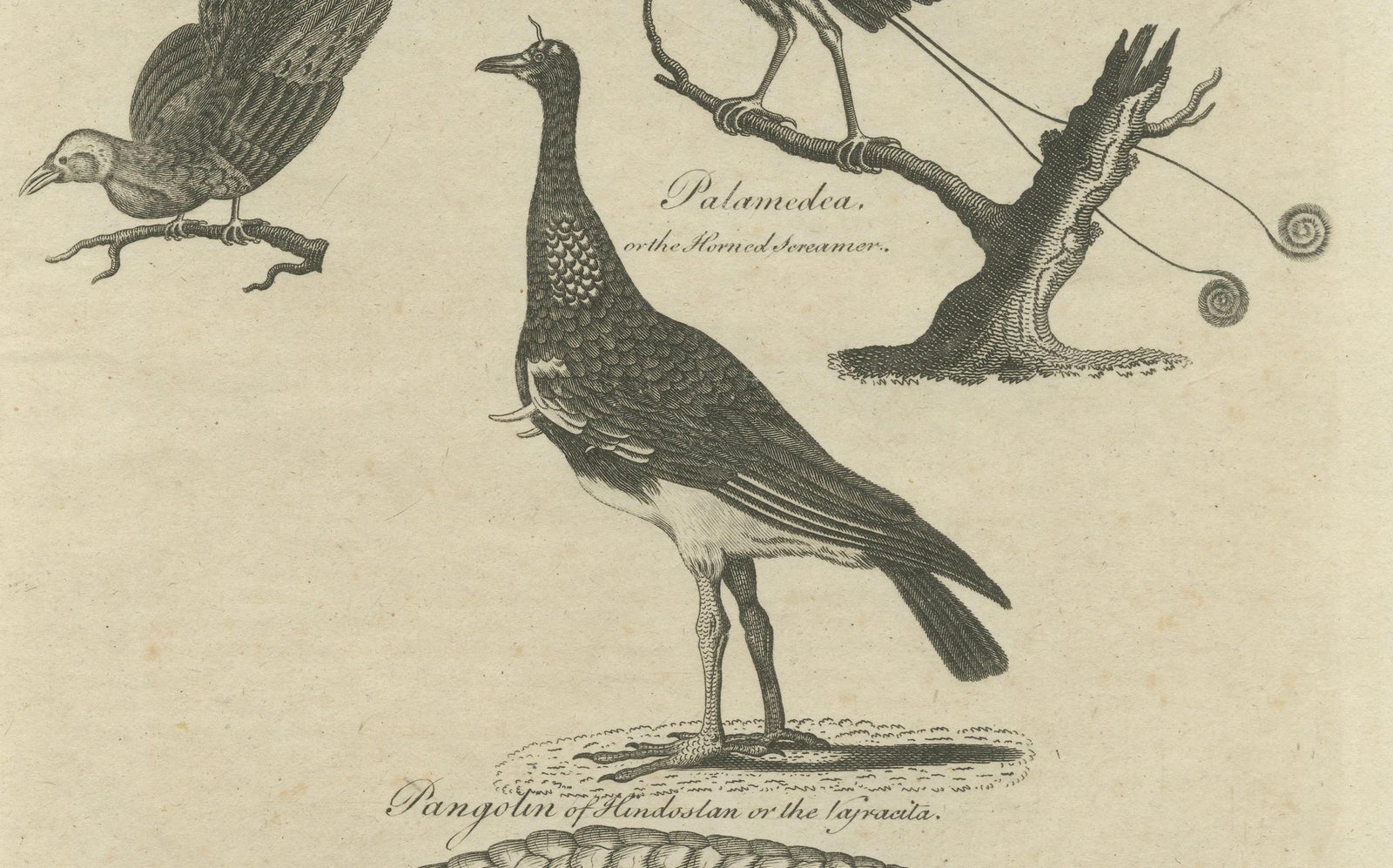
- The middle bird is labeled "Palamedea or the Horned Screamer," perched on a branch. It is depicted with distinctive features typical of the horned screamer bird.
- Another bird, possibly a variant or related species, is shown on the branch, also displaying detailed feather patterns.
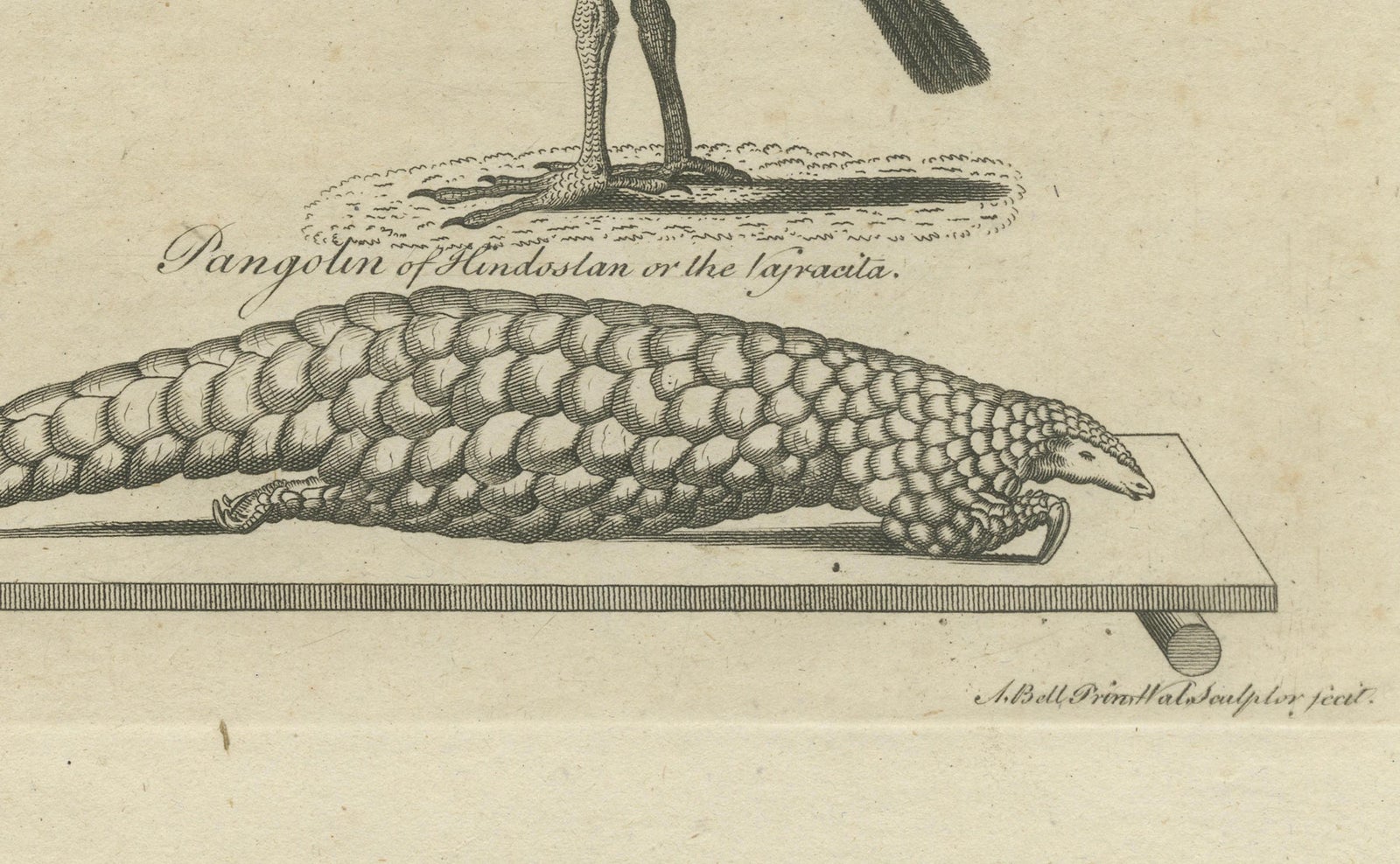
3. Pangolin: At the bottom of the illustration, there is a detailed drawing of a "Pangolin of Hindostan or the Scaly Anteater," lying on a surface. The pangolin is shown with its characteristic scales and elongated body.
The entire illustration is finely detailed, typical of scientific plates used for educational purposes in historical texts.
Its engraver Andrew Bell (1726-1809) was a notable Scottish engraver and co-founder of the Encyclopædia Britannica. Born in Edinburgh, Bell had little formal education and was apprenticed to the engraver Richard Cooper. Despite his small stature (4 foot 6 inches) and physical deformities, he made significant contributions to the field of engraving and publishing.
Bell began his career engraving crests, names, and other items on dog collars and gentlemen’s plates. He produced nearly all the copperplate engravings for the first four editions of the Encyclopædia Britannica, contributing 160 plates for the 1st edition, 340 for the 2nd, 542 for the 3rd, and 531 for the 4th edition. His work included detailed and anatomically accurate illustrations, such as those for the midwifery article in the 1st edition, which famously shocked King George III.
After the death of his partner Colin Macfarquhar in 1793, Bell bought out Macfarquhar's heirs and became the sole owner of the Britannica until his own death in 1809.