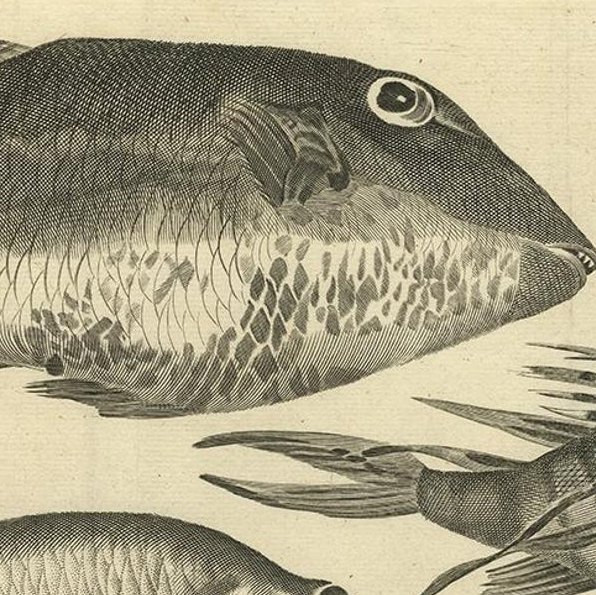
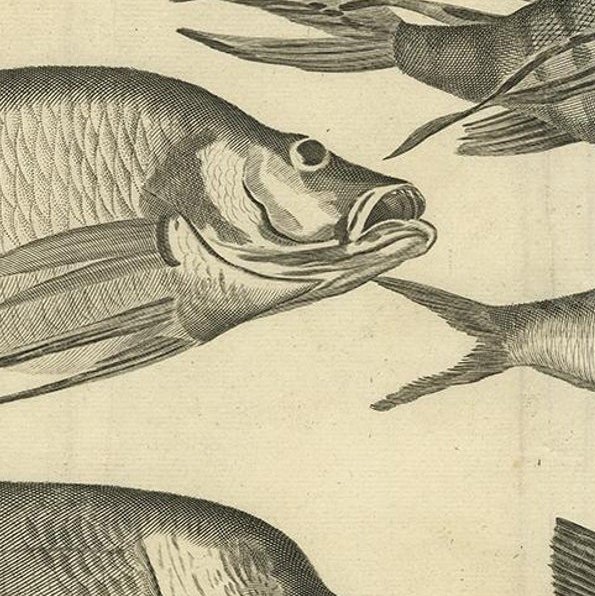
Close-ups
Framed and on the wall
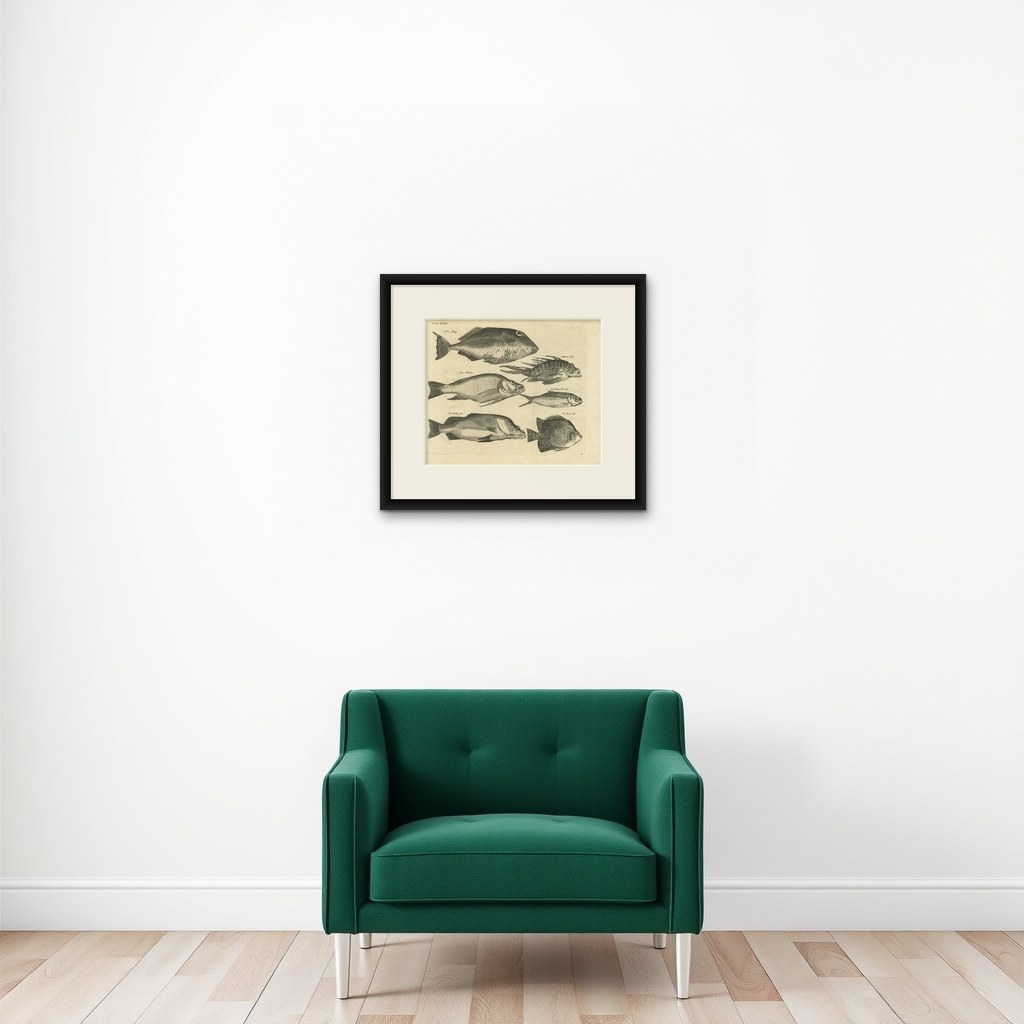
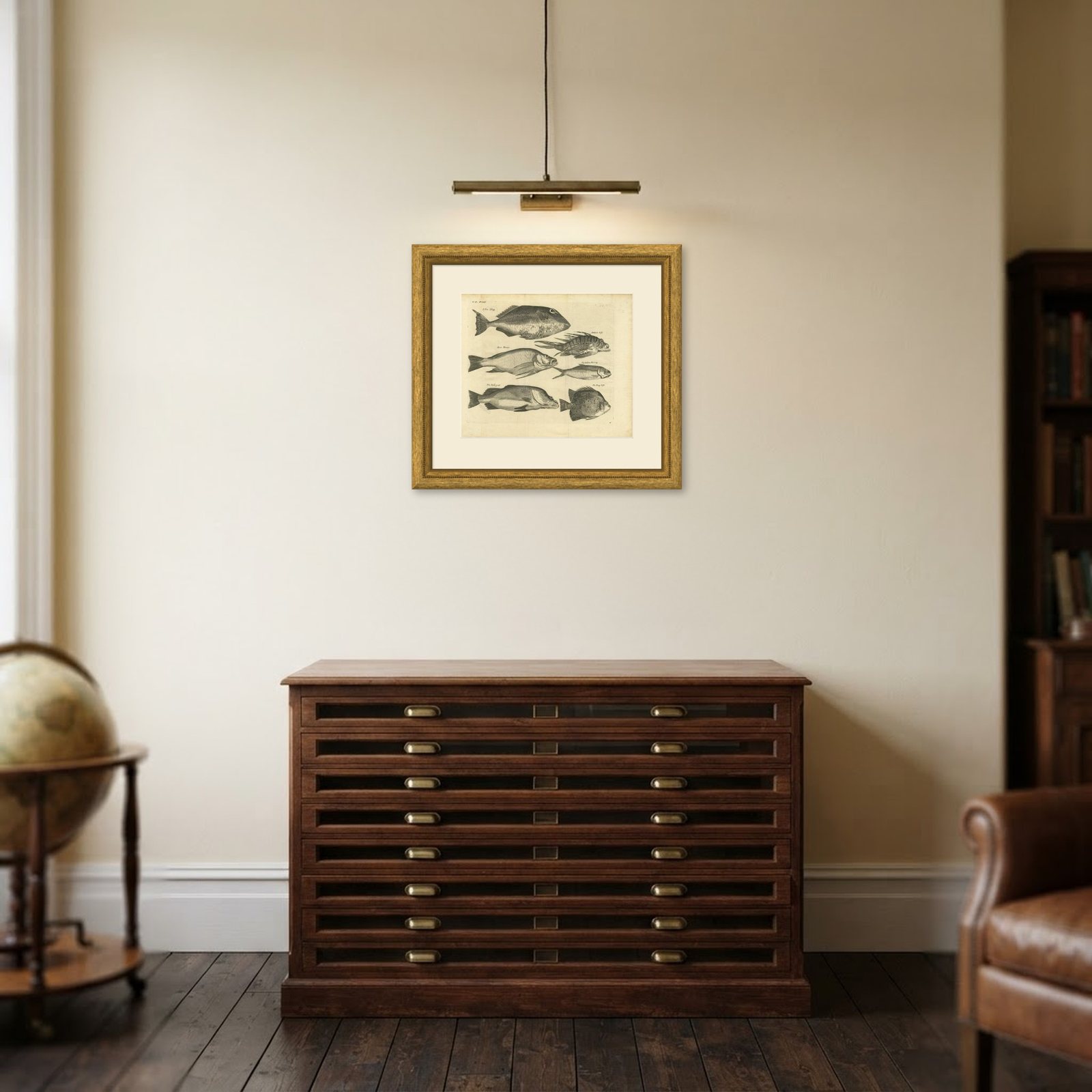
Frame and rooms are illustrations of how the print could look; the description says what is included.
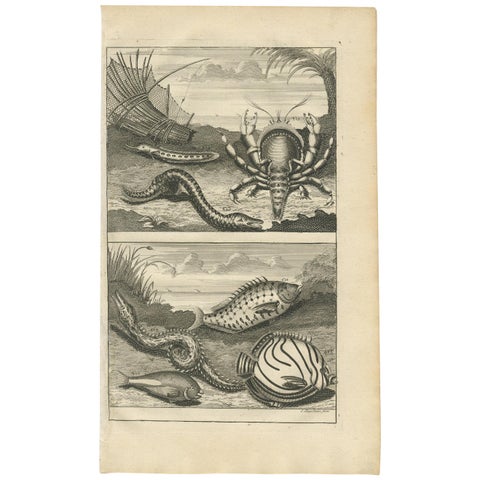
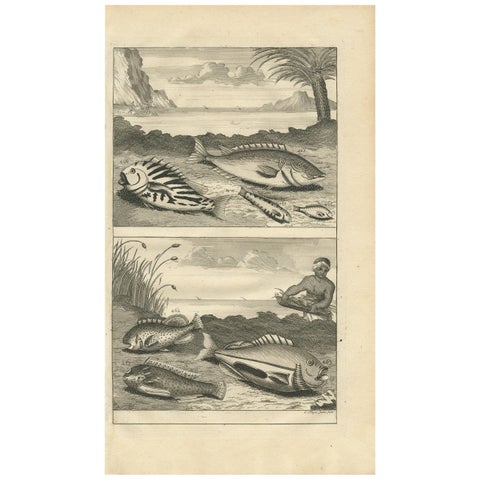
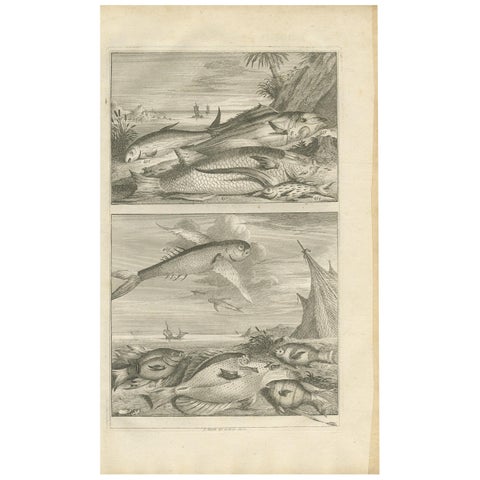
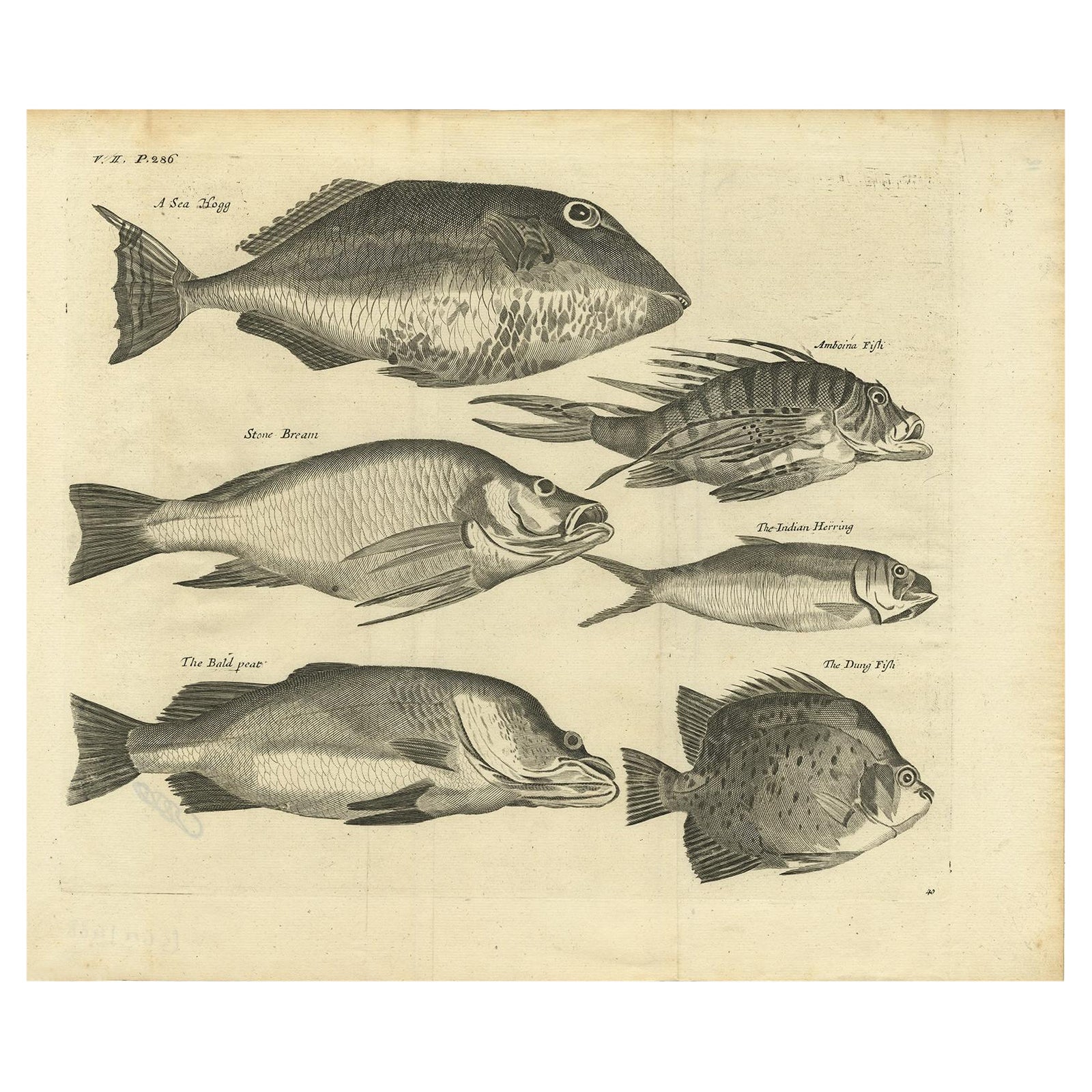
Engraving of a Sea Hogg, Amboina Fish, Stone Bream, Indian Herring Etc, Ca. 1744
€350€24530% off ($270, £205, €245)
Period original, not a reproduction.
Shipped from the Netherlands, flat or rolled, insured and tracked, worldwide. Returns accepted within 14 days.
- Date
- 1744
- Size
- 13.7 × 16.3 in (34.7 × 41.5 cm)
- Condition
- Good. Good, given age. Irregular left edge. Original folds as issued. General age-related toning and/or occasional minor defects from handling. Please study scan carefully.
- Period
- 18th century
- Section
- Fish and shells
- Reference
- f_26557312
What the condition grades mean
- Excellent
- Bright and clean, with no faults worth mentioning.
- Very good
- Only light signs of age, such as faint toning.
- Good
- Normal signs of age for a sheet of this period: toning, some foxing, small marks or neat old repairs.
- Fair
- Clear faults such as staining, tears or repairs, priced to match.
Every fault we see is written in the condition note, and the whole sheet is shown uncropped in the photos.
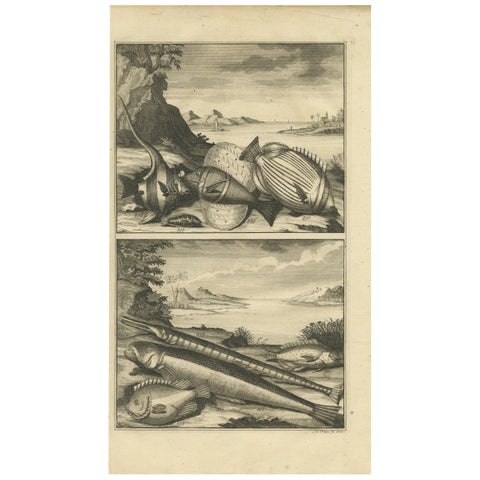
Antique print, titled: 'A Sea Hogg (…).' - A Sea Hogg, Amboina Fish, Stone Bream, The Indian Herring, The Bald peat, The Dung Fish.
Drawn to accompany J. Nieuhof's account of his travel in the east indies. Johan Nieuhof (1618-1672) was a Dutch traveler who wrote about his journeys to Brazil, China, India and the East Indies. His notes and illustrations were published in Dutch by Jacob van Meurs in 1665 and this English edition was published in 'Churchill's Voyages and Travels' (3rd edition 1744).
Source unknown, to be determined.
Artists and Engravers: Made by 'Johannes Nieuhof' after an anonymous artist. Johan / Jan / Johannes Nieuhof / Nieuhoff / Neuhof (1618-1672) was a Dutch traveler who wrote about his journeys to Brazil, China and India. The most famous of these was a trip of 2,400 km from Canton to Peking in 1655-1657 as part of a Dutch envoy, which enabled him to become an authoritative Western writer on China. Johan Nieuhof was born in Uelsen, Germany, of which his father (originally from Zwolle) was mayor. Nieuhof left for Brazil in 1640 as a reserve officer-candidate - from then on, barring two short family visits in 1658 and 1671, he spent all the rest of his life abroad. After an adventurous career in the service of the Dutch East India Company (or VOC) - between 1660 and 1667 he occupied posts in India and on Ceylon - he then lived in Batavia until 1670. He then disappeared without trace on Madagascar, traveling in a sloop from which he had landed to seek drinking water. The engravings are made after Nieuhoff's drawings.
Technic: Copperplate engraving / etching on hand laid (verge) paper.