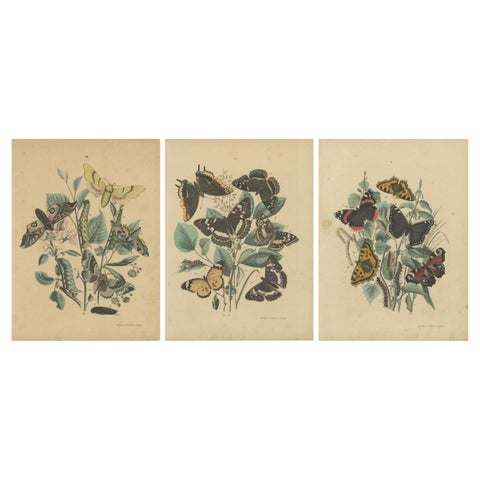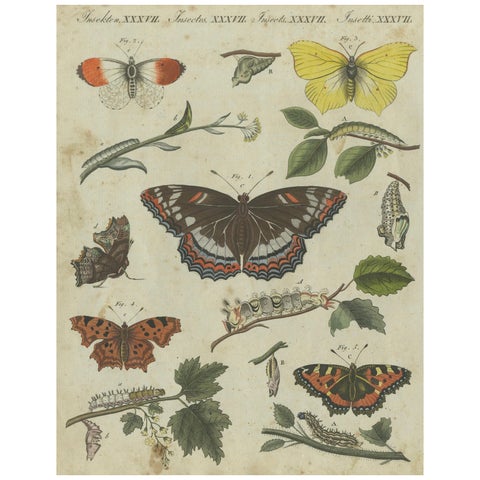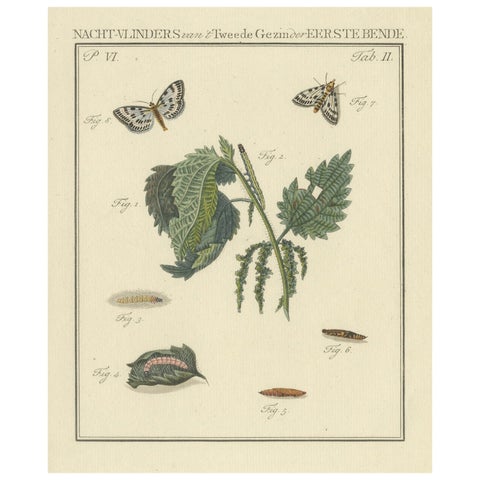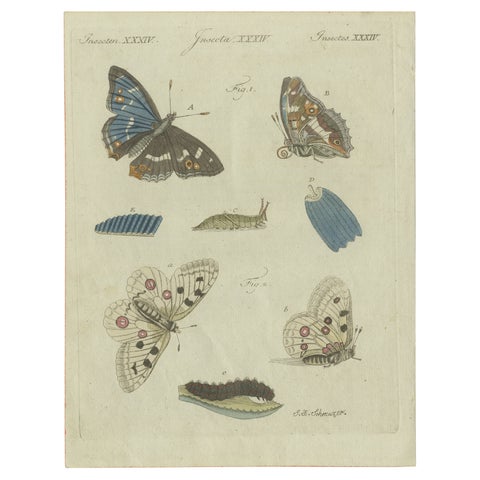
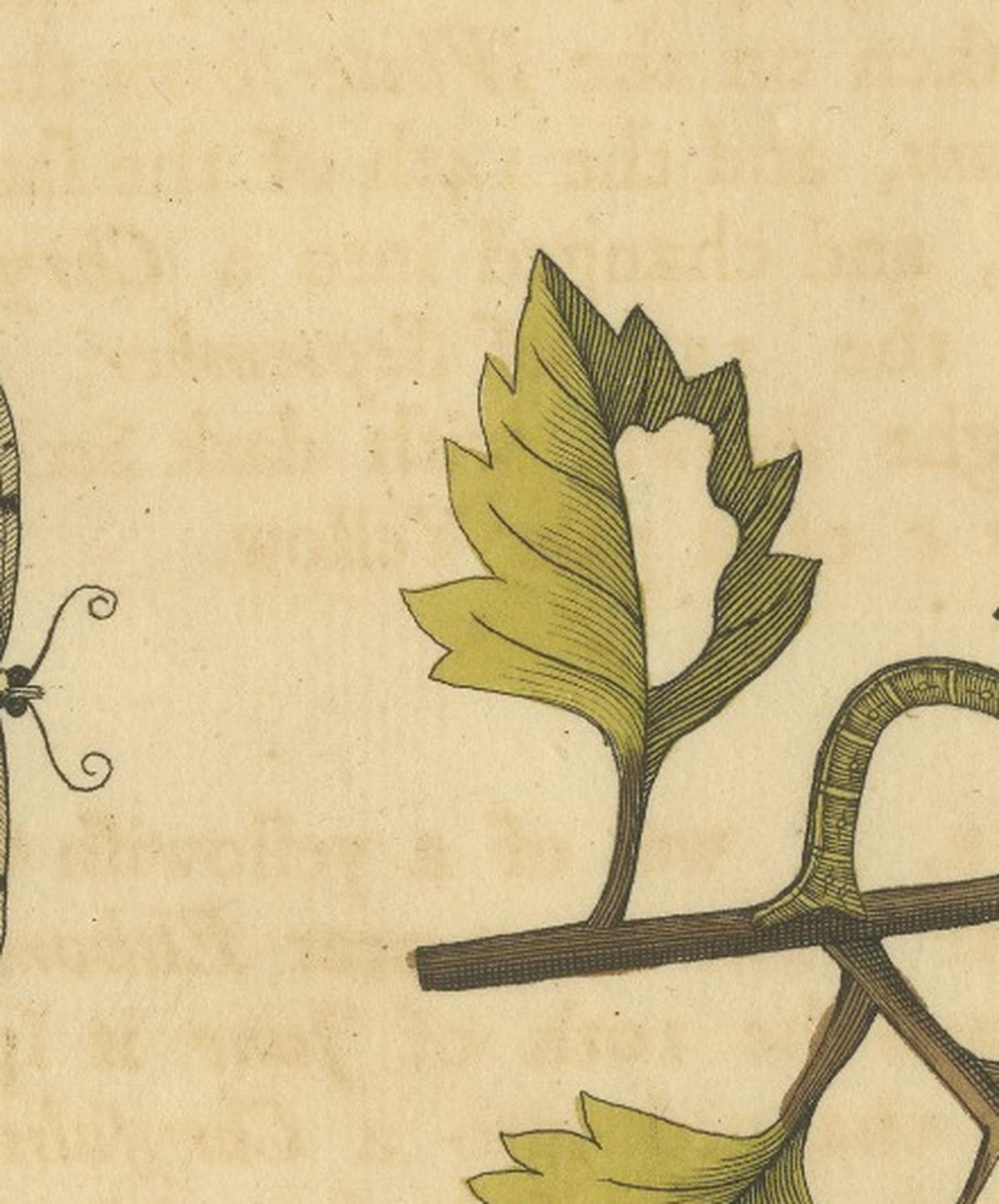
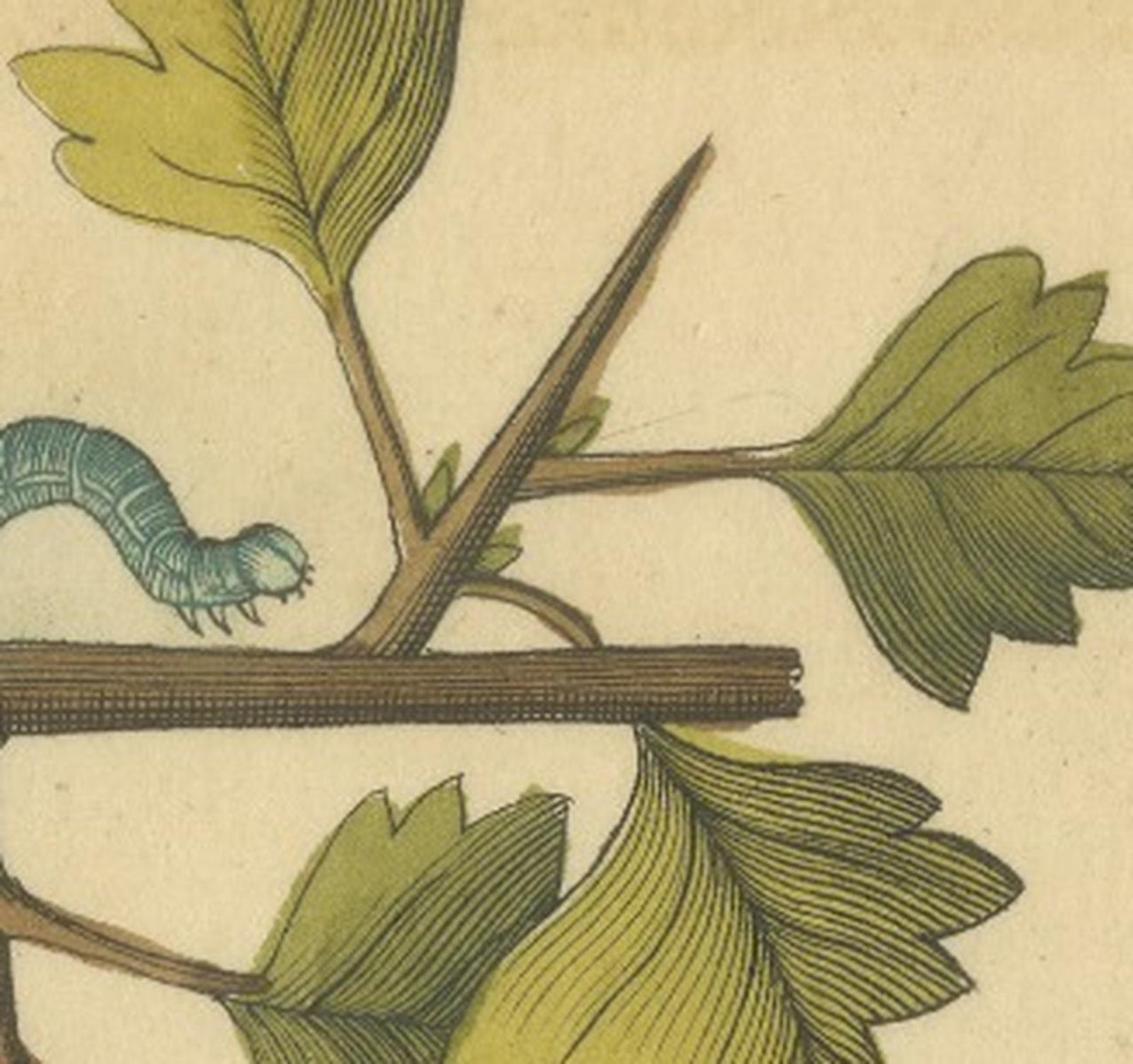
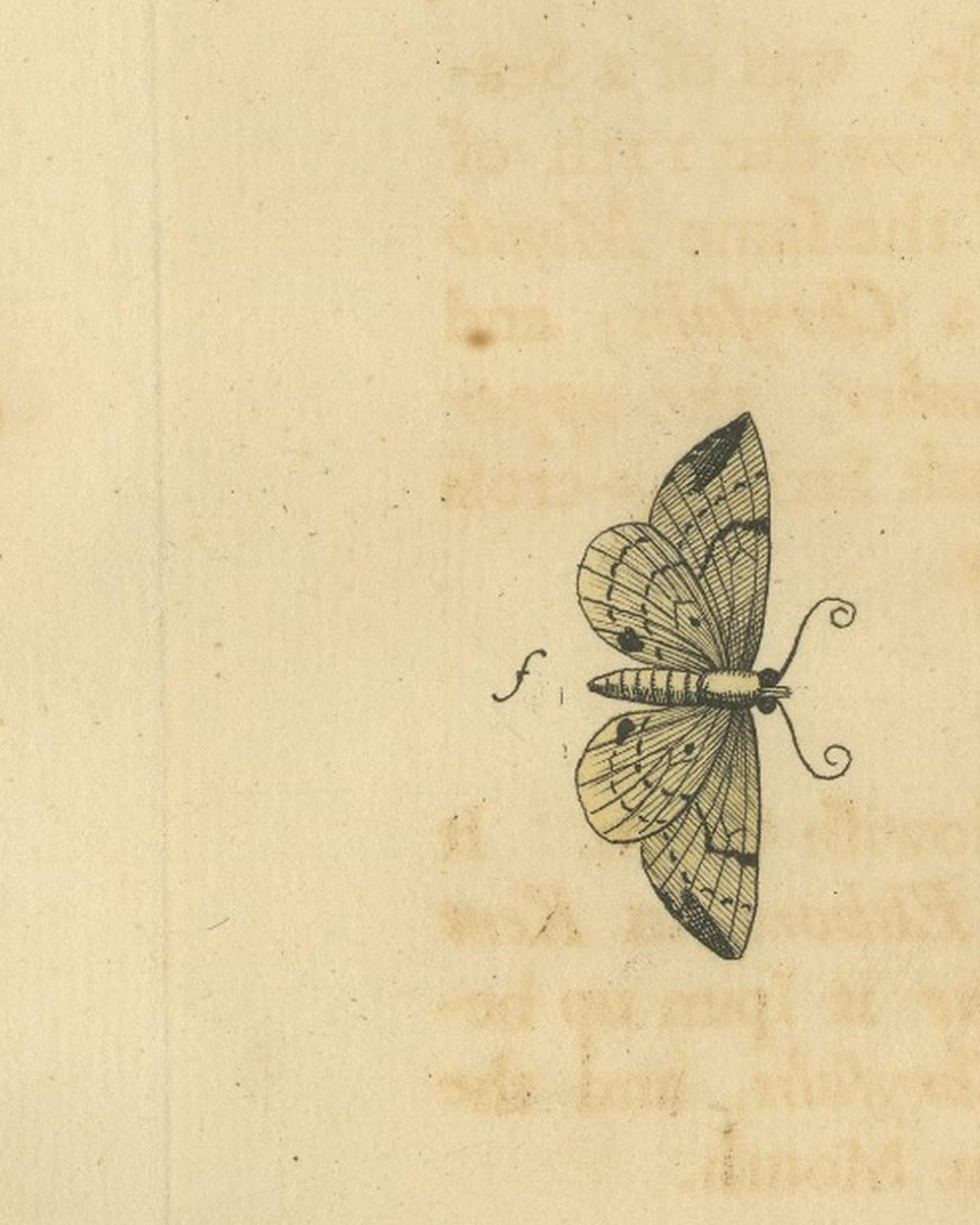
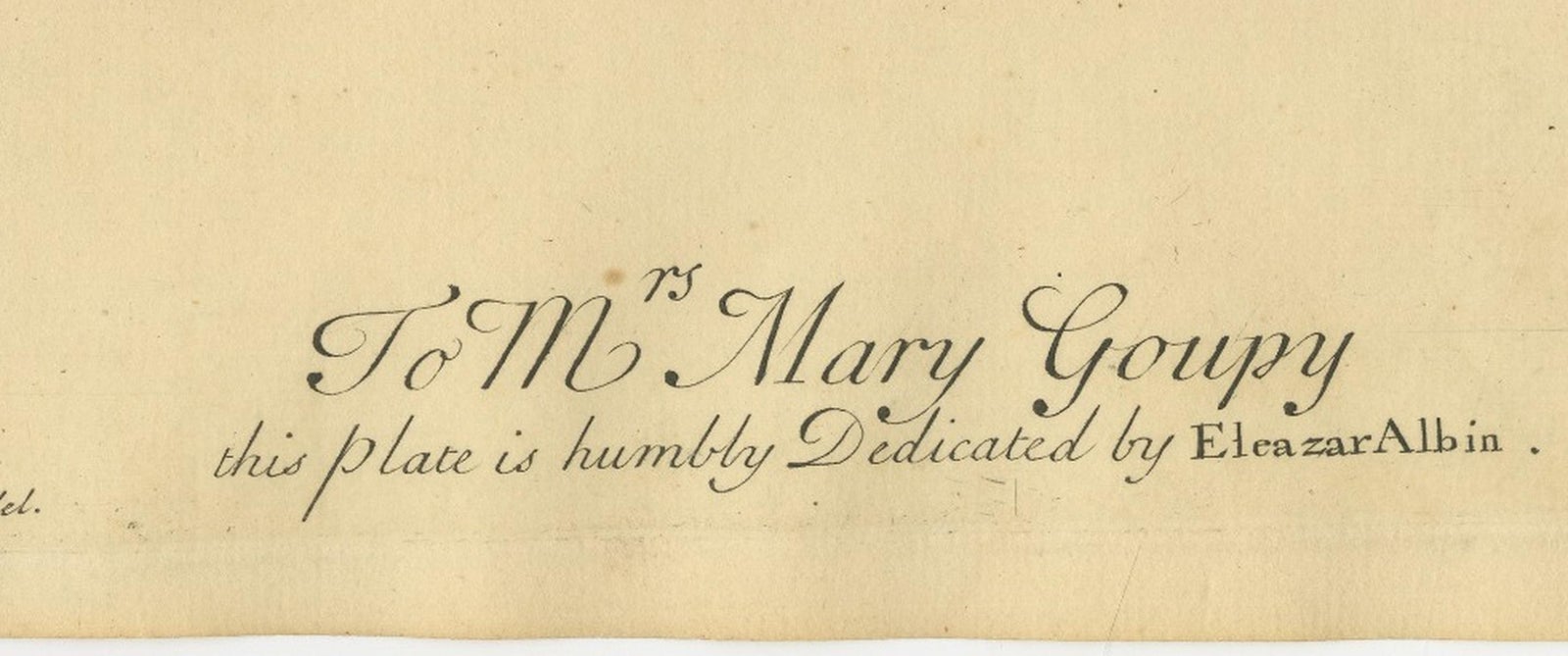
Close-ups
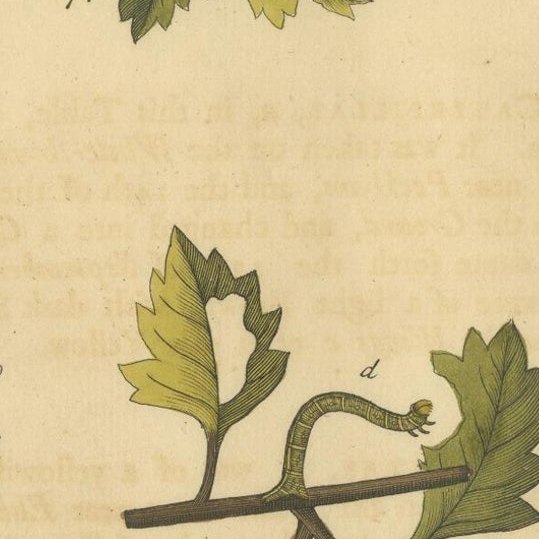
Framed and on the wall
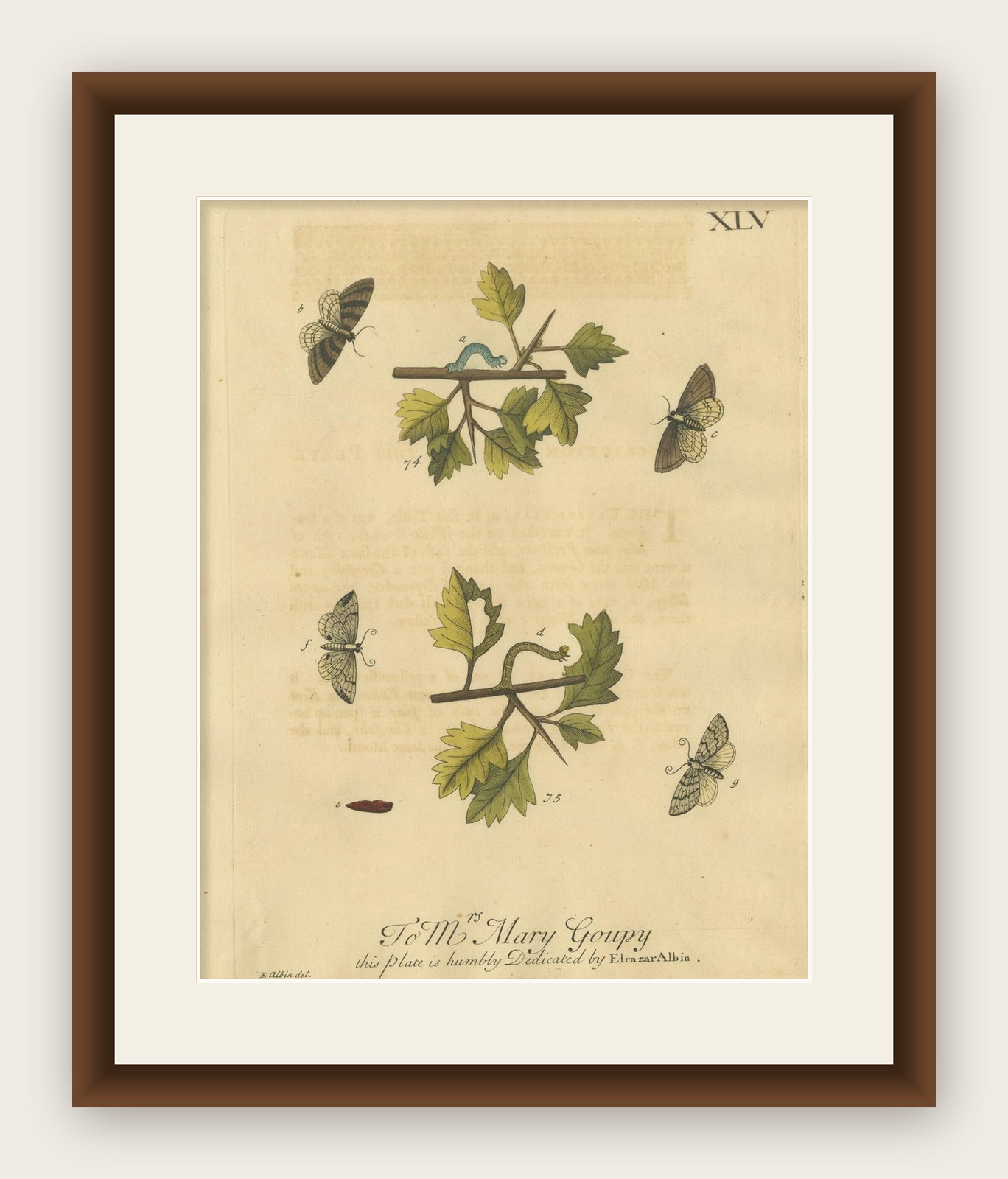
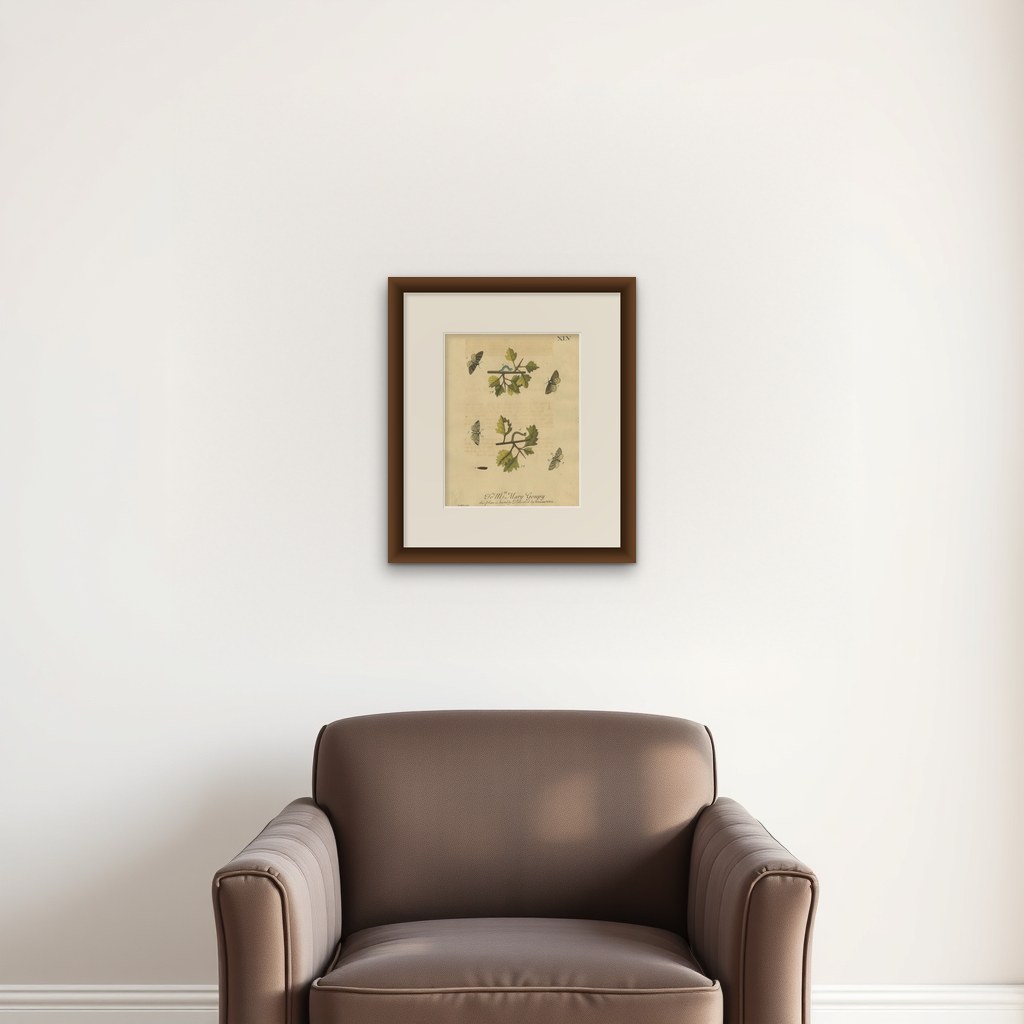

Frame and rooms are illustrations of how the print could look; the description says what is included.
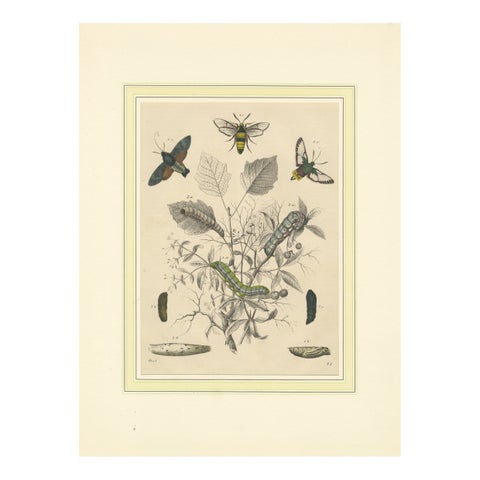
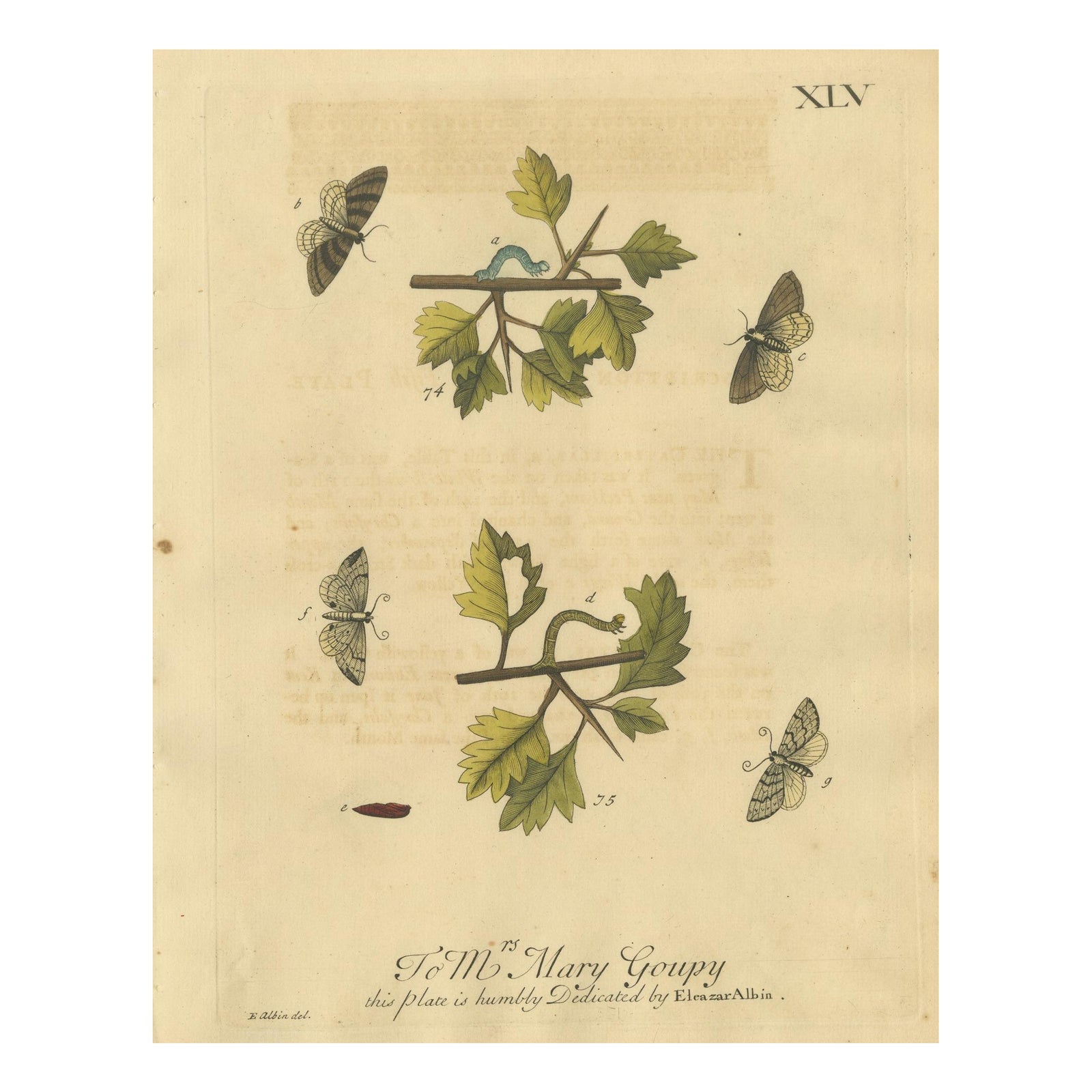
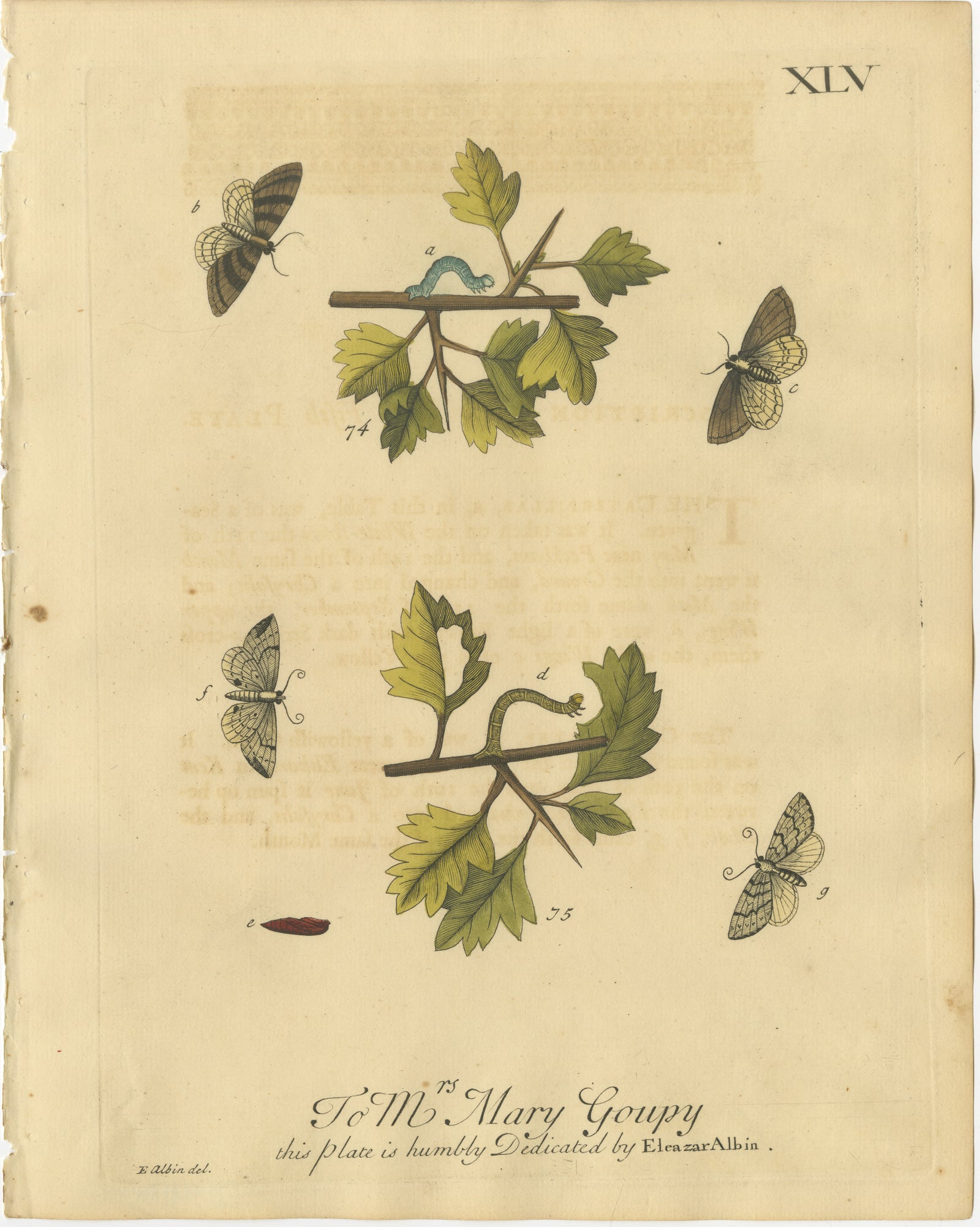
English Moths on Hawthorn Branch, Early 18th-Century Hand-Colored Print
£235 ($315, €280)
Period original, not a reproduction.
Shipped from the Netherlands, flat, insured and tracked, worldwide. Returns accepted within 14 days.
- Date
- Not stated
- Size
- 11.1 × 8.7 in (28.3 × 22.1 cm)
- Condition
- Good. Light to moderate age-related toning. Minor edge wear consistent with original binding. Colors remain clear and well preserved.
- Section
- Insects and butterflies
- Reference
- f_48602752
English Moths on Hawthorn Branch, Early 18th-Century Hand-Colored Print
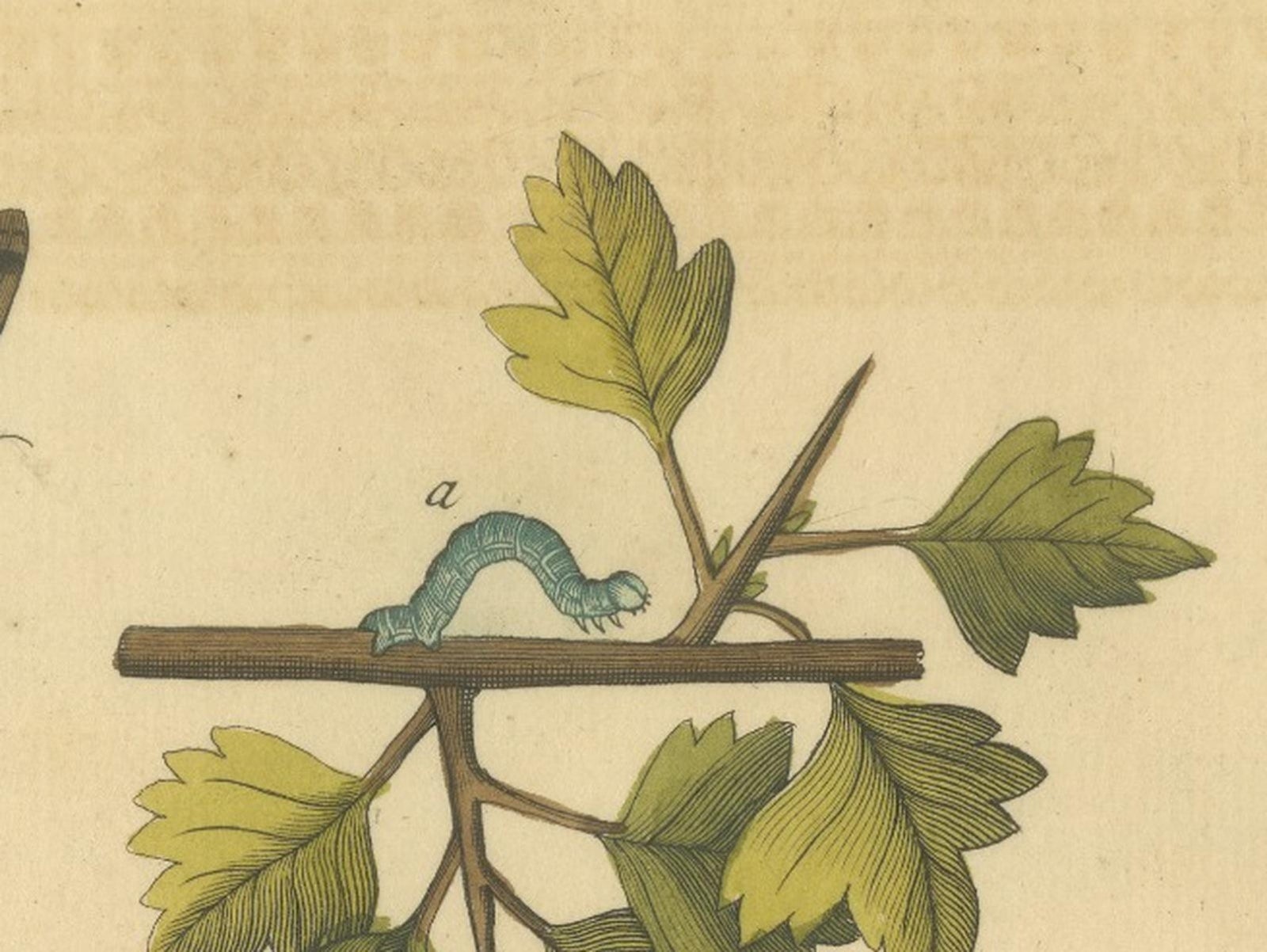
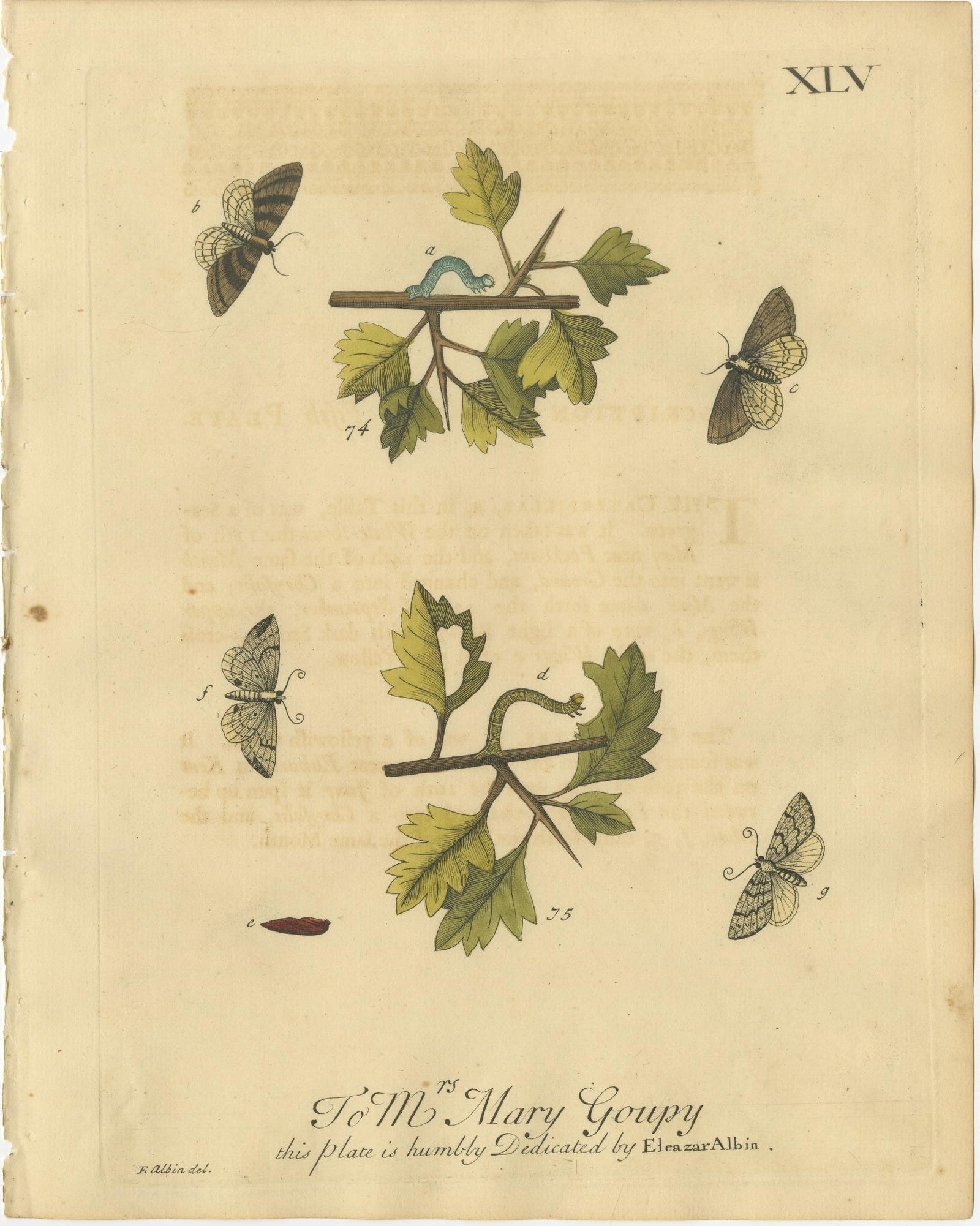
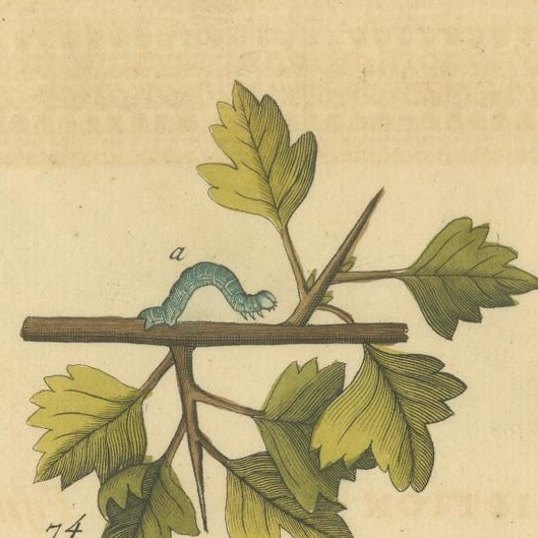
Published in London in 1720, this hand-colored copper engraving forms part of Eleazar Albin’s A Natural History of English Insects, a cornerstone work of early British entomology. The plate depicts moths, caterpillars, and pupae arranged around a hawthorn branch, illustrating the insect life cycle in direct relation to its host plant.
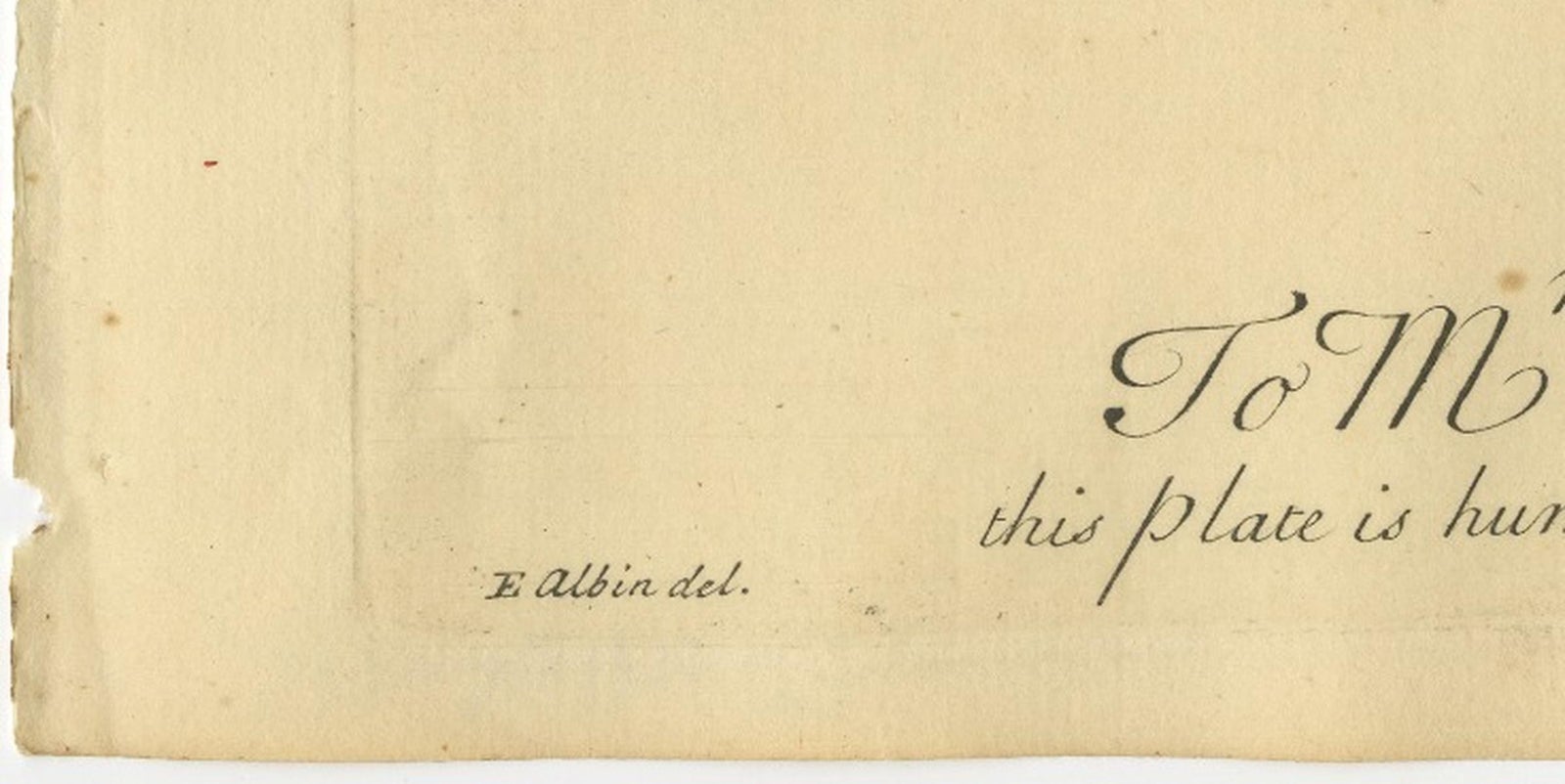
The plate is dedicated “To Mrs. Mary Goupy,” reflecting the network of subscribers and private patrons who supported the publication of natural history works in Georgian England. Such dedications were customary and provide insight into the social and cultural context in which Albin’s work was produced.
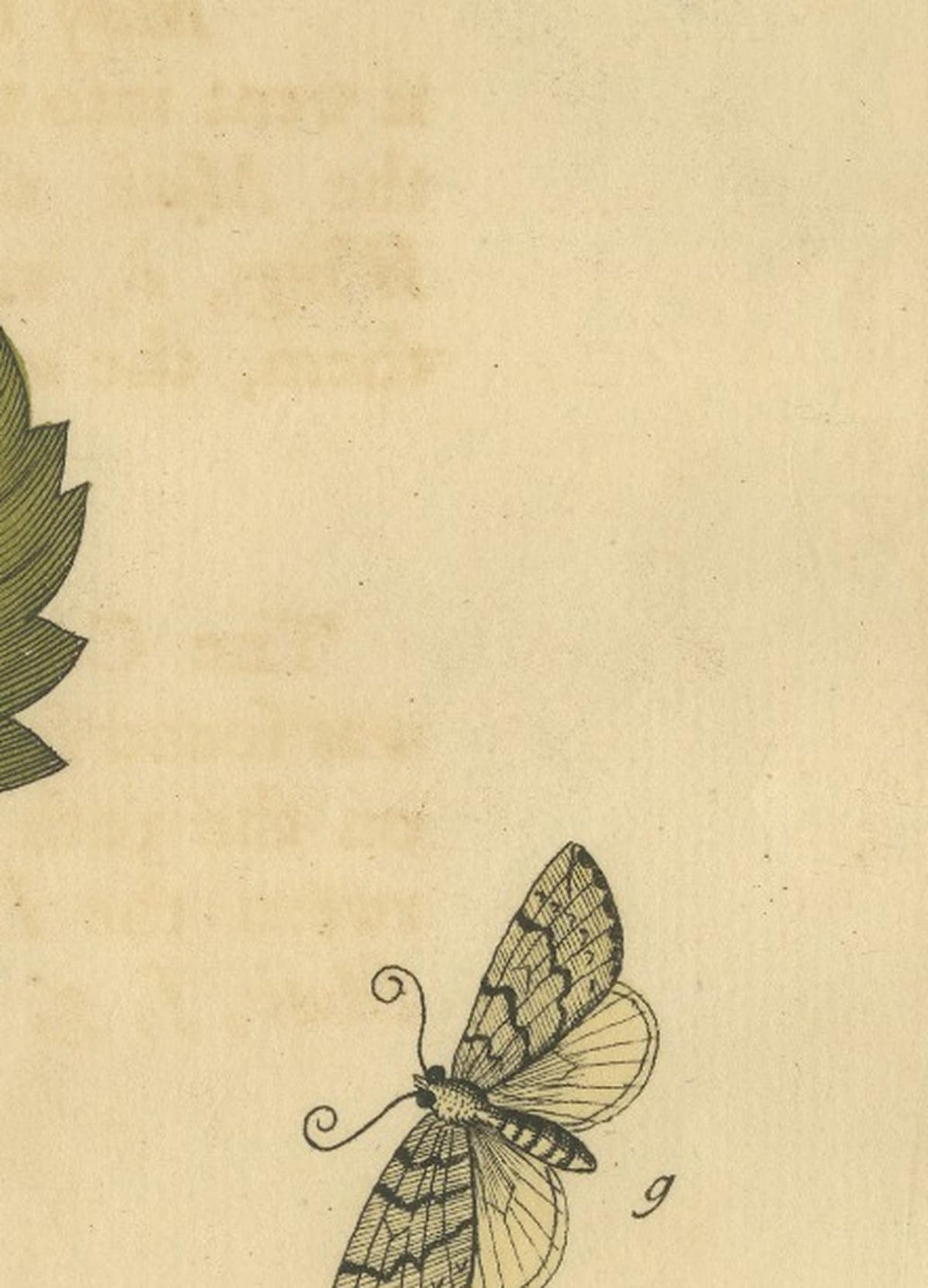
The insects shown are moths and larvae commonly associated with hedgerow habitats, representing early observations of species now largely classified among the geometrid moths. The plant depicted is hawthorn (*Crataegus*), a key species in the English countryside. The soft green palette, balanced composition, and careful hand coloring give the engraving both scientific clarity and strong decorative appeal.
An original 18th-century engraving with original hand coloring.
Condition
Light to moderate age-related toning. Minor edge wear consistent with original binding. Colors remain clear and well preserved.
Framing tips
Dark walnut or ebonized frames with ivory mats enhance the antique character. For contemporary interiors, light oak with museum-white matting is recommended. UV glazing advised. Sold unframed.
Keywords
Eleazar Albin, English insects, antique insect print, entomology engraving, hand colored engraving, Georgian natural history, 18th century print, British insects, moth engraving, caterpillar illustration, hawthorn leaves, Crataegus, hedgerow insects, botanical entomology, antique scientific illustration, natural history art, interior designer wall art, decorative antique print, London 1720, early entomology, collector print
Technique: Copper engraving with original hand coloring
Maker: Eleazar Albin, London, 1720