Close-ups
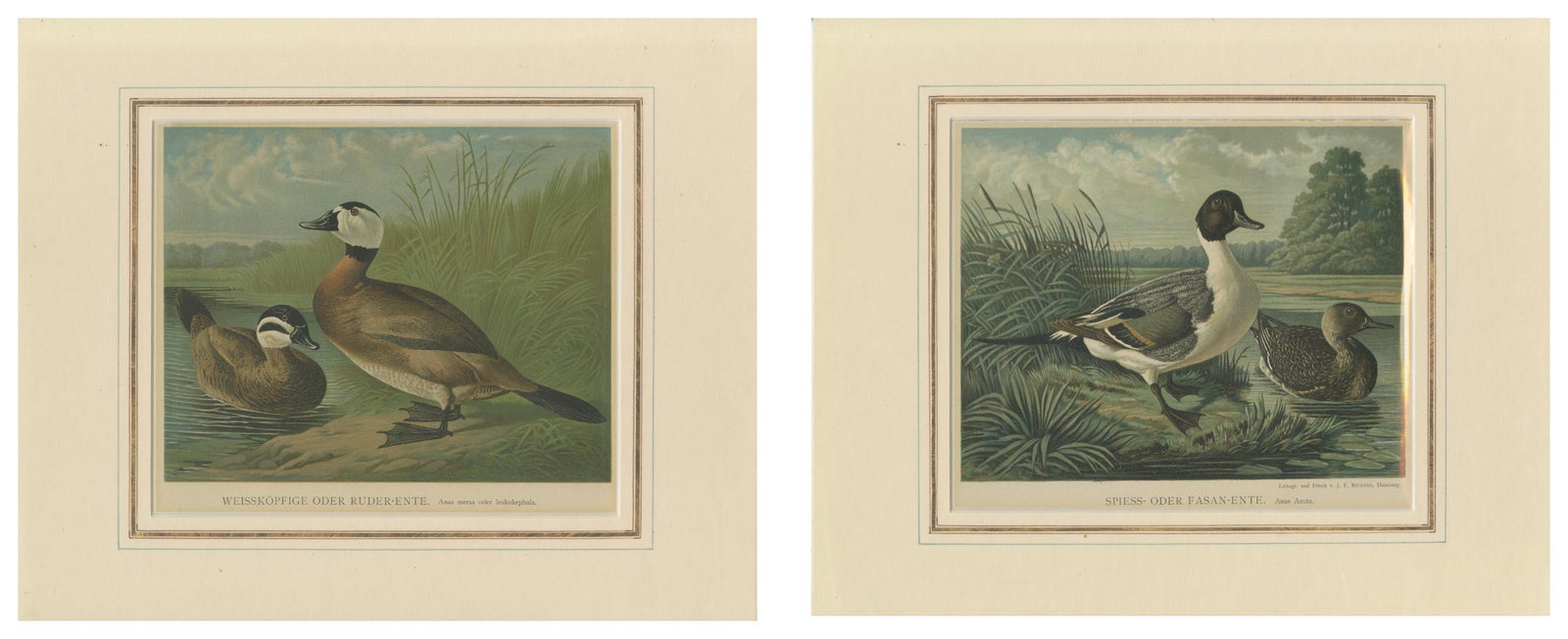
Framed and on the wall
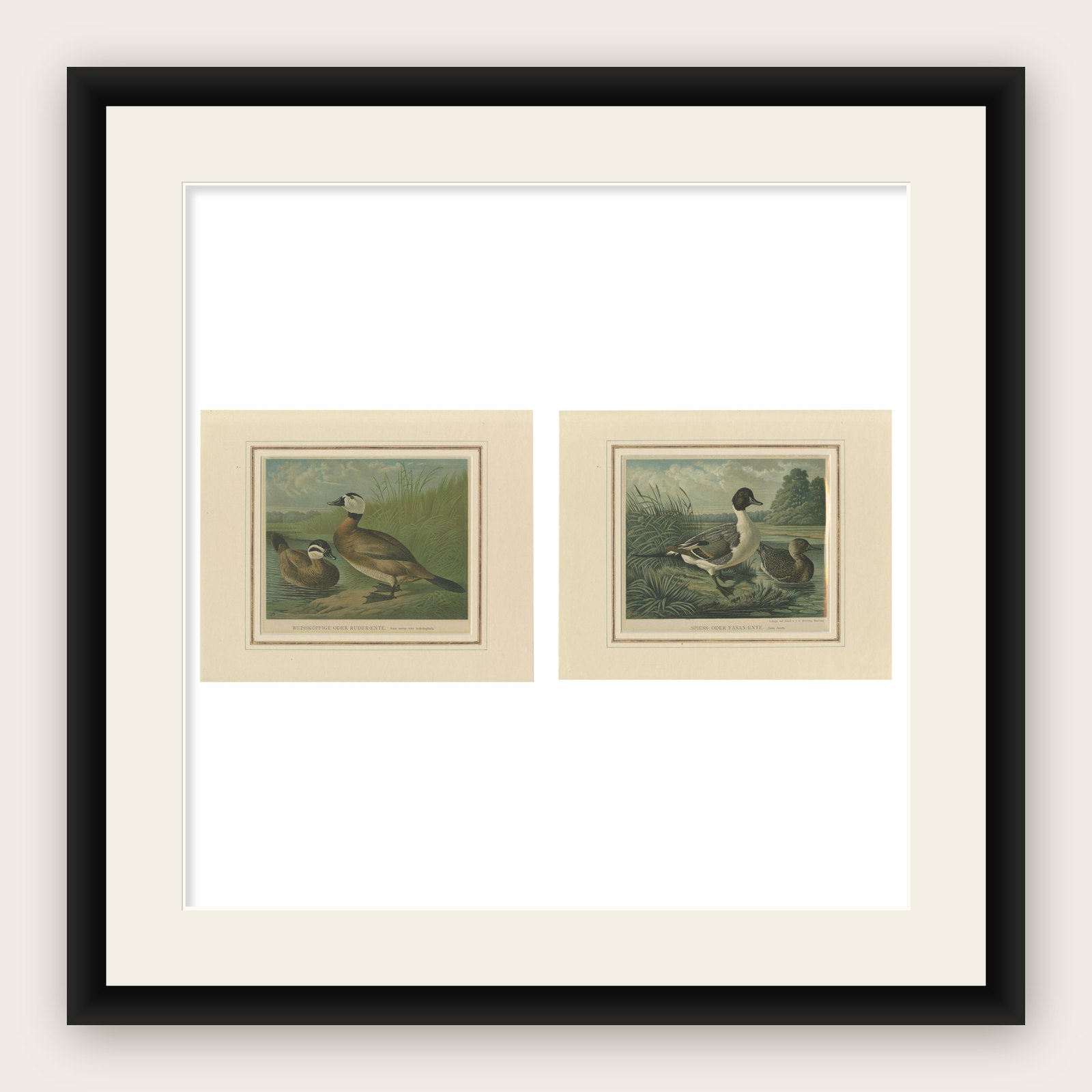
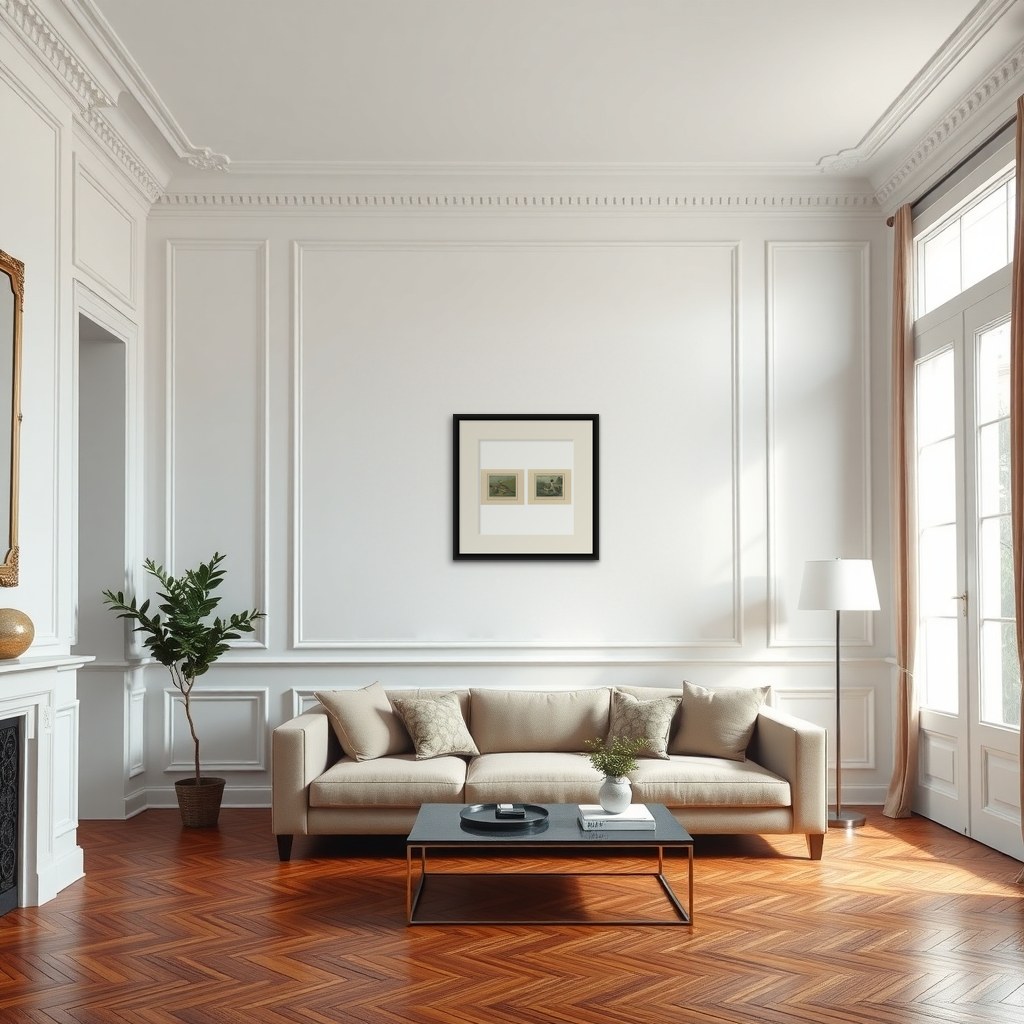
Frame and rooms are illustrations of how the print could look; the description says what is included.
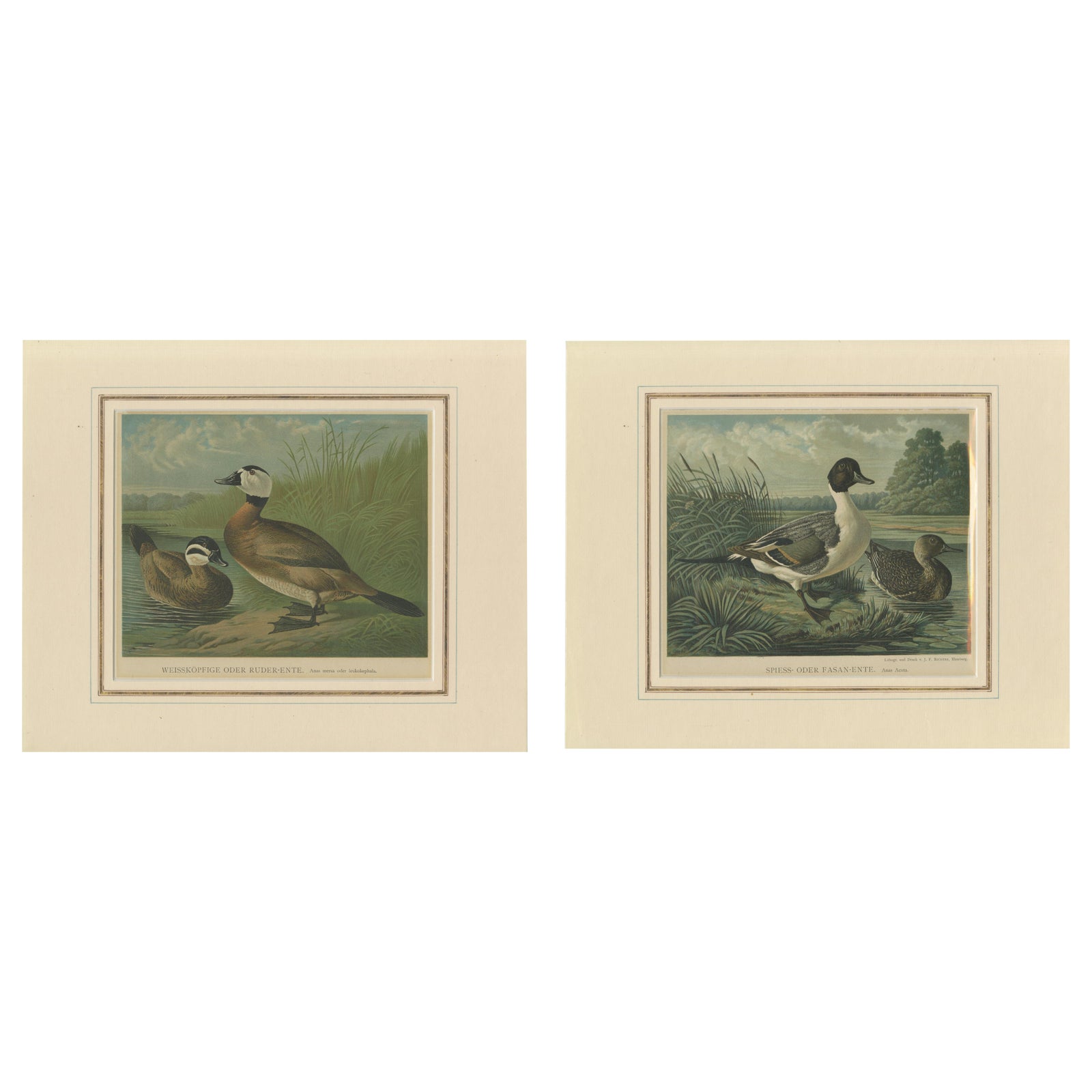
Elegant 1880 Lithographs of Ducks: White-headed Duck and Northern Pintail
£305 ($405, €360)
Period original, not a reproduction.
Shipped from the Netherlands, flat, insured and tracked, worldwide. Returns accepted within 14 days.
- Date
- 1880
- Size
- 12.4 × 15 in (31.5 × 38 cm)
- Condition
- Good. The lithographs are in very good condition, with vibrant colors, clean paper, and no visible damage. Elegantly presented in cream matting boards, the prints enhance the detailed artwork and are ready for framing or display, preserving their historica.
- Period
- Late 19th century
- Section
- Birds
- Reference
- f_42826712
Title: 'Elegant 1880 Lithographs of Ducks: White-headed Duck and Northern Pintail'
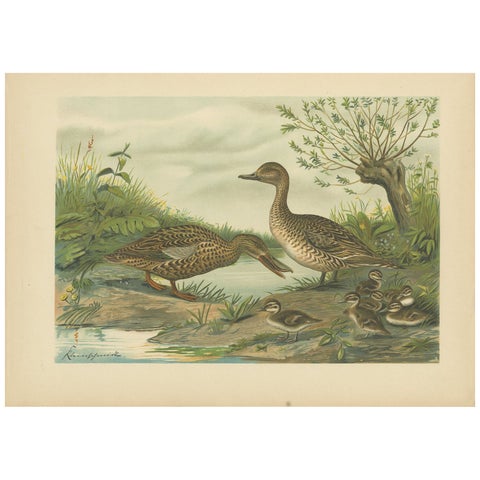
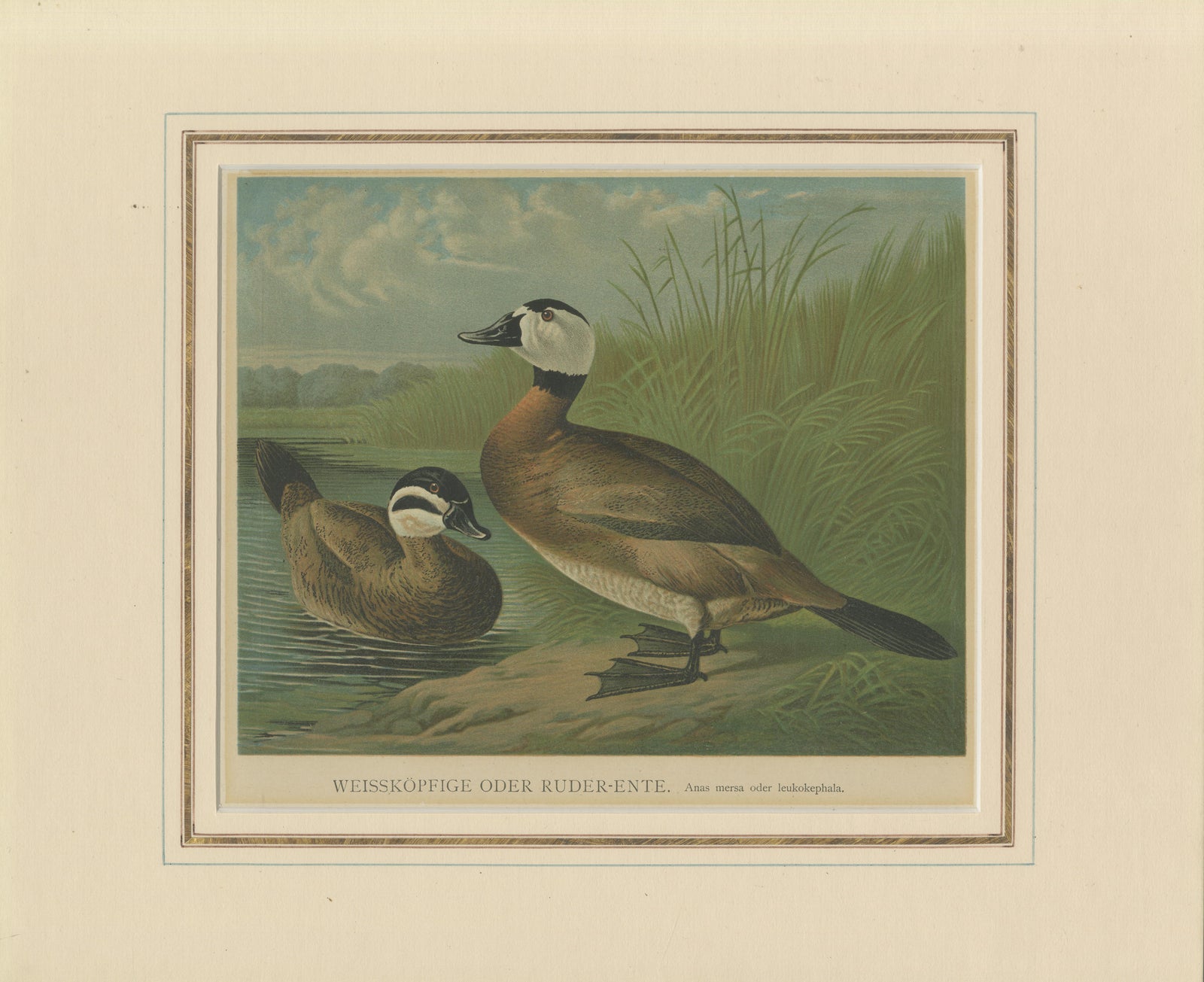
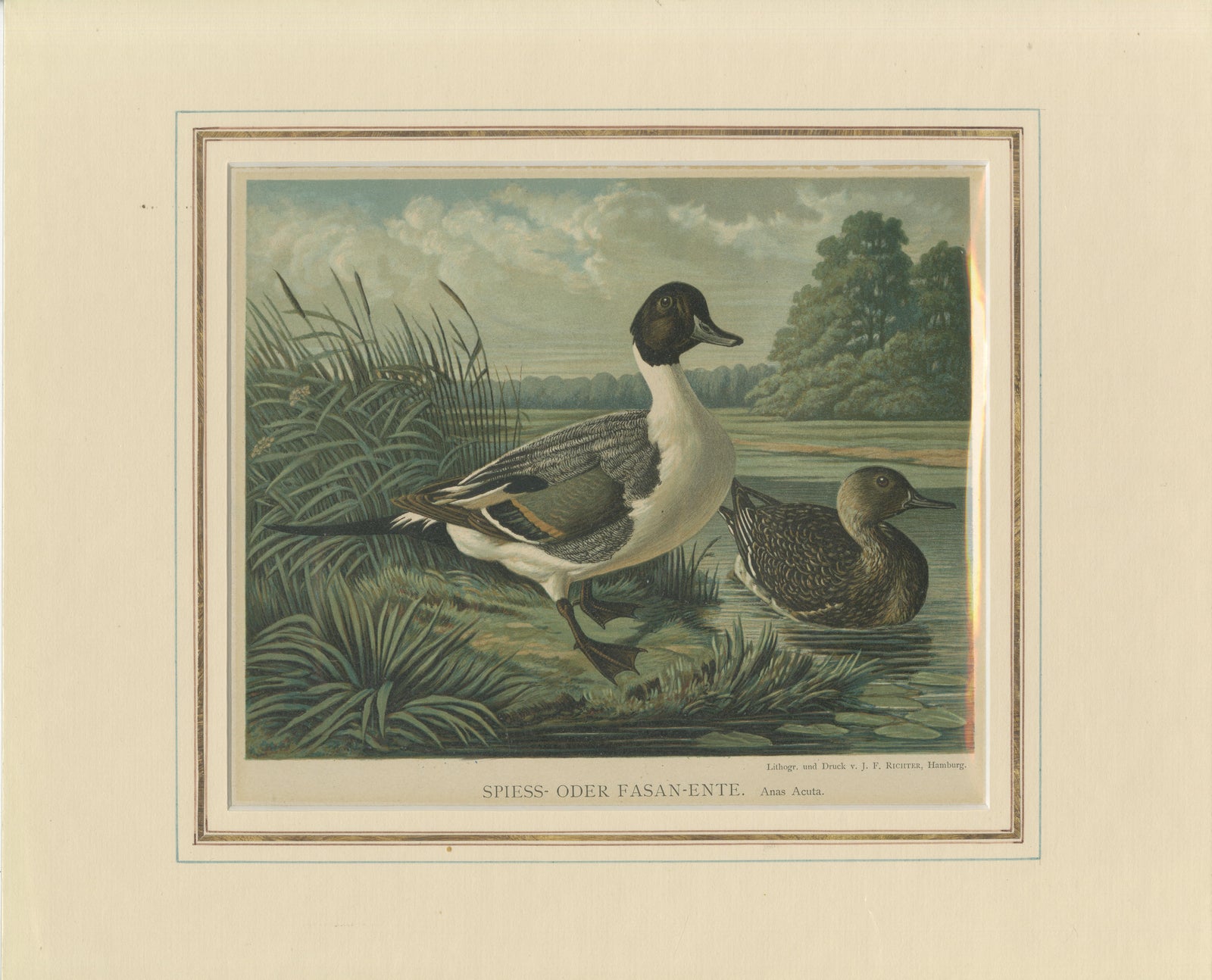
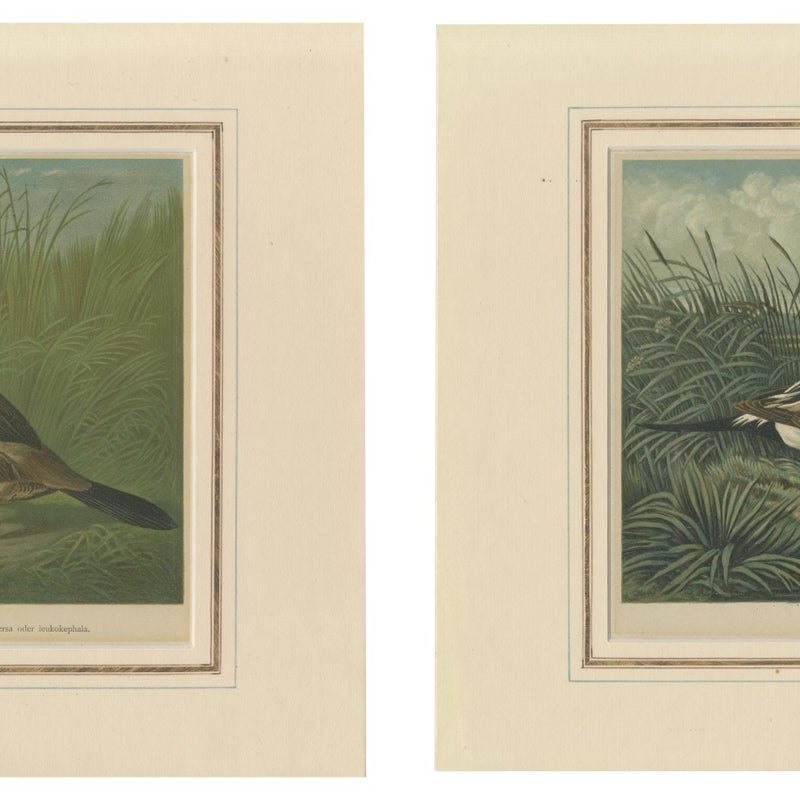
These beautifully hand-colored lithographs, presented in a cream matting board, were published in 1880 by J. F. Richter in Hamburg. They depict two species of ducks with exceptional detail, combining scientific accuracy with artistic finesse.
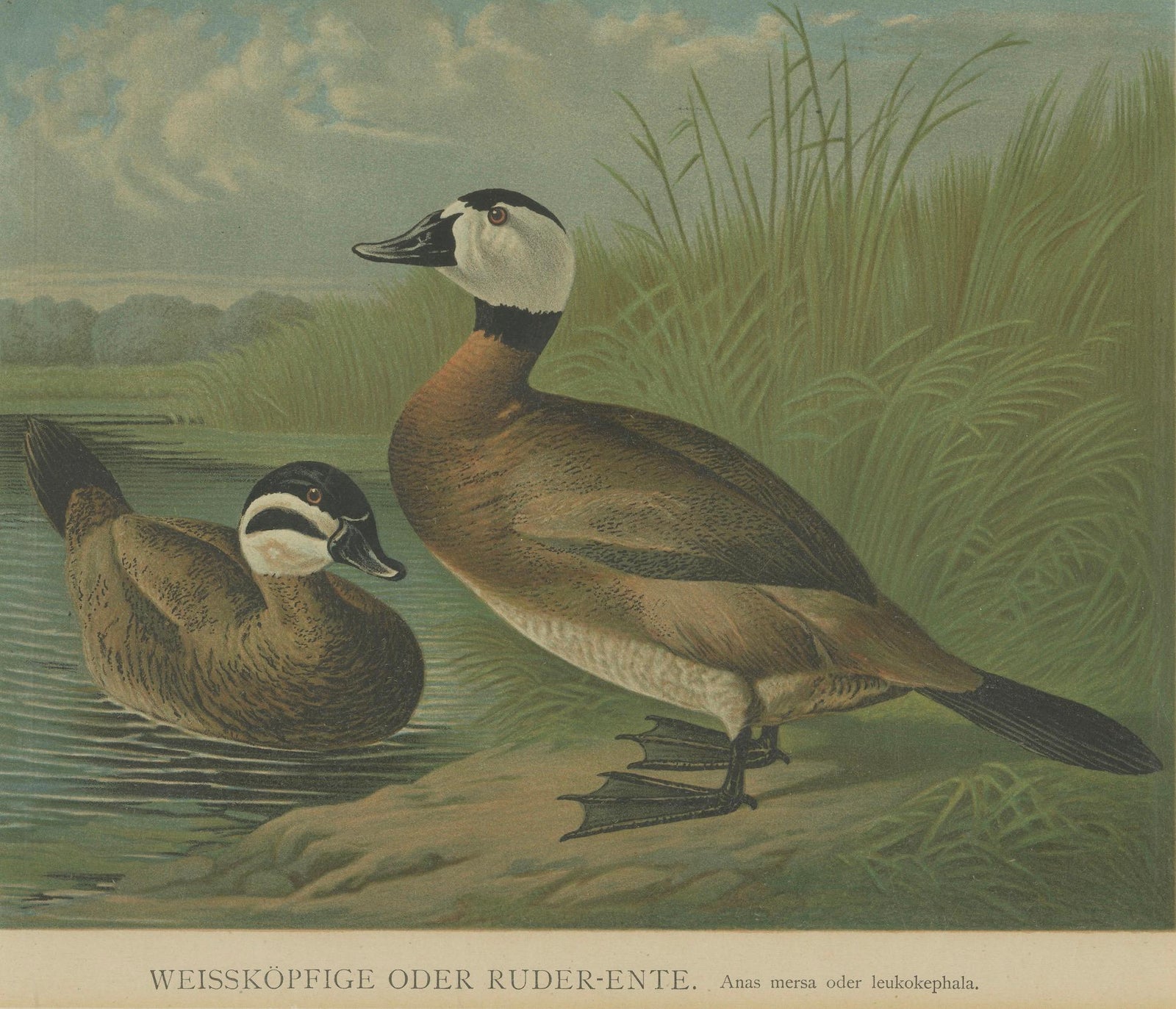
The first print illustrates the Weissköpfige oder Ruder-Ente (White-headed Duck), scientifically known as *Anas mersa* or *leukocephala*. This duck is shown in a serene water setting, easily recognizable by its white head and darker body, a key characteristic of this species.
The second print portrays the Spiess- oder Fasan-Ente (Northern Pintail Duck), scientifically known as *Anas acuta*. This elegant bird is depicted with its long neck and striking plumage, including a distinctive white stripe running down its throat and the male’s pointed tail feathers.
What makes these works particularly interesting is their artistic and historical significance. Created during the height of 19th-century ornithological studies, they reflect the era’s dedication to documenting and celebrating wildlife. Printed in Hamburg, these lithographs are fine examples of meticulous craftsmanship, combining vibrant colors and lifelike composition.
These illustrations serve as both a celebration of natural history and a timeless piece of art, making them ideal for collectors or display.