Close-ups
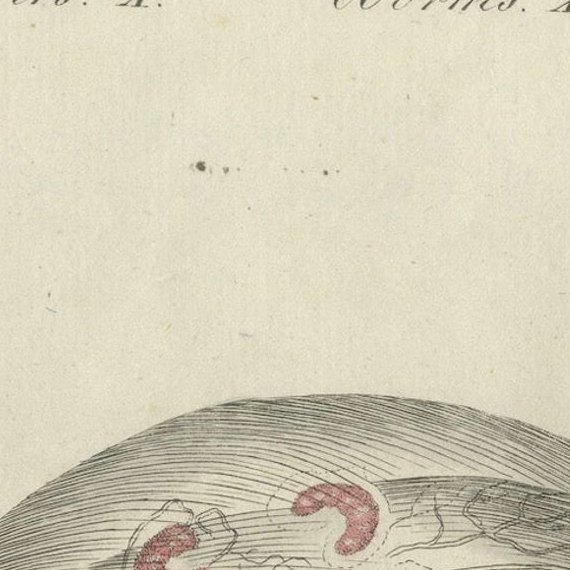
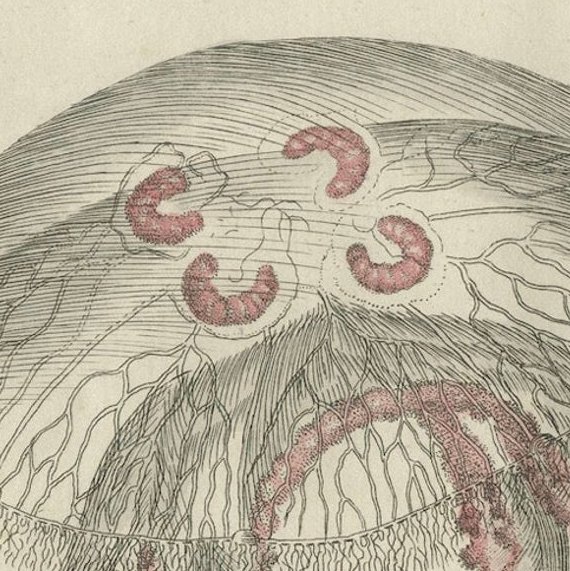
Framed and on the wall
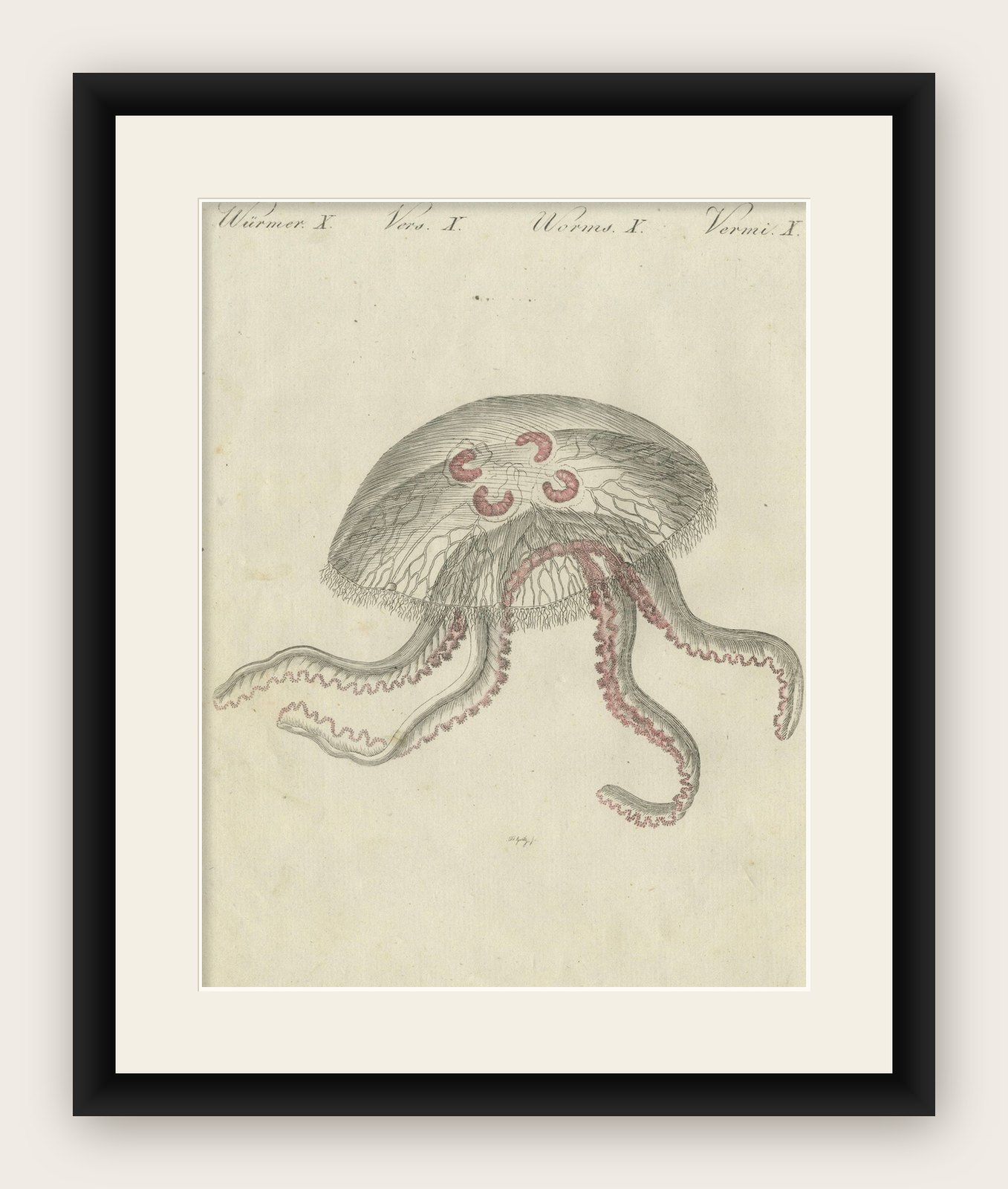
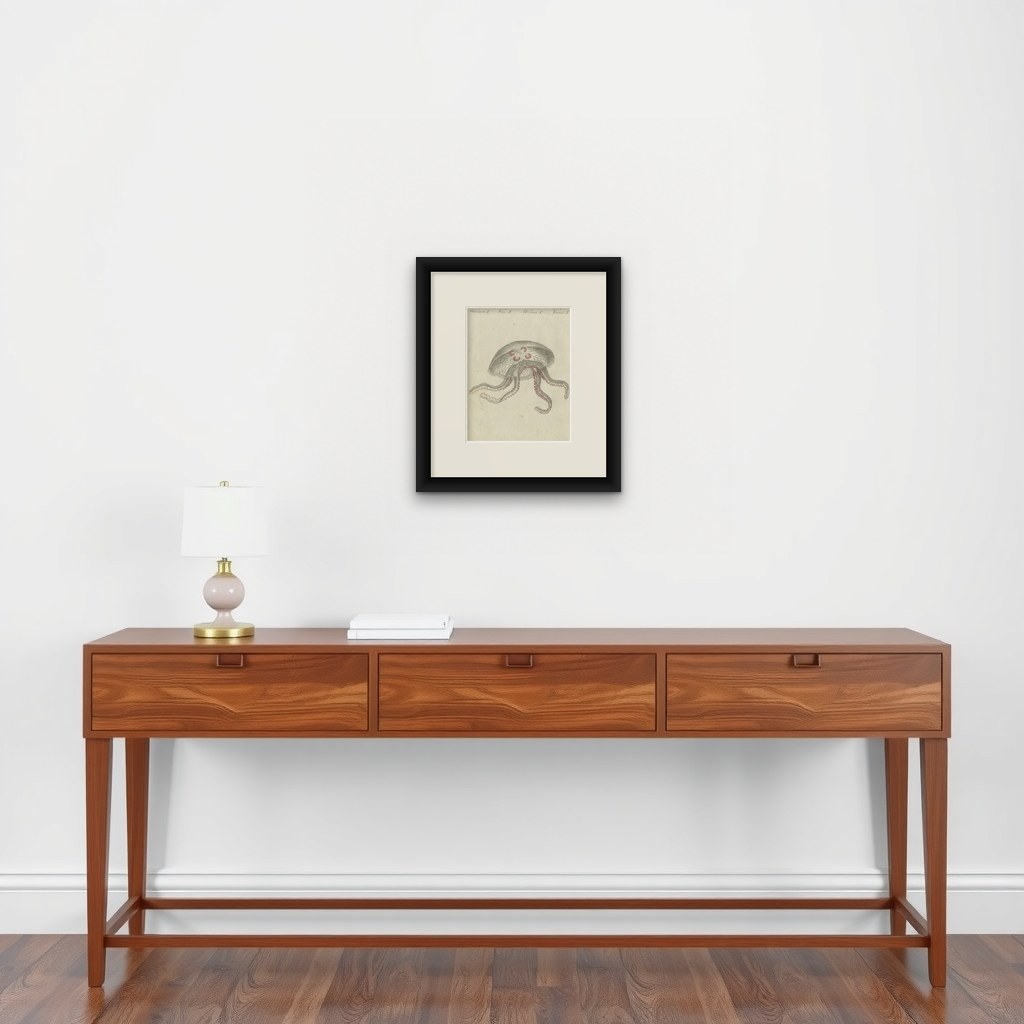

Frame and rooms are illustrations of how the print could look; the description says what is included.
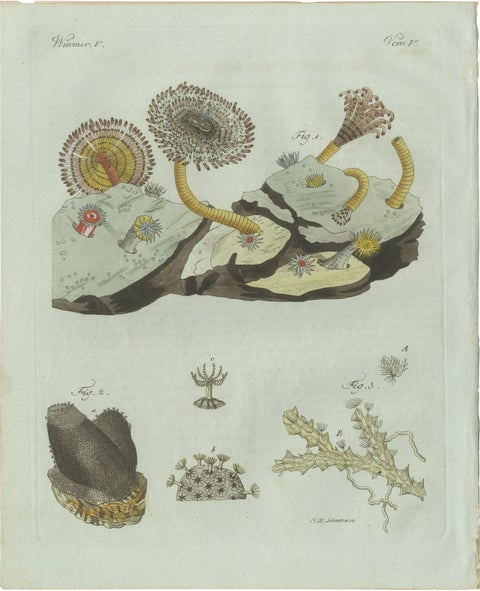
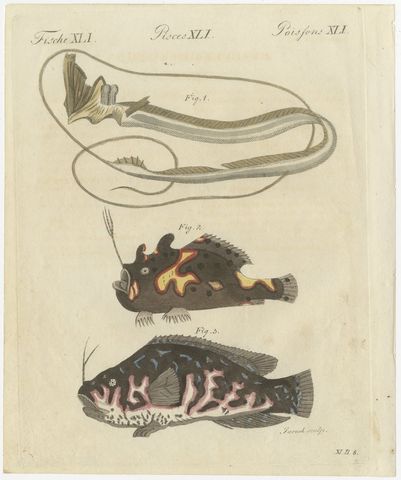
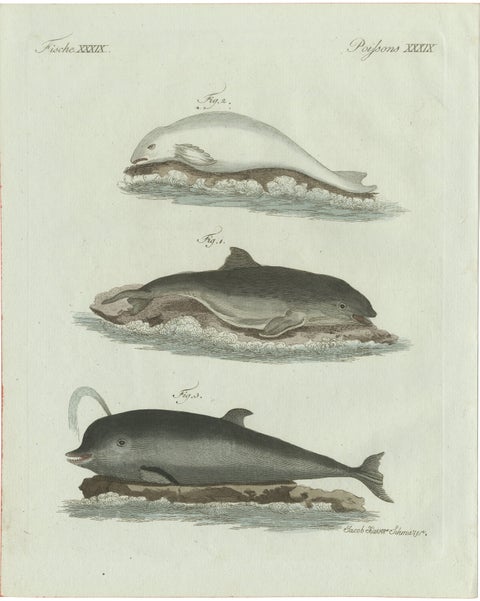
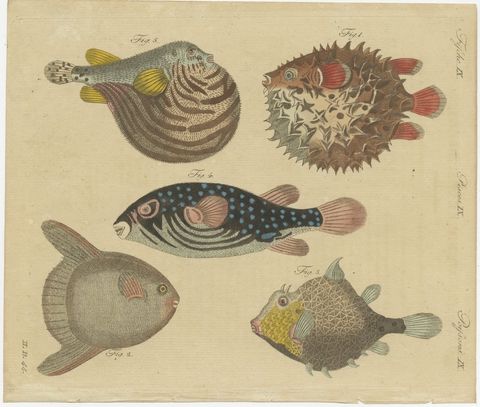
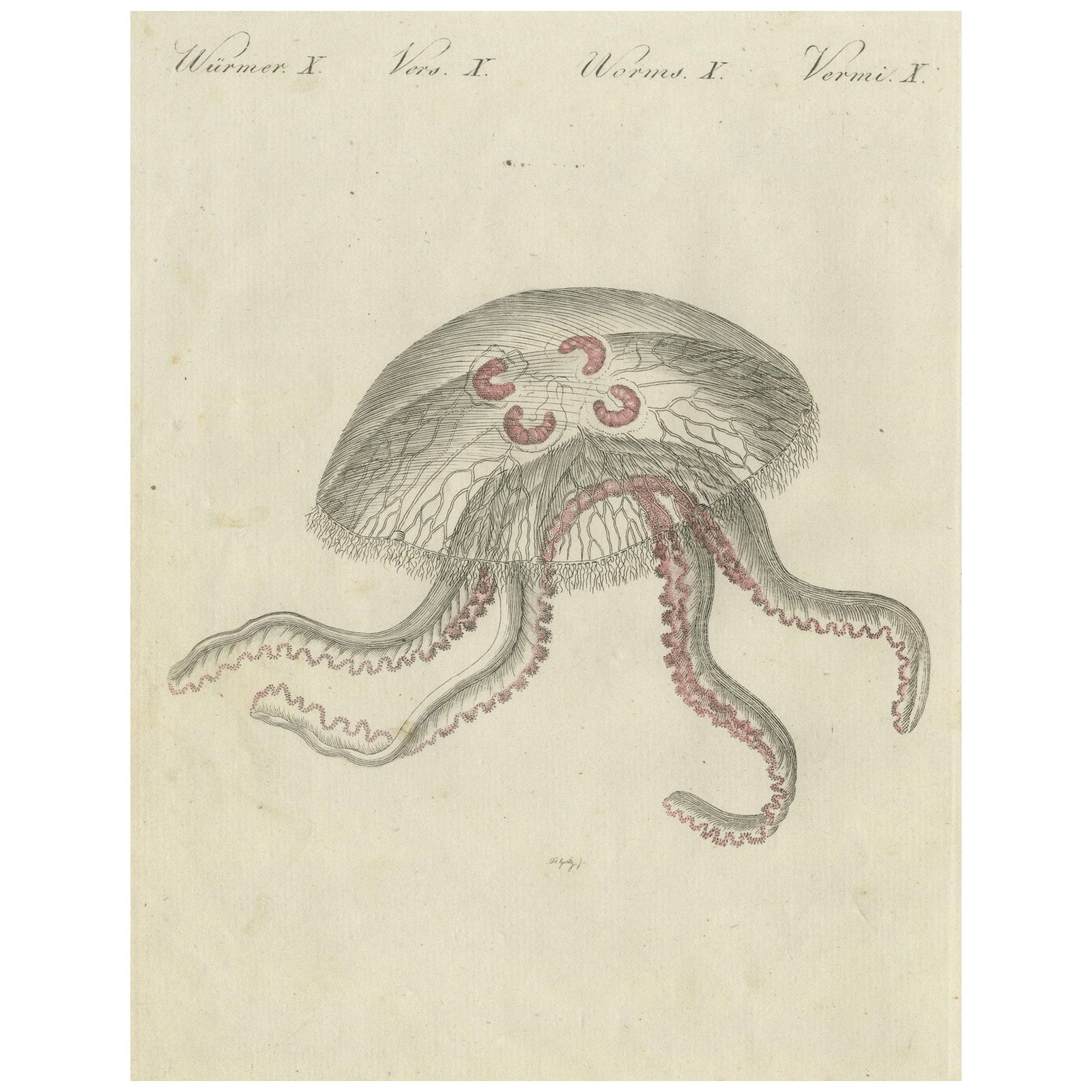
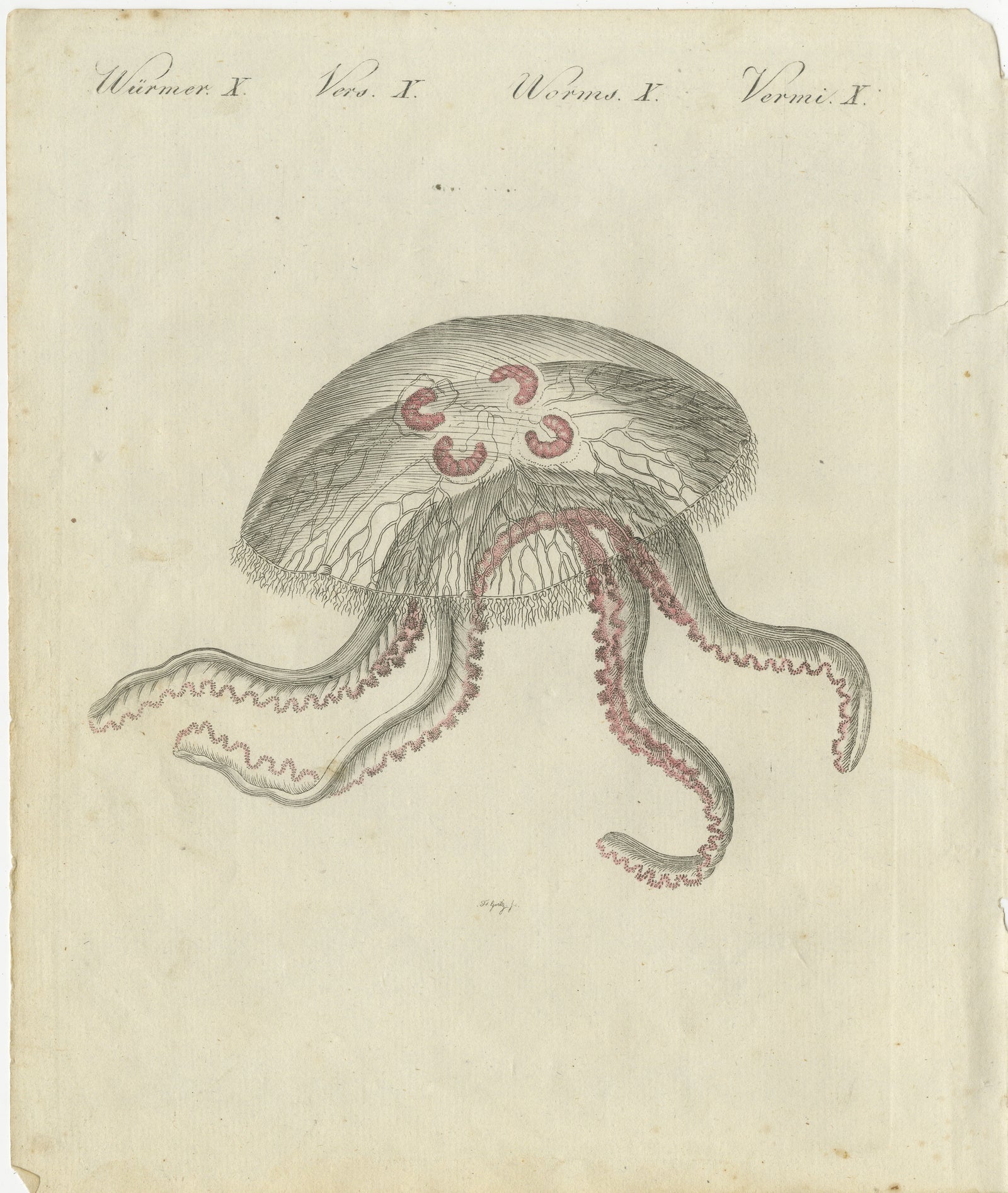
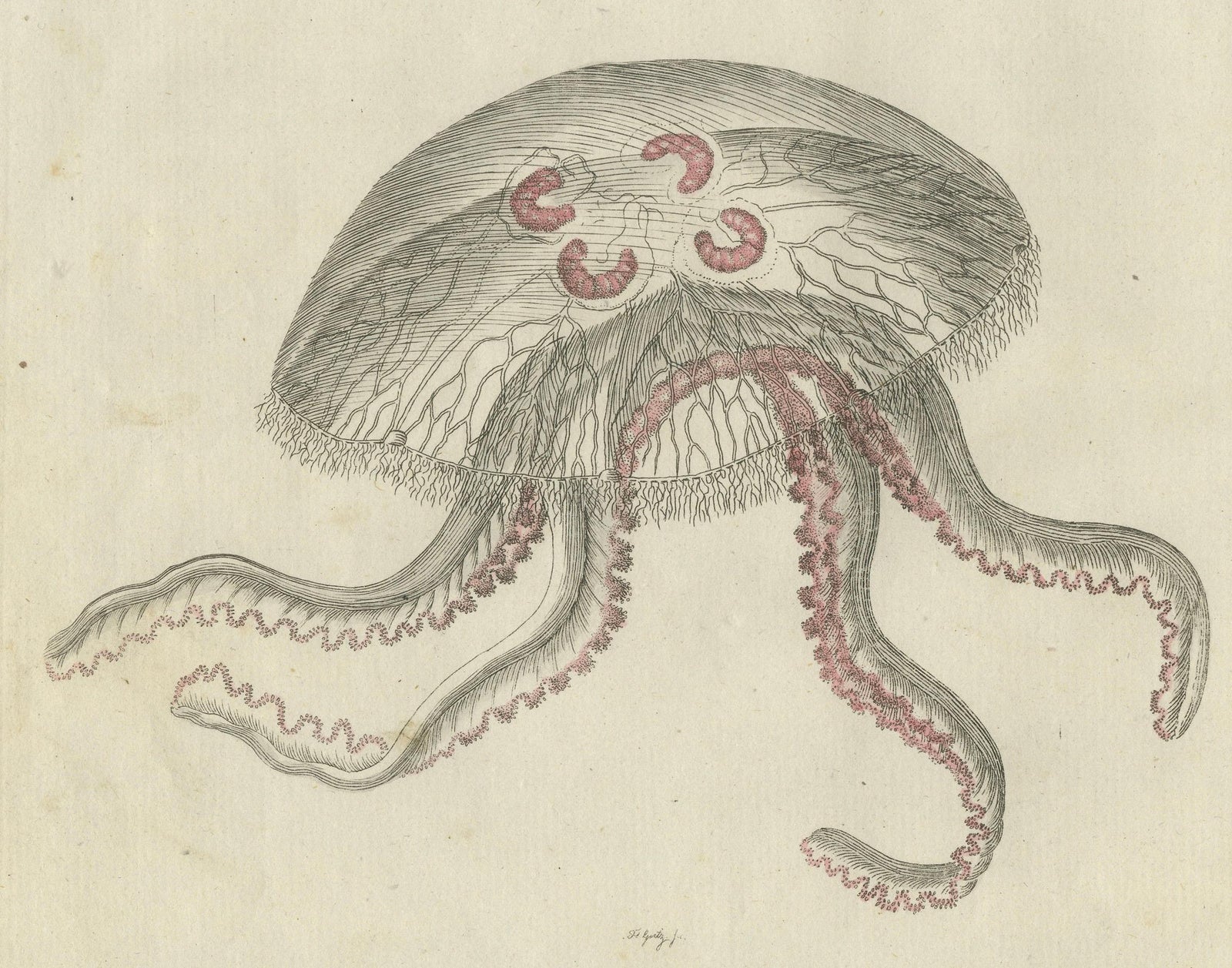
Eared Jellyfish: Detailed Engraving from Bertuch's Children's Encyclopedia, 1805
€160 ($180, £135, €160)
Period original, not a reproduction.
Shipped from the Netherlands, flat, insured and tracked, worldwide. Returns accepted within 14 days.
- Date
- 1805
- Size
- 9.1 × 7.5 in (23 × 19 cm)
- Condition
- Good. Good. Minimal foxing and light toning are present, mainly around the margins, consistent with a piece over 200 years old. The colors remain vibrant, and the details are sharp and well-preserved. No significant tears or creases affect the artwork.
- Period
- Early 19th century
- Artist or book
- Bertuch
- Section
- Fish and shells
- Reference
- f_43181622
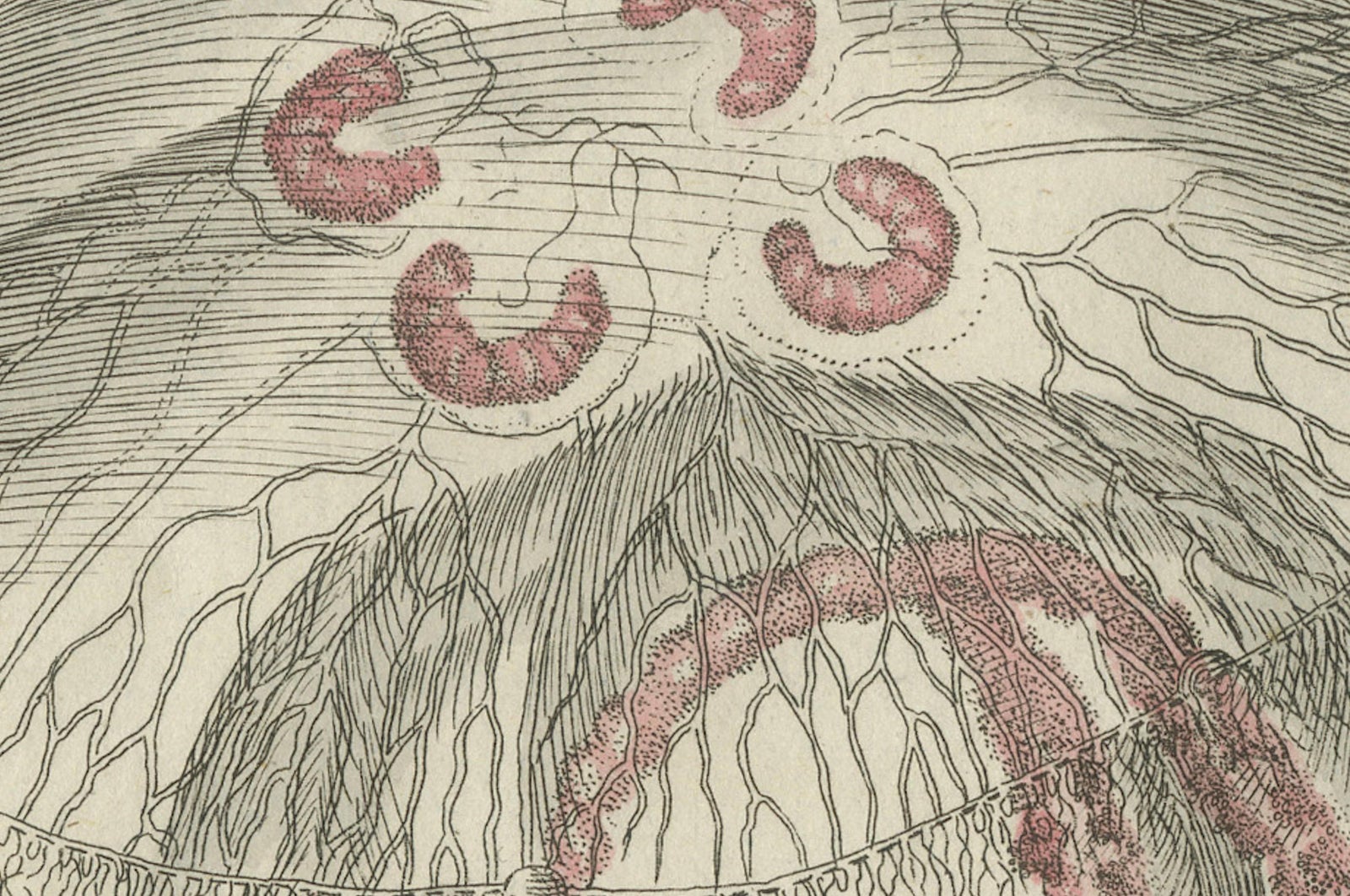
This beautifully detailed engraving of the eared jellyfish (Aurelia aurita) is a captivating representation from Friedrich Johann Bertuch's renowned Bilderbuch für Kinder (Picture Book for Children), published in Weimar, 1805. This elegant jellyfish, with its distinctive radial symmetry and translucent bell, is meticulously depicted, showcasing the graceful undulations of its tentacles and the iconic horseshoe-shaped gonads visible through its bell.
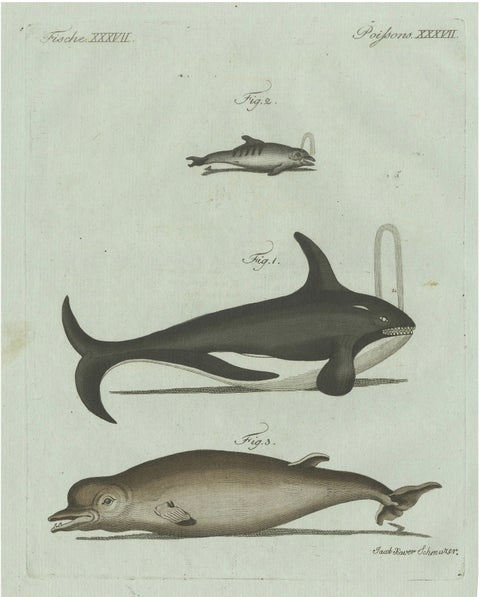
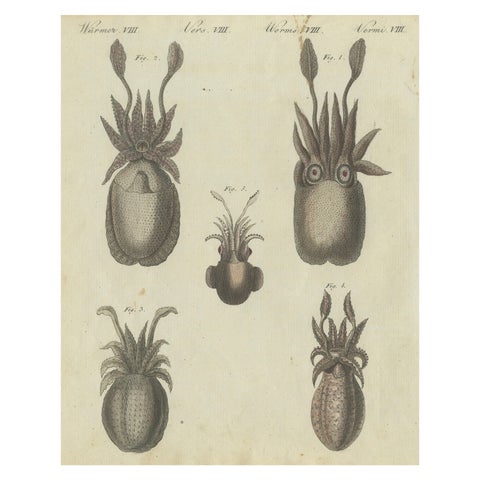
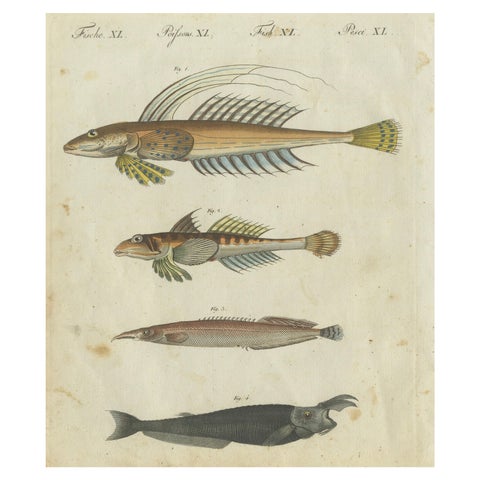
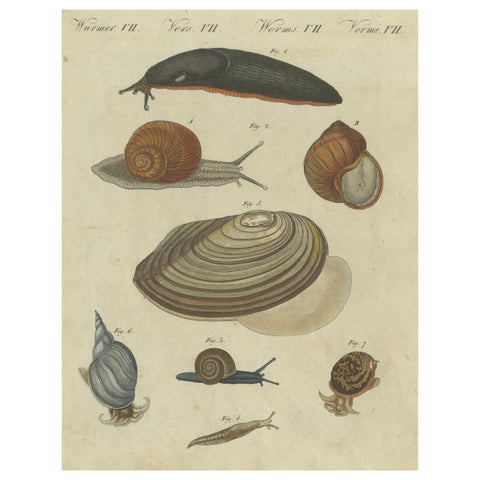
Bertuch's encyclopedia was an ambitious and pioneering project aimed at educating children through visual storytelling. With its 12 volumes featuring over 1,200 hand-colored copperplate engravings, the Bilderbuch für Kinder covered a wide range of topics, including natural history, science, mythology, and more. This particular plate highlights Bertuch’s dedication to artistic precision and scientific accuracy, making it a fascinating artifact of early educational publishing.
The soft color palette, with delicate pinks and subtle grays, enhances the organic beauty of the jellyfish, while the fine linework emphasizes its intricate structure. This engraving not only appeals to natural history enthusiasts but also serves as a testament to the 18th-century fascination with marine life and the growing field of marine biology.
Condition Report
The engraving is in good condition for its age. Minimal foxing and light toning are present, mainly around the margins, consistent with a piece over 200 years old. The colors remain vibrant, and the details are sharp and well-preserved. No significant tears or creases affect the artwork.
Tip on Framing
For optimal display, choose a frame with UV-protective glass to safeguard the delicate hand-colored details from light damage. A cream-colored mat will highlight the subtle tones of the engraving, adding elegance to its presentation while preserving its historical charm.