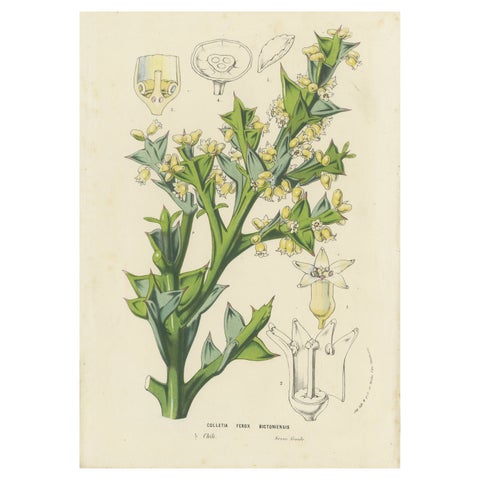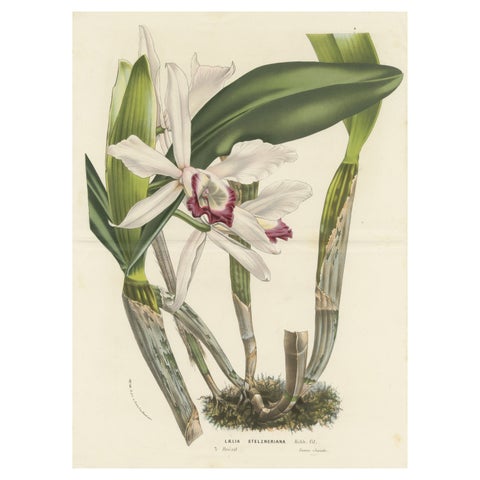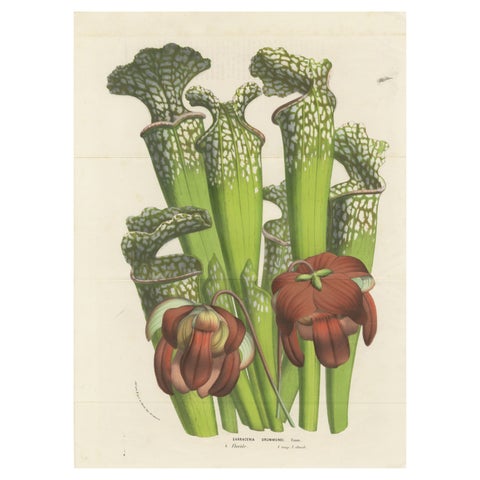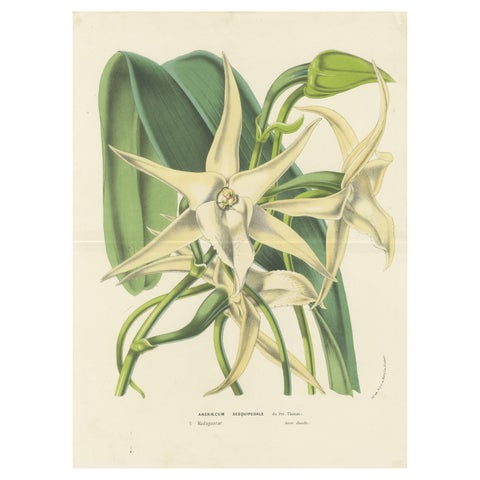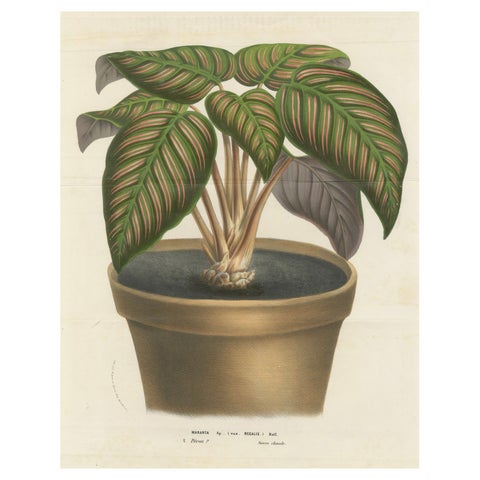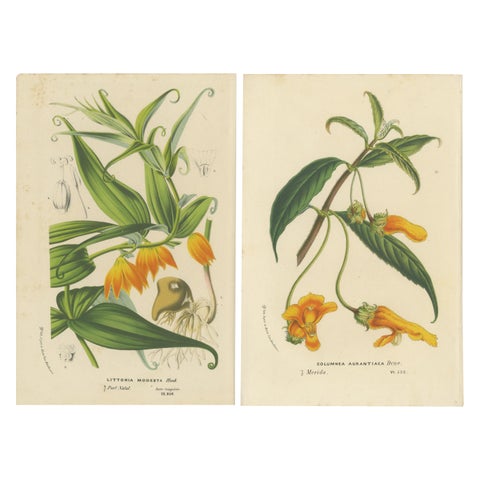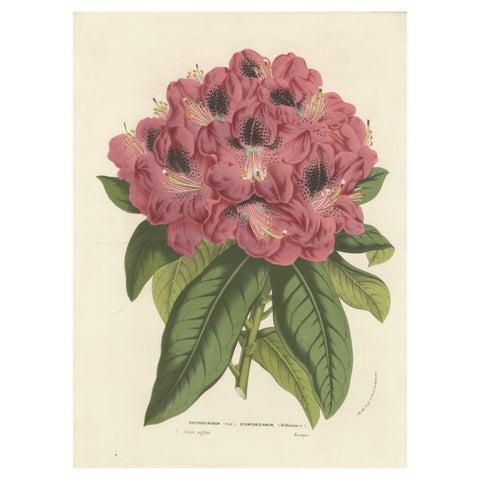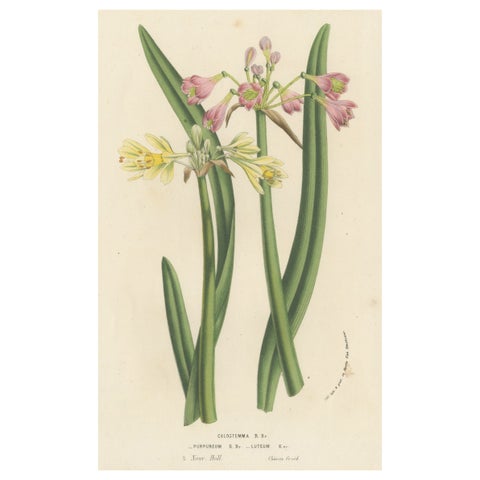
Close-ups
Framed and on the wall

Frame and rooms are illustrations of how the print could look; the description says what is included.
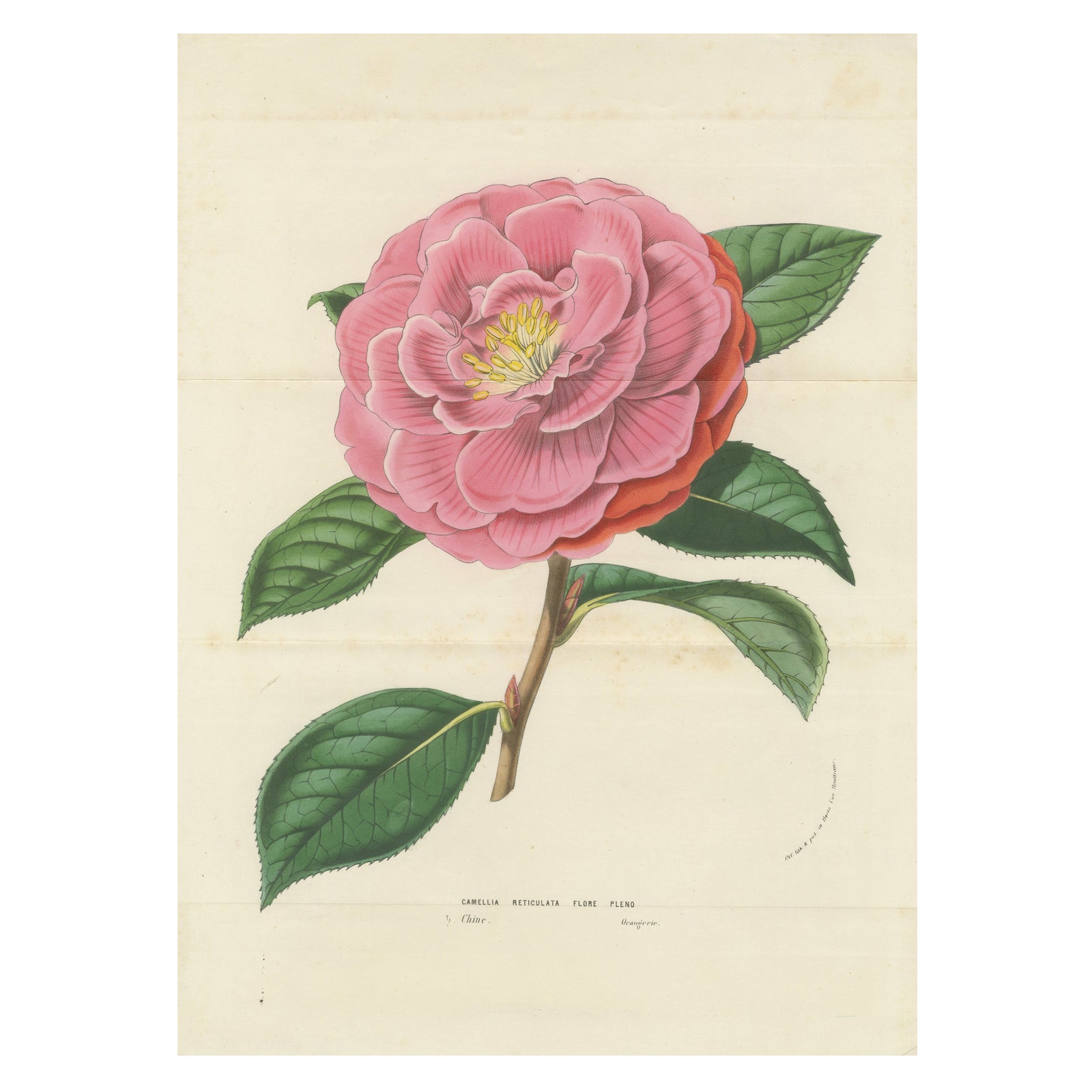
Double Flowering Camellia: Hand-Colored Lithograph from Louis van Houtte, 1855
£205 ($270, €240)
Period original, not a reproduction.
Shipped from the Netherlands, flat, insured and tracked, worldwide. Returns accepted within 14 days.
- Date
- 1855
- Size
- 13 × 9.6 in (33 × 24.5 cm)
- Condition
- Good. The condition of this genuine antique is good, given age, with the central fold line being a characteristic of its original publication. Light foxing. General age-related toning and/or occasional minor defects from handling.
- Period
- Late 19th century
- Artist or book
- Louis van Houtte
- Section
- Botanical
- Reference
- f_41526222
- Colour
- Hand coloured
What the condition grades mean
- Excellent
- Bright and clean, with no faults worth mentioning.
- Very good
- Only light signs of age, such as faint toning.
- Good
- Normal signs of age for a sheet of this period: toning, some foxing, small marks or neat old repairs.
- Fair
- Clear faults such as staining, tears or repairs, priced to match.
Every fault we see is written in the condition note, and the whole sheet is shown uncropped in the photos.
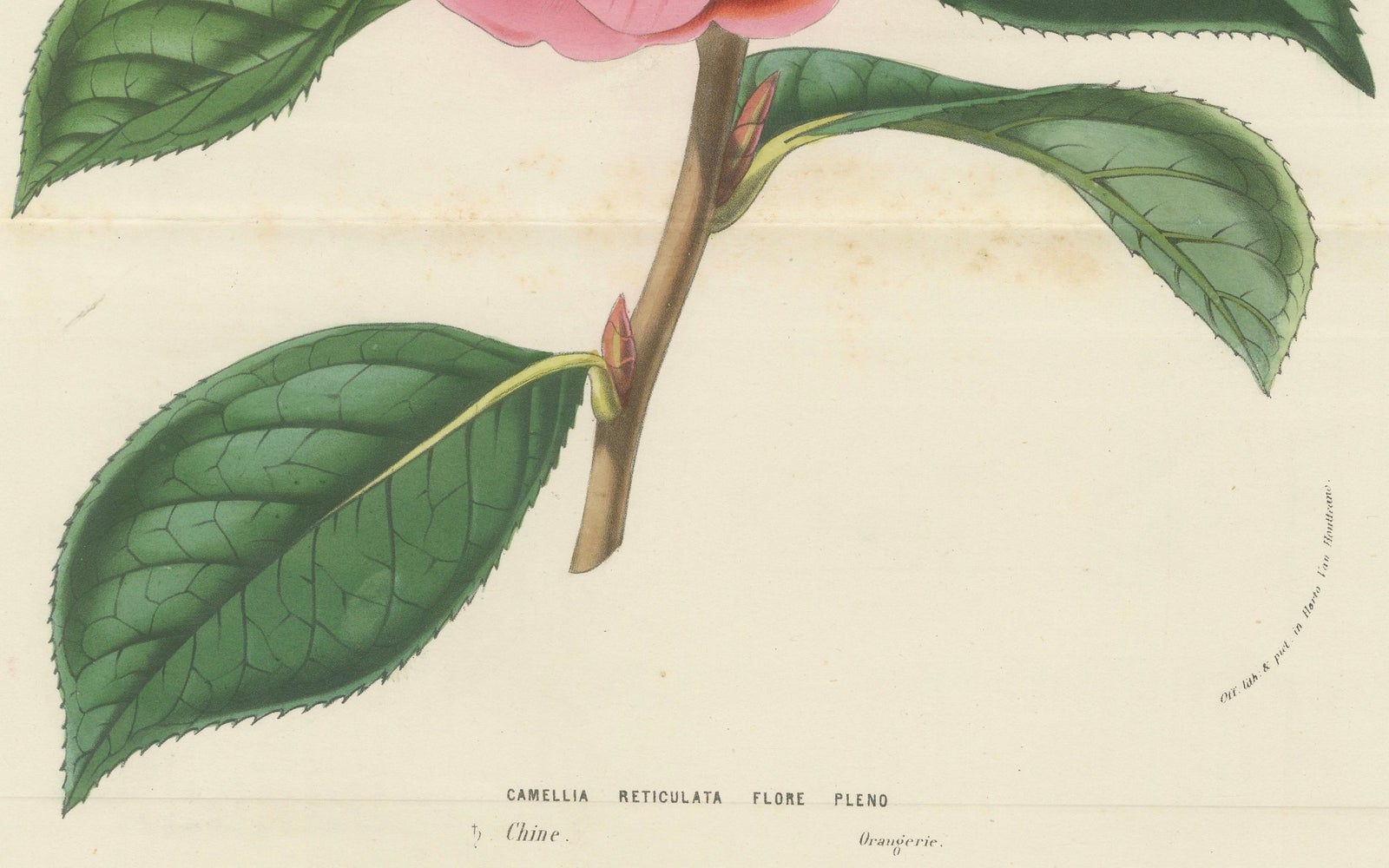
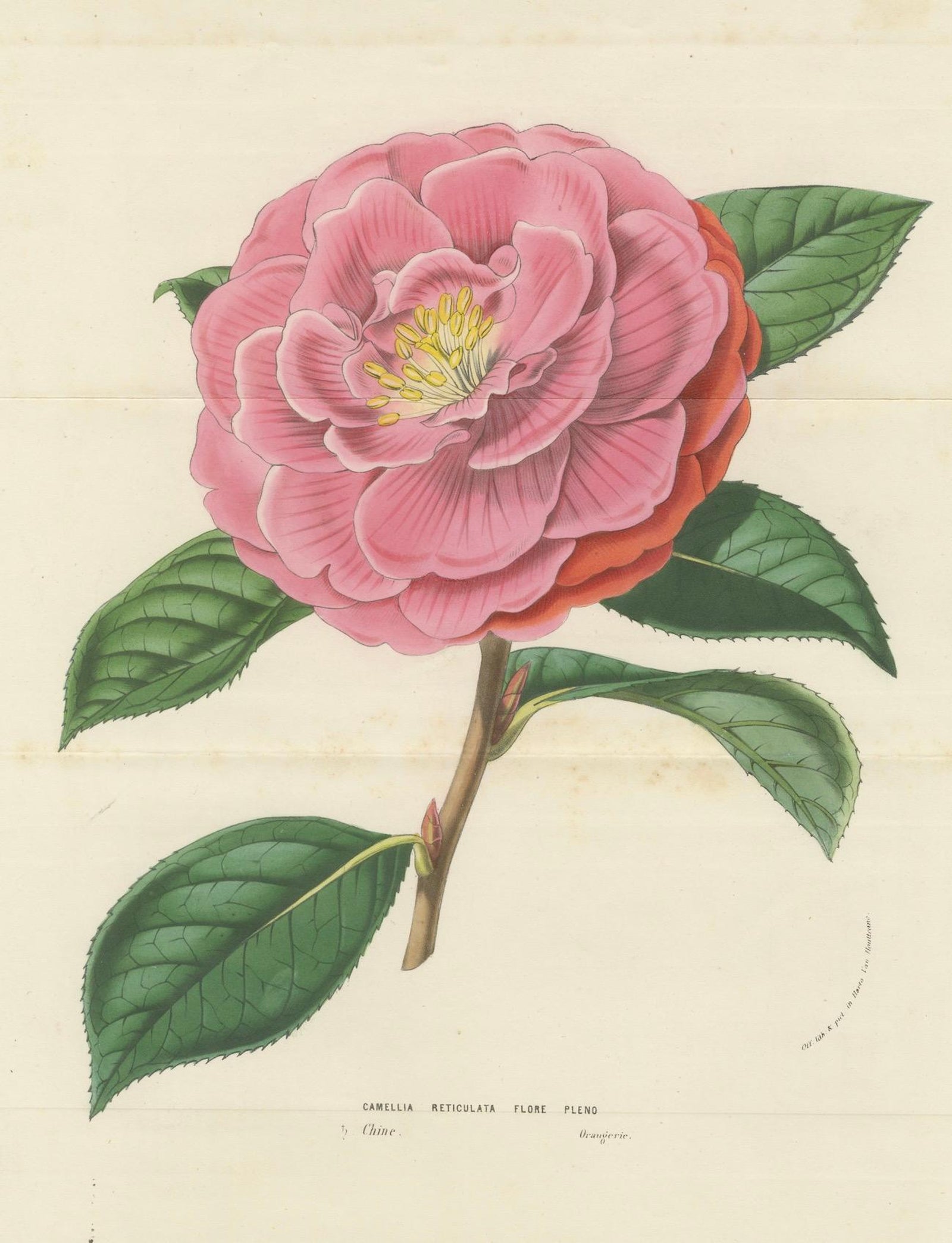
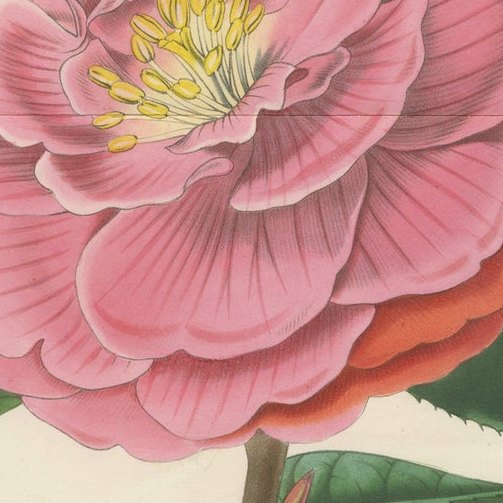
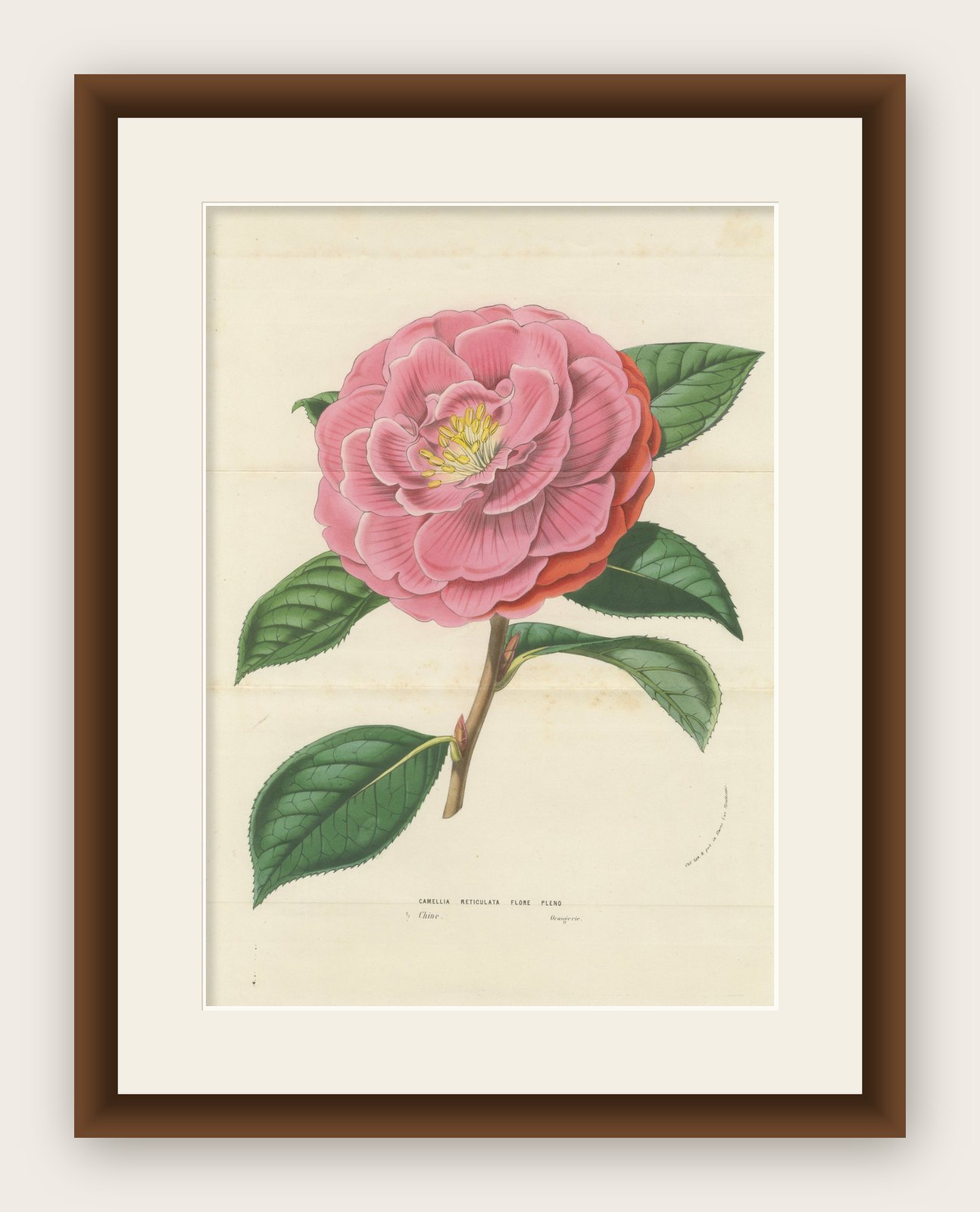
This is a beautiful hand-colored lithograph from the collection, *Flore des Serres et des Jardins de l'Europe* by Louis van Houtte, published between 1854 and 1855. The featured plant here is *Camellia reticulata flore pleno*, commonly known in English as the Reticulated Camellia or Double Flowering Camellia.
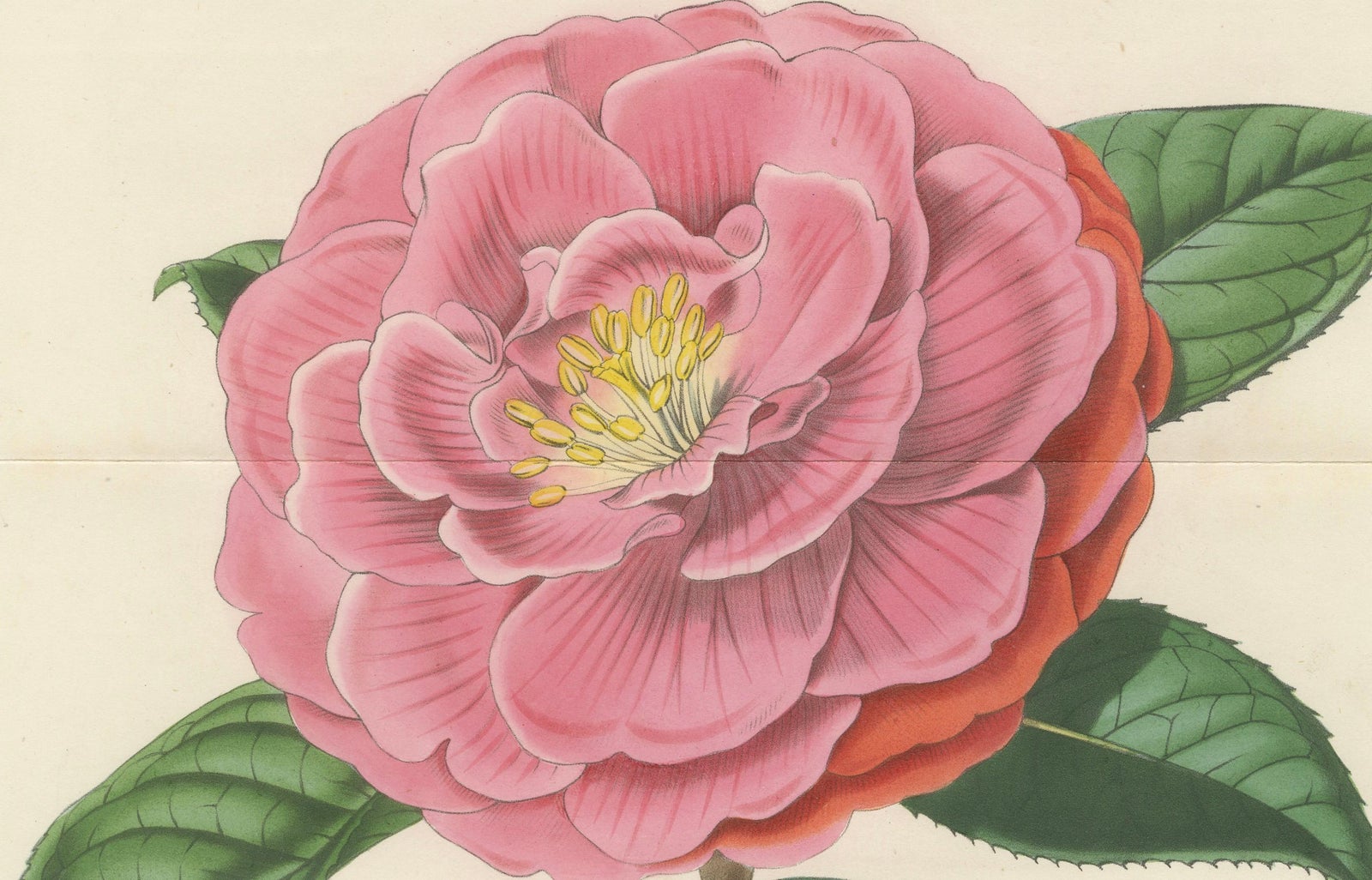
The Camellia is native to China, where it has been highly valued for its ornamental beauty. This lithograph, with its vivid depiction of a double-petaled pink blossom and glossy green leaves, highlights the elegant symmetry and rich color of this sought-after flower. Camellias were often introduced into European horticulture as prized additions to gardens and conservatories during the 19th century, celebrated for their lush, rose-like flowers and evergreen foliage.
The hand coloring brings out the delicate shading and textures of the petals, emphasizing the botanical accuracy and aesthetic appeal that was characteristic of Van Houtte’s works. This print has a central fold, as it was originally bound in the large-format volumes of *Flore des Serres*. Despite the fold, it remains a well-preserved and vibrant example of 19th-century botanical art.
This piece captures the Victorian era's fascination with exotic flora, both for its scientific documentation and for the ornamental allure of plants like the Camellia, which became iconic symbols in European gardens.
Louis van Houtte (1810–1876) was a significant 19th-century Belgian horticulturist and nurseryman, playing a pivotal role in the advancement of botanical gardens and plant collecting throughout Europe. His nursery and botanical publications left a lasting impact on the world of horticulture.
Van Houtte began his professional life working in commerce, but after spending time in Brazil and France, he shifted his focus to horticulture. His experiences abroad, especially in Brazil, ignited his passion for exotic plants, which became central to his work.
In 1839, he established a horticultural nursery in Ghent, Belgium, which eventually grew to be the largest in Europe. The nursery spanned several acres and specialized in growing and distributing rare and exotic plants. Van Houtte’s vast knowledge of plants, combined with his ability to source them from around the globe, made his nursery a key destination for botanists and collectors.
Van Houtte is most famous for founding and publishing *Flore des Serres et des Jardins de l'Europe* (Flowers of the Greenhouses and Gardens of Europe), a celebrated horticultural journal that was published from 1845 to 1883. The publication was known for its beautifully hand-colored lithographs, which featured a wide variety of plants. To achieve this, Van Houtte collaborated with talented botanical artists such as Pieter de Pannemaeker and François Stroobant, producing detailed and vibrant illustrations that were highly regarded for their accuracy and beauty.
In order to expand his collection of plants, Van Houtte employed plant collectors who traveled to far-flung regions, including South America, Asia, and Africa. These collectors brought back many exotic species, such as orchids, palms, and other rare flowering plants, which were then documented and illustrated in *Flore des Serres*.
Van Houtte’s nursery became a central hub for introducing and popularizing new plant species in Europe, contributing to the widespread cultivation of exotic plants in gardens and conservatories. His work greatly influenced the ornamental horticulture movement of the Victorian era, particularly among Europe’s upper class, who were fascinated by the beauty and rarity of these exotic species.
In addition to his horticultural pursuits, Van Houtte also played a role in civic affairs. He served as the director of the Ghent Botanic Garden and held key positions within various Belgian horticultural societies. His expertise and contributions earned him significant recognition, and he became a leading figure in the horticultural community of his time.
After his death in 1876, Van Houtte’s legacy endured through his nursery and the continued appreciation of *Flore des Serres*. His contribution to the introduction and documentation of exotic plants has left a lasting mark on horticulture, and his work continues to be revered for both its scientific and artistic value.
Louis van Houtte's work represents an important era in European horticulture, marked by a combination of botanical exploration, artistic excellence, and a deep appreciation for the beauty of plants. His publications remain some of the finest examples of 19th-century botanical art and knowledge.